

Note: This article contains affiliate links. If you click on these links and make a purchase, I may earn a small commission at no extra cost to you. This helps support my research and content. Read my full affiliate disclosure here.
If clover has become a prominent patchwork in your turf, choosing the right weed killer matters for both control and lawn recovery. You want a solution that eliminates clover without stressing desirable grasses or leaving bare spots. This guide shortlists six top options suited specifically for clover in lawns and explains why they made the cut. We evaluate candidates on how effectively they remove broadleaf clover, how safe they are for common lawn grasses, and how quickly the lawn recovers after treatment. Read on to understand the tradeoffs and find the best approach for your yard.
Top Picks at a Glance
| Best Overall The best all-around choice for most situations | Ortho WeedClear Weed Killer for Lawns with Comfort Wand, 1 gal. |  |
| Best Quality Built to a higher standard if you want something more solid | Syngenta Tenacity Turf Herbicide, 8 oz |  |
| Best Value The sweet spot between price and what you get | Spectracide Large Plot Weed Stop for Lawns Concentrate, 1 Gal |  |
| Best Budget The cheapest option that still gets the job done reliably | Spectracide Weed Stop for Lawns Ready-to-Use Spray, 32 oz | 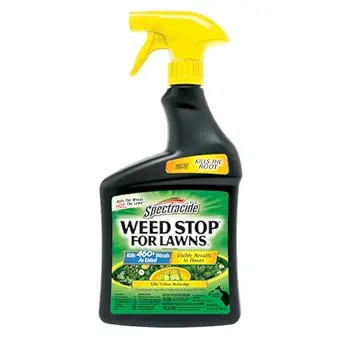 |
| Highest Rated A top-rated pick with lots of positive feedback | ferti-lome Weed Free Zone Broadleaf Weed Killer Concentrate, 16 oz |  |
| Most Popular A crowd favorite that many people choose with confidence | Scotts Weed Control for Lawns, 14 lb granular weed killer |  |
Ortho WeedClear Weed Killer for Lawns with Comfort Wand, 1 gal.

| Unit Count | 128 Fluid Ounces |
|---|---|
| Item Form | Spray |
| Coverage | 16000 square feet |
| Kills listed weeds | 250+ weeds |
Ortho WeedClear is a 1 gallon ready-to-use weed spray formulated for lawn spot and small broadcast treatments. It combines three active ingredients to target broadleaf weeds and is labeled to control more than 250 species, including clover and dandelions. The included Comfort Wand gives a continuous, precise spray for spot application and makes it easy to treat patches without over-spraying surrounding grass. The formula shows visible decline in weeds within hours and becomes rainproof in about an hour once dry, so short windows between application and light rain are manageable. Practical benefits include simple application with no mixing for spot work, broad weed coverage, and guidance for mixing if you choose a wider broadcast treatment. Limitations to consider are that it is intended for actively growing weeds in spring or fall and is not a year-long preventative; repeated applications may be needed for persistent infestations. Also it contains synthetic herbicides, so follow label directions for safety around children, pets, and desirable plants.
Best for: Homeowners who want an easy, effective spot or small-area solution for common lawn broadleaf weeds and prefer a simple applicator for precise treatment.
Less Ideal for: People seeking a seasonal one-time preventer for long-term control or those who want an organic or non-chemical alternative for clover management.
- Targets over 250 common broadleaf lawn weeds including clover and dandelion
- Comfort Wand provides precise continuous spray for targeted spot treatment
- Ready-to-use formula needs no measuring for spot application
- Rainproof within one hour after drying for quicker windows between treatment and weather
- Not formulated for year-long weed prevention so recurring treatments may be required
- Contains synthetic active ingredients that require careful handling and adherence to label safety instructions
Verdict: A user-friendly ready-to-use weed spray with a comfort wand that makes quick, precise control of clover and other broadleaf lawn weeds straightforward and effective.
Syngenta Tenacity Turf Herbicide, 8 oz

| Unit Count | 8 Fluid Ounces |
|---|---|
| Item Form | Liquid |
| Coverage | 2000 ft^2 per 1sp of product |
| Active Ingredients | Mesotrione |
Tenacity Turf Herbicide is a concentrated mesotrione-based liquid designed for both pre-emergent and post-emergent control of common lawn weeds including crabgrass, clover, chickweed and dandelions. You apply it diluted according to label rates with a handheld or hose-end sprayer to target problem areas or broadcast across the lawn; when used as a pre-emergent it is taken up as weeds emerge and when applied post-emergent it acts systemically for selective control. The product covers a large area per bottle and the active ingredient provides residual control so you can expect longer suppression than a contact-only herbicide. Important practical points are that it is turf-selective so follow the label for grass species and mixing instructions to avoid turf injury, and results can take several days to appear. Also this is a concentrated chemical intended for careful, measured application rather than spot-use by people who prefer non-chemical methods.
Best for: Gardeners focused on strong, reliable crabgrass and broadleaf weed control who are comfortable using concentrated herbicides and following label directions for turf safety.
Less Ideal for: People seeking organic, mechanical, or spot-only solutions or those unwilling to follow detailed mixing and application instructions should consider other options.
- Systemic mesotrione active ingredient controls both pre- and post-emergent weeds
- Selective to turf when used per label, allowing treatment without killing desirable grass species
- Concentrated 8 oz liquid provides wide coverage per bottle
- Provides residual suppression, reducing frequency of repeat applications
- Requires careful mixing and adherence to label for turf safety
- Not a non-chemical or organic option for weed control
Verdict: Choose Tenacity when you want a concentrated, turf-selective herbicide that delivers pre- and post-emergent control of crabgrass and other common lawn weeds.
Spectracide Large Plot Weed Stop for Lawns Concentrate, 1 Gal

| Unit Count | 128 Fluid Ounces |
|---|---|
| Item Form | Liquid |
| Coverage | 32000 square feet |
Spectracide Large Plot Weed Stop is a concentrate lawn herbicide you mix with water and apply with a sprayer to control broadleaf weeds across large areas. It targets more than 200 listed weeds, including common offenders like dandelion, chickweed and clover, and is formulated to kill weeds down to the root for visible results in hours. The bottle links to hose-end or tank sprayers and includes settings for concentrate or ready-to-spray use, which makes covering up to tens of thousands of square feet practical for homeowners with large yards. It is rainproof within hours and is labeled for both northern and southern grass types when applied at recommended rates. Important limitations are the temperature window for safe application and safety precautions for people, pets and water features; do not apply when air temperatures exceed 85°F and keep off treated areas until dry. For persistent or isolated tough weeds you may need targeted repeat spot treatments.
Best for: Homeowners who need an effective, large‑area solution for common broadleaf weeds and prefer a concentrated product they can mix and spray themselves.
Less Ideal for: Small-plot gardeners who prefer spot-only, non-chemical methods or anyone who cannot follow temperature and safety application restrictions.
- Concentrate treats large areas—label lists coverage up to 32,000 sq ft for northern grasses
- Kills over 200 listed broadleaf weeds and works down to the root for longer control
- Rainproof within hours so light rain soon after application is less likely to wash it away
- Works with common sprayers and has a built-in hose connector for easier mixing and application
- Must not be applied when air temperatures exceed 85°F to avoid turf damage
- Contains chemicals that require safety precautions and keeping people and pets off treated areas until dry
Verdict: Choose this concentrated sprayer-ready formula if you need a practical, large‑area herbicide that kills common broadleaf weeds down to the root while preserving lawn when used as directed.
Spectracide Weed Stop for Lawns Ready-to-Use Spray, 32 oz

| Item Form | Spray |
|---|---|
| Liquid Volume | 32 |
| Coverage | Up to 10,000 square feet (for cool season grasses) |
Spectracide Weed Stop for Lawns is a pre-mixed spray designed for quick spot and broadcast applications on common turfgrasses. You simply spray until weeds are wet and wait for visible decline, often within hours, because the formula kills by contact down to the root. It lists control for more than 460 weed types including dandelion, clover and chickweed and is labeled for use on bluegrass, fescue, ryegrass, Bermuda and established zoysia. The ready-to-use bottle requires no mixing, which keeps application straightforward and reduces setup time for homeowners. Practical benefits include broad weed spectrum, fast visible results and instructions for safe use (temperature window and re-entry guidance). Important limitations are that it can damage turf if applied outside temperature recommendations or on grass just coming out of dormancy, and coverage claims are for cool-season grasses only. For larger properties you may need multiple bottles or a concentrate product to be more economical.
Best for: Homeowners who want a simple, no-mix weed control that gives fast visible results and prefer a straightforward spray solution for small to medium lawns.
Less Ideal for: Large-property owners or landscape professionals who need a cost-per-acre solution or who require year-round, temperature-agnostic applications.
- Ready-to-use spray requires no mixing or extra equipment
- Kills over 460 listed weeds including common broadleaf and grassy weeds
- Produces visible results within hours by killing weeds down to the root
- Labeled for use on multiple common lawn grasses when directions are followed
- Can harm turf if applied outside the 45° to 90° F window or to grass just emerging from dormancy
- Ready-to-use format may be less economical for treating large lawns compared with concentrates
Verdict: A convenient ready-to-use spray that delivers fast control of common broadleaf weeds for budget-minded homeowners treating small to medium lawns.
ferti-lome Weed Free Zone Broadleaf Weed Killer Concentrate, 16 oz

| Item Form | Liquid |
|---|---|
| Coverage | Full |
| Unit Count | 16 Ounce |
| Item Highlight | Triclopyr + Clopyralid formula |
This ferti-lome concentrate is a targeted broadleaf weed killer designed for use on lawns to control clover and many other common broadleaf weeds. You mix the 16-ounce bottle with water at the label rates and spray affected areas when weeds are young and actively growing; results and leaf injury often show within hours. The active combination of triclopyr and clopyralid addresses persistent species that some general weed products miss and is labeled safe for common turfgrasses such as Kentucky bluegrass and bermudagrass when used as directed. Practical benefits include concentrated packaging that covers multiple applications and a formula that remains effective across spring, summer, and fall. Important limitations are that it is a non-selective broadleaf herbicide for susceptible species only and must be applied carefully to avoid drift onto desirable broadleaf plants and ornamentals; users should follow safety directions on the label and time applications for calm weather.
Best for: Homeowners who prioritize a reliable, proven herbicide for persistent broadleaf weeds like clover and want a product that works across seasons when applied correctly.
Less Ideal for: Gardeners who need an all-purpose weed control that is safe for ornamentals or broadleaf garden plants should consider selective or spot treatments designed for mixed plantings.
- Contains triclopyr plus clopyralid to target stubborn broadleaf weeds including clover
- Concentrated 16 oz bottle covers multiple applications when mixed per label
- Works on cool- and warm-season turfgrasses listed on the label
- Visible injury to weeds within hours when applied to actively growing plants
- Requires careful mixing and application to avoid damage to non-target broadleaf plants
- Label restrictions limit where and when it can be used on certain turf types and sites
Verdict: Choose this concentrate if you want a dependable, turf-safe broadleaf herbicide that reliably knocks back clover and other stubborn lawn weeds when applied per the label.
Scotts Weed Control for Lawns, 14 lb granular weed killer

| Item Form | Granule |
|---|---|
| Coverage | 5000 square_feet |
| Active Ingredients | 1.108% 2,4-D, 0.167% Mecoprop-p, 0.071% Dicamba |
Scotts Weed Control for Lawns is a granular herbicide designed to target broadleaf weeds — including clover and dandelions — in established turf. It is applied with a spreader in spring or early fall when weeds are actively growing; Scotts provides spreader settings for easy calibration. The granules act on contact and translocate to the root, which helps reduce regrowth rather than just burning foliage. A single 14 lb bag treats about 5,000 sq. ft., so it is practical for small to medium yards and seasonal spot or whole-lawn treatments. Important features include a familiar active ingredient mix (2,4-D, mecoprop-p, and dicamba) and clear timing and watering guidance to maximize effectiveness. Limitations: it is not safe for certain turf types such as Dichondra, Carpetgrass, Floratam St. Augustine, or creeping bentgrass and will also kill desirable clovers, so use cautiously where clover is wanted; chemical controls require careful handling and temporary access restrictions after application.
Best for: Homeowners who want a proven chemical solution to remove clover and other broadleaf weeds from conventional lawns and who value straightforward application guidance and documented performance.
Less Ideal for: Those maintaining specialty turf, homeowners who want to preserve clover, or anyone seeking nonchemical or organic weed control methods should consider alternatives.
- Controls over 200 listed broadleaf weeds including clover and dandelion
- Granular formula works on contact and translocates to roots for longer control
- Covers approximately 5,000 sq. ft. per 14 lb bag, suitable for small to medium lawns
- Clear application instructions and spreader settings reduce guesswork
- Contains strong active ingredients that require careful handling and temporary watering restrictions
- Not labeled for use on several turf types where it can damage desirable grass species
Verdict: A reliable granular option for homeowners who need an effective, easy-to-apply product to eliminate clover and other broadleaf weeds from conventional lawns.
Choosing the Right Weed Killer for Clover in Lawn: Key Factors to Consider
Active Ingredient and Mode of Action
Knowing the active ingredient is the single most important factor when choosing a weed killer for clover in a lawn. Different actives target broadleaf weeds via different physiological pathways; some are selective for broadleaves and spare grasses, while others are nonselective and will damage turf. Understanding the mode of action helps you pick a product that attacks clover effectively and reduces the need for repeat applications.
Active ingredient also determines reapplication timing, how long treated clover remains controlled, and whether the product will interfere with overseeding. Look for clear labeling on what the active does and how long it persists in the plant and soil.
Turfgrass Type and Selectivity
Lawn species differ in their tolerance to herbicides. A product that is safe on one grass type may scorch another. Identify your lawn species to choose a formulation labeled as safe for that turf. Cooler-season grasses and warm-season grasses can have different windows for treatment and recovery.
Selectivity affects the chance of creating brown patches or thin areas. Products marketed for broadleaf control typically offer selectivity, but always confirm the label lists your grass species to avoid unintended injury.
Application Method and Coverage
How you apply the product changes both effectiveness and risk. Spot treatments let you target isolated clover with minimal turf exposure, while broadcast sprays cover larger areas but increase the chance of contact with desirable grass. Granular formulations can be easier for even coverage but may need activation by water.
Consider the equipment you have and the size of the infestation. Handheld sprayers, pump sprayers, and hose-end applicators each offer different control over mix rates and droplet size, which affects contact with clover foliage and drift to nearby plants.
Timing Relative to Lawn Care Activities
Timing of application makes a big difference. Apply when clover is actively growing for best uptake, typically in spring or fall depending on climate. Mowing schedule matters: mowing too soon after treatment removes treated leaf tissue and reduces effectiveness, while waiting too long can leave treated patches unsightly.
Also consider seasonal stress on the lawn. Avoid treating during heat or drought stress when turf tolerance is lower. Pay attention to recommended waiting periods before irrigation, mowing, or fertilizer applications to maximize both safety and control.
Recovery Time and Overseeding Compatibility
After herbicide use, you may want to overseed or repair thin spots. Some products require a waiting period before seeding to avoid damage to new grass seedlings. Recovery time also affects how soon your lawn will return to uniform appearance and how long bare or treated patches might be visible.
Check label directions for reseeding windows and plan lawn renovation accordingly. If rapid recovery is a priority, choose a product with a short reseeding wait and a demonstrated track record of minimal turf injury when used as directed.
Environmental and Safety Considerations
Consider off-target impacts and safe handling. Some herbicides can drift to ornamentals or pollinator-attractive plants, so think about nearby flower beds and vegetable gardens. Read instructions on buffer zones, wind limits for spraying, and restrictions near water features.
Personal protective equipment and storage instructions matter for safe use. Also review guidance on pet and child access to treated areas and how long to wait before allowing normal activity on the lawn.
When to Treat Clover in the Lawn
Treat clover when plants are actively growing and leaf surface area is high so the herbicide is absorbed efficiently. For many climates that means early to mid-spring and again in early fall when temperatures are moderate and soil moisture is adequate.
Avoid treating during drought stress or extreme heat because turf tolerance drops and uptake by clover can be reduced. If you plan to mow, do so a few days before treatment rather than immediately after to leave more foliage for herbicide contact.
- Spring and fall offer best uptake windows in most temperate zones
- Avoid spraying in strong heat or drought
- Mow lightly several days before treatment for better leaf area
Spot Treatment Versus Lawnwide Applications
For small, isolated patches of clover, spot treatments minimize herbicide use and lower the chance of turf damage. Use a handheld sprayer or a targeted applicator and treat only the plants showing infestation.
If clover is widespread, a broadcast application may be more efficient. With broadcast sprays, follow the label carefully for mix rates, and consider using a product formulated for lawn broadcast use to preserve turf health.
- Spot treatment reduces chemical exposure and preserves grass
- Broadcast sprays are practical for heavy infestations but need careful mixing
- Granular options work well for even coverage but require activation
Cultural Practices to Reduce Clover Reinfestation
Herbicides control the current clover, but good lawn care reduces future outbreaks. Improve turf vigor with proper mowing height, regular fertilization based on soil test results, and targeted overseeding of thin areas. Thicker, healthier turf competes better with clover.
Adjust soil pH and address compaction to favor grass over clover. Clover often thrives in compacted, low-fertility spots where grass struggles, so correcting those conditions reduces the long-term need for chemical control.
- Maintain recommended mowing height for your grass species
- Use soil testing to guide fertilizer and lime applications
- Overseed bare or thin areas in the correct season for your turf
Safe Use Practices and Drift Prevention
To protect nearby plants and pollinator-friendly areas, avoid spraying on windy days and keep nozzles low to the ground. Use droplet-size settings appropriate for herbicide labels and consider adding a drift-reducing agent when allowed by the product instructions.
Rinse equipment thoroughly after use and follow PPE recommendations on the label. Post-application, keep pets and people off treated areas for the time specified to reduce incidental exposure.
- Spray on calm days and follow nozzle recommendations
- Respect buffer zones near ornamentals and water
- Clean equipment and follow PPE guidance
Managing Expectations and Follow-up Treatments
Expect visible decline in clover within a couple of weeks for many selective herbicides, though complete control can take longer and sometimes requires a second application. Monitor treated areas to determine if retreatment is necessary and to avoid over-application.
If clover persists in shaded, poorly drained, or compacted spots, address the site conditions in addition to repeating control measures. Combining cultural improvements with carefully timed follow-up treatments yields the best long-term results.
- Visible results may take weeks; follow label for retreatment intervals
- Address site issues if clover returns in specific patches
- Combine chemical control with cultural practices for lasting results
How We Chose the Best Weed Killer for Clover in Lawn
We focused on products and formulations that are appropriate for treating clover in established lawns and then applied consistent editorial filters. Key evaluation criteria included degree of clover control under typical lawn conditions, selectivity versus common turfgrasses, speed of visible results, and safety for treated areas including replanting or overseeding windows. We also considered application flexibility such as spot-treatment versus broadcast options and compatibility with common yard equipment. Excluded items included general-purpose garden herbicides intended for landscape beds, products labeled only for agricultural or turf-grass production uses, and home remedies lacking documented active ingredient guidance. We prioritized options that balance effective broadleaf clover control with minimized damage to grass, and that offer clear use directions for timing and mowing around treatment. The final list reflects products that meet these criteria in a range of application styles gardeners commonly use.
FAQ
Will treating clover harm my grass?
It depends on the product and your grass type. Selective broadleaf herbicides are designed to target clover while sparing common turfgrasses, but grass tolerance varies. Always check the label for compatibility with your lawn species and follow application instructions to reduce the risk of injury.
When is the best time of year to apply a weed killer for clover in lawns?
Apply when clover is actively growing, typically in spring and early fall in temperate regions. Avoid treatments in extreme heat or drought, and plan mowing and irrigation around the recommended timing on the label to maximize uptake.
Can I overseed after using a clover weed killer?
Some products require a waiting period before overseeding to avoid harming new seedlings. The reseeding interval varies by active ingredient. Check the product instructions and wait the recommended number of days before seeding.
Are spot treatments effective for long-term control?
Spot treatments are effective at removing isolated patches and reduce chemical use, but long-term control also depends on fixing conditions that favor clover. For widespread infestations, broader treatment plus cultural adjustments may be necessary.
How long before I can mow after applying a herbicide?
Mowing too soon can remove treated foliage and reduce effectiveness. Many labels recommend waiting a few days to a week before mowing. Follow the specific guidance on the product label for best timing.
Will treating clover harm pollinators?
Herbicides that kill clover remove a nectar source and can indirectly affect pollinators. Avoid spraying when flowers are in bloom and take care to prevent drift onto flowering plants. Consider targeted treatments and buffer zones to protect pollinator habitat.
Final Verdict
Choose a product whose active ingredient and label match your turf species and the scale of the infestation. Prioritize selective broadleaf control when preserving lawn appearance is important, and plan applications during active clover growth with careful attention to mowing and reseeding windows. Combining the right herbicide approach with improved cultural practices will deliver the most reliable, long-term reduction in clover.
