

Note: This article contains affiliate links. If you click on these links and make a purchase, I may earn a small commission at no extra cost to you. This helps support my research and content. Read my full affiliate disclosure here.
Picking the right weeding tool for garden plots, raised beds, or narrow borders changes routine maintenance from a chore into a quick, effective task. The right tool helps you extract roots without breaking them, limits soil disturbance, and reduces bending or kneeling so you can spend more time tending plants. This guide covers seven shortlisted weeding tools for garden work that excel at common yard tasks. We evaluated ergonomics, blade geometry, material durability, and suitability for different soil types so you can match a tool to how you garden. Read on for focused buying guidance and practical tips before the product list.
Top Picks at a Glance
| Best Overall The best all-around choice for most situations | Fiskars Ergo Garden Hand Weeder |  |
| Best Quality Built to a higher standard if you want something more solid | Fiskars 39" Deluxe Stand-Up 4-Claw Weed Puller | 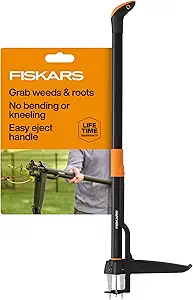 |
| Best Value The sweet spot between price and what you get | CKLT 2-in-1 Garden Hoe and Weed Puller Rake with Adjustable 61" Handle |  |
| Best Budget The cheapest option that still gets the job done reliably | Linatikou Stainless Steel Stand-Up Dandelion Weeder with Ergonomic Handle |  |
| Highest Rated A top-rated pick with lots of positive feedback | Nisaku Namibagata Hori Hori Stainless Steel Weeding Knife (7.25" blade) |  |
| Most Popular A crowd favorite that many people choose with confidence | Grampa's Weeder Original Stand-Up Weed Puller with Bamboo Handle |  |
| Best Seller A high-volume bestseller chosen again and again | DonSail Adjustable Long-Handle Stirrup (Scuffle) Hoe |  |
Fiskars Ergo Garden Hand Weeder

| Material Type | Aluminum |
|---|---|
| Blade Material | Aluminum |
| Handle Material | Aluminum |
| Grip Type | Ergonomic |
| Manufacturer Warranty Description | Lifetime warranty |
The Fiskars Ergo Garden Hand Weeder is a heavy-duty hand tool built for removing deep-rooted weeds like dandelions and thistles. Its angled cast-aluminum head provides leverage to pry roots from compact soil while the contoured SoftGrip handle reduces wrist strain during repetitive use. Typical use is straightforward: push the angled head into the soil around a weed, rock the tool to loosen roots, then pull to extract the whole plant. Notable features include rust-resistant cast-aluminum construction for durability, an ergonomic grip for comfort, and a hang hole for convenient storage. In practice this weeder excels in small beds, borders, and lawns where precise, manual removal matters and where you want a tool that lasts season after season. Limitations are its short length, which requires kneeling or bending for larger areas, and the single-purpose design that is not a substitute for long-handled tools when managing large patches of weeds.
Best for: Buyers who want a durable, efficient hand tool for targeted weed removal and who value comfort and longevity over speed on large plots.
Less Ideal for: People who need to clear large areas of turf or who prefer long-handled tools to avoid frequent bending and kneeling.
- Angled cast-aluminum head delivers strong leverage for removing deep roots.
- Ergonomic contoured SoftGrip handle reduces hand and wrist fatigue during extended use.
- Rust-resistant aluminum construction for long-term durability in garden conditions.
- Short handheld design requires bending or kneeling for larger areas.
- Tool is single-function and not optimal for clearing extensive weed patches quickly.
Verdict: Choose this weeder if you want a comfortable, long-lasting hand tool that makes removing stubborn, deep-rooted weeds quick and reliable.
Fiskars 39" Deluxe Stand-Up 4-Claw Weed Puller

| Head Material | Stainless Steel |
|---|---|
| Handle Material | Aluminum |
| Grip Material | Thermoplastic Elastomer (TPE) |
| Number of Items | 1 |
The Fiskars 39" Deluxe Stand-Up Weeder is built for fast, permanent removal of dandelions, thistles, and other deep-rooted weeds without kneeling or herbicides. You position the head over the weed, step on the reinforced foot pedal to drive four serrated stainless-steel claws into the soil, pull back to extract the root, then use the easy-eject mechanism to clear the head. The long aluminum shaft and offset handle reduce back and wrist strain for longer sessions, while the viewing window in the pedal helps accurate placement. It performs best in moist or recently watered soil; in hard, compacted, or clay-heavy ground you will need to pre-soften the area for the claws to penetrate fully. The tool is light enough for extended use yet feels sturdy when you step down, and the stainless blades are made to stay sharp through repeated use. If you want a durable, ergonomically designed manual weeder that prioritizes effective root removal and less physical strain, this is a practical choice.
Best for: Buyers who want an efficient, ergonomic hand tool to remove broadleaf and taproot weeds by the root while avoiding bending and repeated chemical treatments.
Less Ideal for: Gardeners who need a tool for cutting large woody roots, heavy-duty excavation, or frequent use in hard, compacted clay without pre-wetting the soil should consider more heavy-duty or powered options.
- Long 39-inch shaft and offset handle reduce bending and wrist strain for extended use
- Four serrated stainless-steel claws grab roots for thorough removal
- Reinforced foot pedal and viewing window enable confident placement and penetration
- Easy-eject mechanism clears pulled weeds quickly for faster repetition
- Requires moist or softened soil to penetrate compacted or clay-heavy ground effectively
- Not suited for very large woody roots or extremely dense turf
Verdict: Choose this weeder if you want a durable, ergonomic stand-up tool that reliably extracts weeds by the root with minimal bending.
CKLT 2-in-1 Garden Hoe and Weed Puller Rake with Adjustable 61" Handle

| Head material | Tempered spring steel |
|---|---|
| Rake width | 3.75 inches |
| Handle | Adjustable 4-section to 61 inches |
| Finish | Sand texture |
| Fasteners | 304 stainless steel bolts and nuts |
This 2-in-1 garden hoe and weed puller combines a sharpened trapezoid hoe edge with a 3.75-inch tempered spring-steel rake to tackle both close-up weeding and larger-area soil work. The tool is typically used standing up with its adjustable four-section handle extended to reduce bending, or shortened for precision work in tight beds and pots. Hardened spring-steel tines resist bending and the pre-sharpened hoe cuts roots and loosens compacted ground, which makes pulling dandelions and rooted weeds easier. A sand-texture finish and stainless fasteners improve corrosion resistance for outdoor use. Practical benefits include back-friendly operation, one tool covering digging, trenching, raking, and weed extraction, and a robust head that holds up under leverage. Important limitations are that the multi-piece adjustable handle can feel less rigid than a one-piece shaft under heavy torque and the tool is best for surface-to-medium depth roots rather than deep, established taproots.
Best for: Gardeners who prioritize efficient, back-friendly tools that replace multiple implements and who want a durable, versatile weeder for beds, lawns, and driveways.
Less Ideal for: Users who need a heavy-duty one-piece pry tool for very large roots or professional landscapers who require maximum shaft rigidity for constant high‑torque use.
- Dual-function head lets you switch between raking and sharp cutting without changing tools
- Tempered spring-steel construction resists bending for repeated digging and levering
- Adjustable four-section handle lets you work upright or shorten for tight spaces
- Sand-texture finish and stainless fasteners improve corrosion and weather resistance
- Multi-piece adjustable handle may feel slightly less stiff than a single-piece shaft under heavy leverage
- Not intended for removing very deep taproots or extremely large roots
Verdict: A versatile, back-friendly 2-in-1 hoe and rake that saves time by handling most routine garden weeding and soil loosening without switching tools.
Linatikou Stainless Steel Stand-Up Dandelion Weeder with Ergonomic Handle

| Material Type | Plastic, Stainless Steel |
|---|---|
| Blade Material | Stainless Steel |
| Handle Material | Plastic |
| Grip Type | Ergonomic Rubber |
This Linatikou weed puller is a simple hand tool aimed at removing deep-rooted weeds like dandelions by driving its V-shaped fork into the soil and levering out the root. It is typically used for spot weeding in lawns, flower beds, cracks in patios, and around delicate plants where a powered tool would be too aggressive. Notable features include a stainless steel blade and fork for rust resistance and strength, a curved ergonomic rubber handle for a non-slip comfortable grip, and a compact profile that lets you work accurately in narrow spaces. In practice it pulls whole roots when used with a short twisting and rocking motion, reducing regrowth compared with surface cutting. The tool is lightweight and easy to store, making it handy for regular maintenance sessions. Limitations are that it is a manual tool so larger infestations require time and physical effort, and it is best for individual plants rather than clearing large areas quickly.
Best for: Buyers wanting an inexpensive, no-frills hand weeder for spot removal and routine lawn or bed maintenance who prefer simple, durable tools over powered equipment.
Less Ideal for: People who need to clear large expanses of weeds quickly or prefer motorized solutions for heavy-duty yard work should consider larger or powered options.
- V-shaped stainless steel fork extracts deep roots to reduce regrowth
- Ergonomic rubber handle provides a secure, comfortable grip for extended use
- Compact design reaches tight spaces, cracks, and around plants with precision
- Manual operation is time-consuming for large areas and heavy infestations
Verdict: A dependable, budget-friendly hand weeder that pulls deep roots and is ideal for targeted spot weeding around the yard.
Nisaku Namibagata Hori Hori Stainless Steel Weeding Knife (7.25" blade)

| Blade Material | Stainless Steel |
|---|---|
| Handle Material | Wood |
| Blade Edge | Plain, Serrated |
| Power Source | Manual |
| Special Features | Ergonomic Handle |
The Nisaku Namibagata hori hori is a performance-focused garden knife built for precise digging, planting, and root cutting. Its 7.25-inch stainless steel blade combines a straight edge and a serrated edge so you can slice roots, cut stems, and saw through tougher material without switching tools. The blade is engraved with inch markings which makes planting bulbs and setting seed depth quick and repeatable. A concave profile helps cradle soil when transferring seedlings or measuring depth, and the polished stainless surface resists rust and scratches for regular outdoor use. The wooden handle is comfortable for extended sessions and the included faux leather sheath keeps the blade covered when tucked into a belt or shed peg. This is a single-handed manual tool best suited to spot weeding, planting, and small excavations rather than large-scale digging. It requires hand washing and periodic care for the wood handle, and it is not a substitute for heavy-duty shovels or powered tools when moving large volumes of soil.
Best for: Gardeners who prioritize precise, durable hand tools and want one multiuse knife for weeding, planting bulbs, and light root cutting in beds and borders.
Less Ideal for: People who need to move large amounts of soil or perform heavy-duty landscaping should choose a shovel or powered tool instead.
- Dual-edge stainless steel blade (straight and serrated) for cutting roots and sawing tougher material
- Engraved inch markings on the blade for accurate planting depth
- Rust-resistant, scratch-resistant stainless steel construction for durability outdoors
- Comfortable wooden handle and included sheath for secure grip and safe storage
- Not intended for heavy excavation or replacing full-size shovels
- Requires hand washing and occasional care of the wooden handle
Verdict: Buy this if you want a durable, precision hori hori that combines cutting, digging, and accurate planting depth in one handheld tool.
Grampa's Weeder Original Stand-Up Weed Puller with Bamboo Handle

| Handle Material | Bamboo |
|---|---|
| Head Material | Alloy Steel |
| Item Weight | 2.3 pounds |
| Head Size | Small |
Grampa's Weeder is a simple, hand-operated stand-up tool that uses a 4-claw alloy steel head and a long bamboo handle to pinch and extract weeds by their roots. To use it you press the footpad into soft or recently watered soil, lean the handle toward the footpad so the forks close around the weed, then lift to remove the root. The lightweight bamboo handle and footpad make repeated weeding less strenuous on the back and knees than traditional hand pulling or kneeling. The steel claws are effective on dandelions, crabgrass, and similar taproot weeds in softer soils but the tool is not intended for very hard clay or rocky ground. Its straightforward design requires no power, so it is quiet and chemical-free, and the lifetime guarantee reflects a confidence in build quality. If you have compacted soil or deep-rooted tough perennial weeds you may need additional leverage or a different tool, but for routine weeding in beds and lawns after watering this is a durable, low-effort solution.
Best for: Gardeners who value proven, low-effort hand tools and want a durable, chemical-free way to remove common taproot weeds while protecting their back and knees.
Less Ideal for: People who need to clear large weedy areas quickly or who work primarily in compacted clay or rocky ground should consider heavier-duty or powered alternatives.
- Stand-up design reduces bending and kneeling for gentler, ergonomically easier weeding
- 4-claw alloy steel head grips and pulls taproots effectively in soft or recently watered soil
- Bamboo long handle keeps the tool lightweight while providing comfortable reach
- Simple mechanical operation requires no power or chemicals and is easy to maintain
- Performance drops on hard clay or rocky soil where forks cannot penetrate easily
- Small head size can be slow for very large infestations or broad areas
Verdict: A lightweight, reliable stand-up weeder that removes taproot weeds without bending, ideal for routine gardening in soft or watered soil.
DonSail Adjustable Long-Handle Stirrup (Scuffle) Hoe

| Extendable Length | 30", 43", 60" |
|---|---|
| Material – Pole | Premium steel |
| Material – Blade | Premium steel |
| Handle Top Material | Plastic |
The DonSail adjustable stirrup hoe is a simple long-handle weeding tool built around a hollow, commercial-grade steel shaft and a looped cutting blade for push-pull scuffle weeding. It assembles by screwing three pole sections together and extends to several lengths so you can work from a more upright position and avoid bending. In use the stirrup blade slices weed roots with a short back-and-forth motion, making it efficient for row gardens, flower beds, and vegetable patches without disturbing nearby plants. The tool is lightweight yet made from thicker steel for durability, and the plastic top provides a comfortable grip for longer sessions. Limitations are that it is a single-purpose hand tool best for surface weeds and light cultivation rather than heavy digging or chopping roots, and the adjustable pole depends on threaded joints that should be checked periodically for tightness.
Best for: A cautious gardener who prefers dependable, low-effort tools for regular bed maintenance and wants to minimize bending and back strain while removing surface weeds.
Less Ideal for: Gardeners who need a multipurpose digging tool or who frequently tackle deep-rooted or woody weeds should choose a different heavy-duty hoe or digging implement.
- Adjustable handle length reduces bending and improves comfort for different heights
- Stirrup (scuffle) blade efficiently severs weeds with a push-pull motion
- Commercial-grade hollow steel construction balances strength with light weight
- Quick tool-free assembly by screwing three pole sections together
- Not suitable for heavy-duty digging or cutting large, established roots
- Threaded pole joints may loosen over time and require periodic tightening
Verdict: A practical, easy-to-use stirrup hoe that reduces bending and speeds routine weeding in garden beds.
Choosing the Right Weeding Tool for Garden: Key Factors to Consider
Handle Ergonomics and Reach
A comfortable handle reduces fatigue during repetitive weeding. Look for handles shaped to fit the palm with enough diameter to grip securely when wet. Longer shafts let you work standing, which protects the lower back, while short handles give better control around delicate plants.
Material matters too. Hardwood offers tactile comfort and shock absorption, while coated metal or fiberglass handles provide weather resistance and lower maintenance. Consider whether the tool will be used by multiple gardeners; adjustable-length or different-handle offerings accommodate varying arm reach and strength.
Blade Shape and Root-Grip Design
Blade geometry determines how the tool slices, lifts, or hooks roots. Narrow, forked tines are good for prying taproots from compacted soil without disturbing surrounding plants. Flat, sharpened blades excel at slicing perennial roots at the soil line. A hooked profile can grab and pull runners and fibrous roots effectively.
Also evaluate cutting angle and tip thickness. A thin, sharp tip penetrates dense soil more easily, while a thicker tip resists bending when levering out stubborn roots. The right blade shape reduces the chance of leaving root fragments that can regrow.
Materials and Corrosion Resistance
Weeding tools live in damp, often acidic soils so metal selection affects lifespan. High-carbon steels hold an edge well but need regular drying and oiling to resist rust. Stainless steels offer lower maintenance and good corrosion resistance but can be harder to sharpen. Heat-treated alloys blend toughness and edge retention, useful when prying out hard roots.
Beyond metal, look at how the blade is attached to the handle. Solid forged construction or through-tang designs are more repairable than glued assemblies. Protective finishes, powder coatings, or varnishes on handles slow environmental wear and extend comfortable service life.
Weight and Balance
A well-balanced weeding tool directs force to the blade with less wasted effort. Lightweight designs reduce arm fatigue during long sessions but may lack the mass needed to lever out deep roots. Heavier heads give more momentum for slicing and prying, but poor balance increases wrist strain.
Think about the kinds of weeding you do most. Frequent surface weeding favors lighter tools with nimble balance. For extracting taproots and thick runners, a slightly heavier head combined with a secure handle can be more efficient and less taxing on joints.
Suitability For Garden Soil Types
Soil texture and compaction change which tool works best. In loose, amended raised-bed mix a small hand fork or narrow hoe can pull roots easily without disturbing soil structure. In heavy clay, hardened blades and robust tines that penetrate compacted layers are necessary to pry out deep roots.
Evaluate how often you amend or cultivate beds. If you mostly work in soft, friable soil, prioritize precision designs that protect adjacent roots. For gardens with mixed soils, choose multi-purpose shapes that perform acceptably across conditions rather than specialized tools that only work in ideal loam.
Maintenance and Sharpening Needs
Routine maintenance keeps a tool performing and extends life. Tools that accept standard sharpening are easier to keep effective; thin blades will need more frequent touch-ups. Consider whether you are willing to clean, dry, and oil metal parts after use or prefer low-maintenance stainless options.
Also check replaceable parts. Tools with replaceable blades, consumable tips, or modular handles are easier to keep in service for years. Those that require complex disassembly or have welded, sealed joints will often mean replacement once the finish wears through.
When to Use a Push Hoe Versus a Hand Fork
A push hoe is efficient for light weeding across large beds or pathways where soil disturbance is acceptable. It severs young weed stems just below the surface and is fast for broad, shallow weed control.
A hand fork or narrow weeder is better in tightly planted beds or around seedlings because it removes roots with minimal soil turnover. Use a hand tool for precision work near desirable plants and a push hoe for larger, low-growing weed flushes.
- Push hoes work best on seeds and small seedlings in open areas.
- Hand forks excel at gripping taproots and working between plants.
- Alternate tools seasonally based on plant spacing and weed pressure.
Using Tools Without Damaging Nearby Plants
Work from the outside of a bed toward plants to avoid stepping into planting areas. Use shallow, controlled strokes when close to desirable roots and switch to deeper prying motions only when you have adequate clearance.
Support delicate stems with your free hand when extracting weeds near transplants. For crowded beds, lift soil slightly to expose roots rather than yanking, which reduces collateral damage to companion plants.
- Use a thin-tined tool to tease out roots in tight spaces.
- Protect seedlings by loosening surrounding soil before pulling weeds.
Maintaining Your Weeding Tools
After each use, knock loose soil off blades and dry them to reduce corrosion. Wipe metal parts with an oiled rag to add a protective film, and inspect attachments or rivets for looseness.
Sharpen flat blades and thin tips as needed with a file or sharpening stone. Replace or re-handle tools with cracked hafts or bent tangs rather than continuing to use damaged equipment, which can make tasks harder and less safe.
- Clean off sap and soil before storage to prevent sticking and rust.
- Regularly check handle ferrules and tighten or replace hardware.
Ergonomic Techniques to Reduce Strain
Alternate tasks and change posture every 15 to 30 minutes to limit repetitive strain. Use a padded knee pad if you kneel and a long-handled tool to stand when feasible. Keep your core engaged and bend at the hips rather than rounding the lower back.
Grip tools lightly; an overly tight hold increases fatigue. Use body weight to assist levering motions, positioning feet for stable leverage instead of relying solely on arm strength.
- Switch between standing and kneeling to vary muscle use.
- Use two-handed grips on longer tools for control when prying deep roots.
Best Practices for Different Garden Layouts
Raised beds often benefit from shorter, precise weeders that protect soil structure and roots. Container gardens need compact tools with narrow profiles to reach between pots and into tight planting mixes.
In wide, in-ground beds or pathways, choose larger or long-handled implements that let you cover more ground with fewer passes. For rock gardens or gravel beds, use rigid, narrow tools to work between stones without snagging.
- Match tool length to bed width to avoid stepping into plantings.
- Choose narrow heads for crowded or rock-laden soils.
How We Chose the Best Weeding Tool for Garden
We focused on attributes that matter most in everyday garden weeding. First, we looked at ergonomics and user comfort because long weeding sessions should not cause wrist, hand, or lower-back pain. Second, tool geometry and effectiveness were assessed to ensure blades or tines penetrate, pry, or slice roots cleanly in compacted and loose soils. Third, materials and corrosion resistance were reviewed to judge long-term durability in damp soil conditions. Fourth, maintenance and repairability were considered, including whether blades can be sharpened or handles replaced. Finally, versatility across bed types and soil textures was a selection filter so each pick works in at least two common garden scenarios. We excluded tools designed primarily for lawn care, heavy-duty digging, or mechanized systems that require power. We also left out single-use plastic devices and items with unrepairable construction. The result is a group of tools that balance comfort, root-removal effectiveness, and lasting construction for typical home gardener needs.
FAQ
How often should I sharpen a hand weeding blade?
Often depends on use, but usually after several weeks of heavy use or a few months of light use. Sharpen when the blade struggles to slice roots cleanly or requires extra force.
Can I use the same weeding tool in clay and sandy soils?
Usually a single tool can work in both, but performance varies. In clay you need stronger, thicker tips and sturdier handles; in sandy soils a thinner, sharper tip is more efficient.
Is a long-handled weeder always better for my back?
It often reduces bending, but not always. The tool must be correctly balanced and sized for your height to prevent awkward reaches that transfer strain to shoulders or wrists.
How do I remove deep taproots without breaking them?
Loosen surrounding soil first so you can get the tines or blade deep enough to hook the root. Use a levering motion and pull steadily rather than jerking; if the root snaps, dig a little deeper to extract remaining parts.
What maintenance extends the life of garden weeding tools?
Regular cleaning, drying, and light oiling of metal parts prevents rust. Sharpen blades as needed and repair or replace damaged handles and fasteners to keep the tool safe and effective.
Final Verdict
Focus on the handful of features that will affect your regular gardening routine: handle comfort for longer sessions, a blade shape suited to the weeds you face, and materials that stand up to damp soil. Recognize tradeoffs between light tools that minimize fatigue and heavier designs that pry stubborn roots more easily. Choose a weeding tool for garden work that matches your typical soil and planting layout, and commit to simple maintenance to keep it performing. Prioritize ergonomics and root-extraction effectiveness to make routine weeding faster and less tiring so you can spend more time growing plants.
