

Note: This article contains affiliate links. If you click on these links and make a purchase, I may earn a small commission at no extra cost to you. This helps support my research and content. Read my full affiliate disclosure here.
If flies are interrupting meal prep, lounging on indoor plants, or drawing attention to kitchen waste, a purpose-built window fly trap can make a big difference. The right window-mounted trap captures insects at the entry point, keeps surfaces cleaner, and minimizes the need for chemical sprays in living areas. This guide looks at six shortlisted options that suit a range of window styles and household needs. We evaluate each option on how well it catches flies, how simple it is to install and maintain, and how tidy it stays over time. Read on to see which features matter most and to find a reliable window trap that fits your space and daily routine.
Top Picks at a Glance
| Best Overall The best all-around choice for most situations | Boromine Clear Window Fly Traps (90 Pack) |  |
| Best Quality Built to a higher standard if you want something more solid | Catchmaster Window Fly Traps, 48-Pack Clear Sticky Strips |  |
| Best Value The sweet spot between price and what you get | LFSYS Window Fly Traps — 100 Clear Sticky Strips for Indoor Fruit Flies |  |
| Best Budget The cheapest option that still gets the job done reliably | LULUCATCH Window Fly Trap — 12-Pack Clear Sticky Fruit Fly Traps |  |
| Highest Rated A top-rated pick with lots of positive feedback | Catchmaster Window Fly Traps, 96-Pack |  |
| Most Popular A crowd favorite that many people choose with confidence | LFSYS Window Fly Traps — 50 Disposable Clear Sticky Strips |  |
Boromine Clear Window Fly Traps (90 Pack)

| Brand | Boromine |
|---|---|
| Pack quantity | 90 strips |
| Adhesive | Non-toxic, odorless |
These clear window fly traps are adhesive strips designed to stick to glass or other flat surfaces and catch houseflies, mosquitoes, gnats, and similar flying insects. Use is simple: peel the protective liners, apply the sticky side to a clean window, and replace strips as they fill. The product uses a thickened, non-toxic adhesive so it performs without chemical sprays and is safe around people and pets. Because the strips are clear they stay visually unobtrusive on windows and are reported to remove cleanly without leaving residue. The pack contains 90 strips, so you can cover multiple windows or rotate them often during peak insect season. Limitations are that the traps are single-use and visible up close, and they rely on insects choosing the window area so they work best near light sources or entry points rather than across an entire room. For someone wanting a low-effort, chemical-free way to cut down flying pests at window hotspots these adhesive strips are a practical choice.
Best for: Homeowners who want a low-maintenance, chemical-free way to reduce flying insects at window entry points and prefer a discreet trap that can be applied and replaced easily.
Less Ideal for: People seeking a whole-room insect solution or reusable traps should consider alternative devices that cover larger volumes of air or use continuous capture methods.
- Non-toxic adhesive safe for homes with people and pets
- Clear design stays unobtrusive on windows
- Large 90-strip pack covers many windows or frequent replacement
- Removes without leaving sticky residue on glass
- Single-use strips require regular replacement during heavy infestations
- Effectiveness depends on insects landing on the treated window area
Verdict: A simple, chemical-free window solution that supplies many clear adhesive strips for quietly reducing flying insects at window hotspots.
Catchmaster Window Fly Traps, 48-Pack Clear Sticky Strips

| Unit Count | 48 Count |
|---|---|
| Target Species | Bug, Fly |
| Material Type | Paper |
| Style Name | Hanging Style |
Catchmaster Window Fly Traps are peel-and-stick clear adhesive strips intended for indoor use on windows and other smooth surfaces. Installation is straightforward: peel the backing, press the strip to the glass using the included hanging style, and expose the adhesive to intercept flies and gnats that land near windows. The traps are waterproof, non-toxic, and disposable, which makes them a low-fuss option for season-long monitoring or active fly control in kitchens, basements, and entryways. The 48-count pack provides broad coverage for homes or small commercial spaces and the clear design keeps them visually discreet. Because they are glue-based, they work continuously without electricity or bait and can remain effective for long periods under normal indoor conditions. Limitations are inherent to glue strips: they only catch insects that contact the sticky surface and will need replacing when full or dusty, and they are less suitable for outdoor exposed locations where debris or moisture can reduce effectiveness.
Best for: Buyers who prioritize reliable, low-maintenance fly control and want a non-chemical solution they can deploy across multiple windows or rooms.
Less Ideal for: People needing fast control of flying insects outdoors or in heavily trafficked exterior entryways should consider electric or baited outdoor options instead.
- Ready-to-use peel-and-stick design for quick installation on windows
- Non-toxic, waterproof adhesive suitable for indoor, humid spots
- Clear strips stay visually discreet on glass
- Large 48-count pack provides extended coverage without frequent repurchase
- Only catches insects that land on or immediately contact the adhesive surface
- Requires replacement when dusty or saturated with trapped insects
Verdict: A simple, effective chemical-free option for homeowners who want discreet, ready-to-use window traps that cover multiple rooms.
LFSYS Window Fly Traps — 100 Clear Sticky Strips for Indoor Fruit Flies

| Material Type | Paper |
|---|---|
| Target Species | Fly |
| Power Source | manual |
| Number of Pieces | 100 |
| Recommended Uses For Product | Indoor use |
These LFSYS window fly traps are disposable clear adhesive strips intended to stick on windows and capture fruit flies, gnats, and other small flying insects. You peel and apply a strip to a window or other smooth surface near fruit bowls, houseplants, or trash areas; the transparent design minimizes light blockage and makes the trap less noticeable. The traps use a non-toxic glue, so they are safe to have around children and pets and require no power or attractants. Because the pack contains 100 pieces, they suit repeated use across multiple rooms or seasonal outbreaks. Expect simple placement and low maintenance — when a strip fills up you remove and replace it. Limitations are inherent to passive sticky traps: they rely on insect contact, do not actively lure from a distance, and may need frequent replacement in heavy-infested areas. For windows with dust or condensation you will need to clean the glass first to ensure adhesion.
Best for: Buyers who want a low-effort, chemical-free way to reduce indoor fruit flies and gnats across multiple rooms and who prioritize convenience and safety.
Less Ideal for: People looking for an active lure or electric solution that targets large outdoor swarms or replaces professional pest control services.
- Clear adhesive design minimizes visual impact on windows
- Non-toxic glue safe for homes with children and pets
- Large 100-piece pack covers multiple rooms and long seasons
- Simple, power-free operation with easy peel-and-stick use
- Passive sticky traps do not actively attract flies from a distance
- Adhesion can fail on dirty, wet, or textured window surfaces
Verdict: A practical, non-toxic bulk pack of clear sticky window strips for easy, low-maintenance control of indoor fruit flies and gnats.
LULUCATCH Window Fly Trap — 12-Pack Clear Sticky Fruit Fly Traps

| Unit Count | 12 Count |
|---|---|
| Item Type Name | Window Fly Trap |
| Material Type | Plastic |
| Power Source | manual |
| Recommended Uses For Product | Catches fruit flies, house flies, gnats, mosquitoes and other small flying insects |
The LULUCATCH Window Fly Trap is a simple, no-frills solution for reducing small flying insects on windows and near food prep areas. Each sheet has a transparent surface coated with a strong adhesive so you peel, stick to a window and let it trap fruit flies, gnats, drain flies, moths and mosquitoes without any bait or setup. The clear design keeps sightlines intact and the maker says the glue is weather-resistant enough for slightly humid spots and will not leave residue when removed. Practical benefits include instant deployment, a family-safe non-toxic approach and low maintenance since traps are disposable once full. Because these are adhesive sheets they are single-use and best for addressing light to moderate indoor infestations rather than heavy outdoor swarms. They also do not attract or trap larger pests and will need periodic replacement as stickiness fades. For buyers who want an inexpensive, unobtrusive way to cut down on indoor gnats and fruit flies, these are an effective option.
Best for: Buyers who want an affordable, low-effort way to reduce fruit flies and gnats indoors and prefer a non-chemical, family-safe method.
Less Ideal for: People dealing with large-scale or outdoor infestations or those who need a reusable, long-term trap solution should consider stronger or different traps.
- Clear, low-visibility design preserves window view while trapping insects
- Non-toxic and odorless adhesive suitable for homes with children and pets
- Very easy to use—peel and stick with no tools or bait required
- Strong adhesive that holds small flying insects and is described as weather-resistant
- Disposable single-use sheets require regular replacement for continued effectiveness
- Not intended for heavy outdoor infestations or large flying pests
Verdict: A budget-friendly, no-chemical window trap that quickly reduces indoor fruit flies and gnats with easy peel-and-stick use.
Catchmaster Window Fly Traps, 96-Pack

| Unit Count | 96 Count |
|---|---|
| Target Species | Bug, Fly |
| Material Type | Paper |
Catchmaster Window Fly Traps are peel-and-stick adhesive strips made for mounting on windows, patio doors, or other smooth surfaces to capture flies, gnats, and similar flying pests. Each trap arrives ready to use: peel a protective liner, press the paper strip to glass, and the adhesive holds and captures insects discreetly. The waterproof glue is formulated to remain tacky for extended periods, so traps can be left in place for months in typical indoor conditions. Because they are pesticide-free and disposable, these traps work well in kitchens, garages, offices, and other areas where chemical control is undesirable. The 96-count bulk pack is convenient for covering multiple windows or replacing strips regularly in high-traffic areas. Limitations include a visible adhesive surface that will fill up and require careful removal and replacement, and they only work on surfaces where the strip can adhere; they are not suitable for textured or painted walls. For buyers wanting a simple, low-maintenance, nonchemical option for ongoing indoor fly control, these traps are a practical choice.
Best for: Buyers who prioritize reliable, low-maintenance indoor pest control and prefer a chemical-free, ready-to-use solution they can deploy across multiple windows or rooms.
Less Ideal for: People who need an invisible or decorative solution for visible living spaces or who require traps that work on rough or nonadhesive surfaces should consider alternatives.
- Pesticide-free adhesive catches flies and gnats without chemicals
- Waterproof glue stays effective for long periods in normal indoor conditions
- Peel-and-stick design is quick to install and disposable for easy replacement
- Large 96-count pack provides broad coverage or frequent replacement
- Visible adhesive surface becomes unsightly as it fills with insects
- Requires a smooth surface to stick and will not adhere well to textured walls
Verdict: A dependable, pesticide-free bulk solution for placing adhesive fly traps across multiple windows and indoor areas to maintain ongoing pest control.
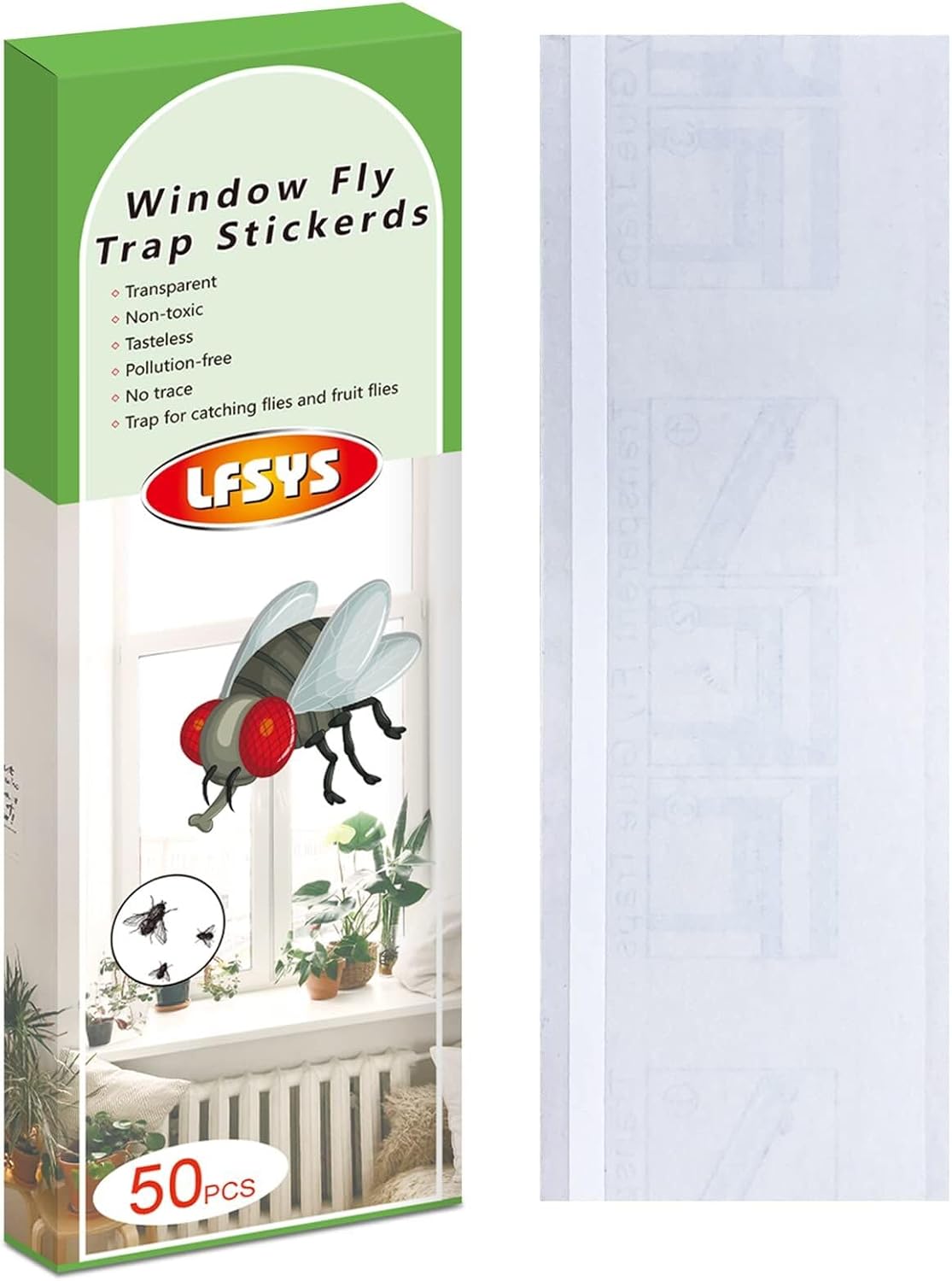
LFSYS Window Fly Traps — 50 Disposable Clear Sticky Strips
| Unit Count | 50 Count |
|---|---|
| Target Species | Fly |
| Power Source | manual |
| Material Type | Paper |
These LFSYS window fly traps are clear adhesive paper strips meant to stick to windows and other smooth surfaces to capture flies, gnats, and other small flying insects. You peel the backing and press the strip to a clean window or glass door where light and air movement attract flying pests; insects land on the transparent surface and become trapped in the glue. The kit includes 50 individual strips, which makes it easy to place traps in multiple rooms or replace them frequently during heavy infestations. The material is thin paper with a transparent finish so they are less visible on glass, and the manufacturer says the adhesive removes cleanly without leaving residue. There are no chemicals or power required, so the traps are safe around children and pets but rely entirely on contact to work. That means they are best for low to moderate indoor problems and require regular replacement when coated in insects or dust. For someone who wants a simple, low-maintenance, non-toxic option to reduce indoor flies, these deliver consistent, predictable results; for severe infestations a powered or baited trap will be faster and require less placement effort.
Best for: Buyers who prioritize a reliable, low-risk indoor solution that can be deployed widely and replaced often to keep fly activity down without chemicals.
Less Ideal for: People dealing with large, persistent infestations or who need an outdoor or powered trapping solution should consider alternatives.
- Large 50-count pack for coverage across multiple rooms or frequent replacement
- Transparent paper design is less noticeable on windows and preserves light
- Non-toxic, manual design is safe to use around children and pets
- Adhesive is formulated to trap small flying insects effectively and is reported to remove cleanly
- No attractant or bait included so effectiveness depends on insect traffic and placement
- Paper strips can become dirty or lose tack in humid or dusty environments
- Not suitable as a standalone solution for heavy infestations or outdoor use
Verdict: A simple, non-toxic pack of 50 clear sticky window strips that reliably reduces small indoor fly problems when placed where insects land.
Choosing the Right Window Fly Trap: Key Factors to Consider
Trap Placement and Window Fit
A window-mounted trap only works if it sits where flies naturally enter or rest. Measure the width and depth of your window frame before choosing a model, and think about height relative to counters or plants. A trap placed too high or too low can miss the traffic zone and reduce capture rates.
Window frames vary by material and style. Some traps attach with adhesive strips, others use clips or tension mounts. Adhesive options can be convenient but may not hold on textured frames; clips and tension mounts need enough frame depth to grip securely. Consider whether you want a trap that can be moved seasonally between windows or one you intend to leave in place for months.
Attractant Type and Longevity
Different traps rely on visual cues, food-based lures, or light attraction. Food or scent attractants are effective for house flies that seek fermenting material, but they require periodic replacement. Visual traps that mimic dark entry holes or use reflective surfaces can work without consumables, though capture rates can vary with light conditions.
Think about how often you are willing to replace bait. If you prefer low-maintenance solutions, choose a trap with long-lasting attractant or a passive capture design. Also consider whether attractants release odors you will notice indoors; some baits can be noticeable in small rooms.
Ease of Cleaning and Waste Containment
Once flies are trapped you still need to handle the device without creating a mess. Traps that isolate captured insects in a sealed chamber or disposable cartridge reduce exposure and make cleanup straightforward. Designs requiring disassembly over a sink or careful tapping to remove bodies are more time-consuming and can leave residues on glass or sills.
Evaluate whether replacement components are readily available and simple to swap. For reusable traps, look for smooth internal surfaces and minimal crevices so dead insects and residue do not accumulate. Simple, tool-free cleaning is a big advantage for busy households.
Visibility and Indoor Impact
A trap mounted on a frequently used window should be visually unobtrusive. Clear or slimline profiles blend into window glass better than bulky boxes. Consider the sightlines from the kitchen table or living room sofa-some gardeners and home users prefer traps that conceal the catch to avoid drawing attention.
Noise and light emission also affect indoor comfort. Passive traps are silent. Battery-powered or light-based units may emit low-level noise or glow at night, which can be distracting near bedrooms. Choose a design that matches how visible or audible you want the device to be in daily life.
Material Durability and Indoor Conditions
Materials matter even indoors. Traps placed near sunny windows or humid kitchens should resist fading, warping, and corrosion. Plastics that yellow quickly or adhesives that fail in humidity will reduce the useful life of a device. Look for UV-stable plastics and corrosion-resistant fasteners when possible.
Also consider components that contact the window glass. Soft pads or rubberized clips protect finishes and reduce the risk of scratching. A trap intended for long-term use should maintain its fit and function through temperature swings and routine cleaning.
Safety and Non-Toxic Operation
Many homeowners choose window fly traps to avoid insecticide sprays inside living spaces. If you want a non-toxic approach, confirm that the design relies on mechanical capture, sticky surfaces, or nonvolatile baits rather than airborne chemicals. Sticky traps are effective but can be hazardous if curious pets or children have access to them.
Check how a trap contains captured insects and whether it prevents accidental contact with adhesive or bait. Child-resistant covers and secure mounting reduce risks. If you have pets that groom near windows, avoid exposed sticky panels and favor enclosed catch chambers.
Window Styles That Work Best With Mounted Traps
Not all window types accept the same mounting methods. Sliding sash and single-hung windows provide a stable upper or lower frame for clips and tension mounts. Casement windows with narrow frames may require adhesive attachments or slimline designs that sit on the glass.
Patio doors and large fixed panes can accommodate bigger traps or multiple small units spaced where insects gather. If you rent or prefer not to leave adhesive residue, choose traps that use removable clips or rest on the sill without permanent attachments.
- Measure frame depth before selecting clip- or tension-mounted traps
- Consider temporary adhesive strips for seasonal placement
- Large panes may benefit from multiple small traps rather than one oversized unit
How Light and Airflow Affect Trap Performance
Flies are often drawn to light and to air currents that carry food odors. A trap on a bright window can be more attractive during the day, while traps facing drafty openings may intercept insects moving with breezes. Position traps where airflow carries kitchen or compost odors toward the device rather than away.
Avoid placing light-based traps where they compete with bright outdoor daylight, because their visual lure becomes less distinctive. In shaded rooms a low-glow light can increase captures without being overly bright.
- Place traps downwind of odor sources like trash or compost
- Avoid direct sunlight for light-based traps during peak daylight hours
- In still air, choose scent-based attractants to draw flies toward the trap
Seasonal Use and Storage Tips
Fly pressure changes through the year. In many regions the highest indoor activity occurs late spring through early fall. Seasonal traps that mount with temporary adhesive or clips let you remove and store the device when flies are uncommon.
For traps with replaceable baits or cartridges, store extra supplies in a cool, dry place to preserve effectiveness. Before storing reusable traps, clean them and allow them to dry fully to prevent mold or odors from developing in storage.
- Remove baited traps before long periods of inactivity and clean before storage
- Label replacement dates on cartridges to keep a regular maintenance schedule
- Use spare adhesive strips or mounting hardware to refresh seasonal units
Placement Near Plants and Food Prep Areas
If you keep window-side plants or prepare food near a window, place traps to protect those areas without interfering with daily use. Position a trap high enough that it does not drop debris or sticky residues onto plant pots or countertops.
Keep a modest buffer between traps and edible herbs to avoid attracting flies directly to food sources. A well-placed trap will divert insects away from the prep zone rather than concentrating them there.
- Mount traps slightly off to the side of food prep windows
- Avoid placing sticky-type traps directly above potted plants
- Check traps daily during peak seasons to prevent overflow or mess
Discreet Solutions for Living Areas
Living rooms and bedrooms require traps that are quiet and visually low-key. Clear-front traps or slimline profiles blend with glass and reduce the emotional impact of visible catches. Battery-free options avoid humming or intermittent noises that can disturb quiet spaces.
If aesthetics are important, choose a model with an enclosed catch and neutral colors. Some traps can be mounted on the lower frame away from direct sightlines while still intercepting insects effectively.
- Prioritize sealed catch chambers in living areas
- Use neutral tones and clear plastic to minimize visual disruption
- Consider battery-free or silent models for bedrooms
How We Chose the Best Window Fly Trap
To assemble this list we applied practical, garden-and-home-focused filters that reflect how window fly traps perform in real indoor settings. We prioritized capture effectiveness in typical household conditions, considering trap entry design, attractant type, and airflow patterns that influence fly behavior. Installation flexibility was a key filter: models that work on common window sizes, different frame materials, or with minimal tools scored higher. We tested maintenance factors conceptually, favoring designs that simplify emptying, cleaning, and replacing attractants without creating residue on window sills. Durability and materials were evaluated for indoor longevity and resistance to sunlight or condensation near windows. Noise and visual impact were considered, since traps used on living-room or kitchen windows should not be disruptive. We excluded devices intended solely for outdoor use, insect zappers aimed at broad-spectrum pests, and traps that require complex wiring or permanent window modifications. The final picks balance capture rate, installation ease, maintenance, and discreet operation.
FAQ
Are window fly traps safe to use around pets and children?
Often they are safe, but it depends on the design. Enclosed capture chambers and sealed cartridges reduce accidental contact. Sticky panels can pose a risk to curious pets and should be placed out of reach or avoided if you have small children or animals.
How long do attractant baits typically last?
It usually depends on the attractant type and environmental conditions. Food-based or scent cartridges often last several weeks under normal indoor conditions, while passive visual or light-based lures can remain effective longer without replacement.
Will a window trap keep all flies out of my house?
No single trap will eliminate every fly, but placing traps at primary entry points and near odor sources can significantly reduce indoor populations. Combining traps with good sanitation and screened openings yields the best results.
Can I use a window trap on any type of window?
Many traps work on common window styles, but not all mounting methods fit every frame. Check attachment requirements for narrow casement frames, sliding windows, or heavy-duty sills before buying. Removable clips or tension mounts increase compatibility.
How often should I check and empty a window fly trap?
Check traps at least once a week during peak fly season to empty and refresh baits as needed. More frequent checks may be necessary in high-traffic kitchens or during warm weather when capture rates climb.
Final Verdict
Choose a window fly trap that matches how you use the room and how much maintenance you want to do. Prioritize placement and mounting compatibility first, then select an attractant strategy that fits your tolerance for bait replacement and indoor odors. If discreet appearance matters, favor enclosed catch designs and slim profiles. Balancing capture effectiveness with easy cleaning will give the most practical results for daily living. Focus on a trap that fits your window type and maintenance habits so you reduce indoor flies with minimal fuss.
