

Note: This article contains affiliate links. If you click on these links and make a purchase, I may earn a small commission at no extra cost to you. This helps support my research and content. Read my full affiliate disclosure here.
Spring feeding sets the tone for the growing season on Zoysia lawns. The right spring fertilizer encourages early green-up, builds carbohydrate reserves, and supports dense, weed-resistant turf without forcing excessive top growth. This guide covers our six shortlisted Zoysia spring fertilizers that are appropriate for home lawns and larger properties. We evaluated options across nutrient formula, release profile, and application ease so you can match a product to your mowing, irrigation, and turf goals. Read on to compare how feed strength, longevity, and turf health considerations differ between choices.
Top Picks at a Glance
| Best Overall The best all-around choice for most situations | The Andersons Professional PGF Complete 16-4-8 Granular Fertilizer with Humic (40 lb) |  |
| Best Quality Built to a higher standard if you want something more solid | The Andersons PGF Balanced 10-10-10 Granular Fertilizer (5,000 sq ft) | 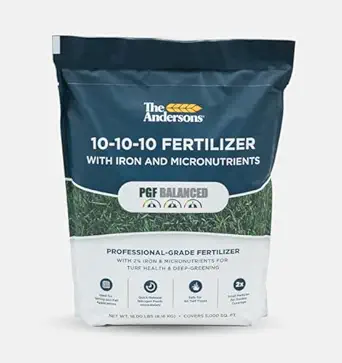 |
| Best Value The sweet spot between price and what you get | Scotts Turf Builder Lawn Food, 37.5 lb. |  |
| Best Budget The cheapest option that still gets the job done reliably | GreenView Lawn Food 22-0-4, 16 lb (covers 5,000 sq. ft.) |  |
| Highest Rated A top-rated pick with lots of positive feedback | Espoma Turf‑Tone Lawn Starter Organic Fertilizer, 30 lb |  |
| Most Popular A crowd favorite that many people choose with confidence | Scotts Turf Builder Lawn Food, 12.5 lb |  |
The Andersons Professional PGF Complete 16-4-8 Granular Fertilizer with Humic (40 lb)

| Item Form | Granules |
|---|---|
| Specific Uses For Product | Lawn Care |
| Target Species | lawn grasses |
| Mixing Ratio | 16-4-8 |
| Coverage | 40 |
This granular 16-4-8 fertilizer is formulated to give lawns both an immediate nitrogen boost and sustained feeding for up to eight weeks, making it well suited for spring applications on warm-season grasses like zoysia. The product spreads evenly thanks to fine particles and includes iron and micronutrients plus Humic DG to support color, root health, and nutrient uptake. Typical use is broadcast spreading followed by watering to activate the granules; the 40 lb bag covers multiple applications for a medium to large lawn. Practical benefits include visible greening from iron, longer-lasting nitrogen so you fertilize less often, and improved soil biology from the humic component. Important limitations are that it is a synthetic granular formula that requires careful application rate to avoid overfeeding, and it is not labeled for sale in California. Also take safety warnings seriously because it can irritate skin and eyes on contact.
Best for: Homeowners looking for a reliable spring fertilizer that provides both immediate greening and extended feeding for warm-season lawns who prefer a single product to cover several weeks of growth.
Less Ideal for: Gardeners who want organic-only products or those who need a liquid or quick-dissolve formulation for spot treatments should consider other options.
- Balanced 16-4-8 analysis with both quick- and slow-release nitrogen for immediate color and extended feeding
- Includes iron and micronutrients to improve turf color and vigor
- Humic DG included to aid nutrient uptake and soil health
- Super-fine granules promote even distribution during spreading
- Not labeled for sale in California
- Can cause skin, respiratory, and eye irritation if handled without protection
Verdict: A convenient, balanced spring fertilizer that delivers immediate greening and up to eight weeks of sustained nutrition for zoysia and other warm-season lawns.
The Andersons PGF Balanced 10-10-10 Granular Fertilizer (5,000 sq ft)

| Item Form | Granules |
|---|---|
| Application Method | spreader |
| Coverage | 5000 square feet |
| Mixing Ratio | 10-10-10 |
| Target Species | Lawns and Gardens |
The Andersons PGF Balanced 10-10-10 is a professional-grade granular fertilizer made with unusually fine particles so each application covers more evenly than standard pebble-sized granules. It is applied with a spreader across lawns, gardens, flower beds, or worked into soil when planting, and the small particle size helps reduce patchy feeding that can be an issue on dense grass types like zoysia. The formula is quick-release nitrogen combined with balanced phosphorus and potassium plus micronutrients and 2% iron for deeper greening, which makes it useful for spring applications when you want vigorous, even spring green-up. One 18 lb bag covers up to 5,000 sq ft and the manufacturer recommends mowing first, applying to dry foliage, sweeping off paved areas, and watering in. Limitations are that the nutrients are quick-release only, so they do not provide the longer-term feeding of slow-release blends, and iron can stain driveways if not swept away before watering.
Best for: Homeowners and turf-focused gardeners who prioritize rapid, even spring green-up on warm-season lawns and want a professional-style granular product that reduces patchy feeding.
Less Ideal for: Anyone seeking a slow-release, low-maintenance feeding program or users who prefer liquid or organic fertilizers for continuous nutrient release.
- Very fine particle size for more uniform coverage and reduced patchiness
- Balanced 10-10-10 formula supplies immediate nutrients across N-P-K plus micronutrients
- Includes 2% iron for enhanced greening of turf
- Covers up to 5,000 sq ft from a single 18 lb bag when applied as directed
- Quick-release formulation does not provide extended feeding over weeks or months
- Contains iron that can stain paved surfaces if not cleaned off
Verdict: Choose this for fast, uniform spring green-up on zoysia and other warm-season lawns when you want professional-style coverage and immediate results.
Scotts Turf Builder Lawn Food, 37.5 lb.

| Item Form | Granules |
|---|---|
| Specific Uses For Product | Lawn |
| Coverage | 15000 |
| Mixing Ratio | 32:0:4 |
Scotts Turf Builder Lawn Food is a granular, all-purpose lawn fertilizer formulated to thicken and green lawns while building deeper roots. It is used by broadcasting with a spreader or dropping with a drop spreader; Scotts gives specific spreader settings for easy, repeatable application. The bag covers a large area so it is convenient for whole-yard spring feeding routines. Practical benefits include improved root strength and better nutrient and water uptake compared with unfed turf, plus flexible timing since it can be applied to wet or dry grass and lightly watered in for faster greening. The product is pesticide-free and intended for any grass type, so it can fit into a seasonal program for warm-season grasses like Zoysia. Limitations are that it is a straight lawn food without weed control or insect ingredients, so you will need separate products for weeds or pests, and handling a 37.5 lb bag can be bulky for small yards or single-application needs.
Best for: Homeowners who want a straightforward, high-coverage spring fertilizer to strengthen and green their Zoysia lawn as part of a planned feeding routine.
Less Ideal for: Gardners who need one-step weed and feed or combined pest control solutions or those with very small lawns who prefer smaller package sizes.
- Covers up to 15,000 sq. ft. from one 37.5 lb. bag
- Formulated to build stronger roots and improve nutrient uptake
- Can be applied to wet or dry lawns and used with common spreaders
- Pesticide-free lawn food suitable for any grass type
- Does not include weed or insect control so additional products may be required
- Large bag size may be awkward for small properties or single applications
Verdict: A simple, high-coverage lawn food that reliably builds root strength and greens Zoysia when used as part of a seasonal feeding plan.
GreenView Lawn Food 22-0-4, 16 lb (covers 5,000 sq. ft.)

| NPK | 22-0-4 |
|---|---|
| Form | Granules |
| Coverage | 5,000 sq. ft. |
| Application | Broadcast or drop spreader |
| Feeding duration | Up to 8 weeks |
GreenView Lawn Food is a granular 22-0-4 fertilizer that combines readily available and controlled-release nitrogen to promote root development and a faster spring green-up. It is applied with a broadcast or drop spreader and is intended to restore soil nutrients, improve water retention, and help turf withstand heat and drought. The MESA controlled-release nitrogen helps deliver steady feeding for up to eight weeks so you get consistent color without a big surge in growth. It contains zero phosphate and is formulated for routine spring or fall applications rather than starter use. Practical benefits include broad coverage from one 16 lb bag, easier scheduling because of extended feeding, and reduced risk of overflow growth after application. Limitations are that the formula is focused on nitrogen and potassium only, so it is not a starter fertilizer for new lawns that need phosphorus, and you must use a spreader for even results rather than hand spreading.
Best for: Homeowners who want a low-maintenance spring fertilizer to improve established warm-season lawns like zoysia and prefer a product that feeds steadily so they can space applications further apart.
Less Ideal for: People establishing new lawns or overseeding who need a starter fertilizer with phosphorus, and gardeners who need a multi-nutrient formula tailored to a soil test.
- Controlled-release MESA nitrogen provides up to 8 weeks of steady feeding
- 22-0-4 formulation supports root development and drought resilience
- Designed for broadcast or drop spreader application for uniform coverage
- Zero phosphate formulation helps avoid excess phosphorus runoff
- Not suitable as a starter fertilizer for new lawns since it contains no phosphorus
- Single bag covers 5,000 sq. ft. which may require multiple bags for larger yards
Verdict: A straightforward, controlled-release 22-0-4 lawn food that delivers steady spring feeding for established zoysia yards with minimal fuss.
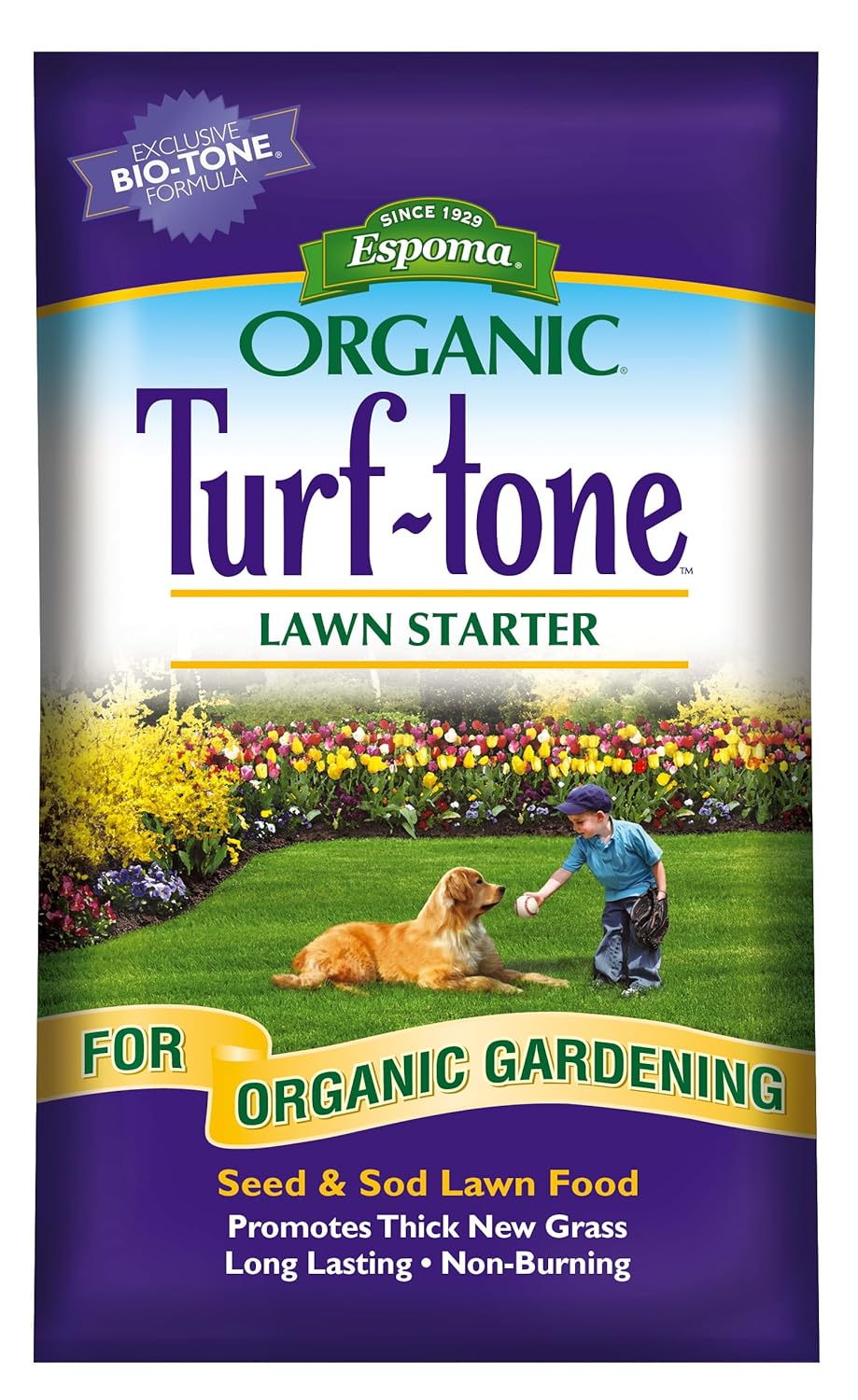
Espoma Turf‑Tone Lawn Starter Organic Fertilizer, 30 lb
| Item Form | Granules |
|---|---|
| Application Method | Apply with a drop or broadcast spreader. |
| Target Species | Lawn Grass |
| Mixing Ratio | 4:6:3 |
Espoma Turf-Tone Lawn Starter is an organic granular fertilizer designed to help establish new lawns, overseeded areas, and fresh sod. It supplies a 4-6-3 nutrient analysis with long-lasting nitrogen, phosphorus for root development, and Espoma's Bio-Tone biological additives to support soil health. You apply it with a drop or broadcast spreader; one 30 lb bag covers up to about 3,000 sq ft, making it convenient for small to medium spring zoysia projects. The pellet form is easy to spread evenly and the organic ingredients such as feather meal and poultry manure release nutrients more slowly than synthetic starters, which reduces burn risk and supports steady root growth. That slower release also means results are not instant and repeated feeding may be needed for rapid green-up. For gardeners who prioritize natural inputs and soil biology, this product balances effectiveness and gentleness, but if you need a quick, high-soluble nitrogen boost for immediate greening, a synthetic starter will act faster.
Best for: Gardeners who want a reliable, natural starter fertilizer for establishing or overseeding zoysia and who prioritize steady root development and improved soil biology.
Less Ideal for: Lawns that need an immediate, visible green-up or short-term nitrogen correction after winter should consider a fast-acting synthetic starter instead.
- Organic formula with Bio-Tone beneficial microbes to support soil biology
- Granular form spreads easily with drop or broadcast spreaders for even application
- Contains phosphorus-rich analysis to encourage stronger root establishment
- One 30 lb bag covers up to 3,000 sq ft, suitable for small to medium lawns
- Slow-release nutrient delivery provides gentler results but not rapid green-up
- Not formulated for immediate high nitrogen correction when quick color is needed
Verdict: Choose this organic starter when you want a dependable, soil‑friendly fertilizer to establish zoysia with steady root development rather than instant greening.
Scotts Turf Builder Lawn Food, 12.5 lb

| Item Form | Powder |
|---|---|
| Specific Uses For Product | Lawn |
| Coverage | 5,000 sq. ft. |
| Mixing Ratio | 32:0:4 |
Scotts Turf Builder Lawn Food is a granular fertilizer intended to thicken and green lawns while building stronger roots. It is applied with a broadcast, drop, or handheld spreader to a wet or dry lawn and can be watered in for faster results. The bag's formulation is designed for use on any grass type, and the package lists spreader settings to simplify application. In practice this product supplies routine nutrition that helps grass recover from stress and improves nutrient and water uptake over time. It is pesticide-free, so it focuses on feeding rather than weed or insect control. For spring use on Zoysia, it will support green-up and root development when used as part of a seasonal program. Limitations to expect are that one 12.5 lb bag only covers about 5,000 sq. ft., so larger lawns require multiple bags, and this product does not control weeds or pests, so plan separate treatments if needed.
Best for: Buyers looking for a reliable, easy-to-apply spring feed to improve Zoysia green-up and root strength who prefer established, well-reviewed lawn-care basics.
Less Ideal for: If you need a combined fertilizer plus weed or pest control or you manage very large lawns, choose a product with integrated weed/insect control or larger coverage options.
- Designed for use on all grass types including warm-season varieties like Zoysia
- Provides nutrients that promote thicker blades and deeper roots
- Can be applied to wet or dry lawns and has recommended spreader settings for easier, even coverage
- Does not include weed or insect control so additional products may be required
- 12.5 lb bag only covers about 5,000 sq. ft., which is small for larger properties
Verdict: A straightforward, well-known spring feed that reliably greens and strengthens Zoysia when used as part of a seasonal fertilizing plan.
Choosing the Right Zoysia Spring Fertilizer: Key Factors to Consider
Nitrogen Release Profile
How quickly nitrogen becomes available matters for Zoysia in spring. Rapid-release nitrogen produces fast color but can stimulate soft, lush growth that is vulnerable to stress if a late cool snap or drought follows. Slow-release or controlled-release nitrogen provides steadier uptake and supports root carbohydrate storage, which helps Zoysia survive summer heat. Understanding the percentage of available versus slow-release nitrogen on the label helps you predict green-up timing and mowing frequency.
Match the release profile to your maintenance style. If you prefer minimal mowing and a gradual color change, choose a higher proportion of slow-release N. If immediate aesthetics are essential for a short window, a product with some quick-release N blended with slow-release sources may be appropriate.
Nutrient Ratio and Secondary Nutrients
The N-P-K numbers show the balance of primary nutrients and should align with soil test recommendations. Zoysia often benefits from a fertilizer that emphasizes nitrogen in spring, but phosphorus and potassium needs vary by soil. Overapplying phosphorus offers no turf benefit if soil tests show adequate levels.
Micronutrients like iron and manganese can darken turf without excessive growth and are sometimes included for visual improvement. Consider blends that include these elements only when soil tests or visible chlorosis indicate a deficiency.
Salt Index and Turf Safety
High salt fertilizers increase the risk of root burn, especially when dry weather follows application. Zoysia tolerates heat well but can suffer when fertilizers with a high soluble salt content are applied to cool, slowly drying turf. Look for products with lower salt index ratings or those labeled as safe for turf application at recommended rates.
Applying correctly and irrigating after application when appropriate reduces burn risk. Follow label directions for maximum single-application rates to protect crown and root tissues.
Application Method and Spread Pattern
How a product is applied affects evenness of coverage and the likelihood of streaks or localized overfeeding. Granular fertilizers should be compatible with standard broadcast or drop spreaders and have a consistent granule size for uniform distribution. Liquid or soluble products require compatible sprayers and attention to mixing rates.
Consider whether you will apply yourself or hire a service. Ease of calibration, clear spreader settings, and straightforward mixing instructions reduce the chance of misapplication that can harm turf or waste product.
Longevity and Reapplication Frequency
Products vary in how long they supply usable nitrogen. A longer-lasting fertilizer reduces the number of spring applications needed, which saves time and reduces mower disruption. However, very long-release formulas might not provide the early-season energy Zoysia needs in cooler springs.
Plan applications around expected growth cycles for your region. If you prefer a single spring feeding, choose a product with a documented multi-week release profile. If you want staged feeding, pick a shorter-duration product and schedule follow-ups.
Environmental Impact and Runoff Risk
Fertilizers used in spring coincide with wet weather in many regions, raising runoff risks. Slow-release nitrogen and products with lower soluble phosphorus reduce the chance of nutrient loss to waterways. Correct timing and avoiding application before heavy rain lowers environmental impact.
Read label restrictions about buffer zones near water and adopt best practices like leaving grass clippings to help recycle nutrients and reduce the total applied fertilizer.
Timing Spring Applications for Zoysia
Zoysia typically breaks dormancy later than cool-season grasses. Wait until soil temperatures consistently reach about 55 to 60 degrees Fahrenheit at the 2 to 4 inch depth for reliable green-up. Applying fertilizer too early can force weak top growth with little root support.
If you want an early green lawn in a mild spring, choose a product with some quick-acting nitrogen but pair it with light irrigation to avoid stress. Otherwise, a slow-release formula timed for initial green-up offers steadier development and reduces the need for repeat feeding.
- Check soil temperature rather than calendar date when possible
- Avoid heavy feeding before expected heavy rains
- Apply lighter rates if you need to feed earlier than usual
Calibrating Your Spreader and Application Rates
Even coverage prevents streaks and localized burn. Before applying a granular fertilizer, test your spreader over a small area to confirm settings and calculate applied pounds per 1,000 square feet. For liquids, follow mixing instructions precisely and runer calibration tests if the sprayer has adjustable output.
Adjust rates by turf condition and soil test results rather than using blanket recommendations. If you have uneven soil fertility, consider targeted feeding in weaker areas.
- Do a dry-run with empty granules to confirm spread pattern
- Follow the label for pounds per 1,000 sq ft and translate to your spreader setting
- Overlap passes slightly to avoid missed strips but do not double-apply
Irrigation After Application
Watering after applying fertilizer reduces burn risk and helps move nutrients into the root zone. For soluble or quick-release products, light irrigation within 24 hours is usually recommended. For most slow-release granules, a short irrigation or expected rainfall will suffice to start nutrient availability.
Avoid applying before heavy rain that could wash nutrients away. Aim for a gentle, even soak that moistens the upper root zone without causing runoff.
- Apply 0.1 to 0.25 inches of water after granular fertilizer unless label directs otherwise
- For liquid feeds, follow the product's irrigation timing guidance
- Skip irrigation if heavy rain is forecast within 24 hours
Dealing With Thin or Patchy Areas
Spring feeding improves vigor, but thin or bare patches usually indicate underlying issues such as soil compaction, thatch, or insufficient sunlight. Combine fertilizer selection with cultural fixes: core aeration, topdressing, and targeted overseeding or plugging where appropriate for Zoysia.
Use a lighter, more frequent feeding approach on recovering areas to encourage steady root development rather than a heavy single application that risks burn.
- Aerate compacted sections before feeding for better root access
- Use starter-style approaches only on newly seeded plugs or sod
- Match fertilizer strength to the recovery stage of the turf
Combining Fertilizer With Weed and Pest Plans
Spring is the season when both turf and weeds respond to nutrients. Avoid mixing herbicides into fertilizer applications unless the label explicitly permits tank mixing. Some pre-emergent herbicides are best applied before heavy nitrogen to maximize weed control without stressing turf.
If pests or disease are a concern, select a feeding approach that supports recovery and avoids pushing succulent growth that pests favor.
- Follow label rules for tank mixing or sequential applications
- Coordinate pre-emergent timing with expected green-up and fertilizer timing
- Consider cultural controls alongside chemical treatments to reduce reliance on pesticides
How We Chose the Best Zoysia Spring Fertilizer
We focused on attributes that affect how a spring feed behaves in established Zoysia turf rather than marketing claims. Key evaluation criteria included nutrient ratio and nitrogen release profile, because Zoysia reacts differently to quick-release versus slow-release nitrogen in spring. We checked granule uniformity and compatibility with common spreaders and sprayers to assess ease of application and even coverage. Salt index and sulfate content were considered since Zoysia is sensitive to burn when conditions are cool or dry. Longevity and expected feeding window were included to understand how often homeowners will need to reapply. We also looked at any turf-health supporting micronutrients and whether products are labeled for turf-safe use. We excluded products aimed solely at starter turf, overseeding mixes, or formulations intended for cool-season grasses. We did not include specialty blends only for fertilizing new sod or seed. The list favors options whose technical specs align with practical spring management for Zoysia: measured N-P-K and nitrogen release behavior, safe salt levels, and straightforward application instructions.
FAQ
When is the best time in spring to fertilize Zoysia?
Usually when soil temperatures consistently reach about 55 to 60 F at 2 to 4 inches. That timing encourages natural green-up and reduces the risk of stimulating weak top growth before roots are active.
Can I use a quick-release lawn fertilizer on Zoysia in spring?
You can, but quick-release products often produce rapid top growth and may increase mowing and stress risk. Blends that include slow-release nitrogen tend to give steadier development on Zoysia.
How much fertilizer should I apply per 1,000 square feet?
Follow the label rate based on the percent nitrogen and desired pounds of nitrogen per 1,000 sq ft. Many spring feeds supply 0.5 to 1.0 pound of actual nitrogen per application, but soil tests and local recommendations should guide the exact amount.
Do I need to water after applying spring fertilizer?
Light irrigation after application helps move nutrients into the root zone and reduces burn risk, especially for quick-release products. Avoid heavy irrigation that causes runoff and do not apply before a forecasted heavy rain.
Should I fertilize thin patches differently than the main lawn?
Yes. Thin or bare patches often need cultural repairs in addition to nutrients. Use gentler, staged feeding for recovering areas and address compaction, thatch, or shading that may be causing poor turf density.
Are slow-release fertilizers better for the environment?
Slow-release formulas reduce the chance of nutrient loss and runoff compared with highly soluble products, particularly when timed properly and applied at appropriate rates. They are generally a more forgiving choice in wet spring conditions.
Final Verdict
Prioritize a fertilizer whose nitrogen release pattern matches your timing and maintenance preferences. For many homeowners a blend with a majority of slow-release nitrogen gives steady green-up with lower stress and fewer repeat applications. Balance N-P-K with soil test results, protect turf by observing spreader settings and irrigation guidance, and address cultural issues for thin areas before expecting fertilizer alone to solve density problems. Decide based on whether you need immediate color or long-term steady feeding. Choosing the right spring fertilizer and applying it correctly will set Zoysia up to withstand summer heat and maintain a dense, healthy stand.
