
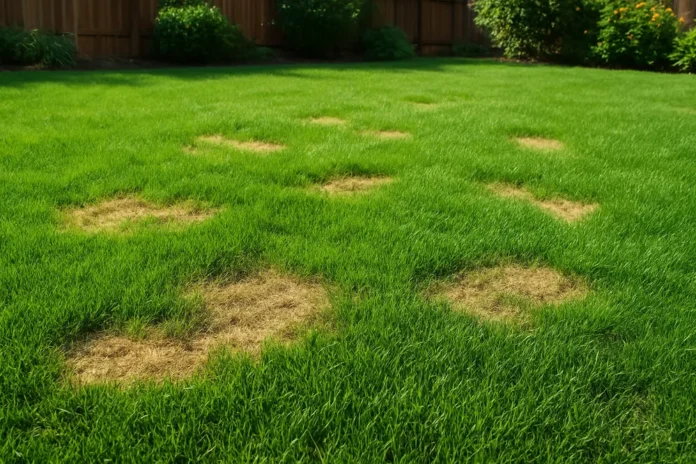
Brown spots in a lawn are usually caused by watering stress, pet urine, fungal disease, insect damage, fertilizer burn, or mower damage. The exact cause depends on the spot size, shape, color pattern, and how quickly the grass declined.
Seeing brown spots spread across your lawn can be frustrating, especially when the rest of the grass still looks green. In many cases, these patches are not caused by one single issue but by a mix of stress, damage, and growing conditions.
Some brown areas show up because the grass is too dry, while others are linked to pet urine, lawn disease, grub activity, compacted soil, or even a mower blade that is tearing the grass instead of cutting it cleanly. The pattern of the spots, the time of year, and how the grass looks around the edges can tell you a lot about the real cause.
The good news is that most lawn brown spots can be narrowed down with a few simple clues. Once you know what triggered the damage, you can usually stop it from spreading and help the turf fill back in.
What Brown Spots Usually Mean
Brown spots are a symptom, not a diagnosis. Grass turns brown when the leaf blades die back or the roots can no longer support active growth. That can happen from drought, heat, disease, chemical injury, insects, salt buildup, or physical damage.
Start by looking at the shape and size of the patch. Small round spots may suggest disease or pet urine. Larger irregular areas often point to watering problems, compaction, or buried construction debris. If the grass pulls up easily like a loose carpet, root-feeding grubs may be involved. If the blades look shredded and tan only at the tips, mowing damage is a better fit.
- Small circular spots often suggest pet urine or fungal disease.
- Large dry-looking patches often suggest underwatering, heat stress, or poor sprinkler coverage.
- Sharp-edged brown areas can point to fertilizer burn, spills, or chemical damage.
- Spots with a dark green ring around them are common with dog urine.
- Brown grass that lifts easily from the soil may be tied to grubs or root loss.
Watering Problems Are One of the Most Common Causes
Underwatering and Dry Spots
Grass that is not getting enough water often turns dull, bluish green first, then straw brown. In many yards, this does not happen evenly. Sprinkler heads may miss certain areas, slopes may dry out faster, and soil near sidewalks or driveways may heat up and lose moisture quickly.
Localized dry spots are especially common in summer. Thatch buildup, compacted soil, and sandy areas can all make water run off instead of soaking in. As a result, one part of the lawn browns out while nearby grass stays green.
Overwatering Can Also Create Brown Patches
Too much water sounds like it should prevent browning, but it often does the opposite. Constantly wet soil limits oxygen around the roots and encourages fungal diseases. Grass may first look pale or weak, then collapse into patchy brown areas.
- Footprints remain visible for a while after walking on the grass
- The soil is powdery dry several inches down
- Brown spots appear first in hot, exposed areas
- Sprinkler coverage is uneven or blocked
If overwatering is the issue, the lawn may feel soft or spongy, the soil may stay wet for long periods, and disease may show up at the same time. Deep, infrequent watering is usually healthier than light daily sprinkling.
Dog Urine and Pet Traffic Can Burn the Grass
Dog urine is a classic source of brown spots, especially in fenced backyards. The problem is not the acidity of the urine as much as the concentrated nitrogen salts. In small amounts, nitrogen can green up grass. In heavy repeated doses, it burns the blades and roots.
These spots are often round and may have a dark green ring around the outside. Female dogs often create more obvious spots because they tend to urinate in one place, but any dog can cause them.
Pet traffic adds another layer of stress. Repeated running, pacing, and turning over the same route compacts the soil and wears out the turf, which can leave brown areas that do not recover quickly.
- Round spots appear where the dog usually urinates
- The center is tan or brown but the border is extra green
- Damage is concentrated near gates, patios, or favorite play routes
- The same areas keep reappearing despite normal watering
Lawn Diseases Often Show Up as Brown Patches
Several turf diseases create brown spots, especially during warm, humid weather or when lawns stay damp overnight. Common examples include brown patch, dollar spot, and summer patch. The exact disease depends on your grass type, region, and weather conditions.
How Disease Spots Tend to Look
Disease-related spots are often circular or irregular and can spread fairly quickly. Some have smoky, dark, or water-soaked margins early on. Others begin as many small spots that merge into larger brown patches. In humid conditions, you may see a fine web-like growth in the morning.
Fungal problems are more likely when the lawn is heavily fertilized with nitrogen, mowed too low, watered late in the evening, or shaded so heavily that the grass never dries well.
- Brown patch is common in hot, humid weather and may create larger circular areas
- Dollar spot tends to form many smaller straw-colored spots
- Summer patch often appears during heat stress and may be tied to root decline
- Leaf spot diseases can start on blades before larger areas thin out
Not every diseased lawn needs fungicide, but improving airflow, adjusting watering, and avoiding excess nitrogen can make a big difference. Severely infected lawns may need a more targeted treatment plan based on the disease involved.
Mowing Damage Can Make Grass Look Brown Almost Overnight
A surprisingly common reason for brown-looking lawns is mowing with a dull blade. Instead of making a clean cut, the mower tears the grass tips. Those torn ends dry out and turn tan or brown, which gives the lawn a scorched look.
Scalping is another possibility. If the mower is set too low or the lawn has uneven high and low spots, the blade can remove too much leaf tissue in one pass. The crown of the plant may be exposed, and the area quickly turns brown in heat.
- Browning is concentrated at the tips of the blades rather than at the base
- The lawn looks ragged or frayed after mowing
- Damage follows wheel tracks, bumps, or high spots
- Recently cut grass browns within a day or two
Keeping mower blades sharp and following the one-third rule helps prevent this kind of stress. Removing more than one-third of the blade at once weakens the grass and makes it more vulnerable to drought and disease.
Fertilizer Burn and Chemical Injury Cause Sudden Brown Areas
If brown spots appear soon after fertilizing, fertilizer burn is a likely suspect. This happens when too much product lands in one spot or when fertilizer is applied to dry grass without enough water afterward. The excess salts draw moisture out of the turf and can damage roots.
Spreader overlap also causes striping or patchy browning. Liquid weed killers, gasoline spills, de-icing salts, and harsh cleaning runoff can produce similar symptoms. In these cases, the edges of the brown area often look more defined than they do with drought or disease.
- The damage appeared within days of fertilizing or spraying
- Brown spots line up with spreader passes or turns
- The pattern is sharp-edged rather than natural-looking
- A spill or concentrated product landed in one place
Mild fertilizer burn may grow out with time and steady watering. Severe burn can kill the grass completely and require reseeding or patch repair.
Insect Damage May Be Hiding Below the Surface
Brown spots are not always caused by what you can see above ground. Root-feeding insects, especially white grubs, can cause turf to wilt, thin, and die in patches. Chinch bugs can also create dry-looking brown areas, especially in sunny lawns during hot weather.
Clues That Insects Are Involved
Grub-damaged lawns often feel loose underfoot, and the turf may peel back easily because the roots are gone. You may also notice birds, raccoons, or skunks digging where they sense larvae. Chinch bug injury often starts in hot paved-edge areas and can look like drought at first.
- Grass pulls up easily with little root resistance
- Wildlife is digging in the lawn
- The lawn is brown despite adequate irrigation
- Damage expands during hot weather
Because drought stress and insect injury can look similar, it helps to inspect the soil and root zone before treating. Applying insect control without confirming the pest can waste time and money.
Soil Compaction, Thatch, and Poor Drainage Create Weak Areas
Sometimes the brown spots are really a soil problem showing up in the grass. Compacted soil reduces airflow and root growth, making the lawn more vulnerable to heat and drought. Thatch that is too thick can keep water from soaking in evenly, so the surface dries out while the root zone stays stressed.
Poor drainage creates a different issue. Water lingers, roots decline, and disease becomes more likely. Low spots, heavy clay, and areas disturbed by construction often develop chronic brown patches because the soil profile is no longer uniform.
- Brown spots return in the same location year after year
- The soil is hard and difficult to penetrate
- Water runs off quickly or puddles for a long time
- The lawn has heavy foot traffic or was installed over poor fill soil
How to Narrow Down the Cause in Your Yard
A few simple observations can usually eliminate several possibilities right away. Look at when the spots appeared, whether they are increasing in size, and what changed recently in the lawn care routine.
- Check the pattern. Round spots suggest urine or disease, while broad irregular areas point more toward watering or soil issues.
- Check the timing. Problems after fertilizing, mowing, or heat waves often have a direct link.
- Check the soil moisture. Dry, dusty soil suggests drought stress, while soggy soil suggests overwatering or poor drainage.
- Check the grass blades. Torn brown tips suggest mowing damage, while dead centers with green edges can suggest pet urine.
- Check the roots. If grass lifts easily, investigate grubs or severe root loss.
If the lawn has multiple stress factors at once, more than one cause may be contributing. For example, a compacted lawn can develop dry spots, then become more vulnerable to disease once watering is increased.
What Helps Brown Spots Recover
Grass can recover from many brown spot problems if the crown and roots are still alive. Recovery is fastest when you remove the original stress and support steady new growth. Dead patches, however, may need reseeding or sod repair.
- Adjust irrigation so the lawn gets deep, even moisture instead of frequent shallow watering
- Sharpen mower blades and avoid cutting the grass too short
- Rinse pet urine spots promptly when possible and rotate bathroom areas
- Use fertilizer carefully and water it in as directed
- Aerate compacted soil and reduce heavy traffic on damaged spots
- Treat confirmed insect or disease problems with the right product for the issue
- Overseed thin areas once the underlying cause is fixed
Recovery timing depends on grass type and season. Cool-season lawns often rebound best in early fall, while warm-season grasses recover more actively in late spring and summer. If the grass is completely dead, new seed or sod is usually the quickest way to restore the area.
When Brown Spots Mean You Need Extra Help
If the brown spots keep returning despite better watering and mowing, a deeper issue may be at work. Persistent disease, hidden soil problems, irrigation design flaws, or recurring insect pressure can make the lawn decline again and again.
It may be worth getting a closer diagnosis if large areas are affected, the roots are failing, or the patches spread rapidly in favorable weather. A local extension office, turf specialist, or lawn care professional can often identify regional problems more accurately than guesswork alone.
FAQ
Will Brown Lawn Spots Turn Green Again?
Sometimes. If the grass crown is still alive, the area may green up once watering, mowing, or other stress is corrected. If the grass is fully dead, the spot will need reseeding or sodding.
How Do I Know if Brown Spots Are From Dog Urine?
Dog urine spots are usually small to medium circles with a tan center and a darker green ring around the edge. They also tend to appear in the same pet-use areas repeatedly.
Can Overwatering Really Make Grass Brown?
Yes. Too much water can suffocate roots and encourage fungal disease, both of which can lead to patchy browning even when the lawn never seems dry.
Do Dull Mower Blades Cause Brown Grass?
Yes. Dull blades tear the grass rather than cutting it cleanly, and the damaged tips dry out and turn brown soon after mowing.
What Do Grub-damaged Brown Spots Look Like?
Grub damage often appears as thinning or browning patches that feel loose underfoot. The grass may peel up easily because the roots have been eaten.
Should I Water Brown Spots Every Day?
Usually no. Most lawns recover better from deep, thorough watering than from light daily sprinkling. Frequent shallow watering can worsen disease and weak root growth.
Can Fertilizer Cause Brown Spots in a Lawn?
Yes. Too much fertilizer, uneven spreader passes, or failing to water in certain products can burn the grass and leave brown patches or streaks.
When Should I Reseed Bare Brown Patches?
Reseed after the original problem is fixed and the season is right for your grass type. Early fall is usually best for cool-season lawns, while late spring to summer is better for warm-season grasses.
Need to fix patchy turf fast? Read our lawn repair and overseeding guide to choose the best seed, soil, and treatment plan for stubborn brown spots.
