

Note: This article contains affiliate links. If you click on these links and make a purchase, I may earn a small commission at no extra cost to you. This helps support my research and content. Read my full affiliate disclosure here.
Growing citrus in containers changes the rules compared with in-ground planting. You need a planter that keeps roots healthy, drains reliably, and is easy to move or protect in cold weather. In this guide we shortlisted the top container options that suit patio, balcony, and small-yard citrus growing. The picks that follow were evaluated for drainage, root volume, material durability, and ease of winter protection so you can pick a planter that matches your space and climate.
Top Picks at a Glance
| Best Overall The best all-around choice for most situations | Vego Garden 45‑Gallon Rolling Metal Planter with Locking Wheels |  |
| Best Quality Built to a higher standard if you want something more solid | Vego Garden Rolling Citrus Tree Planter Gen 3 — 30‑Gallon Self‑Watering Metal Pot with Wheels |  |
| Best Value The sweet spot between price and what you get | Vego Garden Rolling Metal Citrus Tree Planter Pot, 30 Gallon, with Wheels |  |
| Best Budget The cheapest option that still gets the job done reliably | RooTrimmer 16-inch Rolling Large Plant Pots (3-pack) |  |
| Highest Rated A top-rated pick with lots of positive feedback | Vego garden Classic Rolling Metal Raised Planter (1.75' Square) |  |
Vego Garden 45‑Gallon Rolling Metal Planter with Locking Wheels

| Capacity | 45 gallons |
|---|---|
| Material Type | Metal |
| Other Special Features of the Product | Drainage Hole, Portable, Weather Resistant |
| Included Components | Wheels |
| Indoor Outdoor Usage | Indoor, Outdoor |
This Vego Garden 45‑gallon rolling metal planter is built for growing larger container trees such as citrus, olives, and other patio specimens while still remaining mobile. The metal construction and reinforced frame give it a sturdy feel for season‑to‑season use, and the included heavy‑duty locking wheels let you move the planter on a porch or patio and lock it in place once positioned. It has factory drainage holes to avoid waterlogging and a 45‑gallon capacity that supports deeper root systems recommended for small to medium dwarf trees. Practical benefits include easy winter relocation of frost‑sensitive citrus, reliable stability when filled, and low maintenance corrosion resistance. Important limitations are the overall weight when filled—this is a large planter that becomes heavy once planted—and metal can heat up in full sun so position and soil choice matter for root temperature. Assembly and occasional touch‑up of finish may be needed to keep it looking its best outdoors.
Best for: Buyers who want a robust, long‑lasting container to grow citrus or other patio trees and who value the ability to roll the planter for seasonal relocation or positioning.
Less Ideal for: People who need an ultra‑lightweight or decorative planter for small annuals or who plan frequent moves of a fully planted container across rough terrain.
- Durable metal construction and reinforced frame for long service life
- Large 45‑gallon capacity suitable for small to medium container citrus trees
- Heavy‑duty locking wheels allow easy repositioning and secure placement
- Built‑in drainage holes reduce risk of overwatering and root rot
- Weather resistant finish helps outdoors use with minimal upkeep
- Becomes very heavy when filled, making long‑distance moves impractical
- Metal exterior can absorb heat in strong sun which may stress roots
Verdict: A heavy‑duty, mobile 45‑gallon metal planter that lets you grow and easily reposition dwarf citrus trees while providing reliable drainage and weather resistance.
Vego Garden Rolling Citrus Tree Planter Gen 3 — 30‑Gallon Self‑Watering Metal Pot with Wheels

| Capacity | 30 gallons |
|---|---|
| Material Type | Metal |
| Other Special Features of the Product | Self Watering |
| Mounting Type | Floor Standing |
| Indoor Outdoor Usage | Outdoor |
This Vego Garden Rolling Citrus Tree Planter is built for long‑term container fruit production by combining deep soil capacity, self‑watering convenience, and mobility. It functions as a 30‑gallon raised planter with an integrated reservoir and wicking system accessed through a fill tube and monitored by a water gauge, so you can keep root moisture steady without daily watering. Heavy‑duty locking caster wheels let you move a planted tree to follow sun or shelter it from frost without lifting, which makes seasonal management and repositioning simple. Constructed from coated steel with stainless hardware and a painted finish, the pot is intended to resist corrosion in outdoor use. Practical benefits include healthier root development for citrus and dwarf fruit trees, lower watering maintenance, and easier patio reconfiguration. Important limitations are that the metal shell will heat in full sun more than thicker insulated pots and the planter still requires occasional manual checks of soil and reservoir levels for best results. Assembly and occasional touch‑up of the finish may be needed over years of outdoor exposure.
Best for: Buyers who prioritize reliable fruit production and low‑maintenance watering for patio citrus trees and want a durable, movable container that supports long‑term root development.
Less Ideal for: Gardeners seeking lightweight or highly insulated planters for extreme heat sensitivity or those who prefer decorative materials like terracotta or resin for aesthetic reasons.
- Large 30‑gallon volume supports deep root growth for citrus and other small trees
- Integrated self‑watering reservoir with fill tube and water gauge reduces watering frequency
- Locking caster wheels make it easy to move heavy containers for seasonal light or protection
- Corrosion‑resistant coated steel and stainless hardware designed for outdoor durability
- Metal walls can heat up in full sun more than insulated or thick composite planters
- May require periodic assembly and occasional maintenance of painted finish
Verdict: If you want a durable, low‑maintenance container that promotes healthy root growth and lets you easily move patio citrus trees, this 30‑gallon self‑watering rolling planter is a top practical choice.
Vego Garden Rolling Metal Citrus Tree Planter Pot, 30 Gallon, with Wheels

| Capacity | 30 gallons |
|---|---|
| Material Type | Metal |
| Other Special Features of the Product | Drainage Hole, Portable, Weather Resistant |
| Included Components | Wheels |
| Indoor Outdoor Usage | Indoor, Outdoor |
This Vego Garden rolling planter is built for potted trees and larger container-grown shrubs that need durable support and mobility. The metal construction and robust frame give it a noticeably solid feel, while built-in drainage holes help prevent waterlogging for deeper-rooted trees. Included heavy-duty locking wheels make it practical to move plants indoors for frost protection or to reposition for sun, then lock the pot securely in place. The unit is offered in multiple capacities but this 30-gallon size is well matched to patio citrus, olives, and other dwarf or patio fruit trees that benefit from extra root volume. Expect a bit of weight when filled, so the wheels are essential for repositioning rather than constant frequent moves. Finish is unfinished metal so you may want to paint or protect it if you prefer a different look or extra corrosion resistance in harsh coastal climates. Overall it is a performance-focused planter for gardeners who prioritize longevity, drainage, and the ability to relocate container trees seasonally.
Best for: Gardeners growing container fruit or ornamental trees who value a durable, mobile planter that supports larger root volumes and seasonal relocation.
Less Ideal for: People who need a lightweight, decorative indoor pot or who plan to move filled containers frequently by hand should consider lighter or differently finished options.
- Sturdy metal construction and reinforced frame for long-term durability
- Heavy-duty locking wheels provide true mobility and secure positioning
- Built-in drainage holes prevent waterlogging for healthy root systems
- 30-gallon capacity gives ample root space for patio citrus and small fruit trees
- Unfinished metal finish may require additional coating for coastal or very wet climates
- Filled planter is heavy to move without using the wheels
Verdict: A rugged, wheel-equipped 30-gallon metal planter built for growers who want a long-lasting, movable container for patio fruit and ornamental trees.
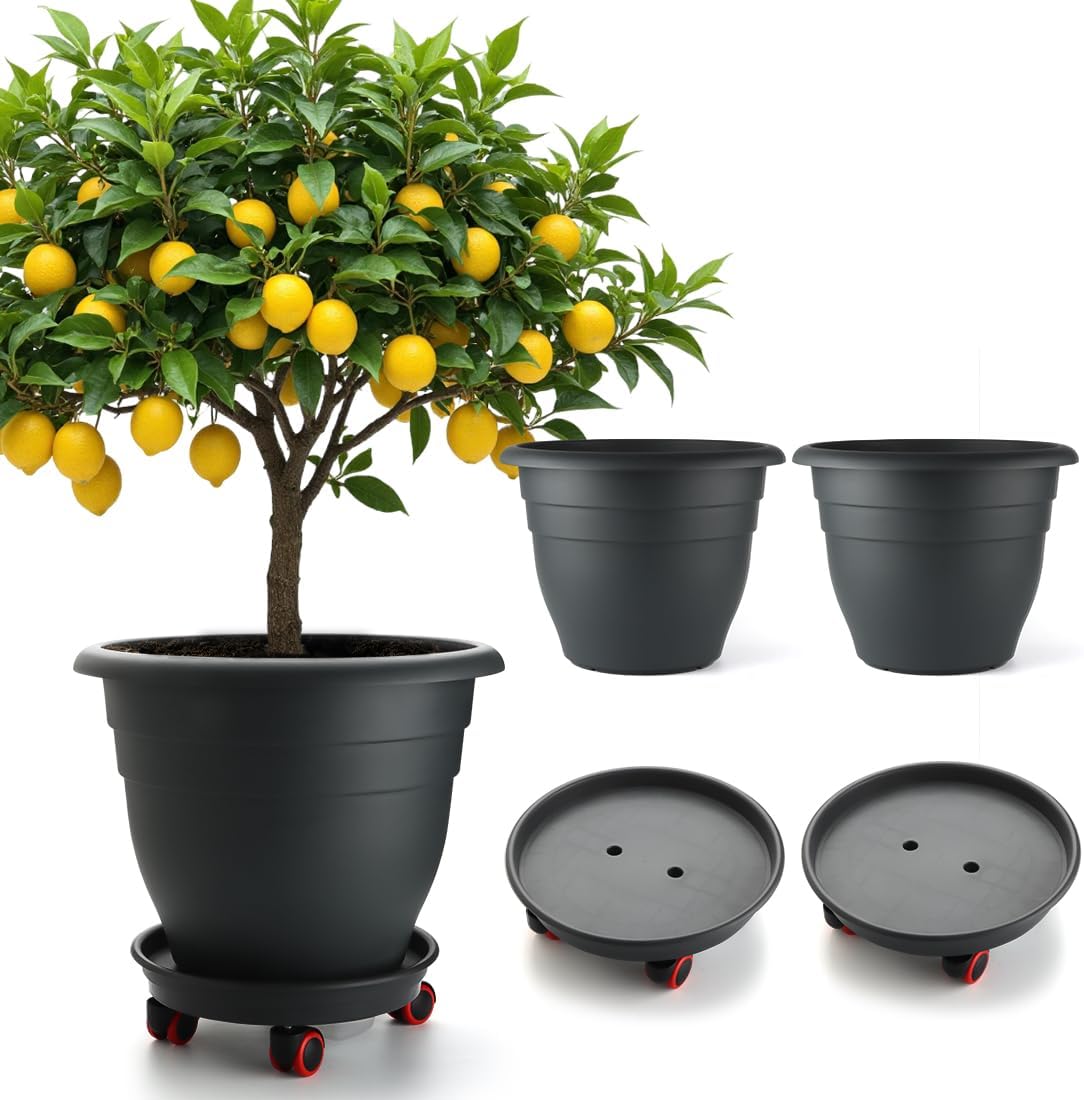
RooTrimmer 16-inch Rolling Large Plant Pots (3-pack)
| Capacity | 10.14 gallons |
|---|---|
| Number of Pieces | 3 |
| Material Type | Plastic |
| Other Special Features of the Product | Drainage Hole |
| Indoor Outdoor Usage | Outdoor |
These RooTrimmer planters are a 3-pack of 15.7-inch plastic pots made for medium to large plants such as citrus, fiddle-leaf figs, and palms. Each pot includes a removable saucer with heavy-duty rollers so you can move a loaded citrus tree across a patio or indoor floor without lifting it. Built-in drainage holes and the detachable catch tray let you remove excess water without disturbing the root ball, which helps prevent overwatering. The pots are made from thickened polypropylene with UV and frost resistance claimed, so they are usable outdoors through changing seasons and stack for compact storage when not in use. The practical limitations are that the set is plastic rather than terracotta or ceramic, so it offers less thermal mass for root temperature buffering, and the 10.14 gallon capacity may require repotting as a mature citrus tree grows. For buyers on a budget who want mobility and straightforward drainage, this kit delivers convenience; if you need maximum insulation or a much larger long-term container, consider heavier materials or a bigger pot size.
Best for: Budget-focused gardeners who want a practical container solution for young to mid-size citrus trees and value easy mobility and low-maintenance drainage.
Less Ideal for: Growers who need heavy, insulating pots or a single very large long-term container for a mature citrus tree should look at ceramic, concrete, or larger-capacity options.
- Includes three pots plus rolling saucers for easy movement
- Built-in drainage holes with removable catch trays for cleaner indoor use
- Lightweight, weather-resistant polypropylene suited for outdoor use and storage
- Plastic construction provides less thermal insulation than ceramic or clay
- 10.14 gallon capacity may be small for very mature citrus without future repotting
Verdict: If you want an affordable, mobile planter set that makes watering and moving young to mid-size citrus trees easy, this 3-pack is a practical buy.
Vego garden Classic Rolling Metal Raised Planter (1.75' Square)

| Material Type | Metal |
|---|---|
| Indoor Outdoor Usage | Indoor, Outdoor |
| Mounting Type | Floor Standing |
| Capacity | 6.9 cubic feet |
| Included Components | Wheels |
This Vego garden Classic rolling raised planter is a compact metal planter on wheels that makes mobile container gardening simple. It provides a deep planting space in a 1.75 foot square footprint, so you can give a potted citrus or other woody plant extra root room without a large footprint. The included wheels let you move the planter to follow sun or shelter it from storms and the metal construction and rust-resistant finish aim to hold up to outdoor use. It is typically filled with quality potting mix and positioned on a patio, balcony, or deck; drainage and winter protection should be planned because metal can conduct heat and cold. Assembly is straightforward and the square shape maximizes planting area in tight spots. If you need a durable, movable container for a small citrus tree or permanent planter for a paved space, this unit balances weather resistance and portability, though it is relatively small for larger mature trees and will need regular watering and winter insulation to protect roots and metal from extreme temperatures.
Best for: A gardener who wants a reliable, weather-resistant container that can be moved to optimize light and protection for a young citrus tree on a patio or balcony.
Less Ideal for: Those planning to grow a large, mature citrus tree long-term or gardeners who need very large soil volumes for big root systems.
- Wheels for easy repositioning to follow sun or avoid weather.
- Deep planting volume in a compact square footprint suitable for small spaces.
- Rust-resistant metal construction designed for outdoor durability.
- Compact size fits patios, balconies, decks, and other paved surfaces.
- 1.75 foot interior limits long-term growth of larger mature citrus without repotting or root pruning.
- Metal walls can heat or cool quickly so plants may need insulation or shade in extremes.
Verdict: A durable, rust-resistant mobile planter that lets you reliably grow and reposition a small citrus tree on patios and balconies.
Choosing the Right Planter for Citrus Tree: Key Factors to Consider
Drainage and Watering Control
Citrus need consistently moist but not waterlogged soil. A planter that drains well prevents root rot and fungal problems by letting excess water escape quickly. Look for multiple drain holes or a raised drainage platform inside the pot so water does not pool at the root crown.
Drainage design also affects watering frequency. Planters with shallow, wide profiles and thin walls dry faster, while deep, narrow containers retain moisture longer. Consider how often you can realistically water and whether you need a saucer or reservoir to catch run-off without rewetting the roots.
Root Volume and Shape
Citrus trees have taproot tendencies and do best when they have room to develop a stable root ball. A planter with generous root volume helps support vigorous growth and fruit production. Depth matters for anchoring the trunk, and width matters for lateral root spread that supports nutrient uptake.
Choose a pot shape that matches the mature size of the citrus variety you plan to grow. Smaller dwarf varieties can thrive in moderate-sized containers, while larger trees need much bigger volumes to avoid becoming root bound and to reduce the need for frequent repotting.
Material and UV/Frost Resistance
Materials behave differently in sun, heat, and freezing conditions. Terracotta breathes and looks classic but can crack in freezing weather. Plastic resists breakage and is lighter but may degrade under prolonged UV exposure. Composite and glazed ceramic options often strike a balance between durability and appearance.
Consider how the material affects soil temperature and moisture. Dark, dense materials heat up faster in sun, increasing water stress, while insulating materials buffer roots from temperature swings. Think about your climate and whether the container will remain outside year-round or be moved indoors during cold weather.
Portability and Manageability
A full planter with citrus can be heavy and awkward to move. If you need to protect plants from frost or reposition them for light, portability features like integrated handles, lightweight materials, or compatibility with plant caddies matter. Easy lifting also makes repotting and root inspections feasible.
Assess how you will move the planter when full and whether you have help or equipment. Consider modular systems that allow you to pot the tree in an inner liner that can be lifted out from an outer decorative shell to simplify handling.
Insulation and Winter Protection Options
Container-grown citrus are exposed to cold at the root line more than in-ground trees. Planters that accept removable insulation wraps, have double-wall construction, or allow space for added insulation reduce cold shock. Some designs also make it simple to lift the pot onto a sheltered surface or into a garage.
Think about how you'll overwinter the container. If you must keep trees outdoors in marginal climates, choose planters that provide a thermal buffer for roots and allow you to anchor or shelter the pot against wind and frost.
Maintenance and Repotting Access
Regular feeding, occasional repotting, and root inspection are part of successful container citrus care. A planter that offers easy access to the root ball, such as an inner liner or removable base plug, reduces the stress and mess of maintenance tasks. Wide rims or stable bases also simplify pruning and soil surface work.
Consider how often you plan to repot or change soil mix. If you prefer low-maintenance containers, choose options that minimize the need for frequent repotting while still allowing nutrient top-ups through fertilization.
Matching Planter Size to Citrus Variety
Not all citrus are the same size or root-habit. Dwarf lemon and lime varieties need much less root volume than full-size orange or grapefruit trees. Start by estimating the mature canopy spread and choose a pot that gives the roots room for at least two to three years of growth before repotting.
If you expect to grow a larger variety, err toward a wider pot rather than only increasing depth. Width supports lateral root expansion and improves stability once the tree fruits heavily.
- Dwarf citrus: moderate 10-18 inch diameter pots for young trees
- Medium citrus: 18-24 inch pots for extended growth before repotting
- Large citrus: 24+ inch diameter for substantial root volume and stability
Container Materials and How They Affect Roots
Common planter materials have clear trade-offs. Terracotta is breathable and attractive but can dry quickly and crack in freeze-thaw cycles. Plastic and fiberglass are lightweight and retain moisture but may heat up in strong sun. Glazed ceramic looks refined but adds weight and can chip if mishandled.
Think beyond aesthetics. Material choice influences how often you water, how you protect roots in winter, and whether the pot will need replacing after a few seasons.
- Terracotta: breathable, cooler in summer, vulnerable to frost
- Plastic/fiberglass: light and durable, may overheat in bright sun
- Glazed ceramic/composite: durable and attractive, heavier to move
Practical Drainage Solutions
Good drainage starts with holes in the base, but useful features go further. Internal raised platforms, detachable saucers, and optional reservoir layers let you tune moisture retention without drowning roots. If a decorative outer pot lacks drainage, plan for an inner liner with holes or use a false bottom that separates soil from standing water.
Also consider how easy it is to access and clear clogged drain holes. Built-in plugs are convenient for winterizing, while removable plugs let you temporarily retain water in very dry climates.
- Inner liners simplify watering control and repotting
- Raised drainage platforms prevent the root crown from sitting in water
- Saucers and trays should be sized to avoid rewetting the root zone
Mobility Tools and Simple Workarounds
If moving heavy containers is unavoidable, small investments pay off. Locking plant caddies, skid platforms, or even well-placed dollies reduce strain and let you reposition plants for light or frost protection. For very heavy pots, consider a planter with a removable inner pot or a lightweight outer shell.
Remember that moving a potted citrus can stress the tree if done too often. Plan movements ahead of weather events rather than making frequent adjustments.
- Use padded lifting straps when relocating large pots
- Choose plant caddies rated for the weight of a filled planter
- Consider planter liners for easier winter storage
Aesthetics, Placement, and Microclimates
Placement affects both the look and the health of container citrus. A sunny south- or west-facing spot delivers heat and light but may increase watering needs. Sheltered corners help protect against wind and can create a slightly warmer microclimate that benefits fruit set.
Select a planter style that fits your outdoor living area while also serving functional needs like stability and frost protection. Grouping pots together can create a shared microclimate and make moving multiple plants simpler.
- Reflective or light-colored pots reduce heat stress
- Group containers near walls for wind protection
- Elevate pots off cold ground with feet or platforms
How We Chose the Best Planter for Citrus Tree
We focused on features that directly affect citrus health and container management. Key evaluation criteria included drainage performance, root volume and shape, material durability in sun and frost, and portability for seasonal moves or protection. We also considered how easy planters are to insulate or lift for winter storage and how they affect watering frequency. Products were excluded if they lacked clear drainage options, produced overly shallow root zones, or were made from materials that degrade quickly outdoors. We filtered out planters that are impractical to move when filled or that restrict root growth in a way that harms fruiting. Our selection prioritizes containers that help maintain even moisture, allow routine fertilizing and repotting, and simplify winter protection for potted citrus. The final picks represent a range of sizes and materials suitable for different citrus varieties and garden situations. Each choice balances durability, root health, and real-world usability for gardeners growing citrus in containers.
FAQ
How often should I water a citrus tree in a container?
It depends on pot size, material, and weather. Smaller or terracotta pots dry faster and may need watering every few days in hot weather, while large plastic containers can go longer. Check soil moisture an inch or two below the surface and water when it feels slightly dry rather than on a fixed schedule.
Can I leave a citrus tree in the same planter indefinitely?
Usually no. Container citrus benefit from repotting every 2 to 4 years depending on growth rate and pot volume. Repotting refreshes soil nutrients and prevents root circling. If you prefer minimal repotting, start in a larger container to extend the interval.
How do I protect a potted citrus tree from winter cold?
Options include moving the planter to a sheltered spot, wrapping the pot with insulation, or lifting it off cold substrates. For severe cold, temporary indoor storage in a garage or unheated sunroom reduces root freeze risk while still providing cooler dormant conditions.
Is it better to use a saucer under a citrus planter?
A saucer can catch runoff and protect surfaces, but avoid letting water sit in it and rewet the root zone. Empty or drain saucers after watering unless you are intentionally keeping a small reservoir in very dry climates.
What size drainage holes are best for citrus planters?
Multiple medium-sized holes are better than a single tiny hole. They allow faster drainage and reduce clogging. If a decorative pot lacks holes, use an inner perforated liner or drill holes where appropriate to ensure adequate flow.
Final Verdict
Prioritize planters that give citrus trees enough root volume, reliable drainage, and a material suited to your climate and handling needs. Think about how often you will water, whether you need to move plants for winter protection, and how the pot material affects soil temperature. Choosing the right container reduces stress on the tree and lowers maintenance over time. Focus on drainage, root space, and winter protection as your top tradeoffs, and pick a planter that matches both the size of the citrus and the realities of your outdoor space.
