

Note: This article contains affiliate links. If you click on these links and make a purchase, I may earn a small commission at no extra cost to you. This helps support my research and content. Read my full affiliate disclosure here.
Growing carrots in containers is a practical way to get fresh roots when garden soil is shallow, rocky, or full of stones. The right planter for carrots prevents crowding, encourages straight roots, and keeps soil loose and well drained so you get full-sized, flavorful roots instead of stunted or forked ones. This guide gathers six top shortlists tested for depth, drainage, and ease of harvest to help you pick the best container for your site and carrot variety. Below we explain the key specs we checked and what to look for before you plant.
Top Picks at a Glance
| Best Overall The best all-around choice for most situations | PAMAZY 15‑Gallon Potato Grow Bags (4 Pack) with Harvest and Viewing Windows |  |
| Best Quality Built to a higher standard if you want something more solid | Land Guard Galvanized Oval Raised Garden Bed Kit (4×2×1 ft) |  |
| Best Value The sweet spot between price and what you get | Homyhoo 10‑Gallon Potato Grow Bags, 4‑Pack with Handles and Harvest Window |  |
| Best Budget The cheapest option that still gets the job done reliably | OPPOLIFE 4-Pack 10 Gallon Potato Grow Bags with Harvest Flap |  |
| Highest Rated A top-rated pick with lots of positive feedback | PAMAZY 2-Pack 20-Gallon Potato Grow Bags with Harvest and Viewing Windows |  |
| Most Popular A crowd favorite that many people choose with confidence | Gardzen 10-Pack 10 Gallon Fabric Grow Bags with Heavy-Duty Handles |  |
PAMAZY 15‑Gallon Potato Grow Bags (4 Pack) with Harvest and Viewing Windows

| Capacity | 15 gallons |
|---|---|
| Unit Count | 4 Count |
| Material | Polypropylene Non-woven Fabric |
| Other Special Features of the Product | Breathable |
| Mounting Type | Floor Standing |
These PAMAZY 15‑gallon grow bags are breathable, reusable containers designed for growing root vegetables in small spaces. Made from polypropylene non‑woven fabric, each bag has reinforced long handles so you can move planted bags when needed and two hinged windows: a clear viewing flap to monitor soil and root development and a harvest flap that opens without dumping soil. For carrots you would plant to the full depth, keep the soil evenly moist and use the viewing window to check root progress and moisture before harvesting through the lower flap. The fabric promotes airflow and drainage so roots are less likely to sit in water compared with solid plastic pots, and the bags fold flat for off‑season storage. Limitations are that the 15‑gallon capacity constrains very long carrot varieties and the bag needs a stable, level surface to avoid tipping when full; you will also need to water more frequently than in heavy ceramic pots because of increased evaporation through the fabric.
Best for: Gardener seeking a practical, space‑saving container for growing medium‑length carrots on balconies, patios, or small plots and who values easy harvesting and good root aeration.
Less Ideal for: Growers who want to cultivate long, taproot carrot varieties or who need rigid, decorative planters for a formal landscape.
- Breathable non‑woven fabric improves drainage and root aeration.
- Harvest window lets you remove carrots without digging and limits soil disturbance.
- Reinforced long handles stitched from the bottom make moving full bags easier.
- Reusable and foldable for off‑season storage and multi‑season use.
- 15‑gallon capacity may be shallow for very long carrot varieties.
- Fabric construction requires more frequent watering than impermeable containers.
Verdict: Choose these grow bags if you want breathable, portable containers with a built‑in harvest window that make growing and harvesting carrots easier in small spaces.
Land Guard Galvanized Oval Raised Garden Bed Kit (4×2×1 ft)

| Material Type | Metal |
|---|---|
| Finish Types | Double-layer galvanized |
| Capacity | 7.14 cubic feet |
| Mounting Type | Floor Standing |
This Land Guard raised garden bed is a simple, durable option for planting vegetables, herbs, or mixed annuals in a compact outdoor space. The kit arrives as flat panels that assemble into an oval planter about 4 by 2 feet and 1 foot deep, and setup is straightforward so you can fill and plant in minutes. Its double-layer galvanized steel construction and wave-shaped panels are intended to resist corrosion and add rigidity, and the manufacturer states thicker panels at stress points to reduce deformation. An open base design lets excess water drain and helps avoid root rot if placed on soil or lawn. Practical benefits include low maintenance, a tidy planted border that keeps soil contained, and a metal finish that lasts longer than untreated steel. Limitations are the shallow depth for deep-rooted crops and the likelihood the metal will warm quickly in hot sun, which may require more frequent watering or shade management. It is best used as a portable, long-lasting planter for raised-bed style container gardening rather than a full replacement for deeper in-ground beds.
Best for: Gardeners who want a quick-to-assemble, durable raised planter to grow vegetables or herbs in small outdoor spaces and who prioritize evidence of longevity over decorative complexity.
Less Ideal for: Growers who need deep soil for large root crops, or those looking for insulated or fully enclosed beds to control soil temperature and moisture long-term.
- Galvanized double-layer steel resists corrosion for multi-season outdoor use
- Oval, interlocking panel design assembles quickly with included tools
- Open base allows natural drainage to reduce standing water and root rot
- Compact footprint fits small patios, balconies, and tight garden beds
- Only 12 inches deep which limits planting of larger, deep-rooted vegetables or shrubs
- Metal surface can heat up in full sun and increase watering needs
Verdict: A tough, easy-to-assemble galvanized oval raised bed that gives small-space gardeners a durable, low-maintenance container for vegetables and herbs.
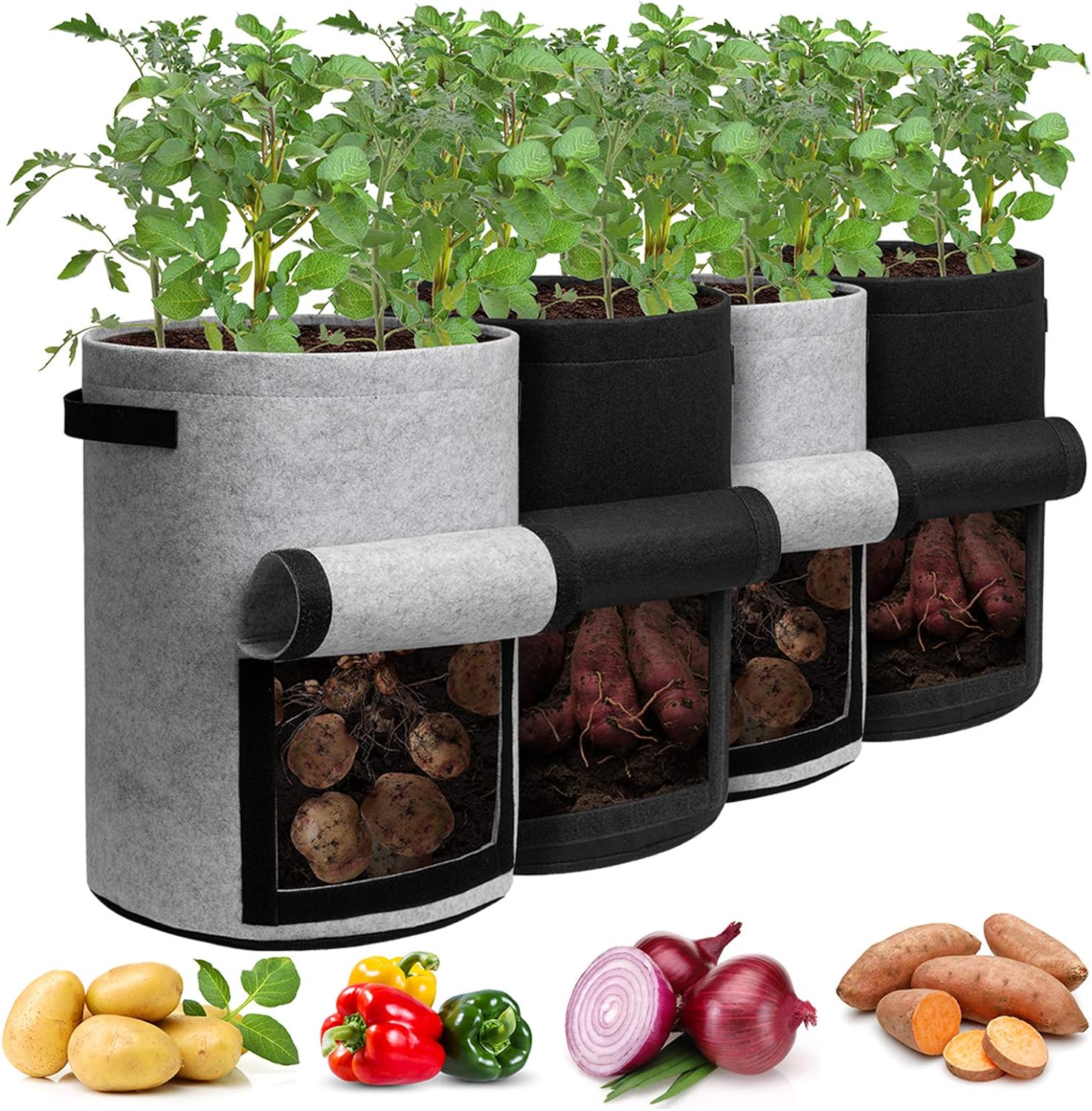
Homyhoo 10‑Gallon Potato Grow Bags, 4‑Pack with Handles and Harvest Window
| Capacity | 10 gallons |
|---|---|
| Number of Pieces | 4 |
| Material Type | Fabric |
| Indoor Outdoor Usage | Indoor, Outdoor |
These Homyhoo fabric grow bags are a practical set for container gardening that use breathable nonwoven material to improve aeration and avoid waterlogging. Each 10‑gallon bag includes a zip or flap harvest window and strong side handles, so you can check root crops and move filled bags when needed. The fabric encourages air pruning of roots, which yields a denser fibrous root system and is useful for producing healthier tubers and root vegetables. Because the material is porous it will dry faster than plastic pots, so expect more frequent watering during hot spells but better temperature regulation for the soil. The bags fold flat for offseason storage and are described as heavy duty, making them reusable across seasons if cleaned and stored dry. Limitations to note are the need to monitor moisture more closely than with rigid containers and that the 10‑gallon size favors medium root crops; very long carrots may be restricted by the round, relatively shallow footprint.
Best for: Gardeners who want a space‑efficient, reusable container system to optimize yield from root crops and who plan to manage watering actively and move containers as needed.
Less Ideal for: Growers who need deep, rigid pots for long carrot cultivars or those who prefer low‑maintenance containers that retain moisture for long periods.
- Breathable double‑layer fabric promotes air pruning and healthier root development
- Built‑in harvest flap lets you access potatoes and other roots without emptying the bag
- Sturdy handles make it easy to move filled bags around patios, balconies, or sunrooms
- Foldable design allows compact offseason storage and reuse
- Porous fabric requires more frequent watering compared with plastic or ceramic containers
- 10‑gallon round shape may limit growth of very long carrot varieties
Verdict: A practical, reusable fabric grow bag set that improves root health and makes harvesting simple for gardeners optimizing space and yield from root vegetables.
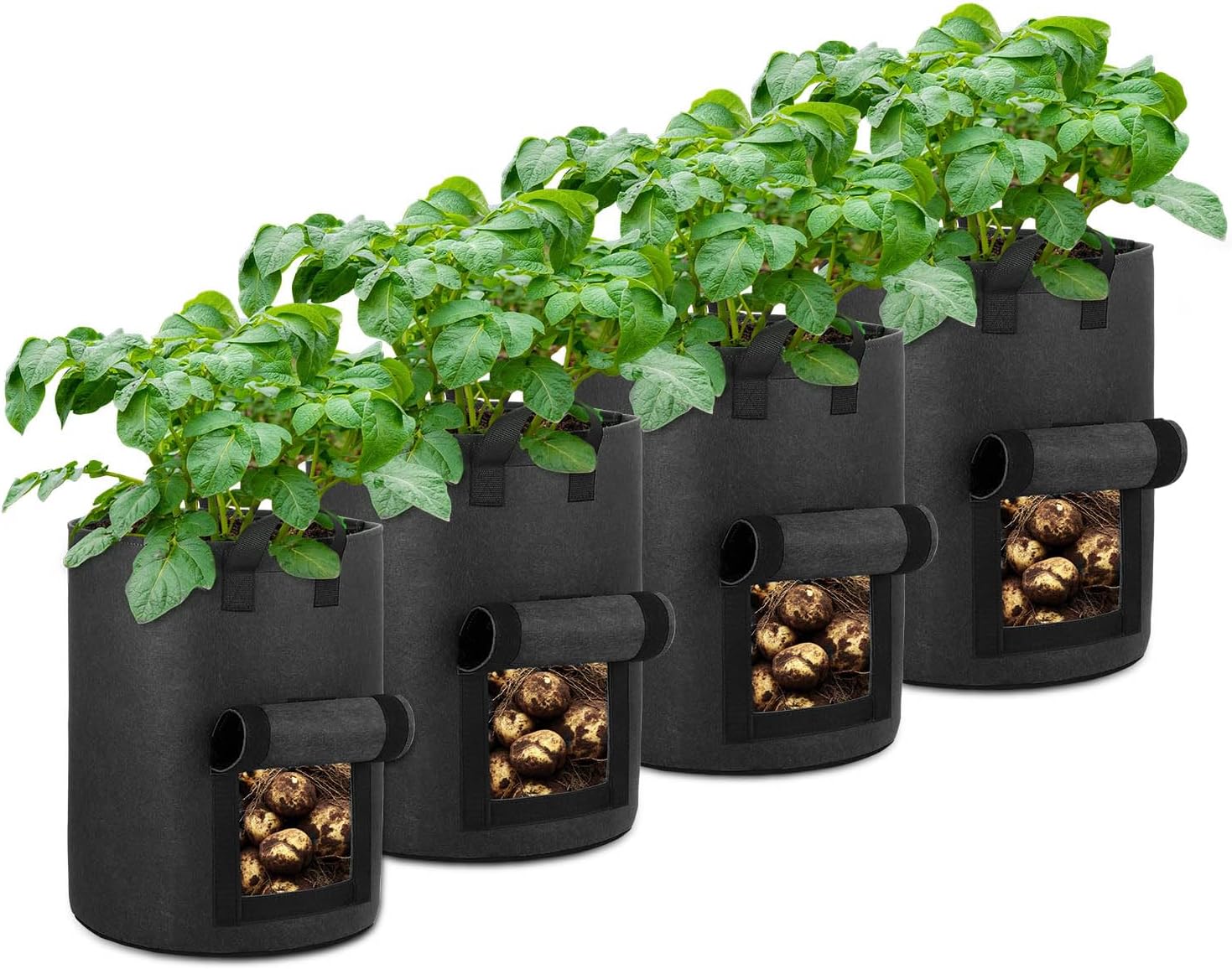
OPPOLIFE 4-Pack 10 Gallon Potato Grow Bags with Harvest Flap
| Capacity | 10 gallons |
|---|---|
| Number of Pieces | 4 |
| Material Type | Fabric |
| Other Special Features of the Product | Breathable |
These OPPOLIFE 10-gallon fabric grow bags are a basic, budget-friendly option for growing root vegetables in containers. Made from thick nonwoven fabric they provide good air circulation for roots and drainage compared with plastic pots. The bags include reinforced handles so you can move filled containers when needed and a flap-style harvest window that makes checking and lifting carrots or small potatoes easier without digging up the whole bag. Typical use is filling with a loose, deep potting mix, planting carrot seed or seedlings, and keeping the bags on a sunny patio or indoor sunlit spot. They are washable and intended to be reusable for multiple seasons. Expect straightforward construction and good value rather than premium finishing; the fabric is practical but not rigid so the bags need support on soft ground and will wrinkle when empty. For very tall carrot varieties you may prefer deeper containers, since these are mid-depth 10-gallon bags.
Best for: Home gardeners on a budget who want an affordable, reusable container for growing carrots and other vegetables in small spaces or on patios.
Less Ideal for: Growers who need deep, rigid planters for long heirloom carrot varieties or who want decorative, finished containers for display.
- Breathable nonwoven fabric improves root aeration and drainage compared with solid plastic
- Included harvest flap lets you inspect and harvest root crops without digging up the entire container
- Reinforced handles make moving filled bags easier
- Pack of four delivers good value for starting multiple carrot rows or succession plantings
- Mid-depth 10-gallon size may be shallow for long or heavy carrot varieties
- Soft fabric construction can wrinkle and needs a flat stable surface for best shape
Verdict: A practical, low-cost set of breathable fabric grow bags with a harvest flap ideal for starting multiple carrot plantings in limited space.
PAMAZY 2-Pack 20-Gallon Potato Grow Bags with Harvest and Viewing Windows

| Capacity | 20 gallons |
|---|---|
| Material | Polypropylene non-woven fabric |
| Set count | 2 Count |
| Indoor Outdoor Usage | Outdoor |
These PAMAZY 20-gallon grow bags are designed for growing potatoes and other vegetables in small outdoor spaces. Made from breathable polypropylene non-woven fabric, the bags improve drainage and air circulation around roots so plants are less prone to waterlogging and root rot. The standout feature is the pair of bottom-opening windows: a clear viewing flap to check soil moisture and root development and a hinged harvest door that lets you remove tubers without digging up the entire bag. Reinforced, long handles stitched from the base make the bags easier to move when full. Because the material is foldable and washable the bags can be stored and reused season after season. Limitations to note: the fabric construction means the bags will depend on external support for very heavy loads or sustained rough handling, and you will need to monitor watering since the breathable fabric dries faster than solid pots.
Best for: Gardeners who prioritize a dependable, low-maintenance solution for reliably producing potatoes in limited outdoor spaces and who want easy, damage-free harvesting.
Less Ideal for: People seeking a rigid, decorative planter or those who need heavy-duty, permanent raised beds for very large yields.
- Breathable polypropylene non-woven fabric improves drainage and reduces risk of root rot
- Two bottom-opening windows provide an observation flap and a hinged harvest door for damage-free harvesting
- Reinforced long handles stitched from the base make lifting and moving full bags easier
- Reusable and foldable material allows washing and off-season storage
- Fabric construction offers less structural rigidity than hard containers and can sag when very full
- Requires more frequent watering monitoring because breathable fabric sheds moisture faster
Verdict: If you want a reliable, reusable grow bag that simplifies monitoring and harvesting potatoes without digging, these 20-gallon PAMAZY bags deliver that convenience.
Gardzen 10-Pack 10 Gallon Fabric Grow Bags with Heavy-Duty Handles

| Capacity | 10 gallons |
|---|---|
| Unit Count | 10 Count |
| Material Type | Fabric |
| Other Special Features of the Product | Aeration, Breathable, Foldable, Lightweight |
| Indoor Outdoor Usage | Indoor, Outdoor |
These Gardzen 10-gallon fabric grow bags are built for performance-focused container gardeners who want reliable root health and easy handling. Made from thickened nonwoven fabric, the bags provide breathability that improves drainage and promotes air pruning to reduce root circling, which helps produce a denser, healthier root ball for vegetables and larger container plants. Reinforced X-shaped stitching on the heavy-duty handles makes moving filled bags far easier without tearing, and the foldable, washable construction simplifies offseason storage. You typically use them filled with a high-quality container mix for tomatoes, peppers, eggplants, or multi-plant arrangements on patios or balconies. Important limitations are their permeable fabric will dry faster than rigid pots so they need more frequent watering and they do not include internal dividers or rigid structure for stacking. For growers who prioritize root development and portability, these bags deliver consistent, season-after-season performance.
Best for: Gardeners focused on maximizing plant health and root development in containers who move or rotate plants regularly and grow larger vegetables or fruiting plants in limited space.
Less Ideal for: People who want low-maintenance containers that hold moisture for long periods or rigid pots that provide structural support for very tall or top-heavy specimens.
- Breathable nonwoven fabric encourages air pruning and better root structure
- Reinforced X-shaped stitched handles support lifting and repositioning filled bags
- Good drainage reduces risk of waterlogging compared with solid containers
- Foldable and washable for compact storage between seasons
- Permeable fabric increases watering frequency compared with rigid pots
- No internal structure or dividers to keep tall plants upright
Verdict: Choose these grow bags when you want breathable, durable containers that improve root health and make moving mature vegetables and container plants easy.
Choosing the Right Planter for Carrots: Key Factors to Consider
Container Depth
Depth controls whether carrots can develop full-length roots. Most common carrot varieties need at least 10 to 12 inches of loose soil to grow straight without hitting the bottom and forking. Deeper containers let you grow longer varieties, while shallower ones limit you to small or baby carrots.
When assessing depth, consider the usable soil depth after any drainage layer, liner, or false bottom is added. Planters labeled with internal depth are the most reliable; if only external dimensions are given, subtract the base thickness and any built-in drainage cavity to estimate planting depth.
Drainage and Water Management
Carrots require consistently moist but well drained soil. Poor drainage leads to waterlogged soil, root rot, and uneven shapes. Effective drainage includes multiple drain holes and a design that prevents water from pooling in the bottom.
Also think about how easy it is to manage moisture in the container. Some planters allow adding a coarse layer for extra drainage or include adjustable plugs to retain water in hot weather. Good drainage also means less risk of soil compaction, which helps roots grow straight and smooth.
Soil Volume and Width
Width and total soil volume determine how many carrots you can grow and how close you can space them. Carrots need room for root expansion and for the shoulders of the root to develop without crowding. A narrow tube-shaped container might give depth but limit the number of plants, while a wider trough-style planter supports multiple rows and easier thinning.
Higher soil volume also buffers temperature swings and retains moisture longer than a very small pot, reducing watering frequency and helping roots develop evenly.
Ease of Harvest and Access
Harvesting carrots from containers should be simple and should not damage the roots. Planters that allow you to tip or unclip a side panel, slide out a tray, or access roots from a low removable panel make harvest faster and reduce bruising. If a container forces you to dig aggressively, you risk breaking long roots.
Also consider whether the planter design allows you to loosen the soil around individual roots before pulling. Smooth interior walls, removable liners, or access ports help extract carrots intact.
Material Safety and Durability
Materials matter for seasonal outdoor use and for food safety. Look for containers made from UV-stabilized plastic, rot-resistant wood, glazed ceramic rated for outdoor use, or metal that has been treated against corrosion. Untreated materials may degrade, leach unwanted compounds, or break down after a few seasons.
Durability also includes resistance to freezing and thawing if you plan to keep containers outdoors year-round. Consider whether the planter will crack, warp, or absorb moisture and how that affects long-term use.
Mobility and Storage
Carrot planters are easier to manage when you can move them to follow sun or to keep them sheltered in extreme weather. Lightweight materials, integrated handles, or wheels help reposition containers without spilling soil. Foldable or stackable designs make offseason storage simpler if you have limited space.
Also think about filling and emptying. A planter that is too heavy when full will be difficult to relocate, so evaluate how often you will need to move the container and whether the design supports that need.
Choosing the Right Carrot Varieties for Container Growing
Not all carrot varieties suit every container. Shorter stump-rooted and medium-length varieties typically perform best in limited-depth planters, while standard and long varieties need deeper soil. Match the variety to the planter depth to avoid forking and thin roots.
When planning, check seed packet recommendations for root length and spacing. If you want a mix of sizes, consider using multiple containers with different depths so each variety has the space it needs.
- Short varieties for shallow containers
- Medium or tapered types for moderate depth
- Deep-rooted varieties only in deep planters
Soil Mix and Feeding for Container Carrots
Carrots thrive in a loose, well-draining mix that is low in fresh nitrogen. Use a sandy loam or a potting mix blended with coarse sand or horticultural grit to keep soil friable. Avoid heavy garden soil that compacts and causes misshapen roots.
Fertilize with a low-nitrogen balanced feed or a fertilizer formulated for root crops. Overly rich nitrogen encourages lush tops and poor root development. Top-dress or use a slow-release formula so nutrients are available as roots expand.
- Aim for light, crumbly texture
- Include coarse grit for structure
- Prefer steady low-nitrogen nutrients
Positioning and Sunlight Needs
Carrots need full sun for best root development, typically six or more hours of direct sunlight. Place containers where they get consistent light and avoid locations that stay damp and cold, which encourages slow growth and forked roots.
If your only option is partial sun, plant early or late season varieties that can handle cooler conditions and schedule sowings to avoid the hottest weeks, which can stress young roots.
- Full sun preferred for strongest roots
- Keep containers away from large trees that steal moisture
- Rotate placement if shade patterns change seasonally
Watering Strategy for Container Carrots
Containers dry out faster than in-ground beds, so consistent moisture is key. Water deeply and regularly to keep the soil evenly moist but not waterlogged. Mulching the surface with straw or compost can reduce evaporation and temperature swings.
Use fingertip checks or a moisture meter to judge watering needs. During hot spells, shallow pots may require daily checks, while deeper troughs hold moisture longer. Avoid sudden drying followed by heavy watering, as that contributes to split or distorted roots.
- Water thoroughly to wet the whole root zone
- Mulch the surface to conserve moisture
- Avoid large moisture swings that stress roots
Seasonal Care and Succession Planting
Stagger plantings every two to three weeks for a continuous harvest through the season. Containers make succession easy because you can start new plantings in spare pots while an earlier batch matures.
Protect containers from extreme heat or frost by moving them to sheltered spots or using shade cloth and insulating wraps. Clean out old soil and refresh the mix between major plantings to prevent disease buildup and nutrient depletion.
- Stagger sowings for continuous harvest
- Use shade or insulation for temperature extremes
- Refresh soil between plantings to maintain vigor
How We Chose the Best Planter for Carrots
We narrowed the field to planters suited specifically for growing carrots by focusing on features that matter for long, root crops. Editorial selection emphasized container depth, internal soil volume, drainage options, and how the design aids harvest. Durability in outdoor conditions and material safety for edible crops were included to ensure planters last through multiple seasons without contaminating the soil. Ease of filling, moving, and winter storage were also considered because container carrots require occasional repositioning and offseason care. We excluded shallow decorative pots or planters intended for annual bedding where depth and drainage were clearly inadequate for carrot roots. Selections reflect containers that provide sufficient depth, stable drainage, manageable soil capacity, and construction that supports repeated planting and harvest cycles.
FAQ
How deep does a planter need to be for most carrots?
Most carrot varieties grow well in containers with at least 10 to 12 inches of usable soil depth. Deeper planters let you grow longer varieties without the roots hitting the bottom and forking.
Can I grow carrots in a narrow tube or vertical planter?
You can grow carrots in narrow or vertical planters if the depth is sufficient, but narrow tubes limit spacing and may produce fewer roots. Wider trough-style containers make thinning and harvest easier for multiple plants.
What soil mix works best for container carrots?
A light, well-draining mix with coarse sand or grit works best. Avoid heavy garden soil that compacts. The mix should hold moisture without becoming waterlogged and remain loose to allow straight root growth.
How often should I water carrots in containers?
Frequency depends on pot size and weather, but containers usually need regular watering to keep soil evenly moist. Check moisture frequently during hot weather and water deeply to wet the full root zone rather than shallow surface wetting.
Will carrots tolerate being in containers all season?
Yes, carrots will grow in containers all season if given adequate depth, consistent moisture, and occasional nutrient replenishment. Rotate or refresh the soil between plantings to prevent disease and nutrient depletion.
Final Verdict
Choose a planter that matches the carrot varieties you want to grow and prioritize usable soil depth and reliable drainage. Balance soil volume and width against mobility so you can water, harvest, and move containers as needed. If you are limited on space, pick a deep, narrow trough or a tall container for a few high-quality roots; if you want larger yields, use wider planters with ample soil volume. Focus on depth, drainage, and ease of harvest to get the best results from container-grown carrots.
