

Note: This article contains affiliate links. If you click on these links and make a purchase, I may earn a small commission at no extra cost to you. This helps support my research and content. Read my full affiliate disclosure here.
If you want to grow a productive vegetable patch without rebuilding beds, a raised planter for vegetables can transform soil, drainage, and accessibility. The right planter controls root depth, warms earlier in spring, and reduces weed pressure so you get healthier starts and cleaner harvests. This guide covers seven top-rated raised planters vetted for common vegetable garden situations, from patios and balconies to compact backyard plots. We evaluated each option for durability, drainage, ease of filling and planting, and maintenance demands to help you choose the best fit for your space and crop list. Read on for what matters and how different planters behave in real gardens before the product summaries below.
Top Picks at a Glance
| Best Overall The best all-around choice for most situations | FOYUEE 31.5" Elevated Mobile Raised Garden Bed with Wheels and Shelf |  |
| Best Quality Built to a higher standard if you want something more solid | Vego Garden 17" Tall Modular Metal Raised Garden Bed Kit (8ft x 2ft) |  |
| Best Value The sweet spot between price and what you get | GADI 67-Inch Galvanized Raised Garden Bed |  |
| Best Budget The cheapest option that still gets the job done reliably | Utopia Home Galvanized Raised Garden Bed Kit, 4 x 2 x 1 ft |  |
| Highest Rated A top-rated pick with lots of positive feedback | BIVODA Small HDPE Elevated Raised Garden Bed |  |
| Most Popular A crowd favorite that many people choose with confidence | Land Guard Galvanized Oval Raised Garden Bed Kit (4×2×1 ft) |  |
| Best Seller A high-volume bestseller chosen again and again | Land Guard 2-Pack Galvanized Raised Garden Beds (4×2×1 ft) |  |
FOYUEE 31.5" Elevated Mobile Raised Garden Bed with Wheels and Shelf

| Capacity | 2.5 cubic feet |
|---|---|
| Material Type | Metal |
| Finish Types | Powder Coated |
| Mounting Type | Floor Standing |
| Included Components | Wheels, Plant Stand |
This FOYUEE elevated raised bed is a mobile, waist-height planter designed for easy, ergonomic vegetable and herb growing on patios and balconies. The galvanized steel box with a powder-coated finish resists rust and supports heavy fill so you can add ample soil for productive vegetable crops. Built-in drainage channels and a central drain help prevent waterlogging while the raised profile improves air circulation around roots. A lower storage shelf keeps tools and pots handy and the integrated handle plus 6-inch all-terrain wheels make it straightforward to reposition the planter for sun or shelter. Typical uses are growing salad greens, herbs, compact vegetables, or creating a movable culinary garden outside a kitchen door. Assembly and moving when fully loaded will require some effort despite wheels, and the metal surface can warm in strong sun so seedling protection may be needed. The unit favors growers who want less bending and an organized, movable planting station rather than a large in-ground plot.
Best for: Gardeners who want an ergonomic, moveable vegetable planter for patios or balconies and value easy access, organization, and rust-resistant construction.
Less Ideal for: People who need very large planting volumes, deep-rooted crops, or a permanent in-ground bed for large-scale vegetable production.
- Powder-coated galvanized steel construction resists rust for outdoor use
- Raised waist-height design reduces bending and back strain
- Integrated drainage channels and central drain prevent water buildup
- Built-in wheels and handle allow the planter to be moved for light or weather
- Lower shelf provides convenient storage for tools and supplies
- May be heavy and awkward to assemble or move when filled with soil
- Metal walls can heat up in direct sun and may require shading for sensitive plants
Verdict: Buy this if you want a durable, waist-height mobile planter that makes growing herbs and compact vegetables easier without stooping.
Vego Garden 17" Tall Modular Metal Raised Garden Bed Kit (8ft x 2ft)

| Material Type | Metal |
|---|---|
| Finish Types | Powder Coated |
| Capacity | 23 cubic feet |
| Number of Pieces | 20 |
| Indoor Outdoor Usage | Outdoor |
This Vego Garden raised bed kit is a modular metal planter designed for growing vegetables and flowers without bending to ground level. The 9-in-1 system assembles into multiple layouts so you can build an 8ft x 2ft oval bed or reconfigure panels to fit different garden footprints. Constructed from a Zn-Mg-Al coated steel with a powder-coated finish, the kit is marketed for long durability and corrosion resistance and includes rubber edging to cover panel edges for safer handling. At 17 inches deep it gives room for healthy root development and better drainage compared with shallow containers, which makes it suitable for most common vegetables. Installation is straightforward and uses fasteners and preformed panels so no specialized carpentry is required, though assembly of 20 pieces still takes time and two people make alignment easier. The system accepts add-ons such as trellises, covers, and irrigation to expand functionality, but those accessories are sold separately. This is a solid, low-maintenance option if you want a long-lasting, reconfigurable metal raised bed for productive vegetable planting.
Best for: Gardeners who want a durable, reconfigurable raised bed that supports productive vegetable growing and reduces bending while working. It suits practical owners who value long-term weather resistance and modular flexibility over a quick, one-piece planter.
Less Ideal for: People who need a ready-to-plant, lightweight single-piece container or those who prefer untreated wood or plastic planters for aesthetic or budget reasons.
- Modular 9-in-1 design lets you reconfigure layout to fit different garden spaces
- 17" planting depth supports deeper root systems and improved drainage for vegetables
- Powder-coated, Zn-Mg-Al treated steel construction for weather resistance and long life
- Rubber-edged panels reduce sharp edges for safer handling during assembly
- Accessories like trellises, covers, and irrigation are not included and must be purchased separately
- Assembly involves multiple panels and fasteners so it requires time and at least one helper
Verdict: A durable, 17" deep modular metal raised bed that gives serious vegetable growers a reconfigurable, low-maintenance planting system.
GADI 67-Inch Galvanized Raised Garden Bed

| Capacity | 7 cubic feet |
|---|---|
| Material Type | Metal |
| Finish Types | Powder Coated |
| Other Special Features | Breathable, Drainage Hole, Rust Resistant, UV Resistant, Weather Resistant |
| Mounting Type | Floor Standing |
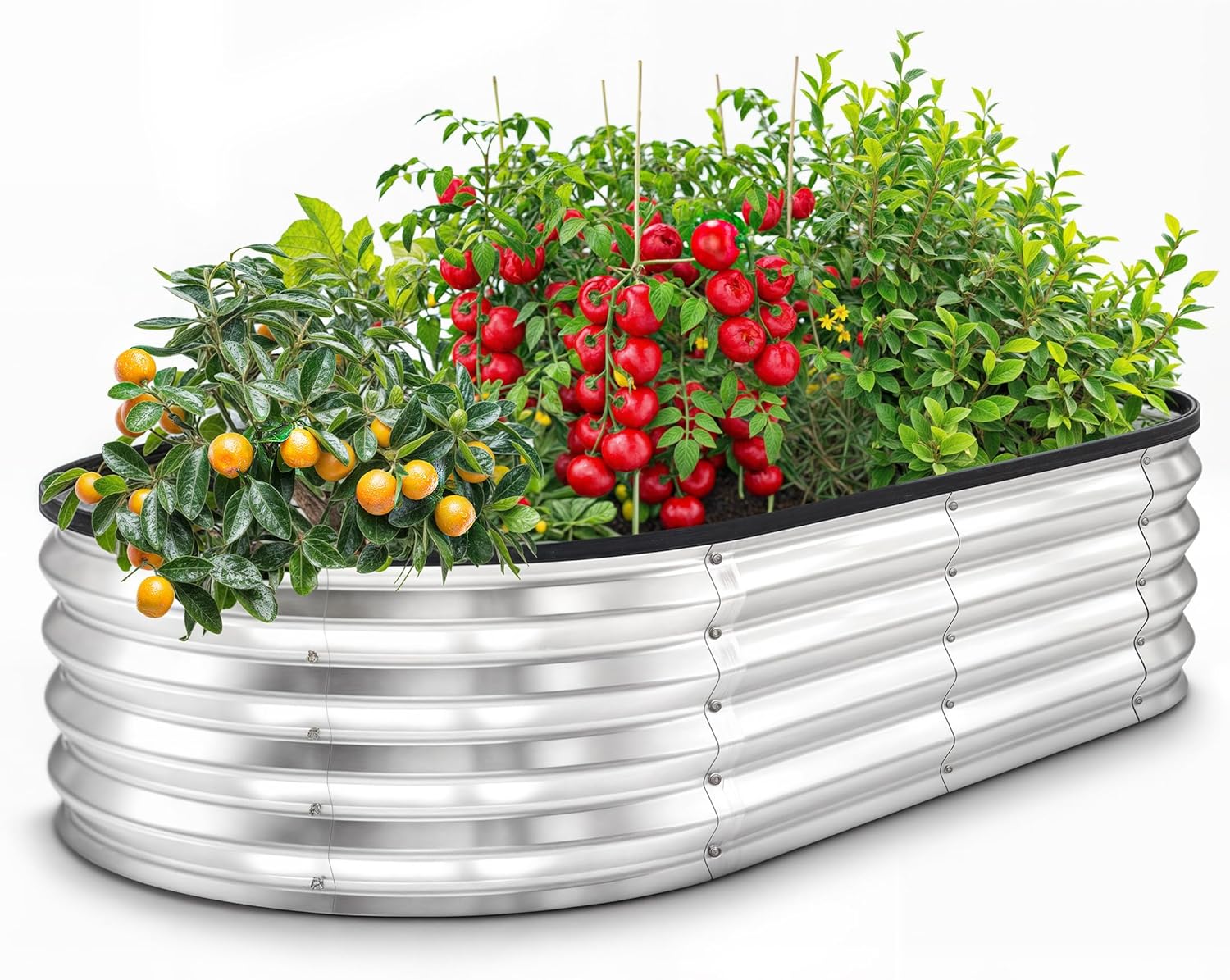
This GADI 67-inch galvanized raised garden bed is a straightforward metal planter built for outdoor vegetable and flower gardening. It assembles quickly with the included hardware and tools into a sturdy, floor-standing bed that uses a wave-shaped metal design for added rigidity. The galvanized steel with powder-coated finish and two layers of anti-corrosion paint give it rust resistance and UV/weather protection, while the open-bottom and drainage hole design prevent waterlogging and let roots access native soil. Side vents improve airflow to roots and help prevent excess moisture buildup. At roughly 7 cubic feet capacity it suits shallow-root vegetables, herbs, and annual flowers planted in patio or backyard settings. Expect limited depth for very deep-rooted crops and the metal construction will warm and cool with ambient temperatures, which affects watering needs. If you want a low-maintenance, durable raised bed that is quick to set up and resists corrosion, this is a practical choice for an efficient vegetable plot.
Best for: Gardeners who prioritize durable, low-maintenance solutions and want a quick-to-assemble raised bed for growing vegetables, herbs, and flowers in patios or small yards.
Less Ideal for: Growers planning to cultivate deep-rooted crops like large root vegetables or small fruit trees should consider deeper, soil-retaining alternatives or wooden beds.
- Galvanized steel with powder-coated finish resists rust and weathering
- Open-bottom design and drainage hole prevent water buildup and improve root access to soil
- Wave-shaped metal panels add structural strength for stability
- Includes necessary hardware and tools for quick assembly
- Shallow depth limits suitability for deep-rooted vegetables or large perennials
- Metal walls can heat up or cool quickly, affecting soil temperature and watering frequency
Verdict: A sturdy, weather-resistant galvanized raised bed that makes it easy to set up a productive vegetable patch with minimal upkeep.
Utopia Home Galvanized Raised Garden Bed Kit, 4 x 2 x 1 ft
| Capacity | 216 liters |
|---|---|
| Material Type | Alloy Steel |
| Finish Types | Powder Coated |
| Mounting Type | Floor Standing |
| Indoor Outdoor Usage | Outdoor |
This Utopia Home galvanized raised garden bed is a simple, no-frills metal planter that turns a patch of yard or patio into a contained growing area. The kit arrives as flat panels that lock together around an open base so roots can grow into the ground while the box keeps soil and beds organized. Made from powder-coated alloy steel and described as lightweight, it is corrosion-resistant compared with untreated metal and includes a center support strip for added rigidity. Typical uses are starting vegetables, herbs, or flowers where you want clearer edges, better drainage, and less bending to tend plants. Assembly is straightforward and tool-light, so it is practical for quick seasonal setups or moving around the yard. Limitations are its modest 4 x 2 ft footprint and single-level depth, which limits the number of plants and makes it better for shallow-rooted crops; heavier-duty raised beds with thicker panels or built-in liners will suit long-term heavy use better than this lighter kit.
Best for: Buyers looking for an inexpensive, easy-to-assemble raised bed to start vegetables or herbs in small outdoor spaces and who prioritize low upfront cost and portability.
Less Ideal for: People who need large or permanent heavy-duty beds for long-term, high-yield vegetable production or who prefer deep, multi-level planters.
- Galvanized alloy steel with powder coat offers rust resistance for outdoor use.
- Open-base design allows roots to grow into native soil and improves drainage.
- Lightweight panels make assembly and relocation easy for seasonal use.
- Center support strip increases rigidity compared with basic panel-only kits.
- Small 4 x 2 ft footprint limits planting area for larger vegetable gardens.
- Lightweight construction is less robust than thicker steel or heavy-duty wooden beds.
Verdict: A budget-friendly, rust-resistant galvanized steel raised bed that is quick to assemble and easy to move, ideal for small-scale vegetable and herb gardening.
BIVODA Small HDPE Elevated Raised Garden Bed

| Material Type | High Density Polyethylene (HDPE) |
|---|---|
| Capacity | 10 gallons |
| Number of Levels | 1 |
| Other Special Features of the Product | Drainage Hole, Fade Resistant, Rot Resistant, Rust Resistant, Weather Resistant |
| Mounting Type | Floor Standing |
This BIVODA raised garden bed is a compact, elevated planter built from high-density polyethylene (HDPE) designed for outdoor vegetable and herb growing. It assembles quickly using pre-inserted nuts and 304-grade stainless steel screws, and the elevated 19.7 inch height keeps plants off the ground for easier planting and protection from small pests. The molded HDPE construction is rot and rust resistant and promises low maintenance since it does not need painting or sealing; drainage holes and a reinforced bottom help keep soil from waterlogging while supporting root mass. Practical for balconies, patios, or small yards, it provides about 10 gallons of planting capacity for a few dwarf vegetables, salad greens, or concentrated herb beds. Limitations include a relatively small planting volume and footprint, so it is better for succession planting or compact varieties rather than large, full-season tomatoes or deep-rooted crops. The plastic construction is durable but will not provide the insulating or aesthetic properties of natural wood for certain garden designs.
Best for: Gardeners who prioritize a low-maintenance, long-lasting raised bed for vegetables in small spaces and want a reliable, pest-elevated planting surface they can use season after season.
Less Ideal for: Growers who need large soil volume for big, deep-rooted vegetables or who prefer the thermal and visual qualities of natural wood beds.
- Durable HDPE construction resists rot, cracking, peeling and weathering
- Rust-resistant 304-grade stainless steel hardware reduces corrosion risk
- Pre-inserted nuts and screws make assembly fast and tool-friendly
- Drainage holes and reinforced bottom help prevent waterlogging and add support
- Limited planting capacity at about 10 gallons, not suitable for large root crops
Verdict: Choose this HDPE elevated planter when you want a reliable, low-maintenance raised bed for concentrated vegetable and herb growing in a small outdoor space.
Land Guard Galvanized Oval Raised Garden Bed Kit (4×2×1 ft)

| Material Type | Metal |
|---|---|
| Finish Types | Double-layer galvanized |
| Capacity | 7.14 cubic feet |
| Mounting Type | Floor Standing |
This Land Guard raised garden bed is a simple, durable option for planting vegetables, herbs, or mixed annuals in a compact outdoor space. The kit arrives as flat panels that assemble into an oval planter about 4 by 2 feet and 1 foot deep, and setup is straightforward so you can fill and plant in minutes. Its double-layer galvanized steel construction and wave-shaped panels are intended to resist corrosion and add rigidity, and the manufacturer states thicker panels at stress points to reduce deformation. An open base design lets excess water drain and helps avoid root rot if placed on soil or lawn. Practical benefits include low maintenance, a tidy planted border that keeps soil contained, and a metal finish that lasts longer than untreated steel. Limitations are the shallow depth for deep-rooted crops and the likelihood the metal will warm quickly in hot sun, which may require more frequent watering or shade management. It is best used as a portable, long-lasting planter for raised-bed style container gardening rather than a full replacement for deeper in-ground beds.
Best for: Gardeners who want a quick-to-assemble, durable raised planter to grow vegetables or herbs in small outdoor spaces and who prioritize evidence of longevity over decorative complexity.
Less Ideal for: Growers who need deep soil for large root crops, or those looking for insulated or fully enclosed beds to control soil temperature and moisture long-term.
- Galvanized double-layer steel resists corrosion for multi-season outdoor use
- Oval, interlocking panel design assembles quickly with included tools
- Open base allows natural drainage to reduce standing water and root rot
- Compact footprint fits small patios, balconies, and tight garden beds
- Only 12 inches deep which limits planting of larger, deep-rooted vegetables or shrubs
- Metal surface can heat up in full sun and increase watering needs
Verdict: A tough, easy-to-assemble galvanized oval raised bed that gives small-space gardeners a durable, low-maintenance container for vegetables and herbs.
Land Guard 2-Pack Galvanized Raised Garden Beds (4×2×1 ft)

| Material Type | Galvanized Metal |
|---|---|
| Capacity | 54 gallons |
| Included Components | 2x Planter, Instruction manual, Tools |
| Set Name | Land Guard 2-Pack Raised Garden Bed Set |
These Land Guard raised beds are a straightforward option for growing vegetables and herbs in a backyard or patio. Each set includes two 4×2×1 ft galvanized steel planters that assemble with the supplied nuts and bolts; the metal panels and hardware create a sturdy, low-maintenance frame that will hold soil and seedlings easily. The open-bottom design sits directly on the ground so soil can interface with the native soil for drainage and root expansion while helping reduce standing water and weed intrusion. The thickened zinc galvanizing is intended to resist rust and weathering, which makes the beds suitable for season-long outdoor use with typical vegetable crops. Expect simple installation and durable performance, but keep in mind these are shallow beds better suited to shallow-rooted vegetables, herbs, and annuals rather than deep-rooted perennials or large root crops. Also plan for soil settlement over time and use good-quality compost to maximize fertility in the smaller soil volume.
Best for: Buyers who want a low-maintenance, durable raised bed to reliably grow vegetables and herbs in a small yard or patio and prefer a product that is straightforward to assemble and weather-resistant.
Less Ideal for: Gardeners who need deep soil for large root vegetables, long-term perennial beds, or who want larger single raised beds for extensive vegetable production.
- Galvanized steel with thick zinc coating provides corrosion and weather resistance
- Open-bottom design improves drainage and allows root access to native soil
- Comes as a two-pack with hardware and instructions for easy assembly
- Shallow footprint fits small yards, patios, and raised-row vegetable planting
- 12-inch depth limits suitability for deep-rooted vegetables and large root crops
- Metal sides can heat more than wood or fabric beds in full sun
Verdict: A practical, rust-resistant two-pack of shallow galvanized raised beds that makes establishing dependable vegetable and herb beds quick and low-maintenance.
Choosing the Right Raised Planter for Vegetables: Key Factors to Consider
Material and Longevity
The material a raised planter is made from determines how it weathers seasons and handles wet soil. Wood can be attractive and insulate roots well but may rot without rot-resistant species or protective treatment. Metal planters resist rot but can heat up in hot sun and may corrode over time unless properly coated. Plastic and composite options resist decay and are lightweight, though lower-grade plastics can become brittle after repeated UV exposure.
Material choice affects long-term cost, how often you will need to replace or repair a planter, and whether any chemicals could leach into potting mix. For vegetable use pick materials that balance durability with safe contact for edible crops and consider whether you want a planter that blends into a natural landscape or stands out as a modern element.
Drainage and Water Management
Good drainage is essential for most vegetables because roots need oxygen as well as water. A planter with inadequate drainage will hold saturated soil, which leads to root rot and nutrient issues. Look for planters with pre-drilled drainage holes, slotted bottoms, or designs that allow you to add a well-draining substrate layer. The ability to add or modify drainage later is a useful feature for seasonal adjustments.
Water management also includes thickness and insulation. Thin-walled metal or plastic planters can heat and cool quickly, changing soil moisture and temperature; thicker walls or added insulation moderate fluctuations. Choose a planter that suits your watering habits and local rainfall patterns to reduce overwatering risks and watering frequency.
Rooting Depth and Volume
Different vegetables require different rooting depths. Leafy greens and herbs often do well in shallow planters, while carrots, beets, and tomatoes need deeper, looser soil to develop properly. When assessing raised planters for vegetables, consider both the planted soil depth and the total volume the box will hold. Narrow but deep boxes concentrate root space vertically, while wide, shallow boxes spread roots horizontally.
Adequate soil volume also affects how often you need to fertilize and water. Larger volumes buffer temperature swings and nutrient depletion, which benefits fruiting crops and heavy feeders. Think about your preferred crops and choose a planter that provides the right rooting environment for them.
Ease of Filling and Setup
Many gardeners set up raised planters by themselves or in small teams, so manageable assembly and filling are practical necessities. Planters that require heavy lifting or complex fasteners add work and can delay planting. Removable slats, modular panels, or open-top designs simplify adding soil, compost, and amendments. If a planter is intended for a balcony or roof terrace, consider how soil will be delivered and whether a staged fill method is feasible.
Also consider whether the planter needs a liner or landscape fabric, and whether that liner is easy to install or replace. The time and effort it takes to assemble and fill a planter affects how quickly you can start your growing season.
Maintenance and Accessibility
Ongoing maintenance includes weeding, soil amendments, crop rotation, pest inspection, and seasonal clean-up. Raised planters that offer easy access to soil surface and root zone reduce back strain and speed routine tasks. Taller beds are helpful for gardeners with mobility limitations, while lower-profile boxes are easier to reach from the edge for routine harvesting.
Also consider how easy it is to refresh soil each season. If a planter disassembles or has removable sides, you can replace or amend soil in place rather than excavating. Features that simplify mulching, installing trellises, or protecting crops from pests can cut maintenance time across the growing season.
Placement, Sun Exposure, and Microclimate Effects
Where you place a raised planter affects microclimate, sunlight, and access to water. Elevated planters warm faster in spring, which can extend your growing season, but they also dry out faster in hot weather. Positioning near walls or fences can provide wind protection or reflected heat but may shade certain crops. Consider how nearby structures and trees affect sun hours and airflow.
Think about long-term placement versus portability. If you plan to move planters seasonally to chase sun or shade, prioritize lightweight or modular designs. If the planter is permanent, choose materials and finishes that stand up to constant exposure in that spot.
Best Depths and Sizes for Popular Vegetables
Match planter depth to the vegetables you want to grow. Shallow boxes 6 to 8 inches deep work for salad greens, chives, and shallow-rooted herbs. Root vegetables and medium-sized annuals need 12 to 18 inches of loose, well-drained soil. Large fruiting plants like indeterminate tomatoes, peppers, and eggplants perform better in 18 inches or more of planting mix to support root systems and steady moisture.
Width and length determine how many plants you can grow and how accessible the center of the bed will be. Narrow beds allow easy reach across while wider beds increase planting area but may require stepped access for maintenance.
- Shallow: 6-8 inches for greens and herbs
- Medium: 12-18 inches for root crops and bush vegetables
- Deep: 18+ inches for large fruiting vegetables and heavy feeders
Preparing Soil Mixes for Raised Planters
A light, crumbly soil mix that holds moisture but drains well is ideal. Blend high-quality compost with a loam or topsoil and an airy component like coarse sand or perlite to prevent compaction. Avoid straight garden soil in shallow planters because it compacts more quickly and reduces oxygen to roots.
Top up and refresh planting mix annually with compost and balanced organic fertilizer targeted for vegetables. In deeper planters, consider layering heavier materials lower and lighter mixes near the surface to manage weight and drainage while preserving root-friendly soil where plants need it most.
- Use compost for fertility and structure
- Add an airy component for drainage
- Top-dress yearly to maintain nutrients
Protecting Plants From Pests and Weather
Raised planters make it easier to install physical protections like mesh covers, floating row covers, or cold frames. Lightweight rigid sides give a stable anchor for hoops and screens, which helps prevent pest access and extends the season in spring and fall. Consider planters with edges or attach points for netting and cloches.
Planters can also magnify temperature extremes. In intense sun, add shade cloth or move planters into partial shade for heat-sensitive crops. In early spring, cold frames or removable insulation can raise soil temperatures and protect young transplants.
- Mount covers and supports to keep pests out
- Use insulation or covers to extend season
- Provide shade for heat-sensitive varieties
Installing Irrigation and Watering Strategies
Because raised planters dry faster, consider installing drip irrigation or soaker lines to supply steady moisture with minimal surface wetting. Drip systems reduce disease pressure on foliage and deliver water directly to the root zone. For gardeners without irrigation, planters with deeper soil volume or water-retentive amendments reduce watering frequency.
Group plants by water needs within and between planters to simplify watering. Heavy feeders and thirsty crops should be separated from drought-tolerant herbs and greens to avoid over- or under-watering.
- Install drip lines for consistent moisture
- Use water-retentive amendments sparingly
- Plant by similar water needs to simplify irrigation
Moving and Reconfiguring Raised Planters
If you expect to rearrange planting beds, choose modular or lightweight planters that can be disassembled and relocated. Portable planters are useful for seasonal sunlight shifts or for moving small gardens indoors during extreme weather. Consider the added effort of moving full soil loads versus empty planters when planning mobility.
Permanent installations benefit from sturdier joinery and anchored placement. For rooftop or balcony use, confirm structural capacity and pick planters that allow for proper drainage without damaging the surface beneath.
- Pick modular designs for reconfiguration
- Empty planters before moving to reduce weight
- Check load limits on balconies and rooftops
How We Chose the Best Raised Planter for Vegetables
We prioritized criteria that reflect real-world vegetable growing needs rather than abstract product claims. Durability and material resilience mattered because planters face constant soil moisture, UV exposure, and physical handling; long-lasting construction extends useful life and protects soil structure. Drainage and root depth were evaluated so vegetables that need loose, well-drained soil and adequate rooting volume can thrive. Ease of filling and setup was included because many gardeners handle heavy soil on their own or in small spaces; simple assembly and logical dimensions reduce labor and initial cost in time. We also scored maintenance and accessibility: planters that allow easy weeding, crop rotation, and seasonal soil amendment make ongoing care much simpler. Portability and modularity were considered for gardeners who may want to move or reconfigure beds between seasons or sites. We excluded designs that are only decorative and lack adequate depth or drainage for common vegetable crops. Final selections emphasize materials, drainage performance, and real-world usability for vegetable production rather than novelty features.
FAQ
How deep should a raised planter be for carrots?
Carrots need loose soil at least 12 inches deep for shorter varieties and 14 to 18 inches for longer types. Choose a planter that provides depth and a fine, stone-free mix to allow straight root growth.
Can I use a raised planter on a balcony?
Yes, but verify the balcony or deck load capacity before filling. Lightweight planters and staged filling can reduce initial weight. Also ensure proper drainage so water does not pool on the surface below.
How often should I refill or refresh soil in a raised planter?
Top-dress with compost each season and plan to refresh or replace part of the soil every one to three years depending on crop intensity. Heavy-feeding vegetables may deplete nutrients faster and require more frequent amendments.
Do raised planters need liners or fabric?
Liners help protect softer materials from constant moisture and can make cleanup easier, but they can restrict drainage if not properly installed. Use breathable landscape fabric or create well-placed drainage outlets when using liners.
What is the best soil mix for tomatoes in a raised planter?
Tomatoes prefer a fertile, well-draining mix with good water retention. Combine compost, quality topsoil, and a light amendment like perlite or coarse sand. Ensure the planter depth is 18 inches or more for strong root development.
Will raised planters warm up the soil faster in spring?
Yes, raised planters typically warm earlier than in-ground beds because soil is exposed on more sides and is insulated less by surrounding earth. That can allow earlier planting but may also require frost protection for seedlings.
Final Verdict
Raised planters for vegetables offer control over soil, drainage, and accessibility that in-ground beds often cannot. Prioritize depth for the crops you want to grow, choose materials that withstand moisture and sun in your climate, and plan for drainage and maintenance needs. Tradeoffs include portability versus permanence and insulation versus heat buildup. Focus on the handful of features that matter most for your garden: rooting depth, drainage, ease of filling, and long-term durability. With those priorities in mind, you can select a raised planter that fits your space and delivers consistently stronger vegetable harvests.
