

Note: This article contains affiliate links. If you click on these links and make a purchase, I may earn a small commission at no extra cost to you. This helps support my research and content. Read my full affiliate disclosure here.
If you grow potatoes in containers, raised beds, or limited garden space, the right potato planter changes planting and harvest from backbreaking work into a tidy, repeatable task. You want a tool or container that protects developing tubers, gives even soil depth and drainage, and lets you hill or layer without losing plants. This guide compares seven shortlisted potato planters chosen for real garden performance across common situations from patio buckets to larger raised containers. Below we explain what mattered in our selection and how each planter performs against those criteria so you can pick the option that fits your plot and harvest goals.
Top Picks at a Glance
| Best Overall The best all-around choice for most situations | Gardzen 20-Pack 10 Gallon Fabric Grow Bags with Heavy-Duty Handles |  |
| Best Quality Built to a higher standard if you want something more solid | Gardzen 10-Pack 15 Gallon Fabric Grow Bags with Heavy-Duty Handles |  |
| Best Value The sweet spot between price and what you get | Songrey 10-Pack 10 Gallon Fabric Grow Bags |  |
| Best Budget The cheapest option that still gets the job done reliably | 10 Gallon Potato Grow Bags, 2-Pack PE Fabric Planters with Flap and Handles |  |
| Highest Rated A top-rated pick with lots of positive feedback | PAMAZY 2-Pack 20-Gallon Potato Grow Bags with Harvest and Viewing Windows |  |
| Most Popular A crowd favorite that many people choose with confidence | VIVOSUN 5-Pack 15-Gallon Fabric Grow Bags with Handles |  |
| Best Seller A high-volume bestseller chosen again and again | VIVOSUN 5-Pack 20 Gallon Fabric Grow Bags with Handles |  |
Gardzen 20-Pack 10 Gallon Fabric Grow Bags with Heavy-Duty Handles

| Capacity | 10 gallons |
|---|---|
| Number of Pieces | 20 |
| Material Type | Fabric |
| Other Special Features of the Product | Aeration, Breathable, Foldable, Lightweight |
| Indoor Outdoor Usage | Outdoor |
These Gardzen 10-gallon fabric grow bags are a practical choice for planting potatoes and other vegetables in containers. Made from thick nonwoven fabric, the bags provide good aeration and drainage so roots avoid circling and excess water can escape, which encourages healthier tuber development. Each bag has reinforced handles and strong stitching, making them easy to move for repositioning or harvesting without tearing. The set of 20 is aimed at gardeners who want to plant multiple rows or rotate crops across a season. The fabric is foldable and lightweight for storage between seasons and is reusable for at least a couple of years with normal outdoor use. Limitations to expect are that fabric bags need sturdy support on uneven ground to keep soil from spilling and they dry out faster than rigid containers, so you will likely need more frequent watering. Also these are basic fabric planters with no built-in dividers or liners, so you must manage soil mixes and watering for best potato yields.
Best for: Gardeners who want a balanced, reliable solution for growing multiple potato plants outdoors and value breathability, portability, and the ability to scale up plantings across a yard or patio.
Less Ideal for: Those who need permanent, decorative planters or very low-maintenance containers that retain moisture for long periods.
- Breathable fabric promotes root pruning and reduces root circling
- Efficient drainage helps prevent overwatering
- Reinforced handles and stitching make filled bags easier to lift and move
- Bulk 20-pack suits multi-plant or large-scale container beds
- Foldable and lightweight for compact off-season storage
- Fabric pots dry out faster than rigid containers requiring more frequent watering
- No built-in dividers or liners for layered planting or wet climates
- May need extra support on uneven surfaces to prevent soil spillage
Verdict: A practical, scalable set of breathable fabric grow bags well suited to gardeners planting multiple potato crops who want portability and good root health.
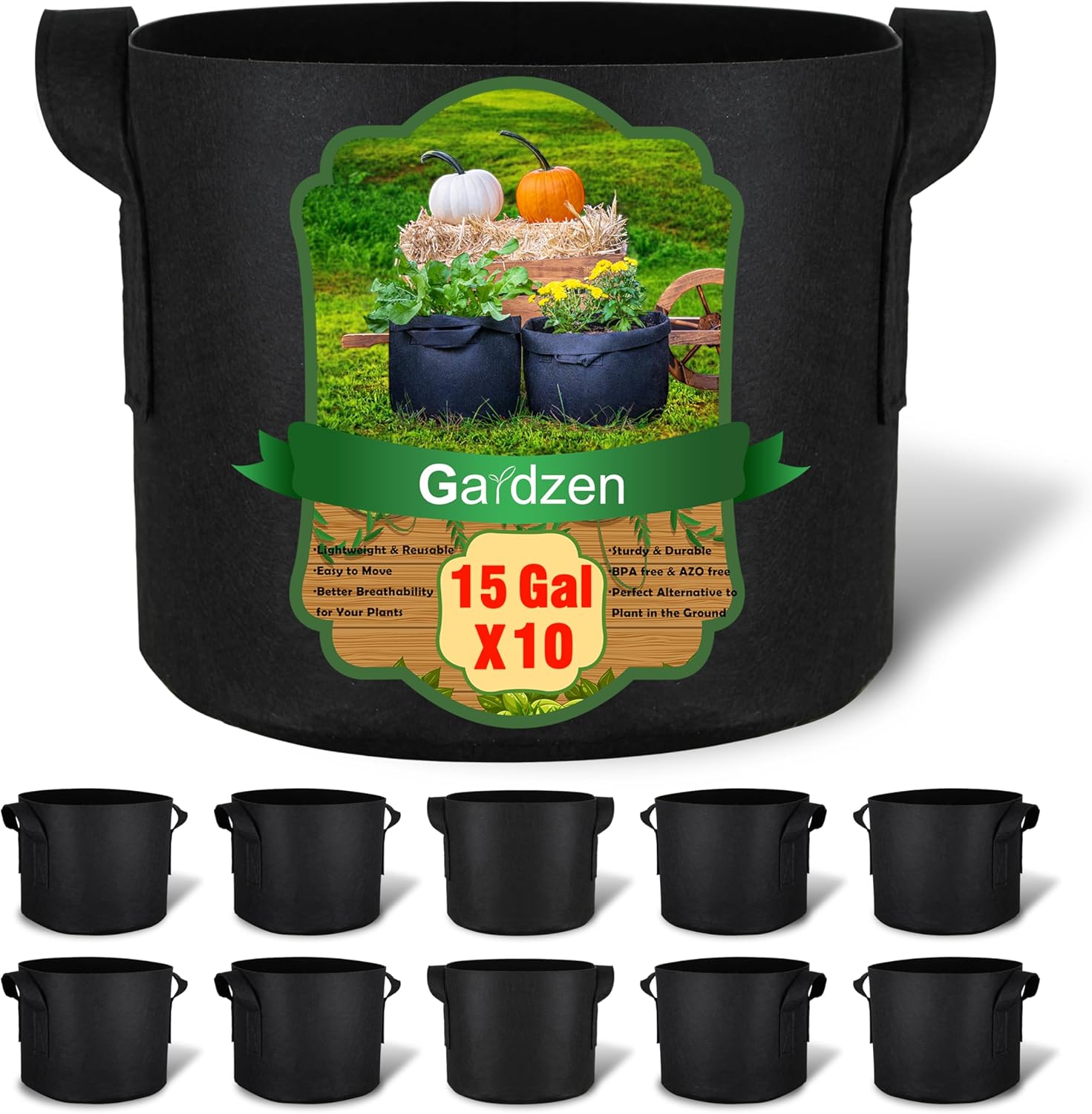
Gardzen 10-Pack 15 Gallon Fabric Grow Bags with Heavy-Duty Handles
| Capacity | 15 gallons |
|---|---|
| Included Components | 10 x 15 Gal Grow Bags |
| Material Type | Fabric |
| Indoor Outdoor Usage | Indoor, Outdoor |
| Other Special Features of the Product | Aeration, Foldable, Lightweight |
These Gardzen 15‑gallon fabric grow bags are a performance-focused solution for growing larger vegetables like potatoes. Made from thick nonwoven fabric the bags promote air pruning and strong root development while letting excess water drain through the material so plants avoid waterlogging. Each bag folds flat for storage and has reinforced X‑stitched handles that tolerate moving filled containers across a patio or into a garage between seasons. For potato growing the 15‑gallon capacity gives enough soil depth and volume to support tuber development and the breathable walls reduce root circling compared with rigid pots. The bags are washable and reusable for multiple seasons but will eventually show wear if left in high UV or rough conditions. Because they are fabric they do allow some moisture loss so you will need to check water more often than with solid-sided planters and provide a sturdy support or tray beneath to protect decking from staining or seepage.
Best for: Gardeners who want to maximize potato yield from container beds and prioritize strong root development and easy seasonal handling.
Less Ideal for: People who prefer low‑maintenance, water‑retentive rigid planters or who need fully waterproof containers for indoor use.
- Breathable nonwoven fabric encourages air pruning and healthier root systems
- Reinforced X‑stitched heavy‑duty handles make lifting and moving filled bags easier
- 15‑gallon capacity suitable for larger vegetables and tuber development
- Foldable and washable for convenient offseason storage and reuse
- Fabric construction requires more frequent watering than rigid containers
- Can degrade over long exposure to sun and abrasive surfaces without protection
Verdict: Choose these Gardzen 15‑gallon grow bags when you want breathable, transportable containers that boost root health and support high potato yields.
Songrey 10-Pack 10 Gallon Fabric Grow Bags

| Capacity | 10 gallons |
|---|---|
| Indoor Outdoor Usage | Indoor, Outdoor |
| Other Special Features of the Product | Drainage Hole |
| Unit Count | 1 Count |
These Songrey 10-gallon fabric grow bags are a practical, no-frills option for container-grown potatoes and other vegetables. Made from thick nonwoven fabric that the listing describes as tear-resistant and BPA-free, the bags promote airflow and quick drainage so roots are less likely to circle or suffer from rot. Built-in handles are tightly stitched which makes moving a filled bag easier when you need to reposition plants or harvest tubers. The breathable material supports air pruning, encouraging a denser, healthier root system that is beneficial for potato production. Because they are washable and fold flat for storage, they fit a gardener who wants reusable, space-saving planters. Limitations are typical of fabric pots: they will dry out faster than rigid containers so you will need a consistent watering schedule or a simple drip system, and the soft sides provide less insulation in extreme heat or cold than thicker, insulated planters. For someone organizing a multi-bag potato patch on a patio or in a small yard, these deliver a durable, lightweight solution that keeps growing tidy and portable.
Best for: Gardeners who want an efficient, reusable system to grow potatoes in containers and who prioritize space-saving, movable planters and tidy, modular beds.
Less Ideal for: Those who prefer low-maintenance, infrequent watering or need heavy insulated containers for extreme climates should consider other planter types.
- Breathable nonwoven fabric encourages air pruning and reduces root circling
- Quick drainage helps prevent overwatering and root rot
- Reinforced stitched handles make lifting and moving full bags manageable
- Washable and foldable for easy storage and repeated seasonal use
- Fabric sides allow faster moisture loss than rigid pots requiring more frequent watering
- Less thermal insulation than thicker or rigid planters in extreme temperatures
Verdict: A cost-effective, reusable set of breathable 10-gallon grow bags that makes growing potatoes in small patios or yards simple and portable.
10 Gallon Potato Grow Bags, 2-Pack PE Fabric Planters with Flap and Handles

| Pack quantity | 2 |
|---|---|
| Capacity | 10 gallon |
| Material | PE fabric |
These 10 gallon PE fabric grow bags come as a two‑pack and are built for small-scale potato growing in containers, patios, or raised beds. Each bag has a removable side flap that lets you check and harvest tubers without digging through the whole container, plus stitched handles for moving filled bags when needed. The lightweight, breathable fabric promotes good drainage and air pruning of roots compared with rigid pots, which helps reduce waterlogging and encourages healthier tuber development. Because they are compact 10‑gallon sizes, they are easy to store and fit on balconies or small garden plots but will hold fewer plants than larger sacks. Expect some wear over multiple seasons if left outdoors constantly and plan to support them on a tray or surface to avoid staining or tearing from rough concrete. For gardeners watching their budget these bags offer a practical, space-saving way to grow potatoes with minimal setup and easy harvest access.
Best for: Practical gardeners on a tight budget who want a low‑effort way to grow potatoes in small spaces like balconies, patios, or compact vegetable beds.
Less Ideal for: Gardeners who need to produce large yields or who prefer permanent heavy‑duty containers for multi‑year use should consider larger or more robust options.
- Removable side flap simplifies inspecting and harvesting tubers without full excavation
- Breathable PE fabric improves drainage and reduces root circling compared with rigid pots
- Two bags in the pack give immediate capacity for multiple plants or staggered crops
- Stitched handles make it easier to move filled bags for repositioning or winter storage
- 10 gallon size limits number and final size of potato plants compared with larger grow bags
- Fabric may degrade over several seasons if left exposed to sun and rough surfaces
Verdict: A budget‑friendly, space‑saving two‑pack of breathable 10‑gallon grow bags that makes potato growing and harvesting simple for small‑space gardeners.
PAMAZY 2-Pack 20-Gallon Potato Grow Bags with Harvest and Viewing Windows

| Capacity | 20 gallons |
|---|---|
| Material | Polypropylene non-woven fabric |
| Set count | 2 Count |
| Indoor Outdoor Usage | Outdoor |
These PAMAZY 20-gallon grow bags are designed for growing potatoes and other vegetables in small outdoor spaces. Made from breathable polypropylene non-woven fabric, the bags improve drainage and air circulation around roots so plants are less prone to waterlogging and root rot. The standout feature is the pair of bottom-opening windows: a clear viewing flap to check soil moisture and root development and a hinged harvest door that lets you remove tubers without digging up the entire bag. Reinforced, long handles stitched from the base make the bags easier to move when full. Because the material is foldable and washable the bags can be stored and reused season after season. Limitations to note: the fabric construction means the bags will depend on external support for very heavy loads or sustained rough handling, and you will need to monitor watering since the breathable fabric dries faster than solid pots.
Best for: Gardeners who prioritize a dependable, low-maintenance solution for reliably producing potatoes in limited outdoor spaces and who want easy, damage-free harvesting.
Less Ideal for: People seeking a rigid, decorative planter or those who need heavy-duty, permanent raised beds for very large yields.
- Breathable polypropylene non-woven fabric improves drainage and reduces risk of root rot
- Two bottom-opening windows provide an observation flap and a hinged harvest door for damage-free harvesting
- Reinforced long handles stitched from the base make lifting and moving full bags easier
- Reusable and foldable material allows washing and off-season storage
- Fabric construction offers less structural rigidity than hard containers and can sag when very full
- Requires more frequent watering monitoring because breathable fabric sheds moisture faster
Verdict: If you want a reliable, reusable grow bag that simplifies monitoring and harvesting potatoes without digging, these 20-gallon PAMAZY bags deliver that convenience.
VIVOSUN 5-Pack 15-Gallon Fabric Grow Bags with Handles

| Capacity | 15 gallons |
|---|---|
| Unit Count | 5 Count |
| Material Type | Nonwoven Fabric |
| Indoor Outdoor Usage | Indoor, Outdoor |
| Other Special Features of the Product | Drainage Hole |
These VIVOSUN fabric grow bags are a durable, reusable option for container plants that need good aeration and drainage. Made from 300g nonwoven fabric, the bags breathe to keep roots cooler and oxygenated, which helps develop a fibrous root system and reduces root circling compared with rigid pots. Each pack includes five 15-gallon bags with reinforced serger-stitched handles that make moving filled pots easier. The built-in drainage and porous sides mean you will water more frequently than in impermeable containers, but the payoff is healthier root structure and less risk of overwatering. The material is thick enough for multiple seasons if you handle and store them properly, though repeated heavy use on abrasive surfaces will eventually wear fabric pots. These are well suited for patio or balcony plantings and for growers who prioritize root health and portability; expect to pair them with saucers or trays to protect surfaces from seepage during watering.
Best for: Gardeners who value proven, low-risk container solutions for healthy roots and want durable, easy-to-move pots for patios, balconies, or grow tents.
Less Ideal for: People who need fully waterproof, decorative planters or who prefer low-maintenance containers that require less frequent watering.
- Breathable nonwoven fabric promotes air pruning and healthier root systems
- Reinforced serger-stitched handles make full bags easier to lift and move
- Built-in drainage reduces waterlogging and root rot risk
- Thicker 300g material designed for multi-season reuse
- Porous fabric means more frequent watering and potential surface seepage
- Fabric will eventually abrade or weaken with heavy outdoor use on rough surfaces
Verdict: Choose these VIVOSUN 15‑gallon fabric grow bags when you want durable, breathable containers that improve root health and are easy to move.
VIVOSUN 5-Pack 20 Gallon Fabric Grow Bags with Handles

| Capacity | 20 gallons |
|---|---|
| Number of Pieces | 5 |
| Material Type | Nonwoven Fabric |
| Other Special Features of the Product | Drainage Hole |
| Indoor Outdoor Usage | Outdoor |
These VIVOSUN grow bags are 20‑gallon, nonwoven fabric pots sold in a five‑pack intended for outdoor container gardening. They breathe, which helps keep soil cooler and promotes air pruning of roots, a useful trait for heavy feeders like potatoes because it reduces root circling and encourages a fibrous root system. Each bag includes reinforced sewn handles so you can move filled bags around a patio or planting area without the handles tearing. The fabric construction provides good drainage and reduces waterlogging, so you can avoid soggy tubers if you monitor watering. Practical limitations are that the bags are fabric so they will hold less moisture than rigid containers and may dry faster in hot, windy conditions, requiring more frequent watering. Also, while durable for reused seasons, fabric will eventually degrade outdoors and may need replacement after multiple growing cycles. For potato growing you will still need sufficient soil depth and regular hilling, but these bags make harvesting easier by lifting and emptying the bag compared with in‑ground beds.
Best for: Gardeners who want an easy, movable container option for growing potatoes on patios, decks, or small yards and who value proven user experiences and durability. They suit growers who prefer simple, no‑dig harvesting and like the flexibility to reposition plants.
Less Ideal for: Growers who need long‑term, low‑maintenance containers in very hot or windy climates where watering frequency must be minimal or who prefer rigid planters that retain moisture longer.
- Breathable nonwoven fabric promotes air pruning and healthier root systems
- Reinforced serger‑stitched handles allow moving filled bags without tearing
- Good drainage reduces risk of waterlogged tubers
- Sold as a five‑pack so you can plant multiple hills or varieties at once
- Fabric pots dry out faster than rigid containers, so they need more frequent watering
- Will slowly degrade over multiple seasons and may require replacement after extended outdoor use
Verdict: A practical five‑pack of breathable 20‑gallon fabric grow bags that make planting and harvesting potatoes simpler while promoting healthier root development.
Choosing the Right Potato Planter: Key Factors to Consider
Planting Depth and Hill Control
Potatoes develop tubers along stems and roots at specific depths, so consistent planting depth matters. A planter that lets you set and repeat depth precisely helps ensure even emergence and reduces losses from too-shallow planting or excessive compaction. Features that let you build soil up around stems in stages support hilling, which increases tuber production and keeps developing potatoes covered and out of sunlight.
When depth is easy to control, you also minimize seed-piece wastage and get more uniform yields. For container systems, consider how the planter design supports incremental soil additions without disturbing stems.
Drainage, Aeration, and Root Health
Potatoes need well-drained, airy soil to avoid rot and fungal problems. A planter must provide reliable drainage while retaining enough moisture between waterings. Designs with integrated aeration channels, breathable fabric, or perforations can improve root oxygen and reduce compaction, which is especially important in taller containers where lower layers can become waterlogged.
Good drainage also makes harvest cleaner because tubers are less likely to be water-soaked and stuck to soil. If you plan to reuse the planting media, look for options that allow thorough drying and easy turning to reduce disease carryover.
Ease of Harvest and Tubers Retrieval
Harvest is where planter design pays off. Systems that permit side access, removable panels, or simple tipping let you collect tubers without sifting through heavy pots or digging up the entire container. Easy-access features reduce tuber damage and make harvest tasks safe for gardeners with limited mobility.
Consider how the planter exposes different soil layers and whether you can remove soil in stages. A design that enables gentle handling of tubers preserves skin integrity and helps long-term storage quality.
Material Strength and Weather Resistance
Planters spend seasons outside, so material choice affects longevity. Rigid plastics can crack in sun and cold unless UV-stabilized. Fabric and felt pots resist cracking but may degrade at seams or handles. Metal components should be corrosion-resistant or well-coated to avoid rust that weakens panels or fasteners.
Also evaluate handle and seam quality if you intend to move planters when full. Durable materials reduce replacements and keep planting consistent over multiple seasons.
Capacity, Modularity, and Space Efficiency
Match planter capacity to the number of seed pieces you want to plant and the space you have. Larger capacity gives higher per-unit yield but requires more soil and water. Modular designs let you combine sections or stack layers so you can scale planting without buying a single oversized container. For small patios or balcony gardeners, compact, high-efficiency planters provide more tubers per square foot.
Consider how the planter footprint affects sunlight exposure and whether multiple small planters fit better than one large unit for rotation and staggered harvests.
Best Planter Types for Different Gardens
There is no single universal potato planter. Fabric sacks and grow bags are lightweight and breathable, making them well suited to patios and temporary installations. Rigid tall containers or barrels hold more soil and support larger harvests, which works for gardeners with space and the willingness to move heavier units. Multi-chamber planters are useful when you want to stagger plantings or harvest in phases without disturbing other plants.
Consider how each type fits your site. Tight spaces benefit from narrow, tall planters that give depth without using much ground area. If moisture control is your main concern, choose a planter with deliberate drainage and the ability to lift or invert for drying.
- Grow bags: breathable, light, good for small spaces
- Rigid tall planters: high capacity, stable but heavy
- Multi-chamber/stackable: staggered planting and harvest
Soil Mix and Fertility Tips
Potatoes prefer a loose, well-draining mix rich in organic matter. Combine a coarse, airy base such as composted bark or coir with garden compost and a small fraction of mineral soil to give structure. Avoid mixes that compact easily, such as heavy clay, because compaction reduces tuber size and increases disease risks.
Fertilize with a balanced approach. Too much nitrogen drives leafy growth at the expense of tuber set. Use a fertilizer schedule that supports steady root and tuber formation, and refresh the top layers when reusing planters across seasons to replace nutrients lost to watering and harvest.
- Aim for loose, crumbly texture with good water retention and drainage
- Limit high-nitrogen feeds once stems are established to encourage tuber growth
- Top up nutrients between plantings when reusing media
Planting and Hilling Workflow
A repeatable planting workflow saves time and improves yields. Start with seed pieces placed at the recommended spacing and depth for your variety, then add soil in stages as stems grow to encourage additional tuber formation. Planters that accept incremental additions without disturbing roots make this process faster and safer for developing plants.
Water deeply after each addition and monitor moisture so layers do not remain soggy. When foliage reaches a height where you want more hilling, add more loose mix and repeat until the planter is filled or the plant stops producing new stems.
- Place seed pieces at uniform depth for even emergence
- Hill in stages to promote more tubers along the stem
- Water after each hilling to settle the soil and avoid air pockets
Seasonal Care and Pest Management
Keep an eye on common potato pests and diseases when using containers. Slugs, wireworms, and fungal blights can affect container-grown potatoes as readily as in-ground ones. Good airflow, clean media, and timely removal of diseased foliage reduce problems. Using a barrier under planters or elevating pots can limit access for some ground pests.
Rotate plantings and avoid reusing the exact same unamended media season after season. Fresh compost and proper sanitization of reusable planters cut disease carryover and support healthier crops.
- Monitor foliage regularly for early signs of disease
- Use clean media and rotate planting locations when possible
- Elevate or place planters on a barrier to reduce pest access
Mobility and Placement Considerations
Placement affects sunlight, water needs, and harvest convenience. Locate planters where they receive the recommended daily sun for your potato variety and where you can easily access them for regular watering and hilling. Mobility matters if you need to move units for season protection or to optimize light. Lightweight materials and integrated handles make relocation easier, but balance that against the planter's stability when full.
Think about winter storage and whether the planter materials will tolerate freezing cycles. Some materials compress or crack in repeated freeze-thaw conditions, which shortens usable life.
- Place planters in full to partial sun depending on variety
- Choose portable options if you expect to move or shelter plants seasonally
- Consider winter durability in cold climates
How We Chose the Best Potato Planter
We focused on potato planters that deliver predictable planting depth, good drainage, and easy harvest access. Our editorial filters prioritized containers and tools that are robust enough for multiple seasons, offer straightforward soil filling and hilling, and protect tubers from light and pests. We examined materials and construction to favor options that resist cracking, UV damage, and warping outdoors. Capacity and modularity were important so gardeners can match planter size to seed piece count and bed space. Ease of harvest and removal features were weighted heavily because retrieving tubers with minimal damage is a primary gardener concern. Drainage design, ventilation, and the ability to reuse or refresh growing media were also part of the evaluation. We excluded setups that require complex assembly, permanent in-ground excavation, or heavy custom fabrication because most home gardeners need practical, low-effort solutions. The final list balances durability, planting capacity, protection of tubers, and straightforward harvest access.
FAQ
How deep should a potato planter be?
A planter should provide enough depth for initial planting plus room to hill, typically at least 12 to 18 inches for small containers. Taller planters let you add soil in stages and produce more tubers, but seed-piece depth and staging are more important than absolute height.
Can I reuse the soil in a potato planter next season?
You can reuse soil if you refresh it with compost and check for disease. Remove tuber debris, allow the media to dry, and amend with fresh organic matter and fertilizer. If you had disease issues the previous season, replace the media to avoid carryover.
Are fabric grow bags better than rigid containers for potatoes?
Fabric grow bags offer superior aeration and reduce root circling, while rigid containers provide stability and often higher capacity. The better choice depends on your space, mobility needs, and how much soil you want to manage.
How do I prevent potatoes from turning green in a planter?
Keep developing tubers covered with soil or mulch and hill as stems grow. Light exposure causes greening, so a planter that allows layer additions or has opaque walls reduces risk. Promptly remove any tubers that show green skin before storage.
What watering routine works best for container potatoes?
Water deeply but less frequently to encourage strong root systems. Monitor moisture because containers can dry faster than ground beds. Use a consistent schedule adjusted for temperature and wind, and ensure good drainage to avoid waterlogged lower layers.
Final Verdict
Choose a potato planter that balances planting depth control, reliable drainage, and harvest accessibility for your garden conditions. If space is limited, prioritize breathable, compact planters; if you want maximum yield per unit, choose taller or higher-capacity containers with solid construction. Remember the tradeoffs between weight, mobility, and capacity so you pick a setup you can manage through planting, hilling, and harvest.
