

Note: This article contains affiliate links. If you click on these links and make a purchase, I may earn a small commission at no extra cost to you. This helps support my research and content. Read my full affiliate disclosure here.
Picking the right soil mix for succulents changes how quickly water drains, how roots breathe, and how prone plants are to rot. In containers, on windowsills, or in mixed succulent arrangements, the wrong mix can hold moisture and invite root problems even if watering is careful. This guide focuses on plant soil mixes formulated for succulents and explains why drainage, particle size, and nutrient balance matter in real garden and indoor situations. Below are the top shortlisted mixes chosen for common succulent setups. We evaluate each option on practical gardener-focused criteria so you can match a mix to your pot size, watering habit, and light conditions.
Top Picks at a Glance
| Best Overall The best all-around choice for most situations | Miracle-Gro Succulent Potting Mix (4 qt) |  |
| Best Quality Built to a higher standard if you want something more solid | Molly's Succulent Potting Mix — Cactus & Bonsai Gritty Blend, 5 Dry Quarts |  |
| Best Value The sweet spot between price and what you get | Back to the Roots Succulent & Cacti Mix, 12 Quart |  |
| Best Budget The cheapest option that still gets the job done reliably | Doter Cactus & Succulent Soil Mix, 1 qt |  |
| Highest Rated A top-rated pick with lots of positive feedback | Awesome Industries Lithops Seed Starting Gritty Mix, 2 Qt |  |
| Most Popular A crowd favorite that many people choose with confidence | Miracle-Gro Indoor Potting Mix for Cactus & Succulent, 2‑pack (8 qt.) |  |
| Best Seller A high-volume bestseller chosen again and again | Back to the Roots Organic Succulent & Cacti Soil, 6 Quart |  |
Miracle-Gro Succulent Potting Mix (4 qt)

| Unit Count | 128 Ounce |
|---|---|
| Volume | 4 quarts |
| Item Type Name | Indoor Cactus Plants, Aloe Vera and More |
| Ingredients | Sphagnum Peat Moss, Processed Forest Products, Fertilizer, Wetting Agent |
Miracle‑Gro Succulent Potting Mix is a ready‑to‑use 4 quart bag of growing media made specifically for indoor succulents and cacti. It combines sphagnum peat moss and processed forest products with a dose of Miracle‑Gro plant food so new and established succulents get a light, nutrient boost at potting. Use it when repotting aloe, echeverias, houseleeks and similar plants into a container with drainage holes; the bag is sized to fill roughly an 8‑inch pot. The mix is easy to work with for quick repots and follow‑up care recommendations include feeding with a cactus and succulent indoor plant food about 30 days after potting. Practical limitations are that this is a small 4 qt package aimed at single pot repots rather than larger containers or multiple plants and it contains peat‑based material so gardeners who avoid peat should look elsewhere. Also the mix is intended for indoor container use and is not a replacement for fast‑draining gritty cactus blends if you need very high drainage.
Best for: Buyers who want a simple, purpose‑built indoor potting mix to repot a few succulents quickly and prefer a product that includes starter nutrition.
Less Ideal for: Gardeners repotting many plants or building outdoor cactus beds and those who prefer peat‑free or extra‑gritty, ultra fast‑draining cactus mixes should consider larger or different blends.
- Formulated specifically for indoor succulents and cacti with added plant food
- Easy to use for repotting and sized to fill an ~8‑inch container
- Contains sphagnum peat moss and processed forest products for moisture retention and structure
- Small 4 qt bag suitable for one or two repots rather than large projects
- Peat‑based composition may not suit gardeners seeking peat‑free or very gritty mixes
Verdict: A convenient, small‑batch potting mix that makes repotting indoor succulents quick and gives plants a built‑in nutrient boost.
Molly's Succulent Potting Mix — Cactus & Bonsai Gritty Blend, 5 Dry Quarts

| Brand Name | veryplants |
|---|---|
| Item Highlight | Chunky Mix for Desert Plants. Includes Akadama, Pumice, Hyuga & Lava Rock |
| Style Name | Succulents & Cacti |
| Volume | 5.5 liters |
Molly's Succulent Potting Mix is a chunky, soilless blend designed to keep container succulents healthy by encouraging fast drainage and resisting compaction. The mix combines akadama, pumice, hyuga, and lava rock with orchid bark and a mycorrhizae carrier so pots dry more evenly and roots get better oxygenation than with dense soil mixes. It is typically used straight from the bag for repotting or top-dressing and works well for plants that need airy media, such as cacti, echeveria, and bonsai succulents. The included mycorrhizal fungi can help with nutrient uptake, and the resealable, heat-sealed bag keeps the mix fresh between uses. Practical benefits include reduced risk of overwatering, longer intervals between repots, and a cleaner, lighter product that is easy to handle. The main limitations are that it is a soilless, inorganic-heavy formula so it will not hold as much moisture or nutrients as organic mixes and may require supplemental fertilizing for long-term potted growth.
Best for: Buyers who prioritize plant performance and root health for container succulents and bonsai and want a ready-to-use, fast-draining medium that reduces repotting and overwatering issues.
Less Ideal for: Gardeners who prefer high-organic, moisture-retentive potting soils or want a mix that supplies long-term nutrients without regular feeding should consider other blends.
- Fast-draining gritty blend reduces risk of root rot and compaction
- Contains akadama, pumice, and lava rock for long-term structural stability
- Includes mycorrhizae to support root nutrient and water uptake
- Sold in a resealable, heat-sealed bag to maintain freshness
- Soilless, mineral-heavy formula holds less moisture and nutrients than organic mixes
Verdict: Choose this gritty, soilless mix when you want a high-performance, fast-draining medium that helps container succulents and bonsai thrive.
Back to the Roots Succulent & Cacti Mix, 12 Quart

| Unit Count | 384 Fluid Ounces |
|---|---|
| Item Type Name | Potting Mix |
| Volume | 12 quarts |
| Style Name | Succulent & Cacti Mix |
| Manufacturer | Back to the Roots |
This 12-quart Back to the Roots Succulent & Cacti Mix is a purpose-built potting soil for desert plants that combines aged bark, perlite, and horticultural sand to improve aeration and speed drainage. In practice it is best used for repotting small to medium succulents and cacti or filling decorative containers where quick drying and root health matter. The organic nutrient blend and included mycorrhizae give new transplants a helpful start and reduce the need for immediate additional feeding for a few weeks. Notable features are the fast-draining structure that lowers the risk of root rot, the organic formulation, and the U.S. manufacturing. Expect it to be lightweight and easy to work with, though very fast drainage means water and fertilizer schedules should be adjusted compared with all-purpose mixes. If you want to push growth long-term you will still need to top up fertilizer after the first month. Overall this is a practical, beginner-friendly mix that removes much of the guesswork when potting succulents and cacti.
Best for: Buyers who want a low-fuss, purpose-made soil that helps succulents and cacti establish healthy roots quickly and prefer an organic, ready-to-use option for repotting or container displays.
Less Ideal for: Gardeners who need a single all-purpose potting soil for mixed houseplants or those who prefer denser, moisture-retentive mixes for tropical species should look elsewhere.
- Formulated for succulents and cacti with aged bark, perlite, and sand for fast drainage
- Organic nutrient blend with root-boosting mycorrhizae to support early root development
- 12-quart volume provides enough mix for multiple small pots or several repots
- Made in the USA which may appeal to buyers prioritizing domestic products
- Very free-draining texture requires more frequent fertilizing compared with richer mixes
- Not suitable as a sole long-term fertilizer source for heavy feeders
Verdict: A practical, ready-made organic mix that gives succulents and cacti the fast drainage and root support they need for reliable repotting success.
Doter Cactus & Succulent Soil Mix, 1 qt

| Unit Count | 32 Ounce |
|---|---|
| Volume | 1 quarts |
| Style Name | Aerated, well-draining, nutrient-rich cactus and succulent mix |
This 1 quart Doter cactus and succulent soil is formulated for potted succulents and cacti that need fast drainage and good root aeration. The mix combines coarse components such as perlite, sand, and bark with coconut coir and pumice to create a chunky, airy texture that reduces water retention and helps prevent root rot. It also includes slow-release nutrients and a pH-balanced base so newly potted plants get a gentle, ongoing feed without frequent fertilizing. In practice the small bag is easy to use for repotting individual plants, top dressing, or refreshing the medium in small containers, and the texture makes it simple to check wetness and avoid overwatering. The main limitation is the size: at 1 quart this is best for a few small pots rather than batch repotting larger collections, so budget shoppers should plan for multiple bags if they have several plants. Expect consistent drainage and low maintenance between waterings for single-plant projects.
Best for: A thrifty indoor gardener with a small collection of succulents or a few individual pots who prioritizes low-maintenance, fast-draining soil.
Less Ideal for: Large collections, outdoor beds, or growers who need bulk quantities for many pots should choose a larger-volume product or a commercial-sized mix.
- Well-draining chunky mix with perlite, sand, and bark to prevent waterlogging
- Aerated texture that promotes healthy root oxygenation
- Includes slow-release nutrients for low-maintenance feeding
- pH balanced formula to support nutrient uptake
- Small 1 quart volume requires buying multiple bags for several plants
Verdict: A compact, budget-friendly cactus and succulent mix that delivers fast drainage and steady nutrition for repotting a few small indoor plants.
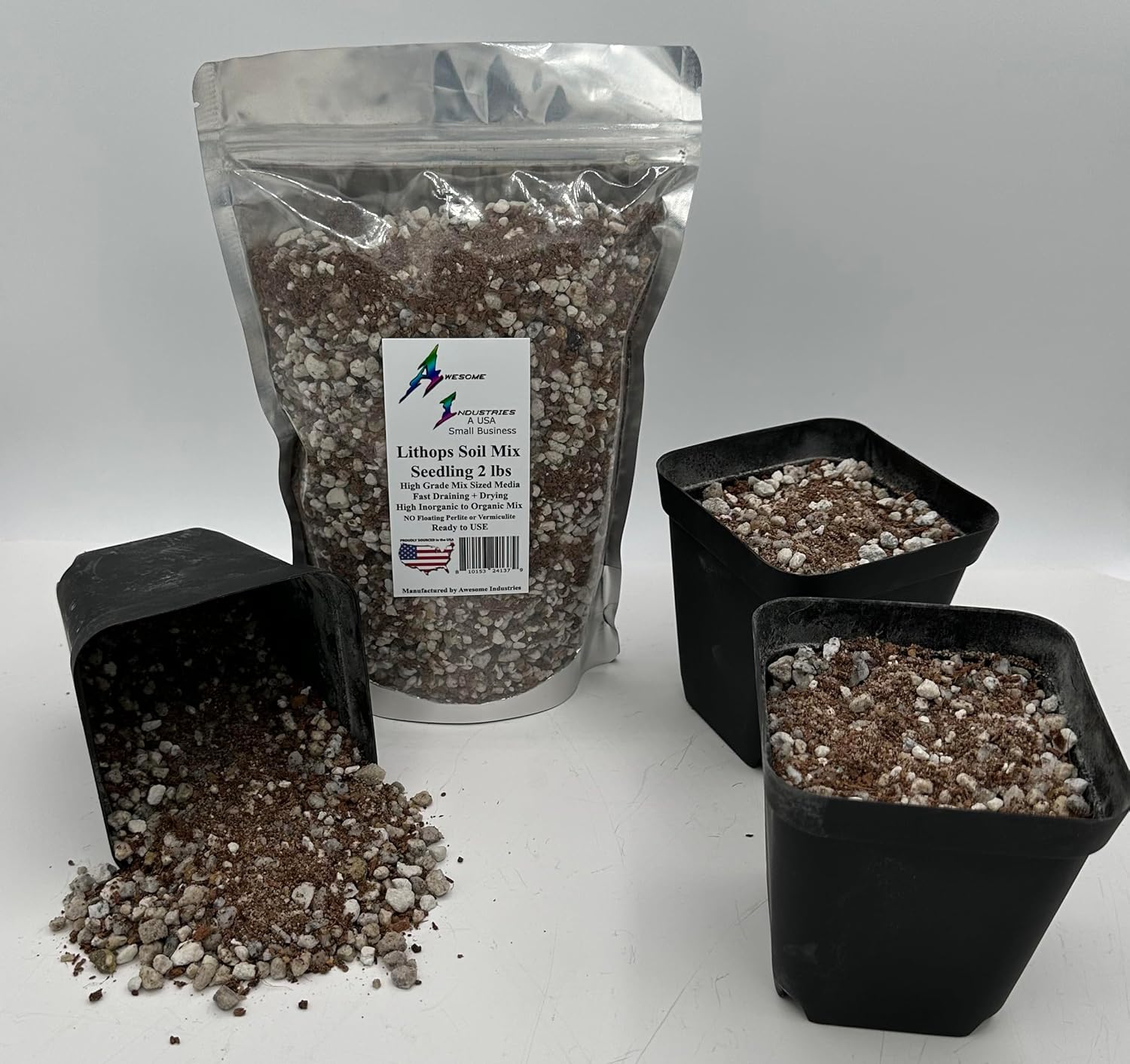
Awesome Industries Lithops Seed Starting Gritty Mix, 2 Qt
| Brand Name | Awesome Industries |
|---|---|
| Unit Count | 64 Ounce |
| Style Name | Seeding Mix 2 lbs |
| Volume | 2 quarts |
This gritty seed-starting mix is designed specifically for lithops and similar succulents and is meant to reduce the common problem of overwatering by promoting fast drainage and good root aeration. It contains a high ratio of inorganic aggregates such as pumice, decomposed granite, and sand with a modest organic component to provide some available water without staying wet. Use it for sowing seeds, repotting small living stones, or as a top-up for well-draining succulent containers; the finer seedling grade helps anchor tap roots and encourages development of fine feeder roots. Notable features are the varied particle sizes for good aeration and the deliberate exclusion of perlite and vermiculite to avoid floating media and excess moisture retention. The practical benefit is a lower risk of root rot and healthier root architecture in plants that need a dry, arid-like substrate. Because the product is a small 2 quart volume and a seedling-focused blend, you will need more or a coarser grow mix for larger pots or mature specimens.
Best for: Buyers who want a dependable, purpose-built substrate for starting lithops, mesembs and other small succulents and who prioritize consistent drainage and root health over bulk volume.
Less Ideal for: Gardeners seeking a bulk potting soil for larger succulent collections, mature cacti, or general-purpose container mixes should choose a coarser grow mix or larger package instead.
- High proportion of inorganic grit (pumice, decomposed granite, sand) for excellent drainage
- Varied particle sizes improve aeration and help soil settle around tap roots
- Formulated without perlite or vermiculite to reduce floating media and excess moisture retention
- Seedling-grade finer texture supports faster early growth and root development
- Small 2 quart volume may require frequent repurchasing for multiple plants or larger pots
- Finer seedling mix holds slightly more moisture than the coarser grow mix offered by the same brand
Verdict: Choose this gritty seedling mix when you need a reliable, fast-draining substrate to establish healthy roots in lithops and other small succulents.
Miracle-Gro Indoor Potting Mix for Cactus & Succulent, 2‑pack (8 qt.)

| Item Highlight | Fast-Draining Cactus and Succulent Potting Mix with Plant Food |
|---|---|
| Number of Packs | 2 |
| Included Components | 2 bags |
| Item Type Name | Soil |
| Ingredients | Sphagnum Peat Moss, Sand, Perlite |
This two-pack of Miracle-Gro Indoor Potting Mix is made specifically for cacti, succulents and other indoor container plants that need quick drainage. The blend pairs sphagnum peat moss, sand, perlite and forest products to help water move through the root zone and reduce the risk of overwatering. It arrives ready to use so you can repot straight from the bag into a pot with drainage; the manufacturer recommends feeding with a compatible indoor plant food about 30 days after repotting and repotting roughly every two years. Practical benefits include improved aeration for shallow roots and a lighter, less compacting medium than standard all-purpose soils. Limits to expect are modest bag volume per unit (8 qt. each) so multiple bags are needed for larger collections, and the mix contains peat which may compress over time and require refreshment. Overall this is a convenient, plant-food enriched option for hobbyists who want a reliable, fast-draining substrate for indoor succulents and cacti.
Best for: Buyers who want a straightforward, low-fuss soil that promotes quick drainage and helps prevent overwatering for indoor succulents and cacti, guided by proven brand formulations and product feedback.
Less Ideal for: Growers who prefer fully organic or peat-free mixes or who need large volumes for outdoor beds should consider alternatives tailored to those priorities.
- Formulated for desert plants with fast-draining ingredients to reduce root rot risk
- Includes plant food to give newly potted succulents a nutrient boost
- Ready-to-use mix so no blending or amendments are required
- Perlite and sand improve aeration for shallow succulent roots
- Each bag is 8 quarts so you may need several bags for multiple pots or larger repots
- Contains peat moss which can compact over time and may require occasional repotting to refresh structure
Verdict: A convenient, plant-food enriched fast-draining potting mix that makes repotting indoor succulents and cacti quick and low effort.
Back to the Roots Organic Succulent & Cacti Soil, 6 Quart

| Volume | 6 quarts |
|---|---|
| Item Highlight | Fast-draining cactus and succulent soil; peat-free |
| Made in | USA |
| Ingredients | Dolomitic limestone, perlite, horticultural sand, aged bark, plant food |
This 6-quart succulent and cacti mix is designed to give desert-type plants a well-draining, nutrient-ready medium straight from the bag. It combines aged bark, perlite and horticultural sand to improve aeration and speed water movement so roots avoid staying waterlogged. The formula is peat-free and made in the USA, with added plant food to support early growth; manufacturers recommend supplementing with organic fertilizer about a month after transplanting. For typical use you fill pots or refresh topsoil for potted aloe, jade, echeveria and small cacti, then water sparingly as needed. Practical benefits include easier care for beginners, reduced risk of root rot thanks to the rapid-drain blend, and a soil texture that encourages stronger roots. Limitations are the small 6-quart volume for users with many plants and the recommendation to add additional fertilizer later for sustained nutrition.
Best for: Buyers who want a low-risk, ready-to-use soil that simplifies care for indoor succulents and cacti and reduces the chance of overwatering problems.
Less Ideal for: Gardeners who need bulk soil for many containers or large raised beds should choose larger-volume blends or bulk potting mixes instead.
- Designed specifically for succulents and cacti with fast-draining ingredients to reduce root rot risk
- Contains aged bark and perlite to improve aeration and root development
- Peat-free, organic-focused formula made in the USA
- Includes plant food to support early growth and simplify care for beginners
- Small 6-quart bag may require multiple purchases for several plants or larger pots
- Does not eliminate the need for follow-up fertilizing after initial transplant
Verdict: A convenient, fast-draining organic mix that reduces overwatering risk and makes succulents easier to grow for cautious or beginner plant owners.
Choosing the Right Plant Soil Mix for Succulents: Key Factors to Consider
Drainage and Porosity
Succulents need a soil that sheds excess water quickly to avoid prolonged wet pockets around the roots. Drainage depends on the mix of coarse components such as pumice, perlite, coarse sand, or grit blended with a small portion of organic material. A porous mix encourages rapid flow through the pot and allows air to reach the root zone, which helps roots stay healthy and reduces bacterial or fungal issues.
When assessing mixes, look for visible coarse particles and avoid components that break down into fines, which reduce porosity over time. Drainage also depends on pot size and container drainage holes, so pair a fast-draining mix with appropriately sized pots to maintain the intended water balance.
Particle Size Distribution
Uniform particle size and the right range of particle diameters help create stable pore spaces for oxygen and water. Too many fine particles fill gaps between larger grit and cause compaction and poor oxygen flow, while a mix that is too coarse may not retain enough moisture between waterings. Ideal succulent mixes include a variety of particle sizes with a bias toward coarse fragments to preserve aeration.
Consider the scale of your containers: small pots benefit from finer-grit mixes that still drain well, while large planters tolerate coarser blends. Also think about the long-term: some materials break down faster than others and change the particle profile after a season or two.
Nutrient Content and Longevity
Succulents do not require heavily fertile soil, but they still need a baseline of nutrients to sustain growth and recovery after repotting. Look for mixes with a modest, slow-release nutrient profile or that accept top-dressing and light feeding without accumulating salts. A balanced nutrient level prevents overly lush, weak growth and supports steady development of roots and foliage.
Longevity matters because some mixes lose structure or exhaust available nutrients quickly. Choosing a mix with stable inorganic components and moderate organic matter reduces the need for frequent full repots and keeps maintenance simple.
Salt Content and Chemical Additives
Excess soluble salts and harsh chemical additives can damage succulent roots and lead to leaf tip burn, stunted growth, or poor water uptake. Many commercial mixes include starter fertilizers or water-retaining crystals that may be inappropriate for succulents. Gardeners should prefer mixes with low soluble-salt content and avoid those with unfamiliar wetting agents or high-concentration starter charges.
If a mix includes fertilizer, ensure it is low and slow release or plan for a gentle feeding schedule. Flushing newly repotted succulents with plain water once after planting can help remove residual salts from some bagged mixes.
pH and Mineral Composition
Soil pH affects nutrient availability and the microbial environment around succulent roots. Most succulents are tolerant of a slightly acidic to neutral pH range, so mixes that are extremely alkaline or acidic can cause nutrient lockup or micronutrient deficiencies. Mineral components such as limestone or high-calcium materials will raise pH over time, which matters if you keep plants long term.
If you grow succulents that prefer specific pH conditions, choose a mix with compatible mineral content, or amend cautiously with inert components rather than chemical pH adjusters.
Workability and Repotting Practicalities
A good succulent mix should be easy to work with during potting and repotting. It should hold enough cohesion to support plants when you move containers but remain loose enough to remove the root ball without excessive root damage. Materials that are dusty, extremely light, or that fly apart make precise placement difficult, especially in small pots.
Consider how often you repot and whether you want a mix suitable for top-dressing. Potting mixes that require heavy rinsing or handling add time and mess to maintenance tasks, so choose blends that match your preferred repotting rhythm.
Choosing Mix Texture by Container Size
Container size changes how a mix behaves. Small pots dry out faster and can benefit from a somewhat finer mix that still drains well. Large planters hold more moisture overall, so a coarser, more porous blend prevents waterlogging in the lower layers.
Match particle coarseness to pot diameter and depth. For shallow trays and tiny pots, slightly smaller grit keeps enough moisture available between waterings. For deep pots, increase coarse fraction so oxygen reaches deeper roots.
- Small pots: finer grit with good drainage
- Medium pots: balanced coarse and fine particles
- Large pots: high coarse fraction for deep aeration
Top-Dressing and Amendments That Help
Top-dressing with fresh grit or pumice refreshes the surface, reduces crusting, and improves evaporation patterns without disturbing roots. Light annual top-dressing can extend the useful life of a mix.
You can amend existing mixes by adding measured proportions of pumice, coarse sand, or perlite to boost drainage. Avoid over-amending with organic compost because too much organic matter increases moisture retention and decomposition.
- Use pumice or grit for improved drainage and weight
- Add coarse sand sparingly to increase density without clogging pores
- Top-dress annually to renew surface porosity
Watering Patterns to Match the Mix
Adjust watering habits to the mix you use. Faster-draining mixes require less frequent but more thorough soakings. Slower mixes need longer drying between waterings to prevent root rot. Observe the soil surface and pot weight rather than a strict calendar.
When switching mixes, allow a transition period and monitor for signs of under- or over-watering as the root environment settles.
- Fast mix: water deeply, then wait until mostly dry
- Moderate mix: check moisture at 1-2 inch depth
- When in doubt: err on the drier side for most succulents
Indoor Versus Outdoor Use
Indoor succulents often experience lower light and humidity compared with outdoor plants, which changes evaporation rates. Choose a mix with a little more water-holding capacity indoors if you tend to under-water. Outdoors, especially in rainy climates, prioritize rapid drainage and consider protective placement or covered containers to limit excess wetness.
Also consider freeze-thaw exposure outdoors. Some porous materials break down with temperature swings, so select durable components for outdoor planters that face seasonal extremes.
- Indoor: slightly higher organic fraction for steady moisture
- Outdoor: coarser mineral mix to avoid waterlogging
- Protected placement helps manage rainfall for container succulents
Mixes and Pot Materials
Pot material affects drying. Terracotta wicks moisture and pairs well with less-absorbent gritty mixes, while plastic holds moisture longer and may need coarser blends to compensate. Consider how the pot breathes when selecting a mix to achieve the right root humidity.
Drainage holes and internal layering also influence how a mix behaves. Avoid relying on a separate drainage layer that separates from the root zone; instead use a consistently porous mix through the pot depth.
- Terracotta + balanced grit = quicker drying
- Plastic pots + coarse mix = balanced moisture
- Consistent mix depth is better than separate drainage layers
How We Chose the Best Plant Soil Mix for Succulents
We selected mixes that suit typical succulent growing situations from small indoor pots to larger outdoor containers. Our filters prioritized physical drainage properties and root health over vague claims. We assessed mixes for drainage rate and porosity, particle size distribution and aeration, nutrient content and longevity, salt and additive levels that can harm succulents, and ease of use for repotting or top-dressing. We also considered how mixes perform across common container types and climates, including whether a mix compacts over time or requires regular amendment. Excluded from consideration were blends primarily designed for cacti with extreme grit only, mixes containing high levels of retained-moisture additives, and potting soils formulated mainly for houseplants that lack sufficient aeration. The final list reflects mixes that balance quick drainage with enough water-holding capacity to support periodic watering and steady nutrient delivery.
FAQ
Can I make my own plant soil mix for succulents?
Yes. Many gardeners blend potting soil with coarse mineral components like pumice, perlite, or coarse sand to achieve the right drainage and aeration. Keep organic matter low and test the texture in the actual pot size you will use.
How often should I repot succulents into fresh mix?
Often repotting every one to three years is sufficient, depending on how quickly the mix breaks down and your plant's growth. Repot when the mix compacts, drains poorly, or the plant outgrows its pot.
Is perlite or pumice better for succulents?
Both improve drainage, but pumice is heavier and more durable, which helps stability in outdoor pots and reduces float during watering. Perlite is lighter and inexpensive but can break down or migrate to the surface over time.
Should I use fertilizer in a succulent soil mix?
Use low-concentration, slow-release feeding sparingly. Succulents prefer modest nutrients; heavy feeding encourages weak, leggy growth. Apply light feeding during the active growing season rather than relying on a high-fertilizer mix.
How do I reduce salt buildup in repotted succulents?
Rinse new mixes lightly after repotting if you suspect soluble salts, and occasionally flush containers with water during the growing season to remove accumulated salts. Choosing a low-salt mix from the start helps minimize this issue.
Can I reuse old succulent soil mix?
You can reuse parts of old mix if it still drains well and is not high in salts or decomposed organic matter. Refresh the blend with added coarse material and replace a portion with fresh mix to restore porosity and nutrients.
Final Verdict
Prioritize drainage, stable particle structure, and modest nutrient levels when choosing a plant soil mix for succulents. Match the mix texture to your pot size and growing conditions, and be prepared to top-dress or refresh the mix as structure declines. The right mix reduces watering mistakes, lowers disease risk, and supports steady, compact growth. Focus on porosity and low soluble salts first, then adjust nutrient inputs and amendments to suit your specific indoor or outdoor setup.
