

Note: This article contains affiliate links. If you click on these links and make a purchase, I may earn a small commission at no extra cost to you. This helps support my research and content. Read my full affiliate disclosure here.
If you plan to renovate or seed a lawn, the right garden tiller for lawns makes preparing compact turf and mixed soil much easier. You want a machine that breaks up old sod, loosens compacted topsoil, and tills without tearing up surrounding grass or leaving big clods. This guide shortlists the top options suited specifically for lawn work and explains how each was judged for turf friendliness, soil penetration, and ease of use in real yard conditions. Read on for a concise overview of performance factors and practical uses to help you pick the best tiller for your lawn project.
Top Picks at a Glance
| Best Overall The best all-around choice for most situations | LawnMaster 13.5-Amp 18" Corded Electric Tiller (TE1318M) |  |
| Best Quality Built to a higher standard if you want something more solid | Steelite 18" Electric Tiller Cultivator with 13.5A Motor and Adjustable Wheels |  |
| Best Value The sweet spot between price and what you get | SOARFLY Cordless Tiller Cultivator with 2×4.0Ah Batteries |  |
| Highest Rated A top-rated pick with lots of positive feedback | Feeoc 21V Cordless Tiller Cultivator with 8.0Ah Battery and Charger |  |
| Most Popular A crowd favorite that many people choose with confidence | Sun Joe Corded Electric Garden Tiller & Cultivator TJ604E |  |
LawnMaster 13.5-Amp 18" Corded Electric Tiller (TE1318M)

| Power Source | AC |
|---|---|
| Operation Mode | Electric |
| Tilling Width | 18-Inch |
| Tilling Depth | 9-Inch |
| Blades | 6 |
The LawnMaster TE1318M is a corded electric tiller built to prepare and refresh lawns and garden beds without gasoline. It uses a 13.5-amp motor driving six rust-resistant steel tines at about 380 RPM to cut through soil to a reported 9-inch depth and an 18-inch width, and the tines are detachable so you can convert to a narrower 4-tine setup for tighter passes. It is typically used for primary tilling, breaking compacted soil, and incorporating compost or amendments across medium to large areas where cord access is available. Practical features include mechanical overload protection that stops the unit if the tines bind, adjustable transit wheels for easier transport, and foldable handles for compact storage. As an electric machine it runs quietly and avoids fumes, but being corded limits reach compared with cordless or gas models and the 380 RPM speed is tuned for general cultivation rather than heavy-duty rock-hard ground. Assembly and handling are straightforward, and the metal construction gives a solid feel for routine lawn and garden maintenance.
Best for: Buyers who want a reliable, low-maintenance electric tiller for medium to large lawns and garden beds and prefer a quieter, emission-free tool for routine soil preparation.
Less Ideal for: Users who need unlimited range or frequent heavy-duty tilling of very compacted or rocky ground should consider cordless or gas-powered alternatives.
- 18-inch working width with detachable tines offers coverage flexibility for beds and narrow rows
- Rust-resistant steel tines and metal construction for durability in regular use
- Mechanical overload protection reduces risk of motor damage if tines bind
- Corded electric power gives consistent torque and emits no fumes during operation
- Corded design limits how far from an outlet you can till compared with cordless or gas models
- Not optimized for extremely hard, rocky soil where higher torque gas tillers perform better
Verdict: A practical, emission-free corded tiller that delivers wide, consistent coverage for routine lawn and garden soil preparation.
Steelite 18" Electric Tiller Cultivator with 13.5A Motor and Adjustable Wheels

| Power Source | AC |
|---|---|
| Cutting Width | 18 inch |
| Cutting Depth | 8.7 inch |
| Motor Current | 13.5 AMP |
| Number of Blades | 24 |
The Steelite 18-inch electric tiller is designed to break up compacted soil and prepare lawn or garden plots without the fuss of gas. It plugs into AC power and uses a 13.5-amp motor driving a set of steel tines to till up to about 8.7 inches deep across an 18-inch swath. Adjustable height wheels and an ergonomic, textured handle make it easier to control direction and working depth when cultivating flower beds, lawn reseeding, or turning small vegetable plots. Built-in safety features include a safety switch and overload protection to reduce the risk of accidental starts and motor damage. The unit folds down for compact storage, which helps if space is limited. Expect quieter, lower-maintenance operation than a gas machine, but you will be limited by cord length and by lower torque compared with heavier petrol tillers, so very hard or rocky ground may require multiple passes or a more powerful machine.
Best for: Gardeners who prioritize reliable power and efficient coverage for lawn prep and medium-sized plots and prefer low-maintenance electric tools over gas models.
Less Ideal for: If you need a tiller for very large acreage, remote sites without mains power, or consistently heavy clay and rocky soil, a heavier gas or commercial-grade tiller would be a better choice.
- Wide 18-inch cutting width covers ground quickly for lawns and medium plots
- 13.5-amp motor provides consistent, plug-in power without fuel maintenance
- Adjustable wheels and ergonomic grip improve control and reduce fatigue
- Folds for compact storage to save garage or shed space
- Safety switch and overload protection protect the motor and user
- Corded design limits reach and requires an extension for larger lawns
- Less torque than gas-powered tillers on very compacted or rocky soils
Verdict: Choose this Steelite electric tiller when you want a low-maintenance, wide-coverage corded machine that makes lawn and medium-plot soil prep faster and easier.
SOARFLY Cordless Tiller Cultivator with 2×4.0Ah Batteries

| Unit Count | 2 Count |
|---|---|
| Material Type | Alloy Steel, Plastic |
| Power Source | Battery Powered |
| Operation Mode | Electric |
This SOARFLY cordless tiller is built for small gardens, raised beds, and flower plots where maneuverability and ease matter more than industrial power. It runs on two included 4.0Ah lithium batteries and drives 48 steel tines at a stated 360 RPM to loosen soil, remove weeds, and aerate moderately compacted ground. Adjustable handle height and an auxiliary grip make it simple to steer in tight rows and reduce operator fatigue during longer sessions. Because it is cordless and relatively lightweight, it is easy to carry between beds and safe to use where extension cords would be impractical. The machine performs best in normal garden soil and slightly moist clay when started shallow and increased gradually; very hard, rock-filled, or deeply compacted ground will slow progress and may require multiple passes or a heavier gas unit. Safety features include a two-step start with a safety lock to prevent accidental engagement. For gardeners who want a fuss-free, portable cultivator for prepping planting areas and spot weeding, this model is a practical, user-friendly option.
Best for: Home gardeners with small plots, raised beds, or tight planting rows who prioritize a lightweight, cordless tool that is easy to maneuver and reduces physical strain.
Less Ideal for: Large acreage owners or users who need to break up deep, heavily compacted or rock-strewn soil should consider a heavier gas-powered tiller instead.
- Comes with two 4.0Ah batteries for extended runtime and quick battery swaps
- 48 steel tines provide effective soil loosening for small beds and raised planters
- Adjustable height and auxiliary handle improve comfort and control during use
- Cordless design makes it highly portable and usable where power outlets are unavailable
- Not powerful enough for very hard, rocky, or deeply compacted soil compared with gas tillers
- 360 RPM and lightweight build mean slower progress on large areas
Verdict: A portable, easy-to-use cordless cultivator ideal for prepping and maintaining small gardens and raised beds with minimal hassle.
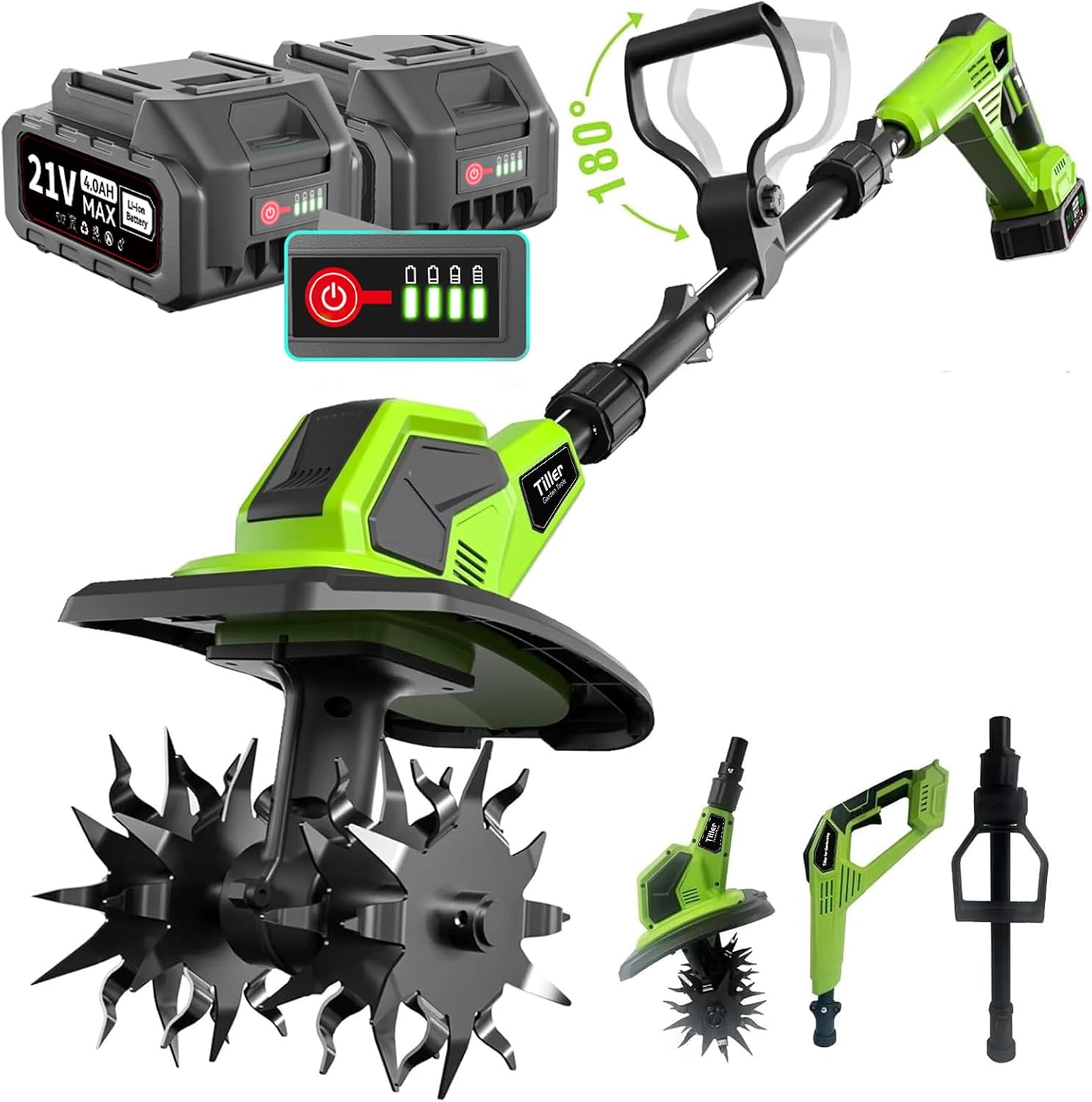
Feeoc 21V Cordless Tiller Cultivator with 8.0Ah Battery and Charger
| Power Source | Battery Powered |
|---|---|
| Operation Mode | Electric |
| Material Type | Alloy Steel, Aluminum |
The Feeoc cordless tiller is a battery-powered cultivator aimed at making light-to-moderate soil prep faster and less physical. It converts between three handle heights so you can use it standing in open beds or shorter in raised planters, and its SK5 steel tines dig about 8.6 inches deep across a roughly 9 inch working width. The included 8.0Ah batteries and charger are intended to provide long run times with a protection cycle to prevent motor overheating, while three-sided cooling on the 900W motor helps sustain power during tougher spots. Assembly is tool-free and straightforward, and the self-propelled feel reduces user fatigue when working larger patches. Limitations to note are that this is built for garden and light turf work rather than heavy-duty sod or rocky subsoil, and the narrower width means it will take more passes on wide areas. If you need a portable, adaptable battery tiller for raised beds, vegetable plots, and routine cultivation, this model balances power and runtime well but is not a replacement for a full-size gas tiller on very compacted ground.
Best for: Gardeners who prioritize strong cordless performance and long runtime for regular bed preparation and maintenance, and who want a versatile tool that adapts to raised beds and standing use.
Less Ideal for: Those who need a heavy-duty machine for breaking sod, large-scale landscaping, or frequent work in rocky, compacted subsoil should look at larger gas-powered tillers instead.
- Adjustable 3-stage handle lets you customize height for raised beds or open gardens
- Includes 8.0Ah battery pack and charger for extended runtime
- 900W motor with three-sided cooling reduces heat-related power loss during sustained use
- SK5 steel blades provide adequate depth for turning and cultivating garden soil
- Working width is relatively narrow, requiring more passes on large areas
- Not intended for heavy sod, large roots, or very rocky compacted soil
Verdict: Buy this if you want a powerful cordless tiller with long battery life and adjustable height that makes bed prep easier without a gas engine.
Sun Joe Corded Electric Garden Tiller & Cultivator TJ604E

| Power Source | Corded Electric |
|---|---|
| Motor | 13.5-Amp |
| Tilling Width | Up to 16 inches |
| Tilling Depth | Up to 8 inches |
The Sun Joe TJ604E is a compact corded electric tiller built to prepare small garden plots and flower beds without the fuss of gas maintenance. It runs on a 13.5-amp motor that tills a 16-inch-wide swath up to 8 inches deep, using six angled alloy steel tines that resist rust and handle light to medium soil. The folding handle and three-position wheel adjustment make it easy to store and to control working depth across different soil types. As an electric machine it delivers quieter, cleaner operation and continuous power as long as you have an outlet nearby, which simplifies upkeep compared with small gas tillers. Limitations include dependence on a cord for power, which restricts range and requires care to avoid tangling, and it is best suited for softened or loamy soils rather than heavy clay or rocky ground where a more powerful gas model would perform better.
Best for: Gardeners who want a low-maintenance, easy-to-use cultivator for preparing and refreshing small vegetable beds, flower borders, or starter plots and who prioritize simplicity and reliable electric power.
Less Ideal for: Large-acreage gardeners or those who regularly work compacted clay or rocky ground should consider a heavier gas-powered tiller or professional equipment instead.
- 13.5-amp motor provides steady power for small to medium garden beds
- Six angled alloy steel tines designed to resist rust and cultivate effectively
- Folding handle and compact footprint for easy storage and transport
- Three-position wheel adjustment for better control of tilling depth
- Corded electric design means quieter operation and low maintenance
- Corded power limits working range and requires attention to avoid the cord
- Not intended for very heavy clay, large roots, or rocky conditions
Verdict: If you need a simple, low-maintenance electric tiller to quickly prepare and maintain small gardens, the Sun Joe TJ604E delivers reliable power and easy storage.
Choosing the Right Garden Tiller for Lawns: Key Factors to Consider
Turf Safety and Adjustable Depth
For lawn work you need a tiller that lets you control how deep the tines cut so you do not remove too much turf or create large bare areas. Adjustable depth settings let you start shallow to scarify and loosen the top inch or two of soil for overseeding, or go deeper to remove sod and prepare a new lawn.
A turf-safe machine will have a guard or adjustable skids to limit tine aggression at the edges and reduce tearing. Choosing a tiller with fine depth increments helps you respond to varying conditions across a yard, from compacted walkways to softer garden edges.
Tine Design and Soil Penetration
Tines determine how the machine interacts with compacted soil and thatch. L-shaped or C-tine designs tend to dig more aggressively and are useful for breaking sod, while forward-rotating blades can work the soil more gently for topsoil blending and seedbed prep.
Consider the tine width and spacing as well. Narrow, closely spaced tines give a finer finish and better seedbed for lawns, while wider, heavy-duty tines are better for ripping through root-bound or clay-rich patches. Matching tine type to the common soil texture in your lawn will save effort and produce a more even surface.
Power Source and Torque
Power matters, but the important measure for lawns is usable torque at the tines rather than raw engine size. A unit with good low-end torque will pull through compacted patches without bogging down and will deliver consistent revolutions under load.
Gas engines usually offer higher torque for tougher soils, while electric or battery models provide quieter operation and simpler maintenance for smaller yards. Consider how often you will use the tiller and the hardest soil conditions in your lawn when choosing the powertrain.
Maneuverability and Width
Working around trees, flower beds, and along fences requires a tiller that is easy to steer and that has an appropriate working width. Narrower machines are easier to control and better for tight spaces, while wider units cover more ground faster on open lawns.
Weight distribution affects how the unit tracks and how easily you can lift or turn it. Look for ergonomic handle positioning and reversible wheels or transport modes that make moving the tiller across grass simple without damaging the yard.
Start-Up, Maintenance, and Storage
You will likely use a lawn tiller only a few times per season, so ease of starting and low maintenance are valuable. Features like easy-access spark plugs, simple belt or chain covers, and clear oil-fill points reduce the time spent on upkeep.
Compact storage design or foldable handles matters for homeowners with limited shed space. Also consider the availability of common service parts like belts and tines so the machine can be kept in working order through multiple seasons.
Durability and Repairability
A tiller that stands up to occasional heavy use will save money and frustration. Durable tine mounts, a robust gearbox or transmission, and corrosion-resistant materials in the tines and frame help the unit survive moist lawn conditions.
Repairability matters because simple, replaceable components are easier to fix between seasons. Machines designed for easy access to driveline parts and with common fasteners are preferable for homeowners who maintain their own equipment.
When to Use a Tiller on a Lawn
Tilling is appropriate for actions such as removing old sod before installing a new lawn, breaking up compacted areas prior to reseeding, and incorporating topdressing or amendments into the upper soil layer. For simple overseeding you usually want only light surface work rather than deep tilling.
Avoid tilling when the soil is overly wet because that can create clods and make compaction worse. Early spring after a few dry days or late summer into early fall are often the best windows for lawn tilling in many climates.
- Use shallow depth for overseeding and scarification.
- Choose deeper passes for sod removal or major renovation.
- Wait until soil is dry enough to crumble, not stick to tines.
Preparing the Lawn Before Tilling
Mow the lawn short and remove debris, stones, and any persistent roots that could wrap the tines. Mark sprinkler heads and landscape features that could be damaged. If the lawn has thick thatch, rake or dethatch before using a tiller to reduce load on the machine.
If planning to seed, test a small area first to confirm the depth setting produces the finish you want. Preparing clear boundaries with landscape edging makes it easier to control where the tiller operates and prevents accidental damage to beds.
- Shorten grass and clear debris the day before tilling.
- Dethatch very dense lawns to reduce tine stress.
- Mark sensitive features like sprinkler heads and shallow cables.
Safety and Best Practices
Always wear eye protection, gloves, and sturdy footwear when operating a tiller. Keep bystanders, especially children and pets, well away from the work area. Follow the manufacturer's guidance on safe posture and handle control to avoid strain.
Work in slow, controlled passes and avoid forcing the tiller into overly hard ground. If the machine starts to stall frequently, stop and reassess the depth or make a prior pass at a shallower setting. Regularly inspect tines and hardware for wear during use.
- Wear protective gear and keep clear zones.
- Operate at a steady pace and avoid sudden turns.
- Inspect tines and fasteners between passes.
After-Tilling Care and Seeding Tips
Rake the tilled area to level the seedbed and break remaining clods. Lightly roll or tamp high spots so seeds will have even soil contact. If overseeding, broadcast seed evenly and consider a light top dressing of screened compost to promote germination.
Water gently and frequently until seedlings establish, then taper to deeper, less frequent irrigation. Avoid heavy traffic on newly tilled and seeded areas until grass has developed a stable root system.
- Level and firm the seedbed for uniform germination.
- Use screened compost as a thin topdressing for seed protection.
- Keep newly tilled areas protected from foot traffic until established.
Alternatives to Tilling for Minor Lawn Repairs
For small patch repairs, core aeration followed by topdressing and overseeding can be less disruptive than full tilling. Aeration reduces compaction and improves seed-to-soil contact without removing turf.
Hand tools such as a half-moon edger or a garden fork can suffice for localized spot repairs, particularly where you want to preserve surrounding grass. These alternatives are lower cost and reduce the risk of overworking healthy turf.
- Use core aeration for compaction relief without full disturbance.
- Employ hand tools for precise patch repairs in tight spaces.
How We Chose the Best Garden Tiller for Lawns
We focused on features that matter for lawn-focused tilling rather than broad garden or agricultural use. Our editorial filters prioritized machines that deliver controlled turf disturbance, adjustable working depth, and predictable soil turnover. We evaluated engine or motor power relative to tine design, the ability to handle compacted clay or thatch-bound topsoil, and maneuverability around existing turf areas. Ease of starting, transport and storage, and maintenance accessibility were considered because homeowners use these machines intermittently. Durability of the tine assembly and the robustness of the drive system were assessed to avoid frequent repairs when working on tougher lawn soils. We excluded heavy-duty agricultural rototillers and multi-function units intended primarily for large-scale cultivation; the list focuses on machines sized and spec'd for lawn renovation, overseeding prep, and small-to-medium yards. Final choices balance turf-safe operation, effective soil penetration, operator control, and serviceability.
FAQ
Can I till my lawn in the spring?
You can till in spring if the soil is dry enough to crumble rather than smear. Early spring can work, but avoid tilling when the ground is saturated because that can damage soil structure.
How deep should I set the tiller for overseeding?
For overseeding aim for a shallow setting that lightly scores the surface, typically no more than 1 to 2 inches. The goal is to improve seed-to-soil contact without removing the existing turf completely.
Will tilling make my soil worse by increasing compaction?
Tilling can temporarily loosen compacted soil, but if done when the soil is too wet or with improper technique it can create clods and cause further compaction. Proper timing and shallow passes reduce that risk.
Is an electric or gas tiller better for small lawns?
Electric or battery tillers are often suitable for small lawns because they are lighter, quieter, and require less maintenance. Gas models provide more torque for very compacted or clay-heavy soils and larger renovation jobs.
How often should I inspect the tines and drive components?
Check tines and driveline hardware before each use and again midway through larger jobs. Regular pre- and post-season inspections help catch loose bolts, worn tines, or belt issues before they cause failures.
Final Verdict
Choosing the right garden tiller for lawns means balancing turf-safe operation with the ability to penetrate your specific soil type. Prioritize adjustable depth control, a tine design suited to either light scarification or sod removal, and a power source that matches the toughest spots in your yard. Consider maneuverability, maintenance ease, and durable tine construction to minimize downtime and protect surrounding turf. With these tradeoffs in mind you can confidently select a tiller that fits your lawn renovation needs and helps produce a smooth, seed-ready surface.
