

Note: This article contains affiliate links. If you click on these links and make a purchase, I may earn a small commission at no extra cost to you. This helps support my research and content. Read my full affiliate disclosure here.
If you tend a medium-sized yard, allotment, or backyard vegetable patch, the right mid garden tiller makes soil prep faster and less tiring. You want enough power to break compacted soil and chop through roots without a machine so large it is hard to steer or store. This guide shortlists the top mid garden tillers built for those mid-size spaces and everyday prep tasks. We evaluated each model for power delivery, tine design, handling, and durability to help you pick a machine that matches your soil type and storage constraints. Read on for practical guidance and the specific factors we used to choose the best options.
Top Picks at a Glance
| Best Overall The best all-around choice for most situations | BILT HARD 18-Inch Corded Electric Tiller Cultivator, 15A Motor, 6 Steel Tines |  |
| Best Quality Built to a higher standard if you want something more solid | Earthquake Versa 2-in-1 Front-Tine Tiller/Cultivator with 99cc Viper Engine |  |
| Best Value The sweet spot between price and what you get | BILT HARD 14-inch Corded Electric Tiller Cultivator, 10 Amp |  |
| Best Budget The cheapest option that still gets the job done reliably | EWORK 10A Corded Electric 14" Garden Tiller |  |
| Highest Rated A top-rated pick with lots of positive feedback | Sun Joe TJ603E 16-Inch Corded Electric Garden Tiller & Cultivator |  |
BILT HARD 18-Inch Corded Electric Tiller Cultivator, 15A Motor, 6 Steel Tines

| Power | 15A 120V/60Hz |
|---|---|
| Tilling width | 18 in. (max) |
| Tilling depth | 8.7 in. (max) |
| Tines | 6 steel tines with 4 angled blades |
| Blade speed | 380 RPM |
The BILT HARD 18-inch electric tiller is a straightforward corded cultivator aimed at preparing garden beds, loosening soil, and mixing in compost. It uses a 15A AC motor driving six steel front tines that spin at about 380 RPM to break up soil across an 18-inch width and reach up to roughly 8.7 inches deep, which makes short work of small to medium vegetable plots, flowerbeds, and courtyard gardens. A foldable H-handle and quick-release knobs keep it easy to carry and store, and the flip-down wheels with multiple positions let you control working depth for different soils. Practical benefits include lighter weight and simple plug-in operation so you avoid gas maintenance and cold starts, plus rust-resistant blades for durability. Important limitations are its corded power source, which restricts range unless you use an outdoor extension rated for the tool, and modest torque compared with gas tillers, so it can struggle in very compacted or rocky ground. For routine bed prep and seasonal cultivation in typical backyard gardens it is an efficient, easy-to-use option.
Best for: Gardeners who want a low-maintenance, easy-to-use tiller for preparing and maintaining small to medium beds and who value portability and simple electric operation.
Less Ideal for: People who need a heavy-duty machine for large acreage or very compacted, rocky ground should consider a gas-powered or more powerful tiller instead.
- Powerful 15A motor suitable for routine garden bed preparation
- Six steel tines with angled blades for effective soil breaking and mixing
- Foldable H-handle and quick knobs for compact storage and portability
- Adjustable flip-down wheels let you set tilling depth for different tasks
- Corded power limits range unless a proper outdoor extension is used
- Less torque than gas tillers so not ideal for very hard or rocky soil
Verdict: A lightweight, no-fuss electric tiller that reliably preps and maintains small to medium garden beds without gas maintenance.
Earthquake Versa 2-in-1 Front-Tine Tiller/Cultivator with 99cc Viper Engine
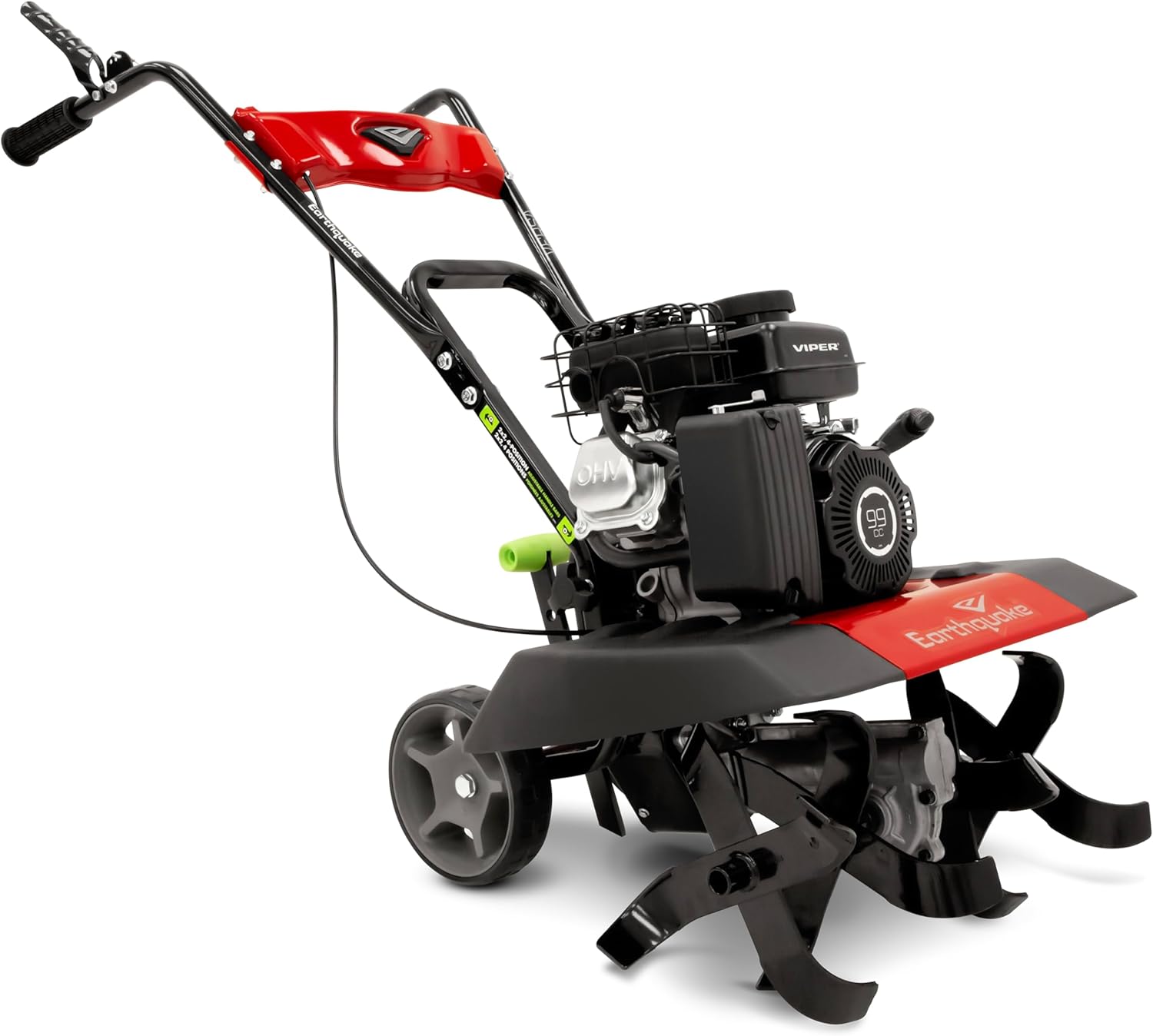
| Engine | 99cc 4-cycle Viper |
|---|---|
| Tilling width | Adjustable 11" to 21" |
| Tilling depth | Up to 11" |
| Power source | Gas powered |
The Earthquake Versa is a two-in-one front-tine tiller and cultivator built around a 99cc 4-cycle Viper engine; it handles both preparing large garden beds and working narrow rows by removing outer tines and side shields. In tiller mode the 21-inch maximum width and deep 11-inch depth let you break compacted soil and prepare seedbeds quickly, while the 11-inch cultivator setting makes it easy to work between plants and along fences. Tool-less removal of outer tines and integrated transport wheels speed conversion and moving the unit around the yard. The low center of gravity and adjustable handlebar height improve control during use, and the onboard wheels reduce lifting when transporting. Because it is gas powered, expect routine engine maintenance, noise, and fuel handling compared with electric alternatives, and its front-tine design is better for garden rows than heavy-duty sod or clay in large acreage jobs. For homeowners who want a reliable, convertible gasoline tiller for regular garden prep and midseason cultivating, the Versa covers both roles without specialized tools.
Best for: Home gardeners who want a dependable gas machine that can both prepare full beds in spring and work narrow rows midseason, and who prioritize a versatile, easy-to-convert tool over quieter electric alternatives.
Less Ideal for: People who need a quiet, low-maintenance electric option or who must till very large areas of heavy sod or clay where a rear-tine, heavy-duty machine would be more efficient.
- Convertible 2-in-1 design switches quickly between 21" tiller and 11" cultivator without tools
- Powerful 99cc 4-cycle Viper engine suitable for breaking compacted garden soil
- Tilling depth up to 11" lets you prepare deep seedbeds and remove stubborn roots
- Integrated transport wheels and adjustable handlebar height improve maneuverability and handling
- Gas engine requires regular maintenance, fuel, and produces noise and exhaust
- Front-tine layout is less efficient than rear-tine tillers for very large or heavy sod removal
Verdict: Choose the Versa if you want one gas tiller that reliably converts to a narrow cultivator so you can both prep large beds and work tight rows with the same machine.
BILT HARD 14-inch Corded Electric Tiller Cultivator, 10 Amp

| Power Source | Corded Electric |
|---|---|
| Working Width | 14" |
| Working Depth | 8.7" |
| Tines | 4 rust-resistant steel blades |
The BILT HARD 14-inch corded electric tiller is built for small vegetable patches, flowerbeds, and light soil prep where maneuverability matters more than heavy-duty power. Its 10 amp AC motor turns four rust-resistant steel tines to till a 14-inch swath to roughly 8.7 inches deep, making short work of breaking up topsoil, mixing in compost, and removing shallow weeds. The unit is compact and light enough for one person to handle and the two-position wheels plus foldable H-handle make transport and storage straightforward. Safety features include a lock button to reduce accidental starts. Practical limitations are its corded power and modest tine setup, which mean it is best for looser soil and smaller plots rather than compacted ground or deep, rocky beds. Expect quicker work on established garden soil and lighter prep tasks but consider a larger electric or gas tiller for heavy duty turning or large acreage.
Best for: Gardeners with small to medium raised beds or flower borders who want an easy-to-handle, low-maintenance tiller for routine soil prep and compost mixing.
Less Ideal for: People preparing large plots, hard-packed ground, or stony soils should look at more powerful gas or larger electric tillers built for heavy-duty turning.
- Lightweight and foldable handle for easy transport and compact storage
- Four rust-resistant steel tines that slice and mix soil for small beds
- Two-position wheels simplify moving between work and transport modes
- Safety lock button reduces risk of accidental activation
- Corded power limits range and requires an appropriately rated extension cable
- Modest tine configuration and 10 Amp motor are not ideal for very hard or rocky soil
Verdict: A compact, easy-to-use electric tiller that handles routine prep of small garden beds quickly and with minimal storage footprint.
EWORK 10A Corded Electric 14" Garden Tiller
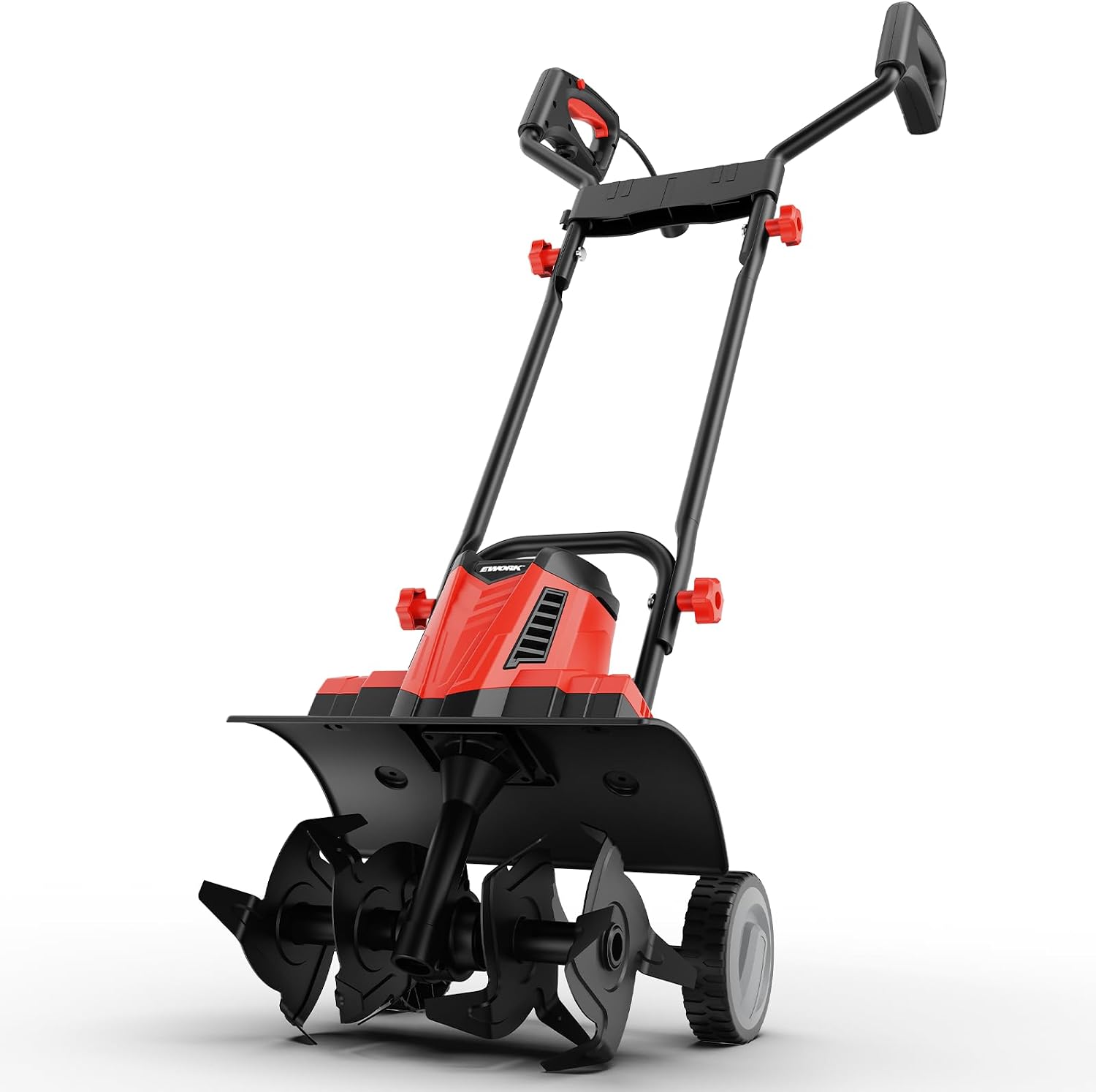
| Power Source | AC |
|---|---|
| Operation Mode | Electric |
| Tilling Width | 14" |
| Tilling Depth | 7" |
| Motor | 10A |
The EWORK 10A corded garden tiller is a straightforward electric cultivator targeted at everyday garden bed prep. It uses a 10 amp high-torque motor driving a 14-inch tine width and a 7-inch maximum depth to break clods, aerate soil, and level planting rows in a single pass. The one-piece manganese steel claw tine disc resists wear and reduces grass wrapping, and adjustable wheels let you set working depth to match different soil types. As a corded model it delivers continuous power without fuel, and the foldable handle plus light 18.3 lb mass make assembly, storage, and handling easier for homeowners. Safety features include dual safety switches, an anti-loose cord clip, and mechanical overload protection that shuts the unit off if the tines jam. Limitations are typical of corded hand tillers: it is best for small to medium plots rather than large acreage and will struggle with very heavy rocky ground compared with larger gas machines. Still, for routine garden prep this offers reliable, low-maintenance performance.
Best for: Home gardeners who want an affordable, low-maintenance tool to prep small to medium vegetable plots and flower beds with reliable electric power and easy storage.
Less Ideal for: People who need a heavy-duty tiller for large properties, deep rocky soil, or commercial-scale cultivation should consider larger gas-powered models instead.
- Continuous corded power for uninterrupted tilling without refueling
- 10A motor with 14" width and 7" depth handles compacted soil and breaks clods in one pass
- Manganese steel one-piece claw tines resist wear and reduce grass wrapping
- Lightweight, foldable design makes assembly, storage, and maneuvering simple
- Built-in safety features including dual safety switches and overload auto-shutoff
- Corded design limits reach unless an extension is used
- Not intended for large acreage or very rocky, heavy-duty excavation
Verdict: A budget-friendly corded tiller that delivers reliable, low-maintenance soil prep for small to mid-size garden beds.
Sun Joe TJ603E 16-Inch Corded Electric Garden Tiller & Cultivator

| Power Source | Corded Electric |
|---|---|
| Motor | 12 Amp |
| Tilling Width | 16 Inch |
| Tine Material | Steel |
The Sun Joe TJ603E is a compact corded tiller and cultivator built to break up soil and prepare garden beds quickly. It uses a 12-amp electric motor to power six angled steel tines that cultivate a 16-inch swath and reach about 8 inches deep, making it a good choice for turning small to medium vegetable plots, flower beds, and prepping new planting rows. The folding handle and three-position wheel adjustment make it easy to set working depth and transport or store in a garage. Being electric, it runs cleaner and quieter than gas models and requires little maintenance beyond keeping tines clean. Practical limitations are the corded power source, which restricts reach without an extension, and the unit is intended for lighter soils and moderate workloads rather than heavy, compacted ground or commercial-scale tilling. For gardeners who want reliable, low-maintenance performance for routine bed preparation, this machine delivers straightforward, efficient results.
Best for: Gardens where routine bed preparation and moderate digging are the priority; ideal for homeowners who want a low-maintenance, reliable electric tool to prep vegetable plots and flower beds quickly.
Less Ideal for: Large acreage, professional landscapers, or anyone who needs to break up dense, compacted clay or heavy turf should consider a more powerful gas or heavy-duty tiller instead.
- Decent 12-amp motor for consistent power during typical home gardening tasks
- Six angled steel tines for effective soil turnover and durability
- 16-inch tilling width covers beds efficiently for quicker passes
- Folding handle and adjustable wheel positions for easier transport and storage
- Electric operation reduces maintenance and eliminates gas fumes and oil
- Corded design limits working range without an outdoor extension cord
- Not intended for very hard, compacted soils or commercial-scale tilling
Verdict: A practical, low-maintenance electric tiller that delivers dependable performance for routine garden bed preparation.
Choosing the Right Mid Garden Tiller: Key Factors to Consider
Engine or Motor Output
How much raw power a tiller produces determines whether it can break compacted ground and cut through root mat. For mid garden use you want an engine or motor that provides steady torque across low revs so the tines keep turning in heavier soil.
Higher peak horsepower is less important than usable torque at working speeds. Electric models trade top-end grunt for instant torque and lower maintenance, but they may struggle in very heavy clay unless they are sized to the task. Consider how often you will encounter hardpan, sod, or thick roots and choose output accordingly.
Tine Configuration and Material
Tine shape, width, and metallurgy affect how the machine slices through soil and organic matter. Curved or L-shaped tines dig and pull soil differently than straight blades; more aggressive tines are better for new ground, while gentler designs suit cultivated beds.
Tines made from hardened steel or with heat treatment last longer and resist bending when they hit stones. Removable and replaceable tines simplify repairs and let you switch to narrower or wider setups depending on the task.
Handling and Maneuverability
A mid garden tiller needs to be easy to steer between rows, around plants, and on slopes. Weight distribution is critical: too light and the tines will skip, too heavy and the machine becomes a chore to turn. Adjustable handle height and folding grips help you maintain control and store the unit when not in use.
Look for responsive steering, forward and reverse options if you plan to work tight beds, and vibration damping to reduce fatigue on longer jobs.
Durability and Frame Construction
The structural build determines how a tiller handles knocks, corrosive soil, and regular transport. A robust frame with protective coatings resists rust and maintains alignment of the drive train and tines through seasons of use.
Welded joints, quality bearings, and sealed gearboxes extend service life. Consider how the unit will be stored; exposed metal benefits from extra corrosion protection if you keep it in a damp shed or outdoors under cover.
Ease of Maintenance and Service Access
Tillers need routine attention: air filter cleaning, spark plug checks, tine replacement, and lubricant points. Designs that give easy access to the engine/motor compartment, quick-release tine assemblies, and standard fasteners reduce downtime and make seasonal servicing straightforward.
Availability of simple consumables such as belts, tines, and common fasteners matters for long-term ownership. Even for electric models, check how accessible brush assemblies or drivetrain components are for replacement.
Best Tiller Types for Mid Gardens
There are a few common tiller styles you will encounter for mid-sized spaces. Front-tine tillers are compact and highly maneuverable, making them suitable for working between established beds and edging. Rear-tine tillers deliver more aggressive soil-turning action and can handle tougher jobs but are heavier to move.
Corded electric and battery-electric tillers are quiet and low-maintenance, ideal if you have easy access to power and prefer lighter machines. Gas-powered tillers bring continuous high torque for heavy clay or large patches that need regular deep cultivation.
- Front-tine: best for tight spaces and lighter cultivation
- Rear-tine: better for primary tilling and breaking new ground
- Electric: low maintenance and quieter operation
- Gas: higher sustained torque for compacted or large areas
Preparing Soil Before You Till
Removing large surface debris and cutting lawn turf into manageable strips reduces strain on the tiller and prevents clogging. If the soil is very dry, water lightly a day before tilling to prevent dust and reduce bounce.
Mark any underground lines, and avoid areas where roots from existing trees might be extensive. For beds being renovated, work in stages: mow or sod-cut, then do a shallow pass before deeper cultivation to make the final tilling easier.
- Clear rocks and sticks to protect tines
- Moisten very dry soil for better tine engagement
- Work in passes for heavy turf or thick root layers
Operating Tips for Safety and Efficiency
Start with a shallow depth setting to let the machine establish traction, then increase depth as the soil loosens. Keep a steady walking pace and avoid forcing the tiller forward; let the tines pull the tool through the ground.
Wear hearing protection and gloves, and keep feet and hands well away from the rotating tines. If the tiller bogs down, raise the depth or reverse to clear the load rather than stalling the engine or motor.
- Begin with a shallow pass, then deepen
- Use protective gear and maintain clear foot placement
- Reverse or lighten depth to clear clogging rather than forcing forward
Storage and Off-Season Care
Drain fuel or add a stabilizer for gas engines before long storage. Clean soil from tines and moving parts and apply a light oil to steel surfaces to prevent rust. Store in a dry, covered area to protect electrical components and reduce corrosion risk.
For battery-electric units, store batteries at recommended charge levels in a controlled-temperature space. Periodically inspect tine sharpness and replace any bent or nicked blades before the next season.
- Clean and lightly oil metal parts
- Stabilize or drain fuel for gas models
- Store batteries in cool, dry conditions at proper charge
Matching Tiller Size to Your Garden Tasks
Think about the regular tasks you will perform. For occasional light cultivation, a compact mid garden tiller with a narrower tine width may be all you need. If you plan to renovate beds, mix large amounts of compost, or tackle compacted patches, choose a unit with stronger torque and a wider working width to reduce passes.
Also consider storage space and how you will transport the machine. Wider tillers cover more ground quickly but take more space in a shed or garage and can be harder to maneuver in tight beds.
- Narrower tillers for tight beds and edging
- Wider tillers reduce passes on larger plots
- Balance storage limitations against required working width
How We Chose the Best Mid Garden Tiller
We focused on features and real-garden performance that matter for medium beds and backyard plots. Core evaluation criteria included engine or motor output and torque for how well a tiller breaks compacted soil; tine configuration and material for cutting roots and mixing residue; steering and weight balance for maneuverability in narrow rows and around established plants; and build quality plus serviceability for season-to-season durability. Each candidate was screened for usability in mid-sized plots, including start-up reliability and ease of storage. We excluded machines that are clearly underpowered for mid garden work or models intended solely for large-acreage tilling or micro-potting tasks. Safety features and vibration control were also considered because comfort affects how long you can work without fatigue. The shortlist favors tillers that offer a practical balance between power and control, with accessible maintenance points and replaceable tines. We did not include specialized aerators, purely decorative cultivators, or machines that demand commercial-level maintenance.
FAQ
How deep should I till in a mid garden?
For routine cultivation and mixing organic matter, a shallow depth of 3 to 5 inches is usually sufficient. For breaking new ground or loosening compacted soil you may need deeper passes, but do it in stages rather than a single deep pass to avoid strain on the machine.
Are electric tillers powerful enough for medium-sized yards?
Electric tillers can be sufficient for many medium gardens, especially if the soil is loamy and you do regular maintenance. Very compacted clay or heavy sod may require a gas option with higher sustained torque.
How often should tines be replaced or serviced?
Tine wear depends on soil type and frequency of use. Inspect them at the start and end of the season; replace any that are bent, cracked, or excessively worn. Regular cleaning and lubrication extend tine life.
Can I use a mid garden tiller to incorporate compost?
Yes, tillers are effective at mixing compost into topsoil when run at a moderate depth and slower forward speed. Avoid over-mixing to preserve soil structure; aim to blend compost into the top few inches for planting beds.
What maintenance does a gas-powered tiller need?
Gas tillers require periodic oil changes, air filter cleaning, spark plug checks, and fuel system care. Regularly inspect belts and drive components and keep mounting bolts tight to prevent wear-related failures.
Final Verdict
Choose a mid garden tiller by matching usable power and tine aggressiveness to the toughest soil you expect to work, while keeping maneuverability and storage needs in mind. Prioritize a machine with accessible service points and replaceable tines so routine upkeep is simple. Balancing torque, tine design, and weight distribution helps you cover ground efficiently without overworking the tool or yourself. Focus on the criteria above to select a tiller that will reliably handle your medium beds season after season.
