

Note: This article contains affiliate links. If you click on these links and make a purchase, I may earn a small commission at no extra cost to you. This helps support my research and content. Read my full affiliate disclosure here.
If you manage a large garden, a gas-powered tiller can save hours of backbreaking work and get beds ready faster than manual tools. Choosing the right gas garden tiller matters because large spaces require machines with sustained power, wide working widths, and durability on varied soil types. This guide covers five top-rated gas tillers shortlisted for large gardens and explains the features that make them suitable for heavy use. We evaluated machines on engine performance, tine design, maneuverability, build quality, and maintenance needs so you can match a tiller to your plot size and soil conditions. Read on to understand the tradeoffs and which specs to prioritize before you pick a tiller for a large garden.
Top Picks at a Glance
| Best Overall The best all-around choice for most situations | Earthquake Pioneer Dual Direction Rear Tine Tiller (127cc Briggs & Stratton) |  |
| Best Quality Built to a higher standard if you want something more solid | NOVUS 18-Inch Rear Tine Tiller with 212cc Gas Engine |  |
| Best Budget The cheapest option that still gets the job done reliably | AidBuilt 212cc 7HP Gas Tiller with Adjustable 22" Width and Heavy-Duty Steel Tines |  |
| Highest Rated A top-rated pick with lots of positive feedback | Poulan Pro 18" Rear Tine Tiller with 212cc Gas Engine |  |
| Most Popular A crowd favorite that many people choose with confidence | EARTHQUAKE Victory Rear Tine Tiller (209cc Viper Engine) |  |
Earthquake Pioneer Dual Direction Rear Tine Tiller (127cc Briggs & Stratton)

| Engine | 127cc Briggs & Stratton 4-cycle |
|---|---|
| Tilling Width | 17" |
| Tilling Depth | Up to 11" |
| Tine Modes | CRT and SRT (dual direction) |
| Wheels | Airless rubber tires with steel rims |
The Earthquake Pioneer is a purpose-built rear tine tiller that balances power and user-friendly handling for medium to large garden work. It uses a 127cc Briggs & Stratton 4-cycle engine and a patented transmission to deliver sod-busting torque in Counter Rotating Tine mode and a smoother seedbed in Standard Rotating Tine mode. Instant Reverse lets you back out of tight spots without shifting, which speeds work along fences and in rows. The airless rubber tires on steel rims eliminate flats and give good traction across varied terrain, while the adjustable handlebar and option for one- or two-handed operation help keep footprints out of prepared beds. At a lower weight than many competitors, it is easier to maneuver without extra counterweights, though that lighter package may feel less substantial on extremely rocky ground. The Pioneer is well suited to homeowners who want a reliable, versatile tiller for breaking new ground and finishing seedbeds, but buyers should plan for typical gas-engine maintenance and storage needs.
Best for: Gardeners who want a capable, easy-to-handle rear tine tiller for prepping new plots and maintaining existing beds, and who value maneuverability and versatile tilling modes over the absolute heaviest-duty machine.
Less Ideal for: Commercial landscapers or users who need maximum durability for continuous heavy excavation or frequent rock-filled ground should consider larger industrial-grade tillers.
- Dual-direction tines (CRT and SRT) let you both break new ground and finish a smooth seedbed
- 127cc Briggs & Stratton 4-cycle engine with an efficient transmission provides strong tilling torque
- Instant Reverse handle enables quick backing and tight-turn maneuvering without shifting gears
- Airless rubber tires on steel rims eliminate flats and provide reliable traction
- Adjustable three-position handlebars and optional one-handed operation keep footprints out of beds
- Gas engine requires regular maintenance and winter storage care
- May feel less heavy-duty on very rocky or extremely compacted soils compared with larger, heavier commercial models
Verdict: A well-balanced rear tine tiller that delivers strong sod-busting power and easy maneuverability for homeowners preparing and maintaining garden beds.
NOVUS 18-Inch Rear Tine Tiller with 212cc Gas Engine

| Power Source | gas_powered |
|---|---|
| Tilling Width | 18" |
| Tilling Depth | 4"-10" |
| Transmission | Full Gear |
The NOVUS 18-inch rear tine tiller is designed to tackle large or overgrown garden plots with a 212cc 4-cycle gas engine and a full gear transmission for durable, consistent power. It uses 16 steel tines with selectable standard and counter-rotating modes and two forward speeds plus one reverse, so you can break new ground or work established beds and control how aggressively the soil is worked. The eight-position depth adjustment reaches down to 10 inches, which helps when loosening compacted subsoil or preparing deep vegetable trenches. Airless tires reduce downtime from flats and make moving the machine across rough terrain easier. Expect heavier weight and the usual gas-maintenance tasks such as fuel, oil, and periodic tuneups, and it will be more than you need for tiny raised beds or light surface cultivation. Assembly and storage require space, and the machine is best handled by someone comfortable with engine-driven equipment. For large plots where power, depth range, and durable transmission matter, this tiller performs like a workhorse.
Best for: Gardeners with large plots who need a robust, durable tiller to break compacted soil and prepare new beds and who prefer a powerful, engine-driven machine over lighter electric options.
Less Ideal for: Those with very small raised beds, limited storage, or who want a lightweight electric or handheld cultivator for light surface work.
- Powerful 212cc 4-cycle gas engine suitable for heavy soil and large gardens
- Full gear transmission for durable, low-maintenance power delivery
- Selectable tine rotation and multiple speeds allow both aggressive ground-breaking and gentler bed preparation
- Eight-position depth adjustment to till as deep as 10 inches for robust soil preparation
- Airless tires eliminate flat tires and improve mobility over rough terrain
- Requires regular gas engine maintenance and fuel handling
- Large and heavy so it needs storage space and may be hard to maneuver for small users
Verdict: If you need a hard-working, heavy-duty tiller for large gardens and compacted soil, this NOVUS rear tine model delivers the power and depth control to get the job done.
AidBuilt 212cc 7HP Gas Tiller with Adjustable 22" Width and Heavy-Duty Steel Tines

| Brand Name | AidBuilt |
|---|---|
| Model Number | 0236 |
| Power Source | fuel_powered |
| Operation Mode | Fuel |
The AidBuilt 212cc gas tiller is built for gardeners who need a powerful machine to break new ground and cultivate large plots. It uses a 212cc 4-cycle engine and heavy-duty steel tines to dig into hard or compacted soil, while the adjustable 22 inch working width and instant reverse make it easier to maneuver around beds and back out of stubborn patches. A three-lever adjustable handle and wheels help with transport and control during use. In practice this tiller handles deep cultivation and weed removal efficiently, cutting the time and effort of hand work on larger areas. It is a straightforward, no-frills machine focused on performance rather than convenience features, so expect regular fuel and basic maintenance and a larger, heavier footprint when storing or moving it. Safety reminders in the manual are important because the machine is powerful and intended for experienced users comfortable operating gas equipment.
Best for: Gardeners with large beds or plots who want a budget-minded, high-power tiller to reduce manual digging time and handle tough soil conditions.
Less Ideal for: Small-plot gardeners or those who prefer electric or low-maintenance tools for quiet operation and lighter storage needs.
- Powerful 212cc 4-cycle engine suitable for breaking hard or compacted soil
- Heavy-duty steel tines designed for deep cultivation and weed control
- Adjustable 22 inch working width for wider coverage per pass
- Instant reverse improves maneuverability when encountering obstacles
- Heavy weight makes lifting and storing more difficult
- Fuel-powered engine requires regular maintenance and fuel handling
Verdict: A heavy-duty, no-frills gas tiller that delivers strong digging power for large gardens at a budget-focused value.
Poulan Pro 18" Rear Tine Tiller with 212cc Gas Engine
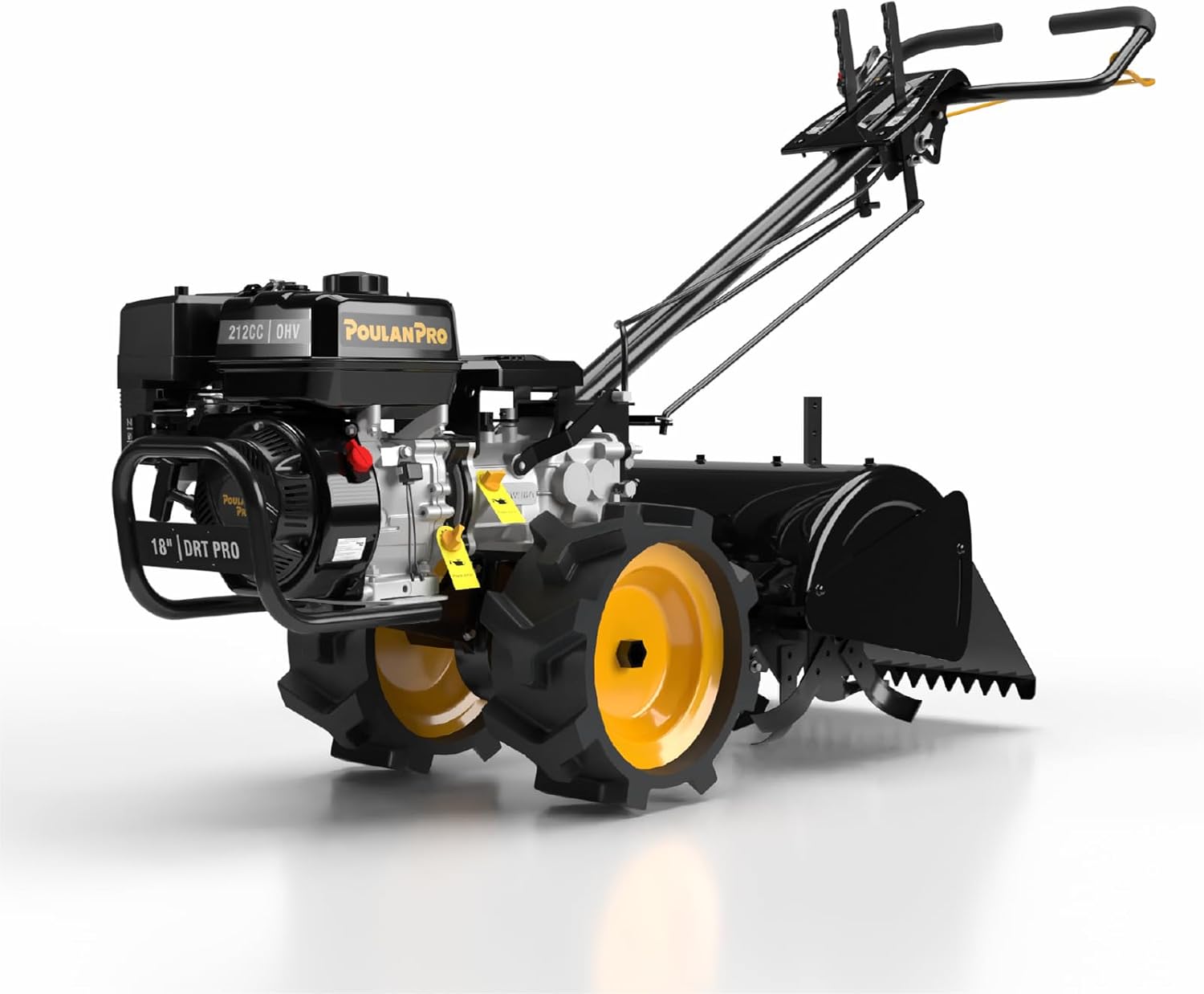
| Engine | 212cc 4-cycle |
|---|---|
| Tilling width | 18" |
| Tilling depth | 4"-10" |
| Tines | 16 steel dual-rotation |
| Transmission | Full gear-driven |
The Poulan Pro 18-inch rear tine tiller is built for repetitive, demanding soil work where reliability matters. Its 212cc 4-cycle gas engine pairs with a full gear-driven transmission rather than belts, which reduces routine adjustments and delivers steady power when breaking hard or compacted ground. The unit uses 16 steel tines with dual-direction rotation and three speeds (two forward, one reverse) so you can control progress and back out without fighting the machine. Flat-free tires and a dual-grip handlebar make maneuvering and pivoting along beds more controlled and low maintenance. Practical benefits include consistent performance in vegetable plots, flower beds, and small acreage prep, plus fewer service headaches thanks to the gear drive. Important limitations are that it is a gas machine so it needs fueling and periodic engine upkeep, and its weight and size make it less suited for very small or raised beds where a compact tool would be easier to handle.
Best for: Gardeners and small-scale growers who prioritize a low-maintenance, workhorse tiller that consistently handles heavy or compacted soil for regular bed preparation.
Less Ideal for: Urban gardeners with very small plots, raised beds, or those who prefer electric or hand tools for lighter, infrequent tilling tasks.
- Full gear-driven transmission reduces belt maintenance and delivers consistent torque
- Powerful 212cc 4-cycle engine handles compacted soil and larger plots
- Dual-rotation 16-tine setup with multiple speeds improves control when tilling and reversing
- Flat-free tires provide long-term durability and stable traction without inflation concerns
- Gas engine requires regular fueling, oil changes, and winter storage care
- Physical size and weight limit ease of use in very small or raised garden beds
Verdict: Choose this tiller when you need a robust, low-maintenance gas tiller that consistently tackles compacted soil on vegetable plots and small farms.
EARTHQUAKE Victory Rear Tine Tiller (209cc Viper Engine)

| Engine | 209cc 4-Cycle Viper |
|---|---|
| Tilling width | 16" |
| Max tilling depth | 10" |
| Wheels | 13" pneumatic self-propelled |
The Earthquake Victory is a purpose-built rear tine tiller for homeowners who need serious soil-turning power. Its 209cc Viper 4-cycle engine drives counter-rotating tines that aggressively break compacted soil and new ground, while a durable cast-iron transmission with bronze gears is designed for long service life. The machine tills a 16-inch swath up to about 10 inches deep, and features instant reverse so you can change direction or work close to fences without stopping to shift. Adjustable handlebars and a drag stake let you tune comfort and tilling resistance, and 13-inch pneumatic wheels make positioning and moving the unit over rough ground easier. Side tine shields and a rear smoothing shield help keep dirt away from plants and produce a neater seedbed. This tiller is best suited to gardeners who need a robust, long-lasting tool for breaking new ground and maintaining rows; it is heavier and more powerful than lightweight front-tine models, so storage, transport, and initial assembly should be planned for accordingly.
Best for: Buyers who want a robust, long-lasting rear tine tiller for breaking new ground and maintaining garden rows and who prioritize proven mechanical durability and user control over low weight.
Less Ideal for: Casual gardeners with very small plots, those who need a lightweight portable unit, or users who prefer low-maintenance electric alternatives.
- Powerful 209cc 4-cycle engine for sustained tilling performance
- Counter-rotating rear tines that break compacted soil and new ground effectively
- Instant Reverse handle for easy directional changes and tight-space maneuvering
- Durable cast-iron transmission with bronze gears for long-term reliability
- Adjustable handlebars and drag stake for operator comfort and better seedbed control
- Substantial weight makes it less convenient to move or lift for storage
- Requires gas engine maintenance and winterization unlike electric models
Verdict: Choose the Victory if you want a heavy-duty, mechanically durable rear tine tiller built to break new ground and deliver reliable season-after-season performance.
Choosing the Right Gas Garden Tiller for Large Garden: Key Factors to Consider
Engine Size and Continuous Power
Engine displacement and sustained horsepower determine how well a tiller will pull through dense or compacted soil over long runs. For a large garden you will use the machine for longer stretches, so an engine that maintains RPM under load reduces stalling and stress on components. Consider not just peak power but how the engine behaves under continuous tilling and whether it offers easy starting when hot or cold.
Larger engines typically need more fuel and heavier maintenance, but they pay back in fewer passes and less strain. Also check for features that help cooling and airflow since overheating is more likely during extended work in big plots.
Tine Configuration and Working Width
Tine shape, number, and spacing affect how aggressively the soil is cut and how far each pass covers. Wider working widths speed up coverage of large areas but can make steering heavier; narrower tines concentrate power for deeper penetration in compacted ground. Choose a tine design suited to your soil: L-shaped or C-shaped tines are common and perform differently in clay, loam, or root-filled beds.
Adjustable widths or interchangeable tine sections add versatility, letting you switch between deep cultivation and finishing passes without buying multiple machines.
Transmission Type and Gear Options
A durable transmission with multiple gears or a variable-speed drive helps match engine output to soil conditions and operator skill. Lower gears provide torque for breaking new ground while higher gears move the tiller efficiently between rows. A reliable clutch and geartrain reduce slippage and wear when you encounter rocks or roots.
Some tillers have forward and reverse drive options that make maneuvering in tight beds or around plants much easier. Consider how gear selection and control layout affect ease of use during long sessions.
Build Quality and Frame Stability
Robust frame materials and good weight distribution are important when working large areas because the machine will experience repeated stress. A solid frame resists bending, and protective housings around the transmission and tines prevent damage from debris. Heavier machines maintain tine depth in hard soils while lighter ones can bounce and produce inconsistent results.
Check for reinforced mounting points and corrosion-resistant finishes if your garden sees humid conditions or seasonal storage where rust could be an issue.
Serviceability and Routine Maintenance
Accessible maintenance points save time across a season. For large gardens expect regular checks of oil, air filters, spark plugs, and tine wear. Machines that allow easy access to the engine, drive belts, and transmission components will reduce downtime and service costs. Availability of common replacement parts and clear maintenance intervals also matter.
Think about whether you have the tools and skills for routine care or if you will need professional servicing. Grease fittings, replaceable wear plates, and simple belt-change procedures are all helpful features for garden users.
Preparing Large Beds Before Tilling
Before you run a gas tiller across a large garden, remove large rocks, branches, and persistent weeds to reduce stress on the machine. Mark irrigation lines and buried utilities so you do not damage them during deeper passes. For established beds with dense roots, consider several shallow passes before attempting a deep till to reduce load and avoid stalling.
Timing also matters. Work when soil moisture is neither waterlogged nor rock-hard. Slightly moist soil tills more cleanly and causes less wear on tines and the engine.
- Clear surface debris and mark buried lines
- Do multiple shallow passes before deep cultivation
- Avoid tilling in overly wet or bone-dry soil
Tilling Patterns and Efficiency for Large Areas
Plan a tilling pattern that minimizes unnecessary turns and overlaps. For long rectangular plots, run parallel passes along the long axis to reduce time spent repositioning the machine. Overlap each pass slightly to ensure complete coverage without reworking the same ground excessively.
Use wider tine settings for primary cultivation and narrower settings for seedbed preparation. If your tiller has a transport mode or foldable handlebars, use them to move quickly between sections.
- Run long parallel passes where possible
- Overlap slightly to avoid unworked strips
- Switch to narrow settings for final seedbed finishing
Maintaining a Gas Tiller During the Season
Regular maintenance keeps a gas tiller reliable over the long seasons needed in a large garden. Check oil and air filters before each major outing, inspect tines for wear or bending, and tighten fasteners that can loosen under vibration. Replace worn tines promptly to maintain efficient soil turnover.
At season end drain fuel or add stabilizer to avoid carburetor gumming, and clean the tiller thoroughly to prevent rust. Store in a dry location and cover or elevate the machine to reduce exposure to damp concrete or soil.
- Check oil and air filter before long sessions
- Inspect and replace worn tines
- Drain fuel or use stabilizer for long storage
Safety Practices When Using a Gas Tiller
Wear hearing protection, eye protection, and sturdy footwear when operating a gas tiller. Keep bystanders and pets well clear of the working area, and never attempt adjustments while the engine is running. Be mindful of carbon monoxide risk when operating in enclosed spaces and run engines only outdoors.
Be cautious when encountering rocks, buried roots, or irrigation hardware. If the tiller hits a hard obstruction, stop the engine, disengage drive components, and inspect for damage before continuing.
- Use PPE: hearing, eye protection, and sturdy boots
- Keep people and pets away from the work area
- Stop and inspect after hitting hard obstructions
Adapting Tiller Use to Different Soil Types
Sandy soils require less aggressive tine engagement and can be worked faster, while clay soils benefit from slower speeds and multiple passes to break clods. Organic-rich loam is the easiest to till but still requires attention to moisture level to prevent compaction or smearing. In root-heavy or previously uncultivated ground, use a staggered approach of shallow then deeper passes to avoid overloading the engine.
Adjust forward speed and gear selection to match resistance. Lower gears provide more torque for stubborn patches and reduce the chance of stalling when encountering hidden obstacles.
- Use shallow-to-deep passes in clay or root-filled soil
- Operate faster in sandy soils with lighter tine engagement
- Adjust gears to maintain steady RPM under load
How We Chose the Best Gas Garden Tiller for Large Garden
We focused on attributes that directly affect performance and longevity when working large garden plots. Key evaluation criteria included engine displacement and continuous power to ensure a machine can handle extended runs and dense soil. Tine configuration and working width were assessed to measure how much ground a tiller covers per pass and how it handles compacted or root-filled soil. Build materials and frame design were considered for resistance to wear and for stable handling under load. Transmission type and gear options were evaluated for low-speed torque and control while turning or digging. Ease of maintenance and serviceability were included so gardeners can keep a machine running through seasons with minimal downtime. We excluded small electric or lightweight hobby models that lack the power or tine width needed for large plots. Also excluded were machines designed only for light bed preparation rather than heavy cultivation. The final shortlist reflects machines that balance sustained engine output, robust tine systems, workable widths, and practical maintenance features relevant to serious large-garden use.
FAQ
How wide should the tiller tines be for a large garden?
For large gardens, wider working widths reduce the number of passes and save time. However, very wide tillers can be harder to steer in tight spots and may need more power. Choose a width that balances coverage with the engine's capacity and the garden layout.
How often will I need to service a gas tiller used on a big plot?
Service frequency depends on hours of use and soil conditions, but expect basic checks before each long session and more thorough maintenance every 25 to 50 hours of operation. Heavy, abrasive soils accelerate wear and require more frequent inspection of tines, belts, and filters.
Can a lightweight gas tiller handle perennial beds with roots?
Lightweight models can struggle with root-filled ground because they lack torque and weight to maintain tine depth. For perennial beds with many roots, a heavier tiller with stronger torque is usually more effective and reduces the risk of stalling.
Is it better to do several shallow passes or one deep pass?
Several shallow passes are generally better for large gardens. They reduce engine strain, produce a more even seedbed, and make it easier to manage hidden obstructions. Deep passes can be used for initial breaking of virgin ground but should be followed by finishing passes.
What fuel and storage prep does a gas tiller need between seasons?
Before storage, either drain the fuel tank and carburetor or add a fuel stabilizer and run the engine briefly to distribute it. Change the oil if due, clean the air filter, and store the tiller in a dry place elevated off the ground to prevent moisture damage.
Final Verdict
For a large garden, prioritize machines with sustained engine power, suitable tine coverage, and a transmission that offers control under load. Expect tradeoffs between wide coverage and maneuverability; a heavier, more powerful unit will cover ground faster but requires more maintenance and storage space. Focus on the dimensions that matter for your plot size and soil type so you choose a tiller that reduces labor while staying reliable through seasons.
