

Note: This article contains affiliate links. If you click on these links and make a purchase, I may earn a small commission at no extra cost to you. This helps support my research and content. Read my full affiliate disclosure here.
If you want to extend the growing season or start plants earlier, choosing the right amazing home greenhouse makes a big difference. The right structure controls temperature swings, protects young plants from pests, and gives you more predictable conditions for seedlings, tender edibles, or overwintering potted specimens. This guide shortlists the top options suited to small yards, patios, or compact home gardens and evaluates them against real gardener needs like build durability and climate control. Below we cover the key features and performance points we used to narrow the field, so you can pick an option that fits your space, maintenance willingness, and seasonal goals.
Top Picks at a Glance
| Best Overall The best all-around choice for most situations | Palram Canopia Hybrid 6' x 4' Polycarbonate Aluminum Greenhouse |  |
| Best Quality Built to a higher standard if you want something more solid | Garvee 8×10 ft Walk-in Greenhouse with Polycarbonate Panels and Aluminum Frame |  |
| Best Value The sweet spot between price and what you get | Ohuhu 3-Tier Walk-In Greenhouse with 12 Shelves (PE Cover, Steel Frame) |  |
| Best Budget The cheapest option that still gets the job done reliably | Bamworld 4-Tier Wooden Mini Greenhouse with PE Cover |  |
| Highest Rated A top-rated pick with lots of positive feedback | VELTRIS 3-Tier Mini Indoor Acrylic Greenhouse with Magnetic Door |  |
| Most Popular A crowd favorite that many people choose with confidence | Pure Garden 4-Tier Mini Greenhouse with PVC Cover and Locking Wheels |  |
| Best Seller A high-volume bestseller chosen again and again | EAGLE PEAK 8×6 Pop-Up Walk-In Greenhouse |  |
Palram Canopia Hybrid 6' x 4' Polycarbonate Aluminum Greenhouse

| Cover Material | Polycarbonate (PC) |
|---|---|
| Frame Material | Aluminum |
| Number of Vents | 2 |
| Number of Doors | 1 |
The Palram Canopia Hybrid 6' x 4' greenhouse is a ready-to-assemble backyard kit that creates a protected, light-filled environment for seedlings, container plants, and small crops. It pairs twin-wall polycarbonate roof panels for improved heat retention with crystal-clear side panels that transmit over 90% of light while blocking harmful UV. The powder-coated aluminum profiles, galvanized steel base, integrated gutters, roof vent, and hinged door make it a practical, low-maintenance structure for year-round use. Typical use is straightforward: place on a level spot, anchor the base, slide in the panels, and use the vent and door to adjust temperature and humidity. Notable conveniences include a reversible hinged door, magnetic door catch, and pre-drilled profiles to speed assembly. Important limitations are its small footprint, which restricts planting density and taller crops, and the need to anchor it for windy sites since anchoring hardware is not included. Assembly requires basic tools and two people for safe handling of panels but results in a durable, weather-resistant shelter that outperforms simple hoop houses in light control and longevity.
Best for: Home gardeners who want a durable, low-maintenance backyard greenhouse to extend the season and protect a moderate number of plants without upgrading to a large, permanent structure.
Less Ideal for: Growers who need large-scale production space or those seeking a fully freestanding, heavy-duty commercial greenhouse for very tall plants should consider larger models.
- Hybrid panel design balances heat retention and high light transmission for healthier plants
- Powder-coated aluminum frame with galvanized steel base offers corrosion resistance and durability
- Integrated gutter and roof vent provide basic water management and ventilation
- Hinged reversible door and magnetic catch make access and airflow control simple
- Small 6' x 4' footprint limits planting space and vertical growing options
- Anchors are not supplied so additional hardware is required for secure installation in windy locations
Verdict: A compact, durable backyard greenhouse that delivers balanced light, heat retention, and weather resistance for homeowners who want reliable year-round growing in a small footprint.
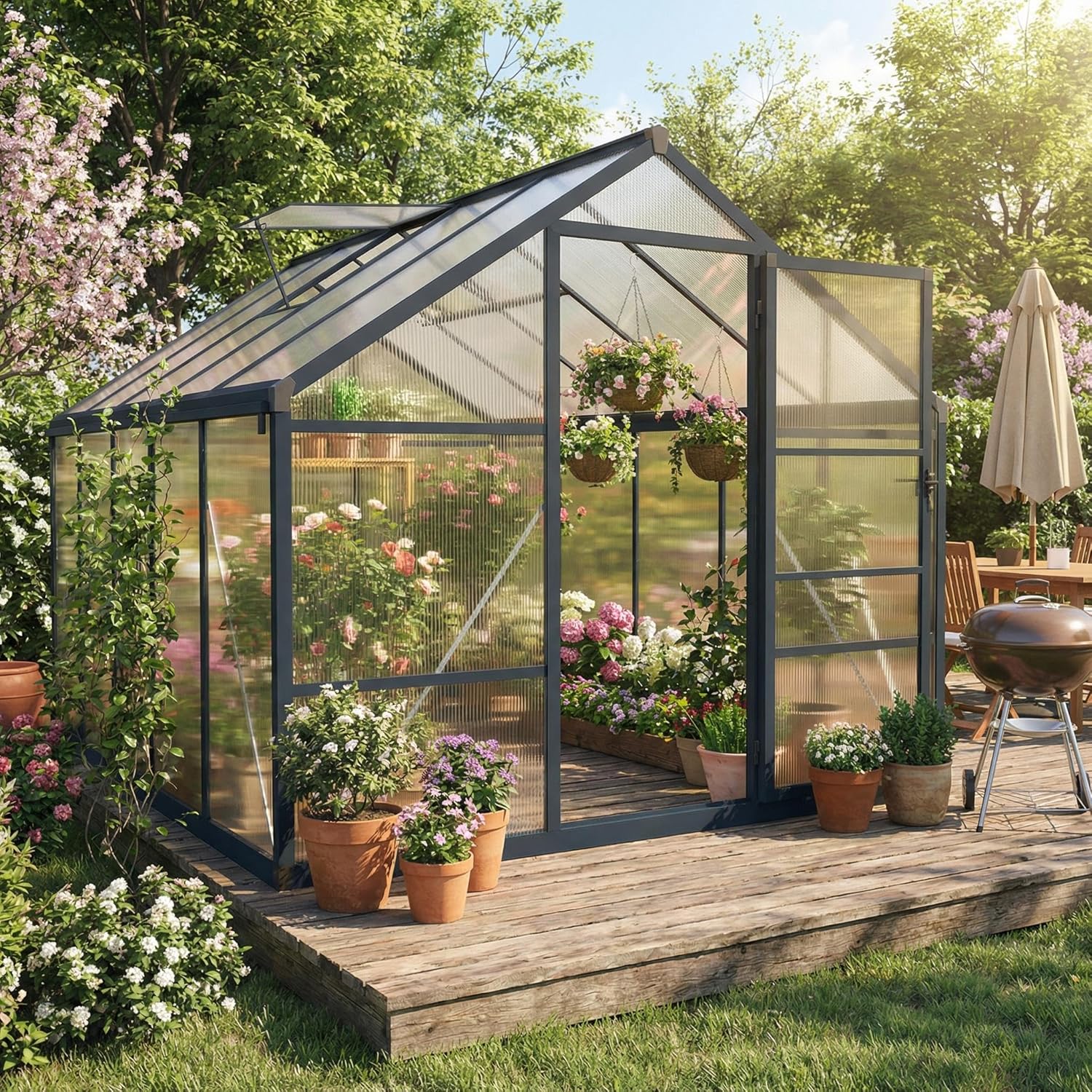
Garvee 8×10 ft Walk-in Greenhouse with Polycarbonate Panels and Aluminum Frame
| Cover Material | Polycarbonate (PC) |
|---|---|
| Frame Material | Aluminum |
| Indoor Outdoor Usage | Outdoor |
| Number Of Vents | 1 |
The Garvee 8×10 walk-in greenhouse is built for gardeners who want a durable, performance-focused sheltered growing space. Its reinforced aluminum frame and double-walled polycarbonate panels provide insulation and UV protection so plants receive filtered light while being shielded from the elements. Typical use is backyard season-extension and overwintering of vegetables, starter seedlings, and tender perennials. The roof vent and lockable door let you manage airflow and temperature without sacrificing security, and an integrated rain gutter lets you channel runoff for watering. Setup is mostly straightforward thanks to labeled parts, included tools, and pre-assembled windows, though assembly still requires time and a powered driver for the fastest result. The design is rated to handle heavy snow loads and includes ground anchors and mid-post supports for stability on varied terrain. Expect a roomy interior for pot benches and shelving, but plan on committing a weekend to assemble and anchor the structure and consider additional bracing if you face extreme winds beyond typical residential conditions.
Best for: Gardeners who prioritize a robust, year-round growing environment and want a high-capacity walk-in greenhouse that performs in snow and seasonal conditions; ideal for serious hobbyists extending production and protecting tender plants.
Less Ideal for: Someone who needs a near-instant or fully prebuilt solution or has very limited time for multi-hour assembly and anchoring tasks.
- Reinforced aluminum frame with double-walled polycarbonate panels for insulation and UV protection
- Roof vent and lockable door provide effective climate control and security
- Includes ground anchor kits and mid-post supports for anchored stability
- Integrated rain gutter allows easy rainwater collection and drainage
- Pre-labeled parts and included tools speed up assembly compared with generic kits
- Requires significant assembly time and benefits from a powered driver for fastest installation
- May need extra bracing or site preparation in locations with extreme winds despite included anchors
Verdict: Buy this greenhouse when you want a sturdy, performance-oriented walk-in structure that reliably protects plants year-round while offering strong insulation and secure ventilation.
Ohuhu 3-Tier Walk-In Greenhouse with 12 Shelves (PE Cover, Steel Frame)

| Size | 3 Tier 12 Shelves |
|---|---|
| Cover Material | Green PE |
| Frame Material | Alloy Steel |
| Number of Vents | 2 |
| Closure Type | Zipper |
This Ohuhu walk-in greenhouse is a straightforward solution for gardeners who want a durable, space-efficient shelter for seedlings and potted plants. It assembles with a push-fit frame and a zippered roll-up door, and the reinforced green PE cover has a UV-resistant grid and double stitching to resist tearing. Two screened windows let you ventilate without letting pests in, while the 12 metal mesh shelves (six per side) make it easy to store trays and heavier pots on multiple levels. The alloy steel frame and stakes add stability for routine outdoor use, and each shelf is rated to support heavier containers so you can maximize vertical space. Expect simple seasonal protection from frost, wind, and light snow rather than a permanent structure; the PE cover and frame are good for extended use but will need occasional retensioning and careful anchoring in strong winds. The greenhouse is practical for growers who prioritize organized, year-round gardening in a modest footprint and prefer a portable setup that can be moved or stored when not needed.
Best for: Gardeners who want an efficient, easy-to-assemble portable greenhouse to extend their season and organize many pots in a small backyard or patio.
Less Ideal for: People seeking a permanent, heavy-duty greenhouse for extreme climates or growers who need maximum light transmission for sun-loving crops.
- Reinforced PE cover with UV-resistant grid and double stitching for durable weather protection
- Alloy steel push-fit frame and included stakes provide solid stability and easy assembly
- Twelve metal mesh shelves (6 per side) maximize vertical storage for pots and trays
- Two screened windows and a zippered roll-up door allow ventilation control while keeping pests out
- Not intended as a permanent greenhouse for extreme weather conditions and may require re-anchoring after high winds
- PE cover admits less light than clear PVC options, so light-loving plants may receive slightly reduced direct sun
Verdict: Choose this greenhouse if you need a practical, easy-to-build walk-in shelter that maximizes vertical planting space and extends the growing season.
Bamworld 4-Tier Wooden Mini Greenhouse with PE Cover

| Frame Material | Wood |
|---|---|
| Cover Material | Polyethylene (PE) |
| Indoor Outdoor Usage | Outdoor |
| Size | 4 Tier Single Layer Roof |
This Bamworld 4-tier wooden mini greenhouse is a simple, low-cost solution for extending the growing season and starting seeds outdoors. The unit uses a wooden frame with a PE cover and a roll-up zipper door, and assembles into a narrow, tall greenhouse that fits on patios or small garden spots. It provides four shelving levels so you can organize seed trays, herb pots, or small overwintering plants vertically to maximize limited space. The PE cover protects plants from light frost and wind while the roll-up door gives easy access and ventilation. Practical benefits include straightforward assembly with the included hardware and a compact footprint that suits balconies or tight corners. Limits to expect are the lightweight single-layer PE cover and wooden frame which are fine for mild protection but not for heavy snow, strong winds, or long-term permanent installation. Buyers should plan to anchor it and replace the cover sooner than heavier, commercial greenhouses if exposed to harsh weather.
Best for: Gardeners working with tight patios, balconies, or small yards who want an inexpensive way to start seeds and protect herbs or small plants through light cold spells.
Less Ideal for: Those needing a permanent, heavy-duty greenhouse for year-round production or for sheltering large plants and heavy winter loads.
- Compact vertical design with four shelves maximizes planting area in small outdoor spaces
- Wood frame offers a sturdier feel than all-plastic alternatives
- Roll-up zipper door allows easy access and adjustable ventilation
- Includes PE cover and assembly hardware so it is ready to set up
- Single-layer PE cover and wooden frame are not suited for heavy snow or very windy locations
- Narrow footprint limits the size and number of larger pots you can use
Verdict: A low-cost, space-saving greenhouse that gives budget gardeners an easy way to start seeds and shield small plants from mild cold.
VELTRIS 3-Tier Mini Indoor Acrylic Greenhouse with Magnetic Door

| Indoor Outdoor Usage | Indoor |
|---|---|
| Closure Type | Magnetic |
| Cover Material | Acrylic |
| Frame Material | Acrylic |
| Size | 3 Tier |
The VELTRIS 3-tier mini indoor greenhouse creates a stable, visible microclimate for seedlings, herbs, succulents, and small houseplants. Its clear acrylic panels trap warmth and humidity while allowing 360 degree visibility, which helps seeds germinate and cuttings root more consistently than open-air setups. Three adjustable, removable shelves make it easy to arrange plants by height and to move trays in and out for watering or inspection. The magnetic door gives quick access without disrupting internal humidity and the tool-free assembly means you can set it up in minutes and relocate it around a windowsill or countertop. Because the whole unit is acrylic it is lightweight and resists bending or tearing that cloth covers can suffer from, but the rigid panels also mean less airflow control than mesh or ventilated units, so you will need to monitor moisture to avoid mold in very humid conditions. Its tabletop footprint is best for small collections rather than larger propagation runs.
Best for: Buyers who prioritize a dependable, low-maintenance indoor propagation station that reliably preserves warmth and moisture for seedlings and cuttings in small spaces.
Less Ideal for: Not a good fit for growers needing large-capacity propagation, heavy-duty outdoor use, or precise airflow and temperature control for sensitive plants.
- Clear acrylic panels provide full visibility while retaining warmth and humidity for more consistent germination
- Three adjustable shelves accommodate varying plant heights and tray sizes
- Magnetic door allows quick, low-disruption access for watering and pruning
- Tool-free assembly makes setup fast and simple for immediate use
- No built-in ventilation or airflow controls, which can require manual monitoring to prevent excess humidity and mold
Verdict: Choose this compact acrylic greenhouse when you want a sturdy, easy-to-use indoor propagation unit that reliably holds warmth and humidity for small-scale seed starting and plant propagation.
Pure Garden 4-Tier Mini Greenhouse with PVC Cover and Locking Wheels

| Number of Doors | 2 |
|---|---|
| Closure Type | Zipper |
| Weight Capacity | Maximum weight: 24 pounds |
| Cover Material | Polyvinyl Chloride (PVC) |
| Frame Material | Alloy Steel |
This 4-tier Pure Garden mini greenhouse provides a compact, movable environment for starting seedlings, growing herbs, and protecting small potted plants from frost. Assembly is tool-free and the tubular alloy steel frame plus clear PVC cover create a warm, sheltered space; the zippered roll-up door gives easy access and ventilation control. Each shelf is rated to hold up to 24 pounds, so it accommodates multiple trays, medium pots, or seed flats across four levels. Locking caster wheels make it simple to move the unit onto a porch or into a sunroom, and you can remove the wheels to keep it stationary outdoors. Practical benefits include season extension for vegetables and tender perennials and convenient organization of plants and supplies. Limitations are the lightweight PVC cover, which will need careful anchoring and protection from strong wind and prolonged sun exposure, and the modest shelf spacing that limits very large pots or tall plants.
Best for: Gardeners who want a versatile, space-efficient greenhouse to start seedlings, grow herbs, or protect small plants through cooler months and who value portability and simple setup.
Less Ideal for: Growers who need a heavy-duty, long-term outdoor greenhouse for large plants or commercial propagation should look for sturdier, larger climate-controlled options.
- Compact four-tier design fits seed trays and multiple small to medium pots
- Tool-free assembly with locking wheels for easy repositioning
- Clear PVC cover with zippered roll-up door for protection and ventilation
- Alloy steel tubular frame offers basic stability for everyday use
- PVC cover is lightweight and can deteriorate under prolonged sun or rough weather
- Shelf spacing and weight limits restrict use with large or heavy containers
Verdict: A practical, easy-to-move four-shelf greenhouse that extends the season for seed starting and small-plant growing in compact spaces.
EAGLE PEAK 8×6 Pop-Up Walk-In Greenhouse

| Size | 8×6 |
|---|---|
| Cover Material | Polyethylene (PE) |
| Frame Material | Alloy Steel |
| Number of Doors | 1 |
| Number Of Vents | 2 |
The EAGLE PEAK 8×6 pop-up greenhouse is a walk-in shelter aimed at extending the growing season and protecting plants from frost and light weather. Its preassembled alloy-steel frame uses extra steel reinforcement and a patented PeakPush center lock so one person can set it up quickly without tools. The PE cover is water-resistant and UV-filtering to help retain warmth and humidity, while the roll-up zippered door and mesh vents let you manage airflow and pest access. It includes stakes and guy ropes for added stability and a ground skirt you can weight down for windy conditions. Practical benefits include ample interior space for shelving or multiple pots, straightforward seasonal use for seed starting or fall protection, and replaceable covers or frames if components wear. Important limitations are that pop-up greenhouses are not engineered for heavy snow loads or sustained high winds so you will need to clear snow and add extra anchoring or weights during storms, and the PE cover will age faster than rigid glazing in strong sun over many seasons.
Best for: Gardeners who want an easy-to-assemble, walk-in greenhouse to start seeds, protect pots, and extend the growing season with minimal setup time and hands-on maintenance.
Less Ideal for: People needing a permanent, year-round structure for heavy snow loads or high-wind exposed sites should choose a rigid-glazed or anchored greenhouse instead.
- One-person, tool-free setup with patented center lock for fast assembly.
- Sturdy alloy-steel frame reinforced for better stability than typical pop-ups.
- Water-resistant, UV-filtering PE cover that traps warmth for season extension.
- Zippered roll-up door and mesh vents for adjustable ventilation and pest control.
- Not built to withstand heavy snow or severe winds without additional reinforcement.
- PE cover will wear faster than rigid glazing and may need replacement after prolonged sun exposure.
Verdict: Buy this if you want a roomy, one-person pop-up greenhouse that balances easy setup with a stronger steel frame for reliable seasonal protection.
Choosing the Right Amazing Home Greenhouse: Key Factors to Consider
Frame Material and Strength
The frame determines how well the greenhouse stands up to wind, snow load, and repeated assembly cycles. Metal frames offer higher bending resistance and longer life in many climates, while thicker tubing and reinforced joints reduce flexing that can tear covers over time.
Assess whether the frame has corrosion protection if you garden near salt air or in high-humidity areas. Lightweight frames can be fine for sheltered patios but plan for anchoring if the structure goes in open yard locations.
Cover Type and Weather Resistance
Cover material affects light transmission, heat retention, and longevity. Polyethylene films are common and affordable but vary widely in UV stabilization and tear resistance. Multiwall polycarbonate panels provide better insulation and longer service life but add weight and cost. Look for covers rated for UV exposure and with warranties indicating expected lifespan.
Also consider how the cover handles condensation and whether it diffuses light to prevent hot spots. A cover that allows even light can reduce sunscald on seedlings and lower the need for shading adjustments.
Ventilation and Climate Control
A compact greenhouse must allow for reliable airflow to avoid overheating on sunny days and to reduce disease pressure from stagnant, humid air. Passive vents, roll-up sidewalls, and operable roof vents all help regulate temperature without constant monitoring.
If you plan to grow through winter or in variable climates, evaluate whether the structure can accommodate small electric fans, heaters, or thermostat-controlled vents. The ability to fit simple automation expands what you can grow successfully.
Footprint and Layout Efficiency
Space efficiency matters when yard room is limited. Consider internal width and usable shelving area rather than just overall footprint. Narrow aisles may save space but reduce workability when moving pots or carrying seed trays.
Think about door placement and whether shelving systems can be attached to the frame. A layout that lets you zone plants by light and heat needs will make daily gardening chores faster and reduce accidental damage to seedlings.
Ease of Assembly and Maintenance
Home gardeners often install small greenhouses themselves, so clear instructions and simple joinery save time and frustration. Snap-fit frames and pre-drilled connections reduce the need for extra tools. Check whether replacement covers and common spare parts are readily available.
Maintenance considerations include how easily you can clean the cover, replace panels or film, and access fasteners that may corrode. Lower-maintenance designs reduce the chances of gaps and wear that compromise climate control.
Anchoring and Wind Resistance
How a structure is anchored affects its survival in windy sites. Permanent ground anchors or heavy base rails increase wind resistance. Lightweight pop-up models can work well in sheltered spots but require extra ties or sandbags in breezier locations.
Evaluate the anticipated seasonal weather and whether temporary shelters need frequent re-tensioning. A design that provides clear anchor points and instructions for securing it will be safer and last longer.
Sizing for Your Garden Space
Measure the available planting area and consider how you will use the greenhouse. If you want to start flats of seedlings, prioritize a footprint with room for benching and a narrow work aisle. For overwintering small shrubs or several potted edibles, a slightly deeper structure with multiple shelf levels works better.
Also account for access around the outside for maintenance and anchoring. Remember that height matters for trellised crops or taller transplants; some compact greenhouses are low-ceilinged and better suited to seedlings and small pots.
- Allow space for door swing and comfortable access to shelves
- Plan vertical space for shelving or hanging baskets
- Consider proximity to water and power for fans or heaters
Placement and Microclimate
Placement influences how much sunlight the greenhouse receives and what microclimate it creates. South- or southeast-facing locations maximize morning and midday light in northern latitudes. Avoid deep shade from trees that can drop debris and reduce light levels.
Consider wind exposure and the potential for reflected heat from nearby walls. A greenhouse placed against a sun-warmed wall gains passive heat in cooler months, while one in open lawn may need stronger anchoring and better insulation.
- Choose a level surface for even drainage and stability
- Keep some clearance from trees to reduce debris and shade
Seasonal Use and Insulation Strategies
Think about how many months of the year you plan to actively use the structure. For spring and fall season extension, a simple film cover with good ventilation may suffice. To carry plants through winter, add insulation options such as double-layer covers, bubble wrap for framing, or removable thermal curtains.
Also plan for condensation management. Insulation can reduce temperature swings but may increase interior humidity. Use vents and circulation to keep plants healthy while retaining heat.
- Use removable insulation for nights and remove during warm days
- Combine passive ventilation with small fans for steady airflow
Organizing Pots, Benches, and Storage
Efficient organization makes the most of limited interior space. Modular benching and adjustable shelving let you adapt the layout for flats, seed trays, or larger pots. Allocate a small area near the door for potting supplies to avoid tracking soil through the structure.
Consider mobile carts or stackable trays that fit on shelves so you can move seedlings in and out quickly on sunny or cold days.
- Prioritize adjustable shelving for changing seasonal needs
- Keep heavy pots low to reduce risk of toppling
Integrating Simple Automation
Basic automation can make greenhouse care less time-consuming. Thermostatically controlled vent openers or plug-in circulation fans help maintain stable temperatures and reduce manual venting. Time switches on grow lights are useful when natural light is limited during winter.
When adding electrical devices, plan safe routing for cords and place outlets where they remain dry. Small thermostats and humidity monitors provide feedback so you do not need to constantly check conditions manually.
- Use weatherproof outlets or run power to a safe outdoor GFCI point
- Start with one or two automated devices to learn how they affect microclimate
How We Chose the Best Amazing Home Greenhouse
We focused on criteria that matter when adding a compact greenhouse to a home garden. Durability was a primary filter, including frame material strength and cover fabric resistance to UV and tearing. Climate control capability was another key dimension, covering passive ventilation, ability to accommodate vents or fans, and insulation potential for cooler months. Ease of assembly and footprint efficiency were evaluated to ensure the structures can be put up by a typical homeowner and fit small yards, decks, or patios. Usability features such as door design, shelving compatibility, and floor anchoring were considered because they affect daily access and plant organization. Finally, long-term maintenance requirements were examined, including how easy covers are to clean and replace and how corrosion-resistant frame connections are. We excluded large commercial or greenhouse kit designs intended for acre-scale production and any structures that required permanent foundations. Also omitted were options that do not provide at least basic weather protection suitable for year-round hobby growing. The result is a list focused on compact, durable solutions suited to home gardeners who need reliable season extension and manageable upkeep.
FAQ
Can I use an Amazing Home Greenhouse year-round in cold climates?
Often you can, but it depends on the structure and how you insulate it. With added thermal insulation, reliable venting to control humidity, and a frost-safe heater when necessary, a compact greenhouse can protect plants through winter. Expect higher heating needs during extreme cold.
How much maintenance does a small greenhouse require?
Maintenance is usually moderate. Regular tasks include cleaning the cover to maintain light transmission, checking anchors and fasteners after storms, and replacing worn covers or seals. Simple upkeep prevents gaps that undermine climate control and reduces pest or disease problems.
What ventilation options work best for small greenhouses?
Roll-up sides, roof vents, and louvered windows provide effective passive ventilation. For more precise control, add small circulation fans or thermostatic vent openers. The best setup balances fresh air intake with protection from cold drafts.
Do I need a foundation for a compact greenhouse?
Not always. Many home greenhouses are designed for temporary placement and use anchoring stakes or base rails. A simple compact foundation can improve stability and drainage, but permanent foundations are only necessary for larger or heavier structures.
How do I prevent condensation inside the greenhouse?
Reduce condensation by improving ventilation and air circulation and by avoiding overwatering. Insulating covers or double-layer panels lower temperature swings that cause fogging. Regularly opening vents during warm periods also helps keep humidity in check.
Will a compact greenhouse get enough light for vegetables?
Usually yes for seedlings and many herbs and leafy greens, especially if sited in a sunny spot. For fruiting crops that need high light levels, ensure the cover allows good light transmission and consider supplemental grow lighting during low-light months.
Final Verdict
Choose the Amazing Home Greenhouse that matches how you plan to garden, balancing frame strength with cover performance and ventilation options. Prioritize structures that fit your available space and make daily tasks easier with sensible access and shelving. Be realistic about seasonal goals: simple covers work for early starts and fall extension, while winter growing requires better insulation and reliable climate control. With those tradeoffs in mind, pick the design that gives the climate control and durability you need for the plants you intend to grow.
