

Note: This article contains affiliate links. If you click on these links and make a purchase, I may earn a small commission at no extra cost to you. This helps support my research and content. Read my full affiliate disclosure here.
If you want reliable, year-round hydroponic production, the right greenhouse makes the difference between steady yields and frequent system problems. A greenhouse built for hydroponics must manage light levels, temperatures, humidity, and airflow so nutrient solutions and plant roots stay healthy. In this guide we narrowed the field to six top greenhouse options suited to hydroponic setups. Each pick was assessed for environmental control, durability, and usability, so you can match a greenhouse to the size of your system and the crops you plan to grow. Read on to understand the practical traits that matter most when setting up hydroponics under cover.
Top Picks at a Glance
| Best Overall The best all-around choice for most situations | VIVOSUN 5×5 Grow Tent 60x60x80 Inch with Reflective Mylar Interior |  |
| Best Quality Built to a higher standard if you want something more solid | AC Infinity CLOUDLAB 811 Advance Grow Tent (10×10) |  |
| Best Value The sweet spot between price and what you get | MELONFARM 2×2 Grow Tent with Observation Window and Floor Tray |  |
| Best Budget The cheapest option that still gets the job done reliably | MELONFARM 24 x 16 x 24 in Grow Tent with Double Viewing Door and Reflective Lining |  |
| Highest Rated A top-rated pick with lots of positive feedback | Barrina LH600 Pegboard Indoor Greenhouse with 70W Full-Spectrum Grow Light |  |
| Most Popular A crowd favorite that many people choose with confidence | VIVOSUN S448 4×4 Grow Tent (48" x 48" x 80") |  |
VIVOSUN 5×5 Grow Tent 60x60x80 Inch with Reflective Mylar Interior

| Frame Material | Metal |
|---|---|
| Inner Material | Mylar |
| Outer Material | Oxford Fabric, PE |
| Weight Capacity Maximum | 165 pounds |
| Light Source Wattage | 220 watts |
The VIVOSUN 5×5 grow tent creates a lightproof, high-reflectivity chamber for indoor hydroponic and soil gardening. It is typically used as the controlled enclosure for lights, fans, filters, and hydroponic trays; the heavy-duty metal poles, tool-free corner connectors, and top support bars make hanging lights and filters straightforward. Notable features include a 100% reflective mylar lining to boost light efficiency, multiple vent ports for ducting and equipment, upgraded zippers with an inner blackout lining, a removable mylar floor tray for easy cleaning, and a small observation window for monitoring plants without opening the tent. Practical benefits are stable structural support for hanging equipment up to the stated capacity, better light utilization that can reduce wasted lumen output, and simplified maintenance from removable trays and smooth-access doors. Limitations are that the tent is an enclosed indoor system so you must provide and size your own lighting, ventilation, and hydroponic components, and its footprint requires a dedicated indoor space with enough clearance for a tall fixture and airflow management.
Best for: Growers who want a reliable, lightproof enclosure to build a balanced hydroponic setup and who prioritize efficient light use and easy maintenance.
Less Ideal for: People seeking an all-in-one kit with included lights and ventilation or those with very limited indoor space where a 5×5 footprint cannot be accommodated.
- 100% reflective mylar interior increases usable light and efficiency
- Sturdy metal frame and top bars designed to support hanging equipment
- Multiple vent ports and openings for easy integration of fans and filters
- Removable floor tray and observation window simplify maintenance and monitoring
- Does not include lights, fans, or hydroponic systems so buyers must supply compatible equipment
- Requires a dedicated indoor location with sufficient clearance for safe ventilation and wiring
Verdict: A sturdy, highly reflective 5×5 tent that gives hydroponic growers a dependable, easy-to-maintain enclosure to maximize light efficiency and support hanging equipment.
AC Infinity CLOUDLAB 811 Advance Grow Tent (10×10)

| Item Highlight | Largest Zipper Window, 2000D Mylar Canvas, 1" Poles, Lab-Tested Highest Reflectivity |
|---|---|
| Frame Material | Alloy Steel |
| Inner Material | Mylar |
| Weight Capacity Maximum | 250 pounds |
| Capacity | 30 load |
The AC Infinity CLOUDLAB 811 is a purpose-built grow tent for serious indoor hydroponic setups. It uses thick 2000D canvas and lab-tested high-reflectivity mylar to maximize usable light inside the tent while strong 1-inch alloy steel poles and reinforced corners provide a stable frame for multiple hanging bars and heavy gear. The tent includes large zipper windows and double front flaps that help monitor plants without compromising the internal climate and reduce light leaks when closed. Multiple duct ports and a controller-mounting plate with a lightproof cable passthrough make it straightforward to integrate inline fans, filters, humidifiers, or smart controllers typical in hydroponic rigs. Practical touches like a stain-resistant catch tray and tool bag streamline maintenance. The main trade-offs are its large footprint, which requires a dedicated space, and the assembly and moving of the unit may need two people due to its weight and robust construction. For growers prioritizing performance, durability, and professional ventilation integration, this tent delivers a lot of value.
Best for: Growers who prioritize maximum light efficiency and reliable environmental control for multi-plant hydroponic systems and who have space to support a dedicated 10×10 tent.
Less Ideal for: Casual hobbyists with minimal space, single-plant setups, or those wanting an all-in-one kit with included lights and fans.
- High-reflectivity mylar to improve light efficiency for hydroponic lighting setups
- Sturdy 1" alloy steel poles and reinforced corners support heavy lights and multiple hang points
- Multiple duct ports and a controller mount simplify integrating ventilation and environmental controls
- Thick 2000D canvas and double zipper flaps reduce light leaks and increase durability
- Large, heavy unit that requires significant floor space and may need two people to assemble and relocate
- No built-in lighting or ventilation hardware included
Verdict: Built for performance-focused hydroponic growers who need a rugged, highly reflective, and ventilation-ready 10×10 tent.
MELONFARM 2×2 Grow Tent with Observation Window and Floor Tray

| Frame Material | Metal |
|---|---|
| Inner Material | Polyethylene Terephthalate (PET) |
| Outer Material | Oxford Cloth |
| Light Source Wattage | 24 watts |
This MELONFARM 2×2 grow tent creates a light-proof, reflective microenvironment for one to a few plants in a small indoor space. It is lined with highly reflective PET mylar and wrapped in heavy-duty 600D Oxford canvas, which helps contain light and maintain stable temperatures when used with a small LED and an inline fan. The kit includes a sturdy metal pole frame that supports lights and ventilation hardware and a removable floor tray to protect floors from spills. Two observation windows let you check plants without opening the main door and disturbing the climate. Assembly is straightforward and tool-free, so setup in a closet or corner is quick. Limitations are its small footprint and modest height, which restricts plant count and tall varieties, and the tent does not include lighting or fans so you must add compatible equipment separately. For conservative buyers this tent emphasizes durability and predictable environmental control rather than extras or large-scale capacity.
Best for: Buyers who want a reliable, low-risk way to start indoor growing in tight spaces and value durable construction and easy setup over large capacity.
Less Ideal for: Gardeners planning to grow many plants, tall varieties, or a full multi-light setup should choose a larger tent or a taller model.
- Durable 600D Oxford canvas and double-stitched seams for light-proofing and tear resistance
- Highly reflective PET inner lining to improve light distribution and efficiency
- Metal pole frame rated to support grow lights and small inline fans
- Observation windows let you inspect plants without opening the main door
- Removable floor tray protects flooring from water and nutrient spills
- Small internal volume limits the number and height of plants you can grow
- No included lighting, fans, or ducting so you must purchase ventilation and light separately
Verdict: A compact, well-built tent that delivers predictable light control and easy setup for cautious indoor growers starting small.
MELONFARM 24 x 16 x 24 in Grow Tent with Double Viewing Door and Reflective Lining

| Frame Material | Iron |
|---|---|
| Inner Material | Polyethylene Terephthalate (PET) |
| Capacity | 7.68 cubic feet |
This small grow tent creates a controlled microclimate for hydroponic and potted plants in tight indoor spaces. It uses a reflective PET lining to boost light utilization from grow lamps and a reinforced iron frame with heavy canvas exterior to keep light and odors contained. The tent’s standout feature is a double-layer observation door: a clear panel for quick checks without opening the tent and an outer opaque flap for privacy and better temperature control. Assembly is tool-free and the included floor tray makes routine watering and cleaning simpler. At this compact size the tent fits closets, dorm rooms, or spare corners and is intended for one or a few plants rather than a full crop. Limitations are its small capacity and modest internal volume, which restricts plant height and number, and the framework and fabric are basic compared with professional-grade tents, so long-term commercial use may require an upgrade.
Best for: Buyers on a tight budget who need an inexpensive, space-efficient tent for one to a few hydroponic or potted plants in a closet, dorm, or small room and who value easy setup and light efficiency.
Less Ideal for: Growers planning larger hobby or commercial runs, taller plants, or multi-tier systems should choose a larger, heavier-duty tent instead.
- Highly reflective PET lining increases light efficiency for indoor grow lights
- Double-layer observation door lets you check plants without disturbing the environment
- Reinforced iron frame and thick canvas exterior help block light and contain odors
- Includes a removable floor tray for easier watering and cleaning
- Small internal capacity limits number and height of plants
- Build materials and frame are basic compared with heavy-duty commercial tents
Verdict: A compact, budget-friendly grow tent that boosts light use and keeps setup tidy for small-scale hydroponic or indoor plant projects.
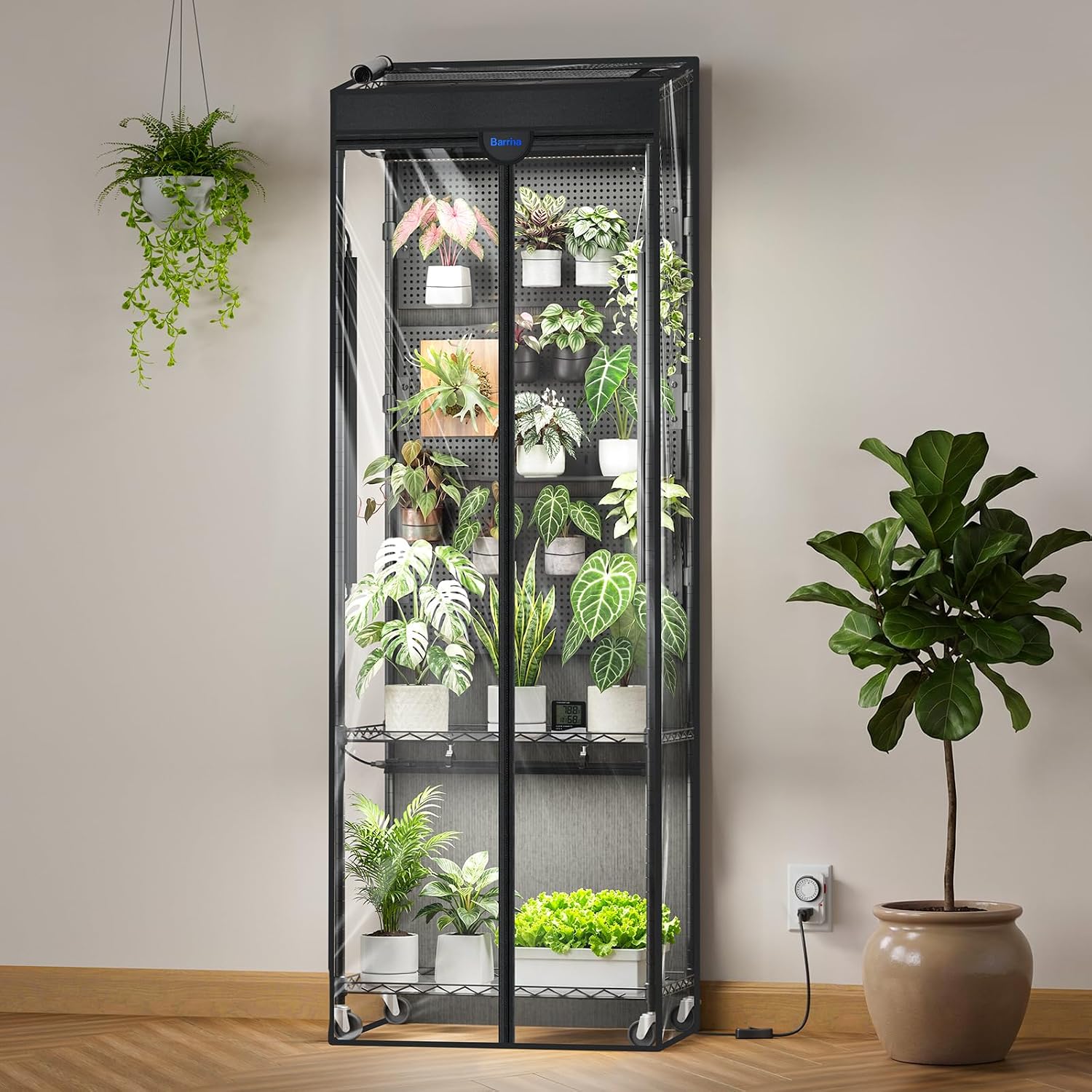
Barrina LH600 Pegboard Indoor Greenhouse with 70W Full-Spectrum Grow Light
| Grow light power | 70W Full Spectrum |
|---|---|
| Light color temperature | 5000K |
| Maximum reported PPFD | 444.9 μmol/m²/s (at 3.9 in) |
| Lighting controls | Independent switches and mechanical timer |
| Mobility | Caster wheels with locks |
The Barrina LH600 is a space-saving indoor greenhouse cabinet built around detachable pegboard tiers and integrated full-spectrum lighting to support seedlings, cuttings, and small hydroponic setups. It typically stands in a corner or beside a workbench and is used to create separate propagation zones with movable hooks, extension shelves, and caster-mounted mobility. Notable features include four professional grow lights (two high-PPFD fixtures and two magnetic side T5 fixtures), independent switches, a built-in mechanical timer and thermometer, and a top vent for passive airflow. In practice the modular pegboard design makes rearranging plants and tools easy and the strong side lighting improves foliar development for greens and transplants. Assembly is tool-free but the cabinet is optimized for small-scale or tray-based hydroponics rather than large systems; growers needing full environmental controls will miss automated humidity control and heavy-duty enclosure sealing. Expect reliable, consistent light schedules and easy monitoring, with some limits on capacity and tight environmental sealing for high-demand hydroponic crops.
Best for: A grower who prioritizes dependable, easy-to-manage indoor propagation and consistent lighting for seedlings or small hydroponic trays and wants a tidy, modular cabinet that simplifies routine care.
Less Ideal for: Commercial growers or hobbyists planning large multi-bay hydroponic systems or crops that require tight humidity and airflow control should consider a purpose-built sealed grow tent or room instead.
- Integrated 70W full-spectrum lighting with independent switches and timer for consistent light schedules
- Modular pegboard tiers and hooks allow flexible organization and customized propagation zones
- Magnetic T5 side lights provide targeted side lighting to improve canopy coverage
- Top vent for passive convection airflow and built-in thermometer for basic climate monitoring
- Caster wheels enable easy repositioning and locking for space flexibility
- Not designed for tightly sealed environments so humidity control for demanding hydroponic crops is limited
- Capacity is best suited to small-scale or tray-based hydroponic setups rather than larger systems
Verdict: Choose this modular pegboard greenhouse if you need reliable, consistent full-spectrum lighting and an easy-to-manage cabinet for small-scale hydroponic propagation.
VIVOSUN S448 4×4 Grow Tent (48" x 48" x 80")

| Tent size | 48" x 48" x 80" |
|---|---|
| Inner material | Polyethylene Terephthalate (PET) |
| Outer material | Oxford Fabric |
| Frame material | Metal |
| Light source wattage | 400 watts |
The VIVOSUN S448 is a 4×4 grow tent designed to give hobby and small-scale growers a durable, lightproof environment for indoor plants. It uses a high-reflectivity mylar interior to diffuse light and reduce hotspots, plus upgraded heavy-duty zippers and a thick 1680D oxford outer fabric for long-term use. The metal frame and reinforced connectors hold hanging bars for lights and other equipment, while multiple duct ports and cable openings make it straightforward to add fans, filters, humidifiers or controllers. A removable mylar floor tray simplifies cleaning and the observation window lets you check plants without breaking the seal. Setup is intended to be quick with clear instructions and smooth-gliding doors for easy access. Expect a solid, workmanlike tent that supports multimedia grow systems, but be aware it is a dedicated grow environment so you will need to add lighting, ventilation and environmental controls separately to run a complete setup.
Best for: Buyers who value proven construction and clear social proof and want a reliable, long-lasting 4×4 tent to build a complete indoor grow system with separate lights and ventilation.
Less Ideal for: Casual plant owners who want a plug-and-play all-in-one kit or those with very limited indoor space should consider smaller integrated kits instead.
- 100% reflective mylar interior to improve light distribution and reduce hotspots
- Sturdy all-metal frame and reinforced connectors that support hanging lights and equipment
- Thick 1680D oxford fabric and heavy-duty zippers for durability and lightproofing
- Multiple duct ports and cable openings for easy integration of ventilation and climate-control gear
- Removable waterproof floor tray and observation window for easier maintenance and monitoring
- Does not include lighting, fans, or filtration so you must purchase a complete system separately
- Relatively large footprint requires dedicated indoor space and clearance for airflow
Verdict: A well-built, reflective 4×4 tent that gives risk-conscious growers a durable, serviceable base to assemble a reliable indoor grow system.
Choosing the Right Greenhouse for Hydroponics: Key Factors to Consider
Ventilation and Airflow
Hydroponic systems need steady airflow to prevent stagnation, control temperature, and reduce disease pressure. Look for greenhouses with adjustable vents at the ridge and eaves, and the ability to add fan-assisted exhaust and intake. Cross-ventilation matters when running multiple grow trays or high-density vertical racks because warm pockets can form near the roof and stress plants.
Air movement inside the greenhouse also affects transpiration rates and how quickly nutrient solutions warm. If the structure limits airflow, you will need to invest more in ducting, fans, or dehumidification to keep root zones within optimal temperature ranges.
Light Control and Glazing
The glazing material determines how much usable light reaches plants and how heat builds up inside. Clear polycarbonate or glass provides high transmission but can cause hot spots if not paired with shade options. Diffuse glazing softens light and helps even canopy penetration, which is beneficial for multi-tier hydroponic racks.
Consider whether the greenhouse allows for internal shade cloths or exterior screening. Being able to tune light intensity across seasons reduces the need to alter nutrient schedules dramatically and protects seedlings from sudden light stress.
Humidity and Condensation Management
Hydroponics generates moisture from reservoirs, plant transpiration, and frequent misting or fogging. Good greenhouse designs minimize condensation dripping onto plants and equipment, which can spread pathogens or corrode metal fittings. Look for steep roof pitches, vapor-permeable vents, and accessible guttering to channel condensation away from grow areas.
If you plan heavy fogging or high-transpiration crops, ensure the structure can accommodate dehumidifiers or heat sources without compromising airflow. Materials that resist mold and mildew help reduce maintenance and sanitize cycles.
Interior Space and Layout Flexibility
Hydroponic setups range from single flood-and-drain tables to multi-level vertical towers. Choose a greenhouse with interior height and unobstructed floor area to match your system type. Features like removable benches, reinforced anchor points for shelves, and modular panels let you reconfigure as your operation scales.
Also consider access for maintenance: wide doorways, service aisles, and the ability to route plumbing and electrical safely. A cramped greenhouse increases the risk of accidental spills and makes routine checks more cumbersome.
Frame Strength and Corrosion Resistance
Hydroponic environments are humid and can accelerate corrosion on metal frames and fixtures. Frames constructed from corrosion-resistant aluminum or powder-coated steel last longer and reduce long-term maintenance. Reinforced joints and proper anchoring also matter for withstanding wind loads and snow in harsher climates.
Assess how the greenhouse interfaces with flooring and baseboards so that you can clamp racks and route piping without stressing connection points. Durable frames reduce long-term replacement costs and minimize structural adjustments as you add equipment.
Accessory Compatibility and Infrastructure
A greenhouse suited to hydroponics should make it easy to add essential infrastructure like fans, dehumidifiers, lights, and irrigation piping. Check for predefined mounting options, conduit channels, and space for control panels. Electrical access and protected cable routing keep controllers and pumps safe in moist conditions.
Compatibility with irrigation hardware also simplifies system layout. Consider how easily you can run water supply lines, drainage, and waste containment for reservoir changes. Greenhouses that anticipate accessory placement reduce on-site improvisation and improve system reliability.
Sizing the Greenhouse to Your Hydroponic System
Match greenhouse dimensions to the footprint and vertical profile of your hydroponic equipment. Shallow ebb-and-flow tables need less ceiling height than deep-rooted vertical towers or stacked raft systems. Think beyond the current build and plan space for circulation aisles and future expansion.
Consider how much bench length you want versus how much vertical shelving. Smaller backyard operations often gain more production per square foot by using vertical racks, but those need extra headroom and stronger anchoring to avoid sway.
- Leave at least 18 to 36 inches of aisle space for routine maintenance and reservoir access.
- Allow 12 to 24 inches clearance above the tallest plant canopy for maintenance and light placement.
- Plan entry and service points so pumps and nutrient tanks can be removed without disassembling racks.
Managing Temperature Swings in Enclosed Spaces
Hydroponic nutrient temperatures directly influence root health and oxygen levels in solution. Greenhouses can heat up quickly on sunny days and cool rapidly at night. Use thermal mass, venting strategies, or controlled fans to smooth temperature extremes.
Passive ventilation works for mild climates, but active systems that integrate thermostats and variable-speed fans give predictable control for sensitive crops. Position intake near the floor and exhaust near the ridge to encourage effective convective flow.
- Install thermostatic control for fans and heaters to automate target ranges.
- Consider insulating the north wall or adding thermal curtains to reduce nighttime heat loss.
Simplifying Plumbing and Electrical Routing
Hydroponic systems require reliable water delivery and safe electrical supply. Before finalizing a greenhouse, map out plumbing runs, reservoir locations, and where pumps and controllers will sit. That reduces later drilling and potential leaks.
Look for greenhouses with built-in cable channels or sufficient framing to mount conduit. Protect electrical components from direct moisture exposure and place control equipment on elevated shelves to reduce splash risk.
- Group electrical outlets and controllers on one service wall for easier troubleshooting.
- Plan for drip containment beneath reservoirs to protect floors and prevent nutrient runoff.
Seasonal Strategies for Year-Round Production
To grow hydroponically throughout the year, plan how you will adjust light and climate across seasons. Short winter days may require supplemental lighting but also present cooling advantages. Summer may need shading and increased ventilation to prevent heat stress.
A greenhouse that supports both shade cloths and light fixtures gives you flexibility. Use timers and environmental controllers to maintain consistent photoperiods and minimize manual intervention.
- Use reflective or diffusive surfaces to even out light distribution in stacked systems.
- Schedule seasonal maintenance windows to clean glazing and check seals before high-demand periods.
Sanitation and Pest Management Under Cover
Hydroponic greenhouses can concentrate pests and pathogens if sanitation is lax. Choose materials and finishes that are easy to clean and resist mold buildup. Smooth trays, removable benches, and accessible corners speed routine disinfection.
Also plan for pest exclusion: tight door seals, insect screens on vents, and controlled entry procedures reduce the chance pests arrive with staff or supplies.
- Keep a dedicated cleaning kit and a schedule for reservoir and tubing sanitation.
- Use physical barriers and monitoring traps before considering chemical controls.
How We Chose the Best Greenhouse for Hydroponics
We focused on features that directly affect hydroponic systems and plant health. Key evaluation criteria included structural ventilation and airflow options, the greenhouse envelope and glazing performance, internal layout flexibility for racks and channels, humidity and condensation management, and durability for long-term indoor-like conditions. We prioritized greenhouses that let gardeners control light exposure and airflow without complex retrofits, and those that provide enough interior height and modularity for vertical or raft systems. We excluded structures designed only for soil beds or decorative garden use that lack adequate sealing, ventilation, or internal space for hydroponic equipment. Lightweight pop-up frames with no provision for mounting grow systems were not considered. Our picks favor solutions that balance ease of setup with the environmental control hydroponics requires. The scoring emphasized measurable, gardener-relevant specs rather than brand claims or price alone.
FAQ
How much ventilation does a hydroponic greenhouse need?
Ventilation needs vary by climate and crop density, but most hydroponic greenhouses benefit from continuous low-level airflow and the capacity for high-exchange rates on hot days. Aim for adjustable intake and exhaust and the option to add fans sized to exchange the greenhouse volume several times per hour under peak heat.
Can small backyard greenhouses support hydroponics?
Yes. Compact greenhouses can host countertop or single-rack hydroponic systems if you match system size to available bench and headroom. Smaller structures require careful humidity control and access planning to avoid cramped work conditions.
What glazing is best for hydroponic crops?
Diffuse polycarbonate is often a good balance of light transmission and thermal performance for hydroponics. Clear glazing gives more direct light but may create hotspots. Also consider how easy it is to attach shade cloths or reflective materials for seasonal tuning.
Do I need a dehumidifier in a hydroponic greenhouse?
A dehumidifier is useful in climates or setups where high transpiration and fogging elevate humidity beyond safe levels. Whether you need one depends on your crop, ventilation capability, and how often condensation accumulates on glazing and structures.
How should I protect electrical equipment from moisture?
Mount controllers and outlets on elevated, splash-protected panels and use weatherproof boxes for connections. Route wiring through conduit and keep pumps and reservoirs on drip trays to minimize exposure. Regular inspections help catch wear before failures occur.
Is it better to buy a kit greenhouse or build one custom for hydroponics?
Kits can be a convenient starting point and may include useful glazing and framing, but custom builds let you tailor height, ventilation, and service access to hydroponic needs. The best choice depends on your budget, local conditions, and willingness to modify a structure for specialized equipment.
Final Verdict
Choose a greenhouse that matches the physical needs of your hydroponic system: adequate ventilation, flexible interior space, and materials that withstand humid conditions. Prioritize features that reduce the need for retrofit work such as built-in venting, sturdy anchor points for racks, and corrosion-resistant framing. Accept tradeoffs between footprint and control. Smaller greenhouses are easier to heat and light but demand strict humidity and airflow management. Larger structures offer scale but require more robust climate systems. Use the criteria here to weigh which factors matter most for the crops and production rhythm you intend to run.
