

Note: This article contains affiliate links. If you click on these links and make a purchase, I may earn a small commission at no extra cost to you. This helps support my research and content. Read my full affiliate disclosure here.
If you want plants to survive and produce through the cold months, choosing the right outdoor greenhouse for winter matters. A winter-ready greenhouse does more than shelter plants from frost; it stabilizes temperature swings, sheds snow, and retains humidity so seeds, seedlings, or tender perennials keep developing when outdoor beds are dormant. This guide covers seven shortlisted outdoor greenhouses for winter use, each selected for structural strength, thermal behavior, and practical garden handling. We evaluate build durability, insulation options, ventilation, and ease of maintenance to help you pick the greenhouse that fits your space and winter severity. Read on to understand the tradeoffs and which features matter most for your yard or patio.
Top Picks at a Glance
| Best Overall The best all-around choice for most situations | KING BIRD Premium 25x10x6.6 ft Tunnel Greenhouse (Upgraded Galvanized Frame) |  |
| Best Quality Built to a higher standard if you want something more solid | Sylviera 6×10 ft Aluminum Frame Greenhouse with Polycarbonate Panels |  |
| Best Value The sweet spot between price and what you get | VEVOR Walk-In Tunnel Greenhouse 9.6 x 6.4 x 6.2 ft Galvanized Steel Frame |  |
| Best Budget The cheapest option that still gets the job done reliably | Greengro Small Walk‑In Greenhouse with Zippered Door and PE Cover |  |
| Highest Rated A top-rated pick with lots of positive feedback | Gardzen Mini Greenhouse with Reinforced PE Cover and Floor Mat, 36 x 36 x 59 in |  |
| Best Seller A high-volume bestseller chosen again and again | EAGLE PEAK 6×8 Easy-Setup Pop-Up Greenhouse with Roll-Up Door |  |
KING BIRD Premium 25x10x6.6 ft Tunnel Greenhouse (Upgraded Galvanized Frame)

| Size | 25'x10'x6.6' |
|---|---|
| Cover Material | Polyethylene (PE) |
| Frame Material | Alloy Steel |
| Nominal Wall Thickness | 150 GSM |
| Number Of Vents | 10 |
The KING BIRD 25x10x6.6 ft tunnel greenhouse is built to give a backyard gardener a roomy, protected environment for vegetables and ornamentals through winter and into the growing season. It uses a galvanized alloy-steel frame with extra crossbars and two stiffeners to add rigidity, and a 150 GSM PE cover treated for UVI 6 to resist UV damage and shed rain and snow. Ten roll-up screen windows and dual zipper mesh/PE doors let you balance ventilation and warmth as seasons change, while included stakes and ropes help anchor the structure. In practice this greenhouse suits seasonal crop protection, extending the growing season and keeping plants sheltered from wind and precipitation. The large interior gives space for multiple benches or tall plants, but assembly and anchoring take time and strong fastening is important in high winds because the cover can act like a sail. The upgraded zippers and reinforced seams reduce tearing, and the maker offers a one-year KING CARE+ support plan for component help and gardening advice.
Best for: Gardeners who want a roomy, season-extending outdoor greenhouse that prioritizes year-round plant protection and ventilation control and who are willing to invest time in proper installation and anchoring.
Less Ideal for: People with very limited yard space or those seeking a lightweight, portable hoop house for occasional use should consider smaller or simpler options.
- Reinforced galvanized-steel frame with extra crossbars and stiffeners for improved stability
- 150 GSM PE cover with UVI 6 treatment for longer UV and weather resistance
- Ten roll-up screen windows plus dual-layer zipper doors give good ventilation and pest protection
- Large internal footprint suitable for multiple benches or taller plants
- Includes ground stakes and ropes and upgraded zippers to reduce cover damage over time
- Large footprint requires significant site space and a multi-person assembly
- Cover can create a sail effect in strong winds so additional anchoring or removal in storms is recommended
Verdict: Buy this if you need a large, reinforced tunnel greenhouse that reliably extends the outdoor growing season and withstands sun, rain, and light winter conditions.
Sylviera 6×10 ft Aluminum Frame Greenhouse with Polycarbonate Panels

| Cover Material | Polycarbonate (PC) |
|---|---|
| Frame Material | Aluminum |
| Number Of Vents | 2 |
| Indoor Outdoor Usage | Outdoor |
This Sylviera 6×10 ft greenhouse is built to give backyard growers a stable, year-round shelter for plants with a focus on durability and climate control. It uses an aluminum frame and 4mm double-wall polycarbonate panels that block UV while admitting light, which helps retain heat in cool weather and reduces sun damage. The structure includes two adjustable roof vents and a lockable door for airflow management and security, and reinforced corners improve resistance to wind, rain, and light snow. Assembly is intended to be straightforward with labeled parts and basic tools, though a helper is recommended for aligning panels and securing the frame. For winter use the greenhouse provides meaningful heat retention compared with single-sheet plastic covers, but the 4mm panels are not as insulating as thicker resin panels, so very cold climates may still need supplemental heating and added sealing around gaps. Practical upside is a roomy interior for benching and organizing plants; practical limits are the panel thickness and need for occasional reinforcement or silicone sealing for long-term heavy-snow exposure.
Best for: Gardeners who need a stable, easy-to-assemble outdoor greenhouse to protect plants through cooler seasons and who prioritize ventilation and UV protection to maintain healthy growth.
Less Ideal for: Growers in regions with prolonged heavy snowfall or extreme subfreezing winters who want maximum passive insulation without adding heaters or structural upgrades.
- Aluminum frame with reinforced corners for improved structural stability
- 4mm double-wall polycarbonate panels that admit light and provide UV protection
- Adjustable roof vents and lockable door for ventilation control and security
- Designed for relatively quick assembly with labeled parts and included basic tools
- 4mm panels offer less insulation than thicker panel options, so supplemental heat may be needed in very cold winters
- May require silicone sealing or additional reinforcement for heavy snow loads over time
Verdict: A sturdy, easy-to-build 6×10 greenhouse that improves winter protection and ventilation for serious backyard growers while still allowing room for supplemental heating if you need extra insulation.
VEVOR Walk-In Tunnel Greenhouse 9.6 x 6.4 x 6.2 ft Galvanized Steel Frame

| Cover Material | Polyethylene (PE) |
|---|---|
| Frame Material | Alloy Steel |
| Number Of Vents | 6 |
| Closure Type | Roll Up Zipper |
This VEVOR walk-in tunnel greenhouse is a budget-conscious, practical option for extending your outdoor growing season into winter. The kit uses 1" galvanized steel pipes with added diagonal braces, U-shaped stakes, and tie-downs to create a stable hoop structure that resists deformation in wind and light snow. A thick 140 g/m² polyethylene cover with double-stitched seams and reinforced window areas helps retain heat and block sun while the roll-up zipper door and six Velcro-window vents provide adjustable airflow and insect protection. Inside the roomy walk-in footprint you can fit shelving or move around to tend plants, seedlings, and overwintering containers. Assembly requires time and at least two people to align pipes and secure the cover; the PE cover will still need winter anchoring and occasional tightening to stay taut. It is a strong, no-frills greenhouse for gardeners who want reliable frost protection without specialty materials or rigid panels.
Best for: Gardeners who want a practical, low-cost way to protect vegetables and potted plants through cold months and who prioritize stability and usable interior space over premium glazing.
Less Ideal for: Users seeking a permanent, rigid greenhouse with glass or polycarbonate panels or those who need a solution rated for heavy snow loads.
- Reinforced galvanized steel frame with diagonal bars and stakes for improved stability
- Thick 140 g/m² PE cover with double-stitched seams for better insulation and durability
- Walk-in interior large enough for multiple shelves and easier plant access
- Six mesh windows plus a roll-up zipper door for adjustable ventilation and pest control
- PE cover requires regular anchoring and may need replacement sooner than rigid glazing
- Assembly is time-consuming and typically requires two people to complete properly
Verdict: A sturdy, cost-effective tunnel greenhouse that gives practical winter protection and roomy walk-in access for gardeners who want reliable frost-cover without premium glazing.
Greengro Small Walk‑In Greenhouse with Zippered Door and PE Cover
| Cover Material | Polyethylene (PE) |
|---|---|
| Frame Material | Metal |
| Closure Type | Zipper |
| Included Accessories | Ropes and ground stakes, plant tags, watering globes |
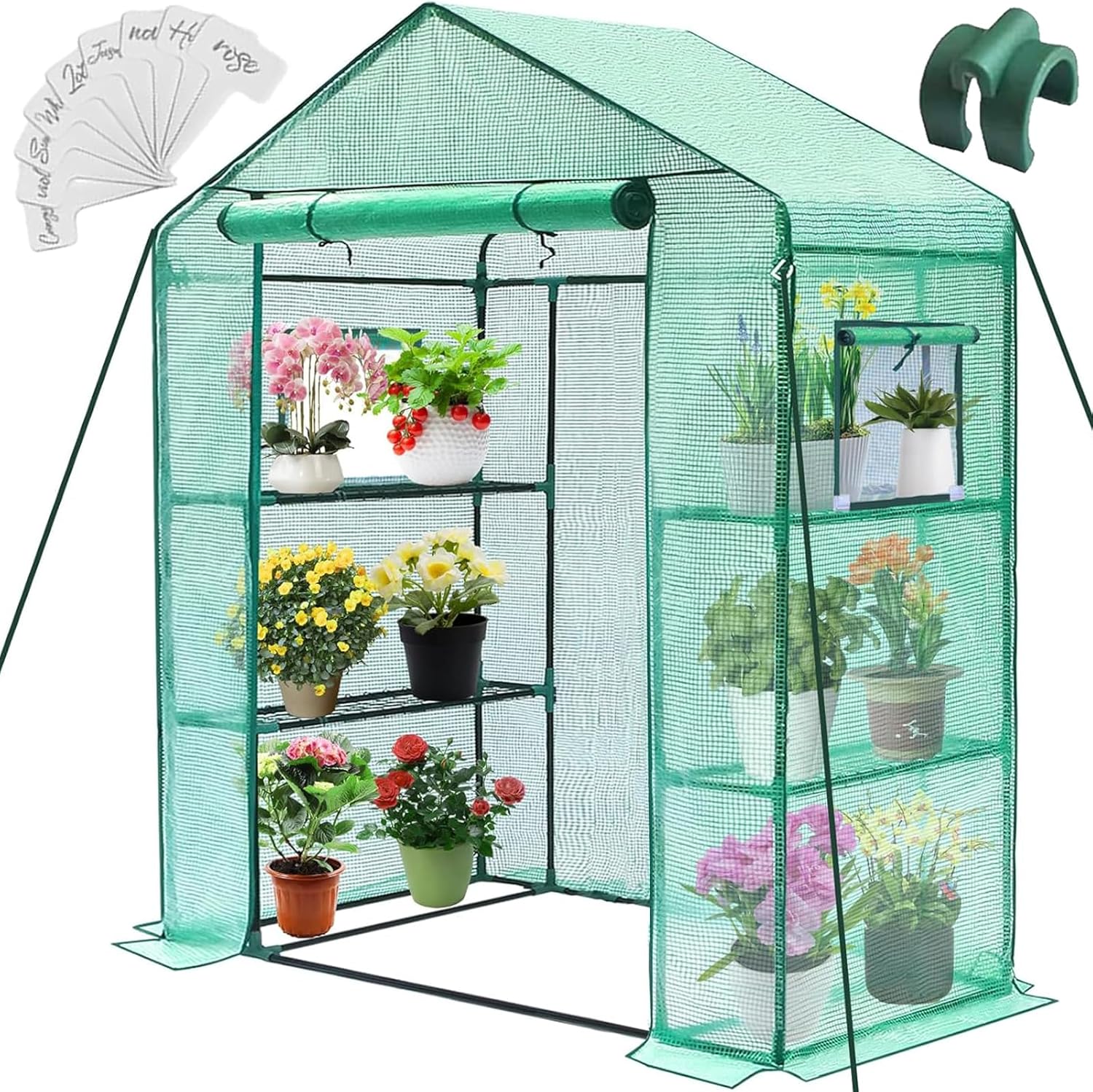
This Greengro small walk-in greenhouse creates a sheltered microclimate for potted plants and seedlings through winter and transitional seasons. It assembles without tools and uses a metal frame with a heavy PE cover, zippered door and screened ventilation windows to balance protection and airflow. The kit includes shelves, guy ropes and ground stakes so you can store up to a dozen small to medium pots and keep plants off the ground. The thick, grid-reinforced cover is waterproof and designed to cut UV exposure while resisting wind gusts commonly encountered in backyard settings. Because it is portable and detachable you can move it to a porch or garage when storms approach or take it down for storage. Important limitations are its small footprint and relatively light-duty frame compared with permanent greenhouses, so it is best for overwintering tender pots and starting seedlings rather than long-term heavy staging or large plants. Expect some care with anchoring in strong winds and routine inspection of the PE cover for wear.
Best for: Buyers wanting an inexpensive, no-fuss way to protect potted plants and seedlings through cold months who value portability and easy setup over permanent construction.
Less Ideal for: Gardeners who need a heavy-duty, permanent greenhouse to house large plants or long-term benching should consider sturdier, framed options instead.
- Thick, grid-reinforced PE cover provides waterproofing and UV reduction for winter protection
- Zippered door and screened windows offer easy access and adjustable ventilation
- Includes shelves, ropes and ground stakes so plants can be organized and the structure secured
- Tool-free assembly and detachable design make it easy to set up, relocate or store
- Small footprint limits the number and size of plants you can overwinter
- Lightweight frame and PE cover are less durable than rigid, permanent greenhouses in severe weather
Verdict: A budget-friendly, portable greenhouse that reliably shelters small pots and seedlings through winter while remaining easy to assemble and move.
Gardzen Mini Greenhouse with Reinforced PE Cover and Floor Mat, 36 x 36 x 59 in

| Indoor Outdoor Usage | Outdoor |
|---|---|
| Cover Material | Polyethylene (PE) |
| Frame Material | Alloy Steel |
This compact Gardzen greenhouse provides a reliable, weather-resistant shelter for small-scale outdoor growing. The alloy steel frame and 140 GSM reinforced PE grid cover work together to resist tearing and support the cover in wet or cool conditions, while the included waterproof floor mat helps keep pots off the ground. At 59 inches tall it gives good vertical space for pots and young vegetables on patios, balconies, or near a wall. Access is simple thanks to a roll-up front panel and two-way zipper for watering and short ventilation bursts. The design is best for cool to mild winter protection and season extension rather than heavy snow loads or permanent year-round use; anchoring or weighting the base is recommended in windy conditions. Replacement covers are available if the PE wears over time, and the unit is straightforward to assemble and maintain. For gardeners who need a compact, dependable shelter to get seedlings through cool spells, this greenhouse balances protection and convenience.
Best for: Gardeners who prioritize a dependable, easy-to-assemble outdoor shelter to extend the growing season for seedlings, herbs, and potted vegetables in cool to mild winter conditions.
Less Ideal for: Those needing a heavy-duty, permanent greenhouse for snowy climates or large-scale production should look at larger, framed structures rated for snow load and year-round exposure.
- Reinforced 140 GSM PE cover with internal grid for improved tear resistance
- Alloy steel tube frame offers sturdy structural support and straightforward assembly
- Roll-up front panel with two-way zipper provides easy access and quick ventilation control
- Includes removable waterproof floor mat to protect pots and simplify clean up
- PE cover is suitable for cool-season protection but not ideal for heavy snow or extreme winter storms
- Compact footprint limits the number of large pots or taller plants that can fit comfortably
Verdict: A compact, reliable season-extender for gardeners who want straightforward winter protection for pots and seedlings on patios and balconies.
EAGLE PEAK 6×8 Easy-Setup Pop-Up Greenhouse with Roll-Up Door

| Size | 6×8 |
|---|---|
| Cover Material | Polyethylene (PE) |
| Frame Material | Alloy Steel |
| Number of Doors | 2 |
| Number Of Vents | 2 |
This EAGLE PEAK 6×8 pop-up greenhouse is built for gardeners who want a quick, sturdy shelter for winter protection and seed starting. The preassembled alloy steel frame uses a patented center-lock that lets one person raise the structure without tools, while the powder-coated finish, wind ropes, and stakes improve outdoor stability. The PE cover is water- and UV-resistant, which helps retain humidity and filter sunlight through cold months. Two roll-up zippered doors and mesh windows provide adjustable ventilation and keep small animals out. Practical benefits include fast setup, walk-in access for tending plants, and compatibility with optional shelving to increase growing capacity. Limitations to consider are that the PE cover is less durable than polycarbonate in heavy snow or prolonged abrasion, and pop-up frames generally need careful anchoring in high winds; long-term outdoor exposure may require occasional cover replacement. For a risk-averse buyer wanting simple winter protection and easy assembly, this greenhouse delivers predictable, straightforward performance.
Best for: Buyers who want a low-effort, dependable winter greenhouse for frost protection and seed starting and who prefer easy single-person setup and predictable performance.
Less Ideal for: Growers needing a permanent, heavy-duty greenhouse for heavy snow loads or long-term all-season use should consider rigid-frame polycarbonate or wood greenhouses instead.
- One-person pop-up setup with patented center-lock for fast assembly
- Alloy steel frame with powder coating and included wind ropes and stakes for improved outdoor stability
- Water-resistant and UV-resistant PE cover that helps retain humidity for winter protection
- Walk-in size with two zippered roll-up doors and mesh windows for ventilation and access
- PE cover is less impact- and snow-resistant than rigid panels and may need replacement over time
- Pop-up frames require good anchoring and may not perform as well in very high winds
Verdict: A fast, one-person pop-up greenhouse that reliably extends the growing season with simple setup and practical winter protection.
Choosing the Right Outdoor Greenhouse for Winter: Key Factors to Consider
Snow Load Resistance
Winter greenhouses must withstand accumulated snow. A greenhouse with a steep roof pitch and a sturdy frame reduces the risk of collapse under heavy, wet snow. When snow sits on glazing it compresses heat transfer and adds weight, so knowing the structure's rated snow load or choosing heavy-gauge framing matters.
If you get frequent ice storms or heavy snowfall, opt for designs that allow snow shedding or that can be easily cleared. Consider the effort required to remove snow safely without damaging glazing or the frame, and whether you can access the roof from ground level or need a ladder.
Thermal Retention & Insulation
Keeping internal temperatures stable is the core function of a winter greenhouse. Glazing type-single-wall polycarbonate, twin-wall polycarbonate, or glass-affects insulation and light transmission. Multi-wall materials trap air and provide better R-value, reducing heating needs or temperature swings overnight.
Also evaluate how the greenhouse seals at doors and vents, and whether there are options for adding insulating panels, thermal curtains, or soil insulation. Good passive solar orientation and internal thermal mass, like water barrels or stone, help moderate lows and highs without continuous heating.
Frame Durability
Frame material and construction determine how long a greenhouse survives repeated freeze-thaw cycles, wind, and the general wear of cold climates. Aluminum frames resist rust and are lighter; steel frames can be stronger but need protective coatings to prevent corrosion. Connection points, fasteners, and corner joints are common failure spots in cold weather when materials contract.
Look for powder-coated finishes, reinforced corners, and frames rated for outdoor exposure. Frames that allow part replacement rather than whole-panel swaps reduce long-term maintenance worries for winter users.
Ventilation and Frost Control
Even in winter you need ventilation to prevent excessive humidity, mold, and condensation that can harm plants. Automatic vent openers that respond to temperature changes reduce manual work during cold snaps and sunlit days. Controlled ventilation also helps avoid sudden freezes after warm afternoons.
A good system balances retaining heat overnight with airing out moisture during the day. Consider roof vents, louvered side vents, and the ability to add small heaters or circulation fans safely when needed.
Ease of Assembly and Maintenance
Winter-ready greenhouses sometimes have more components or heavier materials. Ease of assembly matters if you plan to install before the first frost or to reinforce the structure annually. Clear instructions, pre-drilled parts, and thoughtful hardware reduce set-up time and the risk of improper assembly that undermines winter performance.
Maintenance considerations include how easy it is to replace glazing panels, tighten fasteners after seasonal movement, and access the exterior for snow clearing. Designs that allow partial disassembly or have modular parts simplify repairs and upgrades.
Size, Footprint, and Site Adaptability
The greenhouse size affects internal climate control and what you can grow all winter. Smaller structures warm faster and are easier to heat, but limit crop diversity. Larger footprints increase thermal mass benefits but require more robust frames and greater heating or insulation strategies.
Assess the available site for sun exposure, prevailing winds, and proximity to utilities if you plan to use supplemental heat. Consider whether the greenhouse can be anchored securely to your foundation type, and whether the layout allows shelving, benches, and workspaces that suit winter tasks.
Preparing Your Site for Winter Performance
Choose a site with maximum winter sun exposure, typically a southern or southeast-facing spot that avoids shade from buildings or tall trees. Good drainage and a level base prevent water pooling and ice formation around the structure, which can corrode frames or freeze foundations.
- Clear vegetation and level the ground before installation
- Provide a compacted gravel or paving base to improve drainage
- Plan access routes for snow clearing and winter maintenance
Passive Heating Strategies That Reduce Fuel Use
Using thermal mass and solar gain can significantly reduce the need for active heating. Water barrels painted dark, stone floors, or stacked masonry inside the greenhouse absorb daytime heat and release it overnight. Combining multi-wall glazing with insulated north walls helps trap that energy.
Insulating the north side or adding removable thermal curtains at night gives an extra layer of protection. These strategies are especially useful where electricity or fuel is limited in winter.
- Use dark-colored water containers for thermal mass
- Insulate or shade the north wall to limit heat loss
- Install roll-up thermal curtains for overnight insulation
Winter Ventilation and Moisture Management
Condensation and high humidity can be as damaging as cold. Design your layout to encourage cross-ventilation during warmer midday hours to avoid mold and fungal problems. Auto-open vents are helpful on sunny winter days when inside temperatures rise quickly.
Also plan for irrigation practices that limit excess moisture. Water in the morning so foliage and soil surface dry during daylight, and use trays or gutters to direct runoff away from foundations.
- Place vents at roof and side locations for natural airflow
- Use timed or thermostatic heaters sparingly to avoid excess humidity
- Water early in the day and avoid overhead watering when possible
Anchoring and Snow Management Techniques
Secure anchoring prevents uplift from winter storms and helps the structure resist shifting under snow load. Use ground anchors appropriate to your soil type and check them seasonally. For roof snow, use soft tools and work from the ground where possible to avoid stepping on glazing panels.
Consider roof angle and glazing material when planning snow removal. Designs that shed snow reduce the need for manual clearing, while more horizontal roofs may require regular attention.
- Inspect anchors after heavy storms
- Use plastic roof rakes or soft brooms for snow removal
- Avoid standing on roof panels to prevent cracking
Accessory Options for Cold Climates
Look for add-ons that make winter management easier, like thermal curtains, automatic vent openers, and compatible heater mounts. Shelving that allows airflow under pots and raised benches minimize cold stress on root systems. Removable insulation panels for doors and windows add flexibility for changing conditions.
Electrical planning is another consideration. If you intend to use thermostatic heaters or grow lights, plan safe conduit routes and weatherproof outlets positioned above potential snow levels.
- Install removable door insulation panels
- Choose shelving that allows under-bench airflow
- Plan safe electrical access for heaters and lights
How We Chose the Best Outdoor Greenhouse for Winter
Our shortlist focused on features that directly affect winter performance and everyday garden usability. We prioritized structural strength against snow and wind, thermal retention and insulation options, ventilation and frost-control features, and materials that resist cold-related wear. Ease of setup, available sizes for common garden footprints, and compatibility with supplemental heating or passive solar measures were also important. Excluded from consideration were models designed only for summer use, temporary pop-up structures without rated wind or snow loads, and units with hard-to-replace parts that compromise long-term winter reliability. We emphasized objectively measurable specs such as frame material and gauge, glazing type and R-value where available, certified or rated snow load capacity, and ventilation arrangements. Practical gardener concerns like ease of replacing panels, available accessories for winterizing, and maintenance demands informed the final choices.
FAQ
Do I need to insulate a greenhouse for winter?
Insulation helps stabilize temperatures and reduces heating needs. Multi-wall glazing and insulated north walls or thermal curtains provide meaningful gains in cold climates, while small greenhouses often need less active heating due to their lower volume.
How much snow can a typical outdoor greenhouse handle?
Snow capacity varies widely by frame and roof design. Look for a rated snow load where available and choose steeper roof angles or stronger frames in areas with heavy wet snow. When ratings are not listed, prioritize heavier-gauge frames and reinforced joints.
Can I grow vegetables through the winter in an outdoor greenhouse?
Often you can, depending on local lows and the greenhouse type. Cold-tolerant crops, winter lettuces, and root vegetables do well with passive measures and occasional supplemental heat during extreme cold spells.
How do I prevent condensation and mold in winter?
Provide daytime ventilation on sunny days, avoid overwatering, and use circulation fans if humidity is persistent. Insulating the greenhouse and adding thermal mass can also reduce wide temperature swings that cause condensation.
Is it worth installing automatic vent openers?
Automatic openers are useful in winter because they reduce the need to manually vent during sunny spells when temperatures spike. They also help prevent sudden plant stress from rapid temperature changes.
Final Verdict
When choosing an outdoor greenhouse for winter, prioritize structural strength and thermal management over cosmetic features. Snow load resistance, good glazing that balances light and insulation, and reliable ventilation determine whether plants survive and thrive through cold months. Match size and accessories to how much heating you are willing to provide and how much maintenance you can manage. Focus on durability, ease of winter upkeep, and flexible options for adding insulation or passive heating to get the most reliable cold-season performance.
