

Note: This article contains affiliate links. If you click on these links and make a purchase, I may earn a small commission at no extra cost to you. This helps support my research and content. Read my full affiliate disclosure here.
If you manage larger beds, a small farm, or an overgrown garden area, choosing the right garden tiller for tractor changes how quickly and reliably you prepare soil. A tractor-mounted tiller handles tougher ground, wider passes, and heavier residue than hand-held tools, but only if its PTO, tine design, and build match your tractor and soil conditions. This guide shortlists seven top options suited for tractor use and focuses on real-garden performance: power compatibility, tilling depth and width, tine durability, and serviceability. Read on to understand which features matter for your fields and which tradeoffs to expect before the product list.
Top Picks at a Glance
| Best Overall The best all-around choice for most situations | MIVA 59" Rear-Mount Rotary Tiller for 25–30 HP Tractors (Cat 1) |  |
| Best Quality Built to a higher standard if you want something more solid | Titan Attachments 48" Cat 1 3-Point Rotary Tiller Attachment |  |
| Best Value The sweet spot between price and what you get | ALMULOO 3-Point Cultivator for Category 1 Tractors with 6 Spring Shanks |  |
| Best Budget The cheapest option that still gets the job done reliably | Wutist 34" Disc Harrow Attachment for Tractor Sleeve Hitch |  |
| Highest Rated A top-rated pick with lots of positive feedback | QEEKA 3-Point Hitch Rotary Tiller (42 in) for Category I Tractors |  |
| Most Popular A crowd favorite that many people choose with confidence | Agri-Fab 45-0266 Steel Sleeve Hitch Disc Cultivator (8-Disc, Adjustable 30–38 in Working Width) |  |
| Best Seller A high-volume bestseller chosen again and again | Farmer-Helper FH-TL85 33" Offset 3-Point Rotary Tiller |  |
MIVA 59" Rear-Mount Rotary Tiller for 25–30 HP Tractors (Cat 1)

| Working Width | 58.7 inches |
|---|---|
| Blades Count | 32 |
| Tractor Power Range | 25 – 30 HP |
| PTO Input Speed | 540 rpm |
| Working Depth | 5 inches |
This MIVA 59" rotary tiller is built for tractor owners who need broad, efficient soil preparation on larger gardens and small farms. It mounts to a Category 1 three-point hitch and uses a standard 540 RPM PTO and universal driveline for straightforward hookups. The heavy-duty gear-driven gearbox and 32 replaceable L-shaped alloy steel blades work to a stated 5-inch depth to break hardpacked soil into a finer seedbed, which speeds up multiple-row passes and reduces the number of passes needed. Individual replaceable blades make maintenance and blade replacement practical without swapping the entire rotor. The wide 58.7-inch working width covers more ground per pass, saving time on acreage and landscape jobs. Limitations to note are that it requires a 25–30 HP tractor and substantial lift capacity to operate safely, and the unit is heavy so moving or mounting it single-handedly will be difficult. Expect routine gearbox and driveline checks like any PTO implement for dependable service life.
Best for: Best for small-farm and serious hobbyist tractor owners who prioritize faster coverage and durable soil preparation across larger beds and acreage.
Less Ideal for: Not a good fit for owners of sub-25 HP tractors, very small urban gardens, or gardeners who need a lightweight, easily portable tiller.
- Wide 58.7" working width covers more ground per pass to boost efficiency
- 32 replaceable L-shaped alloy steel blades that handle hardpacked soil and are economical to replace
- Compatible with standard Cat 1 three-point hitch and 540 RPM PTO for easy hookup
- Gear-drive transmission provides direct power transfer and robust tilling force
- Requires a 25–30 HP tractor and appropriate lift capacity so smaller tractors cannot use it
- Heavy unit that will be difficult to move or mount without assistance
Verdict: Buy this tiller if you want a wide, heavy-duty rear-mount implement that quickly converts hard soil into a fine seedbed for larger gardens and small farms.
Titan Attachments 48" Cat 1 3-Point Rotary Tiller Attachment

| Tilling Width | 48" |
|---|---|
| Tilling Depth | Up to 5" |
| Power Requirement | 20-45 HP |
| Power Source | PTO Driven |
This Titan Attachments 48" rotary tiller connects to Category 1, 3-point tractors and uses a 540 RPM PTO-driven gearbox and heavy-duty PTO shaft to power a central rotor with replaceable L-shaped tines. It is typically used to break compacted soil, control weeds, and create a smooth, fine seedbed across small fields, orchards, and large gardens. Notable features include five adjustable ski-height settings for consistent tilling depth, a variable-pitch rear deflector for smoothing loose soil, and modular tine positions that make blade replacement straightforward. Built from alloy steel with a powder-coated finish, the unit is designed for season-to-season durability and matches tractors in the 20 to 45 HP range for steady performance. Limitations to consider are the single-speed design, which reduces flexibility on very soft or very rocky ground, and the overall weight and size that require adequate tractor lift capacity and safe handling during hookup and transport. Routine maintenance of tines and attention to debris hazards are necessary for safe, long-term use.
Best for: Buyers who prioritize reliable field performance and fast, consistent seedbed preparation for small farms, orchards, or large gardens and who operate a compatible Category 1 tractor in the 20–45 HP range.
Less Ideal for: Home gardeners with compact lawn tractors, users needing variable-speed tilling for delicate soils, or those without the tractor lifting capacity to safely handle a heavy implement.
- PTO-driven 540 RPM gearbox delivers consistent torque for steady tilling
- Replaceable hardened L-shaped tines for easier maintenance and prolonged service life
- Five adjustable ski settings and rear deflector allow uniform till depth and a smoother finish
- Fits standard Cat 1, 3-point tractors and matches tractors rated 20–45 HP for broad compatibility
- Single-speed gearbox limits versatility across very soft, very hard, or rocky soils
- Heavy unit requires a tractor with sufficient lift capacity and secure hitching
Verdict: Choose this 48" PTO-driven rotary tiller when you want a rugged, replaceable-tine attachment that delivers consistent, professional-grade seedbed preparation for small-scale farming and orcharding.
ALMULOO 3-Point Cultivator for Category 1 Tractors with 6 Spring Shanks

| Brand Name | ALMULOO |
|---|---|
| Model Number | AI-3049 |
| Included Components | 1x 3 Point Cultivator |
| Material Type | Alloy Steel |
| Power Source | Engine |
This ALMULOO 3‑point cultivator is a straightforward tractor attachment for preparing seedbeds, loosening compacted soil, and uprooting shallow weeds before planting. It mounts to standard Category 1 three‑point hitches and uses six spring shanks to flex over rocks while penetrating soil, which makes it useful across variable garden and small‑farm conditions. Built from alloy steel with a powder‑coated finish, the frame aims to resist bending and surface corrosion during regular field use. Installation is simple and comes with mounting hardware and instructions, so you can get it hooked to common small tractors quickly. Practical benefits include consistent aeration and mixing of amendments across beds and the ability to handle stony or uneven ground without damaging the tines thanks to the spring shanks. Important limitations are that working width and tine spacing are tailored to smaller Category 1 tractors so it will not deliver the coverage or deep tilling of larger industrial tillers, and assembly may require basic tools and a helper for alignment. This is a no‑frills, durable cultivator for routine soil prep tasks on small acreage and homestead plots.
Best for: Buyers who want a sturdy, low‑maintenance cultivator to do routine seedbed preparation and weed disruption on small farms, gardens, or homesteads using a Category 1 tractor.
Less Ideal for: Large commercial operators or anyone needing deep primary tillage or wide coverage should choose a heavier or wider implement made for higher‑horsepower tractors.
- Fits standard Category 1 three‑point hitches for broad tractor compatibility
- Six spring shanks provide rock protection and flexible tine action
- Alloy steel construction with powder coating for durability and rust resistance
- Simple installation with included mounting hardware and instructions
- Designed for lighter Category 1 tractors so it is not suitable for heavy commercial tilling
- No specification for exact working width or tine spacing limits planning for large fields
Verdict: A durable, easy‑to‑mount Category 1 cultivator that reliably prepares seedbeds and handles rocky garden soil for small‑scale tractor owners.
Wutist 34" Disc Harrow Attachment for Tractor Sleeve Hitch

| Material | Steel |
|---|---|
| Disc count | 8 |
| Mount type | Tractor sleeve hitch |
| Finish | Powder Coated |
This 34" disc harrow is a straightforward tractor-mounted tillage tool for gardeners and small-acreage farmers who need a simple way to prepare seedbeds. It attaches via a universal sleeve hitch and uses a pin installation system for quick hookup and removal without special tools. The unit features eight concave steel discs with a powder-coated finish that slice and crumble hardened topsoil, cut small roots, and help reduce weed regrowth. A built-in counterweight provision lets you add concrete blocks to increase penetration on compacted or rocky ground. Because it is compact and reasonably light, it is best for shallow to moderate tilling runs, turning over grass, and creating a finer seedbed ahead of planting. Expect basic, utilitarian construction rather than heavy-duty commercial robustness, so deep continuous work in very heavy soils may require more durable or larger implements. For budgets focused on getting effective primary tillage without extras, this harrow delivers a practical, easy-to-fit option.
Best for: Gardeners and small-scale landowners seeking an affordable, easy-to-fit tractor tillage tool for preparing seedbeds and light-to-moderate soil work.
Less Ideal for: Operators who need heavy commercial-grade harrowing, deep primary tillage on large acreage, or equipment with fine depth control and heavy-duty bearings.
- Universal sleeve-hitch compatibility for quick attachment to most tractors
- Eight concave steel discs efficiently break up clods and cut small roots
- Pin installation allows assembly and removal without specialized tools
- Counterweight provision lets you increase ground penetration when needed
- Compact 34" width and lighter construction limit effectiveness for very heavy or continuous deep tillage
- No integrated depth adjustment mechanism provided
Verdict: A budget-friendly, easy-to-attach disc harrow that reliably prepares small to medium garden seedbeds with minimal fuss.
QEEKA 3-Point Hitch Rotary Tiller (42 in) for Category I Tractors

| Working width | 41.34 inches |
|---|---|
| Max cutting depth | 3-5 inches |
| Blades | 20 alloy steel L-shaped blades |
| Power source | Tractor powered (3-point, Category I) |
The QEEKA 3-point rotary tiller is a straightforward tractor-mounted implement for preparing seedbeds, clearing overgrown patches, and loosening topsoil to depths of roughly 3 to 5 inches under normal conditions. It mounts to any Category I three-point hitch and uses a single-speed PTO gearbox to spin 20 alloy steel L-shaped blades across a roughly 41 inch working width, producing a fine, clod-free finish for vegetable plots, orchards, and nursery beds. Notable features include sealed bearings and a powder-coated Q235 steel body for corrosion resistance, a support leg system for safer storage and easier attachment, and an adjustable rear chain/cover for controlling soil discharge and working depth. Practical benefits are durable construction that stands up to frequent use, replaceable blades for maintenance, and simple mechanical design that most tractor owners can service. Limitations to expect are sensitivity to very rocky or compacted ground where stones can damage internals and the single speed PTO which reduces flexibility for specialized tilling tasks.
Best for: Gardeners and small-scale farmers who own a Category I three-point tractor and prioritize a durable, serviceable tiller for regular bed preparation and vegetation cleanup.
Less Ideal for: People with very rocky fields or who need variable-speed tilling for specialized soil conditions should consider alternative tillers or different implements.
- Robust Q235 steel frame with powder coating resists corrosion and abrasion
- Sealed bearings to reduce water and mud ingress and extend service life
- Support legs and three-position adjustment make storage and setup easier
- Replaceable alloy steel L-shaped blades provide effective tilling and are serviceable
- Not suitable for stony or extremely compacted ground where debris can damage the tiller
- Single-speed PTO gearbox limits operating speed options for different soil conditions
Verdict: Buy this if you want a no-nonsense, heavy-duty Category I three-point rotary tiller built for reliability and easy maintenance on small farms and garden plots.
Agri-Fab 45-0266 Steel Sleeve Hitch Disc Cultivator (8-Disc, Adjustable 30–38 in Working Width)
| Power Source | Tractor-Powered |
|---|---|
| Operation Mode | Manual |
| Material Type | Alloy Steel |
| Manufacturer Warranty Description | 3 Year Limited Warranty |
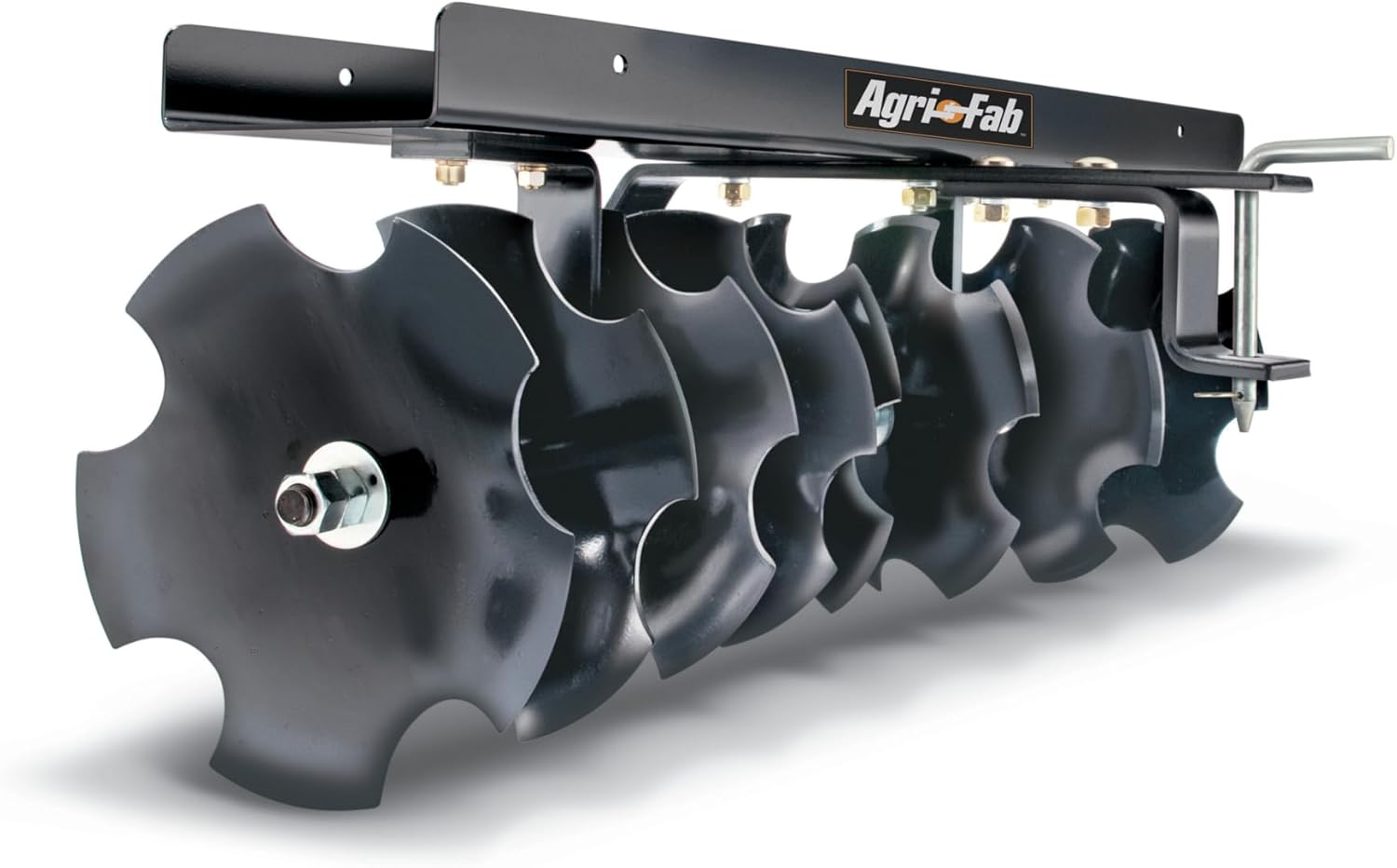
The Agri-Fab 45-0266 is a tow-behind sleeve-hitch disc cultivator designed to break up clods, tidy seedbeds, and help uproot weeds after tilling. It mounts to a tractor sleeve hitch and offers an adjustable working width so you can match row spacing or tractor clearance. Eight 11-inch steel discs are powder-coated for corrosion resistance and the disc angles can be set between roughly 10 and 30 degrees to vary soil disturbance and create a groomed finish. In practice this tool performs best on prepared ground where you need to refine a seedbed or maintain larger garden plots; it is not meant to replace a primary tiller for heavy sod removal. Assembly and secure sleeve-hitch attachment are required and tractors without the proper sleeve hitch will need that adapter. The cultivator is a durable, straightforward attachment that favors farmers and hobby growers who want a low-tech, long-lasting post-till grooming tool that is simple to operate from the tractor seat.
Best for: Practical small-acreage farmers and serious gardeners who already use a tractor and want a durable, low-tech attachment to finish seedbeds and control weeds after primary tilling.
Less Ideal for: Gardeners without a tractor or those needing an all-in-one primary tiller for breaking virgin sod should look at powered tillers or different attachments.
- Adjustable working width (30 to 38 inches) adapts to different row spacings and tractor setups
- Eight 11-inch powder-coated steel discs provide durable soil engagement and resist corrosion
- Disc angle adjustment (about 10 to 30 degrees) lets you control soil finish from light grooming to more aggressive breakup
- Simple mechanical design offers long-term durability and easy maintenance
- Requires a sleeve hitch on the tractor so additional hardware may be needed
- Not intended for primary sod removal or heavy initial tilling of compacted ground
Verdict: Choose this cultivator if you want a rugged, adjustable sleeve-hitch attachment to reliably groom seedbeds and control weeds after tilling.
Farmer-Helper FH-TL85 33" Offset 3-Point Rotary Tiller

| Power Source | PTO Driven |
|---|---|
| Working Width | 33" |
| HP Required at the PTO | 12 – 35 hp |
| Tine Count | 16 |
The Farmer-Helper FH-TL85 is a three-point PTO rotary tiller built for subcompact tractors and homeowner to small-farm use. It mounts on Cat I three-point hitches and runs from the tractor PTO, using a slip clutch driveline and overrunning gearbox to protect the tractor when the tines hit an obstruction. The tiller uses a chain-driven rotor with automatic/manual tensioners, 16 hardened tool-steel L-shaped tines, and an adjustable right-side offset so you avoid compacting tire tracks in the finished bed. Adjustable side runners and a formed rear deflector let you control working depth and final finish. Its 12–35 hp PTO requirement and substantial weight help the tines penetrate compacted soil for smoother, deeper results. Expect a durable, low-maintenance setup thanks to the oil-bath gearbox and heat-resistant chain tightener, but be prepared to use a tractor of sufficient horsepower and to perform basic PTO hookup and safety checks; this is not a walk-behind unit and requires tractor operation and occasional mechanical maintenance.
Best for: Buyers who own a subcompact tractor and want a durable, tractor-mounted tiller for preparing seedbeds, small gardens, and landscaping without guessing on compatibility. Ideal for owners who prioritize reliable PTO-driven performance and equipment protection.
Less Ideal for: Not a fit for gardeners who only have walk-behind tillers or need a lightweight, portable solution or for those who lack basic tractor hookup experience.
- Designed for Cat I three-point PTO mounting for easy tractor hookup
- Slip clutch driveline and overrunning gearbox protect tractor from sudden impacts
- Chain-driven rotor with automatic/manual tensioners reduces maintenance and extends chain life
- Adjustable offset and side runners let you avoid tire tracks and control working depth
- Oil-bath gearbox and hardened tool-steel tines improve durability for regular use
- Requires a tractor with 12–35 hp at the PTO so it is not usable without appropriate equipment
- Heavy unit intended for tractor use and not portable for small-scale hand or walk-behind tasks
Verdict: If you own a subcompact tractor and need a robust, PTO-mounted tiller that protects your tractor while delivering consistent seedbed preparation, the FH-TL85 is a reliable choice.
Choosing the Right Garden Tiller for Tractor: Key Factors to Consider
Tractor Power and PTO Match
A tractor-mounted tiller must match the tractor's horsepower and PTO speed to operate safely. Using a tiller that demands more torque than your tractor can supply will strain the drivetrain and reduce tilling efficiency.
Check the recommended horsepower range and whether the tiller is designed for 540 rpm, 1000 rpm, or multiple PTO speeds. Also consider drive-line protection and shear-pin systems that prevent damage if the rotor hits a large obstruction.
Tine Design and Material
Tines determine how the tiller cuts and mixes soil. Thick, forged or heat-treated tines resist bending and wear when working in rocky or rooty soil, while thinner tines can be fine for light bed preparation but will blunt or twist faster under heavy loads.
Look at tine shape too. L-shaped or S-shaped tines can be more aggressive in breaking clods, while paddle-style tines move material differently. Replaceable tines are important for long-term upkeep.
Gearbox Strength and Drive Layout
The gearbox transfers tractor power to the rotor and must be built to handle repeated high torque. Sealed, oil-filled gearboxes with cast housings and accessible inspection points last longer than open or poorly shielded designs.
Consider whether the drive uses chains, gears, or belt reductions. Chain drives can be robust but require tensioning and lubrication. A well-protected drive layout reduces downtime and the chance of mud or debris causing failures.
Working Width, Depth, and Adjustability
Width and depth determine how much ground you cover per pass and how deeply you turn the soil. Wider tillers reduce the number of passes but need more tractor power and can be harder to maneuver on tight plots.
Depth adjustment allows you to set the tiller for seedbed preparation or deeper turnover. Transport width and folding features are worth noting if you will move the implement on narrow roads or through gates.
Three-Point Hitch Compatibility and Ease of Attachment
Most tractor tillers mount on a three-point hitch, so check category compatibility and whether the unit includes adjustable top links or quick-attach features. A tiller that is simple to hitch up and level saves time and reduces frustration.
Also review the ease of aligning the PTO shaft and securing safety guards. Quick-access grease points and simple service panels speed routine maintenance.
Maintenance Access and Replaceable Parts
Frequent maintenance tasks include greasing bearings, checking gearbox oil, tightening fasteners, and swapping tines. A design with accessible lubrication points and easy-to-replace wear parts reduces downtime and long-term ownership cost.
Verify availability of replacement tines, belts, and seals before committing, and prefer units with service-friendly layouts that let you reach common wear items without major disassembly.
Matching Tiller Size to Your Land and Tractor
Choose a tiller width and working depth that reflect both the scale of your land and the maneuverability of your tractor. For narrow vegetable rows or raised beds, a compact tiller with adjustable width may be ideal; for larger plots, a wider unit reduces passes and fuel use.
Consider transport and storage too. Wider tillers can fold or partially retract, but still need enough clearance for gates and trailers. If your tractor has limited lifting capacity, prioritize narrower or lighter models that still meet your tilling goals.
- Narrow tillers: better for tight beds, lower tractor power requirement
- Wide tillers: fewer passes, need more horsepower and lift capacity
- Adjustable depth: enables both shallow seedbed work and deeper turning
Soil Types and How They Affect Tiller Choice
Sandy loam, clay, and rocky soils demand different approaches. Sandy soils are easier to till but can become overly pulverized if you overwork them, while clay benefits from aggressive mixing and may require staggered passes to avoid compaction beneath the working depth.
Rocky or root-filled ground calls for reinforced tines and a strong gearbox. In fields with frequent debris, choose models with shielding and straightforward access to clear obstructions safely.
- Light soils: use less aggressive tines and shallower depth
- Heavy clay: stage passes and use strong tines to break clods
- Rocky ground: reinforced tines and protective drive components
Routine Care to Prolong Service Life
Regular maintenance keeps a tractor tiller reliable season after season. After each use, clear debris from around the rotor and gearbox and inspect tines for wear or bending. Grease all specified points and check gearbox oil level per the manufacturer schedule.
Store the tiller in a dry place to slow corrosion, and replace worn tines promptly to maintain consistent tilling depth. Keeping spare shear pins and a small set of commonly used fasteners on hand saves time during field repairs.
- Daily: remove debris and check for loose fasteners
- Weekly during heavy use: inspect tines and grease pivot points
- Seasonally: change gearbox oil and replace worn tines
Safety Practices When Operating Tractor-Mounted Tillers
Operate at recommended PTO speeds and never exceed the tractor or implement ratings. Keep shields and guards in place, and ensure bystanders and pets are well clear before engaging the tiller.
Use the tractor's linkage controls to lower and raise the tiller smoothly and avoid sudden loads on the driveline. If the rotor stalls on a hidden obstacle, stop the PTO and reverse the tractor slowly to clear the obstruction when safe.
- Always wear eye and hearing protection when nearby
- Keep a safe distance from rotating parts and never reach under the implement
- Inspect shields and replace damaged guards before use
Transporting and Storing Your Tiller
Plan for safe transport by locking hitch points and securing the PTO shaft. Folding or modular designs can reduce transport width, but check that latches and pins are in good condition before moving on public roads or farm tracks.
For storage, elevate the unit slightly to prevent tine and frame contact with wet ground. A light coat of oil or corrosion inhibitor on exposed metal can reduce rust during off-season storage.
- Secure hitch and PTO before transport
- Use stands or blocks to keep tines off soil during storage
- Cover or shelter the unit to limit moisture exposure
How We Chose the Best Garden Tiller for Tractor
We prioritized specifications and real-garden utility that matter when a tiller is powered by a tractor. Selection began with compatibility checks for common tractor PTO speeds and horsepower ranges so each candidate will run safely and effectively without overloading the tractor. We next evaluated tine design and materials for wear resistance and ability to handle roots, rocks, and compacted beds. Build quality and gearbox robustness were key because tractor-driven rotors transmit high torque; we looked for sealed gearboxes and replaceable components. Width and depth flexibility were included to match common row and bed sizes, along with ease of attachment to standard three-point hitches. Noise and vibration damping, as well as maintainability-access to lubrication points and spare parts-were further filters. Items were excluded if they lacked clear tractor compatibility data, had non-serviceable drive systems, or used thin stamped tines unlikely to last under heavy use. The resulting shortlist balances durability, PTO and hitch fit, ease of maintenance, and adjustable working dimensions so gardeners and small farmers can pick a machine that suits their tractor and soil.
FAQ
What tractor horsepower do I need for a garden tiller for tractor?
It depends on tiller width and tine aggressiveness. Small, narrow tillers can run on low-horsepower tractors, while wider or heavy-duty models require more horsepower. Check the implement's recommended horsepower range and match it to your tractor to avoid overloading the drivetrain.
Can I use a tractor tiller on previously unworked compacted soil?
Yes, but plan staged passes. Start shallow to break surface compaction, then progressively increase depth to avoid creating a compacted layer below the working depth. Stronger tines and slower ground speed help when dealing with very compacted soils.
How often should I replace the tines on a tractor tiller?
Replacement frequency depends on soil type and usage. In abrasive or rocky soils, tines wear faster and may need replacement every season or two. Inspect tines regularly and replace them when they are clearly worn, bent, or no longer maintain proper depth.
Are universal PTO shafts safe to use between tractors and tillers?
Universal PTO shafts are common, but you must ensure shaft length, shielding, and coupling type match both tractor and implement. Keep the telescoping portion greased and the safety shield in place to reduce the risk of entanglement and wear.
What maintenance tasks should I perform after each tilling session?
Clear crop residue and soil from the rotor and gearbox, check for loose bolts, and inspect tines for damage. Grease accessible fittings as specified and look for leaks or damaged guards that could compromise safe operation.
Is it better to use a wider tiller or make multiple passes with a narrow unit?
A wider tiller covers more area with fewer passes but requires more tractor power and can be harder to maneuver. Multiple passes with a narrow unit are gentler on the tractor and may suit plots with tight access. Choose based on tractor capability and field layout.
Final Verdict
Pick a garden tiller for tractor that matches your tractor's PTO and horsepower, and prioritize tine strength and gearbox durability for long-term performance. Balance width and depth against maneuverability and soil type: wider units save time on large plots but demand more power and care during transport. Regular maintenance and correct attachment practices will extend service life and reduce downtime. With those priorities in mind, you can choose a tiller that fits your tractor and the work you need to do with confidence.
