

Note: This article contains affiliate links. If you click on these links and make a purchase, I may earn a small commission at no extra cost to you. This helps support my research and content. Read my full affiliate disclosure here.
If you have limited outdoor space but want to extend the growing season, a greenhouse tailored for small gardens can transform a balcony, patio, or tiny backyard into a productive plant nursery. The right compact greenhouse gives you reliable frost protection, better humidity control for seedlings, and a sheltered place for overwintering tender plants without taking over valuable yard area. This guide looks at seven shortlisted greenhouses for small gardens and explains the practical tradeoffs gardeners face. We evaluated structure footprint, durability in local weather, ventilation and microclimate control, and ease of setup so you can pick a compact option that fits your plot and growing goals.
Top Picks at a Glance
| Best Overall The best all-around choice for most situations | Ohuhu 3-Tier Walk-In Outdoor Greenhouse with 4 Shelves (PE Cover, Alloy Steel Frame) |  |
| Best Quality Built to a higher standard if you want something more solid | Racknookly 2-Pack Mini Pop-Up Greenhouse Plant Covers (44 x 22 x 17.5 in) |  |
| Best Value The sweet spot between price and what you get | Ohuhu Portable Mini Greenhouse with Dual Zipper Doors (71 x 36 x 36") |  |
| Best Budget The cheapest option that still gets the job done reliably | AHOME Mini Pop-Up Greenhouse (27 x 27 x 31 in) |  |
| Highest Rated A top-rated pick with lots of positive feedback | Bochino Raised Garden Bed Cover Mini Greenhouse with Zipper Doors |  |
| Most Popular A crowd favorite that many people choose with confidence | Pure Garden 4-Tier Mini Greenhouse with PVC Cover and Locking Wheels |  |
| Best Seller A high-volume bestseller chosen again and again | EAGLE PEAK 6×4 Pop-Up Walk-In Greenhouse |  |
Ohuhu 3-Tier Walk-In Outdoor Greenhouse with 4 Shelves (PE Cover, Alloy Steel Frame)

| Size | 3 Tier 4 Shelves |
|---|---|
| Cover Material | Green PE |
| Frame Material | Alloy Steel |
| Number Of Vents | 2 |
| Closure Type | Zipper |
This small walk-in greenhouse is designed to give hobby gardeners a protected, ventilated space for seedlings, potted vegetables and small ornamentals. It assembles from alloy steel tubing and a zippered PE cover to create a three-tier structure with four wire shelves that hold trays and pots; the manufacturer rates total shelf capacity at about 18 lb. A roll-up door and two screened side windows let you control airflow and check plants without fully opening the cover, which helps reduce heat spikes while maintaining circulation. The PE cover is tear-resistant and offers UV protection but is not as clear as PVC, so light transmission is moderate rather than glass-like. Installation is tool-free and the unit is portable, so it can be repositioned on a patio, balcony or sheltered yard spot as seasons change. Expect modest long-term durability compared with rigid greenhouses in exposed, windy sites and plan to anchor the frame and replace the cover sooner if used year-round in harsh weather.
Best for: Gardeners who want a portable, no-tools greenhouse to protect seedlings and container plants while controlling airflow and access with minimal fuss.
Less Ideal for: People needing a permanent, high-transparency structure for heavy-duty year-round use or for large-scale production should choose a rigid-frame greenhouse or taller commercial option.
- Compact walk-in design provides usable standing space for tending plants
- Four wired shelves let you organize trays and pots and keep plants off the ground
- Zippered roll-up door plus two screened windows allow ventilation control and easy access
- Alloy steel frame and grid PE cover offer better tear resistance and UV protection than cheaper covers
- PE cover reduces light clarity compared with transparent PVC or polycarbonate panels
- Not intended for high-wind or heavy-snow exposure without additional anchoring
Verdict: Buy this if you want an easy-to-assemble, portable walk-in greenhouse that protects seedlings and container plants while giving simple ventilation control.
Racknookly 2-Pack Mini Pop-Up Greenhouse Plant Covers (44 x 22 x 17.5 in)

| Number of Packs | 2 |
|---|---|
| Number of Doors | 1 |
| Indoor Outdoor Usage | Outdoor |
| Cover Material | Polyethylene (PE)-Freeze Protection |
| Frame Material | Alloy Steel |
These Racknookly pop-up plant covers are small, portable greenhouses intended to protect raised beds, planters, and seedlings from frost, wind, and light snow. Each unit expands instantly from its carry bag and secures to the ground with eight included stakes, and the reinforced PE cover with grid lining plus alloy steel wire frame gives the shelter rigidity and improved resistance to low temperatures and light abrasion. A wide roll-up zippered door provides easy access for watering and harvesting without removing the whole cover, and the product folds back into a compact disc for winter storage. In practice the covers are best for small garden plots or containers where a quick heat-trapping enclosure is needed; they let in most daylight while buffering nighttime temperature drops. Limitations are the compact internal space and modest height, so larger plants or multi-layer shelving will not fit, and the pop-up frame is not designed for prolonged heavy-snow loads or permanent installation in very exposed locations.
Best for: Gardeners with small plots, raised beds, or lots of containers who need a fast, performance-focused frost protection solution that is easy to move and deploy.
Less Ideal for: Growers who need a permanent, full-size greenhouse or who cultivate tall plants and stacked shelving setups that require more interior space and load-bearing structure.
- Quick pop-up setup and tool-free assembly with included stakes
- Reinforced PE cover with grid lining for higher light transmission and improved cold resistance
- Wide roll-up zippered door for easy plant access and better airflow control
- Comes as a two-pack for covering multiple beds or containers
- Folds compactly into a carry bag for simple transport and storage
- Compact internal dimensions limit use to low-growing plants and small containers
- Not intended as a permanent greenhouse; frame may struggle under heavy, prolonged snow
Verdict: If you need a fast, portable frost-protection shelter for small beds and containers, this reinforced PE pop-up two-pack delivers effective, easy-to-deploy coverage.
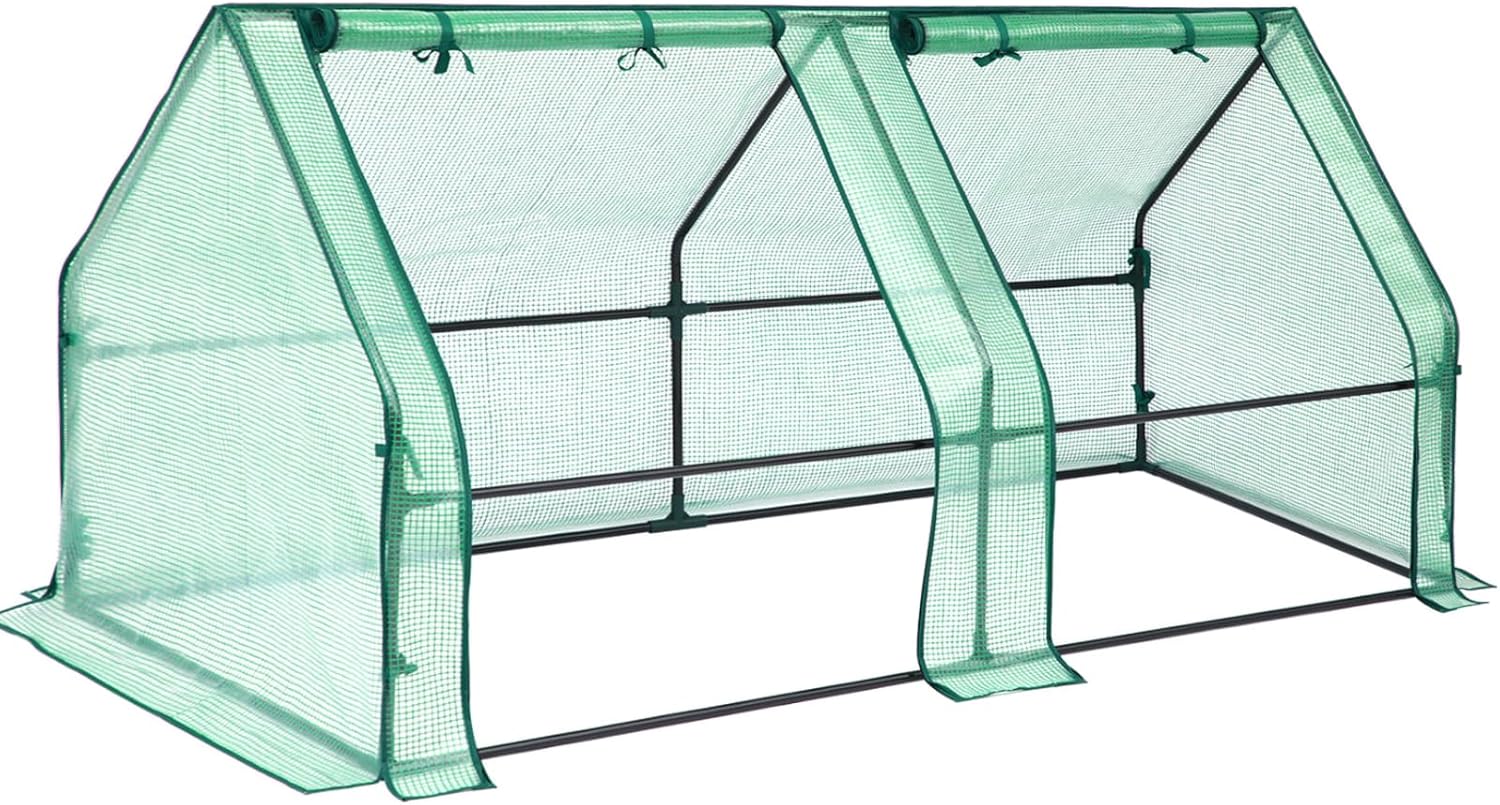
Ohuhu Portable Mini Greenhouse with Dual Zipper Doors (71 x 36 x 36")
| Number of Doors | 2 |
|---|---|
| Indoor Outdoor Usage | Indoor, Outdoor |
| Closure Type | Zipper |
| Cover Material | Polyethylene (PE) |
| Frame Material | Iron |
The Ohuhu portable mini greenhouse is a compact, house-shaped shelter that creates a warmer, more sheltered environment for seedlings, potted plants, and small raised beds in tight outdoor spaces. It assembles without tools using iron frame poles and plastic connectors, then slips over a durable polyethylene mesh cover that resists UV and tearing. Two large double-zippered roll-up doors give easy access and let you control ventilation, and built-in straps plus ground stakes help anchor the unit on patios or lawns. Practical benefits include year-round season extension for cool-weather crops, easy entry for watering and pruning, and a compact footprint that fits small gardens, balconies, and decks. Expect trade-offs typical of lightweight portable greenhouses: it is not a permanent structure, wind or heavy snow can strain the frame, and the PE cover offers less light transmission than clear PVC. For gardeners who prioritize convenience and space efficiency it performs well, but plan on occasional retensioning of straps and replacing or patching the cover over several seasons if exposed to harsh climates.
Best for: Gardeners with limited outdoor space who want an easy, no-tools solution to protect seedlings and extend the season on patios, balconies, or small yards.
Less Ideal for: People seeking a permanent, high‑light greenhouse for large plants or locations with frequent high winds or heavy snowfall should consider sturdier, anchored structures instead.
- Compact footprint fits patios, balconies, and small garden plots
- Durable PE cover with anti-UV/anti-aging mesh for weather resistance
- Iron frame with plastic connectors assembles quickly without tools
- Dual large zippered roll-up doors for easy access and ventilation
- Includes ground straps and stakes to improve stability outdoors
- Lightweight structure not intended as a permanent or heavy-load solution
- PE cover transmits less light than transparent PVC, reducing maximum light-admittance
Verdict: A compact, tool-free mini greenhouse that reliably extends the growing season for small gardens and balcony growers who want easy setup and sheltered plant space.
AHOME Mini Pop-Up Greenhouse (27 x 27 x 31 in)

| Indoor Outdoor Usage | Outdoor |
|---|---|
| Special Features | Pop-up design, high humidity promotion, zipper window |
| Cover Material | Polyvinyl Chloride (PVC) |
| Frame Material | Polyvinyl Chloride (PVC) |
This compact pop-up greenhouse is designed to give seedlings and small plants a protected, higher-humidity environment without a lot of effort or setup. The PVC cover and pop-up frame allow the shelter to be erected and folded in seconds, and the included ground tacks help anchor it on lawns or beds. The zipper door and a single vent let you access plants and provide some airflow on warm days. For budget-focused gardeners it delivers the core functions you need to extend the season, guard against light frost, and shelter seedlings from wind and rain. Expect limitations typical of lightweight mini greenhouses: the PVC frame and cover are not as durable as metal-and-polycarbonate structures and will be less resistant to heavy snow or prolonged exposure to strong sun. It is best used as a seasonal, low-cost solution for seedlings, small container plants, or short-term frost protection rather than a permanent greenhouse replacement.
Best for: Gardeners looking for an inexpensive, no-fuss way to start seedlings, protect small plants from light frost, or extend the growing season in beds and containers.
Less Ideal for: People who need a heavy-duty or year-round greenhouse for large plants or for regions with heavy snow, high winds, or intense sun exposure.
- Very quick pop-up setup and folding for easy seasonal use
- Clear PVC cover promotes humidity and light transmission
- Includes ground tacks to improve stability outdoors
- Zipper door and vent provide access and basic ventilation
- Lightweight PVC frame and cover limit long-term durability in harsh weather
- Single vent offers only minimal airflow control
Verdict: A very affordable, easy-to-use pop-up greenhouse that gives seedlings and small plants quick seasonal protection and humidity control.
Bochino Raised Garden Bed Cover Mini Greenhouse with Zipper Doors

| Cover Material | Polyethylene (PE) |
|---|---|
| Number Of Vents | 2 |
| Indoor Outdoor Usage | Outdoor |
This Bochino mini greenhouse is a simple, no-tool cover that fits over small raised beds to protect vegetables, flowers, and seedlings from birds, pests, frost, wind, and harsh sun. It uses a light-transmissive polyethylene cover with two zippered access points so you can ventilate, water, prune, or harvest without removing the whole shelter. Setup is straightforward and the cover folds flat for storage, while the supplied ground nails help keep it anchored. The clear PE material lets sunlight through for photosynthesis but still gives a barrier against physical damage and light scald when partially shaded. Expect a durable, reusable solution for season extension and short-term frost protection, though it is sized for smaller beds and does not replace a rigid-frame greenhouse for larger or year-round heavy-duty use. For gardeners who want a reliable, low-effort way to shelter a small bed, this cover delivers practical protection with easy access.
Best for: Gardeners seeking a straightforward, dependable way to extend the season and protect a single small raised bed or seedling area with minimal setup and maintenance.
Less Ideal for: People who need a permanent, heavy-duty greenhouse for year-round production or who want to cover large beds or multiple rows at once should look at rigid or framed greenhouse options.
- Light-transmissive PE cover allows sunlight for healthy plant growth while providing protection
- Dual zippered doors and side access for adjustable ventilation and easy tending
- Tool-free setup and fold-flat storage for seasonal use and compact storage
- Includes ground nails and storage bag to help anchor and protect the cover
- Small fixed size limits use to compact raised beds or trays
- Soft PE construction offers less structural strength than framed mini greenhouses
Verdict: A reliable, easy-to-use mini greenhouse cover that extends the growing season and protects a small raised bed with simple setup and convenient access.
Pure Garden 4-Tier Mini Greenhouse with PVC Cover and Locking Wheels

| Number of Doors | 2 |
|---|---|
| Closure Type | Zipper |
| Weight Capacity | Maximum weight: 24 pounds |
| Cover Material | Polyvinyl Chloride (PVC) |
| Frame Material | Alloy Steel |
This 4-tier Pure Garden mini greenhouse provides a compact, movable environment for starting seedlings, growing herbs, and protecting small potted plants from frost. Assembly is tool-free and the tubular alloy steel frame plus clear PVC cover create a warm, sheltered space; the zippered roll-up door gives easy access and ventilation control. Each shelf is rated to hold up to 24 pounds, so it accommodates multiple trays, medium pots, or seed flats across four levels. Locking caster wheels make it simple to move the unit onto a porch or into a sunroom, and you can remove the wheels to keep it stationary outdoors. Practical benefits include season extension for vegetables and tender perennials and convenient organization of plants and supplies. Limitations are the lightweight PVC cover, which will need careful anchoring and protection from strong wind and prolonged sun exposure, and the modest shelf spacing that limits very large pots or tall plants.
Best for: Gardeners who want a versatile, space-efficient greenhouse to start seedlings, grow herbs, or protect small plants through cooler months and who value portability and simple setup.
Less Ideal for: Growers who need a heavy-duty, long-term outdoor greenhouse for large plants or commercial propagation should look for sturdier, larger climate-controlled options.
- Compact four-tier design fits seed trays and multiple small to medium pots
- Tool-free assembly with locking wheels for easy repositioning
- Clear PVC cover with zippered roll-up door for protection and ventilation
- Alloy steel tubular frame offers basic stability for everyday use
- PVC cover is lightweight and can deteriorate under prolonged sun or rough weather
- Shelf spacing and weight limits restrict use with large or heavy containers
Verdict: A practical, easy-to-move four-shelf greenhouse that extends the season for seed starting and small-plant growing in compact spaces.
EAGLE PEAK 6×4 Pop-Up Walk-In Greenhouse

| Size | 6×4 |
|---|---|
| Cover Material | Reinforced Polyethylene Film |
| Frame Material | Alloy Steel |
| Number of Doors | 1 |
| Number Of Vents | 2 |
The EAGLE PEAK 6×4 pop-up walk-in greenhouse is a compact, easy-to-use shelter for starting seeds, protecting tender plants from frost, and extending fall or early-winter growth. Its pre-assembled pop-up frame and patented center lock let one person erect the structure quickly without tools, and the reinforced polyethylene cover holds warmth and humidity while filtering light. Mesh windows and a roll-up zippered door provide straightforward ventilation and access, and included stakes and guy ropes help stabilize the unit in light to moderate winds. The alloy steel frame and powder-coated finish add durability compared with flimsy hobby tents, but because it is a lightweight pop-up design it still needs care in heavy snow or high winds and can require additional anchoring or weight bags for stormy weather. The greenhouse is best for patios, balconies, and small backyards where a simple, portable shelter is desirable rather than a permanent heavy-duty structure.
Best for: Buyers who want a small, reliable portable greenhouse they can set up alone to start seeds, overwinter plants, or extend the growing season in a patio or small yard with minimal fuss.
Less Ideal for: Gardeners needing a permanent, heavy-duty greenhouse for large crops or those in exposed, high-wind or heavy-snow climates should choose a framed, rigid structure instead.
- One-person, tool-free pop-up frame for quick setup
- Reinforced PE cover that retains warmth and is UV and water resistant
- Alloy steel frame with powder-coated finish for improved durability
- Zippered roll-up door and mesh windows for ventilation and easy access
- Pop-up design is not suited to heavy snow loads or extreme wind without extra anchoring
Verdict: A compact, one-person pop-up greenhouse that delivers easy setup and season-extension performance for small-space gardeners.
Choosing the Right Greenhouse for Small Gardens: Key Factors to Consider
Footprint and Usable Growing Area
In a small garden, the greenhouse footprint determines whether the structure fits without crowding plants or blocking light. Measure available space precisely and think about access from all sides for watering and moving pots. A narrow but tall greenhouse may save ground space while offering vertical staging for shelves and hanging pots.
Usable growing area is not just the floorplan but how much of that space has decent light and headroom. Consider shelf layouts, bench placement, and how many standard nursery flats or grow bags you plan to store. A compact design that makes efficient use of corners and vertical space can outperform a slightly larger footprint that is awkward to use.
Weather Resistance and Anchoring
Small greenhouses can be vulnerable to high winds and heavy rainfall because they often sit in exposed yards or patios. Look for frames with sturdy connections and anchor options that match your surface, whether soil, gravel, or a hard patio. Reinforced corners, cross-bracing, and thoughtful anchoring points significantly reduce the risk of damage during storms.
Snow load matters if you get winter accumulation. For light snow areas a lightweight covering may suffice, but in regions with occasional heavy wet snow choose a structure with stronger framing and a steep enough roof pitch to shed accumulations. Also check how the covering attaches; secure fastenings prevent flapping that shortens material life.
Ventilation and Microclimate Control
Good ventilation prevents overheating on sunny days and reduces humidity that invites fungal disease in seedlings and annuals. For small greenhouses, passive vents, louvered windows, and roof vents are often enough, but plan for placement so prevailing breezes can flow through the structure. Consider whether you need automatic vent openers, battery-powered fans, or shade cloth to manage summer heat.
Controlling humidity and airflow also affects watering frequency and fertilizer schedules. A greenhouse that traps too much moisture will increase disease risk and require more active management, while one with balanced airflow will support healthier seedlings and make pest monitoring easier.
Material Durability and UV Protection
Covering and frame materials determine longevity in a small garden exposed to sun, rain, and temperature swings. Polycarbonate panels resist impact and retain light transmission longer than thin plastic film. UV-stabilized covers prevent rapid degradation in sunny locations. Metal frames should have corrosion-resistant coatings or be made from aluminum to avoid rust in damp climates.
Also think about repairability. Removable panels or replaceable covers mean you can refresh the greenhouse without replacing the entire frame. Durable materials reduce long-term maintenance and keep the structure functioning across seasons.
Ease of Assembly and Seasonal Handling
Many small-space gardeners install greenhouses themselves. A model with clear instructions, labeled parts, and simple fasteners saves time and frustration. Consider how many people the assembly requires, what basic tools are needed, and whether the unit can be disassembled for winter storage if necessary.
Seasonal handling includes how easy it is to replace a torn cover, tighten fittings, or modify shelving and staging as plantings change. If you plan to move the greenhouse occasionally or take it down during extreme weather, lightweight, modular designs with straightforward joinery are best.
Accessibility and Layout for Daily Tasks
Daily use drives satisfaction with a small greenhouse. Door width, shelving height, and aisle space affect how quickly you can water, repot, and inspect plants. Choose a layout that allows comfortable reach to all benches and prevents accidentally brushing tender seedlings when moving around.
Also consider storage within the structure for small tools and potting supplies. A compact greenhouse that integrates tidy shelving and hooks reduces trips to an external shed and makes routine tasks faster and neater.
Sizing the Greenhouse to Your Garden
Start by mapping sunlight through the day where you plan to place the greenhouse. Even a compact unit needs several hours of direct or strong diffuse light for seed starting and vegetable transplants. Note nearby trees or fences that cast shade at different seasons.
Think beyond the footprint to how you will stage plants. Tall shelves or vertical trellises can triple usable area in a small footprint, but ensure the structure has enough headroom and light penetration for multi-tier setups.
- Sketch a scale plan to visualize access and ventilation
- Allow at least 24 inches of aisle space for comfortable movement
- Position longer sides to receive morning and afternoon sun where possible
Placement and Foundation Options
Foundation choice affects stability and heat retention. On soil, secure anchors driven below frost lines help resist wind uplift. On patios or decks, use weighted bases or bolt-through brackets that avoid harming underlying materials. A simple timber or treated-wood base can improve leveling and raise the floor slightly for better drainage.
Avoid siting a greenhouse where water pools after rain. Ensure a slight grade or drainage channel to keep pots dry and prevent root rot in container-grown plants.
- Use gravel or pavers to improve drainage under portable units
- Consider a compact raised bed inside the structure for heavier crops
- Verify local building codes or HOA rules before permanent anchoring
Managing Light, Shade, and Temperature
In small greenhouses temperature swings happen fast. Reflective surfaces, movable shade cloth, and ventilation all work together to maintain a stable microclimate. Use shade cloth on the sunniest afternoons to prevent seedling burn and reduce watering needs.
Consider cheap, passive strategies before adding powered equipment. A thermal mass such as water barrels painted dark can moderate night temperatures, and double-layer coverings reduce heat loss in cool months while still transmitting light.
- Install adjustable vents or use automatic openers for hands-off temperature control
- Use removable shade on south-facing units during midsummer
- Add light-reflective surfaces to boost lower-bench illumination
Seasonal Use and Crop Planning
With a small greenhouse you can run multiple short crops each year. Start seedlings early in spring, move tender annuals in for late frosts, and use the protected space to overwinter herbs or tropical houseplants. Plan succession plantings to avoid empty benches during peak seasons.
Rotate crops and sanitize benches between plantings to reduce disease build-up in a confined environment. Lightweight trays and movable shelving make reconfiguration between seasons quick and efficient.
- Use staging that allows easy removal for cleaning and crop rotation
- Grow heat-loving starts in spring then switch to cool-season crops in the fall
- Label trays and keep a simple journal to track what fits best each season
Maintenance Tips for Longevity
Regular maintenance extends the life of a compact greenhouse. Inspect fasteners and anchors after storms, clean glazing to maximize light, and replace worn weather seals to keep drafts out. Small tears in coverings are easier to patch early than to let them grow into failure points.
Plan a yearly winter check to clear gutters, check frame joints, and remove any accumulated debris. Treat metal parts for corrosion where needed and store loose parts or panels safely during off-season if you plan to disassemble the unit.
- Wipe down glazing in early spring for better light transmission
- Keep a small repair kit for patching covers and tightening fittings
- Remove snow promptly using a soft broom to avoid concentrated loads
How We Chose the Best Greenhouse for Small Gardens
We focused on features that matter in confined garden situations and excluded large commercial or hoop-house designs that are impractical for tight yards. Selection favored greenhouses with small to medium footprints that still provide usable growing area, and structures that are manageable for one or two people to assemble. We prioritized materials and builds suited to typical backyard exposures, including UV-resistant coverings, corrosion-resistant frames, and secure anchoring options for windy sites. Evaluation criteria included footprint efficiency for how much planting area you get relative to the greenhouse size, weather resistance for wind, rain, and light snow loads, ventilation and microclimate control for seed starting and summer ventilation, and ease of assembly and maintenance so a small-space gardener can set up and care for the structure without specialized help. We excluded temporary pop-ups that offer minimal weather protection and full-scale hobby greenhouses meant for larger properties. Practicality, lifespan, and how well the structure integrates into a small garden were the guiding filters.
FAQ
How much sun does a greenhouse for small gardens need?
Most seedlings and vegetables need several hours of direct or strong diffuse light. Aim for a site that gets morning and midday sun. If only limited light is available, choose low-light crops or add reflective surfaces and portable grow lights during the weakest months.
Can I anchor a greenhouse to a patio or deck?
Yes. Use bolt-through brackets or weighted bases designed for hard surfaces. Avoid methods that trap moisture against the deck material and check that anchoring does not violate any deck warranties or local rules.
Do small greenhouses need electricity?
Not always. Many gardeners manage with passive ventilation, shade cloth, and manual watering. Electricity becomes useful for powered fans, small heaters for extended season use, or grow lights when natural light is insufficient.
What covering material is best for small greenhouses?
Polycarbonate panels are durable and provide good light diffusion for seedlings, while heavy-duty UV-stabilized polyethylene covers are lighter and often less expensive. The best choice depends on your climate, desired lifespan, and whether impact resistance or insulation is more important.
How do I avoid overheating in summer?
Use ventilation, shade cloth, and temporary shading to reduce direct sun on the hottest afternoons. Automated vent openers and strategic placement to catch breezes also help. Monitor temperature on sunny days while plants are adjusting to the greenhouse environment.
Can I grow full-season vegetables in a small greenhouse?
Often yes, especially high-value or compact crops like salad greens, seedlings, herbs, and dwarf tomatoes. Full-season production depends on space, light, and how well you manage temperature and ventilation throughout the year.
Final Verdict
For small gardens the best greenhouse balances a compact footprint with efficient use of vertical space, solid anchoring, and reliable ventilation. Prioritize a structure that matches your climate and available light, and favor materials and assembly styles that you can maintain without specialized tools. Decide which tradeoffs matter most: maximize usable square footage if you need many seedlings, choose stronger framing if your site is windy, or select better glazing for longer-term use. With the right small-scale greenhouse you can extend the season, protect tender plants, and get more productive use from limited outdoor space.
