

Note: This article contains affiliate links. If you click on these links and make a purchase, I may earn a small commission at no extra cost to you. This helps support my research and content. Read my full affiliate disclosure here.
If you grow microgreens year-round or want higher yields in a small space, choosing the right greenhouse matters more than you might expect. Microgreens are sensitive to humidity, airflow, and light uniformity, so a greenhouse that stabilizes those conditions will help you get stronger germination, fewer molds, and more consistent stems. This guide covers our shortlisted picks for compact greenhouses designed specifically for microgreen production. We evaluated each option for humidity management, light diffusion, ventilation, and usable benching space so you can match a model to your growing area and workflow.
Top Picks at a Glance
| Best Overall The best all-around choice for most situations | Barrina CX60 Mini Indoor Greenhouse with 40W Full-Spectrum Grow Light |  |
| Best Quality Built to a higher standard if you want something more solid | Spider Farmer 4-Tier Plant Stand with 60W Full-Spectrum Grow Lights and Tent |  |
| Best Value The sweet spot between price and what you get | PEEKUP Clear Mini Indoor Greenhouse, 4-Tier Acrylic |  |
| Best Budget The cheapest option that still gets the job done reliably | Nuanchu Mini Portable Greenhouse (single-piece) |  |
| Highest Rated A top-rated pick with lots of positive feedback | Inzlume 2-Tier Desktop Mini Greenhouse with 20W Full-Spectrum Grow Light and Timer |  |
| Most Popular A crowd favorite that many people choose with confidence | Pure Garden 4-Tier Mini Greenhouse with PVC Cover and Locking Wheels |  |
Barrina CX60 Mini Indoor Greenhouse with 40W Full-Spectrum Grow Light

| Wattage | 40W |
|---|---|
| LED count | 140 PCS |
| Timing function | 3H /9H /12H |
| Input voltage | 100~277V |
| Cover material | EVA |
This Barrina CX60 mini greenhouse is designed for seed starting and small-scale microgreen production in tight indoor spaces. The kit combines a lightweight, clear EVA tent supported by a stainless steel frame with a 2 ft 40W full-spectrum LED panel that is dimmable and offers three color modes plus a repeating 3/9/12-hour timer. Typical use is simple: assemble the frame, zip the cover over it, place seed trays inside and hang or mount the light to provide consistent daily photoperiods. Practical benefits include improved germination and humidity retention from the enclosed tent, easy daily scheduling with the built-in timer, and flexible light intensity for different growth stages. The IP65-rated light and multiple brightness settings make it usable near humid seedlings and adaptable as plants thicken. Limitations are its small footprint, which only fits a few trays at a time, and the thin EVA cover that will need gentle handling and eventual replacement under heavy use. The unit is best for hobby growers who prioritize convenience and controlled light for microgreens or seedlings rather than larger crop production.
Best for: Home growers who want a compact, plug-and-play setup to produce microgreens or start seedlings indoors with reliable, adjustable lighting and simple environmental control.
Less Ideal for: People needing to grow large quantities or full-size vegetable plants should choose a larger greenhouse or dedicated grow rack instead.
- Integrated 40W full-spectrum LED panel with dimming and three color modes for stage-specific light
- Built-in repeating timer (3H/9H/12H) simplifies daily light schedules
- Clear EVA tent retains humidity and warmth to boost germination rates
- Tool-free assembly with a lightweight stainless steel frame for easy setup and storage
- Compact 23×23×23 size limits the number of trays you can grow at once
- EVA cover is thin and can be prone to wear if handled frequently
Verdict: A compact, ready-to-use mini greenhouse that gives hobby growers reliable, adjustable light and humidity control for successful microgreens and seedlings.
Spider Farmer 4-Tier Plant Stand with 60W Full-Spectrum Grow Lights and Tent

| Number of Shelves | 4 |
|---|---|
| Shelf Weight Capacity | 110 pounds |
| Included Components | 3 Pcs Waterproof Mat, 6 Pcs LED Grow Light Bars, Cover |
| Material Type | Metal |
| Item Highlight | 60W Full Spectrum LED Grow Lights |
This Spider Farmer 4-tier plant stand is built for productive indoor growing in a small footprint. It ships as a metal frame with four adjustable shelves, six linkable full-spectrum LED bars (60W total), waterproof drain trays, and a 1680D reflective tent cover with both visual and blackout curtains. Typical use is seed starting and microgreens or keeping multiple small pots under consistent light and humidity control. The LED bars are energy efficient, plug-and-play, and designed for long life, so you can run predictable light schedules without bulky fixtures. The waterproof mats and openable drain holes make watering and cleanup straightforward, and the powder-coated frame with lockable wheels keeps the unit stable yet movable. Limitations to expect are the compact shelf dimensions, which restrict plant size to seedlings and microgreens, and the unit lacks integrated timers or environmental sensors on this model, so you'll need separate controls for automated schedules and monitoring.
Best for: Serious growers who need a compact, high-output setup for seed starting and dense microgreen production and who plan to add separate timers or sensors for automation.
Less Ideal for: People wanting a self-contained, fully automated grow cabinet or those who need space for larger plants or full-size pots.
- Full-spectrum LED grow lights designed for long life and energy efficiency
- Reflective, waterproof 1680D tent cover improves light use and keeps humidity in
- Waterproof trays with drain holes simplify watering and cleaning
- Sturdy powder-coated metal frame with adjustable shelf heights and lockable wheels
- Each shelf supports high load capacity for heavy trays and multiple seedling flats
- No built-in timer or temp/humidity sensors on this model
- Shelf footprint is small so tall or larger plants will not fit
Verdict: A compact, performance-focused grow shelf that delivers efficient full-spectrum lighting and waterproof growing trays ideal for high-yield microgreens and seed starting when paired with external controllers.
PEEKUP Clear Mini Indoor Greenhouse, 4-Tier Acrylic

| Number of Doors | 1 |
|---|---|
| Indoor Outdoor Usage | Indoor |
| Special Features | Adjustable Shelves, Drainage Slot, Magnetic Door |
| Cover Material | Acrylic |
This compact PEEKUP mini greenhouse is designed for seed starting and microgreen production on a tabletop. The clear acrylic enclosure traps warmth and humidity to speed germination and keep microgreens consistently moist while offering full visibility for monitoring. It has four tiers with three removable, adjustable dividers that include drainage slots so excess water can run away from roots and trays can be arranged for different crop heights. A magnetic front door gives quick access for daily harvesting and misting, and the unit is tool-free to assemble and easy to move where you need it. Because it is made of rigid acrylic it stacks with identical units and resists tipping, making it practical for small-space setups. Limitations to consider are its indoor-only design and modest internal footprint, which is meant for microbatches rather than continuous commercial output, and the acrylic can be sensitive to high heat from close-mounted grow lights.
Best for: Ideal for home growers and kitchen gardeners who want an efficient, tidy way to start seeds and grow microgreens in limited indoor space while maximizing usable shelf area.
Less Ideal for: Not a good fit for growers needing large-scale or continuous commercial production or for outdoor transplanting setups.
- Creates a controlled warm, humid microclimate that speeds germination.
- Adjustable removable tiers with drainage slots for flexible tray arrangement and reduced overwatering.
- Magnetic door provides fast, one-handed access for harvesting and maintenance.
- Rigid, stackable acrylic construction is stable and portable for small-space setups.
- Small internal volume limits batch size and continuous production.
- Not rated for outdoor use and can be damaged by grow lights placed too close.
Verdict: A compact, visible, and stackable acrylic mini greenhouse that makes efficient seed starting and microgreen batches simple and tidy.
Nuanchu Mini Portable Greenhouse (single-piece)
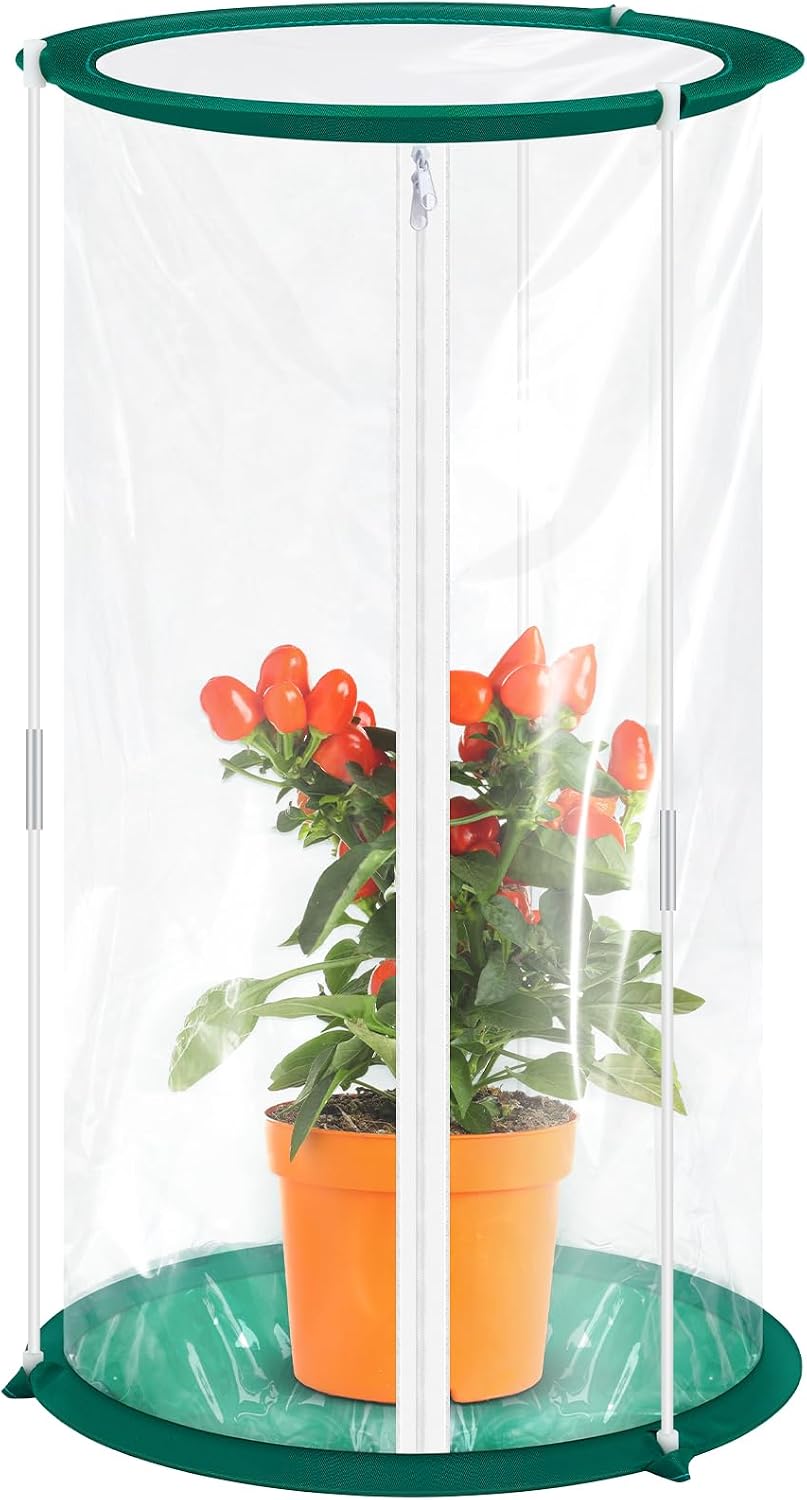
| Indoor Outdoor Usage | Outdoor |
|---|---|
| Special Features | Portable, Weather Resistant, Lightweight, Frost Resistant |
| Closure Type | Zipper |
| Cover Material | Polyvinyl Chloride (PVC) |
| Frame Material | Plastic |
The Nuanchu Mini Portable Greenhouse is a small, no-frills shelter that creates a warmer, more humid microclimate for seedlings, cuttings, and potted plants. It assembles quickly by connecting plastic frame pieces and zipping on the clear PVC cover, then anchors to the ground with the included stakes for outdoor use. The clear PVC lets light through while the zipper closure makes accessing plants simple for watering and inspection. Its lightweight plastic frame and compact footprint are well suited to balconies, patios, and tabletops where space is limited. Because it is made from PVC and plastic, it is easy to move and inexpensive compared with larger models, but the materials mean it offers limited long-term UV resistance and lower structural strength in high winds. Expect this to extend growing windows and protect against light frost and drafts rather than replace a full-size greenhouse for heavy weather or large plants.
Best for: Buyers who want an inexpensive, space-saving way to start seeds or protect small potted plants on a balcony or indoors and prefer an easy-to-move, low-maintenance option.
Less Ideal for: Gardeners who need a heavy-duty, long-lived greenhouse for large plants or for use in very windy or snowy climates should consider sturdier, weatherproof alternatives.
- Compact footprint fits small balconies, patios, and tabletops
- Clear PVC cover provides good light transmission for seedlings
- Zipper closure allows easy access to plants
- Included ground stakes/anchors improve stability outdoors
- PVC cover can degrade with prolonged UV exposure and may need replacement over time
- Plastic frame is lightweight and not suited to heavy winds or snow loads
Verdict: A budget-friendly, compact greenhouse that reliably extends the growing season for seedlings and small potted plants in limited spaces.
Inzlume 2-Tier Desktop Mini Greenhouse with 20W Full-Spectrum Grow Light and Timer

| Item Highlight | 5000K Full Spectrum, 2 Pack Grow Lights (20W), Auto Timer 4/9/14H |
|---|---|
| Indoor Outdoor Usage | Indoor |
| Cover Material | Polyvinyl Chloride (PVC) |
| Frame Material | Metal |
| Closure Type | Zipper |
This Inzlume 2-tier desktop greenhouse is built for dependable indoor seed starting and small-scale propagation. The clear PVC cover holds humidity while the roll-up zipper door gives easy access for watering and inspection. Two 16.5-inch LED strips deliver 20W of 5000K full-spectrum light and a built-in 4/9/14-hour timer provides consistent daily lighting without extra controls. Metal poles, metal mesh shelves and ABS connectors create a stable frame that assembles by hand with no extra tools, and the removable drip tray protects furniture from runoff. The size fits on a desk or counter for year-round starts but limits you to flats, small pots, or seedlings rather than larger plants. The PVC cover is effective for warmth and moisture retention but is less durable than thicker fabrics over heavy use. If you want a compact, low-maintenance starter greenhouse that runs reliably on a preset schedule, this model covers the essentials well.
Best for: Buyers who prioritize a reliable, low-effort seed-starting setup that maintains consistent light and humidity with minimal monitoring and simple assembly.
Less Ideal for: Growers needing space for larger plants, multiple deep pots, or heavy-duty outdoor greenhouse durability should consider larger or sturdier alternatives.
- Integrated full-spectrum LED lights with a built-in 4/9/14-hour timer for consistent, hands-off light scheduling
- Clear PVC cover retains humidity and allows easy observation of seedlings
- Metal frame and mesh shelves with ABS connectors assemble without tools for quick, stable setup
- Removable drip tray protects surfaces from drainage during watering
- PVC cover is thinner than heavy-duty greenhouse fabric and may show wear with long-term daily use
- Compact internal space restricts plant size to seedlings and small pots
Verdict: A compact, dependable desktop greenhouse that combines full-spectrum lighting and an automatic timer for fuss-free seed starting.
Pure Garden 4-Tier Mini Greenhouse with PVC Cover and Locking Wheels

| Number of Doors | 2 |
|---|---|
| Closure Type | Zipper |
| Weight Capacity | Maximum weight: 24 pounds |
| Cover Material | Polyvinyl Chloride (PVC) |
| Frame Material | Alloy Steel |
This 4-tier Pure Garden mini greenhouse provides a compact, movable environment for starting seedlings, growing herbs, and protecting small potted plants from frost. Assembly is tool-free and the tubular alloy steel frame plus clear PVC cover create a warm, sheltered space; the zippered roll-up door gives easy access and ventilation control. Each shelf is rated to hold up to 24 pounds, so it accommodates multiple trays, medium pots, or seed flats across four levels. Locking caster wheels make it simple to move the unit onto a porch or into a sunroom, and you can remove the wheels to keep it stationary outdoors. Practical benefits include season extension for vegetables and tender perennials and convenient organization of plants and supplies. Limitations are the lightweight PVC cover, which will need careful anchoring and protection from strong wind and prolonged sun exposure, and the modest shelf spacing that limits very large pots or tall plants.
Best for: Gardeners who want a versatile, space-efficient greenhouse to start seedlings, grow herbs, or protect small plants through cooler months and who value portability and simple setup.
Less Ideal for: Growers who need a heavy-duty, long-term outdoor greenhouse for large plants or commercial propagation should look for sturdier, larger climate-controlled options.
- Compact four-tier design fits seed trays and multiple small to medium pots
- Tool-free assembly with locking wheels for easy repositioning
- Clear PVC cover with zippered roll-up door for protection and ventilation
- Alloy steel tubular frame offers basic stability for everyday use
- PVC cover is lightweight and can deteriorate under prolonged sun or rough weather
- Shelf spacing and weight limits restrict use with large or heavy containers
Verdict: A practical, easy-to-move four-shelf greenhouse that extends the season for seed starting and small-plant growing in compact spaces.
Choosing the Right Greenhouse for Microgreens: Key Factors to Consider
Humidity Control and Condensation Management
Microgreens thrive in high humidity during germination but are highly susceptible to fungal issues if moisture sits on trays or covers for long periods. A greenhouse that allows you to nudge humidity up for sprouting then lower it slightly as seedlings develop reduces the chance of damping-off. Look for features that reduce surface condensation, such as breathable covers, vents placed to promote crossflow, or slightly angled shelving to avoid water pooling.
Materials and seal quality affect how quickly humidity responds to vents or heaters. Poor seals can make humidity unpredictable, while overly tight enclosures without ventilation increase mold risk. The ability to open doors, adjust vents, or add passive ventilation panels gives you control over wetness without disturbing trays.
Light Transmission and Diffusion
Microgreens need strong, even light to develop compact, healthy stems and uniform color. Direct, uneven light causes stretching or patchy growth across trays, so a greenhouse that disperses incoming light helps produce consistent stems. Evaluate glazing materials for both how much light they allow and whether they diffuse harsh direct sun. Clear glazing can deliver high transmission but may create hotspots; diffusive panels or mesh covers spread light more evenly across multiple shallow trays.
Consider the orientation and placement of the greenhouse relative to seasonal sun angles. If you plan multiple stacked trays, ensure the top shelf does not permanently shade lower levels; supplemental grow lighting compatibility can be important in deeper racks.
Ventilation and Airflow Patterns
Fresh air exchange prevents CO2 depletion and reduces the humidity pockets that favor mold. For microgreens, gentle, consistent airflow is preferable to strong drafts that dry out seedlings. Look for adjustable vents, screened openings to keep pests out, and the ability to add small fans if needed. The layout should promote cross-ventilation so that air moves across tray surfaces rather than stagnating in corners.
Consider how frequently you will open doors for watering and harvesting. Designs that maintain airflow while allowing access or that include hands-free vent adjustments help maintain stable conditions between visits.
Usable Bench Area and Shelf Configuration
Microgreen production favors large surface area of shallow trays rather than tall internal volume. The amount of flat, usable benching determines how many trays you can run at once and how easily you can rotate crops. Adjustable shelves or tiered rack systems let you stack trays efficiently and tailor spacing for different varieties.
Durable shelving that resists warping from constant watering and trays is important. Also consider shelf access for routine tasks like misting, harvesting, and cleaning. Units that force awkward lifting or bending will slow down harvest cycles and increase the chance of accidental tray damage.
Materials, Build Quality, and Maintenance
Repeated watering, fertilizer splashes, and frequent handling mean materials should resist corrosion, rot, and UV degradation. Frames that tolerate humidity and coverings that do not become brittle under sun exposure will last longer. Fasteners, zippers, and seals should be easy to inspect and replace when needed.
Maintenance considerations include how easily you can wipe down glazing, remove and sanitize shelves, and replace worn covers. Choose construction that lets you reach corners for cleaning to reduce pathogen buildup between crop cycles.
Climate Compatibility and Supplemental Systems
The local climate influences whether a greenhouse alone is enough or if you need supplemental heat, shade, or lighting. In cool, low-light winters you may need supplemental grow lights or a small heater to maintain germination temperatures. In hot, sunny climates, shade cloth and increased ventilation become essential to avoid overheating shallow trays.
Factor in available power for fans, lights, or heaters when selecting a unit. Models that integrate easily with small heaters or clip-on lights make it simpler to create the consistent microclimate microgreens require.
Sizing for Tray Throughput
Decide how many trays you want to run per cycle and choose a greenhouse with bench area to match. A compact unit that fits several standard shallow trays side by side will be more productive than a taller structure with empty vertical space.
Think about workflow: space to stage freshly sown trays, an area for drying after harvest, and room for storage of clean trays will streamline repeated batches.
- Measure tray dimensions and map how many fit on each shelf.
- Allow workspace for sowing and harvesting near the greenhouse.
- Plan for airflow between trays; avoid cramming trays so tightly they block ventilation.
Managing Moisture Without Overwatering
Microgreens need frequent surface moisture during germination then less moisture as stems appear. Use watering methods and greenhouse features that let you control surface wetness without saturating trays. Mist systems, humidity domes, or bottom-watering each have pros and cons depending on the greenhouse layout.
Adopt simple routines such as slightly opening vents during the day, closing at night when temperatures drop, and ensuring trays sit on breathable surfaces to avoid standing water.
- Use well-draining trays and keep excess water away from shelf surfaces.
- Consider raised grates or drip trays to catch runoff and make cleaning easier.
Lighting Options and Supplemental Fixtures
If natural light is limited, choose a greenhouse that allows easy installation of overhead LED bars or clamps. Position lights so they illuminate all tray levels evenly and use diffusers if necessary to spread light across the full bench.
When relying on natural light, use diffuse glazing or light-scattering covers to avoid hot spots that can scorch tender cotyledons.
- Mount lights on adjustable brackets to change height as plants grow.
- Use timers to maintain consistent daylength for steady development.
Pest and Disease Prevention Practices
A greenhouse reduces exposure to some pests but can concentrate others. Keep screens over vents and check seals regularly to block flying insects. Sanitation during and between crop cycles is the most effective defense against fungal pathogens.
Designate clean and dirty zones so harvested trays do not sit near new seedlings, and rotate cleaning tasks into your schedule to prevent pathogen buildup on shelves and glazing.
- Sanitize trays and surfaces between crops with a mild disinfectant.
- Inspect new seed batches and store seeds dry to reduce contaminant introduction.
Portable Versus Fixed Installations
Portable greenhouses and pop-up styles offer mobility and can be useful for small indoor setups or temporary outdoor placements. They are often lightweight and easier to store when not in use but may sacrifice long-term durability.
Fixed-frame or heavier-constructed greenhouses provide more stable microclimates and often support more robust shelving and accessories. Choose based on whether you need seasonal flexibility or a permanent production area.
- Consider how often you will move the unit and whether it needs anchoring.
- Check whether covers and frames are replaceable for long-term use.
How We Chose the Best Greenhouse for Microgreens
We focused on criteria that directly affect microgreen success rather than broad greenhouse features meant for large plants. Key evaluation points included humidity control and condensation management, because microgreens are vulnerable to damping-off and mold when moisture pools on trays. Light diffusion and transmission were tested conceptually to ensure even coverage across shallow trays without hot spots. Ventilation and airflow patterns were considered for maintaining fresh air without desiccating delicate cotyledons. Usable bench area and shelf adjustability mattered because microgreen setups favor multiple shallow trays stacked or tiered. Build materials and seal quality were included to estimate durability under repeated watering and the frequent opening of doors. We excluded large hobby or crop greenhouses that do not suit dense tray production or require heavy modification. We also excluded units intended only for single-pot plants or decorative purposes because they lack the controlled environment features microgreen growers need. Our selections emphasize models that balance compact footprint, controllable microclimate, and practical shelving.
FAQ
What size greenhouse is best for starting regular microgreen batches?
It depends on how many trays you want per cycle. For small-scale weekly production, a compact unit with room for several standard shallow trays across two to four tiers is efficient. Scale up bench area rather than height to increase throughput.
How do I keep humidity high enough for germination without causing mold?
Raise humidity briefly during the first few days using covers or a mist routine, then increase ventilation and reduce surface wetness as sprouts appear. Good airflow, breathable tray surfaces, and scheduled venting help prevent mold while maintaining germination moisture.
Can I use supplemental lights in a greenhouse for microgreens?
Yes. Compact LED fixtures work well and are energy efficient. Mount lights so they evenly illuminate all trays and use adjustable heights or racks so you can maintain the correct distance as plants grow.
Is a portable pop-up greenhouse adequate for microgreens?
Portable models can work for hobby or very small-scale production, especially indoors or in protected outdoor spots. Expect tradeoffs in durability and consistent microclimate control compared with fixed-frame options.
How should I clean a greenhouse used for microgreens?
Remove all trays and loose debris, then wipe shelves and glazing with a mild disinfectant solution. Allow surfaces to dry fully before introducing new trays to reduce the risk of pathogens surviving between cycles.
Do I need heated greenhouses to grow microgreens year-round?
Often you do not need full heating, but in cool climates supplemental heat or insulating covers may be necessary to maintain germination temperatures. Small space heaters or heat mats for trays can be sufficient when the greenhouse has reasonable insulation.
Final Verdict
Choose a greenhouse that matches the number of trays you plan to run, and prioritize humidity control, even light, and usable shelf area over unnecessary height. Expect tradeoffs: portable units are flexible and lower cost, while heavier-frame greenhouses provide more consistent microclimates and easier accessory mounting. Focus on how the unit handles moisture, airflow, and light diffusion for microgreens rather than broad gardening features. That approach will help you pick a setup that increases germination rates, reduces disease risk, and fits your production rhythm.
