

Note: This article contains affiliate links. If you click on these links and make a purchase, I may earn a small commission at no extra cost to you. This helps support my research and content. Read my full affiliate disclosure here.
If you want to extend your growing season without spending a fortune, choosing the right greenhouse matters. A small, well-built greenhouse under $500 can provide frost protection, shelter for seedlings, and a controlled microclimate on a patio, small yard, or balcony. In this guide we narrowed the field to the top shortlisted options that balance frame strength, covering material, ventilation, and ease of assembly. Expect practical notes on durability, footprint, and seasonal use so you can pick a greenhouse that fits your space and gardening goals. Read on for how each pick performs against the key gardener-focused criteria.
Top Picks at a Glance
| Best Overall The best all-around choice for most situations | IDEALHOUSE 6×8 ft Walk-In Greenhouse with Polycarbonate Panels and Aluminum Frame |  |
| Best Quality Built to a higher standard if you want something more solid | KING BIRD Premium 25'x10' Tunnel Greenhouse with Galvanized Steel Frame |  |
| Best Value The sweet spot between price and what you get | VEVOR Walk-In Tunnel Greenhouse, 14.6 x 6.4 x 6.3 ft |  |
| Best Budget The cheapest option that still gets the job done reliably | Bamworld 4-Tier Wooden Mini Greenhouse with PE Cover |  |
| Highest Rated A top-rated pick with lots of positive feedback | Ruelyn 8×12 ft Polycarbonate Outdoor Greenhouse with Hygrometer |  |
| Most Popular A crowd favorite that many people choose with confidence | EAGLE PEAK 8×6 Pop-Up Walk-In Greenhouse |  |
| Best Seller A high-volume bestseller chosen again and again | EAGLE PEAK 6×4 Pop-Up Walk-In Greenhouse |  |
IDEALHOUSE 6×8 ft Walk-In Greenhouse with Polycarbonate Panels and Aluminum Frame
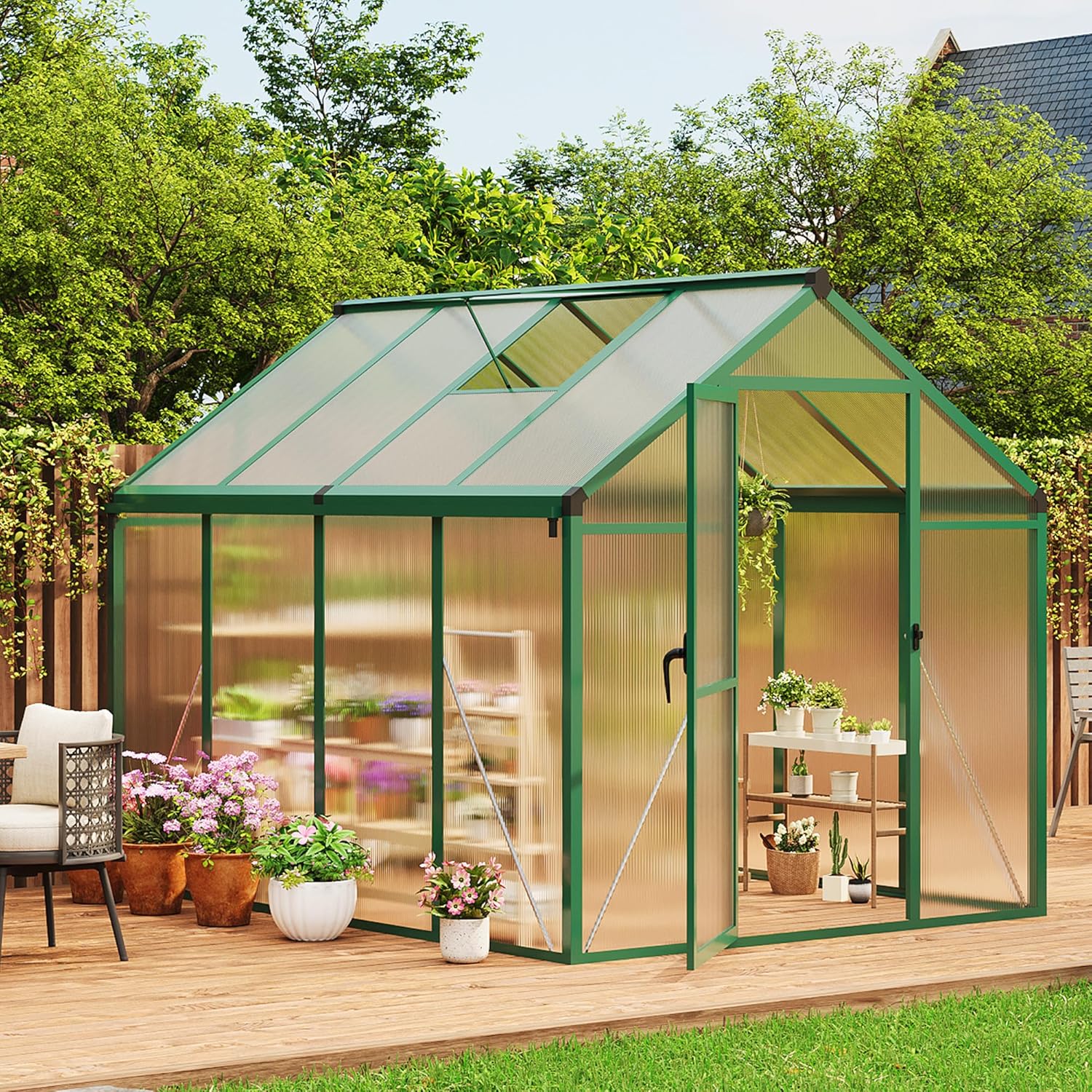
| Size | 6×8 FT |
|---|---|
| Cover Material | Polycarbonate (PC) |
| Frame Material | Aluminum Steel |
| Number Of Vents | 1 |
| Indoor Outdoor Usage | Outdoor |
This IDEALHOUSE 6×8 walk-in greenhouse is designed for gardeners who want a durable, easy-to-assemble sheltered growing space. It uses reinforced 720 g/m² polycarbonate panels that transmit light while blocking most UV and slide into an aluminum-steel frame with a slide-in assembly system that speeds setup. The greenhouse includes a roof vent and adjustable ventilation to help control temperature and airflow, plus a gutter-style water management feature for rainwater collection. In practice the structure provides a roomy footprint for seed-starting, overwintering tender plants, or extending the growing season for vegetables and ornamentals. Expect relatively straightforward assembly if you follow the instructions, but plan to handle heavy components carefully and allow for two shipments. The main limitations are the single roof vent for airflow control and the need to anchor the unit properly in exposed sites; the frame and panels are sturdy for typical garden conditions but may require additional bracing in high-wind locations.
Best for: Serious hobby gardeners who prioritize a robust, season-extension structure and want a relatively fast-build walk-in greenhouse for regular cultivation and overwintering of plants.
Less Ideal for: People needing a lightweight, ultra-portable tunnel-style greenhouse for quick seasonal use or gardeners in very windy coastal sites without plans to add extra anchoring or bracing.
- Reinforced 720 g/m² polycarbonate panels provide strong light transmission while blocking most UV
- Aluminum-steel frame offers solid structural support for outdoor use
- Slide-in panel assembly and clear instructions speed setup compared with conventional builds
- Integrated gutter system enables simple rainwater drainage and collection
- Top roof vent and adjustable ventilation help regulate internal temperature
- Only one roof vent limits fine-grained airflow control for larger heat loads
- Heavy components and sharp edges require careful handling during assembly
Verdict: A sturdily built, performance-focused 6×8 walk-in greenhouse that speeds assembly while providing durable protection for season-extension and overwintering.
KING BIRD Premium 25'x10' Tunnel Greenhouse with Galvanized Steel Frame

| Size | 25'x10'x6.6' |
|---|---|
| Cover Material | Polyethylene (PE), 150 GSM |
| Frame Material | Alloy Steel (galvanized) |
| Doors | 2 roll-up zipper doors |
| Vents | 10 roll-up screen windows |
This KING BIRD 25'x10' tunnel greenhouse is built for growers who need a roomy, durable shelter for season extension and high plant throughput. The galvanized alloy-steel frame includes extra crossbars, diagonals, and two stiffeners to improve rigidity, and the 150 GSM PE cover is marketed as UV index 6 protected for longer life than thin tarps. Two roll-up zipper doors and ten roll-up mesh windows give strong ventilation control so you can raise temperatures in spring, cool on hot days, and keep humidity in check. Practical benefits include easy access from both ends, insect-screened ventilation, and supplied stakes and ropes for anchoring. Expect straightforward assembly but plan time and at least two people because the structure is large. The cover still relies on anchoring in high winds and the manufacturer advises removing or securing it in storms, so this is not a permanent substitute for rigid polycarbonate greenhouses in very exposed sites. For gardeners wanting maximum grow area and robust airflow control without moving to a hard-panel greenhouse, this model balances size and reinforced framing effectively.
Best for: Gardeners who prioritize performance and capacity for season extension and want a reinforced, high-volume greenhouse to grow many plants or run multiple shelving racks.
Less Ideal for: People seeking a permanent, hard-panel greenhouse for extremely exposed sites or those who need a quick, single-person setup solution.
- Large 25'x10' interior provides ample space for many plants or shelving
- Galvanized alloy-steel frame with extra crossbars and stiffeners improves structural rigidity
- 150 GSM PE cover rated UVI 6 offers greater UV and weather resistance than thinner covers
- Ten roll-up mesh windows and dual zipper doors give flexible ventilation and insect protection
- Still a fabric-covered tunnel design that requires removing or heavy anchoring in high winds
- Assembly is time-consuming and typically needs at least two people for safe installation
Verdict: Buy this if you want maximum growing area and a reinforced tunnel greenhouse that prioritizes ventilation and weather-resistant cover performance under $500.
VEVOR Walk-In Tunnel Greenhouse, 14.6 x 6.4 x 6.3 ft

| Cover Material | Polyethylene (PE) |
|---|---|
| Frame Material | Alloy Steel |
| Number Of Vents | 8 |
| Closure Type | Zipper |
This VEVOR walk-in tunnel greenhouse is a roomy hoop-house designed to give backyard gardeners a protected, ventilated environment for seedlings, vegetables, and potted plants. It uses thickened galvanized steel pipes, diagonal bracing, U-shaped stakes, and tie-downs to create a stable frame that resists deformation, while the 140g/m² PE cover with double-stitched seams adds sun protection and insulation. A large roll-up zipper door and eight mesh windows with Velcro let you control airflow and keep out pests, and the generous interior fits shelving or multiple planting rows for easier access and maintenance. The structure is best sited in a sheltered spot and anchored well because the lightweight PE cover and hoop design are practical for wind protection but will need attention in severe weather. Assembly is manageable for two people but requires time and basic tools. If you want simple, cost-effective season extension and flexible interior space, this greenhouse offers solid value, though it is not a permanent glass structure and will require occasional tightening of anchors and care of the cover to prolong life.
Best for: Gardeners who want an affordable, walk-in structure to extend the growing season and organize multiple plants or shelves while optimizing space and stability.
Less Ideal for: People seeking a permanent, low-maintenance greenhouse for year-round exposure in very windy or storm-prone locations should consider sturdier rigid-frame options instead.
- Reinforced galvanized steel frame with diagonal bars and stakes for improved stability
- Heavy-duty 140g/m² PE cover with double-stitched seams for better tear resistance and insulation
- Large roll-up zipper door and eight mesh windows provide good ventilation and pest protection
- Spacious walk-in interior suitable for shelving, multiple planting rows, or easy access
- PE cover and hoop design are less durable than permanent glass or polycarbonate greenhouses in extreme weather
- Requires careful anchoring and occasional maintenance to keep the cover tight and secure
Verdict: A cost-effective, walk-in hoop greenhouse that gives practical season extension and usable interior space for gardeners who prioritize value and easy access.
Bamworld 4-Tier Wooden Mini Greenhouse with PE Cover

| Frame Material | Wood |
|---|---|
| Cover Material | Polyethylene (PE) |
| Indoor Outdoor Usage | Outdoor |
| Size | 4 Tier Single Layer Roof |
This Bamworld 4-tier wooden mini greenhouse is a simple, low-cost solution for extending the growing season and starting seeds outdoors. The unit uses a wooden frame with a PE cover and a roll-up zipper door, and assembles into a narrow, tall greenhouse that fits on patios or small garden spots. It provides four shelving levels so you can organize seed trays, herb pots, or small overwintering plants vertically to maximize limited space. The PE cover protects plants from light frost and wind while the roll-up door gives easy access and ventilation. Practical benefits include straightforward assembly with the included hardware and a compact footprint that suits balconies or tight corners. Limits to expect are the lightweight single-layer PE cover and wooden frame which are fine for mild protection but not for heavy snow, strong winds, or long-term permanent installation. Buyers should plan to anchor it and replace the cover sooner than heavier, commercial greenhouses if exposed to harsh weather.
Best for: Gardeners working with tight patios, balconies, or small yards who want an inexpensive way to start seeds and protect herbs or small plants through light cold spells.
Less Ideal for: Those needing a permanent, heavy-duty greenhouse for year-round production or for sheltering large plants and heavy winter loads.
- Compact vertical design with four shelves maximizes planting area in small outdoor spaces
- Wood frame offers a sturdier feel than all-plastic alternatives
- Roll-up zipper door allows easy access and adjustable ventilation
- Includes PE cover and assembly hardware so it is ready to set up
- Single-layer PE cover and wooden frame are not suited for heavy snow or very windy locations
- Narrow footprint limits the size and number of larger pots you can use
Verdict: A low-cost, space-saving greenhouse that gives budget gardeners an easy way to start seeds and shield small plants from mild cold.
Ruelyn 8×12 ft Polycarbonate Outdoor Greenhouse with Hygrometer

| Size | 8×12 FT |
|---|---|
| Cover Material | Polycarbonate (PC) |
| Frame Material | Aluminum |
| Number of Vents | 2 |
| Number of Doors | 1 |
This Ruelyn 8×12 ft greenhouse is a budget-minded, reliability-oriented kit that creates a stable growing space for seedlings, vegetables, herbs, and small ornamentals. The rust-proof aluminum frame and 4mm twin-wall polycarbonate panels provide light diffusion, UV protection, and some insulation to moderate temperature swings. It includes adjustable roof vents, a built-in hygrometer for quick climate checks, and dual rain gutters to manage runoff. Anchoring options for soil, concrete, or wooden bases give you flexible ways to secure the base feet for windy sites. Assembly is intended for consumer setup and comes with the necessary components, but plan for two people and a few hours to align panels and seal gaps for long-term durability. The construction handles typical rain and snow but is not a commercial-grade structure, so heavy or prolonged extreme weather will require extra anchoring and maintenance. For gardeners who want dependable protection and season extension without a large investment, this greenhouse offers practical features and solid materials for everyday home use.
Best for: Home gardeners who prioritize a dependable, year-round growing space and want a ready-made kit that balances durability and cost for vegetable starts, herbs, and season extension.
Less Ideal for: Gardeners seeking a heavy-duty commercial greenhouse for large-scale production or those wanting a frameless or permanently installed masonry structure.
- Aluminum frame resists rust for longer outdoor life
- 4mm twin-wall polycarbonate panels provide UV protection and insulation
- Built-in hygrometer and adjustable vents simplify climate monitoring and control
- Multiple anchoring methods let you secure the base on soil, concrete, or wood
- Integrated rain gutters manage runoff and protect the foundation
- Not engineered as a commercial-grade structure so extreme weather may require extra reinforcement
- Assembly requires time and at least two people to correctly fit panels and seals
Verdict: A reliable, budget-friendly walk-in greenhouse that gives home gardeners durable materials and climate controls to extend the growing season without a big investment.
EAGLE PEAK 8×6 Pop-Up Walk-In Greenhouse

| Size | 8×6 |
|---|---|
| Cover Material | Polyethylene (PE) |
| Frame Material | Alloy Steel |
| Number of Doors | 1 |
| Number Of Vents | 2 |
The EAGLE PEAK 8×6 pop-up greenhouse is a walk-in shelter aimed at extending the growing season and protecting plants from frost and light weather. Its preassembled alloy-steel frame uses extra steel reinforcement and a patented PeakPush center lock so one person can set it up quickly without tools. The PE cover is water-resistant and UV-filtering to help retain warmth and humidity, while the roll-up zippered door and mesh vents let you manage airflow and pest access. It includes stakes and guy ropes for added stability and a ground skirt you can weight down for windy conditions. Practical benefits include ample interior space for shelving or multiple pots, straightforward seasonal use for seed starting or fall protection, and replaceable covers or frames if components wear. Important limitations are that pop-up greenhouses are not engineered for heavy snow loads or sustained high winds so you will need to clear snow and add extra anchoring or weights during storms, and the PE cover will age faster than rigid glazing in strong sun over many seasons.
Best for: Gardeners who want an easy-to-assemble, walk-in greenhouse to start seeds, protect pots, and extend the growing season with minimal setup time and hands-on maintenance.
Less Ideal for: People needing a permanent, year-round structure for heavy snow loads or high-wind exposed sites should choose a rigid-glazed or anchored greenhouse instead.
- One-person, tool-free setup with patented center lock for fast assembly.
- Sturdy alloy-steel frame reinforced for better stability than typical pop-ups.
- Water-resistant, UV-filtering PE cover that traps warmth for season extension.
- Zippered roll-up door and mesh vents for adjustable ventilation and pest control.
- Not built to withstand heavy snow or severe winds without additional reinforcement.
- PE cover will wear faster than rigid glazing and may need replacement after prolonged sun exposure.
Verdict: Buy this if you want a roomy, one-person pop-up greenhouse that balances easy setup with a stronger steel frame for reliable seasonal protection.
EAGLE PEAK 6×4 Pop-Up Walk-In Greenhouse

| Size | 6×4 |
|---|---|
| Cover Material | Reinforced Polyethylene Film |
| Frame Material | Alloy Steel |
| Number of Doors | 1 |
| Number Of Vents | 2 |
The EAGLE PEAK 6×4 pop-up walk-in greenhouse is a compact, easy-to-use shelter for starting seeds, protecting tender plants from frost, and extending fall or early-winter growth. Its pre-assembled pop-up frame and patented center lock let one person erect the structure quickly without tools, and the reinforced polyethylene cover holds warmth and humidity while filtering light. Mesh windows and a roll-up zippered door provide straightforward ventilation and access, and included stakes and guy ropes help stabilize the unit in light to moderate winds. The alloy steel frame and powder-coated finish add durability compared with flimsy hobby tents, but because it is a lightweight pop-up design it still needs care in heavy snow or high winds and can require additional anchoring or weight bags for stormy weather. The greenhouse is best for patios, balconies, and small backyards where a simple, portable shelter is desirable rather than a permanent heavy-duty structure.
Best for: Buyers who want a small, reliable portable greenhouse they can set up alone to start seeds, overwinter plants, or extend the growing season in a patio or small yard with minimal fuss.
Less Ideal for: Gardeners needing a permanent, heavy-duty greenhouse for large crops or those in exposed, high-wind or heavy-snow climates should choose a framed, rigid structure instead.
- One-person, tool-free pop-up frame for quick setup
- Reinforced PE cover that retains warmth and is UV and water resistant
- Alloy steel frame with powder-coated finish for improved durability
- Zippered roll-up door and mesh windows for ventilation and easy access
- Pop-up design is not suited to heavy snow loads or extreme wind without extra anchoring
Verdict: A compact, one-person pop-up greenhouse that delivers easy setup and season-extension performance for small-space gardeners.
Choosing the Right Greenhouse: Key Factors to Consider
Frame Strength and Material
A greenhouse frame supports the covering and resists wind, snow, and repeated seasonal use. Lighter materials like thin steel or aluminum save cost but vary widely in tube gauge, joint quality, and corrosion resistance. Thicker tubing, reinforced joints, and powder-coating extend lifespan and reduce wobble when doors or vents are used frequently.
Consider where you place the greenhouse. Exposed sites need a stronger frame and good anchoring options. In sheltered patios or against a wall, a lighter frame may be acceptable. Check how corners and cross-braces are joined since those are common failure points over time.
Covering Type and Weather Resistance
Covers range from polyethylene film to twin-wall polycarbonate panels. Lightweight polyethylene is common at lower prices and provides decent protection for a single season or two if UV-treated, but it will degrade faster and can flap in wind if not tensioned properly. Polycarbonate panels cost more but resist tearing and retain insulation properties longer.
Look for UV stabilization, tear-resistant seams, and clear manufacturer guidance on replacement intervals. How the cover attaches to the frame matters because clipped or zippered systems reduce flapping and leakage, maintaining a more consistent interior temperature.
Ventilation and Climate Control
Ventilation determines temperature, humidity, and air movement inside the structure. Passive vents, roll-up side walls, and roof vents all change how quickly heat builds or dissipates. For seed starting and summer use, good airflow reduces fungal problems and overheating. For winter protection, being able to control vents helps avoid sudden freezes followed by rapid warming that can stress plants.
Consider what you will grow and when. If you plan to use the greenhouse year-round, choose models with adjustable venting and options to add fans or shade cloth. Easy-to-use closures and screened openings also help keep pests out while allowing airflow.
Footprint, Layout, and Usable Interior Space
A greenhouse's nominal square footage does not always equal usable space. Curved walls or shelving arrangements can reduce workable area. Think about bench height, door swing, and how many trays or pots you want on the floor. Clearance at the center peak matters for trellised vegetables or taller pots.
Measure the intended site and plan for access on at least one side. If you need to move plants in and out during the season, wider doors and clear center paths improve usability. Also factor in where you will anchor the frame and whether the base profile allows straight edging against patios or soil.
Ease of Assembly and Required Tools
Many budget greenhouses are sold as DIY kits. The assembly time and complexity vary widely depending on fastener types, pre-drilled holes, and the clarity of instructions. Fewer unique parts and simpler fastening methods lower the chance of leftover pieces and reduce frustration.
Check whether the design requires two people for safe assembly, what tools are necessary, and whether replacement parts are commonly available. A design that can be tightened and adjusted after first wind exposure prolongs useful life without complex disassembly.
Anchoring, Stability, and Seasonal Maintenance
Anchoring is critical for wind resistance. Look for options to bolt to a hard surface, drive-in stakes for soil mounts, or tie-down kits. Stability also influences how the structure handles snow; flatter roofs can accumulate snow weight while peaked frames shed it more readily.
Routine checks for tension, cover integrity, and rust at joints extend life. Consider whether the greenhouse allows easy access for repairs or swapping out covers as seasons change.
Best Sites and Placement Tips
Choose a site that maximizes sunlight while protecting the greenhouse from prevailing winds. South- or southeast-facing locations capture morning and midday sun. Avoid heavy shade from trees that drop leaves or sap onto the cover.
On patios or decks, ensure the surface is level and that the greenhouse can be anchored without damaging the substrate. For ground installations, clear turf and level the footprint to prevent pooling water and uneven stress on the frame.
- Allow space for door swing and plant access
- Keep the greenhouse away from large trees that drop debris
- Consider morning sun exposure for quicker daytime warming
Seasonal Use and Year-Round Considerations
A greenhouse under $500 is often best suited to season extension, starter plants, and overwintering small pots. In mild climates it can function year-round with added ventilation and shading. In cold regions, expect to use it as a protected nursery rather than a full heated conservatory.
Prepare for season changes by planning removable insulation, temporary shelving, and adding portable heaters or electric fans as needed. Remove snow promptly from flatter coverings to avoid excess load and inspect tension after storms.
- Use shade cloth in high summer to prevent overheating
- Add temporary insulation around the lower walls in cold snaps
- Bring delicate plants indoors during extreme weather
Accessory Upgrades That Improve Function
Small investments in accessories can make a budget greenhouse far more useful. Simple shelving systems increase usable area and keep seedlings off the floor where water can pool. Roll-up sides or screened vents provide flexible airflow control without major modifications.
Anchoring kits, replacement covers, and heavier base rails improve longevity and wind resistance. Consider adding a basic thermometer and hygrometer to monitor conditions and make ventilation decisions based on measured values.
- Add adjustable shelving to maximize vertical space
- Install a thermometer/hygrometer to track microclimate
- Use tie-downs or added base rails for windy sites
Quick Maintenance Checklist
Regular maintenance keeps a low-cost greenhouse usable for multiple seasons. Inspect the cover for tears and UV degradation before spring and replace any worn fasteners. Tighten frame joints and lubricate moving parts like zippers and hinges.
Clean interior surfaces to reduce disease pressure and clear drains or low spots where water might collect. Store seasonal accessories and spare fasteners in a labeled container for faster repairs.
- Check and tighten fasteners after strong winds
- Replace torn covers early to prevent further damage
- Clean and disinfect benches between crops
How We Chose the Best Greenhouse
We focused on practical performance for small-scale gardeners who need an affordable structure. Our selection process prioritized frame strength relative to footprint, the covering material's weather resistance, ventilation options, and how straightforward installation and seasonal maintenance would be. Portability and footprint flexibility mattered for patios or tight yards where anchoring and access are constraints. We also considered ease of replacement parts and how usable the interior is for shelving, pots, and seed trays. We excluded oversized commercial frames and models that require advanced foundation work or professional assembly. Extremely flimsy covers or frames without basic ventilation were disqualified. Final selections balance real-world stability, protection from wind and light snow, usable internal volume, and user-friendly assembly.
FAQ
Can a greenhouse under $500 survive light snow?
Often it can handle light snow if the frame is reasonably sturdy and the cover is tensioned. You should remove accumulated snow promptly and avoid letting heavy loads build up. In regions with frequent heavy snow, a low-cost greenhouse will usually require reinforcement or seasonal disassembly.
Do cheaper greenhouses need a foundation?
Not always. Many budget models sit on soil or a leveled patio and use anchor kits for stability. A simple base or compacted gravel pad improves drainage and reduces ground moisture, while a bolted base is better for permanent patio installations.
How important is ventilation in a small greenhouse?
Ventilation is crucial because heat and humidity can rise quickly in compact spaces. Adjustable vents, roll-up sides, or screened openings help prevent overheating and reduce disease pressure. Adding a small fan or passive vents improves air circulation significantly.
What covering material lasts longest under budget constraints?
Twin-wall polycarbonate typically outlasts polyethylene film, resisting tears and UV degradation better. However, polycarbonate panels may be less common at the lowest price points. UV-treated polyethylene with reinforced seams is a good compromise if you plan to replace it periodically.
Can I use shelving and hanging systems inside a small greenhouse?
Yes. Smart shelving and hanging racks increase usable area and make small greenhouses much more productive. Ensure shelving is anchored to the frame or base so it does not shift when plants are moved or when the door opens.
How long should I expect a budget greenhouse to last?
Lifespan varies with materials, exposure, and maintenance. With good anchoring, regular cover checks, and seasonal care, a well-chosen budget greenhouse can give several seasons of use. Expect to replace covers more often than frames unless the cover is polycarbonate.
Final Verdict
For gardeners on a limited budget, a greenhouse under $500 offers meaningful season extension and a protected environment for seedlings and potted plants. Prioritize a stable frame, a weather-resistant cover, and straightforward ventilation to get the most practical use out of the structure. Accept tradeoffs between long-term durability and initial cost by planning for periodic cover replacement or modest reinforcements. With clear priorities around site placement, anchoring, and maintenance, you can choose a compact greenhouse that fits your space and keeps plants thriving through variable weather.
