

Note: This article contains affiliate links. If you click on these links and make a purchase, I may earn a small commission at no extra cost to you. This helps support my research and content. Read my full affiliate disclosure here.
If you need living ground cover that survives frequent use, the right species or mix makes all the difference. Ground Cover for High Traffic are chosen for toughness, ability to regrow after compaction, and low fuss in a real garden, patio edge, or lawn substitute. This guide shortlists six top-performing options and explains practical tradeoffs for small yards, walkways, and play areas. We evaluated wear tolerance, recovery rate, and maintenance needs to help you choose a planting that stays attractive under repeated use. Read on to see which characteristics matter most and how each option behaves in everyday garden conditions.
Top Picks at a Glance
| Best Quality Built to a higher standard if you want something more solid | Outsidepride MiniClover Perennial White Micro Clover Seed (5 lb) |  |
| Best Value The sweet spot between price and what you get | Pennington Annual Ryegrass Seed, 10 lb |  |
| Best Budget The cheapest option that still gets the job done reliably | Mountain Valley Seed Co Micro Clover Lawn Seed, 4 oz |  |
| Highest Rated A top-rated pick with lots of positive feedback | Scotts Turf Builder Grass Seed High Traffic Mix, 5.6 lb |  |
| Most Popular A crowd favorite that many people choose with confidence | Outsidepride White Dutch Clover Seed, 5 lb |  |
| Best Seller A high-volume bestseller chosen again and again | X-Seed Microlawn Grass Seed & Microclover Mix, 5 lb |  |
Outsidepride MiniClover Perennial White Micro Clover Seed (5 lb)

| Seed type | Trifolium repens (mini white clover) |
|---|---|
| Pack weight | 5 lb |
| Growth habit | Perennial, spreads by stolons |
| USDA zones | 3-10 |
Outsidepride MiniClover is a small-leaved white clover (Trifolium repens) sold as seed for use as a low-maintenance lawn alternative or to overseed existing turf. It establishes by stolons and stays shorter than common Dutch clover, making it suitable for lawns that are mowed low; the plants produce white flowers briefly in summer if left unmowed and attract pollinators. The seed is promoted for mixing at low percentages with grass seed to improve green-up and soil fertility because the clover fixes nitrogen from the air, which can reduce fertilizer needs and support denser turf in high-traffic areas. It is drought tolerant and spreads to fill bare patches, reducing repeated reseeding. Limitations to expect are a slower initial cover compared with fast-establishing grasses and visible flowers if you want a perfectly uniform mowed turf surface, plus clover may be less wear-resistant than the toughest turfgrasses under extreme, constant heavy use.
Best for: Gardeners and homeowners who want a low-maintenance, greener lawn alternative that improves soil fertility and fills in high-traffic bare spots with minimal inputs.
Less Ideal for: People who need a perfectly uniform, high-wear athletic turf or who require instant dense cover for very heavy continuous use should choose a dedicated turfgrass designed for sports fields.
- Small leaves and shorter growth habit keep the surface neater under low mowing heights
- Nitrogen-fixing habit reduces need for synthetic fertilizer and promotes neighboring grass health
- Spreads by stolons to repair bare spots and form continuous cover
- Drought-tolerant once established, lowering irrigation needs
- Slower to establish than some quick-germinating turf grasses
- Less durable than the toughest sports turf under continuous heavy traffic
- Produces summer flowers if unmowed, which can interrupt a uniform lawn appearance
Verdict: Choose this mini clover when you want a low-growing, drought-tolerant ground cover that improves soil fertility and self-repairs bare spots in a high-traffic yard.
Pennington Annual Ryegrass Seed, 10 lb

| Bag weight | 10 lb |
|---|---|
| Sun exposure | 6 to 8 hours |
| Germination time | 3 to 7 days |
This 10 lb bag of Pennington Annual Ryegrass is designed primarily for overseeding to give lawns fast green cover during the cooler months. It establishes quickly with visible growth in three to seven days and is recommended for areas receiving about six to eight hours of sun. Typical uses include overseeding Bermuda, Zoysia, and other warm-season lawns for winter color, or filling in thin spots on northern lawns as a temporary solution. Notable features are its fast germination, good wear tolerance under light foot traffic, and disease resistance, which make it practical for patios, play areas, and lightly used yards. The seed is presented as a seasonal, short-term fix rather than a permanent lawn replacement, so expect it to decline as temperatures rise. If you need a reliable, fast-acting rye for winter color or quick coverage before an event, this delivers; for long-term lawn renovation choose a perennial turf mix instead.
Best for: Buyers who need quick winter green-up or short-term coverage for lawns and want a dependable seed that establishes fast and tolerates light use.
Less Ideal for: Homeowners seeking a long-term, permanent turf solution or those who need a seed mix tailored to shade-dominant yards should consider other options.
- Very fast germination with visible results in 3 to 7 days
- Works well for overseeding warm-season grasses like Bermuda and Zoysia
- Good tolerance to foot traffic for temporary use
- Described as disease-resistant for healthier short-term growth
- Annual ryegrass is temporary and will decline as temperatures warm
- Not intended as a permanent replacement for established perennial turf
Verdict: Choose this ryegrass when you want fast, reliable winter green-up and temporary turf support for overseeding projects.
Mountain Valley Seed Co Micro Clover Lawn Seed, 4 oz

| Unit Count | 4 Ounce |
|---|---|
| Material Features | GMO Free, Heirloom |
| Sunlight Exposure | Partial Shade |
| Moisture Needs | Moderate Watering |
| Other Special Features of the Product | High Germination Rate |
This micro clover seed is designed as a low-maintenance lawn alternative or mix-in to repair high-traffic areas. It produces tiny, low-growing clover that crowds out weeds, requires less mowing and water than typical turf, and naturally fixes nitrogen to improve soil fertility over time. Typical use is broadcasting 1 to 2 pounds per 1,000 sq ft (or half that rate when overseeding an existing lawn), keeping the surface damp until seedlings establish. Notable features include a high germination rate, heirloom non-GMO seed stock, and suitability for partial shade and moderate watering. In practice it performs well in compacted or worn patches because the dense mat tolerates some foot traffic and recovers quickly compared with many grass species. Limitations are that it grows only 4 to 6 inches and so changes lawn appearance, it may not tolerate continuous heavy wear like athletic fields, and full establishment requires consistent moisture early on.
Best for: Buyers on a budget who want an easy, low-maintenance groundcover for worn or high-traffic residential areas and prefer reduced water and fertilizer needs.
Less Ideal for: People needing a traditional turf appearance or those who require turf that withstands constant, high-impact athletic use.
- Drought tolerant so requires less watering than standard turf once established
- Naturally fixes nitrogen to reduce need for fertilizer
- Low-growing habit reduces mowing and maintenance
- High germination rate for reliable establishment from seed
- Not suited for continuous heavy wear such as sports fields
- Changes the look of a traditional grass lawn which may not suit formal landscapes
Verdict: A low-cost, low-maintenance groundcover that establishes reliably and keeps high-traffic residential lawns greener with less water and fertilizer.
Scotts Turf Builder Grass Seed High Traffic Mix, 5.6 lb

| Sunlight Exposure | Full Sun |
|---|---|
| Expected Planting Period | Spring |
| Other Special Features of the Product | High Germination Rate |
| Expected Blooming Period | Spring to Summer |
This Scotts Turf Builder High Traffic Mix is a seeded lawn solution built to establish deeper roots and stand up to regular use. It is used for seeding new lawns or overseeding worn areas in spring or fall when soil temperatures are in the recommended range. Notable features include Root-Building Nutrition to encourage stronger root systems and a high germination rate that helps the lawn fill in and self-repair after wear. Practical benefits are clear coverage guidelines—about 930 sq. ft. for new lawns and 2,800 sq. ft. for overseeding from a 5.6 lb. bag—and guidance to use a spreader for even application. The seed performs best with consistent watering until seedlings reach about 2 inches and in full sun to light shade. Limitations to expect are lower drought tolerance, so performance can suffer in dry climates without irrigation, and the mix is optimized for high-traffic tolerance rather than shade-heavy sites. Success depends on following prep, application, and watering steps rather than a quick fix.
Best for: Buyers who prioritize a dependable, durable lawn that recovers from regular foot traffic and are willing to follow recommended seeding and watering routines.
Less Ideal for: Gardeners in hot, dry climates who cannot irrigate regularly or those with primarily dense shade who need a shade-specific seed mix.
- Formulated Root-Building Nutrition to promote deeper roots and a stronger lawn
- High germination rate that helps bare spots fill in and self-repair
- Clear coverage estimates for new lawns and overseeding to plan material needs
- Designed specifically for high-traffic areas with good durability under wear
- Lower drought resistance so it needs regular watering to establish and persist
- Not aimed at heavily shaded sites where different species mixes perform better
Verdict: Choose this mix if you need a dependable seed that builds deep roots and reliably repairs a high-traffic lawn when properly sown and watered.
Outsidepride White Dutch Clover Seed, 5 lb

| USDA Hardiness Zone | 3 |
|---|---|
| Sunlight Exposure | Full Sun |
| Moisture Needs | Little To No Watering |
| Material Features | Heirloom |
| Expected Blooming Period | Early spring/Late summer |
Outsidepride White Dutch clover is a hardy perennial cover crop sold in a 5 lb bulk bag and treated (nitrocoated and inoculated) to support germination and soil health. It is used for quick-establishing ground cover, erosion control, lawn alternatives, pasture mixes, and deer or food plots. Typical use is broadcasting seed at the recommended rate, lightly raking it in, and keeping the soil moist until germination, which often appears within two weeks under favorable temperatures. Notable features include drought tolerance, the ability to fix atmospheric nitrogen to improve soil fertility, and fragrant white blooms that attract pollinators. Practical benefits are reduced need for watering and herbicides, faster soil stabilization on slopes, and improved soil structure when used in rotations. Limitations are that it establishes best with some site preparation and regular moisture during germination, it can be slow to outcompete aggressive weeds in very poor seedbeds, and its low stature means it is not a replacement for tall ornamental plantings. Overall it is a straightforward, low-maintenance option for durable, pollinator-friendly ground cover in dry landscapes.
Best for: Buyers who prioritize proven performance and want a low-water, pollinator-friendly ground cover with strong customer feedback to back its reliability for erosion control and lawn alternatives.
Less Ideal for: Gardeners seeking a tall, ornamental flowering display or immediate weed-free lawns should consider other perennial or turf options that provide instant height or faster weed suppression.
- Treated (nitrocoated and inoculated) seed for improved germination and soil inoculation benefits
- Drought tolerant once established, suitable for low-water landscapes
- Attracts pollinators with white flowers, supporting garden biodiversity
- Effective at crowding out weeds and stabilizing soil for erosion control
- Needs consistent moisture during germination window or establishment may be patchy
- Won't rapidly suppress very aggressive weeds without prior site prep or repeat sowing
Verdict: A drought-tolerant, treated white clover seed that delivers reliable, pollinator-friendly ground cover and soil improvement for low-water landscapes.
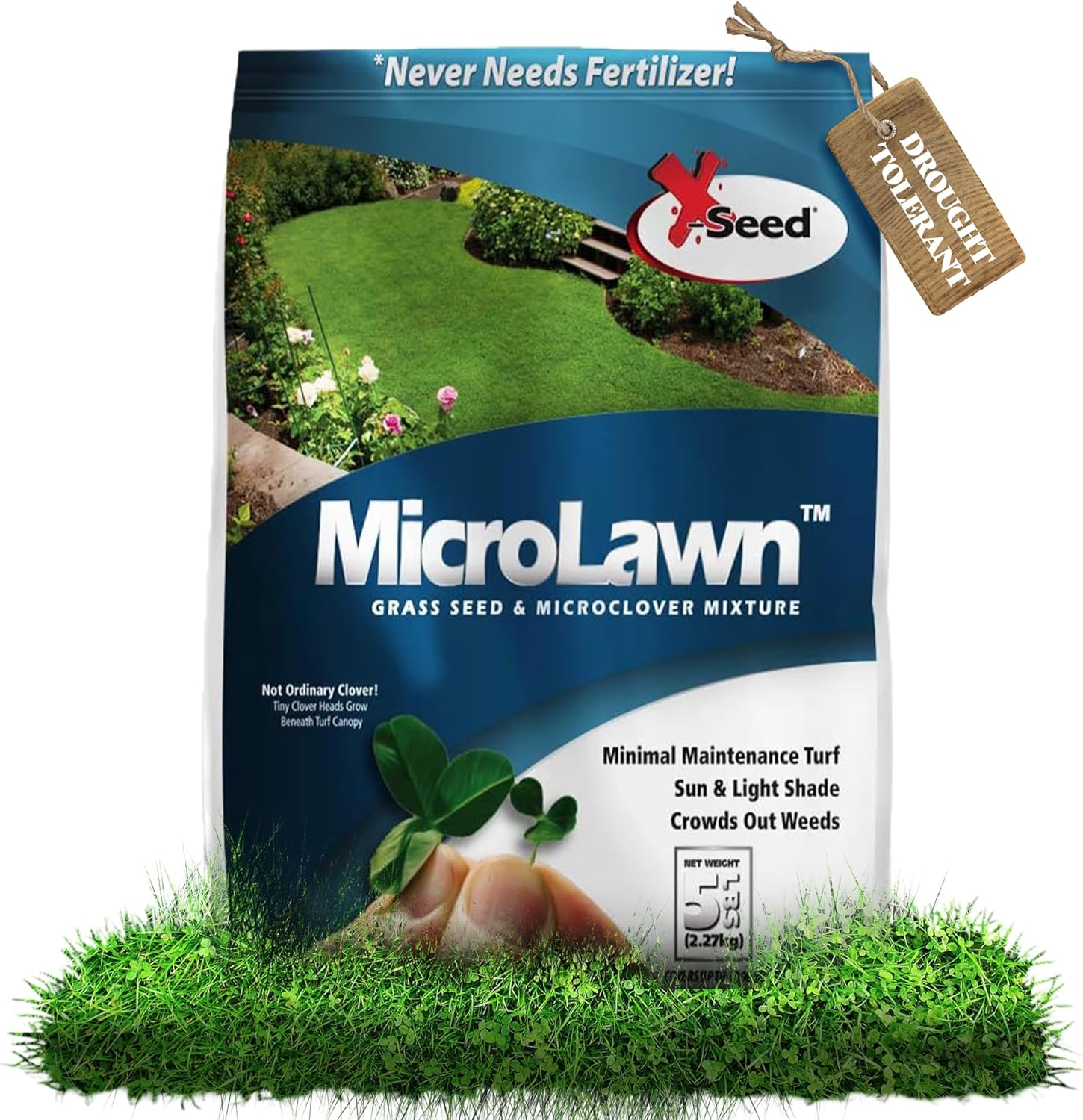
X-Seed Microlawn Grass Seed & Microclover Mix, 5 lb
| Indoor Outdoor Usage | Outdoor |
|---|---|
| Other Special Features of the Product | Drought Tolerant |
| Sunlight Exposure | Partial Shade |
| Material Features | Grass seed and micro-clover seed mixture |
| Moisture Needs | Moderate Watering |
This 5 lb X-Seed Microlawn mix combines tall fescue, perennial ryegrass and microclover to create a dense, self-nourishing turf suited to yards and high-traffic areas. Typical use is overseeding bare spots or establishing a new low-maintenance lawn by scattering seed, raking lightly, and keeping the area lightly watered until germination. Notable features include a ProNitro coating on half the seed for improved moisture retention and early root development, and a microclover component that naturally adds nitrogen so extra fertilizer is usually unnecessary. In practice that means quicker, more even germination, thicker coverage that helps suppress weeds, and a deeper root system that improves drought tolerance. Limitations are typical for seed mixes: establishment still requires regular watering at first and several mowings before the lawn is fully resilient, and results vary with soil preparation and local climate. For a safety-minded buyer this mix reduces ongoing inputs and chemical needs while delivering a durable, traffic-tolerant ground cover when installed correctly.
Best for: Buyers who want a low-maintenance, durable lawn solution that minimizes fertilizer and performs well in yards with regular foot traffic and mixed sun and light shade.
Less Ideal for: Gardeners seeking an instant lawn or a pure single-species turf for specialized sports lawns should consider alternatives designed for rapid cover or uniform grass type.
- Microclover supplies natural nitrogen to reduce or eliminate regular fertilizing
- ProNitro coated seed promotes faster germination and stronger early root development
- Blend of fescue and ryegrass creates dense turf that crowds out many common weeds
- Formulation emphasizes drought tolerance and holds up to foot traffic once established
- Requires consistent light watering and proper soil prep during establishment
- Performance depends on local climate and site conditions, so results can vary
Verdict: Use this mix when you want a durable, low-input lawn that establishes into a thick, traffic-tolerant ground cover with minimal fertilizer needs.
Choosing the Right Ground Cover for High Traffic: Key Factors to Consider
Wear Resistance and Habit
How a plant or mix resists physical damage is central for high-traffic sites. Ground covers with a prostrate habit, dense mat formation, or strong runners absorb impact better than thin, upright foliage. A dense, interlocking canopy reduces bare patches by protecting crowns and roots from direct pressure.
Consider the growth form: stolons and rhizomes help plants re-establish from adjacent healthy runners, while tight clumping plants may isolate damage into bare spots. Also think about leaf texture; thicker, tougher leaves often survive abrasion longer than delicate foliage.
Recovery Rate and Spread Mechanism
A cover that spreads quickly can close trampling gaps without replanting. Recovery depends on whether the species spreads vegetatively or relies on reseeding. Vegetative spread via runners or rhizomes tends to repair worn areas reliably, while reseeding may be slower and less predictable, especially under heavy footfall.
Match recovery expectations to the planting scale. Small paths and stepping areas benefit from rapid-spreading plants. For larger lawns, a slower but robust regenerator may still work if you can relieve pressure periodically to allow regrowth.
Soil Compaction and Drainage Tolerance
High-traffic zones often have compacted soil, which restricts root oxygen and water infiltration. Choose covers that tolerate shallow, compacted soils and varied drainage. Species with shallow fibrous roots or those that form dense surface mats will cope better with intermittent compaction than deep-rooted types.
Also consider seasonal wetness. Some tolerant covers withstand occasional soggy conditions, while others need quick drainage to avoid crown rot. Testing a small patch first can reveal how your specific soil responds to a chosen plant.
Maintenance Needs and Grooming
Even tough ground covers have maintenance tradeoffs. Low-maintenance choices reduce mowing, edging, and reseeding chores, but may need occasional thinning, topdressing, or invasive growth control. Understand whether a cover tolerates occasional light mowing or will need hand trimming to keep pathways clear.
Maintenance also includes winter cleanup, debris removal, and managing weeds that exploit worn patches. Budget your time and tools against the cover's expected upkeep: more aggressive spreaders often demand more boundary management.
Aesthetic Behavior Through Seasons
Durability is important, but so is appearance. Some covers stay green and tidy most of the year, while others brown back in dormancy or produce flowers that change texture and height. Decide whether you want a year-round neat look, seasonal color, or a flowering ground layer that tolerates trampling.
Flowering or variegated varieties may be less resilient under constant foot traffic, so factor seasonal visual preferences into your durability requirements.
Suitability for Use Case and Climate
High-traffic planting for shaded walkways behaves differently than sun-exposed play areas. Check that the chosen ground cover suits your light and climate conditions. Drought-resistant covers are better for hot, dry regions, while cold-hardy options are essential where freeze-thaw cycles occur.
Microclimates matter. Areas near buildings, under trees, or on slopes present unique challenges for moisture and root competition. Align the plant's ecological needs with the specific site rather than assuming one option fits all.
Preparing the Site for Long-Lasting Coverage
Proper preparation determines whether a ground cover establishes and endures. Remove construction debris, level deep ruts, and break up compacted layers so new roots can penetrate. Lightly aerate if compaction is severe, and incorporate a modest amount of organic matter to improve structure without creating an excessively deep, fine seedbed that favors weeds.
Define edges and traffic lines before planting. Temporary stepping stones or mulch on new paths can protect young plants while they root and spread. Planting at the right season for your region also speeds establishment and reduces the window when bare soil is vulnerable to compaction and weed invasion.
- Clear and level high-use routes and compacted pockets
- Aerate or loosen the soil in the top few inches
- Add a light dressing of compost to improve texture
- Install temporary protections until plants are well rooted
Establishment Tips and First-Year Care
The first growing season is the most important for long-term success. Keep foot traffic off new plantings until they form a continuous mat or runners have spread enough to anchor the soil. Water regularly during establishment, reducing frequency as plants form deeper roots and tolerate drought better.
Control weeds while covers are still sparse; weeds can outcompete seedlings and create weak spots. Avoid heavy fertilization that encourages soft, tender growth vulnerable to trampling. Light grooming and targeted reseeding of thin spots will prevent small bare areas from expanding.
- Protect new plantings from repeated traffic for several months
- Water consistently during dry spells but avoid overwatering
- Weed early and often to prevent competition
- Fill thin patches with plugs or shortened runners rather than broadcast seed
Integrating Ground Cover with Path Materials
Combining living ground cover with hardscape elements balances durability and aesthetics. Use stepping stones, pavers, or low edging to channel foot traffic and concentrate wear where paving protects the ground. Choose paver spacing that allows plants to grow between stones without being crushed at each step.
When bordering mulched beds or gravel paths, select low-growing, traffic-tolerant covers that will not be smothered by coarse materials. A strategic mix of living cover and durable path surfaces reduces the maintenance burden on both elements.
- Space stepping stones to accommodate mature plant spread
- Use edging to prevent runners from invading unintended areas
- Select gravel grades and mulch depths that do not bury low-growing covers
Managing Common Problems in High-Traffic Areas
Keep an eye out for thin patches, compaction zones, and opportunistic weeds. Address localized compaction by aerating and encouraging surrounding runners to spread into the area. Small bare spots are easier to repair than large ones, so spot-treat early.
If a cover declines from pests or disease, isolate the area and replace affected crowns or plugs rather than letting the problem spread. Rotating usage patterns or adding stepping elements can relieve chronic pressure on a single line of wear.
- Repair small bare spots promptly with plugs or runner pieces
- Aerate compacted pockets and add organic matter as needed
- Isolate and replace pest- or disease-affected areas quickly
- Vary walking routes to allow fatigued patches time to recover
Sustainability and Environmental Considerations
Choose covers that fit local ecology to reduce inputs like irrigation and pesticide use. Native or regionally adapted ground covers often require less care and are more resilient to local pests and weather extremes. Avoid aggressive non-native spreaders in locations where they might escape into natural areas.
Consider water use and habitat value. Some ground covers provide nectar for pollinators and habitat for beneficial insects while also tolerating foot traffic. Balance ecological benefits with durability needs to create multifunctional outdoor spaces.
- Prefer locally adapted species when possible
- Avoid escape-prone aggressive spreaders near natural areas
- Factor in wildlife value alongside traffic tolerance
How We Chose the Best Ground Cover for High Traffic
We focused on traits that actually predict how well a ground cover will handle frequent foot traffic in home landscapes. Primary evaluation criteria were wear resistance, recovery and spread rate, root and soil tolerance, maintenance demands, and visual resilience through seasons. Each candidate had to demonstrate quick lateral growth or strong stolon/rhizome networks, tolerance of light soil compaction, and the ability to regrow after repeated trampling. We excluded plants that require constant hand-tending, very specialized soil amendments, or conditions only available in commercial turf management. Seed-only mixes without established vegetative spread were deprioritized unless combined with a fast-spreading species. Practical gardener concerns such as drought tolerance, pest vulnerability, mowing needs, and seasonal color changes informed the selection. The result is a set of options that balance durability, recovery speed, and achievable maintenance for typical yards and paths.
FAQ
Can any ground cover survive constant foot traffic?
Not every ground cover tolerates constant trampling. Some species endure light to moderate traffic well, while others only survive occasional stepping. Look for covers with dense mats, runners, or fast recovery traits for the best performance under repeated use.
How long until a ground cover can handle regular walking?
Establishment time varies by species and climate but typically ranges from a single growing season to two seasons. Rapid-spreading vegetative covers can handle light traffic in a few months, while slower types may need longer before they form a durable mat.
Will ground cover reduce soil compaction over time?
Healthy, well-rooted ground cover improves surface stability and reduces erosion, but it will not reverse severe compaction quickly. Aeration and organic amendments can help roots penetrate compacted layers so the plants can contribute to long-term soil structure improvement.
Is it better to plant plugs or seed for high-traffic areas?
Plugs or established cuttings usually establish faster and are more reliable in high-traffic situations because they already have rooted tissue that can spread. Seed can work for mixes that include fast germinators, but young seedlings are more vulnerable to trampling during establishment.
How do I repair worn patches without replanting the whole area?
Targeted repairs with plugs, short runner pieces, or transplanting small sections from healthy edges are effective. Lightly loosen the soil in the patch, plant the repair material, and protect the spot until it roots and spreads to adjacent crowns.
Final Verdict
Prioritize wear resistance, recovery speed, and site compatibility when choosing ground cover for high-traffic areas. Durable growth habit and vegetative spread reduce the need for constant reseeding, while proper site preparation and early protection determine long-term success. Balance maintenance willingness against desired appearance and seasonal behavior to pick the best solution for your space. Ultimately, select a cover that matches your light, soil, and use patterns, then protect young plants until they form a resilient mat. That approach gives you a durable, low-maintenance surface that looks good and stands up to repeated use.
