

Note: This article contains affiliate links. If you click on these links and make a purchase, I may earn a small commission at no extra cost to you. This helps support my research and content. Read my full affiliate disclosure here.
Choosing the right ground cover for tomatoes changes how your plants use water, how often you weed, and how disease spreads in a patch. The wrong surface can hold too much moisture at the crown or let weeds compete with young roots, while the right cover moderates soil temperature, conserves moisture, and keeps fruit cleaner. This guide covers six shortlisted ground covers suited for tomato growing situations, from containers and small raised beds to larger in-ground rows. We evaluate practical factors like water retention, weed suppression, breathability, and durability so you can choose the option that best matches your garden setup.
Top Picks at a Glance
| Best Overall The best all-around choice for most situations | FEED GARDEN 4 ft x 50 ft Heavy Duty Woven Weed Barrier Fabric with 15 Staples |  |
| Best Quality Built to a higher standard if you want something more solid | HOOPLE Heavy-Duty Weed Barrier Landscape Fabric, 3 ft x 30 ft |  |
| Best Value The sweet spot between price and what you get | VEVOR 3.2 oz Heavy-Duty Woven Weed Barrier Fabric, 1.4 x 50 ft |  |
| Best Budget The cheapest option that still gets the job done reliably | OWTWCNL Black PE Mulch Film, 95×10 m with Precut Holes (5-hole, 15 cm spacing) |  |
| Highest Rated A top-rated pick with lots of positive feedback | houya 4 ft x 100 ft Heavy Duty Weed Barrier Landscape Fabric |  |
| Most Popular A crowd favorite that many people choose with confidence | LGJIAOJIAO 3.2 oz Heavy-Duty Weed Barrier Landscape Fabric (3 ft x 50 ft) |  |
FEED GARDEN 4 ft x 50 ft Heavy Duty Woven Weed Barrier Fabric with 15 Staples

| Material | Woven polypropylene |
|---|---|
| Coverage | 4 ft x 50 ft (200 sq ft) |
| Includes | 15 U-shaped staples |
This FEED GARDEN woven weed barrier is a straightforward solution for reducing weeds under trees, in beds, and along paths. The heavy duty polypropylene weave resists tearing and stands up to foot traffic and surface mulch, while the fabric's permeability lets water and air reach tree roots so irrigation and drainage are not blocked. Guide lines printed on the fabric make measuring and cutting around trunks, root flares, and irregular beds faster, and the included 15 U-staples help keep the material flat during installation. For larger or irregularly contoured areas you will need multiple rolls and extra staples to prevent lifting where roots or slopes create gaps. The fabric does not eliminate the need to hand-pull persistent weeds or address root suckers, and it should be cut carefully near trunks to avoid girdling when trees grow. For gardeners who want low-maintenance ground cover under trees, this product offers durable, breathable coverage that simplifies repeated weeding and mulching tasks.
Best for: Buyers who want a practical, long-lasting way to reduce weeds and cut maintenance under trees and in landscaped beds, and who prefer a breathable fabric that works with watering and mulching routines.
Less Ideal for: People looking for a permanent root barrier or those who want a decorative, visible groundcover instead of a fabric under mulch should consider alternative solutions.
- Durable woven polypropylene resists tearing and holds up under mulch and foot traffic
- Breathable construction permits water and air to reach tree roots
- Printed guide lines simplify measuring and cutting around tree trunks and beds
- Includes 15 U-shaped staples to anchor fabric and reduce shifting
- Only 200 sq ft per roll, so larger tree canopies require multiple rolls
- Staple count may be insufficient for uneven ground or steep slopes
Verdict: A durable, breathable landscape fabric that makes it faster to suppress weeds and maintain clean groundcover under trees.
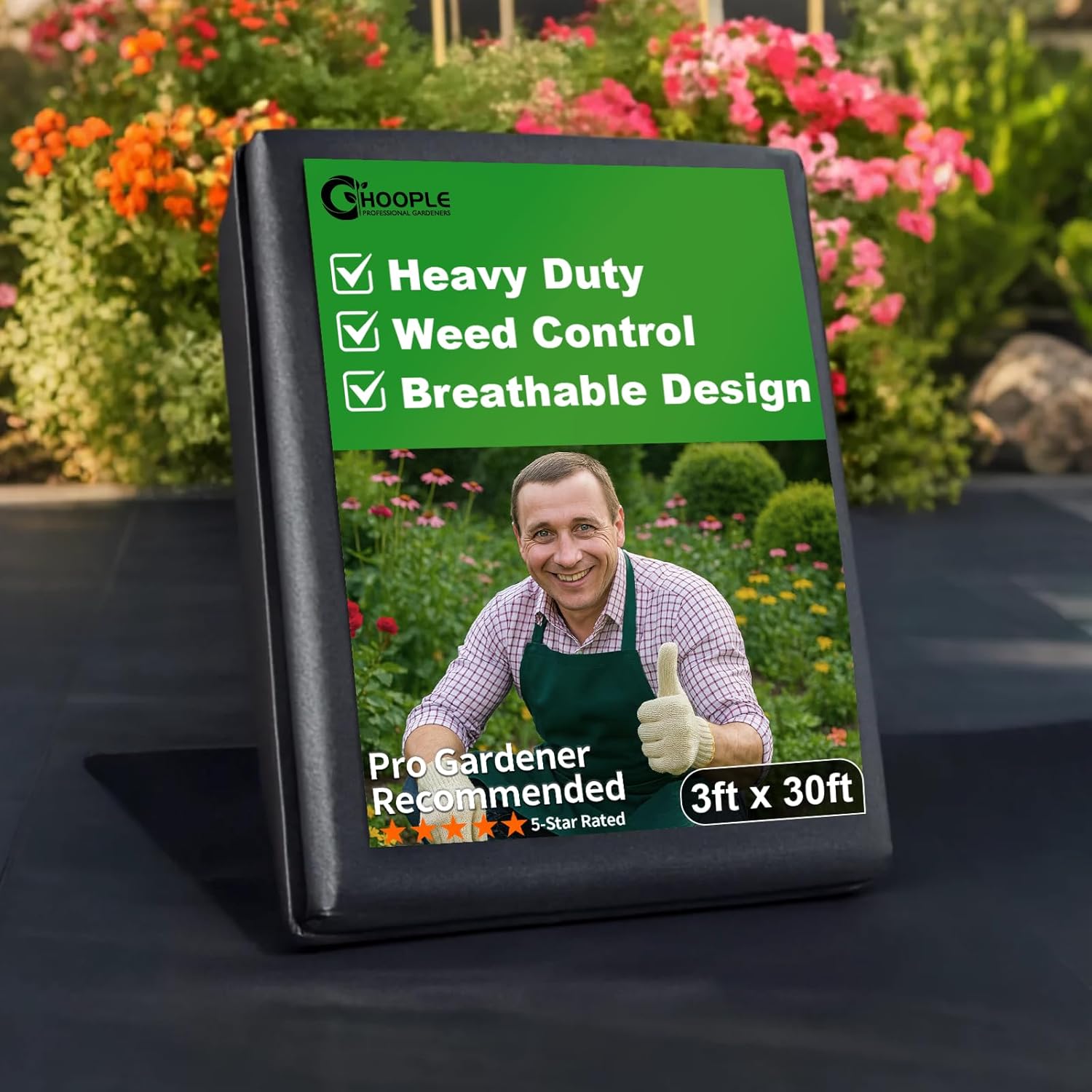
HOOPLE Heavy-Duty Weed Barrier Landscape Fabric, 3 ft x 30 ft
| Material | Polypropylene |
|---|---|
| Permeability | Allows water and air flow |
| Weight per unit | 3.2 ounces (item weight listed) |
HOOPLE's non-woven weed barrier is a tough landscape fabric intended to suppress weeds, stabilize soil, and let water and air through to the root zone. In practice you unroll it, cut planting holes where needed, secure the edges, and cover with mulch or gravel; the fabric's permeability supports root respiration and drainage so tomato plants receive moisture without sitting in runoff. Notable features include tear resistance and UV stability that help the fabric withstand foot traffic, seasonal weather, and occasional cultivation. For tomato beds it reduces weeding and conserves moisture, which can mean more consistent soil conditions and less time between irrigations. The product is commercial-grade polypropylene and is sold in a convenient 3 by 30 foot roll that is easy to handle and trim for raised beds or in-ground rows. Limitations are that you must cut holes for each plant and replace or reposition fabric if you reconfigure beds, and a fabric layer can interfere with deep soil amendments or transplanting once installed.
Best for: Gardeners who prioritize long-lasting weed suppression and consistent soil moisture for productive tomato crops and want a low-maintenance ground cover that performs season after season.
Less Ideal for: Growers who regularly amend soil, rotate crops, or transplant frequently since the fabric makes deep bed work and reconfiguration more difficult.
- Permeable polypropylene lets water and air reach tomato roots while blocking surface weeds
- Tear-resistant and UV-stable construction for season-to-season durability
- Easy to cut and lay for quick installation in beds, rows, or around containers
- Requires cutting planting holes which adds time and limits easy reconfiguration of beds
- Fabric can trap shallow surface moisture under heavy mulch if not installed with proper overlap
Verdict: Choose this heavy-duty, permeable fabric if you want reliable, low-maintenance weed control and steadier soil moisture for higher-performing tomato plants.
VEVOR 3.2 oz Heavy-Duty Woven Weed Barrier Fabric, 1.4 x 50 ft

| Material | PP (Polypropylene) |
|---|---|
| Fabric weight | 3.2 oz / 90.7 g |
| Size | 1.4 x 50 ft |
This VEVOR weed barrier is a heavy-duty woven polypropylene fabric intended to control weeds while allowing water and air to pass to the soil. At 1.4 by 50 feet it covers roughly 70 sq ft and cuts easily to fit tomato beds, rows, or paths; green planting guidelines printed on the fabric help line up plants. The dense 3.2 oz weave blocks sunlight to slow germination and resists tearing and punctures when buried under mulch or gravel. Because it is permeable, it drains well and supports soil aeration so tomato roots still get water and nutrients. Expect lower weed maintenance and neater beds, though eventual soil contact and root growth mean occasional weeding where seedlings push through edges or around plant stems. It is not a replacement for regular mulching or crop rotation but pairs well with a thin organic mulch layer to retain moisture and regulate soil temperature for tomatoes.
Best for: Gardeners who want a low-maintenance way to reduce weeds and keep tomato beds tidy while preserving soil drainage and airflow.
Less Ideal for: Growers who prefer fully organic, till-free systems that avoid synthetic fabrics or those who need a single wide sheet to cover very large beds without seams.
- Tight 3.2 oz woven polypropylene limits light to reduce weed germination
- Permeable weave maintains water drainage and air exchange to support roots
- Durable construction resists punctures and holds up under mulch or gravel
- Comes in a roll size that is easy to cut and lays flat with printed planting guides
- Narrow 1.4 ft width requires more seams or overlap for wider beds
- Will not permanently stop weeds that emerge through gaps or around plant stems
Verdict: A practical, durable weed-control fabric that preserves drainage and airflow, making it a sensible choice for keeping tomato beds weed-free and tidy.
OWTWCNL Black PE Mulch Film, 95×10 m with Precut Holes (5-hole, 15 cm spacing)

| Material | PE |
|---|---|
| Size | 95*10 meters |
| Number of holes | 5 holes |
| Strip spacing | 15cm |
| Aperture | 45mm |
This black PE mulch sheet is a simple, low-cost ground cover made for row crops and small vegetable beds. It comes in a long roll with five precut planting holes and 15 cm spacing, so you can lay it over prepared soil and plant directly through the apertures. The black film blocks sunlight to reduce weed pressure, limits surface evaporation to conserve moisture, and helps warm the soil earlier in the season compared with bare ground. Because it is thin plastic rather than woven fabric, handling is lightweight and laying it down is quick for a single gardener or small crew. Important limitations are that it is basic PE material so it will eventually degrade under UV and will need removal or replacement, and the small 15 cm hole spacing is best suited to closely spaced crops rather than larger indeterminate tomatoes unless used for multiple staggered rows. For tomato beds, it is most useful in tight-row or early-season planting to improve soil warmth and reduce weeds, but plan on staking and irrigation underneath the film and removing it when plants become large.
Best for: Gardeners who want a very affordable, no-frills mulch to reduce weeds and warm soil for early-season vegetable planting and who prioritize low upfront cost and quick installation.
Less Ideal for: Growers planning large indeterminate tomato plants or wide spacing beds that need larger planting holes or a longer-lasting, UV-stable landscape fabric.
- Precut planting holes and uniform 15 cm spacing speed installation and reduce cutting on-site.
- Black PE blocks light to suppress weeds and helps retain soil moisture.
- Long roll length covers multiple rows, making it efficient for small plots and repeated use.
- Made from basic PE so it is not UV-stabilized long-term and will need periodic replacement.
- Hole spacing and aperture size are tight and may not suit larger tomato varieties without modification.
Verdict: A budget-friendly black PE mulch with precut holes that quickly reduces weeds and warms soil for early-season tomato beds when used with close spacing.
houya 4 ft x 100 ft Heavy Duty Weed Barrier Landscape Fabric

| Size | 4FT x 100FT (sold as two 4FT x 50FT folds) |
|---|---|
| Material | Polypropylene (PP) |
| Weight/Construction | 3.2 oz cross-woven, needle-punched |
This 4 ft x 100 ft houya landscape fabric is a heavy-duty, cross-woven polypropylene mat intended to block weed growth while remaining permeable to water and air. Typical use is rolling it out across planting rows or beds, cutting to fit, staking with the included U-shaped staples, and planting through slits or cut holes. Notable features are a high-density 3.2 oz needle-punched construction that resists tearing, pre-printed green guide lines for easier plant alignment, and breathability that lets moisture and nutrients pass to tomato roots. For tomato beds it keeps paths tidy, reduces weeding time, and helps conserve soil moisture while preventing sunlight-driven weed germination. Limitations are that fabric must be secured well around edges to prevent lifting, it does not stop deep-rooted perennial weeds completely, and eventual replacement may be needed after multiple seasons in high-traffic areas.
Best for: Gardeners who prioritize a long-lasting, low-maintenance ground cover for vegetable beds and want reliable weed suppression with easy installation.
Less Ideal for: People seeking a purely permanent, no-maintenance solution or those who prefer organic mulch that breaks down into soil; not ideal if you need to frequently relocate plants or rework beds.
- Durable 3.2 oz cross-woven, needle-punched polypropylene resists tearing and heavy foot traffic
- Highly permeable so water, air, and nutrients can reach tomato roots
- Pre-printed guide lines make spacing and planting rows easier
- Comes with U-shaped landscape staples for initial installation
- Does not fully prevent weeds with aggressive deep roots or seeds that germinate in gaps
- May need periodic replacement after several seasons in areas with heavy wear
Verdict: Choose this fabric when you want a durable, breathable weed barrier that reliably reduces weeding and conserves moisture in tomato beds.
LGJIAOJIAO 3.2 oz Heavy-Duty Weed Barrier Landscape Fabric (3 ft x 50 ft)

| Material | Polypropylene |
|---|---|
| Fabric weight | 3.2 oz |
| Available roll sizes | 3 x 50 ft (also other widths/lengths) |
This LGJIAOJIAO landscape fabric is a straightforward weed-control ground cover intended for flower beds, vegetable plots, pathways, and driveway underlayment. Made from 3.2 oz polypropylene, the woven material resists tearing and holds up to foot and occasional vehicle traffic when used as a stabilizing underlayer. It is typically rolled out over prepared soil, cut for plant holes, secured with pins or staples, and covered with mulch or gravel to hide the fabric and improve aesthetics. The fabric lets water and nutrients pass through while suppressing weeds by limiting light, and its heavier weight compared with lightweight options means it lasts longer before needing replacement. Expect easier seasonal maintenance and fewer weeds around plantings, but installation requires some cutting and anchoring work and it is not a permanent barrier for deep-rooted perennials that can work through or around the fabric over time. Also the darker woven surface can be visible through thin mulches unless covered adequately.
Best for: Buyers who want a reliable, heavier-weight fabric to reduce routine weeding and prefer products with established customer feedback and practical, multi-use performance.
Less Ideal for: If you want a zero-installation organic approach or need a temporary surface cover for seasonal planting beds, lighter-weight or biodegradable options may be a better fit.
- Heavy 3.2 oz polypropylene weave offers good tear resistance and longer lifespan than thin fabrics
- Allows water and nutrients to pass through so planted beds remain irrigated
- Versatile for beds, paths, vegetable gardens and as a driveway underlayment
- Comes in roll form that can be cut to fit irregular beds and layouts
- Requires cutting and securing during installation which adds labor
- May become visible under thin mulch and is less effective against deep-rooted weeds over many seasons
Verdict: Choose this heavier 3.2 oz woven polypropylene fabric if you want a durable, proven ground cover that substantially cuts down on hand-weeding across beds and paths.
Choosing the Right Ground Cover for Tomatoes: Key Factors to Consider
Moisture Retention Vs Crown Wetness
Tomatoes need consistent soil moisture but are vulnerable if the plant crown stays wet. A good ground cover should hold water in the root zone between irrigations while letting surface moisture evaporate so the stem and leaves do not remain damp. Covers that form a waterproof barrier can reduce evaporation but may also trap humidity around stems, increasing risk of fungal disease.
When assessing moisture behavior, consider whether you irrigate from above or use drip lines. Drip irrigation under a breathable cover offers the best balance because soil remains hydrated without prolonged wetting of foliage. If you water overhead, choose a cover and spacing that allow quick drying of the crown area.
Weed Suppression and Soil Contact
Weed competition reduces tomato vigor and increases pest habitat. Effective ground covers prevent light from reaching weed seeds and block seedlings from establishing. Some covers provide a physical barrier while others work by mulching and suppressing germination through thickness.
Also think about how closely the cover sits to the soil. Covers with gaps or that float can still allow weed growth underneath. A cover that can be pinned or weighted down and that integrates with planting holes or collars will reduce maintenance and limit the need for hand-weeding around each plant.
Breathability and Drainage
Good airflow and rapid drainage near the root zone prevent waterlogging and root rot in tomatoes. Ground covers that are impermeable or that seal to the soil can create anaerobic pockets after heavy rain. Choose materials that either allow water to pass through or that can be easily removed to let the soil dry.
Porous covers let excess water drain and encourage oxygen exchange. In wetter climates or heavy soils, prioritize breathability to protect roots. In sandy or fast-draining soils, you can afford a cover that retains more moisture, but it should still allow occasional drying cycles.
Durability and Seasonal Use
Ground covers face foot traffic, sun exposure, and occasional tools or hoses. Durability matters if you plan to reuse the material across seasons. Some biodegradable options last a single season and break down into the soil, while synthetic fabrics or heavier mats can last several seasons but may need storage when not in use.
Think about whether you need a cover that withstands repeated installation and removal or one that will degrade safely. Durability also affects how well the cover maintains weed suppression and moisture control over time.
Compatibility with Irrigation and Training Systems
Tomato culture often uses stakes, cages, trellises, or drip irrigation. The best ground cover integrates with these systems without interfering. For example, fabric covers should allow easy cutting for stake placement and should not fray around support posts. Mulches must allow drip tubing to sit in contact with the soil.
Consider whether the cover will complicate seasonal tasks like side-dressing, adding compost, or replacing irrigation lines. Options that allow targeted access to soil and that do not require full removal for routine care save time.
Impact on Soil Temperature and Microclimate
Ground covers influence soil warming and cooling, which affects tomato growth and fruit set. Dark, opaque covers raise soil temperature and can speed early-season growth, while reflective or light-colored covers keep the root zone cooler in hot climates. Breathable mulches that dry quickly may allow larger diurnal temperature swings.
Match the cover to your climate and planting date. In cooler spring conditions, a cover that warms the soil helps seedlings establish. In mid-summer heat, choose a cover that moderates peak temperatures without compromising moisture management.
Mulch Options and Garden Contexts
Different garden setups change which ground cover performs best. In containers and small raised beds you need a cover that allows quick access and does not compact or wash away during heavy waterings. For in-ground rows, a more permanent fabric or heavier organic mulch can suppress weeds across wider areas.
Consider how often you walk between rows and whether you need a stable walking surface. Some covers double as pathways, reducing soil compaction on beds, while others are designed only to sit beneath plants and must be covered with decorative material to handle traffic.
- Containers and small beds: breathable, easily removed covers work well.
- Raised beds: durable fabrics that integrate with drip lines are practical.
- In-ground rows: heavier mulches or anchored fabrics provide season-long weed control.
Seasonal Use and Timing
The time when you lay down ground cover affects seedling establishment and fruiting. Apply covers after soil has warmed and plants are established if you want to avoid late-spring cold stress. Removing or thinning covers during extreme heat can prevent overheating around roots.
Plan seasonal tasks around the cover. Biodegradable options can be tilled in at season end, while synthetic covers should be lifted, cleaned, and stored to extend life.
- Lay down permanent covers after soil warms to avoid delaying spring growth.
- Use breathable covers during wet seasons to prevent waterlogging.
Managing Disease and Clean Fruit
Ground cover influences how fruit contacts the soil and how quickly surfaces dry after rain or watering. Covers that keep fruit off bare soil reduce rot and soil-borne inoculum transfer. They also make harvest cleaner and reduce time spent washing fruit.
In rainy climates prioritize covers that promote fast surface drying and that can be adjusted to increase airflow around stems. Combine good ground cover choice with pruning and proper plant spacing to reduce canopy humidity.
- Raised or mounded planting with cover can keep fruit cleaner.
- Ensure covers do not trap moisture at the stem base.
Maintenance and Long-Term Care
Regular checks of ground cover are important. Look for weed intrusion at edges, tears that allow light through, and sections that have compressed and no longer drain well. Fast action on small repairs prevents larger weed or moisture problems.
Store reusable covers in a dry, shaded place between seasons. Plan to replenish organic mulches yearly and to inspect biodegradable coverings for signs of breakdown before the growing season.
- Inspect edges and anchor points monthly during active season.
- Replace or refresh organic mulches each season for best performance.
Environmental and Soil Health Considerations
Some gardeners prefer biodegradable materials because they add organic matter as they break down, while others accept durable synthetics for multi-season weed control. Consider how the chosen cover affects soil life, earthworm activity, and long-term soil structure.
If soil health is a priority, balance weed control needs with occasional periods of uncovered soil to allow microbial activity and surface residue breakdown. Using compost topdressings with covers can feed soil organisms without sacrificing weed suppression.
- Biodegradable covers contribute organic matter but may need yearly replacement.
- Synthetic covers reduce labor but can limit surface biological activity.
How We Chose the Best Ground Cover for Tomatoes
We focused on ground covers that work specifically with tomato plants and evaluated each option against concrete gardener needs. Criteria included how well the cover controls soil moisture without keeping crowns wet, its effectiveness at suppressing weeds, breathability and drainage to avoid anaerobic root zones, and durability under foot traffic and seasonal exposure. We also considered installation and maintenance: how easy it is to install around established plants, whether the cover allows simple irrigation and mulching practices, and whether it supports common tomato training systems. Materials that trap too much humidity at the stem were excluded, as were options that require excessive daily maintenance. We favored covers that balance moisture conservation with good airflow, provide predictable weed control, and last at least one growing season under normal garden use. The scoring and shortlist reflect those priorities and practical performance in real garden conditions.
FAQ
Will ground cover keep tomato plants too wet?
It depends on the material. Breathable covers and properly installed mulches keep soil moist while allowing surface drying. Impermeable barriers can trap moisture near the crown and raise disease risk, so choose covers that allow drainage or use drip irrigation under the cover.
Can I use weed fabric with drip irrigation for tomatoes?
Yes. Weed fabric works well with drip lines if the tubing sits in direct soil contact or underneath the fabric. Ensure the fabric is cut cleanly for plant collars and that it is anchored to prevent gaps where weeds can grow.
Are biodegradable mulches better for soil health?
Biodegradable mulches add organic matter as they break down and are easier to incorporate at season end. However, they may not provide season-long weed control in all conditions and often need annual replacement.
How close should the cover come to the tomato stem?
Keep covers a small gap around the stem to allow airflow and reduce stem-soil contact. Use collars or cut openings that are large enough to avoid rubbing but small enough to block weeds. Check collars during growth to adjust as stems thicken.
Will a reflective or light-colored cover help fruit set?
Reflective covers can increase light around the canopy and sometimes improve fruit set in cool climates by keeping plants slightly warmer in early season. In hot regions they can help prevent overheating. Match cover color to your climate and planting timing.
How often should I replace or refresh ground cover?
Frequency depends on material and wear. Organic mulches usually need annual refreshes. Durable fabrics can last multiple seasons but should be inspected yearly for damage and replaced when they fail to suppress weeds effectively.
Final Verdict
For tomatoes, prioritize ground covers that balance moisture retention with good airflow and drainage. Think about how the material will interact with your irrigation method and training system, and match durability to whether you want a seasonal or multi-year solution. Tradeoffs are inevitable: biodegradable mulches feed soil but may need yearly replacement, while durable fabrics reduce labor but can limit surface biological activity. Choose the cover that aligns with your climate, bed type, and maintenance willingness so you get healthier plants and cleaner, more reliable harvests.
