

Note: This article contains affiliate links. If you click on these links and make a purchase, I may earn a small commission at no extra cost to you. This helps support my research and content. Read my full affiliate disclosure here.
If you manage an allotment plot you need a compost system that handles larger volumes, keeps smells down around neighbours, and fits a communal layout. The right compost bin for allotment use helps you turn kitchen scraps and garden cuttings into usable compost without constant tending or nuisance odors. This guide covers seven shortlisted compost bins that suit allotment settings. We focus on capacity, ventilation, durability, and ease of turning so you can pick a solution that matches your plot size and maintenance routine. Read on to see which features matter most for allotment composting and why these options made the cut.
Top Picks at a Glance
| Best Overall The best all-around choice for most situations | Maygrove 53‑Gallon Dual‑Chamber Compost Tumbler with Steel Frame |  |
| Best Quality Built to a higher standard if you want something more solid | Algreen Soil Saver Classic 94‑Gallon Compost Bin |  |
| Best Value The sweet spot between price and what you get | Nazhura Dual-Chamber 43 Gallon Compost Tumbler Bin |  |
| Best Budget The cheapest option that still gets the job done reliably | VEVOR 220 Gallon Outdoor Expandable Compost Bin |  |
| Highest Rated A top-rated pick with lots of positive feedback | DIAMONDFORGE 43‑Gal Dual‑Chamber Tumbling Compost Bin |  |
| Most Popular A crowd favorite that many people choose with confidence | VIVOSUN Outdoor Tumbling Composter, Dual-Chamber 43 Gallon |  |
| Best Seller A high-volume bestseller chosen again and again | GEOBIN Backyard Compost Bin, Expandable Plastic Composter |  |
Maygrove 53‑Gallon Dual‑Chamber Compost Tumbler with Steel Frame

| Capacity | 53 gallons |
|---|---|
| Material Type | Polypropylene + Steel |
This Maygrove compost tumbler is designed for continuous backyard composting with two 53‑gallon chambers so you can add fresh scraps to one side while the other matures. The drum spins 360 degrees on a reinforced steel frame and includes internal mixing bars and a gear‑assist handle to make turning easier and more thorough than manual fork turning. Adjustable air vents help control moisture and odor, and the extra‑wide sliding doors simplify loading and harvesting finished compost. Assembly uses snap‑together parts with minimal screws so setup is straightforward. Built from UV‑resistant polypropylene and supported by reinforced legs, the unit resists rust and cracking for year‑round use. Expect faster decomposition than a static bin thanks to regular tumbling, but note this style still benefits from proper balance and occasional monitoring of moisture and aeration; very fine or large woody materials may require chopping before loading. For an allotment where space and continuous supply matter, this tumbler keeps a steady workflow between chambers and reduces manual turning labor.
Best for: Gardeners who want a low‑maintenance, continuous composting system for an allotment and prefer faster results with minimal manual turning.
Less Ideal for: People who need a very large industrial capacity or those who primarily compost bulky woody debris without means to shred it first.
- Dual‑chamber design allows continuous composting and separate loading/curing.
- 360° rotating drum with internal mixing bars for even, faster decomposition.
- Gear‑assist handle and brakes make rotation smooth and stable when loaded.
- UV‑resistant polypropylene plus steel frame offers weather resistance and durability.
- Extra‑wide sliding doors simplify loading scraps and harvesting finished compost.
- Requires occasional monitoring of moisture and balance to avoid odors or compaction.
- Not suitable for very large woody material without preprocessing.
Verdict: A durable 53‑gallon dual‑chamber tumbler that delivers continuous, faster backyard composting with minimal manual turning.
Algreen Soil Saver Classic 94‑Gallon Compost Bin

| Capacity | 94 gallons |
|---|---|
| Material Type | Plastic |
The Algreen Soil Saver Classic is a large, stationary outdoor composter built to accelerate backyard decomposition and hold a full season’s worth of scraps and yard waste. You load material through a wide top lid and finished compost is retrieved through two sliding doors at the bottom, which lets you pull out ready humus without disturbing new inputs. The solid, octagonal walls are molded from 100% recycled plastic and retain heat to help microbes break down material faster, while slim ventilation slots and bottom aeration openings provide airflow. A locking lid reduces problems with wildlife and odors. Practical benefits include a roomy 94‑gallon capacity for heavy users, simple top loading, and low-maintenance construction that will not rust. Limitations are that it is a stationary bin so turning is limited to manual mixing through the top, and its plastic walls mean it can warm well in cold weather but will not insulate like insulated or tumbling designs that speed processing further for very fast results.
Best for: Gardeners who prioritize steady, high‑volume compost production and want a low‑maintenance, pest‑resistant backyard bin that holds a large amount of material.
Less Ideal for: People needing a compact or portable solution, or those who want a fast‑acting tumbling composter that minimizes manual turning and boosts heat quickly.
- Large 94‑gallon capacity handles substantial household and yard waste
- Dual sliding bottom doors let you extract finished compost without disturbing new material
- Made from 100% recycled plastic with heat‑retaining walls to support decomposition
- Locking lid and solid walls reduce pest access and limit odors
- Stationary design limits mechanical turning so you must mix manually for faster decomposition
- No built‑in insulation or tumbling action to accelerate composting in cold climates
Verdict: Choose the Soil Saver Classic if you need a roomy, durable stationary bin that reliably converts large volumes of kitchen and yard waste into usable compost.
Nazhura Dual-Chamber 43 Gallon Compost Tumbler Bin

| Capacity | 43 gallons |
|---|---|
| Material Type | Plastic and Galvanized Steel |
| Manufacturer Warranty Description | 1 Year |
The Nazhura dual-chamber compost tumbler is a practical outdoor bin that speeds up backyard composting by combining insulated rotating chambers with internal mixing when turned. You load kitchen scraps and yard waste into either chamber, let material heat and break down, then rotate the tumbler occasionally to aerate and mix the pile; one chamber can be active while the other finishes so you can compost continuously. Notable features include the side-by-side dual chambers for staggered batches, a slide-open access door for easy removal of finished compost, and construction using plastic with galvanized steel supports for weather resistance. In practice the unit makes managing smaller household volumes straightforward and keeps material off the ground to reduce pests and mess. Limitations are its 43 gallon capacity, which suits small to medium households but may require more frequent emptying for heavy gardeners, and the plastic body means very hot internal temperatures are harder to maintain than in larger insulated systems. Assembly and periodic turning are required to get the fastest results.
Best for: Gardeners who want a tidy, space-efficient way to turn household scraps into usable compost on an ongoing schedule and who value ease of use and continuous batches.
Less Ideal for: People with very large yards, frequent high-volume green waste, or those who need professional-scale hot composting results should consider larger or purpose-built insulated systems instead.
- Dual-chamber design allows continuous composting by loading one side while the other finishes
- Rotating tumbler and internal mixing accelerate decomposition compared with static bins
- Slide-open access door makes removing finished compost quick and tidy
- Plastic body with galvanized steel support resists outdoor weathering and reduces direct contact with pests
- 43 gallon capacity may be small for large yards or heavy kitchen waste producers
- Plastic construction limits maximum internal heat compared with larger insulated or insulated-metal systems
Verdict: A compact, easy-to-use dual-chamber tumbler that lets practical gardeners run continuous small-batch composting with minimal mess and effort.
VEVOR 220 Gallon Outdoor Expandable Compost Bin

| Capacity | 220 gal / 1000 L |
|---|---|
| Material | HDPE |
This VEVOR compost bin is a simple, high-capacity solution for turning yard and kitchen waste into usable compost. It assembles quickly and uses perforated panels to promote air flow, which helps materials break down faster when combined with routine turning. Made from HDPE, the bin resists corrosion and stands up to weather so you can keep it outdoors without rapid deterioration. Its expandable, reusable design and 220 gallon capacity mean fewer emptying sessions, which is useful on an allotment where you generate lots of green waste. Because the unit is lightweight, it should be anchored or weighted to prevent tipping in wind or when full. There is no built-in access door or insulated layering system, so active mixing and occasional decomposition management are required for faster, odor-free results. For gardeners who want a big, economical container to bulk-process leaves, grass clippings, and kitchen scraps, this model is a practical pick.
Best for: Allotment gardeners who need a low-cost, high-volume container to bulk-process garden and kitchen waste and who are prepared to manage turning and aeration manually.
Less Ideal for: Gardeners seeking a compact or insulated tumbler-style system for rapid, low-maintenance hot composting should look at alternative designs.
- Very large 220 gallon capacity reduces how often you need to empty or transfer compost
- Perforated panels promote air circulation to speed up aerobic decomposition
- HDPE construction resists corrosion and weather for outdoor longevity
- Quick and easy assembly that can be completed in minutes
- Lightweight construction can be unstable and requires securing in place
- No integrated access door or base removal for easy harvesting of finished compost
Verdict: Choose this bin when you want the most economical way to bulk-process allotment waste into compost with minimal assembly effort.
DIAMONDFORGE 43‑Gal Dual‑Chamber Tumbling Compost Bin

| Capacity | 43 gallons |
|---|---|
| Material Type | Metal, Polypropylene (PP) |
This DIAMONDFORGE compost tumbler is built as a practical, weather‑resistant solution for continuous backyard or allotment composting. The dual‑chamber design lets you actively compost in one side while adding new material to the other, so you have a steady supply of finished compost without long interruption. Its 360° rotating octagonal drum with deep aeration fins and precision vents makes turning and aerating easy, which speeds decomposition and reduces odors compared with stationary bins. Construction mixes polypropylene panels with a steel frame for year‑round outdoor durability, and the unit claims quick assembly in about 20 minutes. The bin is sized for small plots or individual allotment plots where reliability matters rather than industrial capacity. Keep in mind the 43‑gallon capacity limits how much green waste you can process at once and the plastic drum, while weather resistant, should be secured against strong winds and rough handling to preserve longevity.
Best for: A gardener who values consistent, low‑maintenance compost production for a single allotment plot and wants a reliable system that minimizes manual turning and odors.
Less Ideal for: Not the best choice for communal plots or gardeners who need to process large volumes of yard waste at once; those users should consider larger static or commercial composters.
- Dual‑chamber layout enables continuous composting cycle without interrupting curing material
- 360° rotating drum and aeration fins simplify mixing and improve airflow for faster breakdown
- Steel frame with polypropylene panels provides weather resistance for outdoor use
- Relatively quick assembly so you can start composting soon after setup
- 43‑gallon capacity may be small for larger allotments or heavy seasonal waste streams
- Plastic drum requires sensible siting and anchoring in exposed locations to avoid damage
Verdict: Choose this tumbler if you want a dependable, low‑maintenance dual‑chamber composter that delivers continuous batches of compost for an allotment plot.
VIVOSUN Outdoor Tumbling Composter, Dual-Chamber 43 Gallon
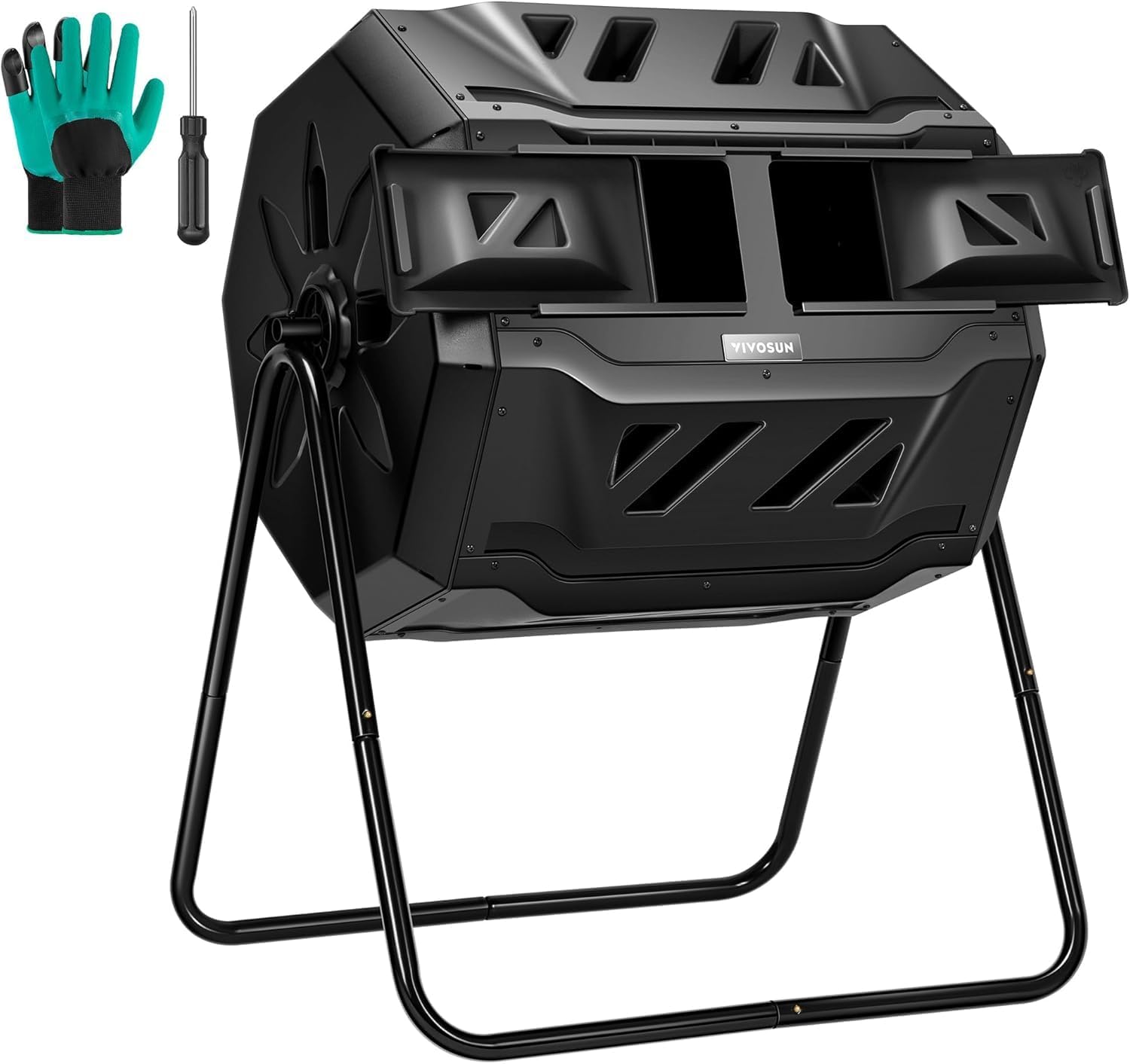
| Material Type | galvanized steel |
|---|---|
| Capacity | 43 gallons |
This VIVOSUN tumbling composter is a practical backyard unit built around two rotating chambers so you can add fresh waste to one side while the other finishes breaking down. The 360 degree tumbling design with deep internal fins makes turning the pile simple and helps break up clumps without digging. Ventilation slots around the drum promote airflow for aerobic decomposition, and the metal frame with a PP plastic barrel is designed to resist corrosion and outdoor weathering. It comes with waterproof garden gloves and small digging claws to make loading and aerating easier. At 43 gallons it is sized for a family garden or vegetable patch but is compact enough for a patio or small yard. Limitations to note are that it requires occasional manual turning to maintain activity and that the plastic drum means it will warm less in cold climates than insulated models, so composting speed will vary by season. Assembly and placement on a level spot are also important for smooth rotation.
Best for: Gardeners who want a hands-on, efficient system to produce regular batches of compost without digging a pile and who prioritize continuous output and easy turning.
Less Ideal for: People who need a completely hands-off hot composter or who compost only very large volumes; those in very cold climates seeking year-round rapid breakdown should consider insulated or electric options.
- Dual chambers let you load new material while another batch finishes, ensuring continuous compost production
- 360 degree tumbling with deep fins makes mixing and aeration easy without manual digging
- Galvanized steel frame and PP plastic barrel designed for outdoor durability and corrosion resistance
- Ventilation slots support aerobic breakdown for faster, less smelly composting
- Plastic drum offers less insulation than insulated or fully metal units, slowing composting in cold weather
- Requires manual turning and regular management to maintain heat and moisture for fast results
Verdict: If you want steady, manageable batches of compost with easy tumbling and continuous use, this dual-chamber VIVOSUN tumbler delivers practical, durable performance.
GEOBIN Backyard Compost Bin, Expandable Plastic Composter

| Capacity | 216 gallons |
|---|---|
| Material Type | Plastic |
| Shape | Cylindrical |
The GEOBIN Backyard Compost Bin is a lightweight, cylindrical plastic composter designed for straightforward backyard use. It assembles quickly with a few closure keys and expands to increase capacity, so you can start with a small footprint and add volume as your kitchen scraps and yard waste grow. The open-structure design gives excellent ventilation, which helps speed up decomposition when you layer greens and browns and turn the pile occasionally. Because it is low-tech and portable, it is easy to move, empty, or reassemble if you relocate it in the yard. The practical benefits are its affordability, ease of setup, and versatility for beginners and experienced gardeners who want a no-fuss system. Limitations are that it is a basic ring-style bin with no insulated walls or built-in access door, so it will not retain heat as well as tumblers or insulated bins and requires manual turning and occasional maintenance to keep the process active.
Best for: Budget-conscious gardeners who want a low-cost, low-effort way to compost yard trimmings and kitchen scraps without complicated setup.
Less Ideal for: People who need fast, high-temperature composting or a bin with a convenient bottom access door for frequent harvests should consider other designs.
- Expandable capacity up to 216 gallons (listed) to handle increasing compost volume
- Very easy assembly with simple closure keys
- Lightweight and portable for repositioning or storage
- Good ventilation that helps organic material break down faster
- No insulated walls or built-in access door for easy compost removal
- Basic plastic construction offers less heat retention than enclosed designs
Verdict: A very affordable, easy-to-assemble composter that gives budget gardeners a simple, expandable solution for backyard composting.
Choosing the Right Compost Bin for Allotment: Key Factors to Consider
Capacity Relative to Plot Size
Allotment plots typically produce more garden waste than a single household, especially during mowing, pruning, or harvest seasons. Choose a bin with enough internal volume to store several weeks of kitchen scraps plus regular yard trimmings without frequent emptying. A larger capacity reduces the chance of overflow and minimizes the number of turns you must perform each week.
Capacity also affects decomposition rate. Very large, uninsulated masses can stay wetter and colder in the core, so consider how you will mix in bulking agents like twigs or straw to maintain airflow. If space is limited, look for modular or multi-chamber designs that let you manage active and curing material separately.
Aeration and Moisture Control
Good airflow is critical to aerobic composting and keeps odors low – an essential concern on allotments with nearby plots. Inspect ventilation features such as perforations, louvered panels, or built-in chimneys. Passive vents that encourage crossflow help microbes do their work without mechanical assistance.
Moisture control matters because soggy piles become anaerobic and smell. Bins with drainage gaps or raised bases prevent waterlogging after heavy rain. Consider whether you will need to add dry bulking material or cover material during wet months; a design that balances airflow with weather protection reduces maintenance.
Durability and Weather Resistance
Allotment bins are exposed to rain, sun, frost, and frequent handling. Durable materials and corrosion-resistant fixings extend service life and reduce long-term maintenance. Look for UV-stabilized plastics, treated timber, or powder-coated metal that resist cracking, rot, and rust.
Structural design also affects longevity. Reinforced corners, sturdy lids, and secure fastenings keep pests out and prevent sagging or collapse when the contents are heavy. If your plot is exposed to strong winds, choose a low-profile or lockable-lid option to prevent tipping.
Access for Turning and Extraction
Easy access to the composting mass makes turning, checking progress, and removing finished compost straightforward. Front-access doors, removable panels, or tumbling mechanisms reduce the effort needed during each maintenance session. For allotment gardeners who share tasks, accessible designs let different people comfortably load and extract material.
Consider how you will extract the finished compost: bottom-access chutes or removable slatted bases speed harvests and reduce sifting. If you plan to use a fork or pitchfork, ensure there is enough clearance and a safe working posture when reaching into the bin.
Pest Control and Sanitation
Allotments can draw rodents and larger animals if food scraps are left exposed. A secure lid and tight seams limit pest access, while elevated bases and fine mesh at ventilation points stop small mammals from entering. Metal fastenings and lockable latches add another layer of protection.
Sanitation also covers how easily you can clean the unit. Smooth interior surfaces shed residue and are easier to rinse. Consider designs that minimize trapped moisture and that allow you to remove finished compost cleanly without contaminating new loads.
Assembly, Portability, and Footprint
How a bin is assembled affects whether you can install it on a plot without special tools or help. Look for units with clear instructions, simple connections, and the option to disassemble for relocation. Portability matters if you rotate plots or need to move a bin for soil management.
Footprint is a practical concern on crowded allotments. Measure available space and factor in access room for turning and loading. Some designs stack or nest parts to save storage space when not in use, and modular systems can be expanded as your composting needs grow.
Managing Odor on Shared Plots
Odor is often the main concern when placing a compost bin on or near allotment plots. Balance airflow with a weatherproof lid and keep a steady ratio of green to brown materials to avoid anaerobic pockets. Layering dry carbon materials and burying food scraps well inside the pile reduces smell.
Regular turning and avoiding meat or dairy in the bin further cut odor risks. If neighbors are sensitive, position the bin downwind and add a coarse cover such as straw or cardboard after each fresh layer to lock in odors while allowing moisture to escape.
- Position bin downwind from common paths
- Use coarse carbon materials to absorb moisture
- Avoid meat, dairy, and oily foods in allotment bins
Choosing Between Static and Tumbler Designs
Static bins are simple, require no mechanical parts, and often offer larger capacity for the footprint. They are easy to build or assemble and work well when you can periodically turn the pile with a fork. Static systems are forgiving and can handle bulkier yard waste.
Tumblers accelerate mixing and often speed decomposition because they make turning quick and mechanical. They are usually higher-maintenance and may have smaller capacity for their size. Consider tumblers if you prefer minimal manual forking and have modest weekly input volumes.
- Static: larger raw capacity, lower mechanical complexity
- Tumbler: faster mixing, easier turning, often smaller volume
Placement and Site Preparation
Site selection affects drainage, access, and neighbor relations. Place the bin on level ground with some drainage to prevent water pooling. If possible, place directly on soil to allow beneficial organisms to move between the ground and pile, unless a raised base is needed for rodent prevention.
Allow space around the unit for turning and harvesting. Ensure access paths are wide enough for carrying loaded buckets or wheelbarrows, and avoid dense shade that keeps piles too cool during the growing season.
- Level, well-drained spot is best
- Direct soil contact encourages organisms unless pest protection is required
- Leave room for wheelbarrow access and turning
Seasonal Care and Speeding Decomposition
Decomposition slows in cold weather, so manage inputs seasonally. Chop woody material small, add nitrogen-rich greens in spring and summer, and insulate larger piles with straw or extra browns in winter to retain heat.
Use hot composting techniques if you need faster turnover: monitor moisture, maintain a balanced carbon-to-nitrogen mix, and increase aeration. For steady supply, rotate bins or have a curing area for finished compost so you always have usable material available.
- Chop woody waste to speed breakdown
- Insulate or cover piles in winter
- Rotate or stage bins to maintain steady supply
Basic Troubleshooting Tips
If the pile smells sour, it is likely too wet or lacks oxygen. Turn and add dry carbon materials. If decomposition is very slow, the pile may be too cold or too dry; moisten slightly and add fresh greens to boost microbial activity.
Pest issues usually indicate accessible food scraps or gaps in the structure. Secure lids and inspect ventilation points for openings. For persistent rodent issues consider elevating the bin or adding fine mesh at vulnerable points.
- Sour smell: add dry browns and increase aeration
- Slow break down: check moisture and particle size
- Pests: secure openings and remove exposed food scraps
How We Chose the Best Compost Bin for Allotment
We selected compost bins that perform reliably in allotment environments, using criteria that matter to gardeners working on shared or larger plots. We prioritized container capacity and loading access so a bin can accept several weeks of kitchen scraps and bulky green waste without overflowing. Aeration and drainage were evaluated because steady airflow and moisture control speed decomposition and reduce odors in close quarters. Durability in outdoor conditions was another filter: materials and construction had to resist weathering, pests, and repeated handling. Ease of turning and access for extraction were judged so compost can be monitored and removed without heavy lifting or special tools. We also considered assembly and footprint to ensure units fit typical allotment plots and can be set up or moved by one or two people. Excluded from consideration were small countertop or indoor tumblers intended for kitchen use, and any systems that demand constant electrical power. We focused on practical, low-maintenance designs that balance throughput, airflow, and longevity for allotment gardeners.
FAQ
How big should a compost bin be for an allotment?
It depends on how much kitchen and garden waste you produce. For most allotment plots a bin with several hundred liters of capacity or a multi-chamber system is practical. Bigger bins reduce the frequency of emptying but may require more attention to aeration to avoid cold cores.
Can I compost on bare soil at an allotment instead of using a bin?
Yes, open composting on soil works and encourages soil organisms to move in, but it may attract pests and be less tidy for shared plots. Bins contain material, protect against rodents, and create a neater plot appearance while still allowing beneficial organisms to access the pile if the base is open.
What should I not put in an allotment compost bin?
Avoid meat, dairy, and oily food scraps as these attract pests and cause odors. Also be cautious with diseased plant material and invasive weed seeds; hot composting at high temperatures is needed to reliably destroy pathogens and seeds.
How often should I turn an allotment compost bin?
Turning frequency depends on the system and desired speed. For active hot composting turn every few days to a week. For larger static piles turning every few weeks is often sufficient. Regular turning helps aeration and reduces smell.
Will a tumbler work for large allotments?
Tumblers are excellent for fast mixing and convenience but often have smaller capacity than static systems. For large volumes typical of allotments, multiple tumblers or a combination of a tumbler for kitchen waste and a static bin for bulky yard trimmings can work well.
Final Verdict
For allotment composting prioritize capacity, ventilation, and ease of access because those factors determine how much material you can process and how often you need to intervene. Expect tradeoffs between raw volume and convenience: large static bins store more material but need manual turning, while tumblers make turning easy but may limit throughput. Choose a design that fits your plot layout, keeps odors down for nearby gardeners, and is robust enough to withstand weather and regular use. Focus on airflow, drainage, and secure access so your composting routine stays efficient and low-maintenance over the seasons.
