

Note: This article contains affiliate links. If you click on these links and make a purchase, I may earn a small commission at no extra cost to you. This helps support my research and content. Read my full affiliate disclosure here.
A good counter compost bin keeps food scraps contained, reduces kitchen odors, and makes it simple to transfer material to an outdoor pile or municipal collection. Choosing the right Counter Compost Bin matters because size, sealing performance, and ease of emptying determine whether you actually use it daily. This guide covers seven carefully shortlisted countertop bins that suit a range of kitchen sizes and habits. We evaluated candidates for seal and odor control, lid operation, capacity, and how easy they are to clean. Read on to understand the tradeoffs so you can pick a bin that fits your prep routine and kitchen layout.
Top Picks at a Glance
| Best Overall The best all-around choice for most situations | OXO Good Grips Easy-Clean Compost Bin, 1.75 gal |  |
| Best Quality Built to a higher standard if you want something more solid | simplehuman 4L Compost Caddy with Magnetic Dock, Brushed Stainless Steel |  |
| Best Value The sweet spot between price and what you get | Utopia Kitchen Countertop Compost Bin, 1.3 Gallon Stainless Steel |  |
| Best Budget The cheapest option that still gets the job done reliably | Kichly 0.8‑Gallon Indoor Compost Bin with Lid and Wall-Mount Holder |  |
| Highest Rated A top-rated pick with lots of positive feedback | Reli. 1.3‑Gallon Stainless Steel Kitchen Compost Bin with Charcoal Filters |  |
| Most Popular A crowd favorite that many people choose with confidence | Epica 1.3 Gallon Stainless Steel Kitchen Compost Bin |  |
| Best Seller A high-volume bestseller chosen again and again | Utopia Kitchen 1‑Gallon Stainless Steel Countertop Compost Bin |  |
OXO Good Grips Easy-Clean Compost Bin, 1.75 gal

| Capacity | 6.62 liters |
|---|---|
| Material Type | Plastic |
| Included Components | Compost bin |
| Unit Count | 26.35 Ounce |
The OXO Good Grips Easy-Clean Compost Bin is a compact countertop container for collecting kitchen scraps before transferring them to an outdoor composter or municipal pickup. It fits on a counter without drawing attention and is designed to tuck a compost bag inside for a neat appearance. The soft-close lid helps limit odors while allowing airflow to reduce pest attraction, and the stay-open feature makes it convenient to toss peels and coffee grounds while cooking. The internal bucket is removable and dishwasher safe, and the smooth plastic interior wipes clean easily without much scrubbing. A folding handle makes short trips to the larger bin straightforward. Because it is only 1.75 gallons, it works best for small households or cooks who empty it frequently; heavy users will need to empty it often to avoid overflow. The plastic construction is lightweight and easy to maintain but is not insulated for odor control beyond the lid design.
Best for: Best for cooks or small households that want a tidy, easy-to-use countertop solution for collecting daily food scraps and who will empty it regularly.
Less Ideal for: Not suited for large families, heavy cooks, or anyone who wants a high-capacity or actively filtered indoor composter.
- Compact countertop size that fits on most kitchen surfaces
- Soft-close, stay-open lid that limits odors and makes tossing scraps easy
- Removable internal bucket that is dishwasher safe for thorough cleaning
- Tucks compost bags inside for a tidy look and easier disposal
- Small 1.75 gallon capacity requires frequent emptying for multi-person households
- Plastic body offers no active odor filtration beyond the lid design
Verdict: A neat, easy-to-clean countertop compost bin that keeps daily kitchen scraps contained and is ideal for small households who empty it often.
simplehuman 4L Compost Caddy with Magnetic Dock, Brushed Stainless Steel
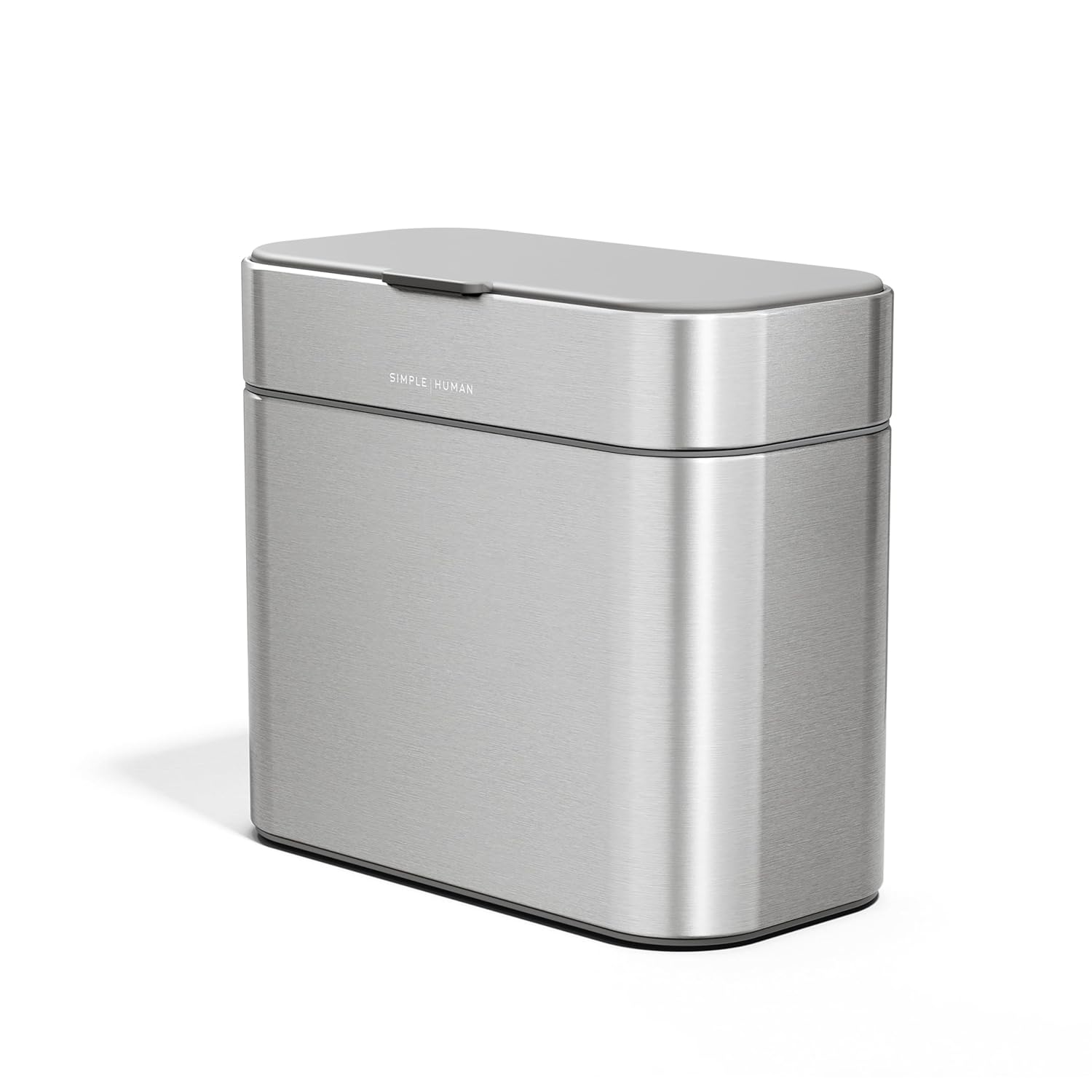
| Capacity | 4 liters |
|---|---|
| Material Type | Stainless Steel |
The simplehuman 4L Compost Caddy is a compact countertop bin designed to make kitchen composting quick and tidy. It docks magnetically to compatible rectangular or slim‑rim simplehuman trash cans to stay out of the way between uses, and can be lifted off the dock for food prep beside the cutting board. The soft‑seal lid lets scraps breathe while reducing kitchen odors and discouraging fruit flies. A smooth, handled inner bucket lifts out for easy dumping into an outdoor compost pile or municipal pickup and rinses clean without tight corners. The stainless exterior has a silver‑ion coating to resist fingerprints and the caddy accepts custom fit compostable liners that eliminate bag overhang and simplify disposal. Limitations are its small 4 liter capacity, which means more frequent emptying for larger households, and that magnetic docking requires a compatible simplehuman can or optional wall mount for alternate placement.
Best for: Buyers who want a high‑quality, performance‑focused solution for daily kitchen scraps and prioritize odor control and quick food‑prep convenience on the countertop.
Less Ideal for: Households that generate large amounts of food waste or need a larger indoor compost container for multiple people will find the capacity too small.
- Magnetic dock keeps the caddy tucked out of the way on compatible trash cans for a streamlined countertop workflow
- Soft‑seal lid lets organics breathe while reducing odors and deterring fruit flies
- Removable handled inner bucket lifts out for easy emptying and rinsing with no hard‑to‑clean corners
- Stainless steel exterior treated to resist fingerprints for a cleaner appearance
- Designed to use custom compostable liners that fit without overhang for mess‑free disposal
- 4 liter capacity is small for busy or larger households and requires frequent emptying
- Magnetic docking limits placement unless you have a compatible simplehuman can or purchase the wall mount
Verdict: Choose this compact compost caddy if you want a clean, countertop‑friendly system that controls odors and speeds daily food‑prep scraping.
Utopia Kitchen Countertop Compost Bin, 1.3 Gallon Stainless Steel

| Capacity | 4.92 liters |
|---|---|
| Material Type | Stainless Steel |
| Item Highlight | Odorless countertop compost bin with charcoal filter |
| Item Type Name | Kitchen Compost Bin for Kitchen Countertop – 1.3 |
This stainless steel countertop compost bin is designed for everyday kitchen use as a small, tidy container for food scraps until they move to an outdoor pile or municipal collection. It holds roughly 1.3 gallons, enough to collect a week of typical household fruit and vegetable peelings or coffee grounds for one to two people. The cylindrical stainless steel body looks neat on a counter and resists chips or cracks that plastic bins can show. A tight-fitting lid and replaceable charcoal filter reduce odors so you can keep the bin in the kitchen without noticeable smells for several days. Cleaning is straightforward: line with paper or rinse with mild soap as needed. The main limitations are capacity and active composting functions; this is a holding bin not a hot composter, so you still need to empty it regularly and manage moisture by draining liquids or using absorbent liners. If you need a larger or processing-capable unit this will not replace that role, but as a clean, low-maintenance countertop catcher it performs well.
Best for: Buyers who want a low-maintenance, odor-controlled way to collect daily kitchen scraps on the counter and prefer a durable, attractive container over hidden plastic buckets.
Less Ideal for: Households that generate large volumes of food waste or want a single device that actively processes compost rather than temporarily storing scraps.
- Stainless steel construction resists scratching and looks tidy on a countertop
- Charcoal filter and tight lid help control odors for several days
- Compact 1.3 gallon capacity fits small kitchens and does not take much prep-space
- Easy to clean by rinsing or lining with paper to absorb liquids
- Small capacity requires frequent emptying for larger households
- Does not accelerate decomposition or perform active composting
Verdict: A compact, durable countertop catcher with a charcoal filter that keeps kitchen scraps contained and largely odor-free for users who want simple, low-effort indoor compost storage.
Kichly 0.8‑Gallon Indoor Compost Bin with Lid and Wall-Mount Holder

| Capacity | 0.8 gallons |
|---|---|
| Material Type | PVC, Polypropylene (PP) |
| Item Weight | 9.44 ounces |
This compact Kichly compost bin is designed for simple, everyday kitchen scrap collection. It holds about 0.8 gallons, so it is best for small households or single cooks who want a tidy place for peels, coffee grounds, and other food waste. You can leave it on the countertop or use the included holder and adhesive hook to hang it under a cabinet or on a wall, which saves counter space and keeps scraps out of the way. The polypropylene interior and lightweight construction make it easy to empty and rinse, and the covered lid helps contain odors between trips to an outdoor composter or municipal pickup. Because of its small capacity the bin needs frequent emptying if you cook a lot, and it is not suitable as a full composting system on its own. The straightforward plastic construction is practical but not insulated or carbon-filtered, so odor control depends on regular cleaning and prompt emptying.
Best for: Budget-minded cooks or individuals living in small apartments who need an inexpensive, space-saving container to collect daily food scraps before transferring them to a larger composter or collection service.
Less Ideal for: Families or households that generate a lot of kitchen waste or users seeking a self-contained indoor composting system with active odor filtration.
- Compact 0.8‑gallon capacity fits small kitchens and takes little counter space
- Can be wall‑mounted with included holder and adhesive hook to free up counters
- Lightweight polypropylene construction is easy to lift, empty, and rinse
- Covered lid helps contain food scraps and reduce occasional odors
- Small capacity requires frequent emptying for households that generate more scraps
- No built‑in charcoal filter or insulation for long‑term odor control
Verdict: A no‑frills, affordable countertop or wall‑mount compost bin that keeps small amounts of kitchen scraps contained and is easy to clean.
Reli. 1.3‑Gallon Stainless Steel Kitchen Compost Bin with Charcoal Filters

| Capacity | 1.3 gallons |
|---|---|
| Material Type | Stainless Steel |
| Included Components | Bags |
This Reli. 1.3‑gallon compost bin is built for everyday kitchen use where odor control and durability matter. Made from stainless steel with an airtight, vented lid and two activated charcoal filters, it keeps food waste discreet on a countertop and resists rust and staining. The compact footprint fits in tight kitchens and the ergonomic handle makes transferring scraps to an outdoor pile or larger bin simple. In practice the charcoal filters and vented lid noticeably reduce smells, though the filter needs replacing every 2 to 3 months for best performance. The small capacity means it suits singles, couples, or light kitchen use rather than large families or heavy cooking days. Cleaning is straightforward because of the smooth steel interior, but you will still need to empty and rinse regularly to avoid buildup. Overall this is a practical, low-maintenance choice if you want a dependable indoor compost container that prioritizes odor control and long-term material performance.
Best for: Buyers who want a no-fuss, durable countertop compost solution that reliably controls smells and is easy to maintain in small kitchens.
Less Ideal for: Homes that produce large volumes of food scraps, need a hands-off continuous composter, or prefer a larger-capacity indoor system.
- Stainless steel construction resists rust, stains, and odor absorption
- Airtight vented lid combined with charcoal filters reduces kitchen odors
- Compact size fits small countertops and includes an ergonomic pour handle
- Comes with two activated charcoal filters so a replacement is included
- 1.3 gallon capacity is small for large households or heavy food waste producers
- Filters require replacement every 2 to 3 months to maintain odor control
Verdict: A sturdy, compact stainless steel countertop bin that reliably keeps kitchen scraps contained and odors down for small household composting.
Epica 1.3 Gallon Stainless Steel Kitchen Compost Bin

| Capacity | 1.3 gallons |
|---|---|
| Material Type | Stainless Steel |
| Item Highlight | Airtight lid with replaceable activated charcoal filter |
The Epica 1.3 gallon kitchen compost bin is a small, well-made countertop container for collecting food scraps between trips to an outdoor compost pile or municipal collection. It uses a stainless steel, one-piece body and an airtight, leak-resistant lid to keep moisture contained, and an activated charcoal filter in the lid to control odors. Typical use is simple: deposit peels, coffee grounds, and vegetable scraps during meal prep, empty the bin weekly, hand-wash the interior, and replace or gently rinse the charcoal filter every few months. The stainless construction resists rust and scratches and makes the bin easy to wipe clean. It is sized for couples or small families who want to keep composting accessible without a large outdoor setup. The main limitations are capacity and filter maintenance: at 1.3 gallons it requires frequent emptying for larger households, and the carbon filter needs periodic replacement to remain effective. The design is practical and unobtrusive, and it prioritizes odor control and durability for indoor kitchen use.
Best for: Buyers who want a durable, odor-conscious countertop solution for daily kitchen scraps and who value social proof and low-risk purchases backed by many positive reviews.
Less Ideal for: Not a good fit for large families or households that generate heavy daily food waste who need a higher-capacity or hands-off indoor composter.
- Stainless steel one-piece body resists rust and is easy to clean
- Airtight, leak-resistant lid contains moisture and reduces mess
- Replaceable activated charcoal filter reduces kitchen odors
- Compact 1.3 gallon capacity fits easily on most countertops
- Small capacity requires frequent emptying for larger households
- Charcoal filter needs periodic replacement or gentle rinsing to stay effective
Verdict: A compact, durable countertop compost bin that keeps kitchen odors in check and is ideal for small households wanting a reliable indoor compost solution.
Utopia Kitchen 1‑Gallon Stainless Steel Countertop Compost Bin

| Capacity | 1 gallons |
|---|---|
| Material Type | Stainless Steel |
This 1‑gallon Utopia Kitchen compost bin is a small, stainless steel countertop bucket intended for daily food-scrap collection. It sits on the counter and is used to store peels, coffee grounds, and small food waste until you empty it into an outdoor composter or municipal collection. Notable features include a secure lid and replaceable charcoal filter to reduce smells, a cylindrical stainless body that resists chipping, and a size meant to fit on busy prep surfaces. In practice the bin hides odors well for several days when the filter is fresh and it is easy to rinse out by hand. Because the capacity is one gallon it will need frequent emptying for larger households, but that small size also keeps it unobtrusive and simple to manage. The design favors straightforward maintenance over advanced features so you should plan to line or dry scraps to limit moisture and clean the unit regularly to avoid buildup.
Best for: Buyers who want a low-maintenance, unobtrusive countertop solution to collect daily food scraps and prioritize odor control and easy cleaning.
Less Ideal for: Large families or households that produce heavy daily food waste and prefer a larger or hands-free indoor composter.
- Stainless steel construction that resists cracking and chipping
- Charcoal filter included for effective odor control
- Compact one-gallon size that fits neatly on most countertops
- Simple lid and body design makes cleaning and rinsing straightforward
- Small capacity requires frequent emptying for multi-person households
- No built-in drainage or liquid collection system so moisture management is manual
Verdict: A compact, easy-to-clean countertop bin that reliably keeps kitchen scraps contained and odors down for buyers who prefer a low-risk, no-fuss indoor compost container.
Choosing the Right Counter Compost Bin: Key Factors to Consider
Odor Control and Sealing
How well a counter compost bin contains smells determines whether you will keep it on the counter or banish it to a cabinet. Effective odor control can come from a tight lid seal, gasketed closures, activated-carbon filters, or a combination. Consider whether the lid design prevents airflow when closed and whether any filter is replaceable.
Odor behavior also depends on what you put in the bin. Wet vegetable scraps and citrus tend to produce stronger kitchen smells, so choose a bin with better sealing or filter options if you generate those types of waste frequently. Regular emptying and using absorbent liners or paper help, but the container itself should not be the weak link.
Capacity Relative to Counter Space
Countertop bins come in compact sizes and larger canister styles. Capacity matters because too-small bins require daily trips outside, while oversized models crowd your prep area. Match the bin's liter or quart capacity to your household's cooking and waste habits. A solo cook or couple might prefer a compact 1 to 2 liter option, while a family that cooks nightly will benefit from a larger 3 to 5 liter container.
Also weigh footprint and shape. Tall narrow bins save counter square footage but can be less stable; wide low bins are easier to scoop into but take more real estate. Think about where you will keep the bin during meal prep and whether it needs to tuck under cabinets or sit near the sink for simple rinsing.
Lid Mechanism and Ease of Use
The lid is where everyday convenience lives. Look for mechanisms that operate with one hand or simple lever action so you can scrape scraps while holding a knife or bowl with the other hand. Removable lids that lift off fully are easiest to clean, while flip-top or pedal lids offer hands-free access but add moving parts that can fail or be harder to disinfect.
Consider whether the lid stays open on its own for multi-step prep and whether it seals tightly when closed. Also check how easy it is to change or service any built-in filter. Frequent, effortless use is essential because even the best bin is useless if it is awkward during real cooking.
Inner Liners and Emptying Workflow
Many countertop compost bins use removable inner buckets, liners, or compostable bags to simplify transport to a larger outdoor composter or municipal collection. An inner liner that snaps out and has a comfortable handle makes emptying faster and less messy. Rigid inner buckets wash easily, whereas soft liners may leak if not handled carefully.
Think about whether you plan to compost outdoors, use municipal food-waste pickup, or drop scraps into a worm bin. That decision affects whether you need a bin designed to accept compostable bags or one optimized for rinsing and reuse. Ease of emptying reduces the temptation to let scraps sit too long, which helps control odors and pests.
Materials and Durability
Counter compost bins face moisture, acidic scraps, and frequent handling, so materials matter. Stainless steel and coated metals resist rust and staining better than untreated metal. Plastics should be food-safe, stain-resistant, and thick enough to resist cracking from daily use. Avoid thin, brittle materials that show wear quickly.
Durable seals and hinges extend a bin's useful life. Look for parts that can be replaced or cleaned without special tools. A well-built bin should remain functional after repeated rinses and light scrubbing without degrading the finish or gasket.
Cleaning, Maintenance, and Hygiene
A countertop bin must be easy to keep sanitary. Smooth surfaces that do not trap residue, removable inner buckets, and dishwasher-safe components simplify maintenance. Consider whether the lid mechanism has crevices that require a toothbrush to clean or whether the hinge is sealed.
Regular cleaning prevents stains and lingering smells. Some bins include charcoal filters or odor-absorbing inserts that need periodic replacement; factor replacement frequency and availability into your choice. Ease of drying and ventilation between uses also affects hygiene.
Best Placement and Setup in Small Kitchens
Placement affects how often you use a countertop compost bin. In small kitchens, tuck the bin near the main prep area or next to the sink so you can scrape scraps into it without extra steps. If counter space is tight, a slim bin by the backsplash or a compact model that fits under low cabinets while still being accessible is a good compromise.
If you keep the bin in a cabinet, choose a model with a good seal and an easy-open lid so you can still use it during cooking. Consider a shallow tray or small cloth mat under the bin to catch drips during emptying. For those with limited space, keeping a small brush and mild cleaner nearby helps with quick wipe-downs after each use.
- Place near prep or sink to minimize extra movement during cooking
- Use compact or tall narrow models to save counter square footage
- Keep cleaning tools nearby to manage drips and spots
Using Filters and Carbon Inserts Effectively
Activated-carbon filters reduce odors but work best as part of a broader routine. Replace or refresh filters on the schedule recommended by the manufacturer or whenever you notice a decline in performance. Filters are most effective against organic kitchen smells but do not remove moisture or liquid odors, so pair them with frequent empties and absorbent liners.
Make sure replacement filters are available or choose a simple, filter-free design that relies on a tight seal. Some gardeners prefer to keep a small box of baking soda in the bin between filter changes for extra odor control. Whatever method you use, monitor scent levels and adjust maintenance cadence accordingly.
- Check filter accessibility and replacement schedule
- Combine filters with regular emptying and absorbent liners
- Consider baking soda or paper liners for additional odor absorption
Cleaning Routines to Prevent Stains and Smells
Rinse and wash the inner bucket or liner at least weekly, and more often if you compost meat scraps or particularly staining items. Use mild dish soap and a nonabrasive scrub to avoid damaging finishes. For stubborn stains and odors, a soak in a vinegar-water solution or a paste of baking soda and water can help lift residue without harsh chemicals.
Dry parts thoroughly before reassembly to slow bacterial growth. If a bin has a gasket or filter compartment, wipe these areas gently and let them air dry. Regular simple maintenance keeps the bin functional and reduces the need for deep cleaning sessions.
- Rinse inner bins weekly; spot-clean as needed
- Use vinegar or baking soda for stubborn odor and stains
- Air dry components completely before reassembly
Integrating Counter Bins with Outdoor Composting
If you transfer scraps to an outdoor composter, choose a counter bin that makes transport simple. Removable inner buckets with comfortable handles, or the ability to use compostable bags without leaks, make it faster to move material to a larger pile or bin. Keep a small set of tools, such as a scoop and a tied bag, near the bin for faster transfers.
Consider whether you will pre-brown scraps with shredded paper or dry leaves in the outdoor system. If so, the indoor bin can be smaller because you will empty it frequently. For gardeners with municipal pickup, prioritize leak-proof liners and a good sealing lid to prevent spills during transit.
- Choose removable liners or rigid inner buckets for easy transport
- Store transfer tools near the counter bin for quick use
- Match indoor emptying frequency to outdoor composting schedule
Design Choices That Improve Daily Use
Ergonomics matter. Wide openings make scraping comfortable, while rounded interior corners reduce trapped scraps. Handle placement on removable buckets should allow one-handed lifting when possible. If you prefer hands-free operation, a pedal or motion lid is convenient but adds mechanical complexity.
A neutral finish or muted color helps the bin blend with kitchen decor, encouraging it to stay on the counter. Think about whether you will store liners inside the bin or separately and choose a model with space for that habit if useful.
- Look for wide openings and rounded interior corners
- Consider handle placement for single-handed emptying
- Decide between hands-free lids and simpler removable-top designs
How We Chose the Best Counter Compost Bin
We screened many countertop compost containers to find units that work well for real kitchen use. First, we prioritized airtight or well-sealing lids and passive odor-control features because keeping smells contained is the most common practical need for indoor scrap storage. Next, we considered capacity and footprint so a bin can sit on a counter without crowding prep space while still holding a few days of scraps for a typical household. Operational ease was a key filter: we favored designs with simple lid mechanics, removable inner liners or buckets, and parts that withstand frequent handwashing. Materials and durability were assessed for rust resistance and stain resistance in a damp, acidic kitchen environment. Finally, we checked cleaning and maintenance – how easily components detach and whether surfaces tolerate scrubbing. We excluded outdoor-only tumblers, composters requiring electrical power, and novelty containers lacking practical sealing or cleaning features. The selection emphasizes countertop suitability: reliable odor control, manageable capacity, and straightforward maintenance were the deciding dimensions.
FAQ
How often should I empty a counter compost bin?
It depends on household cooking volume and the bin's capacity. Many people empty a small countertop bin every one to three days. Empty more frequently for warm, wet scraps or in hot weather to control odors.
Can I put citrus and onion scraps in a countertop compost bin?
Yes. Citrus and onion scraps can go in a countertop bin but may produce stronger odors. Choose a bin with better sealing or a charcoal filter and empty more often if you use these items frequently.
Are compostable bags worth using inside a counter compost bin?
Compostable bags can simplify transport and reduce mess when emptying. They work well if your outdoor composter or municipal pickup accepts them. Be mindful of leakage and choose thicker compostable liners or double-bag for particularly wet scraps.
How do I stop flies from getting into my counter compost bin?
A tight-fitting lid and regular emptying are the best defenses. Consider using absorbent liners or paper towels to reduce exposed wet areas and keep the bin in a cool spot. If flies appear, clean the bin thoroughly and replace any filter elements.
Is stainless steel better than plastic for a countertop compost bin?
Stainless steel resists stains and odors and often looks more finished in the kitchen. Plastic can be lighter and less expensive while still performing well if it is thick and food-safe. Choose based on durability needs and cleaning preferences.
Final Verdict
When choosing a Counter Compost Bin, prioritize a combination of sealing performance and a capacity that matches your cooking habits. Good odor control, easy emptying, and straightforward cleaning are the features that determine whether a bin becomes part of your routine or a cupboard afterthought. Balance footprint with usable volume and pick materials that tolerate moisture and frequent washing. Focus on the tradeoffs most important to you and select a design that makes daily composting simple and hygienic.
