

Note: This article contains affiliate links. If you click on these links and make a purchase, I may earn a small commission at no extra cost to you. This helps support my research and content. Read my full affiliate disclosure here.
Leaves are one of the biggest seasonal inputs in a garden, but they can be slow to break down without the right container and airflow. Choosing a compost bin designed specifically for leaves helps you manage bulky, dry material while keeping the pile aerobic and easy to turn. This guide looks at six shortlisted compost bins for leaves that suit different yard sizes and gardener effort levels. We evaluated them on airflow, ease of mixing and access, durability, and capacity so you can pick a bin that reduces decomposition time and keeps your yard tidy. Read on for practical buying guidance before the product list.
Top Picks at a Glance
| Best Overall The best all-around choice for most situations | Algreen Soil Saver Classic 94‑Gallon Compost Bin |  |
| Best Quality Built to a higher standard if you want something more solid | Greenes Fence Cedar Composter (36" Square, 173.92 gallons) |  |
| Best Value The sweet spot between price and what you get | GEOBIN Backyard Compost Bin, Expandable Plastic Composter |  |
| Highest Rated A top-rated pick with lots of positive feedback | DoCred 234‑Gallon Outdoor Metal Compost Bin with Lid |  |
| Most Popular A crowd favorite that many people choose with confidence | VIVOSUN Outdoor Tumbling Composter, Dual-Chamber 43 Gallon |  |
| Best Seller A high-volume bestseller chosen again and again | GEOBIN 246‑Gallon Expandable Backyard Compost Bin |  |
Algreen Soil Saver Classic 94‑Gallon Compost Bin

| Capacity | 94 gallons |
|---|---|
| Material Type | Plastic |
The Algreen Soil Saver Classic is a large, stationary outdoor composter built to accelerate backyard decomposition and hold a full season’s worth of scraps and yard waste. You load material through a wide top lid and finished compost is retrieved through two sliding doors at the bottom, which lets you pull out ready humus without disturbing new inputs. The solid, octagonal walls are molded from 100% recycled plastic and retain heat to help microbes break down material faster, while slim ventilation slots and bottom aeration openings provide airflow. A locking lid reduces problems with wildlife and odors. Practical benefits include a roomy 94‑gallon capacity for heavy users, simple top loading, and low-maintenance construction that will not rust. Limitations are that it is a stationary bin so turning is limited to manual mixing through the top, and its plastic walls mean it can warm well in cold weather but will not insulate like insulated or tumbling designs that speed processing further for very fast results.
Best for: Gardeners who prioritize steady, high‑volume compost production and want a low‑maintenance, pest‑resistant backyard bin that holds a large amount of material.
Less Ideal for: People needing a compact or portable solution, or those who want a fast‑acting tumbling composter that minimizes manual turning and boosts heat quickly.
- Large 94‑gallon capacity handles substantial household and yard waste
- Dual sliding bottom doors let you extract finished compost without disturbing new material
- Made from 100% recycled plastic with heat‑retaining walls to support decomposition
- Locking lid and solid walls reduce pest access and limit odors
- Stationary design limits mechanical turning so you must mix manually for faster decomposition
- No built‑in insulation or tumbling action to accelerate composting in cold climates
Verdict: Choose the Soil Saver Classic if you need a roomy, durable stationary bin that reliably converts large volumes of kitchen and yard waste into usable compost.
Greenes Fence Cedar Composter (36" Square, 173.92 gallons)

| Capacity | 173.92 gallons |
|---|---|
| Material Type | Cedar Wood |
| Included Components | 4 posts, 24 boards, and 40 spacers |
| Item Type Name | Cedar Composter |
The Greenes Fence cedar composter is a straightforward wooden compost bin built for outdoor backyard use. It assembles without tools by sliding 3/4" cedar boards and spacers into routed corner posts, so one person can put it together quickly using a rubber mallet if needed. The open slatted design gives good airflow and drainage, which helps materials break down and makes it easy to turn the pile with a shovel or pitchfork every two to three weeks. Because it is made from untreated North American cedar, it resists rot and insects while remaining safe for compost destined for edible gardens. The composter is modular and can be expanded into a multi-bin system with add-on kits to support continuous composting. Limitations are its basic open-top design, which requires a tarp or plywood cover to retain heat and moisture in cold or very wet climates, and the wooden walls mean you will need to replace or repair boards after many seasons of heavy use.
Best for: A beginner who wants a low-fuss, natural-material compost bin that is easy to assemble and can be expanded into a multi-bin system for steady compost production.
Less Ideal for: Gardeners who need a fully enclosed, insulated tumbler for fast hot composting or people who want a maintenance-free plastic/metal bin that never needs repair.
- Tool-free, quick assembly with slotted posts and boards
- Untreated cedar construction resists rot and is safe for edible gardens
- Open slatted design provides good airflow and drainage to speed composting
- Modular posts allow easy expansion into a multi-bin system
- No included lid or cover so you must provide a tarp or plywood to retain heat or keep out heavy rain
- Wood will weather over time and may require occasional board replacement
Verdict: A simple, expandable cedar composter that gives beginners an easy, natural way to produce garden-safe compost with minimal assembly.
GEOBIN Backyard Compost Bin, Expandable Plastic Composter

| Capacity | 216 gallons |
|---|---|
| Material Type | Plastic |
| Shape | Cylindrical |
The GEOBIN Backyard Compost Bin is a lightweight, cylindrical plastic composter designed for straightforward backyard use. It assembles quickly with a few closure keys and expands to increase capacity, so you can start with a small footprint and add volume as your kitchen scraps and yard waste grow. The open-structure design gives excellent ventilation, which helps speed up decomposition when you layer greens and browns and turn the pile occasionally. Because it is low-tech and portable, it is easy to move, empty, or reassemble if you relocate it in the yard. The practical benefits are its affordability, ease of setup, and versatility for beginners and experienced gardeners who want a no-fuss system. Limitations are that it is a basic ring-style bin with no insulated walls or built-in access door, so it will not retain heat as well as tumblers or insulated bins and requires manual turning and occasional maintenance to keep the process active.
Best for: Budget-conscious gardeners who want a low-cost, low-effort way to compost yard trimmings and kitchen scraps without complicated setup.
Less Ideal for: People who need fast, high-temperature composting or a bin with a convenient bottom access door for frequent harvests should consider other designs.
- Expandable capacity up to 216 gallons (listed) to handle increasing compost volume
- Very easy assembly with simple closure keys
- Lightweight and portable for repositioning or storage
- Good ventilation that helps organic material break down faster
- No insulated walls or built-in access door for easy compost removal
- Basic plastic construction offers less heat retention than enclosed designs
Verdict: A very affordable, easy-to-assemble composter that gives budget gardeners a simple, expandable solution for backyard composting.
DoCred 234‑Gallon Outdoor Metal Compost Bin with Lid

| Capacity | 234 gallons |
|---|---|
| Material | Powder coated steel |
| Shape | Rectangular |
| Item Highlight | 37.8L x 37.8W x 37.8H inch powder coated steel with cover |
This DoCred compost bin is built to handle big seasonal volumes of leaves and yard waste without frequent emptying. Its 234‑gallon capacity and tall, open-top design make it easy to load whole leaf bags, branches, and grass clippings in a single season. Perforated powder‑coated steel panels and a reinforced frame provide consistent airflow through the pile, which helps speed decomposition and reduce odors and pests compared with closed plastic tubs. The metal lid and sturdy construction also deter small animals and stand up to winter weather better than thin plastic. Panels lock together for tool-free assembly and the free‑standing shape fits neatly against a fence or in a corner. On the downside it is heavy and not insulated, so cold climates will slow breakdown in winter and moving the bin once full requires effort or disassembly. For gardeners who prioritize a durable, high‑capacity solution for leaves, this unit delivers reliable, long‑lasting performance.
Best for: Best for homeowners who want a no-nonsense, durable bin to manage large volumes of fallen leaves and other yard waste without frequent emptying.
Less Ideal for: Not a good fit for gardeners who need a compact or mobile bin for small patios or for those who want accelerated hot‑composting technology year‑round.
- Very large 234‑gallon capacity suitable for whole-season leaf collection
- Powder‑coated steel and reinforced frame resist weathering better than plastic
- Perforated panels provide good airflow to speed composting and reduce odors
- Lid and sturdy construction help deter small animals and pests
- Panels lock together for quick, tool-free assembly and placement against a fence
- No insulation or active heating so composting slows in cold weather
- Heavy construction makes relocating the bin difficult once filled
Verdict: If you need a reliable, heavy‑duty bin to collect and compost a season’s worth of leaves, this large powder‑coated steel composter is an excellent long‑term choice.
VIVOSUN Outdoor Tumbling Composter, Dual-Chamber 43 Gallon
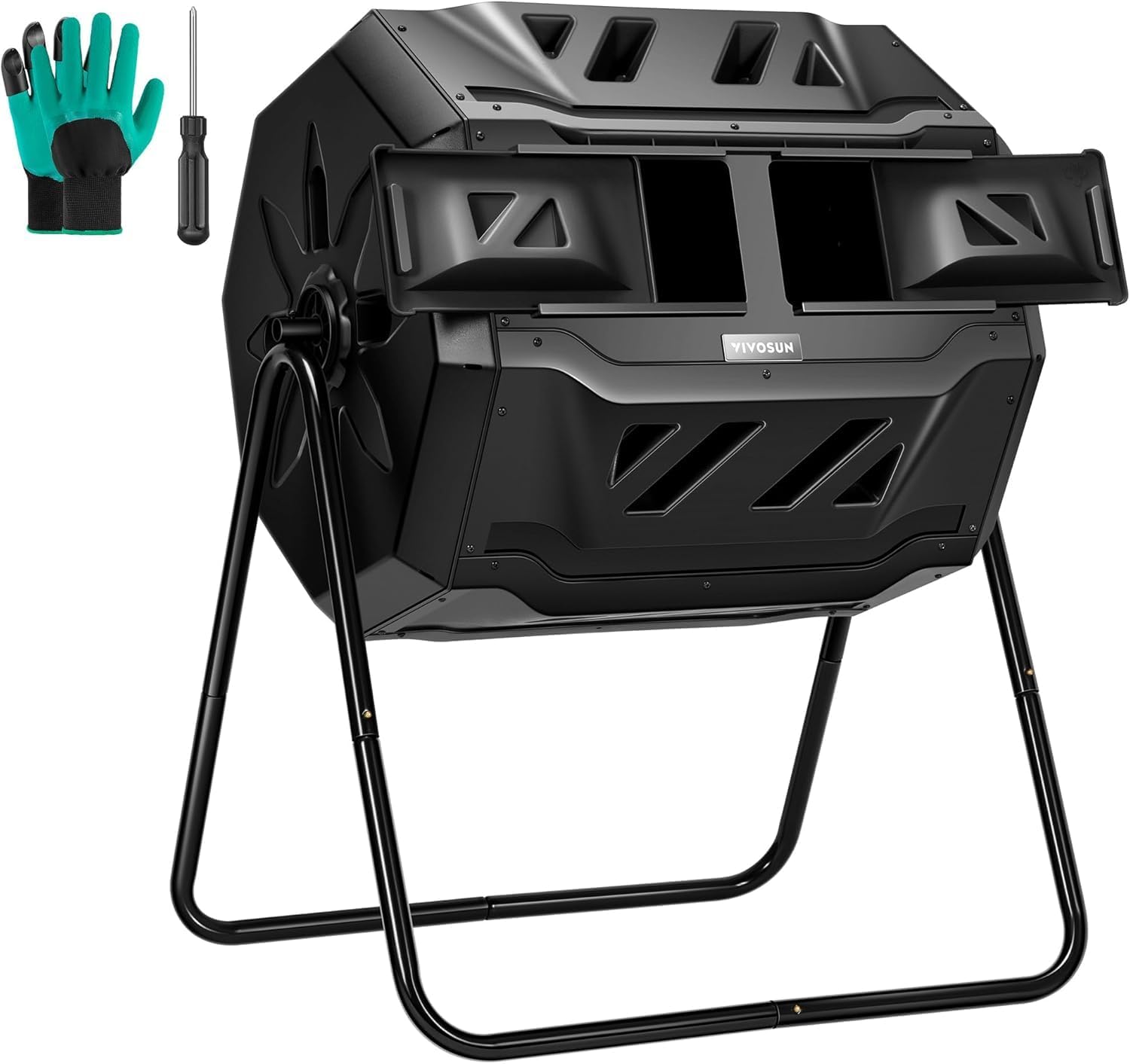
| Material Type | galvanized steel |
|---|---|
| Capacity | 43 gallons |
This VIVOSUN tumbling composter is a practical backyard unit built around two rotating chambers so you can add fresh waste to one side while the other finishes breaking down. The 360 degree tumbling design with deep internal fins makes turning the pile simple and helps break up clumps without digging. Ventilation slots around the drum promote airflow for aerobic decomposition, and the metal frame with a PP plastic barrel is designed to resist corrosion and outdoor weathering. It comes with waterproof garden gloves and small digging claws to make loading and aerating easier. At 43 gallons it is sized for a family garden or vegetable patch but is compact enough for a patio or small yard. Limitations to note are that it requires occasional manual turning to maintain activity and that the plastic drum means it will warm less in cold climates than insulated models, so composting speed will vary by season. Assembly and placement on a level spot are also important for smooth rotation.
Best for: Gardeners who want a hands-on, efficient system to produce regular batches of compost without digging a pile and who prioritize continuous output and easy turning.
Less Ideal for: People who need a completely hands-off hot composter or who compost only very large volumes; those in very cold climates seeking year-round rapid breakdown should consider insulated or electric options.
- Dual chambers let you load new material while another batch finishes, ensuring continuous compost production
- 360 degree tumbling with deep fins makes mixing and aeration easy without manual digging
- Galvanized steel frame and PP plastic barrel designed for outdoor durability and corrosion resistance
- Ventilation slots support aerobic breakdown for faster, less smelly composting
- Plastic drum offers less insulation than insulated or fully metal units, slowing composting in cold weather
- Requires manual turning and regular management to maintain heat and moisture for fast results
Verdict: If you want steady, manageable batches of compost with easy tumbling and continuous use, this dual-chamber VIVOSUN tumbler delivers practical, durable performance.
GEOBIN 246‑Gallon Expandable Backyard Compost Bin

| Capacity | 246 gallons |
|---|---|
| Material Type | High Density Polyethylene (HDPE) |
The GEOBIN 246‑gallon compost bin is a simple, high-capacity system designed for homeowners who want an easy route to turn yard and kitchen waste into usable compost. It assembles quickly using connection keys and expands to about 4 feet tall to accept large volumes of leaves, grass clippings, and food scraps. The HDPE construction is weather-resistant and inert so it will not leach into the compost, while the perforated design provides good airflow to speed decomposition. In practice it is best used as a single large pile rather than a multi-bin rotation system, and periodic turning with a pitchfork or aerator will keep the pile active. The bin lacks a built-in access door for finished compost, so harvesting requires collapsing or tipping the container or reaching in from the top. For gardeners who want a low-maintenance, long-lived outdoor composter that handles bulk material, this GEOBIN provides a cost-effective solution; buyers who need staged composting or easy bottom access should consider alternative designs.
Best for: Homeowners who want a low-maintenance, high-capacity outdoor composter for bulk yard waste and occasional kitchen scraps and prioritize durability and simple setup.
Less Ideal for: Gardeners who need a multi-stage or easy-bottom-access system for continuous small-batch composting or those with very limited backyard space.
- Very large expandable capacity suitable for whole-yard seasons of leaves and clippings
- High density polyethylene construction resists weathering and will not leach into compost
- Perforated design and ventilation promote faster decomposition
- Simple assembly with connection keys makes setup quick for nontechnical users
- No built-in access door for easy removal of finished compost
Verdict: Choose this GEOBIN if you want a durable, large-capacity backyard composter that is easy to assemble and handles big volumes of yard waste.
Choosing the Right Compost Bin for Leaves: Key Factors to Consider
Airflow and Ventilation
Leaves are lightweight and tend to mat together, which traps moisture and creates anaerobic pockets that smell and slow decomposition. A compost bin for leaves should provide consistent airflow through slats, holes, or an open-weave design so oxygen reaches the pile. Good ventilation reduces the need for frequent manual turning and helps microbial communities that break down carbon-rich brown material.
Consider bins that force air circulation or allow easy passive ventilation. If your yard is windy, choose designs that balance airflow with containment so leaves do not blow away. In wetter climates, more airflow helps keep the pile aerobic despite rainy conditions.
Access for Turning and Adding Greens
Mechanical or manual access affects how quickly leaves turn into usable compost. Bins with low removable panels, wide lids, or twist-out cores make it easier to add nitrogen-rich greens such as grass clippings or kitchen scraps and to turn the pile when needed. Frequent turning mixes in those nitrogen sources and redistributes oxygen, accelerating decomposition.
If you plan to rely on natural breakdown with occasional amendments, choose a bin that allows fast, low-effort access. For gardeners who will actively manage the pile, a design that permits full-volume turning or in-bin mixing is preferable.
Capacity Relative to Yard Leaf Volume
Leaf volume varies widely by tree type and lot size. A compost bin that is too small will require constant emptying or multiple trips, while an oversized bin can be hard to manage and may not heat evenly. Think about how many bags or raked piles of leaves you accumulate each season and pick a bin with sufficient usable interior capacity, not just exterior dimensions.
Stackable or modular systems can be useful if you want to scale capacity across the season. Also consider how much finished compost you expect to retrieve at once and whether the bin design supports batch removal.
Material Durability and Weather Resistance
Outdoor bins face UV exposure, rain, freeze-thaw cycles, and animal activity. Materials like thick recycled plastic or rot-resistant metal with rust protection hold up longer. Joints, fasteners, and any moving parts should resist corrosion and loosening over time. Thin, brittle plastics can crack after a couple of seasons, while untreated steel can corrode and bind lids or doors.
Inspect expected sun exposure and local winter conditions when deciding material. A warranty or clearly stated material spec often signals a more durable choice, and replaceable components are helpful for long-term ownership.
Ease of Assembly and Routine Maintenance
A bin that takes hours to assemble or needs frequent fiddly maintenance will discourage regular composting. Look for simple fastening systems, clear instructions, and designs that permit seasonal cleaning. Removable liners or panels speed emptying and make it easier to inspect the pile for pests or excessive moisture.
Maintenance also includes how easy it is to add amendments, check internal temperature or moisture, and repair worn parts. Choose a bin that matches the amount of time you realistically will invest.
Pest Control and Containment
Leaves can attract rodents or opportunistic wildlife if the bin also receives food scraps. A leaf-specific compost bin often avoids kitchen waste, but containment remains important in suburban or rural settings. Solid doors, secure lids, and mesh barriers help keep animals out while still allowing airflow.
Consider local pest pressure and whether you will occasionally add food waste. If wildlife is a concern, prioritize bins with lockable lids or mounting options that reduce access for animals.
Managing Dry, Bulky Leaves Effectively
Leaves are mostly carbon, so they benefit from the addition of nitrogen-rich materials and moisture regulation to compost efficiently. Before adding large volumes to a bin, shred or mow leaves to reduce particle size and prevent matting that impedes airflow.
Layer leaves with greens such as grass clippings, or add small amounts of manure or a nitrogen boost to keep microbes active. Water lightly if the pile is dry to the touch, but avoid soaking, which can create anaerobic conditions.
- Shred leaves with a mower or chipper to speed decomposition.
- Layer thinly with green materials to maintain a workable carbon-to-nitrogen balance.
- Monitor moisture and aerate occasionally rather than letting the pile sit compacted.
Placement and Foundation for a Leaf Compost Bin
Choose a level, well-drained spot with partial sun to encourage microbial activity without drying the pile too quickly. Avoid depressions where water pools after rain.
Elevate on coarse material or a simple pallet if ground drainage is poor. Good ground contact allows beneficial organisms and worms to access the pile and helps with drainage when rains are heavy.
- Place near tool storage or garden beds for easy transfers of finished compost.
- Keep the bin accessible for turning and filling, especially during wet leaf-raking weather.
Simple Techniques to Speed Leaf Composting
Turning and mixing introduce oxygen and distribute moisture evenly. Even a few turns across the season will reduce decomposition time compared with a static pile. If you can, add a nitrogen source and a layer of soil to inoculate the pile with microbes.
Using a compost activator or a handful of finished compost can jump-start microbial activity, but basic organic amendments like grass clippings are usually sufficient.
- Aim for a loosely piled mix that retains shape but allows fingers to move through it when turning.
- Check and adjust moisture so the pile feels like a wrung-out sponge, not bone dry or dripping.
Modular and Stackable Options for Variable Leaf Loads
If your yard produces erratic leaf volumes, modular bins let you add capacity only when needed. Stackable rings, multiple adjacent bins, or removable panels let you fill one unit while another cures into finished compost.
This approach also simplifies batch management, making it easier to harvest finished material without disturbing newly started piles.
- Use separate modules for active composting and curing to maintain better heat and airflow.
- Label or rotate modules through the season to track age and readiness of finished compost.
Winter Care and Using Finished Leaf Compost
Composting slows in cold weather but continues at the core if the pile is large and insulated. Insulating with extra leaf layers or a tarp can preserve heat and microbe activity through late fall and early winter.
Finished leaf compost is a great soil amendment for beds and around trees. It improves structure and moisture retention without adding too much nitrogen, so it works well as a top dressing or mixed into planting beds in spring.
- Keep bins accessible in winter for topping up and occasional turning if the pile is still active.
- Store finished compost in a dry, covered area to prevent nutrient leaching before use.
How We Chose the Best Compost Bin for Leaves
We focused on features that directly affect how leaves compost in real garden conditions. Key criteria included airflow and aeration design, because dry, bulky leaves need consistent oxygen to avoid matting and anaerobic pockets; access and mixing options, since turning or adding nitrogen amendments speeds breakdown; capacity and footprint, to match common leaf volumes from small yards to larger properties; build material and weather resistance, because bins sit outdoors and must resist UV, moisture, and pests; and assembly and maintenance, since gardeners often prefer setups that are quick to install and easy to empty. We excluded indoor composters and tiny kitchen units that cannot accommodate large seasonal leaf volumes. We also filtered out systems that require specialty components or proprietary consumables that complicate routine leaf composting. Final selections were chosen for straightforward operation, clear aeration strategies, robust construction, and practical capacity ranges that reflect typical leaf-management needs.
FAQ
Can I compost only leaves in a bin?
Yes, leaves can be composted alone, but they decompose slowly because they are high in carbon. Shredding leaves and adding occasional nitrogen sources such as grass clippings or manure speeds the process. Regular aeration and monitoring moisture will also help.
How often should I turn a leaf-only pile?
It depends on size and moisture, but turning every few weeks during active decomposition is common. Smaller, shredded piles may need less frequent turning. The goal is to restore oxygen and redistribute moisture rather than exhaustive daily mixing.
Will a closed bin make leaves compost faster than an open pile?
A closed bin can retain heat and moisture, which helps breakdown, but only if it still allows adequate airflow. Open piles may dry out or blow away in wind. Choose a bin that balances containment with ventilation for the best results.
Do I need to shred leaves before adding them to the bin?
Shredding is recommended because it increases surface area and prevents matting, which improves aeration and speeds decomposition. If you do not have a shredder, running a lawn mower over leaves on a driveway or using a chipper on branches can help.
How do I prevent odors when composting leaves?
Odors usually indicate anaerobic conditions or too much moisture. Improve airflow, mix in dry or carbon-rich material if the pile is wet, and avoid adding large amounts of food waste unless the bin is designed to handle it. Turning and adding dry bulking agents solves most smell issues.
Is finished leaf compost good for vegetable beds?
Yes, mature leaf compost is an excellent soil amendment for vegetable beds. It improves soil structure and water retention. Avoid applying fresh, unfinished leaf compost directly if it is still hot or contains uncomposted material that could tie up nitrogen.
Final Verdict
When choosing a compost bin for leaves, prioritize airflow, access for turning, and capacity that matches how many leaves your yard produces. Durable materials and simple maintenance make seasonal leaf management less work, while modular or stackable systems offer flexibility for variable leaf loads. Balance the tradeoff between containment and ventilation to keep the pile aerobic and avoid odors. With the right bin and a few basic practices like shredding and occasional nitrogen additions, you can turn bulky seasonal leaves into valuable compost efficiently.
