

Note: This article contains affiliate links. If you click on these links and make a purchase, I may earn a small commission at no extra cost to you. This helps support my research and content. Read my full affiliate disclosure here.
If you want to keep food scraps out of the trash but lack outdoor space, an electric indoor compost bin can make kitchen composting tidy and practical. These units speed up breakdown, reduce odors, and contain mess in a compact footprint so you can compost year-round on a counter or under a sink. This guide covers seven shortlisted electric indoor compost bins chosen for their odor management, capacity, and ease of use. Read on to see which features matter most and which setups match different household sizes and kitchen layouts before the product list.
Top Picks at a Glance
| Best Overall The best all-around choice for most situations | Soliddis 4.2L Electric Indoor Composter with Self-Cleaning and 900ml Carbon Filter |  |
| Best Quality Built to a higher standard if you want something more solid | GEME PRO 19L Electric Kitchen Composter |  |
| Best Value The sweet spot between price and what you get | Growell 3.2L Electric Countertop Composter |  |
| Best Budget The cheapest option that still gets the job done reliably | Food Cycle Science CS-10 Indoor Food Cycler Compost Bin |  |
| Highest Rated A top-rated pick with lots of positive feedback | THINKWARE BLUEVENT MUMU Smart AI Electric Food Composter, 4L |  |
| Most Popular A crowd favorite that many people choose with confidence | Reencle Prime Electric Composter, 14L |  |
| Best Seller A high-volume bestseller chosen again and again | FoodCycler Eco 5 Electric Indoor Food Recycler (5 L) |  |
Soliddis 4.2L Electric Indoor Composter with Self-Cleaning and 900ml Carbon Filter
| Capacity | 4.2 liters |
|---|---|
| Material Type | Aluminum |
| Filter Capacity | 900ml active carbon filter |
| Noise Level | Under 48dB |
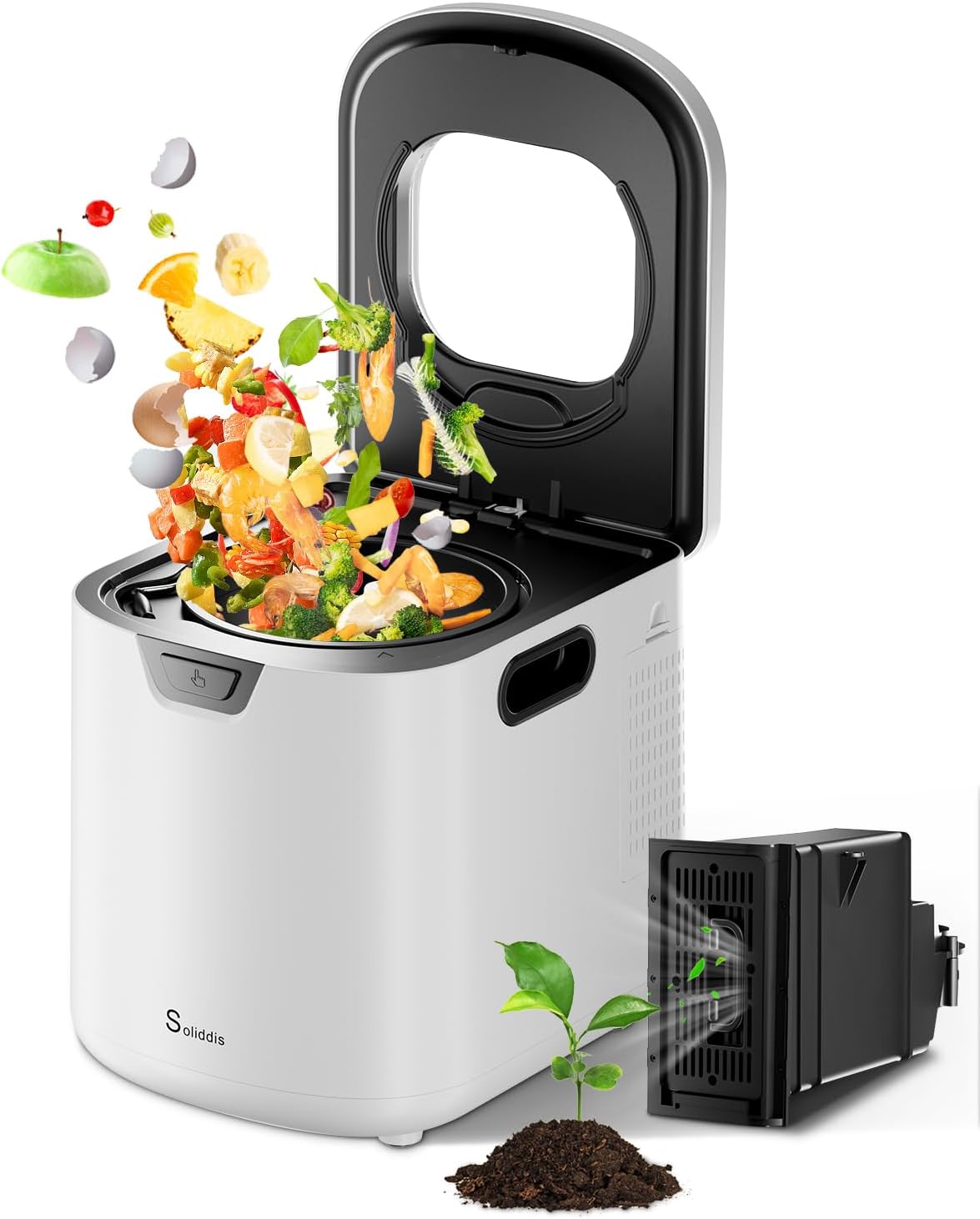
The Soliddis 4.2L electric composter is a countertop appliance that reduces kitchen food waste by grinding, heating, and drying scraps into a usable biomass in about 4 to 6 hours depending on load. It offers three load modes to adapt time and power for small to larger batches, a clear-view window and one-touch lid for easy monitoring, and a press-and-hold safety start to reduce accidental activation. Notable features include a cast aluminum inner bucket that resists scratching and helps dry material faster, an oversized 900ml active carbon filter for extended odor control, and dedicated self-clean and dry modes that make upkeep straightforward. Practical benefits are fast volume reduction, quieter operation (under 48 dB) suitable for kitchen counters, and a processed output that can be mixed into garden soil as a nutrient boost. Limitations to expect are the modest 4.2 L capacity that requires frequent emptying for larger households, variable final texture depending on food types, and the need to fully empty between cycles to avoid clumping and strain on the motor.
Best for: Home cooks who want a compact, quiet countertop solution to cut food waste and produce usable soil amendment without outdoor composting.
Less Ideal for: People who generate large daily volumes of food waste or want a device that accepts continuous top-ups during a cycle should consider a larger or outdoor composting system instead.
- Fast processing reduces waste volume by over 90% in a few hours
- Large 900ml active carbon filter for extended odor control
- Cast aluminum inner bucket improves drying speed and resists scratches
- Self-clean and bucket-dry modes simplify maintenance
- 4.2 L capacity is small for families and needs frequent emptying
- Final texture varies by food type and can include small lumps with starchy items
- Requires emptying before each new cycle to prevent clumping and motor strain
Verdict: A compact, quiet countertop composter that quickly turns daily kitchen scraps into dry, garden-ready biomass while keeping odors under control.
GEME PRO 19L Electric Kitchen Composter
| Capacity | 19 liters |
|---|---|
| Daily processing | Up to 11 lbs |
| Compost time | 6–8 hours |
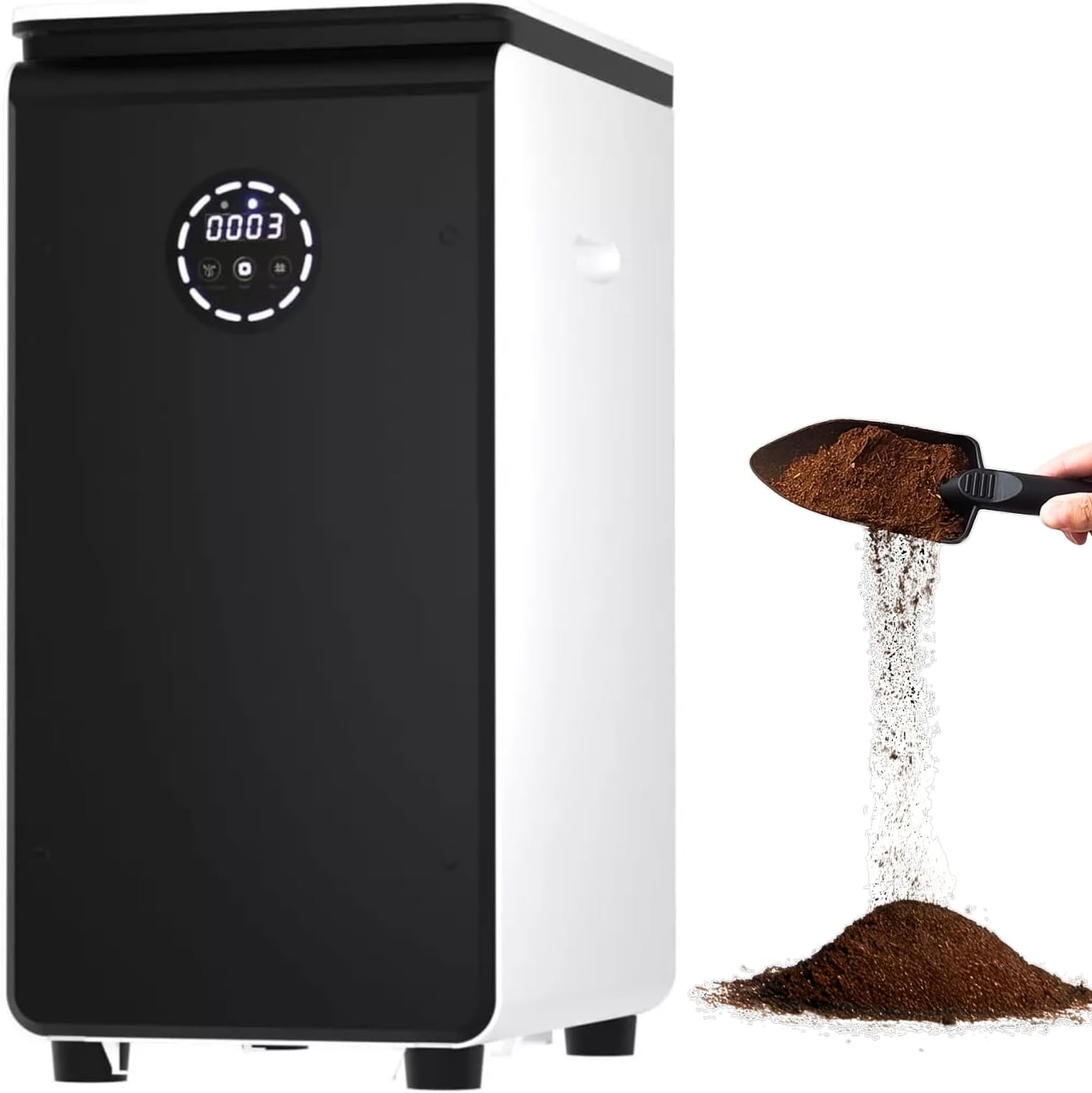
The GEME PRO 19L electric composter is designed to convert everyday kitchen scraps into usable organic compost quickly using microbial degradation rather than dehydration. You load food waste directly into the 19-liter drum any time and the unit runs continuously, processing up to about 11 pounds per day and producing finished material in roughly 6 to 8 hours. Notable features include a permanent industrial-grade filter that the manufacturer says never needs replacing, an integrated deodorization system for low odor, and quiet operation for indoor use. The practical benefits are fast turnaround so you can harvest soil conditioner within hours, fewer trips to an outdoor bin, and reduced ongoing maintenance because the filter and routine cleaning requirements are minimal. Important limitations are its size and weight for placement in a small kitchen, and reliance on the included microbial starter supply to maintain breakdown performance over time. Also expect some electricity consumption compared with passive composting methods.
Best for: Buyers who prioritize fast, reliable on‑site composting and want a low-maintenance indoor unit that turns daily food waste into usable compost within hours.
Less Ideal for: People with very small kitchens or who prefer passive, electricity-free composting methods should consider other options.
- Fast processing: produces usable compost in about 6–8 hours using microbial degradation
- High daily capacity: can handle up to roughly 11 pounds of food waste per day
- Permanent built-in filter reduces ongoing maintenance and filter replacement costs
- Odor control and quiet operation make it suitable for indoor kitchen placement
- Relatively large and heavy for tight kitchens which can limit placement options
- Requires proprietary microbial starter (Kobold) to maintain optimal performance
Verdict: If you want rapid, low‑maintenance indoor composting that turns daily food waste into real compost in hours, this 19L GEME unit delivers performance-focused results.
Growell 3.2L Electric Countertop Composter

| Capacity | 3.2 liters |
|---|---|
| Processing modes | Auto (up to 8 hours) and Manual (1–10 hours) |
| Noise level | About 50 dB |
| Materials | Aluminum alloy, stainless steel, plastic |
The Growell 3.2L electric composter is a kitchen countertop unit designed to convert daily food scraps into a dry, compact pre‑compost within hours. It uses a brushless motor and reinforced blades to grind materials, then applies high‑temperature drying and cooling in either AUTO mode (up to eight hours) or manual mode (1–10 hours) so you can control final dryness. A sealed design plus a large carbon filter and a storage ventilation mode help keep odors contained, and the unit reports filter life so you know when to replace it. Practical touches include a clear LED display, one‑touch cleaning that rinses the inner barrel, and relatively quiet operation around 50 dB suitable for overnight cycles. The small 3.2 L capacity and countertop footprint make it best for singles or small households; larger families will need more frequent runs. It produces a dry, reduced‑volume output rather than finished garden compost, so you may still want an outdoor composting step or soil amendment process for use in larger gardens.
Best for: Buyers who want a compact, low‑maintenance way to reduce kitchen waste daily and prefer automated, countertop processing that fits small households or apartments.
Less Ideal for: People who need to process large volumes of food waste or who want a unit that produces finished garden‑ready compost in a single step should consider larger or multi‑stage solutions.
- AUTO and Manual modes let you balance convenience and control over final dryness
- Brushless motor and reinforced blades handle fruit, vegetable scraps and small bones without frequent clogging
- Carbon filter and sealed design keep operation virtually odor‑free
- One‑touch Clean mode simplifies maintenance by rinsing the inner barrel automatically
- Low noise around 50 dB allows running cycles overnight without disturbing household
- 3.2 L capacity is small and requires frequent batches for larger households
- Produces pre‑compost that typically needs outdoor finishing before use in gardens
Verdict: A compact, quiet countertop composter that automates grinding and drying for small households who want fast, low‑odor kitchen waste reduction.
Food Cycle Science CS-10 Indoor Food Cycler Compost Bin

| Model Number | CS-10 |
|---|---|
| Includes | 2 odor filters |
| Material | Metal/Plastic |
| Unit Count | 1 Count |
| Manufacturer Warranty Description | 1 year manufactures warranty |
The Food Cycle Science CS-10 is an electric countertop composter designed to cut kitchen waste volume quickly through a three-step composting cycle. It is typically used on a kitchen counter where you add fruit and vegetable scraps, start the cycle, and collect reduced, soil-ready material in under a few hours. Notable features include two odor filters, an enclosed system that requires no venting or draining, and a blend of metal and plastic construction that feels sturdy. Practical benefits are faster volume reduction and a mostly odorless process that keeps composting contained indoors, which is helpful for small apartments or gardeners who want quick amendment material. Important limitations are its heavier weight compared with other countertop units and the manufacturer guidance to avoid meat, dairy, and oily foods, which limits the range of kitchen waste it can process. Some users may also find the size and noise level noticeable during operation. For buyers on a tight budget, it offers an affordable way to start indoor electric composting with basic odor control and rapid processing.
Best for: Best for budget-minded home gardeners or apartment dwellers who want a simple electric composter to reduce vegetable and fruit scraps quickly and keep smells out of the kitchen.
Less Ideal for: Not a good fit for households that need to compost meat, dairy, or large volumes of wet food waste or those who prioritize a very lightweight or silent device.
- Two included odor filters help keep smells contained for indoor use.
- Three-step cycle reduces food waste volume up to about 90% and speeds conversion to soil amendment.
- Enclosed design requires no venting, draining, or added chemicals, so it is easy to place on a countertop.
- Not suitable for meat, dairy, or oily kitchen waste.
- Relatively heavy for a countertop unit which can make repositioning awkward.
- May produce noticeable operating noise during cycles.
Verdict: A straightforward, budget-friendly electric countertop composter that quickly reduces fruit and vegetable scraps into a usable soil amendment while keeping odors contained.
THINKWARE BLUEVENT MUMU Smart AI Electric Food Composter, 4L

| Capacity | 4 liters |
|---|---|
| Noise level | 20 dB |
| Material Type | Plastic |
The THINKWARE BLUEVENT MUMU is a countertop electric composter designed for daily kitchen use that automates grinding, drying, and sterilization to shrink food waste into compostable material. It detects the weight of inserted food with AI, then runs a combined grinding and drying cycle that the manufacturer says reduces volume by about 95% and finishes typical loads in roughly 4 to 8 hours. Practical features include a built-in charcoal filter and noise reduction that keep operation quiet at around 20 dB and minimize odors, plus a Green Mode that runs at lower temperatures for nutrient-rich output when you are willing to accept longer cycles. The unit is straightforward to use for households that generate regular kitchen scraps and want a near-hands-free solution; voice prompts and an LCD guide operation and troubleshooting. Limitations to note are the modest 4 L capacity that requires regular emptying for larger households and the exclusion of very hard shells, large bones, or stringy roots which the product warns against. It also relies on proprietary charcoal refills for best odor control.
Best for: Buyers who prioritize a reliable, low-effort indoor composting solution for daily kitchen scraps and want consistent, quiet operation with automated cycles.
Less Ideal for: People who generate large volumes of food waste, need to compost bulky or very hard items, or prefer a simple passive bin without electronics.
- Automated AI weight detection starts the composting cycle without manual settings
- Integrated grinding and drying reduces waste volume by up to 95%
- Charcoal filter plus 20 dB noise reduction keeps operation largely odorless and quiet
- Green Mode for lower-temperature processing that preserves more nutrients
- 4 L capacity means frequent emptying for multi-person households
- Not suitable for very hard shells, large bones, or stringy roots which must be avoided
Verdict: Reliable automated composting with quiet, odor-controlled operation makes this a solid countertop choice for households that need a hands-off indoor solution.
Reencle Prime Electric Composter, 14L

| Capacity | 14 liters |
|---|---|
| Material Type | Polypropylene (PP) |
| Item Type Name | Electric Composter |
The Reencle Prime is a countertop electric composter designed to turn everyday food scraps into finished compost quickly while keeping odors and noise to a minimum. You load mixed scraps (including meat, dairy, citrus and leftovers but not large bones or pits) into the 14 L chamber, the unit activates its aerobic microbe process and filtration system, and living microbes accelerate decomposition so you get usable material within weeks rather than months. Notable features are a three-layer carbon filter for low-odor operation, a hands-free lid, a whisper-quiet motor rated as low as 28 dB, and a starter pack plus shovel included so you can begin right away. The compact rectangular design fits on a kitchen counter and handles small household output — the manufacturer lists up to about 2.2 lb of daily waste processing. Trade-offs are capacity and throughput: the 14 L bin and the daily processing rate suit small households or couples but will require more frequent emptying for larger families, and the unit is a dedicated appliance that uses electricity and occasional filter replacements. For buyers wanting fast, low-odor indoor composting without outdoor bins, this is a practical, easy-to-use option.
Best for: Homeowners or renters who want a straightforward indoor solution to convert daily kitchen scraps into compost quickly and with minimal odor, and who prioritize ease of use and social reassurance from a well-reviewed device.
Less Ideal for: Large households that produce heavy daily food waste or gardeners who need high-volume outdoor composting should choose a larger or outdoor system instead.
- Rapid microbial decomposition that produces usable compost much faster than traditional methods
- Three-layer carbon filter and sealed design reduce kitchen odors
- Whisper-quiet operation (as low as 28 dB) suitable for indoor use
- Includes starter pack, shovel, and one carbon filter so you can begin immediately
- 14 L capacity and stated daily processing limit mean frequent emptying for larger households
- Requires electricity and periodic filter replacements
Verdict: A compact, low-odor electric composter that makes fast, hassle-free indoor composting practical for small households.
FoodCycler Eco 5 Electric Indoor Food Recycler (5 L)

| Capacity | 5 liters |
|---|---|
| Material Type | Plastic |
| Included Components | Bucket & Lid, Carbon Refill, Foodcycler, Refillable Filter |
| Manufacturer Warranty Description | 3 Year Limited |
The FoodCycler Eco 5 is a compact electric kitchen recycler designed to turn everyday food scraps into a dry, low-volume by-product in a few hours. You load peels, leftovers, shells, bones, and similar scraps into the removable 5 liter bucket, set the one-touch cycle, and the unit grinds and dries the material using its Vortech grinding system while a refillable carbon filter controls odors. Its quiet operation and enclosed bucket make it suitable for keeping on a counter during food prep, and the dry output is easy to scoop into a jar or mix into potting soil. Notable practical benefits are the ability to process harder items many home units cannot handle and the reduced need to take out organic trash frequently. Important limitations are that it requires electricity and periodic replacement of the carbon filter and refill, and the processed by-product is not finished compost so gardeners who need finished soil amendment will still need to further compost or age it before planting beds. The unit is plastic-bodied and reasonably portable, but its 5 L capacity means very large households will cycle it frequently.
Best for: A homeowner who wants a low-effort, odor-controlled indoor solution to reduce kitchen waste and prefers reliable, user-friendly appliances that minimize mess and frequent trash trips.
Less Ideal for: Those who want finished, garden-ready compost straight from the unit or very large households that generate heavy daily food waste should consider higher-capacity or outdoor composting alternatives.
- Processes a wide range of food scraps including bones and pits thanks to the Vortech grinding system
- One-touch operation and a removable bucket make it easy to use and clean
- Refillable carbon filter and enclosed design keep odors low during cycles
- Produces a dry, low-volume by-product that is simple to store or add to potting mix
- Requires electricity and periodic replacement of carbon filter refills
- Output is a processed by-product not finished compost and typically needs further composting or aging
Verdict: Choose the Eco 5 if you want a compact, odor-controlled countertop recycler that reliably converts household scraps into a small, dry by-product with minimal effort.
Choosing the Right Electric Indoor Compost Bin: Key Factors to Consider
Odor Management
Indoor compost units sit close to living spaces, so reliable odor control is critical. Look for sealed lids, activated carbon filters, or forced-air ventilation systems that actively remove smells. Some electric models use heat or aeration to reduce anaerobic conditions that create foul odors. Consider how often filters need replacing and whether replacement parts are readily available. Proper odor management influences how long you can store scraps between emptying and how comfortable the unit is in small kitchens.
Processing Method and Speed
Different electric compost bins use heat, tumblers, grinding, or accelerated microbial systems to break down scraps. Faster processing reduces the time organic matter spends in the bin, cutting odor risk and shrinking material to a compact residue. However, faster systems may require higher energy use or more frequent maintenance. Match processing speed to your routine: faster units suit daily disposers and families, while slower, low-maintenance units may be fine for occasional cooks.
Capacity Relative to Household Size
Capacity determines how often you need to empty the unit. Small countertop units are convenient but may require daily emptying in multi-person households. Larger electric bins offer more storage and processing room but take up more counter or floor space. Consider average food-waste volume in your home, how often you want to handle the residue, and where the unit will live. The right capacity balances time between emptying and the unit footprint in your kitchen.
Ease of Cleaning and Maintenance
Tasks like emptying residue trays, replacing filters, and wiping internal surfaces affect whether you keep using the system. Removable, dishwasher-safe components and simple liner systems minimize unpleasant maintenance. Check how residue is presented – dry crumbly matter is easier to handle than wet sludge. Also consider filter replacement intervals, availability of spares, and whether the design traps moisture or food particles in crevices that require detailed cleaning.
Energy Use and Noise
Electric compost bins vary in power draw and operational sound. If the unit runs continuously to maintain heat or aeration, it should be reasonably efficient to avoid large energy draws. Noise matters when the unit is in a kitchen or small apartment; look for low-decibel operation or modes that run quietly at night. Consider standby power use and whether the unit has programmable or sensor-driven cycles to conserve energy.
Residue Quality and End Use
The final output from an electric indoor bin ranges from dry crumbs to fine compost-like material. Think about how you will use the residue: as a soil amendment, for outdoor compost piles, or for municipal composting. Higher-temperature or more aggressive processing will yield drier, more stable residue that stores longer and mixes into potting soil easily. If you plan to add material to garden beds, ensure the residue is safe and broken down enough for plants.
Where to Place an Electric Indoor Compost Bin
Placement affects convenience and odor exposure. Counters near food prep areas are easiest for daily scraps, but ensure there is ventilation and a nearby outlet. Under-sink locations keep the unit out of sight but may limit airflow and increase humidity.
For small apartments, place the unit in a corner of the kitchen or on a utility shelf. Avoid direct sunlight which can overheat some models, and leave a little clearance for air circulation if the design relies on vents.
- Keep near food prep to encourage regular use
- Avoid enclosed cabinets unless the model is rated for limited airflow
- Allow space for emptying residue trays and replacing filters
How to Prepare Scraps for Best Results
Chopping or breaking larger pieces speeds processing and reduces strain on grinders and processors. Remove large bones and very fibrous stems unless the manufacturer explicitly supports them. Balance wet scraps with dryer items like torn paper or small amounts of dry yard waste if recommended by the unit's instructions.
Avoid adding liquids or overly greasy foods that can create sludgy residue. If you generate a lot of citrus or onion waste, expect stronger smells in basic units and consider models with upgraded filtration or heat processing.
- Cut scraps into smaller pieces for faster breakdown
- Limit bones, excessive grease, and large fibrous materials
- Follow manufacturer recommendations for no-go items
Managing Residue and Using the Output
Most electric indoor bins leave a concentrated, low-volume residue that is easier to transport and store than raw scraps. Let residue cool and dry if the unit discharges warm material. Depending on how thoroughly the unit processes waste, you can mix the output into potting mixes, add it to outdoor compost piles, or use it directly as a soil amendment in container gardens.
If the output is not fully finished compost, plan to cure it outdoors or in a secondary compost bin until it stabilizes. Store residue in breathable containers if you need to keep it before use to avoid moisture buildup.
- Cool and dry residue before handling
- Mix with potting soil or cure further in a compost pile if not fully stabilized
- Use residue sparingly in new potting mixes until you know its nutrient profile
Safety and Kitchen Hygiene
Electric compost bins have moving parts and heating elements in some designs, so follow safety instructions and keep them out of reach of children and pets. Regularly clean lids, sealing gaskets, and any detachable components to prevent biofilm buildup.
Use gloves when emptying residue if you have cuts or compromised skin. Sanitize surfaces that touch food scraps and ensure electrical cords are kept away from wet areas.
- Unplug before deep cleaning
- Keep units away from small children and pets
- Sanitize contact surfaces after emptying
Integrating With Other Composting Systems
An electric indoor bin can be a pre-processor for larger outdoor compost piles or municipal collection. Using the indoor unit to reduce volume and dry residue makes transport and downstream composting easier. Match the indoor output to your outdoor method to avoid overloading garden piles with wet material.
If you already have a backyard compost system, use the electric unit for kitchen scraps and add finished residue to the main pile to speed overall decomposition and nutrient recovery.
- Use indoor residue to jump-start outdoor piles
- Avoid dumping large amounts of fresh, wet output into small outdoor piles
- Store residue dry until ready to add to gardens
How We Chose the Best Electric Indoor Compost Bin
We evaluated units based on criteria that matter for everyday kitchen composting. Primary filters included proven odor control methods and airtight seals, since indoor odors are the most common barrier to home composting. Capacity and throughput were assessed to make sure each unit suits the range of household sizes from single cooks to families. Speed of decomposition and processing technology was considered because some designs accelerate breakdown using heat, agitation, or aeration. Ease of maintenance and cleaning were essential, since liners, removable trays, and washable surfaces affect long-term usability. Energy use and noise were checked to ensure the electric components are suitable for a kitchen environment. Units were excluded if they lacked basic safety features, had unclear waste handling processes, or were primarily designed for outdoor use. These filters ensured the shortlist focuses on compact, low-odor electric indoor compost bins that perform reliably in real kitchens.
FAQ
How often should I empty an electric indoor compost bin?
Frequency depends on capacity and household waste generation. Small countertop units may need daily emptying for families, while larger models can last several days. Empty when the residue tray reaches capacity or if you notice any persistent odors.
Can these units handle meat and dairy?
Some electric indoor compost bins can process small amounts of meat and dairy, especially those with high-temperature or sealed processing. However, these items increase odor risk and may require more aggressive units and careful maintenance. Follow the manufacturer's guidance for allowed materials.
Do electric bins need special filters?
Many models use activated carbon or HEPA-style filters to trap smells and particles. Filters vary in lifespan; expect replacements every few months under normal use. Choosing a unit with easy-to-replace filters simplifies upkeep.
Will the unit attract pests?
Properly sealed electric indoor compost bins with effective odor control are unlikely to attract pests. Leaving the lid open or ignoring maintenance can invite fruit flies or odors that attract insects. Regular emptying and cleaning reduce pest risk.
How much electricity do these units use?
Energy use varies by processing method. Units that run heating elements continuously will use more power than intermittent aeration systems. Many models are designed to be energy-efficient, but usage depends on cycle length and frequency.
Is the residue safe to use in houseplants?
Residue is often suitable for houseplants after it has cooled and, if necessary, been mixed into potting soil. If the material is not fully broken down, allow it to cure further to avoid nitrogen drawdown or salt issues in containers.
Final Verdict
Choosing the right electric indoor compost bin comes down to matching capacity, odor control, and processing style to your kitchen habits and available space. Prioritize models with proven sealing and filtration if you live in a small apartment or cook frequently. If you generate larger volumes, favor higher-capacity units with faster processing but be prepared for more maintenance. Balance energy use and noise against convenience, and plan how you will store or use the residue. With the right tradeoffs, an electric indoor compost bin can turn daily food scraps into a manageable, garden-ready resource.
