

Note: This article contains affiliate links. If you click on these links and make a purchase, I may earn a small commission at no extra cost to you. This helps support my research and content. Read my full affiliate disclosure here.
Choosing the right LED grow light for lettuce makes a tangible difference in how fast and uniformly your heads or leaf trays develop. Lettuce is sensitive to light spectrum, intensity, and heat, so the lamp you pick affects seedling vigor, leaf texture, and how quickly you can harvest. This guide covers six shortlisted LED grow lights that suit indoor and small-space lettuce production. We evaluate each option for spectrum control, light intensity, energy use, and heat behavior so you can match a light to your growing setup and goals. Read on to see the decision factors we used and what matters most when growing lettuce under LEDs.
Top Picks at a Glance
| Best Overall The best all-around choice for most situations | VIVOSUN LumaLight 100W LED Full Spectrum Grow Light |  |
| Best Quality Built to a higher standard if you want something more solid | Barrina 4ft T8 Full Spectrum LED Grow Light, 6-Pack |  |
| Best Value The sweet spot between price and what you get | APICDOM 2 ft LED Full Spectrum Linkable Grow Light (5000K + 660nm Red) |  |
| Highest Rated A top-rated pick with lots of positive feedback | VIPARSPECTRA P700 70W Dimmable Full Spectrum LED Grow Light |  |
| Most Popular A crowd favorite that many people choose with confidence | GooingTop HY-021 6000K Full-Spectrum Clip Grow Light |  |
| Best Seller A high-volume bestseller chosen again and again | Aokrean Halo Full-Spectrum LED Grow Light with Base (3-Pack) |  |
VIVOSUN LumaLight 100W LED Full Spectrum Grow Light

| Wattage | 100 watts |
|---|---|
| Light Source Type | LED |
| Number of Light Sources | 336 |
| Is Waterproof | True |
| Control Method | Remote |
The VIVOSUN LumaLight 100W is a compact full-spectrum LED grow light intended for indoor gardens and patios. It uses a mix of white, blue, red and far-red diodes to support all growth stages from seedlings through flowering, and the array is arranged to deliver uniform intensity across the canopy. Typical use is hanging above a small grow area with the included rope hangers and adjusting intensity via the four-level dimming knob or remote/mobile control when paired with VIVOSUN accessories. Notable features include IP65 water and dust resistance for high-humidity setups, a low-heat design for closer placement to plants, and Bluetooth/remote control compatibility for easier scheduling. Practical benefits are even coverage for several small plants, lower heat stress, and long expected LED life. Limitations are its 100W power level, which is best for small tents or a few plants rather than larger grow rooms, and some advanced scheduling requires the separate GrowHub controller for full smart automation.
Best for: A practical home grower who wants a reliable, compact full-spectrum light for seedlings through flowering and values even coverage and low heat in a small tent or patio setup.
Less Ideal for: Large-scale growers or those outfitting multi-shelf systems who need higher wattage fixtures or broader coverage should consider more powerful models.
- Full-spectrum diode mix (white, blue, red, far-red) suitable for all growth stages
- Dimmable four-level control plus Bluetooth/remote connectivity for convenient intensity adjustments
- IP65 waterproof and dustproof rating allows use in humid or misted environments
- Low-heat design with aluminum body for efficient thermal management and longer LED life
- At 100 watts it is intended for small tents or modest plant counts and not optimized for larger grows
- Advanced smart scheduling requires purchasing the GrowHub controller separately
Verdict: A dependable, compact full-spectrum LED grow light that delivers even coverage and low heat for small indoor grows.
Barrina 4ft T8 Full Spectrum LED Grow Light, 6-Pack

| Wattage | 42 watts |
|---|---|
| Brightness | 2100 lumen |
| Color Temperature | 5000 Kelvin |
| Number of Light Sources | 6 |
| Mounting Type | Ceiling Mount |
The Barrina 4ft T8 full‑spectrum LED set is a plug‑and‑play solution for indoor seedling and vegetative stages. Each 42W fixture delivers about 2100 lumens at 5000K, and the included V‑shaped reflector plus aluminum shell improve light throw and heat dissipation for steady performance. Installation is straightforward with mounting clips, tape and connecting cables and you can link multiple fixtures in series to cover a long seedling bench or a small grow tent. Practical benefits for tomato seedlings include even white-spectrum light that encourages compact, balanced early growth and the ability to run an array without complex wiring. Limits to consider are that these are ceiling/indoor fixtures only and not water resistant, and the units use a fixed push‑button on/off control rather than dimming or spectrum adjustment, so you will need a separate timer or controller for precise photoperiods and intensity tuning.
Best for: Growers who prioritize steady, high‑output lighting arrays for fast, uniform seedling growth and want a straightforward, scalable installation for benches or small grow tents.
Less Ideal for: Home gardeners wanting adjustable spectrum or integrated dimming control, or setups where fixtures may be exposed to moisture or occasional splashing.
- Full spectrum 5000K output suited to seedling and vegetative growth
- Linkable design lets you daisy‑chain multiple fixtures to cover benches or tents
- V‑shaped reflector and aluminum body improve light distribution and heat dissipation
- No built‑in dimming or spectrum control so intensity and photoperiod need external timers or controllers
- Not water resistant, so it must be kept away from humidity and overhead watering
Verdict: A reliable, linkable full‑spectrum T8 array that delivers consistent light intensity for vigorous tomato seedlings when you need scalable, performance‑focused coverage.
APICDOM 2 ft LED Full Spectrum Linkable Grow Light (5000K + 660nm Red)
| Light Source Type | LED |
|---|---|
| Color Temperature | 5000 Kelvin |
| Light Output Maximum | 1900 lumens |
| Wattage | 16 watts |
| Light Source Special Features | 660nm Red-Light enhancement, Linkable design |
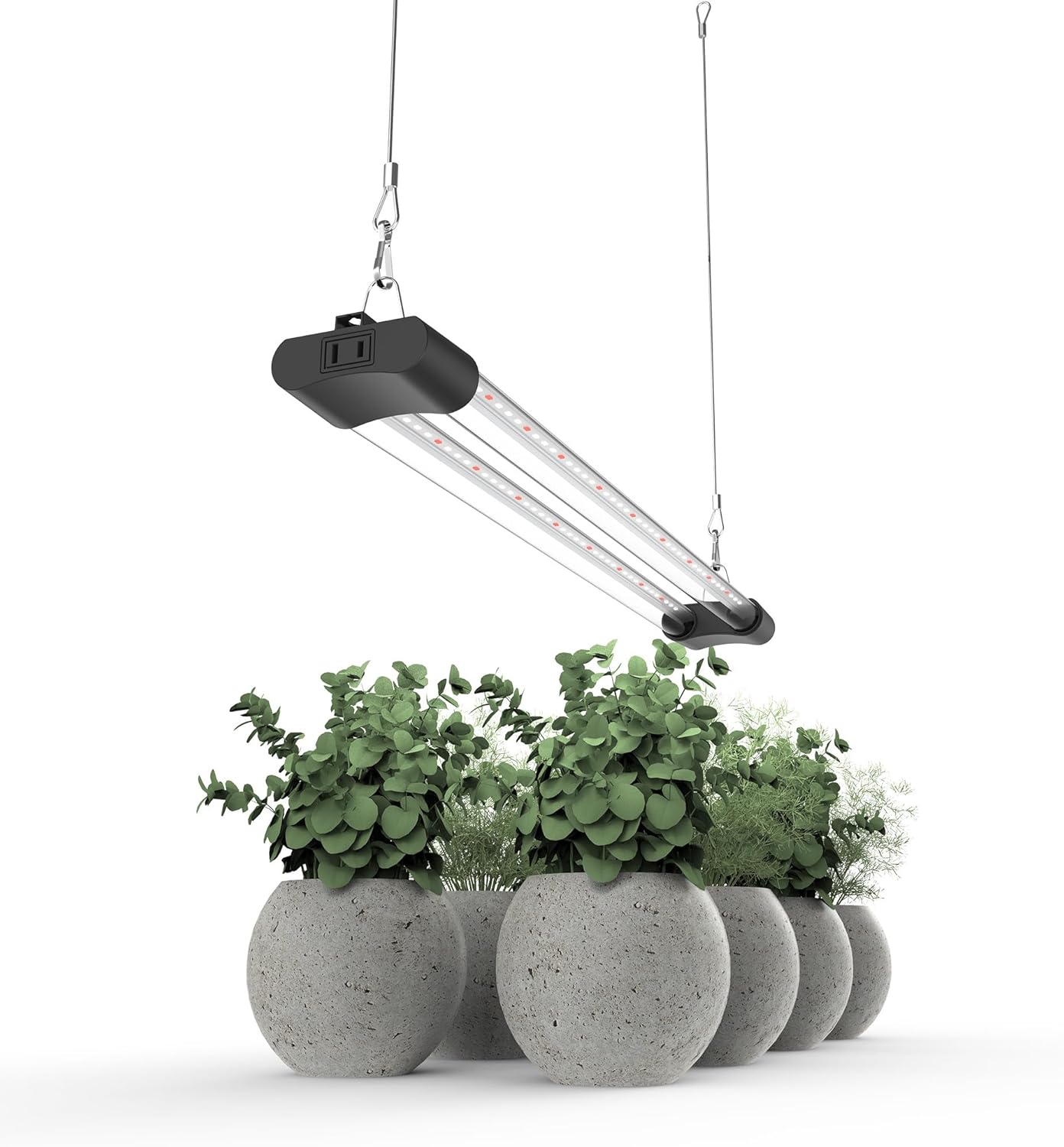
This APICDOM 2 ft LED grow light is a straightforward solution for supplementing indoor plant light on a budget. It delivers a full 5000K spectrum with an added 660nm red band useful for sprouting and flowering, while the integrated LEDs run at 16 watts and produce up to 1900 lumens. Installation is simple: plug in the cord, use the inline on/off switch, and hang or flush mount with the included hardware. A useful practical feature is the daisy chain/linkable design that lets you connect up to four fixtures on one circuit to cover larger benches or shelving. The unit is compact, damp rated for indoor use, and carries FCC certification and a three year limited warranty. Limitations are the small coverage area per fixture and the fixed 16 W output, so multiple units are needed for larger setups or dense plant canopies. Build materials are basic metal and plastic, which keeps cost down but may not match heavier-duty commercial fixtures.
Best for: Buyers who want an affordable, easy-to-install grow light to supplement small indoor gardens or seedling racks and who plan to scale by adding identical fixtures as needed.
Less Ideal for: Growers needing high-output single fixtures for large rooms or dense canopies should consider higher-wattage or professional-grade lights instead.
- Full spectrum 5000K with 660nm red enhancement tailored for vegetative growth and flowering
- Linkable daisy-chain design allows up to four units per circuit to scale lighting across racks or benches
- Simple plug-and-play installation with hanging and flush-mount hardware included
- Low power draw at 16 watts delivers reasonable brightness while keeping energy use down
- Damp rated and FCC certified with a 3-year limited warranty for indoor use
- Compact size and 16 W output limit useful coverage per fixture, requiring multiple units for bigger setups
- Basic metal and plastic construction is less robust than commercial-grade fixtures
Verdict: A budget-friendly, linkable 2 ft LED grow light that gives good full-spectrum performance for small indoor gardens and is easy to expand by adding more units.
VIPARSPECTRA P700 70W Dimmable Full Spectrum LED Grow Light

| Light Output Maximum | 11000 lumens |
|---|---|
| Light Source Wattage | 70 watts |
| Mounting Type | Hanging Mount |
| Light Source Special Features | Dimmable |
| Number of Light Sources | 216 |
The VIPARSPECTRA P700 is a 70W full spectrum LED grow light built for seed starting and vegetative stages. It uses 216 diodes and a tuned mix of red and white LEDs to deliver high PAR output (advertised 11,000 lumens) across a small footprint roughly suited to a 2×2 ft veg area. The light is fanless and relies on large aluminum heat sinks to keep running temperatures low while the included 4-level dimmer lets you dial intensity for seedlings, clones, or mature veg. Setup is simple with hanging mount hardware included and the unit draws about 0.65 A at 120V so it runs far cooler and uses far less power than a comparable 150W HPS/MH system. For compact tents, shelves, or single-cabinet grows it offers a good balance of light output, spectrum, and efficiency. Limitations are its small coverage area and modest absolute wattage compared with larger fixtures, so gardeners with bigger canopies will want a higher-output model or multiple units.
Best for: Growers who want an efficient, low-heat fixture to run a single tent, shelf, or cabinet and who prioritize electricity savings and adjustable output for seedlings and veg.
Less Ideal for: Commercial growers or hobbyists running multi-plant canopies or larger tents who need wider coverage and higher total light output.
- Full spectrum diode layout optimized for seedlings and vegetative growth
- Low power draw (70W) with high reported lumen/PAR output for energy efficiency
- Fanless design with aluminum heat sinks for quiet, low-heat operation
- Integrated 4-level dimmer for easy intensity adjustment
- Coverage geared to a small 2×2 ft veg area so not ideal for larger grows
- Absolute wattage and diode count are modest compared with larger commercial fixtures
Verdict: A compact, energy-efficient full spectrum LED that delivers strong veg-stage light and adjustable intensity for small tents and cabinets.
GooingTop HY-021 6000K Full-Spectrum Clip Grow Light
| Power Source | Corded Electric |
|---|---|
| Color Temperature | 6000 Kelvin |
| Light Output Maximum | 2500 lumens |
| Light Source Special Features | Dimmable |
| Number of Light Sources | 84 |
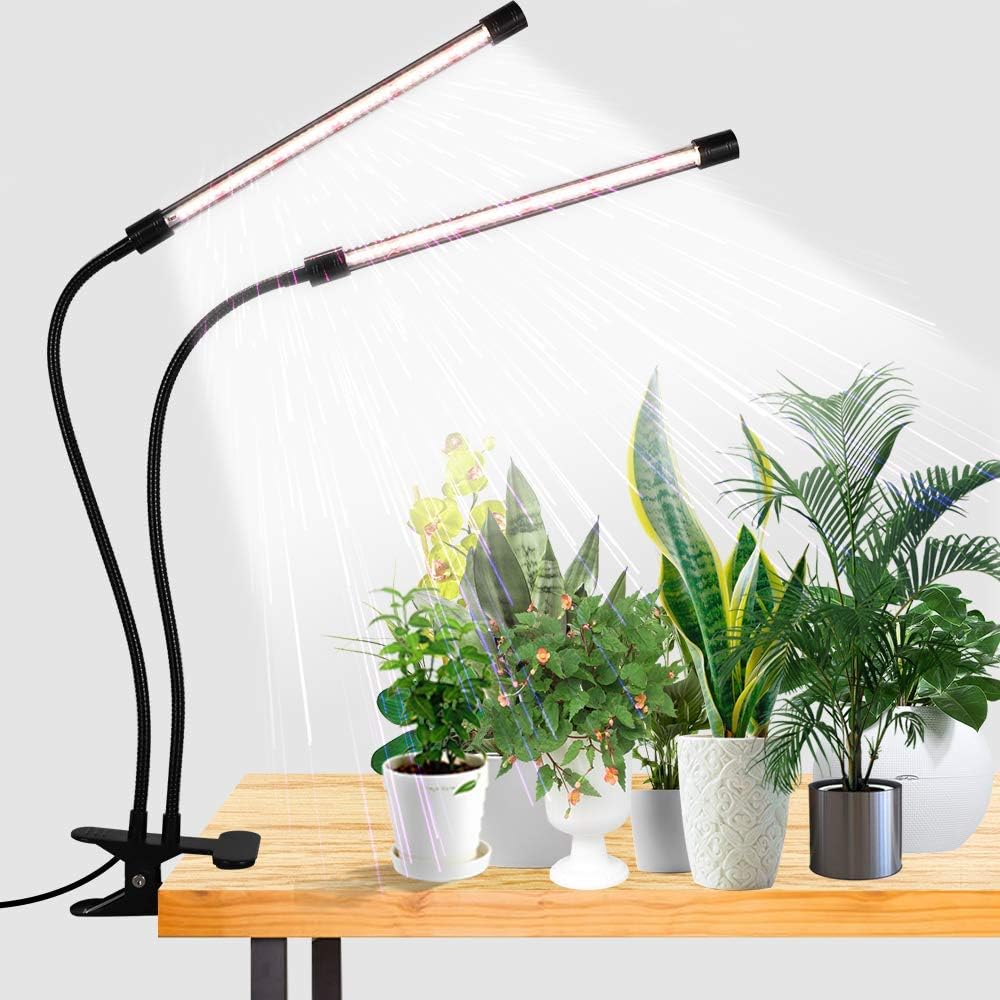
This GooingTop HY-021 is a compact clip-on grow light built for small houseplants, seedlings and shelf gardens. It uses 84 LEDs (white plus deep red) to deliver a 6000K full-spectrum output intended to mimic midday sun, with a high color-rendering output that also makes it pleasant as a reading lamp. Two flexible gooseneck heads and a strong clamp let you aim light precisely over pots and seed trays, while the attached remote provides 50%/100% dim levels and repeating timers at 4, 8 or 12 hours for hands-off scheduling. Practical benefits include low power draw (listed as roughly 10 W LED draw), a claimed 1 to 2 square meter coverage for seedlings, and an included timer that simplifies day/night cycles. Limitations are its design for small setups rather than large grow racks and the clip mounting limits placement compared with freestanding fixtures. The unit also relies on the corded remote instead of a smartphone app and the lifespan claim is typical of LEDs but not independently verifiable from the listing.
Best for: Buyers who want a simple, low-power, plug-and-play grow light to boost seedlings and a few houseplants on a desk or shelf and who value an easy-to-use timer and adjustable brightness.
Less Ideal for: Growers planning multi-shelf installations, larger vegetable grows, or who need networked or app-based control should consider larger bar lights or fixtures designed for commercial racks.
- Full-spectrum 6000K output with added 660 nm red LEDs to support vegetative growth and flowering
- Attached remote with dimming (50%/100%) and repeat timer settings (4/8/12 hours) for easy scheduling
- Flexible dual goosenecks and strong clamp enable precise positioning over small pots and seed trays
- High reported color rendering for comfortable viewing and accurate plant color assessment
- Low electrical draw around 10 W while covering small growing areas
- Clip-mount design and stated 1–2 m² coverage make it better suited to individual plants or small trays rather than large multi-shelf setups
- No smart app or wireless control option; remote is cord-attached which limits placement flexibility
Verdict: A compact, easy-to-use clip grow light that delivers full-spectrum light and convenient timer/dim controls for small indoor plant setups.
Aokrean Halo Full-Spectrum LED Grow Light with Base (3-Pack)

| Light Source Type | LED |
|---|---|
| Number of Light Sources | 48 |
| Wattage | 10 watts |
| Control Method | Touch |
| Power Source | Corded Electric |
This Aokrean Halo grow light is a small, versatile LED solution for indoor plants that offers a lot of convenience in a compact package. Each lamp uses 48 LEDs with a full-spectrum output and three lighting modes plus ten brightness levels, so it can be tuned for seedlings, vegetative growth, or supplemental light for potted houseplants. The lamp can be inserted into soil or mounted on the included base, and the telescoping pole adjusts up to about 26 inches to suit taller pots or change light intensity. Controls are touch-based and include a timer with preset cycles for automated daily on/off. Practical benefits include a neat decorative look, low power draw at 10 watts, and USB/Bluetooth connectivity for modern setups. Limitations are that the base requires the pot to help stabilize the stand and the unit is not water resistant, so it must stay dry and indoors. For balanced buyers looking for adaptable, easy-to-use grow lights for multiple indoor plants, this hits the mark.
Best for: Buyers who want a compact, adjustable grow light that works for seedlings and small to medium houseplants and who value easy controls and automated timers.
Less Ideal for: Growers needing heavy-duty, waterproof fixtures for greenhouse or outdoor use or those who require high-output lighting for large-scale indoor gardens.
- Full-spectrum LED array (48 LEDs) with three lighting modes and 10 brightness levels for flexible plant lighting
- Height-adjustable pole and dual mounting (insert in soil or use the base) to fit a range of pot sizes
- Touch controls with built-in timer options for automatic daily cycles
- Low power consumption (10 watts) and high efficiency for continuous use
- Base stability depends on placing a pot on it so it can be less secure with lighter containers
- Not water resistant so unsuitable for humid or outdoor environments
Verdict: Aokrean's Halo is a space-saving, full-spectrum grow light with adjustable height and timers that makes it easy to give small indoor plants the right light without complex setup.
Choosing the Right LED Grow Light for Lettuce: Key Factors to Consider
Spectrum and Tunability
Lettuce responds differently to blue and red wavelengths at various stages. Blue light promotes compact, sturdy leaves and is important during seedling and rosette stages, while a balanced mixture including red supports overall photosynthesis and faster canopy closure. A fixture with adjustable spectrum or multiple diodes lets you dial back intensity or shift the ratio as seedlings move to transplant or as heads form.
If a light only offers a fixed, narrow spectrum, you may see elongated or overly compact growth depending on the balance. For multi-stage lettuce production, a tunable or full-spectrum white option gives the most predictable, marketable results.
PAR Output and Canopy Coverage
Photosynthetic photon flux density (PPFD) and total usable PAR determine how much useful light the plants actually receive. Lettuce generally thrives at moderate PPFDs rather than the extreme intensities used for flowering crops, so choose a fixture that provides even coverage across trays or racks without large hot or dim spots.
Coverage matters more than peak output alone. A lamp that lists PPFD at multiple heights or has an even spread will reduce the need for frequent repositioning and ensures uniform head size across a tray.
Energy Use and Running Costs
LEDs are valued for lower electricity use, but wattage and efficiency vary widely between fixtures. For continuous or daily long photoperiods used with lettuce, small differences in efficacy translate into meaningful changes in monthly power consumption.
Compare system-level efficacy (micromoles per joule) and expected draw at your intended hang height and schedule. Efficient fixtures can keep operating temperatures lower as well, which reduces the need for additional ventilation.
Heat Output and Management
Lettuce is temperature-sensitive and can bolt or develop off-flavors if lights produce too much localized heat. Good thermal design-passive or active cooling-prevents hot spots directly under the fixture and allows lamps to be hung closer to the canopy for better light use.
Also consider how a fixture affects room microclimate. Units with high heat output may require added ventilation or spacing that changes your overall layout, so choose lights that match the thermal tolerance of your growing space.
Form Factor and Mounting Options
Lettuce is commonly grown in shallow trays, vertical racks, and short hydroponic towers. Fixtures with adjustable hangers, slim profiles, or stackable designs fit better into these setups and simplify maintenance and cleaning. A lamp that can be daisy-chained or mounted under shelving saves space and reduces cable clutter.
Rigid or bulky units are harder to position close to foliage and may force higher hanging heights, reducing usable light at the canopy. Check mounting range and available accessories when planning a layout.
Durability and Moisture Resistance
Indoor lettuce environments are often humid and occasionally wet from misting or nutrient solution. Fixtures with higher IP ratings or sealed LED arrays resist corrosion and failure. Durable construction also reduces long-term maintenance and the risk of electrical faults.
Look for housings and connectors rated for humid conditions and for designs that keep dust and moisture away from driver components to extend service life.
Matching Light Intensity to Lettuce Stages
Seedlings, leaf lettuce, and heading varieties have different ideal light intensities. Young seedlings do well under lower PPFD to avoid stress and stretching. As plants move into the vegetative phase, raise intensity gradually to increase leaf thickness and yield without triggering heat or water stress.
Measure PPFD at canopy level after installation and adjust hang height in 10 to 15 centimeter increments rather than changing output drastically. This approach keeps plants within the recommended light window for their stage and reduces risk of shocking delicate transplants.
- Lower light for germination and first true leaves.
- Increase intensity for dense leaf production and faster harvest cycles.
- Watch for signs of light stress such as bleaching or edge burn and adjust accordingly.
Managing Heat in Small Indoor Setups
Small rooms and closets trap heat quickly, so factor fixture heat into your ventilation plan. Use thermostats or thermometer probes at canopy level to monitor the microclimate and ventilate when temperatures rise above the crop's comfort zone.
Placement and spacing help. Fixtures with passive cooling are quieter but may run warmer. Active-cooled models move heat away from the canopy but may add noise and require clearance. Balance these tradeoffs based on your space constraints and noise tolerance.
- Keep at least a minimal airflow across the canopy to prevent pockets of warm, stagnant air.
- Position lights so that they do not press directly against plastic tray covers or reflective films.
Integrating LEDs Into Vertical and Shelf Systems
If you grow lettuce on shelves or in vertical racks, select thin-profile fixtures or strip lights that can be mounted under each shelf. Uniform spacing between tiers ensures consistent growth and simplifies harvest scheduling.
Dimmable or separately switched fixtures allow you to stagger photoperiods across tiers, which is useful when staggering planting for continuous harvests. Consider power delivery and cable routing when building multi-tier arrangements to keep things safe and serviceable.
- Measure usable space when planning tier heights including light hang clearance.
- Use daisy-chain capable fixtures to reduce outlet and cord clutter.
Light Spectrum Effects on Leaf Quality
Spectrum influences leaf thickness, color, and taste. More blue generally produces tighter, crisper leaves; excessive red can encourage elongation under some conditions. Full-spectrum white LEDs often give pleasing color rendering that helps you monitor plant health visually.
If flavor or leaf texture is a priority, favor fixtures that provide a balanced white output or let you boost blue during the formation period. Avoid relying solely on narrow-band purple LEDs if you need to judge color and defects during routine inspections.
- Use spectrum to tune leaf density and appearance.
- White or adjustable spectrums make it easier to diagnose nutrient or pest issues by sight.
Practical Maintenance and Safety Tips
Keep fixtures clear of dust and foliar spray to maintain efficiency and reduce fire risk. Turn off and unplug lights before wiping housings and use a soft brush or damp cloth for cleaning. Check manufacturer guidance for driver access and sealed components before attempting any service.
Ensure electrical connections are rated for humid indoor use and avoid running cords through areas prone to standing water. Regularly inspect hangers and mounts for corrosion or loosening, especially in humid or saline environments.
- Schedule quick visual checks each week and deeper inspections monthly.
- Replace or re-secure mounts that show wear to prevent fixture drops onto plants.
How We Chose the Best LED Grow Light for Lettuce
We prioritized features that directly affect lettuce growth and day-to-day handling. Key evaluation dimensions included spectral output and tunability because lettuce benefits from balanced blue and red light during different growth stages; photosynthetic photon flux density since adequate PAR controls growth rate and leaf density; energy efficiency to keep running costs and heat low in small indoor setups; heat management and fixture placement options to avoid bolting or leaf scorch; build quality and moisture resistance for long-term use in humid environments; and canopy coverage and mounting flexibility to suit trays, towers, and small racks. We excluded fixtures designed exclusively for tall floriculture or large-field production because their intensity, footprint, and mounting needs do not match typical lettuce setups. We also filtered out units with unclear spectral data or no published PAR numbers. The final list includes lights that offer measurable spectral information, reliable performance specs, and practical mounting or spacing options for hobby and small-scale growers.
FAQ
How close should LED lights be to lettuce?
Distance depends on fixture intensity. Many fixtures work well 20 to 45 centimeters above the canopy for lettuce, but check PPFD numbers at those heights. Start higher and move closer if plants show signs of low light.
Can I use regular full-spectrum LEDs meant for rooms?
Room white LEDs may be usable for seedlings but often lack the PAR intensity and spectral balance growers rely on. Purpose-built grow LEDs provide measured PAR output and spectrum details that make predictable results more likely.
Is it better to run LEDs on a long photoperiod for lettuce?
Lettuce usually benefits from longer photoperiods of about 14 to 18 hours depending on variety and desired growth rate. Balance light hours with temperature and water management to avoid rapid bolting or stress.
Will higher wattage speed up lettuce growth?
Higher wattage can increase available light, but what matters is PAR at the canopy and how evenly it is delivered. More intensity can speed growth up to a point, but excessive light without cooling or water adjustments can harm plants.
Do I need to change spectrum between seedlings and mature lettuce?
Adjusting spectrum can help: favor slightly more blue during early growth to keep plants compact, then add broader spectrum or maintain a balanced output as leaves bulk up. Many growers accomplish this by dimming or shifting fixtures rather than swapping lamps.
How do I prevent leaf scorch under LEDs?
Prevent scorch by monitoring canopy temperature, increasing hang height, or lowering intensity. Ensure good airflow and avoid placing hot fixtures directly against leaves. Use PPFD readings to confirm safe light levels.
Final Verdict
For lettuce, prioritize a fixture that delivers even PAR across your intended footprint, offers the right spectrum balance for leafy growth, and manages heat well in your space. Think about mounting flexibility and moisture resistance to match your rack, tray, or vertical system. Accept tradeoffs between absolute intensity and thermal impact. In many small-scale lettuce systems, a moderately powerful, efficient, and tunable LED produces the most consistent results while keeping running costs and heat manageable. Choose based on canopy coverage and spectrum first, then refine by efficiency and form factor.
