

Note: This article contains affiliate links. If you click on these links and make a purchase, I may earn a small commission at no extra cost to you. This helps support my research and content. Read my full affiliate disclosure here.
If you need to break new ground, loosen compacted clay, or prepare several vegetable beds each season, a gas garden tiller is the tool that gets the job done quickly. The right machine makes hard soil manageable, reduces physical strain, and delivers consistent till depth and forward progress in yards, homesteads, or allotments. This guide shortlists seven top options chosen for the kinds of jobs gardeners actually face, from light annual bed prep to heavier deep-turning chores. Below we evaluate core performance and durability factors like engine output, tine design, and maneuverability so you can pick a tiller that matches your soil, plot size, and maintenance preferences.
Top Picks at a Glance
| Best Overall The best all-around choice for most situations | NOVUS 18-Inch Rear Tine Tiller with 212cc Gas Engine |  |
| Best Quality Built to a higher standard if you want something more solid | EARTHQUAKE Victory Rear Tine Tiller (209cc Viper Engine) |  |
| Best Value The sweet spot between price and what you get | VEVOR 43CC Gas Tiller Cultivator with 4 Adjustable Steel Tines |  |
| Best Budget The cheapest option that still gets the job done reliably | KIOMGLE 52cc 2-Stroke Gas Garden Tiller – Handheld Rotary Cultivator |  |
| Highest Rated A top-rated pick with lots of positive feedback | Mutaomay 212cc Gas-Powered Front-Tine Garden Tiller (21" Width) |  |
| Most Popular A crowd favorite that many people choose with confidence | BILT HARD 46cc 4-Cycle Gas Tiller Cultivator, 16" Tilling Width |  |
| Best Seller A high-volume bestseller chosen again and again | Earthquake Versa 2-in-1 Front-Tine Tiller/Cultivator with 99cc Viper Engine |  |
NOVUS 18-Inch Rear Tine Tiller with 212cc Gas Engine

| Power Source | gas_powered |
|---|---|
| Tilling Width | 18" |
| Tilling Depth | 4"-10" |
| Transmission | Full Gear |
The NOVUS 18-inch rear tine tiller is designed to tackle large or overgrown garden plots with a 212cc 4-cycle gas engine and a full gear transmission for durable, consistent power. It uses 16 steel tines with selectable standard and counter-rotating modes and two forward speeds plus one reverse, so you can break new ground or work established beds and control how aggressively the soil is worked. The eight-position depth adjustment reaches down to 10 inches, which helps when loosening compacted subsoil or preparing deep vegetable trenches. Airless tires reduce downtime from flats and make moving the machine across rough terrain easier. Expect heavier weight and the usual gas-maintenance tasks such as fuel, oil, and periodic tuneups, and it will be more than you need for tiny raised beds or light surface cultivation. Assembly and storage require space, and the machine is best handled by someone comfortable with engine-driven equipment. For large plots where power, depth range, and durable transmission matter, this tiller performs like a workhorse.
Best for: Gardeners with large plots who need a robust, durable tiller to break compacted soil and prepare new beds and who prefer a powerful, engine-driven machine over lighter electric options.
Less Ideal for: Those with very small raised beds, limited storage, or who want a lightweight electric or handheld cultivator for light surface work.
- Powerful 212cc 4-cycle gas engine suitable for heavy soil and large gardens
- Full gear transmission for durable, low-maintenance power delivery
- Selectable tine rotation and multiple speeds allow both aggressive ground-breaking and gentler bed preparation
- Eight-position depth adjustment to till as deep as 10 inches for robust soil preparation
- Airless tires eliminate flat tires and improve mobility over rough terrain
- Requires regular gas engine maintenance and fuel handling
- Large and heavy so it needs storage space and may be hard to maneuver for small users
Verdict: If you need a hard-working, heavy-duty tiller for large gardens and compacted soil, this NOVUS rear tine model delivers the power and depth control to get the job done.
EARTHQUAKE Victory Rear Tine Tiller (209cc Viper Engine)

| Engine | 209cc 4-Cycle Viper |
|---|---|
| Tilling width | 16" |
| Max tilling depth | 10" |
| Wheels | 13" pneumatic self-propelled |
The Earthquake Victory is a purpose-built rear tine tiller for homeowners who need serious soil-turning power. Its 209cc Viper 4-cycle engine drives counter-rotating tines that aggressively break compacted soil and new ground, while a durable cast-iron transmission with bronze gears is designed for long service life. The machine tills a 16-inch swath up to about 10 inches deep, and features instant reverse so you can change direction or work close to fences without stopping to shift. Adjustable handlebars and a drag stake let you tune comfort and tilling resistance, and 13-inch pneumatic wheels make positioning and moving the unit over rough ground easier. Side tine shields and a rear smoothing shield help keep dirt away from plants and produce a neater seedbed. This tiller is best suited to gardeners who need a robust, long-lasting tool for breaking new ground and maintaining rows; it is heavier and more powerful than lightweight front-tine models, so storage, transport, and initial assembly should be planned for accordingly.
Best for: Buyers who want a robust, long-lasting rear tine tiller for breaking new ground and maintaining garden rows and who prioritize proven mechanical durability and user control over low weight.
Less Ideal for: Casual gardeners with very small plots, those who need a lightweight portable unit, or users who prefer low-maintenance electric alternatives.
- Powerful 209cc 4-cycle engine for sustained tilling performance
- Counter-rotating rear tines that break compacted soil and new ground effectively
- Instant Reverse handle for easy directional changes and tight-space maneuvering
- Durable cast-iron transmission with bronze gears for long-term reliability
- Adjustable handlebars and drag stake for operator comfort and better seedbed control
- Substantial weight makes it less convenient to move or lift for storage
- Requires gas engine maintenance and winterization unlike electric models
Verdict: Choose the Victory if you want a heavy-duty, mechanically durable rear tine tiller built to break new ground and deliver reliable season-after-season performance.
VEVOR 43CC Gas Tiller Cultivator with 4 Adjustable Steel Tines

| Engine displacement | 43CC |
|---|---|
| Tine count | 4 |
| Cultivation width | 11.8 in |
| Power source | Gas |
This VEVOR 43CC gas tiller is built to break and prep soil in vegetable beds, flower borders, and small plots without the need for a tractor. It uses a 43CC two-stroke engine to drive four steel tines across an 11.8 inch cultivation width and about 3.9 inch maximum depth. Typical use is stand-up cultivations where you set the skid assembly for shallow or deeper passes, engage the tines and walk the unit through the bed; handle-mounted switches and a brake help control operation. Notable features include an aluminum alloy gearbox for corrosion resistance, enlarged heat-dissipation ports and an air filter for more reliable running, plus a protective shield above the tines to limit debris. The unit’s large drive wheels and adjustable tines make it manageable in compact plots and for users who value straightforward assembly. Important limitations are the two-stroke engine characteristics such as the need to premix fuel and slightly higher vibration and noise compared with four-stroke models, and the relatively narrow width that makes it slower on larger acreage.
Best for: Best for homeowners who want a capable, no-frills gas tiller to prepare and maintain small to medium garden beds and who prioritize reliable, serviceable mechanical performance.
Less Ideal for: Not a good fit for users who need high-acreage coverage, a quieter low-vibration machine, or those who prefer four-stroke engines and lower emissions for frequent use.
- 43CC gas engine delivers strong power for turning compact garden soil
- Four steel adjustable front tines provide effective penetration and mixing
- Aluminum alloy gearbox and improved heat dissipation increase durability in regular use
- Protective shield and handle-mounted controls enhance operator safety and control
- Two-stroke engine requires fuel premix and typically runs louder and with more vibration than four-stroke alternatives
- Cultivation width is modest, so it is slower to cover larger areas
Verdict: A compact, durable gas tiller that gives practical power and control for homeowners working small to medium garden plots.
KIOMGLE 52cc 2-Stroke Gas Garden Tiller – Handheld Rotary Cultivator

| Power Source | Gasoline |
|---|---|
| Material Type | 65 Manganese Steel, Iron, Plastic |
| Operation Mode | Manual |
This KIOMGLE 52cc gas tiller is a handheld rotary cultivator built for basic soil preparation and light-duty garden work. It uses a two-stroke, air-cooled engine with a 0.2 gallon fuel tank and an idle range of about 2800–3200 rpm to deliver steady power for breaking compacted soil and pulling shallow weeds. The tiller offers a reported tillage width of roughly 17 inches and adjustable depth between about 2 and 4 inches, so it is useful for preparing small beds, vegetable plots, and garden rows where maneuverability matters. Controls are mounted on the handle with a throttle and on/off switch for one-touch starting and stopping, and large-diameter tires and a durable manganese steel tine assembly make pushing and operation easier. Expect solid value for straightforward cultivation tasks, but note this is a manual, handheld unit meant for lighter commercial or home use rather than large-scale deep plowing; assembly and routine two-stroke maintenance are required and vibration is typical for this class of tool.
Best for: Gardeners who need an affordable, maneuverable gas tiller for small to medium vegetable beds and quick seasonal prep and who prioritize low upfront cost over industrial power.
Less Ideal for: Landscapers or homeowners with large plots or compacted clay needing deep primary tilling should choose a heavier-duty rear-tine or larger tiller instead.
- Compact handheld design for maneuvering in small beds and tight spaces
- Two-stroke air-cooled engine with a 0.2 gal fuel tank for continuous short-run operation
- Reported 17-inch tillage width and adjustable shallow depth for quick bed preparation
- Durable tine materials (manganese steel and iron) for wear resistance
- Handle-mounted throttle and kill switch enable simple one-touch control
- Two-stroke engine requires fuel/oil mix and more frequent maintenance than four-stroke models
- Not intended for heavy-duty deep tilling or large acreage use
Verdict: A budget-friendly, compact gas handheld tiller that delivers straightforward, maneuverable soil prep for small gardens.
Mutaomay 212cc Gas-Powered Front-Tine Garden Tiller (21" Width)

| Power Source | gas_powered |
|---|---|
| Material Type | High Carbon Steel |
| Unit Count | 1 Count |
| Number of Items | 1 |
This Mutaomay gas tiller is built for heavy-duty garden work: a 212cc 4-stroke engine drives 4×4 steel tines across a 21-inch path to break compacted soil, mix compost, and prepare seedbeds. It uses forward and reverse transmission, which makes maneuvering in long rows and turning in tight spaces much easier than a simple push-only machine. The adjustable multi-height handlebar helps reduce operator strain during long sessions and the large fuel tank supports extended runs between refills. Notable practical benefits are the aggressive tine design for clay and hard-packed ground and the transport/cultivation wheel that switches modes for moving the machine versus deep tilling. Limits to consider are the machine weight and size, which make it better suited to larger plots and users comfortable with gasoline equipment, plus higher maintenance compared with electric models. For gardeners who need reliable, continuous power for big areas, this tiller delivers robust performance but requires regular fuel and engine upkeep.
Best for: Gardeners and small-scale farmers who need dependable, continuous power to prepare and maintain large beds or tough soil and who prioritize a rugged, workhorse machine over lightweight convenience.
Less Ideal for: Those with very small urban plots, users who prefer low-maintenance electric tools, or anyone unable or unwilling to perform regular engine maintenance.
- Powerful 212cc 4-stroke engine for sustained performance on large or compacted plots
- Forward and reverse transmission for easier maneuvering and better control
- Heavy-duty 4×4 steel tines that penetrate hard soil and resist clogging
- Adjustable multi-height handlebar reduces operator fatigue during long jobs
- Heavy overall weight makes transport and storage more difficult
- Requires gasoline engine maintenance and occasional tuneups
Verdict: If you need a robust, gas-powered tiller that can reliably break hard soil and cover large garden areas, this Mutaomay 212cc front-tine tiller is built for the job.
BILT HARD 46cc 4-Cycle Gas Tiller Cultivator, 16" Tilling Width

| Engine | 46cc 4-Cycle |
|---|---|
| Power | 1.9 HP |
| Tilling Width | 16 in. |
| Operation Mode | Gas |
The BILT HARD 46cc 4-cycle tiller is a straightforward gas-powered cultivator aimed at homeowners who need a capable machine for regular garden bed preparation. Its 46cc engine runs on separate gasoline and oil so there is no pre-mixing, and the unit drives six steel tines arranged for a 16-inch working width and up to roughly 8-inch depth in softer soils. Two-position adjustable wheels and foldable handles make it easier to move, store, and transport between beds. Cushioned grips and one-hand throttle control reduce operator fatigue during longer runs. Practical benefits include the 4-stroke engine's smoother operation and lower emissions compared with 2-stroke models and a tine arrangement that mixes compost or fertilizer into soil effectively. Limitations to note are its modest 1.9 hp output and relatively narrow 16-inch width, which mean the machine is best for medium to large garden plots rather than large acreage or very hard, compacted ground where a heavier 24–30 inch tiller would be faster. Routine engine maintenance and safe fueling practices are required for reliable performance.
Best for: Gardeners who want a reliable, easy-to-maintain gas tiller to prepare and maintain medium to large vegetable beds and borders without dealing with gas-oil mixing.
Less Ideal for: Property owners needing high-capacity tilling for several acres or contractors who require a wider, heavier-duty commercial tiller for hardpan or rocky ground.
- 46cc 4-stroke engine with separate oil reservoir avoids gas-oil mixing and runs smoother than 2-stroke units
- Six steel tines and 16-inch cutting width provide thorough soil mixing for garden beds
- Foldable handles and 2-position transport wheels simplify storage and movement
- Cushioned grips and one-hand throttle control reduce operator fatigue during extended use
- Relatively low horsepower and narrow width make it slower on very large or heavily compacted areas
- Not suited for breaking heavy clay or rocky soil without multiple passes
Verdict: A practical, easy-to-maintain 4-stroke gas tiller for homeowners who want efficient soil preparation for medium to large garden beds.
Earthquake Versa 2-in-1 Front-Tine Tiller/Cultivator with 99cc Viper Engine
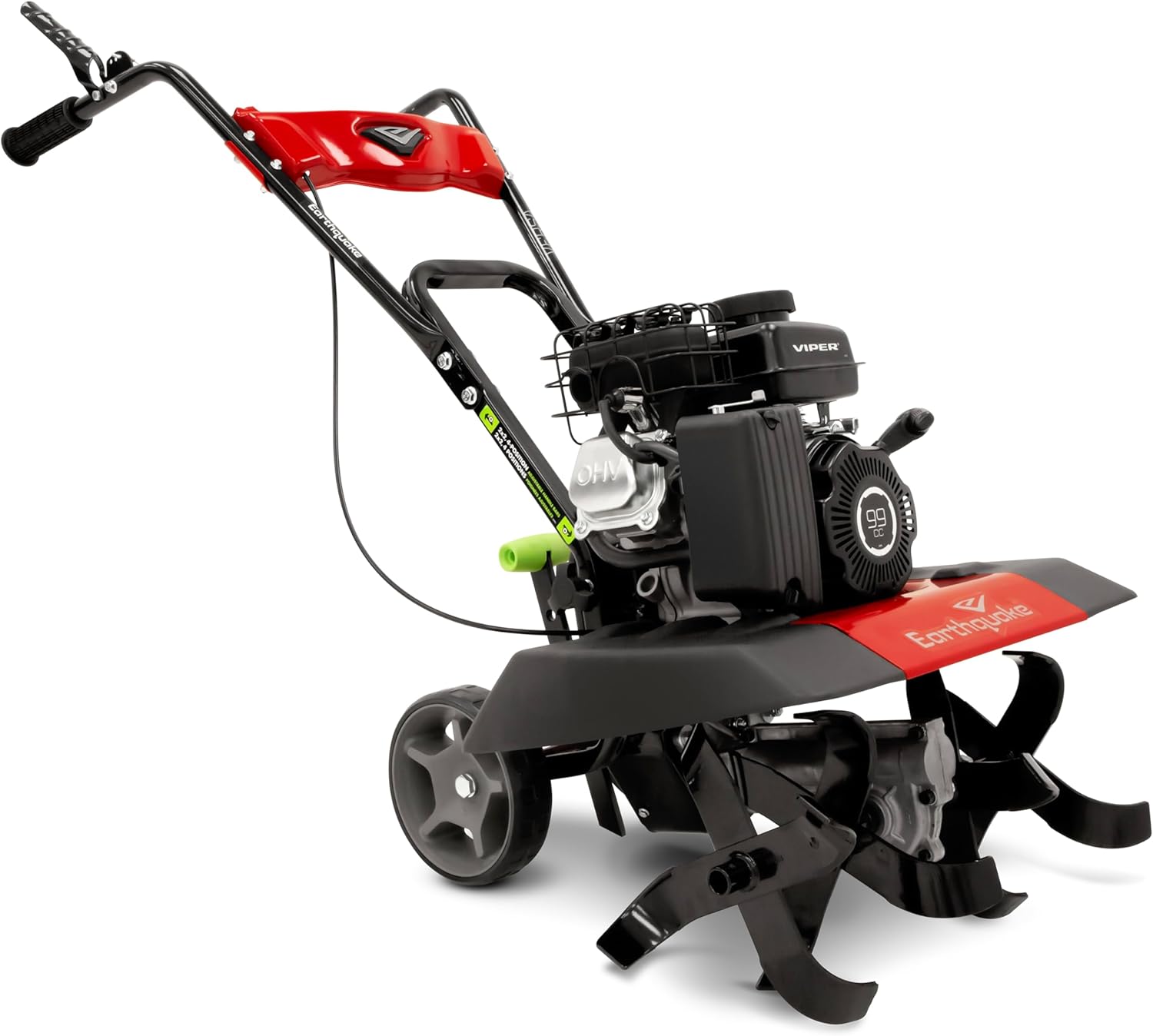
| Engine | 99cc 4-cycle Viper |
|---|---|
| Tilling width | Adjustable 11" to 21" |
| Tilling depth | Up to 11" |
| Power source | Gas powered |
The Earthquake Versa is a two-in-one front-tine tiller and cultivator built around a 99cc 4-cycle Viper engine; it handles both preparing large garden beds and working narrow rows by removing outer tines and side shields. In tiller mode the 21-inch maximum width and deep 11-inch depth let you break compacted soil and prepare seedbeds quickly, while the 11-inch cultivator setting makes it easy to work between plants and along fences. Tool-less removal of outer tines and integrated transport wheels speed conversion and moving the unit around the yard. The low center of gravity and adjustable handlebar height improve control during use, and the onboard wheels reduce lifting when transporting. Because it is gas powered, expect routine engine maintenance, noise, and fuel handling compared with electric alternatives, and its front-tine design is better for garden rows than heavy-duty sod or clay in large acreage jobs. For homeowners who want a reliable, convertible gasoline tiller for regular garden prep and midseason cultivating, the Versa covers both roles without specialized tools.
Best for: Home gardeners who want a dependable gas machine that can both prepare full beds in spring and work narrow rows midseason, and who prioritize a versatile, easy-to-convert tool over quieter electric alternatives.
Less Ideal for: People who need a quiet, low-maintenance electric option or who must till very large areas of heavy sod or clay where a rear-tine, heavy-duty machine would be more efficient.
- Convertible 2-in-1 design switches quickly between 21" tiller and 11" cultivator without tools
- Powerful 99cc 4-cycle Viper engine suitable for breaking compacted garden soil
- Tilling depth up to 11" lets you prepare deep seedbeds and remove stubborn roots
- Integrated transport wheels and adjustable handlebar height improve maneuverability and handling
- Gas engine requires regular maintenance, fuel, and produces noise and exhaust
- Front-tine layout is less efficient than rear-tine tillers for very large or heavy sod removal
Verdict: Choose the Versa if you want one gas tiller that reliably converts to a narrow cultivator so you can both prep large beds and work tight rows with the same machine.
Choosing the Right Gas Garden Tiller: Key Factors to Consider
Engine Power and Torque
Engine output directly affects a tiller's ability to break compacted soil and pull tines through roots and clay. Higher torque at low RPM reduces stalling when you hit dense spots, so gardeners with heavy clay or sod should prioritize engines designed for low-end grunt.
Power also affects how many passes you need to achieve a workable tilth. An underpowered machine will bog down and slow you, increasing fuel use and effort. Consider how often you will use the tiller and the typical soil resistance when deciding on engine size.
Tine Design and Material
Tine shape, thickness, and steel quality determine cutting efficiency and durability. Fluted or L-shaped tines work differently: some slice and mix soil more aggressively while others are built for forward drive and edging. Thicker, heat-treated steel tines resist bending and need less frequent replacement in rocky or rooty ground.
Tine arrangement and working width affect how much soil a single pass turns and how easy the tool is to control along beds and borders. Removable or replaceable tines simplify repairs and extend the machine's working life.
Transmission and Drive System
How power gets to the wheels and tines shapes control and workload. Gear-driven transmissions deliver steady torque and long service life, while belt-driven systems can be lighter and easier to repair but may slip under heavy loads. Variable speed or multiple forward gears help match ground conditions and walking pace.
Reverse gear and reliable forward engagement are important for maneuvering around plants, shifting direction in tight spaces, and clearing out blockages without excessive strain.
Maneuverability and Weight
A balance between weight and control is key. Heavy machines dig deeper and resist being pushed around by tough soil, but they are harder to transport, lift into storage, and turn in small plots. Lighter tillers are easier to handle in raised beds and narrow rows but may struggle on compacted ground.
Handle height, width adjustment, and steering responsiveness determine how comfortable you are during extended use. Look at wheel size and whether wheels can be raised or lowered to change tilling depth and transit behavior.
Ease of Maintenance
Routine upkeep keeps a gas tiller running safely and extends its service life. Accessible air filters, simple carburetor access, and straightforward tine removal reduce the time it takes to service the machine. Availability of common replacement parts like belts, spark plugs, and tines matters for long-term ownership.
Consider whether the design allows winterizing and fuel stabilization steps without disassembly. Machines with clear maintenance points make seasonal storage and quick repairs less of a chore.
Transportability and Storage
Where you keep and how you move the tiller affects the practicality of ownership. Foldable handles, removable tines, and compact footprints make it easier to store a tiller in a shed or garage. Lightweight models and those with large, pneumatic wheels are easier to load onto a trailer or move across uneven yard terrain.
Also consider accessibility for non-mechanically inclined gardeners; simpler folding or quick-release features reduce the setup time and lower the chance of accidental damage during transport.
Matching Tiller Size to Plot and Tasks
Think about the area and type of work you will do most often. Narrow, lighter tillers are ideal for raised beds, vegetable rows, and working between established plants. Wider, heavier units cover larger areas faster and are better suited to creating new beds or tackling compacted soil.
If you have a mix of tasks, choose a unit that offers adjustable working width or a balance between power and maneuverability. That flexibility saves time versus owning two specialized machines.
- Small plots: prioritize low weight and narrow width for control.
- New bed creation: prioritize engine torque and sturdy tines.
- Mixed-use yards: look for adjustable widths and multiple speed settings.
Working in Rocky or Root-Filled Soil
Rocky and root-filled ground increases wear and the chance of tine damage. In these conditions, sturdier tines and a robust transmission reduce downtime. Expect to clear large debris by hand before tilling to protect the machine and improve results.
Consider models with easily replaceable tines and accessible drivetrain components. A design that allows quick clearing of obstructions prevents small issues from turning into major repairs.
- Clear visible large stones and roots before tilling where possible.
- Use shallower passes to expose and remove hidden obstacles gradually.
- Check tines and drivetrain often during the first few passes.
Fuel, Noise, and Environmental Considerations
Gas machines deliver power and run time but produce exhaust and noise. If you work in a small suburban plot, consider neighbors and local restrictions on noisy equipment, and plan jobs at suitable times. Proper muffling and maintenance can reduce noise and emissions over time.
For longer sessions, larger fuel tanks or easier refueling access reduce interruptions. Also weigh the tradeoff between outright power and fuel consumption based on how often you will use the tiller.
- Plan heavy tilling for times when noise is least disruptive.
- Keep the engine tuned to minimize emissions and improve fuel efficiency.
Routine Maintenance Checklist
Create a seasonal checklist that includes air filter cleaning, spark plug inspection, belt tension checks, tine sharpening or replacement, and fuel stabilization. Regular small steps prevent larger failures and keep performance consistent across seasons.
Document torque settings, belt routing, and recommended oil type so maintenance is faster. Many issues arise from neglected belts and clogged filters rather than core engine failures.
- After each use: remove debris from tines and check for damage.
- Monthly during the season: inspect belts and drivetrain components.
- Season end: drain or stabilize fuel and fog the engine as recommended.
Safety Practices for Tilling
Always wear eye protection, sturdy footwear, and hearing protection when operating a gas tiller. Keep hands and feet away from tines at all times and disengage the engine before unclogging or making adjustments.
Be mindful of slopes and avoid operating across steep embankments. Use low gear and take shallow passes on inclines to avoid loss of control.
- Inspect the area for hidden hazards before starting.
- Never attempt repairs with the engine running.
- Use caution when transporting a fueled machine and secure it properly.
How We Chose the Best Gas Garden Tiller
We focused on attributes that affect real-world digging, longevity, and day-to-day handling in home gardens. Key evaluation criteria included engine power and torque because that determines how reliably a tiller pulls through compacted soil and roots. We assessed tine configuration and material to judge cutting, mixing, and resistance to bending or wear. Transmission and drive options were reviewed for forward control and ease of reversing or changing speeds. Ease of transport, setup, and routine maintenance were considered since gardeners often store and service machines seasonally. Vibration, handle ergonomics, and width adjustment matter for comfort and precision, so those dimensions were part of the selection filter. We excluded units that are underspecified for home heavy soil or that rely solely on battery power, since the article scope is gas-powered tillers. We also filtered out commercial-only machinery whose size and fuel needs exceed typical residential use. The final picks balance sufficient engine capacity, robust tines, serviceability, and practical handling for gardeners facing a range of soil conditions.
FAQ
What size tiller is best for small raised beds?
For narrow raised beds, a compact tiller with a working width under 18 inches and lower weight offers the best control. It lets you work between beds without disturbing edging and is easier to lift or load for storage.
How deep can a gas tiller typically dig?
Depth varies by model and power, but most residential gas tillers reach roughly 6 to 12 inches over multiple passes. Heavier machines with more torque can turn deeper in a single pass, while shallower passes reduce strain on the engine and tines.
Can I use a gas tiller in clay soil without damaging it?
Yes, with the right approach. Use a powerful unit that produces steady low-end torque and take multiple shallow passes rather than one deep pass. Moistening extremely dry clay slightly can help, but avoid working overly wet clay when it smears and compacts.
How often should tines be replaced or sharpened?
Frequency depends on soil conditions, especially rocks and roots. Inspect tines after each season and replace or sharpen when they show noticeable wear, bending, or loss of cutting edge. Many gardeners find annual inspection and occasional replacement enough.
Is it hard to maintain a gas garden tiller?
Maintenance is straightforward if you follow a basic schedule: clean debris after use, change oil and air filters per the manual, check belts and tines, and winterize fuel. Simpler designs with easy access points make these tasks quicker for the average gardener.
Are there safety steps specific to gas tillers I should know?
Key safety steps include stopping the engine and removing the spark plug wire before servicing, wearing eye and hearing protection, clearing the work area of debris, and using shallow passes on slopes. These precautions reduce the risk of injury and machine damage.
Final Verdict
Choose a gas garden tiller that matches the hardest regular task you expect to perform. Prioritize engine torque and sturdy tines if you often break new ground or work heavy clay. If your plots are small or tight, favor maneuverability, lower weight, and adjustable widths. Accept tradeoffs between power and ease of storage. Focus on maintenance access and replaceable wear parts to keep the machine productive season after season. With the right balance, a gas tiller will speed prep, reduce manual labor, and last through many planting cycles.
