

Note: This article contains affiliate links. If you click on these links and make a purchase, I may earn a small commission at no extra cost to you. This helps support my research and content. Read my full affiliate disclosure here.
If you grow plants indoors, in a greenhouse, or on a dim patio, a supplemental grow light can make the difference between leggy seedlings and robust, productive plants. Choosing the right unit matters because light intensity, spectrum, and how a fixture disperses heat all change how a plant develops leaves, roots, and flowers. This guide covers six shortlisted options that suit a range of indoor gardening setups-from seed-starting trays to full-shelf veg racks-and explains the practical tradeoffs you should expect. We evaluated these picks for spectrum control, energy draw, heat management, and mounting versatility so you can match a light to your space and plants. Read on for dosing, placement tips, and the decision factors that will steer you to the right supplemental grow light.
Top Picks at a Glance
| Best Quality Built to a higher standard if you want something more solid | AC Infinity IONBEAM S16 Full-Spectrum 16" LED Grow Light Bars (4-pack) |  |
| Best Value The sweet spot between price and what you get | Barrina Orbgrow OG09 Puck Grow Light, 36W (4×9W), 5000K, Timer, Pack of 4 |  |
| Best Budget The cheapest option that still gets the job done reliably | DOMMIA Under-Shelf USB LED Grow Light Panel, 2-Pack |  |
| Highest Rated A top-rated pick with lots of positive feedback | GLOWRIUM G2 Floor Grow Light with Adjustable Stand | 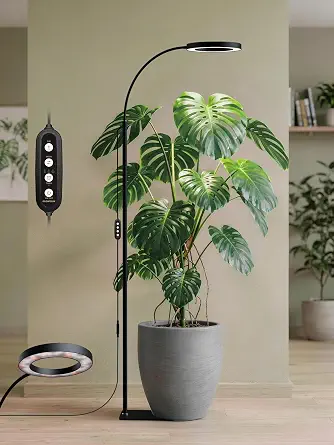 |
| Most Popular A crowd favorite that many people choose with confidence | GooingTop HY-021 6000K Full-Spectrum Clip Grow Light |  |
| Best Seller A high-volume bestseller chosen again and again | Aokrean Halo Full-Spectrum LED Grow Light with Base (3-Pack) |  |
AC Infinity IONBEAM S16 Full-Spectrum 16" LED Grow Light Bars (4-pack)

| Light Output Maximum | 3000 lumens |
|---|---|
| Light Source Wattage | 15 watts |
| Mounting Type | Magnetic Mount |
| Light Source Special Features | Dimmable, Programmable |
| Number of Light Sources | 16 |
The AC Infinity IONBEAM S16 supplies targeted supplemental light to fill shadowed zones in a grow tent or under-cabinet setup. Each kit includes four slim 16-inch aluminum bars with Samsung LM301H EVO LEDs that deliver efficient full-spectrum output and a reported 3.14 µmol/J PPE, so you get high usable light without excessive heat. The bars mount magnetically for fast placement on metal frames or steel strips provided, and the included digital controller offers ten intensity levels plus daily scheduling so you can tailor photoperiods and ramp light levels over a crop cycle. Practical benefits include low-profile installation where space is tight, programmable routines to automate lighting, and strong lumen output for inter-canopy boost. Limitations: this is supplemental lighting rather than a high-power primary fixture for large single-layer canopies, and full app-based automation requires AC Infinity controller models sold separately. For users wanting compact, efficient supplemental bars that integrate into an automated grow, the S16 is a capable choice.
Best for: Serious growers who prioritize light performance and want a compact supplemental solution to boost yields in tents, under cabinets, or layered shelving while using scheduling to optimize cycles.
Less Ideal for: Casual hobbyists who need a single high‑power fixture to light a large, single-layer canopy or buyers who prefer an all-in-one unit with built-in WiFi control included.
- Full-spectrum Samsung LM301H EVO LEDs for high efficiency and usable PAR output
- Slim aluminum bars and magnetic mounts enable low-profile placement in tight spaces
- Programmable digital controller with ten intensity levels and daily scheduling
- Includes four bars to cover inter-canopy or under-shelf areas without bulky fixtures
- Designed primarily as supplemental lighting and may not replace a full‑coverage primary fixture for large single-layer grows
- App automation requires purchase of compatible AC Infinity controller model separately
Verdict: Buy this if you need efficient, low-profile supplemental grow bars that deliver high-quality full-spectrum light and precise scheduling to boost yields in constrained spaces.
Barrina Orbgrow OG09 Puck Grow Light, 36W (4×9W), 5000K, Timer, Pack of 4

| Wattage | 36 watts (4×9W) |
|---|---|
| Color Temperature | 5000 Kelvin |
| CRI | 98 |
| Power Source | AC |
| Special Features | Linkable up to 12, magnetic mount, timer, 5 brightness levels |
The Barrina Orbgrow OG09 is a compact puck-style grow light pack that delivers full-spectrum output from four 9W modules (36W total) for supplemental indoor plant lighting. It is typically used over small shelves, propagation trays, or clustered potted plants where space is limited. Key features include magnetic and zip-tie mounting, the ability to link up to 12 pucks in series, five brightness levels, and four timer settings (4/8/12/16 hours) so you can create a repeatable light schedule without extra controllers. The 5000K spectrum and high CRI (98) mean colors look natural and the LEDs are tuned for photosynthetic use, while a focused lens and reported PPFD of 1080 μmol/m²/s at about 10 cm indicate strong output for seedlings and vegetative growth at close range. Practical benefits are easy installation, flexible placement, and built-in scheduling and dimming that save time for busy growers. Limitations are that the compact pucks are best for close, targeted coverage rather than lighting larger canopies and you will need to plan spacing or combine multiple units to cover wider racks.
Best for: A practical indoor gardener who wants an easy, configurable supplemental light for seed trays, small shelves, or clustered houseplants and prefers quick installation with built-in timers and dimming.
Less Ideal for: Large canopy growers or those needing wide, uniform coverage should choose linear fixtures or higher-output panel lights instead.
- Full-spectrum LEDs with CRI 98 for accurate color rendering and photosynthetic wavelengths
- Built-in timer (4/8/12/16 h) and five dimming levels for hands-off scheduling and light control
- Linkable design and magnetic/zip-tie mounts make it easy to expand and position on shelves
- High reported PPFD at close distance for strong seedling and veg-stage light intensity
- Small puck form factor limits effective coverage area per unit so multiple units are needed for larger setups
- Designed for close proximity use which may require careful height adjustment to avoid hotspots
Verdict: Choose this pack if you need a compact, easy-to-install supplemental grow light system with built-in timers and dimming for small racks, propagation trays, or clustered houseplants.
DOMMIA Under-Shelf USB LED Grow Light Panel, 2-Pack

| Wattage | 10 watts |
|---|---|
| Light Source Type | LED |
| Power Source | Corded Electric (USB 5V 2A) |
| Mounting Type | Under Cabinet Mount |
| Number of Light Sources | 2 |
The DOMMIA two-panel grow light is a compact LED solution made for cramped shelves, plant cabinets, and seedling trays. Each 4" square panel is ultra-thin and mounts with adhesive or magnets so you can position light directly over small pots or seedling flats. The panels provide a full 380–780nm spectrum with built-in optical lenses that concentrate light downward; the listing reports about 260 µmol/m²/s PPFD at 4 inches, which is well suited to germination and early vegetative growth. Controls live on a USB-powered smart controller with a 6/12/16 hour auto timer and four brightness levels, plus memory to restore settings after power loss. USB power and a 6 ft cord make it easy to use with a power bank or USB adapter, and the low-voltage design is safer around humid setups. Expect good coverage for a few seed trays or multiple small pots, but larger flats or multiple shelving tiers will need additional panels for even light. The construction is lightweight aluminum and plastic which keeps cost and bulk down but may be less robust than heavier fixtures.
Best for: Ideal for home gardeners starting seeds or growing a few small seedlings on a tight budget who need a low-profile, easy-to-install light for shelves and cabinets.
Less Ideal for: Not a good fit for growers who need high output over large trays, full shelving racks, or consistent commercial-scale lighting across many plants.
- Ultra-slim 4"x4" panels mount easily under shelves or inside cabinets.
- Full 380–780nm spectrum with optical lenses for focused light on seedlings.
- Built-in 6/12/16H auto timer and 4 brightness levels for set-and-forget use.
- USB 5V power and 6 ft cord work with adapters, power banks, and USB hubs.
- Small panel size limits effective coverage per unit, so multiple panels are needed for larger seedling batches.
- Lightweight plastic/aluminum build may feel less durable than heavier fixtures.
Verdict: A very affordable, ultra-slim USB LED panel set that gives seedlings focused full-spectrum light and automatic timers for small-scale indoor starts.
GLOWRIUM G2 Floor Grow Light with Adjustable Stand

| Light Source Type | LED |
|---|---|
| Additional Features | Adjustable Height, Dimmable, Flexible, Full Spectrum, Timer |
| Wattage | 20 watts |
| Number of Light Sources | 66 |
| Controller Type | Remote Control |
The GLOWRIUM G2 is a floor-style grow lamp designed to give large indoor plants reliable supplemental light without complicated installation. It uses 66 full-spectrum LEDs in a 20W fixture mounted on a three-section aluminum stand so you can raise the lamp to match a Monstera's canopy as it grows. Controls include stepless 10 to 100% dimming across six levels, a 3/9/12-hour auto timer, and a remote plus in-line push-button operation for quick adjustments. Practical features such as a wide base, anti-slip design, 13-foot power cord, and good heat dissipation make it easy to position near living-room plants and keep running safely for long periods. The lamp offers three light modes that combine warm, cool, and red spectrums to support rooting, vegetative growth, and flowering stages. Limitations are that it is meant for indoor use only and has a freestanding footprint, so it takes floor space and is less suitable for very small apartments or for growers who need wall- or ceiling-mounted fixtures.
Best for: Houseplant owners who want a straightforward, durable lamp to give a growing Monstera reliable, adjustable supplemental light without fussing with mounts or complex setups.
Less Ideal for: People with very limited floor space, those who need ceiling- or wall-mounted lighting, or growers who require IP-rated fixtures for humid rooms.
- Adjustable three-section stand lets you raise the light to match Monstera height and changing canopy needs
- Full-spectrum LED array with warm, cool, and red modes supports all growth stages
- Stepless 10–100% dimming and 3/9/12-hour timer add automation and precise intensity control
- Aluminum construction improves heat dissipation for longer runtime and durability
- Long 13-foot power cord and stable anti-slip base make placement flexible and secure
- Freestanding design requires floor space and may not fit very tight or high-shelf setups
- Specified as indoor use only so it is not suitable for humid outdoor or unprotected patio placements
Verdict: A practical, easy-to-use floor grow light that gives Monsteras adjustable full-spectrum illumination as they grow.
GooingTop HY-021 6000K Full-Spectrum Clip Grow Light
| Power Source | Corded Electric |
|---|---|
| Color Temperature | 6000 Kelvin |
| Light Output Maximum | 2500 lumens |
| Light Source Special Features | Dimmable |
| Number of Light Sources | 84 |
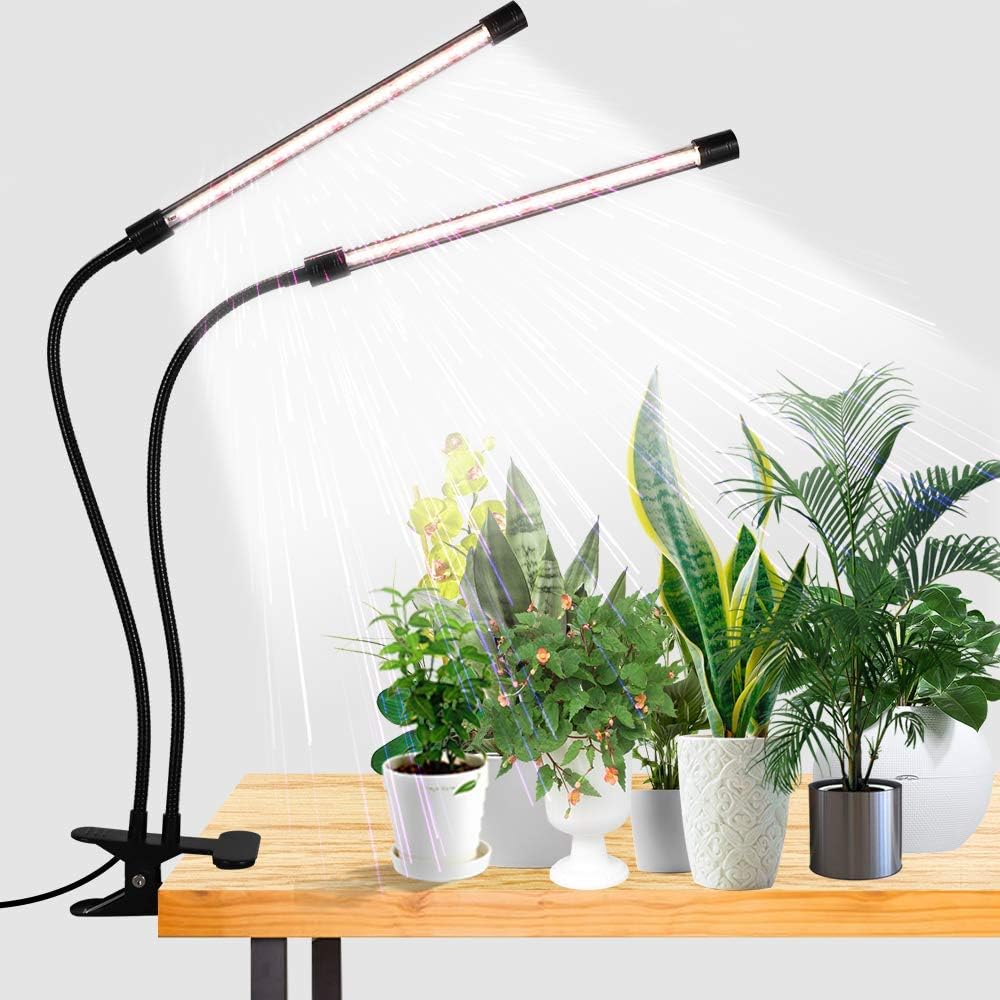
This GooingTop HY-021 is a compact clip-on grow light built for small houseplants, seedlings and shelf gardens. It uses 84 LEDs (white plus deep red) to deliver a 6000K full-spectrum output intended to mimic midday sun, with a high color-rendering output that also makes it pleasant as a reading lamp. Two flexible gooseneck heads and a strong clamp let you aim light precisely over pots and seed trays, while the attached remote provides 50%/100% dim levels and repeating timers at 4, 8 or 12 hours for hands-off scheduling. Practical benefits include low power draw (listed as roughly 10 W LED draw), a claimed 1 to 2 square meter coverage for seedlings, and an included timer that simplifies day/night cycles. Limitations are its design for small setups rather than large grow racks and the clip mounting limits placement compared with freestanding fixtures. The unit also relies on the corded remote instead of a smartphone app and the lifespan claim is typical of LEDs but not independently verifiable from the listing.
Best for: Buyers who want a simple, low-power, plug-and-play grow light to boost seedlings and a few houseplants on a desk or shelf and who value an easy-to-use timer and adjustable brightness.
Less Ideal for: Growers planning multi-shelf installations, larger vegetable grows, or who need networked or app-based control should consider larger bar lights or fixtures designed for commercial racks.
- Full-spectrum 6000K output with added 660 nm red LEDs to support vegetative growth and flowering
- Attached remote with dimming (50%/100%) and repeat timer settings (4/8/12 hours) for easy scheduling
- Flexible dual goosenecks and strong clamp enable precise positioning over small pots and seed trays
- High reported color rendering for comfortable viewing and accurate plant color assessment
- Low electrical draw around 10 W while covering small growing areas
- Clip-mount design and stated 1–2 m² coverage make it better suited to individual plants or small trays rather than large multi-shelf setups
- No smart app or wireless control option; remote is cord-attached which limits placement flexibility
Verdict: A compact, easy-to-use clip grow light that delivers full-spectrum light and convenient timer/dim controls for small indoor plant setups.
Aokrean Halo Full-Spectrum LED Grow Light with Base (3-Pack)

| Light Source Type | LED |
|---|---|
| Number of Light Sources | 48 |
| Wattage | 10 watts |
| Control Method | Touch |
| Power Source | Corded Electric |
This Aokrean Halo grow light is a small, versatile LED solution for indoor plants that offers a lot of convenience in a compact package. Each lamp uses 48 LEDs with a full-spectrum output and three lighting modes plus ten brightness levels, so it can be tuned for seedlings, vegetative growth, or supplemental light for potted houseplants. The lamp can be inserted into soil or mounted on the included base, and the telescoping pole adjusts up to about 26 inches to suit taller pots or change light intensity. Controls are touch-based and include a timer with preset cycles for automated daily on/off. Practical benefits include a neat decorative look, low power draw at 10 watts, and USB/Bluetooth connectivity for modern setups. Limitations are that the base requires the pot to help stabilize the stand and the unit is not water resistant, so it must stay dry and indoors. For balanced buyers looking for adaptable, easy-to-use grow lights for multiple indoor plants, this hits the mark.
Best for: Buyers who want a compact, adjustable grow light that works for seedlings and small to medium houseplants and who value easy controls and automated timers.
Less Ideal for: Growers needing heavy-duty, waterproof fixtures for greenhouse or outdoor use or those who require high-output lighting for large-scale indoor gardens.
- Full-spectrum LED array (48 LEDs) with three lighting modes and 10 brightness levels for flexible plant lighting
- Height-adjustable pole and dual mounting (insert in soil or use the base) to fit a range of pot sizes
- Touch controls with built-in timer options for automatic daily cycles
- Low power consumption (10 watts) and high efficiency for continuous use
- Base stability depends on placing a pot on it so it can be less secure with lighter containers
- Not water resistant so unsuitable for humid or outdoor environments
Verdict: Aokrean's Halo is a space-saving, full-spectrum grow light with adjustable height and timers that makes it easy to give small indoor plants the right light without complex setup.
Choosing the Right Supplemental Grow Light: Key Factors to Consider
Spectrum and Plant Stage
Light spectrum affects photosynthesis and morphology. Blue-rich light encourages compact vegetative growth and strong leaf development, while red wavelengths support flowering and fruiting. Full-spectrum fixtures aim to mimic natural daylight and can simplify switching between stages without swapping bulbs or fixtures.
For seed starting and young seedlings, prioritize fixtures with more blue output or adjustable spectrum so you can avoid stretching. For flowering or fruiting crops, ensure the fixture provides adequate red output or supports supplemental far-red if you need to encourage bloom set.
Measured Light Output and Coverage
Nominal wattage does not reliably indicate how much usable light reaches plants. Look for metrics such as PPFD (photosynthetic photon flux density) at working distances or a stated coverage area at a given height. These measurements tell you whether a single fixture can evenly light a tray, a shelf, or a small bench.
Consider how many watts or fixtures you need to reach target PPFD for your crop. Seedlings and herbs usually need lower PPFD than high-light fruiting vegetables. Match the fixture placement and quantity to the canopy footprint rather than relying on advertised wattage alone.
Energy Efficiency and Operating Cost
Running lights for long daily periods can add significant electrical load. Energy-efficient LEDs deliver more photons per watt and reduce heat output compared with older technologies. Checking the photon efficacy (micromoles per joule) or manufacturer efficiency claims helps forecast operating cost.
Also consider dimming capability and timers. Being able to lower output during lower-light seasons or run a schedule reduces energy use and gives you more control over daily photoperiods without manual intervention.
Thermal Management and Fixture Durability
Heat affects both plants and fixture longevity. Fixtures that run hot can stress plants, especially if placed close to delicate seedlings. Good thermal design-such as aluminum heat sinks, active cooling, or well-ventilated housings-keeps LED junction temperatures down and preserves light output over time.
Durability also matters in humid greenhouse environments. Look for corrosion-resistant materials, proper sealing around electronics, and serviceable parts. Poor thermal management often correlates with premature lumen depreciation and shorter useful life.
Mounting Options and Adjustability
How a fixture mounts and how easily you adjust its height determines how well it integrates into your workflow. Chains, ratchet hangers, adjustable rails, and shelf clip systems each fit different setups. Rapid height adjustment is especially useful during the seedling-to-vegetative transition when you shorten distance to increase intensity.
Consider fixtures that allow directional control or modular linking for expanding coverage. A unit that is awkward to mount will be avoided in practice and might end up improperly placed, reducing its effectiveness.
Control Features and Usability
Intuitive controls, onboard dimmers, timers, and compatibility with external controllers make daily operation simpler. Some gardeners prefer built-in timers and presets for common photoperiods, while others need fixtures that accept smart plugs or separate light controllers for complex schedules.
Ease of cleaning, accessible connectors, and clear installation instructions reduce setup time and maintenance friction. Controls that require minimal adjustment help you maintain consistent light regimes, which is vital for predictable plant responses.
Matching Light Levels to Common Indoor Crops
Different plants need different light intensities. Seedlings, microgreens, and many houseplants thrive at modest PPFD levels, while fruiting vegetables and high-yield herbs require stronger light. Start by estimating the canopy area and the typical daily photoperiod you will run, then choose a fixture or combination that can deliver the appropriate PPFD across that area.
For mixed-use racks or rotating crops, aim for fixtures with adjustable output or a slightly higher coverage so you can move plants without creating large light gaps. Using a handheld PAR meter can confirm actual light levels at canopy height and guide final placement.
- Seedlings and cuttings: lower PPFD, closer blue spectrum
- Leafy greens and herbs: moderate PPFD, balanced spectrum
- Flowering/fruiting crops: higher PPFD, stronger red component
Placement, Distance, and Dosing
Proper fixture distance prevents stretching and avoids heat stress. Start with manufacturer-recommended heights, then observe plant response for a few days. If leaves bleach or curl, increase distance or reduce intensity. If plants stretch, lower the fixture or boost output within safe thermal limits.
Dosing refers to the combination of light intensity and daily hours. Many indoor gardeners run lights 12 to 18 hours daily depending on crop and stage. Keep a consistent schedule and adjust intensity rather than extending hours when possible to prevent overstressing plants.
- Raise lights if foliage shows heat or bleaching
- Lower lights or increase PPFD for leggy growth
- Prefer intensity adjustments over long photoperiods for stronger structure
Heat Control Strategies
Even efficient LEDs produce some heat that can build up in enclosed spaces. Provide ventilation or exhaust near high-heat fixtures and avoid clustering many lights in a tightly sealed cabinet without airflow. Passive heat sinks work well for modest loads, while larger installations benefit from active fans or room ventilation.
Also consider heat-tolerant plant placement. Put heat-loving crops closer to fixtures and more sensitive seedlings slightly farther away or on lower shelves to reduce stress.
- Use airflow to remove heat from enclosed racks
- Space fixtures to allow heat dissipation
- Monitor ambient temperature as well as canopy temperature
Watering and Light Interaction
Light intensity changes plant transpiration rates. Stronger light increases water use, so adjust irrigation frequency when you increase PPFD or photoperiod. Overhead wetting of leaves under intense light can raise disease risk, so time watering to cooler periods or use bottom-watering where practical.
For seedlings, maintain consistent moisture without waterlogging; higher light often means faster drying of plug trays and higher fertilization needs as uptake increases.
- Higher light usually requires more frequent watering
- Avoid wetting foliage directly under intense lights
- Adjust nutrient schedule as plant uptake increases
Scaling Up: From Single Fixture to Multi-Unit Arrays
If you plan to expand, pick fixtures that can daisy-chain power or have compatible mounting systems. Design your light grid around the canopy layout rather than evenly spacing fixtures on a ceiling. Overlap light footprints slightly to avoid dim bands between units.
Plan wiring and ventilation early. Larger arrays introduce more heat and electrical load, so ensure circuits can handle sustained draw and that airflow removes cumulative heat effectively.
- Overlap coverage to avoid dark zones
- Ensure electrical circuit capacity before scaling
- Design arrays with maintenance access in mind
How We Chose the Best Supplemental Grow Light
We focused on attributes that directly affect plant growth and everyday use in indoor and greenhouse environments. Key evaluation criteria included spectrum flexibility to support different growth stages, measured light output and coverage for realistic canopy sizes, energy efficiency to limit operating cost and heat, and thermal management to protect nearby plants and fixtures. We also weighed mounting and adjustability options, ease of maintenance, and build durability for humid or greenhouse conditions. Practical usability factors such as plug-and-play controls, timers or dimming compatibility, and ingress protection for moisture-prone spots were included. Units with vague output data, poor thermal management, or lacking simple mounting options were excluded. We did not include experimental prototypes or fixtures intended only for laboratory use. The resulting selections are meant to represent reliable, gardener-friendly supplemental grow lights that balance plant performance with real-world installation and operating considerations.
FAQ
How many hours should I run a supplemental grow light each day?
It depends on the crop and stage. Seedlings often do well with 14 to 18 hours, while many flowering plants use 12 hours to encourage bloom. Adjust duration based on plant response rather than strictly following a single schedule.
Can I use any LED light panel for seedlings?
Not necessarily. Seedlings benefit from higher blue content and lower overall intensity to prevent stretching without causing heat stress. Panels without spectrum data or with high intensity may require distance adjustment or dimming to be suitable for young plants.
Will running supplemental lights increase my greenhouse temperature significantly?
LED-based supplemental lights typically add less heat than older HID systems, but multiple fixtures or long photoperiods can raise ambient temperature. Provide ventilation and monitor temperatures, especially in small greenhouses or insulated cabinets.
Do I need a PAR meter to pick the right light?
A PAR meter is helpful but not essential for many hobby gardeners. It gives objective PPFD readings to fine-tune placement. If you do not have one, use manufacturer coverage data, start at recommended heights, and watch plant responses.
How close should a supplemental grow light be to the plant canopy?
Start at the manufacturer suggested distance, typically 12 to 24 inches for many LED fixtures, then adjust based on plant response. Closer for higher intensity needs, farther if leaves show bleaching or heat stress.
Final Verdict
Choose a supplemental grow light by matching its measured output and spectrum to the crops and space you manage. Prioritize spectrum versatility if you grow across stages, and favor fixtures with good thermal design and simple mounting for everyday use. Consider operating cost and control features so the light fits your schedule and energy preferences. Weigh the tradeoffs between upfront fixture size and the number of units you will need to cover the canopy. Focus on documented light output, coverage, and durability to make a confident, long-term choice for indoor and greenhouse growing.
