

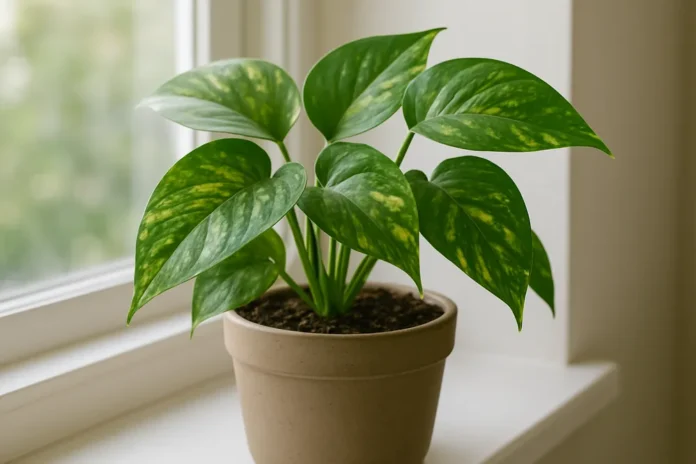
Pothos leaves develop yellow spots most often from inconsistent watering, too much direct sun, pest feeding, or fungal and bacterial leaf spot. In some cases, mineral buildup or nutrient imbalance can also trigger patchy yellowing.
Pothos is usually one of the easiest houseplants to grow, so yellow spots can feel confusing when the rest of the plant still looks mostly healthy. Unlike full-leaf yellowing, spotting often points to a more specific issue, such as sunburn, pest feeding, water stress, or disease.
The good news is that pothos leaves can tell you a lot if you look closely at the size, color, and pattern of the spots. Small speckles, soft blotches, crisp pale patches, and yellow halos around brown centers all suggest different causes, which makes it easier to choose the right fix before the problem spreads.
If your pothos has yellow spotting, the fastest way to narrow it down is to consider recent care changes. Light, watering habits, humidity, fertilizer use, and any sign of insects all matter more than the plant's age alone.
What Yellow Spots on Pothos Usually Mean
Yellow spots are a symptom, not a diagnosis. On pothos, they usually appear when leaf tissue is stressed or damaged in a localized way. That damage can come from cells bursting after watering problems, leaf surfaces burning in harsh light, sap being removed by pests, or pathogens infecting small areas of the leaf.
The exact look of the spots matters. Flat pale yellow patches on the side facing a bright window often suggest light stress. Tiny stippled dots can point to spider mites or thrips. Soft yellow areas that later turn brown may be connected to overwatering or leaf spot disease. If the spots stay only on older leaves, nutrition or root stress becomes more likely.
- Scattered tiny yellow specks often suggest pest feeding.
- Large faded patches often suggest too much direct sun.
- Yellow spots with brown centers or halos often suggest leaf spot disease.
- Spots appearing after watering issues can point to root stress or edema-like damage.
- Patchy spotting after heavy feeding may be linked to fertilizer salts or mineral buildup.
Overwatering and Soggy Soil
Why Excess Moisture Causes Spotting
One of the most common reasons pothos leaves develop yellow spots is that the potting mix stays wet for too long. Pothos roots need oxygen as well as water. When the soil remains soggy, roots struggle to function, and leaves may start showing irregular yellow blotches before they turn fully yellow or brown.
Sometimes the problem is not how often you water but how slowly the pot dries. A dense mix, a pot without drainage, low winter light, or a pot that is too large can all keep moisture around the roots longer than the plant can use it.
Clues That Overwatering Is the Cause
- Spots appear along with limp leaves or yellowing lower foliage.
- The pot feels heavy and the soil stays wet several days after watering.
- Leaves may also develop brown, soft areas after the yellow spots form.
- Stems near the soil line feel soft or dark in severe cases.
- There is a sour or musty smell from the potting mix.
How to Fix It
Let the top part of the mix dry before watering again, and make sure excess water drains freely. If the soil is compacted or the roots smell rotten, repot into a chunky indoor plant mix with drainage material such as bark or perlite. Remove badly damaged leaves so the plant can focus on healthy growth.
Underwatering and Inconsistent Moisture
Pothos is forgiving, but repeated cycles of bone-dry soil followed by deep soaking can stress leaf tissue enough to create yellow mottling or spotty discoloration. When roots dry too far, the plant cannot move water evenly through the leaves. Some areas lose function first, especially at the edges and between veins.
Inconsistent watering can be especially noticeable on trailing vines near bright windows or warm vents, where the plant dries faster than expected. You may also see curling, drooping, and crispy tips along with the spots.
- Dry, lightweight pot and soil pulling from the sides of the container
- Leaves that wilt, curl, or feel thin before spots appear
- Yellow spotting paired with brown crisp edges
- Faster spotting on vines closest to heat or sun
The fix is to water more evenly, not just more often. Give the pot a thorough soak when the top 1 to 2 inches of mix are dry, then let the excess drain. Avoid letting the root ball become extremely dry on a regular basis.
Too Much Direct Sun or Heat Stress
Sunscald Looks Different From General Yellowing
Pothos prefers bright, indirect light. When it sits in strong afternoon sun, especially in a south- or west-facing window, the leaf surface can bleach and develop yellow or pale tan patches. These spots are often larger and flatter than pest damage and tend to show up on the side facing the light source.
Heat stress can worsen the damage. Glass can magnify sunlight, and leaves pressed close to a hot window may scorch quickly even if the rest of the room seems fine.
- Spots are broad, faded, and irregular rather than tiny and speckled.
- Damage is worse on upper leaves or the window-facing side of the plant.
- The tissue may later turn tan or papery.
- The problem began after moving the plant to a brighter spot.
Move the pothos a few feet back from direct sun or filter the light with a sheer curtain. Damaged areas will not turn green again, but new growth should emerge clean once light levels are corrected.
Pests That Leave Yellow Speckles and Blotches
Several common houseplant pests feed by piercing leaf tissue and sucking out sap. On pothos, this often starts as tiny yellow dots that gradually merge into larger pale patches. Pest-related spotting is easy to miss early because the leaves may still feel firm and green overall.
Spider Mites
Spider mites are a frequent cause of fine yellow stippling, especially in dry indoor air. You may notice faint webbing under leaves or where leaf stems meet the vine. The spotting usually looks very small and evenly scattered at first.
Thrips
Thrips can create silvery or yellow streaks, blotches, and distorted new leaves. Their feeding often looks a little scraped or scarred rather than simply faded. Tiny dark specks of waste may also be visible.
Scale and Mealybugs
Scale and mealybugs are less likely to cause fine stippling but can stress the plant enough to create yellow patches and weak growth. Scale appears as brown or tan bumps on stems and leaf undersides. Mealybugs look like bits of white cotton clustered near nodes.
How to Manage Pest Damage
- Isolate the plant from other houseplants.
- Rinse the leaves, especially undersides, with lukewarm water.
- Wipe visible pests away with a soft cloth or cotton swab.
- Use insecticidal soap or neem-based treatment labeled for indoor plants.
- Repeat treatments as directed because eggs and hidden insects often survive the first round.
Leaf Spot Disease From Fungi or Bacteria
Bacterial spots may look greasy or translucent at first, then turn yellow and brown. Fungal spots are often rounder and may have clearer edges. In both cases, the yellow halo around the damaged center is a useful clue.
- Spots spread outward over time instead of staying static.
- Leaf surfaces show brown centers with yellow rings.
- Problem is worse after misting, overhead watering, or crowded conditions.
- Multiple leaves develop similar spots in a short period.
Remove the worst affected leaves with clean pruners, avoid splashing water on the foliage, and improve spacing and air movement. Water the soil directly instead of the leaves. If the outbreak continues, a houseplant-safe copper-based product may help, but sanitation and drier conditions are usually the most important first steps.
Fertilizer Burn, Hard Water, and Salt Buildup
This is more likely if you fertilize every time you water, use strong doses, or have white crust forming on the soil surface or around the pot rim. While salt damage often starts at the edges, it can also create irregular yellow patches on the leaf blade.
- White or gray crust on soil or pot
- Yellow spotting after recent feeding
- Brown leaf tips paired with otherwise green leaves
- Roots look healthy enough, but the plant still seems stressed
Flush the pot thoroughly with room-temperature water to wash out excess salts, or repot if buildup is heavy. After that, fertilize lightly during active growth, usually at half strength or less, and pause during low-light winter periods.
Nutrient Issues and Root Crowding
A root-bound pothos can show similar symptoms because the roots have used up much of the soil volume and dry out very fast between waterings. When roots circle the pot tightly, the plant may struggle to take up water and nutrients evenly.
- Older leaves show more spotting than new leaves.
- Growth has slowed noticeably during spring or summer.
- Roots are densely packed around the pot edge or through drainage holes.
- Water runs straight through the pot instead of soaking in evenly.
If the plant has not been repotted in a long time, move it to a slightly larger pot with fresh mix. Feed lightly during the growing season rather than trying to correct the issue with a strong dose of fertilizer all at once.
How to Tell Which Cause Fits Your Pothos
- If the spots are tiny and numerous, inspect for mites or thrips first.
- If the spots are broad and pale on the bright side of the plant, suspect direct sun.
- If the spots have brown centers or yellow halos, think leaf spot disease.
- If the soil stays wet for days and leaves feel limp, suspect overwatering.
- If the pot gets extremely dry and the leaves crisp, inconsistent watering is more likely.
- If symptoms followed feeding or mineral crust, consider salt buildup.
It is also possible to have more than one issue at the same time. For example, a pothos sitting in low air flow with soggy soil can develop both root stress and leaf spot disease. A plant weakened by dryness can also become more vulnerable to pests.
What to Do Right Now
- Move the plant into bright, indirect light.
- Check the soil moisture with your finger before watering again.
- Inspect the undersides of leaves and stems for pests.
- Trim off heavily spotted or collapsing leaves with clean scissors.
- Improve drainage and air flow if the mix is staying wet too long.
- Pause fertilizer until the plant is growing normally again.
After conditions improve, watch new leaves more than old damage. Existing spots usually stay visible, so recovery is best measured by healthy new growth and the absence of fresh spotting.
How to Prevent Yellow Spots in the Future
- Water when the top 1 to 2 inches of soil feel dry rather than on a fixed calendar.
- Use a pot with drainage and a loose indoor potting mix.
- Keep pothos in bright, indirect light instead of harsh midday or afternoon sun.
- Avoid frequent misting and try not to leave leaves wet overnight.
- Inspect new houseplants before bringing them near your collection.
- Feed lightly during spring and summer, and flush the soil occasionally to reduce salt buildup.
- Repot every couple of years if the mix breaks down or the roots become crowded.
FAQ
Can Yellow Spots on Pothos Leaves Turn Green Again?
No. Damaged leaf tissue usually does not regain its original color. The goal is to stop new spots from forming and encourage healthy new growth.
Should I Cut Off Pothos Leaves with Yellow Spots?
If a leaf is badly spotted, browning, or likely diseased, remove it with clean scissors. If damage is minor, you can leave it in place until the plant produces more foliage.
Can Tap Water Cause Yellow Spots on Pothos?
Sometimes. Hard water and mineral buildup can stress roots over time and contribute to patchy yellowing or brown tips, especially when combined with fertilizer salts.
Do Spider Mites Cause Yellow Spots on Pothos?
Yes. Spider mites commonly cause tiny yellow speckles that may spread across the leaf surface. Fine webbing under leaves is another common clue.
Is Direct Sun Bad for Pothos?
Strong direct sun can scorch pothos leaves and leave pale yellow or tan patches. Bright, indirect light is usually the safest placement indoors.
How Often Should I Water Pothos to Avoid Yellow Spots?
Water when the top 1 to 2 inches of soil feel dry, then let excess water drain away. The exact schedule changes with light, temperature, pot size, and season.
Can Pothos Leaf Spot Spread to Other Leaves?
Yes. Fungal or bacterial leaf spot can spread, especially when leaves stay wet or air flow is poor. Removing affected leaves and keeping foliage dry helps limit spread.
Need the right fix fast? Read our guide to the best indoor plant pest sprays, fungicides, and potting mixes so you can treat yellow-spotted pothos with confidence.
