

Note: This article contains affiliate links. If you click on these links and make a purchase, I may earn a small commission at no extra cost to you. This helps support my research and content. Read my full affiliate disclosure here.
If you need a compact indoor grow space that fits a closet, small spare room, or balcony, a well-built 3×3 grow tent makes temperature and light control manageable. The right tent stabilizes humidity, prevents light leaks, and simplifies ducting for ventilation so your plants develop consistently. This guide covers six shortlisted 3×3 grow tents that meet practical gardener needs for airflow, durability, and ease of use. We evaluate candidates on the factors that matter in a real grow setup so you can pick a configuration that matches your space and cultivation goals.
Top Picks at a Glance
| Best Quality Built to a higher standard if you want something more solid | Spider Farmer 3×3 Grow Tent (36 x 36 x 72) — 1680D Oxford Canvas, Removable Floor Tray |  |
| Best Value The sweet spot between price and what you get | MARS HYDRO 3×3 Grow Tent (90x90x180 cm) |  |
| Best Budget The cheapest option that still gets the job done reliably | zazzy 3×3 Grow Tent 600D Mylar with Removable Floor Tray |  |
| Highest Rated A top-rated pick with lots of positive feedback | AC Infinity CLOUDLAB 733 Advance 3×3 Grow Tent |  |
| Most Popular A crowd favorite that many people choose with confidence | VIVOSUN S336 3×3 Grow Tent (36 x 36 x 72) with Reflective Mylar |  |
| Best Seller A high-volume bestseller chosen again and again | zazzy 3×3 Grow Tent (36x36x72) with Reflective Mylar |  |
Spider Farmer 3×3 Grow Tent (36 x 36 x 72) — 1680D Oxford Canvas, Removable Floor Tray

| Outer Material | 1680D Oxford Canvas |
|---|---|
| Frame Material | Metal |
| Chamber Volume | 1.46 cubic_meters |
| Weight Capacity Maximum | 140 pounds |
| Unit Count | 9 Square Feet |
The Spider Farmer 3×3 grow tent is aimed at serious hobbyists who need a stable, lightproof chamber for two to four plants. Constructed from high‑density 1680D Oxford canvas and reflective mylar, the tent keeps light in and maximizes usable light on plants. The reinforced metal frame and thickened poles with sturdy corner adapters support heavy LED fixtures and inline filters, and the removable waterproof floor tray plus enlarged observation window make routine maintenance easier. Built‑in cable pass‑throughs, controller hooks, and a tool bag help organize equipment for a compact smart setup. Setup is tool‑free and fast: assemble the frame, pull on the tent, install the tray and hanging bars, and you are ready to mount lights and ventilation. Expect excellent light control and stability, but note the tent is optimized for serious indoor grows rather than casual decorative uses and will require separate ventilation, lighting, and environmental controls to reach full performance. The design favors durability and organization over ultralight portability.
Best for: Growers who prioritize stable, high‑performance indoor cultivation in a compact footprint and want a durable, lightproof tent that supports heavier equipment and tidy cable management.
Less Ideal for: Casual plant owners who only need a decorative enclosure or users who need an ultra‑lightweight, frequently moved tent.
- Heavy‑duty 1680D Oxford canvas and reflective mylar for strong light control and high reflectivity
- Reinforced metal frame and thick poles rated to support substantial lights and filters
- Multiple cable pass‑throughs, controller hooks, and tool bag for tidy equipment organization
- Removable waterproof floor tray and enlarged observation window for easier maintenance
- Tool‑free assembly for quick setup in small indoor spaces
- Requires separate fans, filters, and lights to build a complete grow system
- Heavier, less portable build compared with lightweight hobby tents
Verdict: Choose this tent if you want a rugged, lightproof 3×3 that supports heavy lights and organized smart grow setups for serious small‑space cultivation.
MARS HYDRO 3×3 Grow Tent (90x90x180 cm)

| Model Number | 90x90x180cm |
|---|---|
| Frame Material | Alloy Steel |
| Inner Material | Polyethylene Terephthalate (PET) |
| Outer Material | Polyester |
| Chamber Volume | 1.46 cubic_meters |
The MARS HYDRO 3×3 grow tent provides a compact, light-tight environment for indoor gardening. It is built from thick 1680D canvas with dense diamond reflective mylar inside to maximize light use and reduce stray light; dual zippers and an added shade strip along the zipper seam help prevent pinholes. Assembly uses metal poles, corner adapters and pop snaps for a straightforward setup and a sturdy frame that handles typical light, fan and filter loads. Practical touches include an observation window for checking plants without opening the tent and a removable base tray that makes cleaning and drainage management easier. The polyester outer shell and PET inner layer are tear-resistant and the smooth zippers reduce the chance of snags during frequent access. Limitations are its standard 3×3 footprint and modest height, which may constrain taller training systems or multiple vertical tiers, and it does not include lighting, ventilation or controllers, so plan to add those components to complete a working grow system.
Best for: Buyers who want a durable, no-nonsense 3×3 tent that maximizes usable light and is easy to set up for a single- or small multi-plant indoor grow.
Less Ideal for: Growers needing extra tall vertical space, multi-tier commercial racks, or those who prefer an all-in-one kit with lights and ventilation included.
- Thick 1680D canvas and dense diamond mylar lining for strong light reflection and durability
- Sturdy alloy steel pole frame with pop-snap assembly for quick setup and reliable support
- Observation window lets you check plants without disturbing the internal environment
- Removable floor tray simplifies cleaning and managing runoff
- Does not include lighting, fans, filters, or controllers so additional purchases are required
- Height is limited for very tall plants or multi-level shelving setups
Verdict: A rugged, well-sealed 3×3 tent that maximizes light efficiency and assembles quickly, ideal for practical indoor growers who will add their own lights and ventilation.
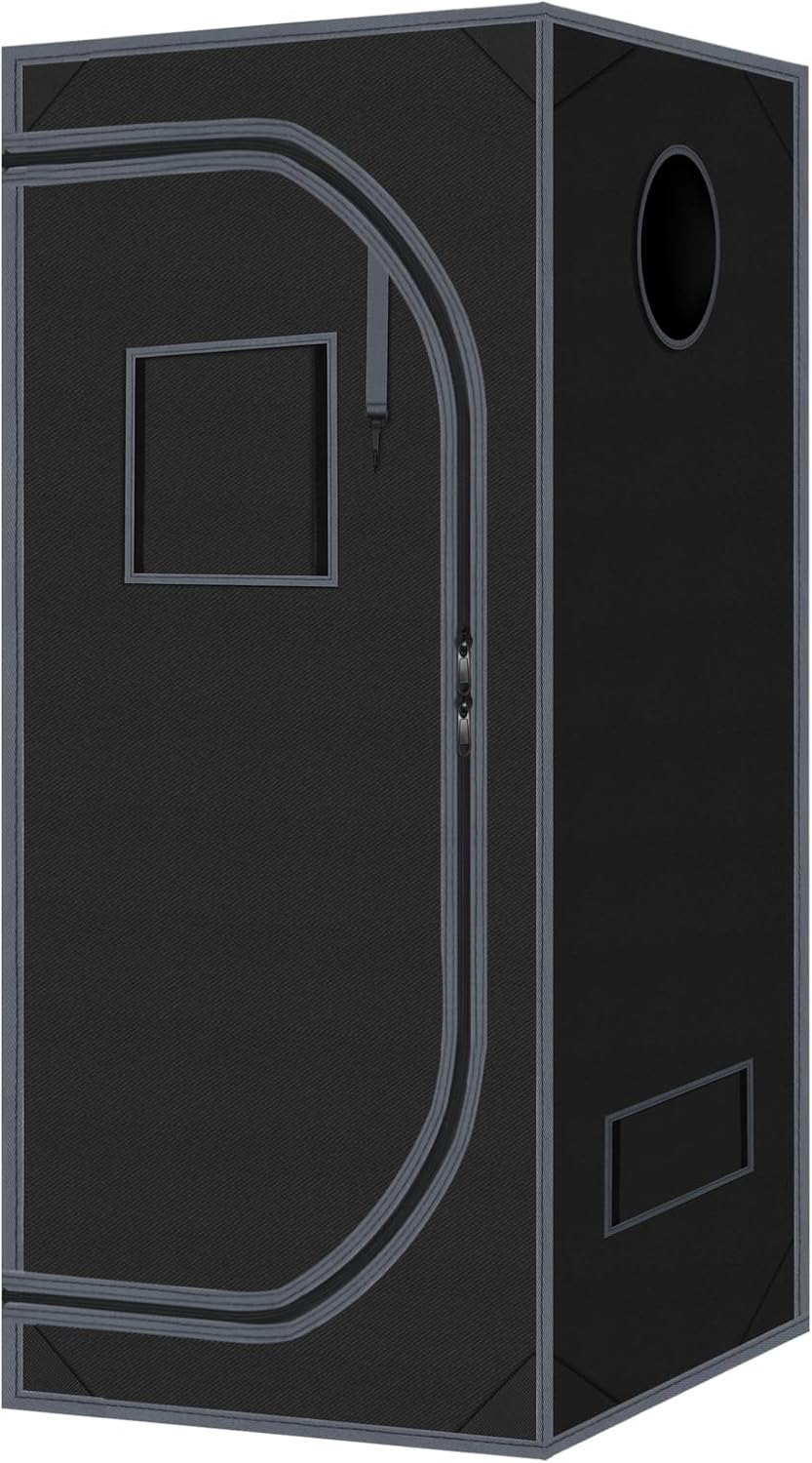
zazzy 3×3 Grow Tent 600D Mylar with Removable Floor Tray
| Inner Material | Metal |
|---|---|
| Outer Material | Canvas |
| Frame Material | Metal |
| Chamber Volume | 54 cubic feet |
| Item Highlight | 100% Reflective Mylar Interior, Heavy-Duty Zippers, Removable Floor Tray |
This 3×3 grow tent is aimed at indoor gardeners who need a compact, no-frills grow space. It uses 600D tear‑resistant canvas and a 98% reflective mylar interior to boost light efficiency, while heavy‑duty zippers, double stitching, and reinforced PA corner connectors give the frame solid stability. The tent includes multiple ventilation ports, a ducting window with mesh to keep insects and dust out, and a removable mylar floor tray that simplifies cleaning and spill control. Setup is tool‑free and straightforward, so you can have a working grow chamber fast. Expect good light containment and heat retention for year‑round plant production in a small footprint. Limitations are typical for an entry-level unit: the basic metal poles and connectors are functional but not premium, and the tent lacks built-in mounting rails or integrated support bars for very heavy fixtures. If you need a simple, effective 3×3 tent without paying for pro features, this covers the essentials at a modest cost.
Best for: Ideal for growers who want an affordable, compact 3×3 tent for hobby or small-scale indoor gardening and who prioritize straightforward setup and efficient light use.
Less Ideal for: Not the best choice for commercial growers or anyone needing heavy-duty mounting infrastructure or advanced integrated features for large fixtures.
- Durable 600D canvas with double stitching for light blocking and longevity
- 98% reflective mylar lining to improve light distribution and efficiency
- Tool‑free assembly with reinforced corner connectors for quick setup
- Multiple vents and a ducting window with mesh to support ventilation while keeping debris out
- Removable mylar floor tray makes cleaning runoff and spills easy
- Frame uses basic metal poles and connectors rather than heavy‑duty mounting rails
- No integrated support bars or accessories for very heavy lights or equipment
Verdict: A cost-conscious 3×3 grow tent that delivers solid light reflection, easy setup, and simple cleanup for hobby and small-scale indoor growers.
AC Infinity CLOUDLAB 733 Advance 3×3 Grow Tent

| Chamber Volume | 54 cubic feet |
|---|---|
| Capacity | 150 pounds |
| Weight Capacity Maximum | 250 pounds |
| Frame Material | Alloy Steel |
| Outer Material | Waterproof Oxford Canvas |
The AC Infinity CLOUDLAB 733 is a purpose-built 3×3 grow tent for growers who prioritize durable construction and light management. It uses 1-inch alloy steel poles and a thick 2000D canvas shell with lab-tested high-reflectivity mylar to maximize usable light inside the tent and resist wear. The tent includes taller viewing windows with SBS zippers for easier access, multiple hanging bars and a reinforced corner structure to support lights and inline fans. Practical features for reliable operation include a controller mount with a lightproof cable passthrough, numerous duct ports for ventilation or climate devices, and a removable catch tray that helps contain spills. The design favors long-term stability over ultra-lightweight portability, so assembly is straightforward but the tent is relatively substantial. If you need a compact, robust 3×3 that integrates well with environmental controllers and ventilation gear, this model delivers consistent performance; buyers wanting the lightest or smallest possible setup should consider a simpler, more portable option.
Best for: Growers who want a dependable, long-lasting 3×3 tent that integrates with controllers and ventilation gear for stable, repeatable indoor grows.
Less Ideal for: Casual hobbyists who need a very lightweight, highly portable tent or gardeners with extremely limited space who only want a temporary setup.
- Thick 2000D canvas and lab-tested reflective mylar increase light retention and durability
- 1" alloy steel poles and reinforced corners support heavy lights and fans
- Multiple duct ports and controller mount with lightproof passthrough simplify ventilation and cable routing
- Extra hanging bars and taller zipper windows improve access and equipment placement
- Heavier, sturdier construction makes it less portable and bulkier to move
- Size and robust materials may be overkill for single-plant micro set ups
Verdict: Buy this tent if you want a rugged, professional-feeling 3×3 that keeps light in and equipment securely mounted for reliable, long-term indoor grows.
VIVOSUN S336 3×3 Grow Tent (36 x 36 x 72) with Reflective Mylar

| Capacity | 54 cubic feet |
|---|---|
| Chamber Volume | 93312 cubic inches |
| Weight Capacity Maximum | 100 pounds |
| Frame Material | Metal |
| Inner Material | mylar |
The VIVOSUN S336 is a straightforward 3×3 grow tent for hobby and small-scale indoor cultivation. It creates a lightproof environment with a 100% reflective mylar lining to maximize light efficiency and a heavy-duty 600D oxford outer fabric for durability and water resistance. The frame uses metal poles and tool-free corner connectors for quick, no-tools assembly and includes hanging straps and a top bar rated to support substantial equipment. Practical touches include a removable mylar floor tray for easy cleaning, a clear observation window with hook-and-loop closure, multiple duct and cable ports, and an internal tool organizer. For growers focused on predictable, repeatable results the tent’s reflective interior and organized ports make it easy to set up lighting and ventilation. Limitations are typical for this size: internal headroom is limited by the 72 inch height for taller setups and it does not include lighting or filtration equipment so those must be purchased separately to complete a full grow system.
Best for: Growers who want a dependable, easy-to-assemble 3×3 tent with proven performance and clear build quality for small-scale indoor cultivation backed by many customer purchases.
Less Ideal for: Users who need a complete plug-and-play system with lights and filters included or those requiring extra tall vertical space for large plants or multi-tiered shelving.
- 100% reflective mylar interior improves light usage and uniformity
- Heavy-duty 600D oxford fabric outer layer is waterproof and tear-resistant
- Tool-free metal frame with sturdy corner connectors for quick assembly
- Removable floor tray and observation window simplify maintenance
- Multiple duct and cable ports plus hanging straps accommodate lights and ventilation
- Does not include lighting, fans, or filtration components
- 72 inch interior height limits taller setups or stacked equipment
Verdict: A sturdy, reflective 3×3 tent that reliably boosts light efficiency and simplifies setup for small indoor grows.
zazzy 3×3 Grow Tent (36x36x72) with Reflective Mylar

| Chamber Volume | 54 cubic feet |
|---|---|
| Capacity | 54 cubic feet |
| Weight Capacity Maximum | 110 pounds |
| Frame Material | Alloy Steel |
| Inner Material | Polyethylene Terephthalate (PET) |
This 3×3 grow tent is built for hobbyists who want a compact, light‑controlled space for seedlings, single plants, or a couple of small flowering plants. The 95% reflective mylar interior and polyester outer shell boost light efficiency and help retain heat, so lower-wattage lights perform better and temperature control is easier. Assembly is straightforward with alloy steel poles and reinforced connectors that support up to 110 pounds, and the smooth heavy‑duty zippers and observation window let you check plants without fully opening the tent. A removable floor tray simplifies cleaning and protects floors from spills. Practical limits are its modest 54 cubic foot volume, which constrains canopy size and number of plants, and the fabric-based walls mean you still need to manage ventilation, odor, and humidity with separate fans and filters. Overall this tent is a reliable, no-frills option for small indoor grows where light efficiency and sturdy construction matter most.
Best for: Buyers who want a compact, dependable grow space that maximizes light and is simple to set up and maintain for small indoor grows.
Less Ideal for: Growers planning larger canopies, multi-plant setups, or those who want integrated ventilation or odor control should consider larger tents or kits with included fans and filters.
- High-reflectivity mylar lining improves light use efficiency
- Sturdy alloy steel frame and reinforced connectors rated up to 110 lb
- Easy-access observation window and smooth heavy-duty zippers
- Removable floor tray for easier cleaning and spill containment
- 54 cubic foot capacity limits the number and size of plants you can grow
- No built-in ventilation or odor control included
Verdict: A compact, well-built 3×3 tent that boosts light efficiency and offers sturdy, tool-free assembly for reliable small-scale indoor growing.
Choosing the Right 3X3 Grow Tent: Key Factors to Consider
Tent Size and Interior Workspace
A 3×3 footprint limits how many pots, trays, or vertical tiers you can run. Think in terms of usable interior volume, not just length and width. The height dimension matters for lamp clearance, plant stretch, and vertical shelving. If you plan to use taller light fixtures or add a trellis, prioritize tents with extra height rather than minimal headroom.
Interior workspace also affects airflow patterns and how evenly you can light the canopy. Crowding plants near walls or duct ports can create hot spots or stagnant air pockets. Measure your equipment-lights, filters, fans, and pots-against the tent's internal dimensions before committing.
Light Control and Reflective Lining
Complete light containment prevents unwanted photoperiod interruption during dark cycles. Inspect seam design, zipper overlap, and the presence of inner flaps over zippers when evaluating a tent. The reflective lining should be high-clarity and evenly applied so the canopy receives uniform light; mottled or low-reflectivity liners reduce effective lumen delivery.
A good liner also stands up to cleaning and resists peeling. For growers who routinely run high-intensity lamps, reflectivity can significantly influence how much usable light reaches plants and how efficiently electrical input translates into growth.
Ventilation Ports and Cable Access
A successful small grow depends on controlled airflow. Port size and placement should match your fan, filter, and ducting plans. Look for multiple intake and exhaust locations and ports that are reinforced so ducting clamps do not tear fabric. Some tents include removable or adjustable collars to help create better seals around ductwork.
Cable access and pass-throughs for power, controllers, and CO2 lines make installations cleaner and reduce the need to unzip tents frequently. Properly located ports also let you position intake near the canopy base and exhaust at the highest point to improve air exchange and temperature control.
Frame Construction and Zipper Durability
The frame supports lights, filters, and hanging systems. Thicker metal poles, solid corner connectors, and well-machined joints reduce wobble when you suspend heavy fixtures. Pay attention to how poles lock into place; press-fit designs vary in tolerance and longevity.
Zippers are a common failure point with frequent use. Heavy-duty metal zippers with protective storm flaps or dual-zipper designs last longer in everyday gardening scenarios. A robust frame paired with durable zippers keeps a tent square and light-tight over many grow cycles.
Access, Maintenance, and Visibility
Access panels, removable roof sections, and observation windows influence how easily you tend plants and troubleshoot problems. Large doors that open wide simplify training, pruning, and harvest. Roof access is helpful for repositioning lights without disturbing the canopy.
Consider how easy it is to clean the interior liner and reach corners where soil and water can accumulate. Removable trays or sealed seams reduce mold risk and make routine sanitation faster. Visibility features should let you check plant condition without compromising light schedules.
Optimizing Ventilation in a 3X3 Tent
Small tents need carefully planned airflow to avoid heat buildup and humidity spikes. Position the exhaust near the top and the intake lower down to use natural convection for a more efficient exchange. Inline fan capacity should match tent volume; oversizing can create negative pressure issues while undersizing fails to remove heat.
Use duct elbows and flexible runs only as needed because long or kinked ducting reduces fan efficiency. Install fan speed controllers and consider passive intake vents with mesh to protect against pests and dust. For noisy setups, mount fans outside the tent or use sound-dampening duct components.
- Place intake low and exhaust high for consistent temperature layering
- Match fan CFM to tent volume and filter resistance
- Minimize duct length and sharp bends to preserve airflow
Lighting Considerations for Small Footprints
A 3×3 canopy responds well to lights designed for small rooms or dedicated 3×3 footprints. Pay attention to light spread and driver cooling. Fixtures that concentrate light in the center can create hotspot patterns unless you manage reflector geometry or raise the fixture.
Consider the heat load of your lamp choice and how it interacts with ventilation. LED panels with built-in passive cooling reduce moving parts but still add heat; high-intensity discharge lamps require stronger exhaust and filter strategies.
- Think about fixture footprint relative to canopy area
- Allow clearance for lamp height adjustments during flowering and veg
Managing Humidity and Temperature Fluctuations
In tight spaces, humidity can swing quickly after watering and during lights-off periods. A stable schedule, proper exhaust timing, and a small dehumidifier or humidifier sized to the tent volume help keep relative humidity in the target range. Use a combined hygrometer/thermometer placed at canopy height for accurate readings.
Insulate the room around the tent if the ambient chamber is prone to drafts or temperature swings. Sealing light leaks and minimizing door opening will reduce stress on your HVAC strategy and help maintain consistent plant physiology.
- Monitor conditions at canopy height, not floor or ceiling
- Match conditioning equipment capacity to the tent's internal volume
Space-Saving Training and Layout Tips
Maximize production in a small footprint through low-stress training, scrogging, or selective defoliation. Horizontal canopy management and even light distribution increase effective canopy area without adding more vertical space. Plan trays or saucers under pots to contain runoff and reduce mess during watering.
Use vertical supports that attach to the frame rather than freestanding structures to preserve floor space. If you plan multi-layered grows, ensure the tent height accommodates each layer plus clearance for lights and maintenance access.
- Use SCROG or low-stress training to flatten canopy
- Attach supports to frame to save floor area
Cleaning and Preventing Contamination
Regular cleaning reduces pest and mold risk in closed systems. Wipe liners with recommended, plant-safe cleaners and check seams where moisture can collect. Remove spent soil and debris promptly after harvest to break pest cycles.
Consider a quarantine area or sanitized entry routine for new plants or clones to prevent introducing pests. Good airflow and clean surfaces together make a big difference in long-term tent hygiene.
- Wipe down liners and frames between cycles
- Remove debris and sanitize trays after harvest
How We Chose the Best 3X3 Grow Tent
We shortlisted tents that are sized and built for small indoor grows and then filtered by performance and real-world usability. Core evaluation criteria focused on frame strength and zipper durability, internal reflectivity and light-seal quality, quality of ventilation ports and duct collars, material thickness and stitching, and ease of setup and maintenance. We also prioritized tents with well-placed access panels for tending plants and integrated observation windows or removable roof panels for light and equipment placement. Excluded from consideration were tents intended strictly for temporary use or decorative canopy-style covers that lack fully lightproof interiors. Extremely thin, single-pane fabrics or tents without tested port sizes for standard inline fans and filters were not included. The final list favors tents that balance long-term durability with straightforward ventilation and cable management so growers can build reliable small-scale systems.
FAQ
What fan size do I need for a 3×3 grow tent?
Fan size depends on tent volume and filter resistance. Calculate the tent's cubic feet, then select a fan that provides several air exchanges per minute while adding capacity for the carbon filter's static pressure. Using a speed controller lets you fine-tune airflow once the system is running.
How tall should a 3×3 tent be for most grow cycles?
Height depends on plant type and training method. For simple veg and flower cycles with moderate stretch, a tall 3×3 tent gives flexibility. If you plan multiple vertical layers or tall strains, prioritize a tent with extra headroom rather than the minimum height.
Can I run a full-size filter and fan in a 3×3 tent?
Yes, many small tents accommodate compact inline fans and short can-style filters, but check port sizes and interior clearance. Some setups work better with fans mounted outside the tent with ducting through ports to save internal space and reduce vibration.
How often should I clean the interior of a grow tent?
Wipe down surfaces after each harvest and spot-clean during active cycles if you notice spills or residue. A full sanitation between grows helps prevent pests and diseases. Frequency may increase if you run many successive cycles or have problems with mold or insects.
Is thicker fabric always better for a small grow tent?
Thicker fabric generally resists tears and helps block light, but construction quality and stitching matter a great deal. Reinforced seams, quality zippers, and solid collars can be more important than raw fabric thickness for long-term performance.
Final Verdict
A 3×3 grow tent is a practical choice for gardeners who need a compact, controllable indoor grow area. Prioritize tents that pair solid frames with reliable light-seal liners and well-placed ventilation ports to avoid the common pitfalls of heat and humidity in small spaces. Balance your choice between interior height, access features, and material durability based on how you plan to train and maintain plants. Selecting the tent that fits your equipment layout and maintenance habits will make setup, crop cycles, and troubleshooting more predictable and productive.
