

Note: This article contains affiliate links. If you click on these links and make a purchase, I may earn a small commission at no extra cost to you. This helps support my research and content. Read my full affiliate disclosure here.
If you want to cultivate two healthy plants indoors, choosing the right compact grow tent matters more than picking a kit at random. A properly sized tent gives you predictable light containment, controlled ventilation, and easier environmental management so plants develop evenly and avoid light leaks or overheating. This guide covers the top shortlisted tents suited for two-plant setups and explains the practical factors that separate a usable tent from one that creates extra work. We evaluated build quality, light-blocking performance, ventilation compatibility, and ease of use to help you pick a tent that fits your space and growing plan. Read on to see the considerations that informed our selections and how to set up a small grow space effectively.
Top Picks at a Glance
| Best Overall The best all-around choice for most situations | zazzy 2×2 Grow Tent 24x24x48 600D Mylar Indoor Plant Grow Tent |  |
| Best Value The sweet spot between price and what you get | ATOUR 2’x2’ Grow Tent with Observation Window and 600D Reflective Mylar |  |
| Best Budget The cheapest option that still gets the job done reliably | MELONFARM 2×2 Grow Tent with Double Viewing Door and Reflective Mylar |  |
| Most Popular A crowd favorite that many people choose with confidence | VIVOSUN S425 2×4 Grow Tent (48 x 24 x 60) |  |
| Best Seller A high-volume bestseller chosen again and again | MELONFARM 2×2 Grow Tent with Observation Window and Floor Tray |  |
zazzy 2×2 Grow Tent 24x24x48 600D Mylar Indoor Plant Grow Tent
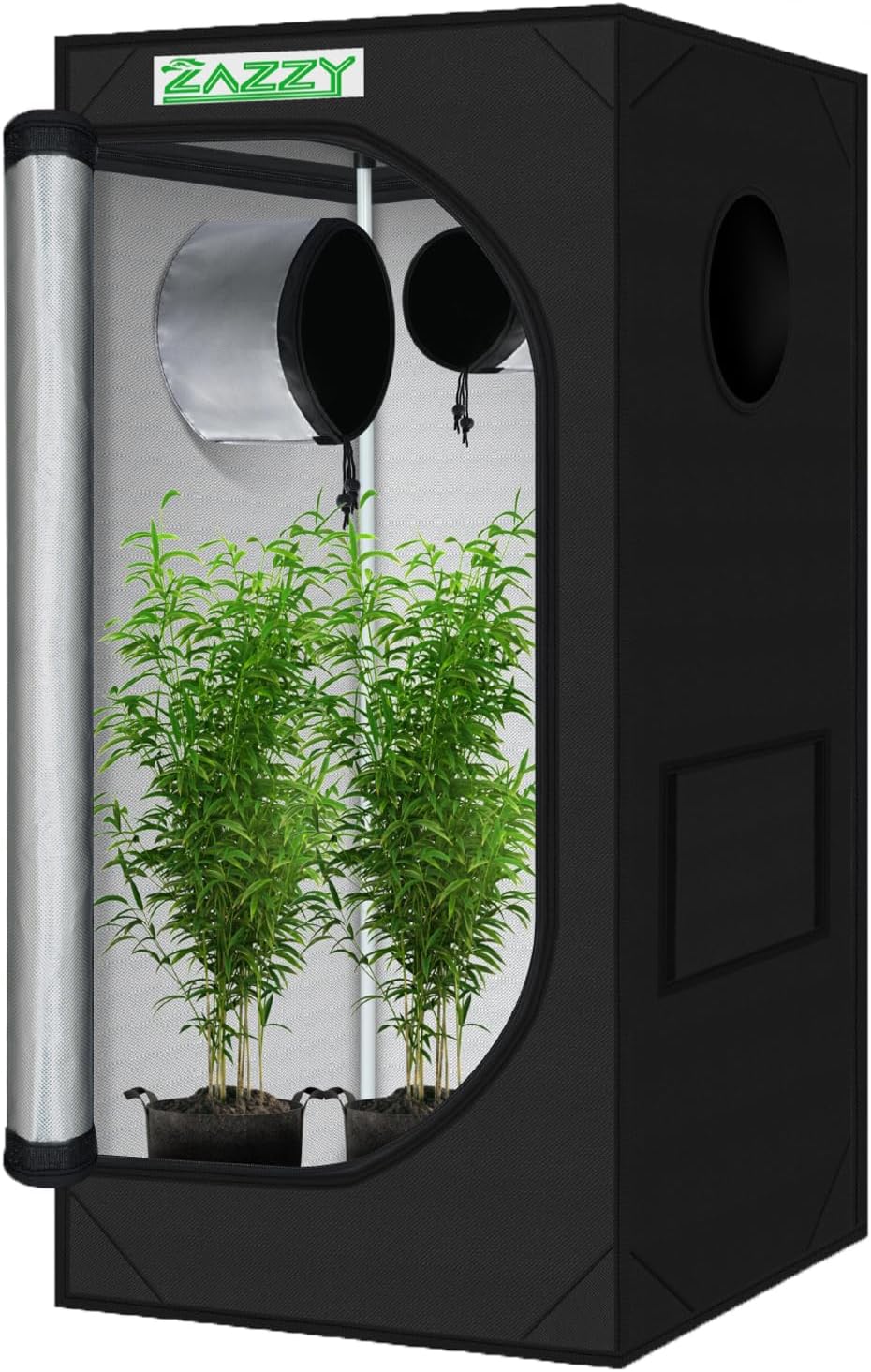
| Chamber Volume | 16 cubic feet |
|---|---|
| Capacity | 110 pounds |
| Frame Material | Alloy Steel |
| Inner Material | Polyethylene Terephthalate (PET) |
This 2×2 grow tent is designed for hobbyists who want a small, compact indoor growing space for one to two plants. The 600D mylar interior and reflective lining boost light efficiency while the alloy steel frame and reinforced connectors are rated to support up to 110 pounds of equipment. Typical use is simple: set the frame, fit the fabric shell, hang a small light and ventilation, and monitor plants through the observation window and access door. Notable features include a removable waterproof floor tray for easy cleaning, a tool bag for accessory storage, and heavy-duty zippers and corner connectors that speed assembly without tools. In practice it keeps light contained and helps retain heat while increasing usable light from your fixtures, which is useful for seedlings, vegging, and small flowering cycles. Limitations are its small internal volume, which restricts larger plants or multi-tier setups, and because dimensions are compact you will need to manage heat and airflow carefully when using powerful lights.
Best for: Growers who want a compact, easy-to-assemble tent for one to two plants and prioritize light efficiency and a tidy, contained workspace.
Less Ideal for: People planning to grow large plants, multi-layer systems, or full-room setups should choose a larger tent or dedicated grow space instead.
- 600D reflective mylar lining improves light efficiency and helps retain heat
- Alloy steel frame and reinforced connectors rated to support up to 110 pounds
- Removable waterproof floor tray and tool bag simplify maintenance and organization
- Observation window and smooth zippers make plant checks easy without fully opening the tent
- Small internal volume limits plant size and the number of plants that can be comfortably grown
- Requires careful ventilation and heat management with higher-power lights
Verdict: A compact, well-built 2×2 tent that boosts light efficiency and is ideal for hobby growers running one to two plants in a small indoor space.
ATOUR 2’x2’ Grow Tent with Observation Window and 600D Reflective Mylar
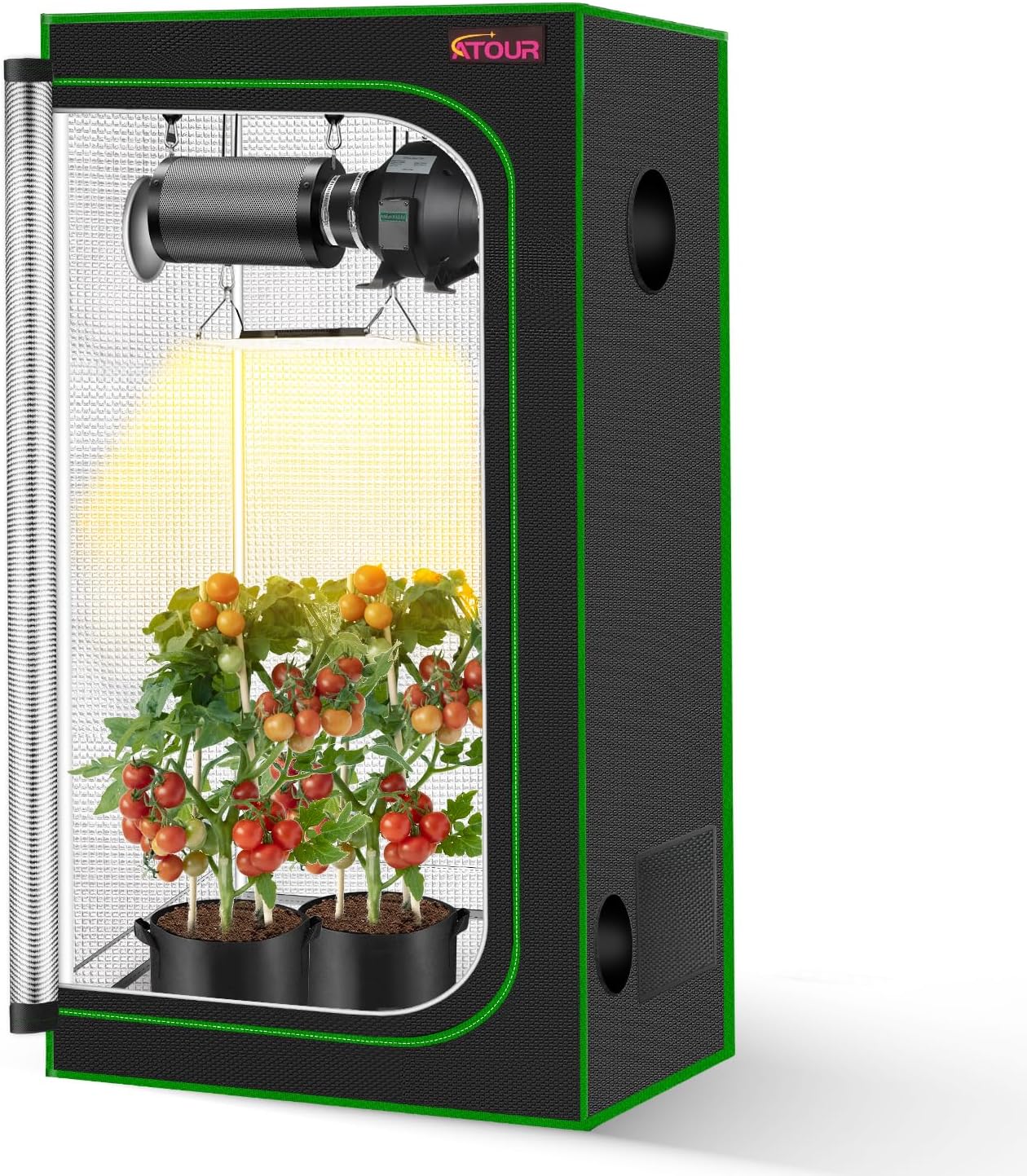
| Chamber Volume | 16 cubic feet |
|---|---|
| Frame Material | Metal |
| Inner Material | Polyester |
| Capacity | 16 cubic feet |
The ATOUR 2’x2’ grow tent is a straightforward small grow space built for hobbyists who need a contained environment for one to two plants. It uses heavy 600D fabric and a reflective mylar interior to reduce light leakage and maximize light spread from a single grow lamp. Assembly is tool-free using metal poles and snap connectors, and the heavy-duty zipper, double-stitched seams, and taped observation window help limit light leaks during use. The tent includes a floor tray and internal tool bag to keep soil and accessories tidy, and multiple intake/exhaust ports let you add a small inline fan and carbon filter for odor and climate control. Trade-offs are typical for this size: interior volume is limited so plants need training or short-stature strains, and the compact footprint constrains larger lighting and ventilation setups. For a beginner or an experienced grower wanting a low-cost micro grow space, this tent delivers a durable, light-proof environment with easy setup and basic organization features.
Best for: Buyers who want a compact, no-frills indoor grow space for one to two plants and prioritize easy setup, light control, and tidy organization.
Less Ideal for: People who plan to run multiple larger plants, full-size flowering setups, or need a workspace for tall cultivars should consider a larger tent.
- 600D fabric and reflective mylar interior to limit light leakage and improve light distribution
- Metal pole frame with snap connectors for tool-free assembly
- Observation window with light-sealing cover for quick plant checks without full access
- Multiple intake/exhaust ports and a floor tray for easy ventilation and mess control
- Small internal volume limits plant size and requires training or compact strains
- Not suited for large multi-light or heavy ventilation rigs
Verdict: A durable, easy-to-assemble 2'x2' tent that gives one to two plants a light-tight, reflective micro environment ideal for compact grows.
MELONFARM 2×2 Grow Tent with Double Viewing Door and Reflective Mylar

| Frame Material | Iron |
|---|---|
| Inner Material | Polyethylene Terephthalate (PET) |
| Chamber Volume | 10.68 cubic feet |
| Light Source Wattage | 2100 watts |
This MELONFARM 2×2 grow tent is aimed at small indoor setups and delivers the essentials for cultivating one to two plants. The frame uses iron supports and the interior is lined with highly reflective PET polyester film to boost light distribution from your grow lamps, while the heavy-duty canvas exterior and double stitching help block light and contain odors. The double-layer observation door combines a clear window for quick checks without unzipping plus an opaque flap for privacy and temperature control. It arrives with a floor tray and storage bag and sets up without tools, making it easy to move into a closet, bedroom corner, or utility room. Expect straightforward maintenance and good light efficiency, but keep in mind the 2×2 footprint limits plant size and the tent is best paired with compact lighting and ventilation suited to the small chamber. For buyers focused on an affordable, no-frills enclosure to run a two-plant micro grow, this tent covers the basics effectively.
Best for: Buyers who want an inexpensive, compact grow space for a one to two-plant micro grow or starter hydroponic project and prefer a simple, easy-to-set-up tent.
Less Ideal for: Growers planning larger plants, multiple full-size flowering cycles, or who want an all-in-one system with included lighting and exhaust should look for larger or bundled options.
- Highly reflective PET lining improves light utilization from grow lights
- Double-layer observation door allows monitoring without disturbing plants
- Iron frame and double-stitched 2100D canvas provide sturdy, light-blocking structure
- Includes floor tray and storage bag for cleaner setup and transport
- Small internal volume restricts plant size and limits larger strains or multi-tier setups
- Light source and ventilation are not included and must be sized for the compact chamber
Verdict: A budget-friendly, compact grow tent that gives small-space growers a reflective, easy-to-use enclosure ideal for one to two plants.
VIVOSUN S425 2×4 Grow Tent (48 x 24 x 60)

| Frame Material | Metal |
|---|---|
| Inner Material | Polyethylene Terephthalate (PET) |
| Capacity | 900000 cubic centimeters |
| Weight Capacity Maximum | 100 pounds |
| Light Source Wattage | 50 watts |
The VIVOSUN S425 2×4 grow tent provides a simple, durable enclosure for indoor cultivation of two to three mature plants. It uses heavy-duty 600D Oxford fabric with a 100% reflective mylar interior to maximize light efficiency and block leaks, and reinforced metal poles with tool-free corner connectors for a stable frame. Typical use is as a dedicated space for potted plants or a small hydroponic setup where you need controlled light, hanging support for lights or filters, and easy access for maintenance. Notable features include an observation window, removable mylar floor tray for easy cleaning, upgraded SBS zippers, multiple vent ports and interior tool organizers. Practical benefits are improved light utilization, neat cable and vent routing, and a fast assembly that does not require tools. Limitations are the modest internal height for taller plants and the relatively small footprint that fits just a few plants, so it is not suitable for larger multi-tier systems or growers needing extra vertical space.
Best for: Buyers who want a reliable, lightproof small grow space for two plants and value easy setup, durability, and efficient light use.
Less Ideal for: Growers who need extra vertical space, plan to run multi-tier systems, or require a large footprint for many plants should consider larger tents or different setups.
- 100% reflective mylar interior improves light distribution and efficiency
- Heavy-duty 600D fabric and double-stitched seams for lightproofing and durability
- Sturdy metal frame with tool-free connectors and hanging bars rated to support heavy equipment
- Removable floor tray and observation window make cleaning and monitoring plants easier
- Interior height is limited which constrains taller varieties or extensive training
- Footprint only accommodates a small number of mature plants so space is tight for multi-plant setups
Verdict: A tough, lightproof 2×4 tent that reliably boosts light efficiency and assembly ease for growers running a focused two-plant setup.
MELONFARM 2×2 Grow Tent with Observation Window and Floor Tray

| Frame Material | Metal |
|---|---|
| Inner Material | Polyethylene Terephthalate (PET) |
| Outer Material | Oxford Cloth |
| Light Source Wattage | 24 watts |
This MELONFARM 2×2 grow tent creates a light-proof, reflective microenvironment for one to a few plants in a small indoor space. It is lined with highly reflective PET mylar and wrapped in heavy-duty 600D Oxford canvas, which helps contain light and maintain stable temperatures when used with a small LED and an inline fan. The kit includes a sturdy metal pole frame that supports lights and ventilation hardware and a removable floor tray to protect floors from spills. Two observation windows let you check plants without opening the main door and disturbing the climate. Assembly is straightforward and tool-free, so setup in a closet or corner is quick. Limitations are its small footprint and modest height, which restricts plant count and tall varieties, and the tent does not include lighting or fans so you must add compatible equipment separately. For conservative buyers this tent emphasizes durability and predictable environmental control rather than extras or large-scale capacity.
Best for: Buyers who want a reliable, low-risk way to start indoor growing in tight spaces and value durable construction and easy setup over large capacity.
Less Ideal for: Gardeners planning to grow many plants, tall varieties, or a full multi-light setup should choose a larger tent or a taller model.
- Durable 600D Oxford canvas and double-stitched seams for light-proofing and tear resistance
- Highly reflective PET inner lining to improve light distribution and efficiency
- Metal pole frame rated to support grow lights and small inline fans
- Observation windows let you inspect plants without opening the main door
- Removable floor tray protects flooring from water and nutrient spills
- Small internal volume limits the number and height of plants you can grow
- No included lighting, fans, or ducting so you must purchase ventilation and light separately
Verdict: A compact, well-built tent that delivers predictable light control and easy setup for cautious indoor growers starting small.
Choosing the Right Grow Tent for 2 Plants: Key Factors to Consider
Tent Size and Canopy Space
Tent dimensions determine how plants are arranged, how much vertical headroom you have for lights and training, and how many fans or filters fit inside. For two plants, interior volume matters more than floor area alone because plant height and training method affect usable space.
If you plan to train or top plants, factor in extra vertical clearance. Too-small tents force cramped canopies and restrict airflow. Too-large tents increase heating and cooling demands and make maintaining uniform light and air circulation harder.
Light Containment and Reflective Lining
A quality lightproof outer shell prevents leaks that can disrupt photoperiod-sensitive plants. Inside, reflective lining boosts usable light by redistributing stray photons back onto the canopy, improving uniformity and reducing hot spots.
Look for tear-resistant liners with high reflectivity and sealed seams. Poorly sealed zippers, thin fabric, or low-reflectivity interiors create uneven growth and can force you to increase lamp output, raising heat management challenges.
Ventilation Ports and Airflow Layout
Proper ventilation keeps temperatures, humidity, and CO2 at target levels. For two-plant tents, port placement affects how easily you can route an exhaust fan, carbon filter, and an intake without sharp duct bends that reduce airflow.
Check the number and sizes of intake and exhaust openings and their positions relative to where lights and filters will mount. A balanced flow pattern that pulls air across the canopy and out near the top is ideal to avoid stagnant pockets and localized heat buildup.
Frame Construction and Durability
Frame strength impacts how much weight the tent can safely hold from lights, filters, and other accessories. Sturdy metal poles and reliable corner connectors reduce sagging and long-term wobble when the tent is loaded.
Durability also means corrosion-resistant finishes and strong stitching on stress points. Lightweight frames may be fine for seedlings, but for a flowering two-plant setup with heavier HID or LED fixtures, a robust frame increases safety and longevity.
Access, Doors, and Maintenance Workflow
Daily and weekly plant care requires easy access for watering, training, pruning, and inspection. Wide doors, removable panels, and conveniently placed observation windows speed routine tasks and reduce accidental damage to plants.
Consider how zipper quality and door geometry interact with your workspace. A tent that forces you to squeeze around plants to reach the rear encourages mistakes. Also check for interior support straps and hanging points that make organizing lights, meters, and trays simpler.
Material Thickness and Seams
Material denier and seam construction determine how well the tent resists wear, light leaks, and moisture. Thicker fabric holds up better to repeated setup and tear-down, and taped or double-stitched seams reduce the chance of stray light or pest entry.
Water resistance and mildew resistance are practical concerns in humid grows. While no tent is a substitute for good humidity control, better material choices reduce maintenance and prolong usable life.
Sizing a Tent for Different Training Styles
Different training methods change how much horizontal and vertical space your two plants need. Low-stress training and topping keep plants more compact and suit tents with lower vertical clearance. If you plan to scrog or heavily top, choose a tent with extra height to allow canopy manipulation and overhead lighting without burning foliage.
- Short tents work well with compact LEDs and light training.
- Tall tents benefit growers using vertical training or larger light fixtures.
- Measure expected final plant height plus light clearance before choosing a tent.
Lighting Choices and Heat Management
Light type and distance determine how much heat you must remove. High-output LEDs run cooler than many HID systems but still require planning for exhaust and intake placement. Match your light footprint to the tent interior so the canopy receives even coverage without hot spots near the edges.
- Place lights so the beam covers both plants evenly.
- Plan exhaust near the top where heat accumulates.
- Consider active intake or passive intake vents sized for your fan to maintain stable temperatures.
Setting Up Ventilation and Filtration
Route ducting with gentle curves and short lengths to preserve fan performance. Carbon filters are often heavier than they look, so ensure your tent frame and hanging points support the weight and that ports line up with the filter and fan configuration you intend to use. Use clip fans or small oscillating fans inside the tent to keep airflow across the canopy and reduce humidity pockets. Placement matters: aim for gentle circulation rather than blasting leaves directly.
- Match port diameter with fan and filter sizes.
- Support heavy filters from the frame, not the fabric.
- Use internal circulation fans to prevent stagnant microclimates.
Organizing the Grow Space Around a Two-Plant Tent
Consider the surrounding room when positioning the tent. Allow space for routing ducting, storing nutrient supplies, and accessing the tent without disrupting other equipment. Noise and heat from fans and lights can affect living spaces, so plan placement with those disturbances in mind. Also think about electrical access and surge protection for lights and environmental controllers. A well-organized setup minimizes trips in and out of the tent and reduces the chance of accidents.
- Keep spare parts and tools nearby in a dry cabinet.
- Ensure easy access to power with GFCI-protected outlets where required.
- Allow clearance for opening doors fully for plant maintenance.
Monitoring and Environmental Control Tips
Accurate, repeatable control of temperature, humidity, and light cycles is easier with a smaller, properly sized tent. Use a combined thermometer-hygrometer and consider a timer or controller for lights and fans to maintain consistent conditions. Place sensors at canopy height rather than near the floor or top of the tent. Consistent monitoring helps you detect problems early and reduces the need for corrective, time-consuming interventions.
- Use data from sensors to adjust fan speed or light distance.
- Place a backup hygrometer to cross-check readings when starting out.
- Automate light and fan schedules for reliable day-night cycles.
How We Chose the Best Grow Tent for 2 Plants
We focused on features that matter in a small, two-plant indoor grow environment. Size and internal usable volume were primary filters to ensure each tent provides adequate canopy room without wasted footprint. Light containment and liner quality were judged because leaks or thin reflective material compromise plant growth and make environmental control difficult. Ventilation compatibility and port placement were another key criterion since two-plant tents need reliable airflow with minimal ducting work. We assessed door and access design for plant care tasks like watering, training, and maintenance. Ease of assembly, frame strength, and materials durability were included to ensure tents endure repeated seasonal use. Practical performance requirements excluded tents intended only for seedlings or micro-climates that cannot support a flowering cycle. Extremely small or overly large tents were filtered out to keep the list relevant to two-plant setups. We prioritized tents that balance reflective efficiency, airflow options, and user access for a straightforward small-scale grow experience.
FAQ
What tent size is best for two medium-sized plants?
A tent that leaves at least 12 to 18 inches of clearance around each mature plant and adequate vertical headroom for lights and training is usually best. Exact dimensions depend on your training method and expected final plant height, but a compact rectangular tent often provides the most efficient canopy layout.
Do I need a carbon filter for a two-plant tent?
A carbon filter is recommended if odor control is important or if the tent is in shared living space. Filters add weight and require correct port alignment and a compatible fan. If odor is not a concern, focus instead on proper ventilation and air exchange rates.
How much ventilation does a small tent require?
Ventilation needs depend on light heat output and the ambient room conditions. As a rule of thumb, aim to exchange tent air multiple times per minute during lights-on periods. Match fan capacity to the tent volume and account for static pressure from filters and duct bends.
Can I use a large light in a small two-plant tent?
You can, but oversized lights increase heat and can create hot spots that stress plants. If using a powerful fixture, increase exhaust capacity and maintain safe distances between the lamp and canopy to avoid light stress or heat damage.
How important is zipper and seam quality?
Very important. Zippers and seams are common sources of light leaks and wear. Heavy-duty zippers and taped or reinforced seams reduce the chance of stray light and extend tent life, making routine maintenance and plant care easier.
Are reflective liners really beneficial?
Yes. Reflective liners improve light distribution, meaning you can achieve more uniform growth with the same light output. Higher-quality liners also resist tearing and help prevent mildew in humid conditions.
Final Verdict
For a two-plant indoor grow, prioritize a tent that balances internal usable space with reliable light containment and sensible ventilation layout. Tradeoffs include tent height versus footprint and heavier frames versus portability. Focus on dimensions that match your training style, airflow that suits your lights and fan, and access features that make daily care fast and safe. Choosing a tent that aligns with those priorities reduces fuss and gives you a stable environment for predictable results. With attention to size, ventilation ports, and material quality, you can set up a compact, efficient two-plant grow space that fits your room and your workflow.
