

Note: This article contains affiliate links. If you click on these links and make a purchase, I may earn a small commission at no extra cost to you. This helps support my research and content. Read my full affiliate disclosure here.
If you want to grow herbs, seedlings, or a few compact plants indoors without giving up living space, a small indoor grow tent makes the setup tidy, efficient, and repeatable. The right tent contains light, controls airflow, and helps you manage humidity and temperature in a limited footprint. This guide covers seven shortlisted small indoor grow tents that perform well in tight spaces, and it explains the features that matter for hobby and apartment growers. We evaluated ventilation options, material lightproofing, ease of setup and maintenance, and how well each tent works with common fans, filters, and lights. Use these notes to match a tent to your available space and the plants you want to grow.
Top Picks at a Glance
| Best Overall The best all-around choice for most situations | CoolGrows Mylar-Lined 2×2 ft Grow Tent with Observation Window and Removable Floor Tray |  |
| Best Quality Built to a higher standard if you want something more solid | Spider Farmer 2×2 Grow Tent (24x24x48) – Master Series |  |
| Best Value The sweet spot between price and what you get | zazzy 2'x2' (24x24x36) Mylar Grow Tent with Observation Window |  |
| Best Budget The cheapest option that still gets the job done reliably | MELONFARM 24 x 16 x 24 in Indoor Grow Tent with Viewing Door and Floor Tray |  |
| Highest Rated A top-rated pick with lots of positive feedback | VIVOSUN 30 x 18 x 36 in Small Mylar Grow Tent |  |
| Most Popular A crowd favorite that many people choose with confidence | MELONFARM Small Grow Tent for Hydroponics, 18 x 18 x 36 in |  |
| Best Seller A high-volume bestseller chosen again and again | MELONFARM Small Grow Tent 30 x 18 x 36 with Reflective 600D Mylar and Viewing Window |  |
CoolGrows Mylar-Lined 2×2 ft Grow Tent with Observation Window and Removable Floor Tray

| Chamber Volume | 16 cubic feet |
|---|---|
| Frame Material | Metal |
| Lining Material | Mylar (reflective) |
| Unit Count | 1 Count |
This CoolGrows 2×2 ft grow tent is designed for small indoor gardens and hydroponic setups where space is limited. It creates a highly reflective, light-proof interior with a 95% reflective Mylar lining to boost light efficiency and retain warmth for seedlings, herbs, or a couple of compact plants. The tent uses a metal pole frame with tool-free connectors, heavy-duty zippers, reinforced stitching, and a removable waterproof floor tray that makes cleaning spills and soil simple. Dual ventilation ports and an observation window let you run inline fans, ducting, and cables while checking plants without fully opening the tent. Assembly is straightforward and does not require tools. Limitations are its small footprint, which restricts plant height and quantity, and the basic metal inner/outer material listing rather than detailed fabric specs, which means long-term durability depends on handling. For growers who need a no-frills, efficient micro tent to get reliable light reflection and tidy containment, this model covers the essentials without complicated features.
Best for: Buyers who want a compact, straightforward grow space for seedlings, herbs, or a small hydroponic setup and value efficient light reflection and easy maintenance.
Less Ideal for: Growers planning to cultivate multiple tall plants, larger strains, or a multi-tiered setup should choose a larger tent with greater internal volume.
- 95% reflective Mylar lining increases usable light and helps retain heat
- Tool-free metal pole connectors and heavy-duty zippers for quick assembly and a secure frame
- Removable waterproof floor tray simplifies cleaning and contains spills
- Observation window and dual ventilation ports for easy monitoring and fan/duct access
- Small internal volume limits the number and height of plants you can grow
- Material descriptions list metal for inner/outer which is ambiguous about fabric durability over time
Verdict: A compact, easy-to-assemble tent that maximizes light efficiency for small indoor grows and simple maintenance.
Spider Farmer 2×2 Grow Tent (24x24x48) – Master Series

| Chamber Volume | 16 cubic feet |
|---|---|
| Frame Material | Metal, Steel |
| Inner Material | Metal |
| Capacity | 55 kg |
| Item Highlight | Cable Pass-through, Viewing Window, Removable Floor Tray |
This Spider Farmer 2×2 grow tent is a performance‑focused small grow space designed for one to two plants in tight areas. It uses thick 1680D Oxford canvas with diamond mylar lining and heavy SBS zippers to minimize light leaks and boost internal reflectivity, while reinforced steel poles and adapters create a stable frame rated to support heavier lights and filters. Practical touches include an 11.8" observation window, multiple cable pass‑throughs and controller hooks for neat smart‑gear integration, plus a removable waterproof floor tray for easy cleaning. Setup is tool‑free and fast, so you can get lights and ventilation running within minutes. Limitations are the compact internal height and floor area, which restrict vertical training and larger root systems, and the tent’s 48" height may need shorter light rigs for optimal placement. For growers prioritizing light control, equipment routing, and a sturdy frame in a small footprint, this tent delivers a professional small‑space solution.
Best for: Growers who need a rugged, light‑tight small tent that integrates with smart controllers and heavier equipment while fitting into constrained indoor spaces.
Less Ideal for: People planning large plants, multi‑plant commercial runs, or tall training methods that require significant vertical clearance.
- Heavy‑duty 1680D canvas and diamond mylar for strong light containment and reflectivity
- Reinforced steel poles and adapters provide stable support for heavier lights and filters
- Multiple cable pass‑throughs and controller hooks simplify smart gear integration
- Removable waterproof floor tray and observation window make maintenance and monitoring easy
- Compact 24x24x48 size limits plant height and the number of pots you can run
- Not suited for larger lights or tall training methods without careful equipment selection
Verdict: Choose this tent if you want a compact, pro‑grade grow space that keeps light sealed, supports heavier gear, and plugs into a smart indoor setup.
zazzy 2'x2' (24x24x36) Mylar Grow Tent with Observation Window

| Chamber Volume | 20736 cubic inches |
|---|---|
| Weight Capacity Maximum | 110 pounds |
| Frame Material | Alloy Steel |
| Inner Material | Polyethylene Terephthalate (PET) |
This compact grow tent provides a practical, no-frills environment for a single small plant or a couple of seedlings. The 95% reflective mylar interior boosts light efficiency and helps retain heat, while the alloy steel frame and reinforced connectors give a stable platform for a light and an inline fan. Assembly is tool-free and straightforward, and the observation window plus easy-access zipper make monitoring and tending plants simpler without disturbing the environment. The removable floor tray helps contain spills and makes cleaning easier. Because it is a 2'x2' footprint, usable space is limited so you will be selecting compact cultivars or low-stature setups and managing ventilation carefully to avoid heat buildup. Build materials and stitching are described as heavy duty, though the small size means upgrades to ducting or hanging heavier gear may be necessary if you run multiple accessories. For growers optimizing limited space, this tent delivers efficient light use and straightforward maintenance in a small package.
Best for: Growers who need an efficient, space-saving tent to run a single plant or a small seedling/clone setup and who prioritize light efficiency and easy upkeep.
Less Ideal for: People planning multi-plant, large canopy grows or those who want to hang multiple heavy fixtures and large ducting assemblies.
- High-reflectivity mylar lining increases usable light and helps maintain temperature
- Alloy steel frame and reinforced connectors support hanging a light and fan
- Observation window and smooth zipper access make plant checks easy
- Removable floor tray simplifies spill containment and cleaning
- Very limited interior space restricts plant size and equipment layout
- May require upgraded ventilation or hangers for heavier or multiple accessories
Verdict: A compact, efficiently reflective grow tent that maximizes light and keeps maintenance simple for single-plant or small-space indoor grows.
MELONFARM 24 x 16 x 24 in Indoor Grow Tent with Viewing Door and Floor Tray
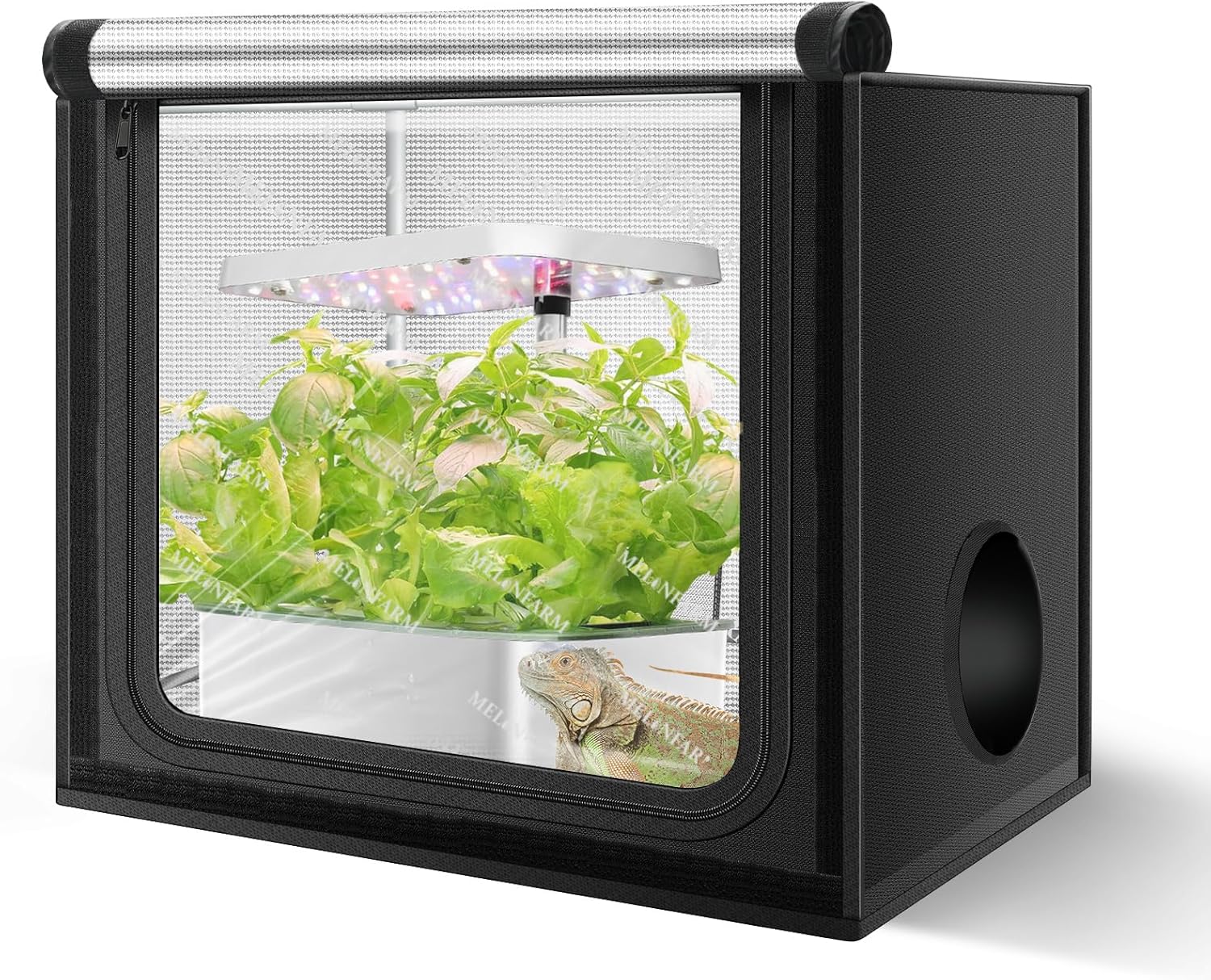
| Capacity | 7.68 cubic feet |
|---|---|
| Frame Material | Iron |
| Inner Material | Polyethylene Terephthalate (PET) |
This small grow tent creates a controlled microclimate for a few plants, seedlings, or compact hydroponic setups. It uses a reinforced iron frame and heavy canvas outer shell with a 2100D diamond polyester film lining to boost light reflection and keep stray light and odors contained. The double-layer observation door has a transparent panel for quick checks without opening the tent and a fabric layer for added privacy and insulation. Setup is tool-free and the included removable floor tray helps contain spills and simplifies cleaning. For a budget-focused gardener this tent covers the essentials: improved light use, basic environmental isolation, and easy access. Limitations are its very small footprint and modest capacity, so it is only suitable for a couple of plants or clones at once, and its lightweight construction means it is best kept indoors in a stable spot rather than moved frequently or used for large heavy equipment.
Best for: Buyers wanting an inexpensive, no-frills grow space for a few starter plants, seedlings, or a small hydroponic experiment in an apartment or spare room.
Less Ideal for: Gardeners who need multi-plant racks, large pots, or a permanent heavy-duty grow room should choose a larger, sturdier tent instead.
- Highly reflective 2100D diamond polyester lining that improves light efficiency
- Reinforced iron frame and double-stitched canvas for basic durability
- Double-layer observation door lets you monitor plants without disturbing the environment
- Tool-free assembly and included floor tray make setup and cleanup straightforward
- Very small interior volume limits plant count and pot size
- Not designed for frequent relocation or heavy equipment
Verdict: A compact, budget-friendly grow tent that delivers better light utilization and quick setup for small indoor grows.
VIVOSUN 30 x 18 x 36 in Small Mylar Grow Tent

| Frame Material | Metal |
|---|---|
| Inner Material | Polyethylene Terephthalate (PET) |
| Light Source Wattage | 100 watts |
| Item Highlight | Heavy-duty Zippers, 100% Reflective Mylar Interior, Observation Window |
This VIVOSUN 30 x 18 x 36 grow tent is a compact option for small indoor grows where light control and durability matter. It uses a metal pole frame with tool-free corner connectors and heavy-duty zippers, so assembly is quick and the structure stays stable once set up. The interior is lined with 100% reflective mylar and reinforced PET/PE layers to keep light inside and improve light distribution for your lamps. Practical touches include a removable floor tray for easy cleaning, multiple duct and cord openings, an observation window with hook-and-loop closure, and included hanging straps for filters or lights. The fabric is thick and waterproof, which helps with humidity management and reduces wear over time. Limitations are its small footprint, which suits only one to two small pots and limits larger equipment placement, and taller growers may find accessing plants awkward without bending. For growers who prioritize a reliable, lightproof enclosure in a tight space, this tent delivers sensible features and solid construction.
Best for: Best for growers who need a dependable, light-tight enclosure for a small indoor setup and value durable construction and easy maintenance over maximum capacity.
Less Ideal for: Not a good choice for people needing a multi-plant or large-equipment setup or for those who want frequent, easy full-height access without bending.
- Sturdy metal frame with tool-free corner connectors for fast, stable assembly
- 100% reflective mylar interior improves light efficiency and even distribution
- Thick, waterproof fabric and reinforced stitching for long-term durability
- Removable floor tray and multiple access ports simplify maintenance and equipment routing
- Small internal footprint only fits one to two small pots or limited equipment
- Access can be cramped, making plant maintenance awkward for taller users
Verdict: A compact, reliably built grow tent that delivers lightproofing and durable materials for small indoor grows.
MELONFARM Small Grow Tent for Hydroponics, 18 x 18 x 36 in

| Frame Material | Metal |
|---|---|
| Inner Material | Polyester |
| Outer Material | Oxford Cloth |
| Chamber Volume | 0.15 cubic feet |
The MELONFARM small grow tent provides a simple, no-frills enclosure for indoor hydroponic or soil-based plants in tight spaces. Sized for a single Aerogarden-style system or a couple of small pots, the tent uses a 600D diamond mylar canvas with a waterproof polyester film lining to reflect light and help retain heat and humidity. It has a heavy-duty zipper door, two clear observation windows and a removable floor tray for easy cleanup. Assembly is tool-free and straightforward, so you can have a working grow space set up quickly in a closet, balcony corner, or basement. Because it is compact and light, ventilation options and larger lighting rigs are limited, so it works best with low-power LED setups and small fans. Build materials are adequate for casual hobbyists but not as robust as higher-end, commercial tents, so expect normal wear if used intensively over years.
Best for: Buyers who need an affordable, compact grow space for one or two small hydroponic systems or a few starter plants and who prioritize quick setup and efficient light use.
Less Ideal for: Not a good fit for growers planning multiple larger plants, full-size lighting rigs, or heavy-duty continuous use where a sturdier, larger tent is required.
- Highly reflective 600D inner lining improves light efficiency for small LEDs
- Compact footprint fits closets, balconies, and other tight indoor spaces
- Tool-free assembly and heavy-duty zipper door make setup and access easy
- Clear observation windows let you check plants without opening the tent
- Included floor tray simplifies watering cleanup and protects surrounding surfaces
- Limited internal space restricts the size and number of plants and larger light or ventilation equipment
- Materials and frame are basic compared with premium grow tents, so longevity may be lower with heavy use
Verdict: A low-cost, compact grow tent that boosts light efficiency and sets up quickly, making it an easy choice for beginners and small-space hydroponic setups.
MELONFARM Small Grow Tent 30 x 18 x 36 with Reflective 600D Mylar and Viewing Window

| Chamber Volume | 11.25 cubic feet |
|---|---|
| Frame Material | Metal |
| Inner Material | Polyester |
| Outer Material | Oxford Cloth |
This MELONFARM grow tent is built for small indoor gardens and aims to create a controlled light and temperature environment for seedlings, herbs, and a few mature plants. It uses a sturdy metal frame and 600D double-stitched canvas with a waterproof polyester mylar lining to block light and reflect grow lamp output back onto plants. The tent includes a heavy-duty zipper door, clear observation windows for checking plants without opening the tent, and a removable floor tray to catch runoff. Assembly is simple and tool-free, so you can have it set up in minutes in a closet, basement, or balcony space. For cautious buyers the materials and construction provide reassuring durability and light sealing, and the small footprint makes it easy to manage ventilation and odor control with common inline fans and filters. Limitations are the compact interior volume, which restricts plant count and headroom, and the tent is best paired with appropriately sized lights and ventilation rather than relying on passive air exchange.
Best for: Buyers who want a reliable, low-risk way to start indoor growing in a small space and prefer a well-sealed, durable tent that is easy to set up and manage.
Less Ideal for: Growers who need large vertical space for tall plants or who want a complete plug-and-play system with integrated lighting and filtration.
- 600D double-stitched canvas and waterproof mylar lining for strong light blocking and reflectivity
- Metal frame offers stable support for small lighting and ventilation equipment
- Heavy-duty zipper door and observation windows allow easy access and monitoring without disturbing plants
- Compact footprint fits closets, balconies, and small indoor spaces and includes a floor tray to collect runoff
- Small internal volume limits the number and height of plants you can grow
- Not supplied with lights or ventilation hardware so those must be purchased separately
Verdict: A compact, well-built tent that gives risk-averse growers a durable, light‑tight environment for small indoor gardens.
Choosing the Right Small Indoor Grow Tent: Key Factors to Consider
Footprint and Interior Height
Measure the available floor area and the vertical clearance where you plan to set the tent. Small indoor grow tents trade floor space for vertical room differently, so a model with greater interior height is useful if you plan to use tall lights or grow plants that stretch.
Also think about the door style and whether you need full front access or just a small flap for maintenance. In tight apartments you may accept a slightly smaller footprint if the tent offers better vertical clearance and easier access to equipment ports.
Lightproofing and Interior Reflectivity
A truly dark outer fabric and a bright reflective inner lining keep light where plants need it and prevent leaks that can disturb light cycles. Seams, zipper areas, and ventilation ports are typical weak points for light intrusion, so inspect how those are finished and reinforced.
Interior reflectivity improves how evenly your lights distribute PAR across the canopy. A smooth, high-reflectance lining reduces hot spots and can let you use lower-wattage fixtures more effectively inside a small tent.
Ventilation Ports and Airflow Management
Properly placed and sized ventilation ports let you fit an inline fan, carbon filter, and ducting without kinking or crowding. In small tents, airflow paths are shorter and can heat or humidify the chamber quickly, so adequate intake and exhaust are essential to prevent temperature spikes.
Consider how many ports you need for an exhaust fan, passive intakes, and routed cables. Some tents include removable panels or pre-cut flaps that make custom airflow setups easier in compact spaces.
Frame Strength and Seams
A sturdy frame with tight-fitting connectors keeps the tent square and prevents sagging when you hang lights or trellis supports. Thin poles and loose joints lead to wobble and stress zippers and seams over time.
Check for reinforced seam stitching and overlap at stress points. Heavy-duty zippers that glide smoothly and have protective fabric covers will extend the tent life in a small indoor environment where you open and close the tent frequently.
Access, Maintenance, and Cleaning
Frequent access for watering, trimming, and inspection is normal in small grows. Look for tent doors and access panels that let you reach plant sites without removing fixtures. Some tents offer internal hanging straps and tool pockets that keep small spaces organized.
Materials that wipe clean and a design that allows full disassembly make pest control and routine cleaning simpler. If you plan to move the tent occasionally, consider how easy it is to take down and reassemble.
Compatibility With Lighting and Accessories
Small grow tents must fit the fixtures and filters you intend to use. Check recommended hanging weight, available mounting points, and internal clearance for LED bars, reflectors, and scope of motion for adjustable hangers.
Also verify that the tent has cable pass-throughs sized for power cords and dimmers. If you plan to use automation like timers or sensors, ensure there is a convenient way to route those connections without creating light leaks or blocking vents.
Best Uses for Small Tents
Small indoor grow tents are ideal for starting seedlings, keeping a year-round herb station, or running one or two compact flowering plants in a limited area. They let you isolate environmental conditions so you can control light cycles, humidity, and temperature without affecting the rest of your living space.
- Seed-starting and clones
- Herbs and microgreens
- Off-season rooting and experimentation
Setting Up Ventilation in Tight Spaces
Plan airflow before you assemble the tent. Position the exhaust fan near the top to remove heat buildup and use passive or filtered intake lower in the tent to encourage even circulation. In small tents, short duct runs and right-angle adapters reduce space hogging and improve performance.
- Mount the fan above plant canopy when possible
- Use flexible ducting sized to the port to avoid kinks
- Install a small oscillating fan inside for canopy circulation
Lighting Tips for Compact Canopies
LED fixtures designed for low ceilings save vertical space and reduce heat output. Suspend lights using adjustable ratchets so you can lower them as plants grow. Also consider multi-bar LEDs that spread light evenly across a small footprint rather than a single high-intensity point source.
- Choose low-profile LEDs for more headroom
- Use hangers with measured increments for repeatable positioning
- Monitor canopy PAR to avoid hot spots
Managing Humidity and Temperature
Small tents respond quickly to changes in watering and lights, so expect larger swings in humidity and temperature than in larger rooms. Use a compact hygrometer and thermometer to track conditions and adjust exhaust speed or spacing between lights and plants. A small humidifier or dehumidifier can stabilize swings, and timing your lights to avoid peak heat in the living area helps maintain predictable cycles.
- Track conditions hourly during critical growth stages
- Avoid overwatering to reduce humidity spikes
- Use timed ventilation boosts during lights-on periods
Organization and Cable Management
Clutter builds fast in a small tent. Use internal pockets and hanging straps to keep tools and cords off the floor and out of plant reach. Secure power strips outside the tent and route power through dedicated cable ports to prevent pests and moisture from reaching electrical connections. Label cords and keep a simple maintenance kit near the tent for quick adjustments and repairs.
- Keep heavy equipment on stable external shelving
- Use Velcro ties for tidy cable runs
- Store spare clips and filters in internal pockets
How We Chose the Best Small Indoor Grow Tent
We focused on criteria gardeners care about when choosing a compact indoor grow tent. Key evaluation points included build and material quality, lightproofing and reflective interior finish, ventilation compatibility and port placement, ease of assembly and access, and durability under repeated use. We looked for tents with sturdy frame connections and heavy-duty zippers, interiors that maximize usable height and shelf area, and practical duct and cable ports that suit typical small fans and LED fixtures. Excluded from the shortlist were tents that lacked clear ventilation ports, used thin fabric that would allow light leaks, or had unstable frame designs. We also favored tents that are straightforward to clean and maintain, since small indoor setups often require frequent access and occasional adjustments. Our selection emphasizes tents that balance a compact footprint with practical features for temperature and humidity control, supporting a range of small-scale indoor growing needs.
FAQ
How much clearance do I need above plants for LED fixtures?
It depends on the LED type and intensity. Low-profile LEDs often need 6 to 12 inches above the canopy, while more powerful fixtures may require 12 to 24 inches. Always follow the light manufacturer guidelines and raise lights if you see leaf stress.
Can I use a small grow tent in a closet or closet-sized alcove?
Often yes, if you can provide fresh air for intake and route an exhaust fan. Ensure doors and surrounding materials are not heat-sensitive, and allow for access to manage humidity and electrical cords safely.
What type of ventilation works best in a small tent?
A compact inline exhaust fan paired with passive lower intakes is common. The fan should be sized to exchange air frequently without creating excessive noise. Adding a small internal circulation fan helps distribute air and prevents hot spots.
Will a small tent cause humidity problems in my apartment?
Small tents can raise local humidity levels, but proper ventilation and control devices usually contain moisture within the tent. Expect to monitor and adjust exhaust timing during sensitive stages like vegetative growth or flowering.
How often should I clean a small grow tent?
Wipe down interior surfaces and check for pests or mold at least once per grow cycle. Heavy handling, soil spills, or pest pressure may require more frequent cleaning. Regular checks protect plants and extend the tent's life.
Can I stack shelving inside a small tent to increase plant count?
You can add shelving if the tent offers enough height and the frame can support the load. Keep airflow and light distribution in mind, and avoid overcrowding which can increase disease risk and make maintenance harder.
Final Verdict
For compact indoor grows, prioritize tents that deliver reliable lightproofing, practical ventilation ports, and a robust frame. Measure your space and match interior height and port placement to the lights, fan, and accessories you plan to use. Tradeoffs are common: the smallest footprints limit shelving and full-size fixtures, while taller tents require slightly more room but offer greater flexibility. Choose a tent that fits your planned setup and maintenance habits rather than chasing the smallest unit available. Focus on durable construction, thoughtful access, and ventilation compatibility to keep small-scale indoor gardening predictable and productive.
