

Note: This article contains affiliate links. If you click on these links and make a purchase, I may earn a small commission at no extra cost to you. This helps support my research and content. Read my full affiliate disclosure here.
Choosing the right grow tent for hydroponics matters because the tent is the environment that determines light reflection, airflow, humidity stability, and how easy it is to maintain plant health. If humidity spikes, leaks, or poor airflow go unchecked you can lose plants or spend hours troubleshooting environmental problems. This guide covers the top shortlisted grow tents for hydroponics and explains the criteria that make a tent reliable for water-based systems. We evaluate build quality, ventilation and ducting, access and maintenance, and features that prevent moisture damage. Read on to understand which tent features will make daily care and system setup simpler and more predictable.
Top Picks at a Glance
| Best Overall The best all-around choice for most situations | VIVOSUN S425 2×4 Grow Tent (48 x 24 x 60) |  |
| Best Quality Built to a higher standard if you want something more solid | Spider Farmer 4×4 Grow Tent (48 x 48 x 80) |  |
| Best Value The sweet spot between price and what you get | Green Hut 4×2 Grow Tent (48 x 24 x 60) with 600D Mylar Lining |  |
| Best Budget The cheapest option that still gets the job done reliably | MELONFARM Small 24 x 16 x 24 in Grow Tent with Observation Window |  |
| Highest Rated A top-rated pick with lots of positive feedback | AC Infinity CLOUDLAB 811 Advance Grow Tent (10×10) |  |
| Most Popular A crowd favorite that many people choose with confidence | VIVOSUN S448 4×4 Grow Tent (48" x 48" x 80") |  |
| Best Seller A high-volume bestseller chosen again and again | MELONFARM 2×2 Grow Tent with Observation Window and Floor Tray |  |
VIVOSUN S425 2×4 Grow Tent (48 x 24 x 60)

| Frame Material | Metal |
|---|---|
| Inner Material | Polyethylene Terephthalate (PET) |
| Capacity | 900000 cubic centimeters |
| Weight Capacity Maximum | 100 pounds |
| Light Source Wattage | 50 watts |
The VIVOSUN S425 2×4 grow tent creates a lightproof, controllable space for two to three hydroponic plants in 5-gallon pots or similar small setups. Its 100% reflective mylar lining and waterproof 600D fabric help maximize light use while preventing leaks, and upgraded zippers and double-stitched seams improve durability. The metal frame with tool-free corner connectors and two top hanging bars speeds assembly and supports hanging lights or a carbon filter up to the stated load. Practical touches include a removable mylar floor tray for easy cleanup, a clear viewing window for quick inspections, multiple vent ports for ducting fans and running power, and internal tool organizers to keep accessories tidy. Limitations are its compact footprint, which restricts plant count and larger equipment placements, and that full environmental control (lights, fans, filtration) requires buying additional components. Beginners should budget for ventilation and lighting to get a complete hydroponic system working inside this tent.
Best for: Growers who want a compact, durable tent to run a small hydroponic setup and prioritize efficient light use and easy maintenance.
Less Ideal for: People planning larger multi-plant grows or those who want an all-in-one kit with built-in lighting and ventilation.
- 100% reflective mylar interior improves light efficiency for hydroponic setups
- Thick 600D fabric with double-stitched seams and upgraded zippers for better lightproofing and durability
- Sturdy metal frame with tool-free corner connectors and two hanging bars for quick assembly and secure equipment mounting
- Removable mylar floor tray and observation window simplify maintenance and visual checks
- Multiple vent ports and internal organizers make routing fans, filters, and cords straightforward
- Footprint is small so it accommodates only a few mature plants and limits larger equipment
- Tent does not include lights, fans, or filtration so those must be purchased separately
Verdict: A well-built, lightproof 2×4 tent that maximizes light efficiency and simplifies maintenance for small hydroponic grows.
Spider Farmer 4×4 Grow Tent (48 x 48 x 80)
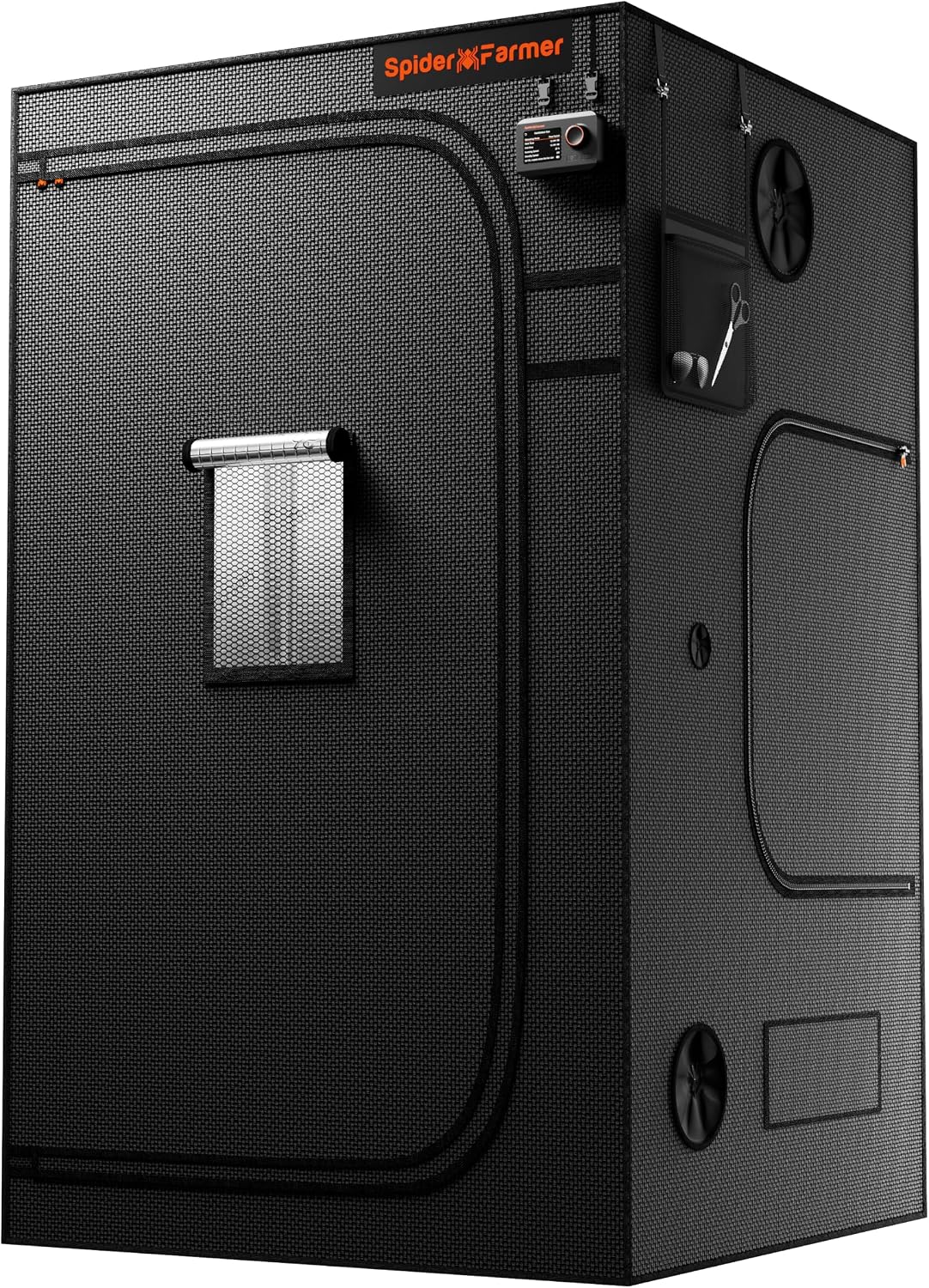
| Unit Count | 16 Square Feet |
|---|---|
| Inner Material | mylar |
| Outer Material | 1680D Oxford cloth and reflective mylar |
| Frame Material | Metal |
| Weight Capacity Maximum | 150 pounds |
This Spider Farmer 4×4 grow tent creates a controlled, lightproof space for indoor gardening and is sized for a 4×4 setup. It uses thick 1680D Oxford canvas and reflective mylar to minimize light leaks and maximize usable light, and heavy steel poles with reinforced adapters support substantial hanging loads so larger LED fixtures and carbon filters can be installed without sagging. The tent includes practical features for organized builds: multiple cable pass-throughs, a dedicated controller hook and cable lanyard, an enlarged observation window, removable waterproof floor tray, and a tool bag for accessories. Setup is tool-free and straightforward, and the observation window plus zipper configurations make monitoring and access convenient. Expect a reliably dark, insulated environment well suited to multi-light grows, but note the tent’s robust materials and metal frame make it less portable than lightweight pop-up options and the interior space is fixed to the 4×4 footprint so larger commercial layouts will need bigger tents or modular expansion.
Best for: Gardeners who want a durable, no-nonsense grow environment that supports heavier lights and tidy cable management for a reliable 4×4 indoor grow setup.
Less Ideal for: People needing a highly portable or very large commercial grow space should consider lighter pop-up tents for mobility or larger modular systems for scale.
- High-density 1680D Oxford canvas and diamond mylar interior for strong lightproofing and reflectivity
- Reinforced steel frame rated to support heavy lights and filters without collapsing
- Multiple cable passthroughs and controller hooks for tidy smart-gear integration
- Removable waterproof floor tray and tool bag simplify maintenance and organization
- Heavier, more rigid construction reduces portability compared with lightweight tents
- Fixed 4×4 interior area may be limiting for larger or multi-tier commercial setups
Verdict: Buy this tent if you want a rugged, lightproof 4×4 grow space built to support heavy lights and organized smart-gear setups.
Green Hut 4×2 Grow Tent (48 x 24 x 60) with 600D Mylar Lining

| Chamber Volume | 40 cubic feet |
|---|---|
| Weight Capacity Maximum | 110 pounds |
| Frame Material | Alloy Steel |
| Inner Material | mylar,steel |
| Capacity | 40 cubic feet |
This Green Hut 4×2 grow tent is designed for hobby hydroponic growers who need a compact, light-tight environment. The 100% reflective mylar lining and removable floor tray help maximize light use and simplify cleaning, while the heavy-duty 600D fabric and double-stitched seams reduce light leaks and wear. Assembly uses alloy steel poles and reinforced connectors rated to support equipment up to the listed capacity, so small inline fans, a modest light and a reservoir fit comfortably. Practical touches include a viewing window and robust zippers with ribbon backing to limit light seepage. Expect efficient heat retention and improved light intensity inside the tent, which benefits fast-growing herbs and small vegetable crops. Limitations are its small footprint and modest height, which restricts larger trellised plants or multi-tier shelving, and the tent does not include internal hangers or electrical access panels beyond the basic ports, so plan equipment layout in advance. For single-light hydroponic rigs the tent balances durability and value.
Best for: Best for growers who want a compact, durable tent to run a single-light hydroponic system and prioritize efficient light use and easy maintenance.
Less Ideal for: Not a good fit for growers planning large canopy areas, tall training systems, or multi-shelf commercial setups.
- High-reflectivity 100% mylar interior that increases usable light for hydroponic setups
- Durable 600D double-stitched fabric and heavy-duty zippers to minimize light leaks
- Sturdy alloy steel frame with reinforced connectors rated to support equipment loads
- Removable floor tray for easy cleaning and spill containment
- Compact footprint suitable for apartments or small grow spaces
- Limited internal height and floor area restricts tall plants or multi-layer shelving
- No included internal shelving, hangers, or advanced cable management accessories
Verdict: A tough, reflective small grow tent that gives hobby hydroponic setups efficient light use and straightforward maintenance.
MELONFARM Small 24 x 16 x 24 in Grow Tent with Observation Window

| Chamber Volume | 4 cubic feet |
|---|---|
| Frame Material | Metal |
| Inner Material | mylar |
| Outer Material | Oxford cloth |
This small MELONFARM grow tent is designed to create a controlled, light-tight environment for hydroponic or soil-based indoor gardening in a very compact footprint. It uses a metal frame and 600D Oxford canvas with a highly reflective mylar interior to help maximize light distribution from compact grow lamps while the heavy-duty zipper and double-stitched seams reduce light leaks. The tent includes a removable floor tray for easy cleaning and two transparent observation windows so you can check plants without opening the main door. Setup is tool-free and straightforward, which is convenient for first-time growers or limited-space setups such as closets or balconies. The main limitations are its small chamber volume and low weight capacity, which restrict the number and size of plants and heavier equipment you can install. Also expect cramped working space when accessing plants and limited airflow if you try to fit large inline fans or bigger reservoirs. For basic hydroponic trays or a single Aerogarden-style unit this tent delivers good value and functionality.
Best for: A budget-conscious gardener who needs an entry-level grow tent for a small hydroponic system or a single countertop unit and values easy setup and portability.
Less Ideal for: Not suited for growers who need to cultivate multiple large plants, run heavy ventilation systems, or expand to larger hydroponic rigs.
- Highly reflective 600D mylar interior improves light efficiency for compact grow lights
- Compact footprint fits closets, balconies, or small indoor spaces
- Tool-free assembly and heavy-duty zipper make setup and daily access easy
- Observation windows let you check plants without opening the main door
- Removable floor tray simplifies spills and cleaning
- Small chamber volume and low weight capacity limit plant size and number
- Tight internal space restricts working around plants and adding large equipment
Verdict: A cost-effective, compact grow tent that gives small hydroponic setups a light-tight, reflective environment with easy setup and maintenance.
AC Infinity CLOUDLAB 811 Advance Grow Tent (10×10)

| Frame Material | Alloy Steel |
|---|---|
| Inner Material | Mylar |
| Item Highlight | Largest Zipper Window, 2000D Mylar Canvas, 1" Poles, Controller Mount |
| Weight Capacity Maximum | 250 pounds |
This AC Infinity CLOUDLAB 811 is built for serious hydroponic growers who prioritize a durable, light-tight environment. The tent uses 1-inch alloy steel poles and thick 2000D mylar canvas to create a rigid frame and maximized internal reflectivity, which helps even light distribution for dense canopies. It includes extra hanging bars and a large integrated controller-mount plate with cable passthroughs so inline fans, humidifiers, and environmental controllers can be tidily installed and routed. Practical touches include oversized zipper windows for easy access and inspection, multiple duct ports in common sizes for exhaust and intake, and a removable catch tray for spills. The heavy-duty construction and reinforced corners reduce the chance of sagging or light leaks over multi-season use. Trade-offs are that the tent is large and substantial to assemble and will need a dedicated indoor space and compatible ventilation equipment to perform at its best.
Best for: Hydroponic growers who need a long-lasting, light-controlled environment and want an easy way to mount controllers and ventilation for consistent multi-crop cycles.
Less Ideal for: Casual hobbyists with limited space or growers who need a compact, quickly portable tent for occasional use.
- Robust 1" alloy steel pole frame for structural stability
- 2000D mylar canvas with lab-tested high reflectivity to improve light efficiency
- Multiple factory-cut duct ports and controller mount for neat hydroponic integration
- Extra hanging bars and reinforced corners support heavier lights and equipment
- Large inspection windows and heavy-duty zippers for convenient access and reduced light leaks
- Large footprint requires a dedicated indoor location and can be cumbersome to assemble
- Heavier, higher-spec materials increase shipping and handling difficulty during setup
Verdict: Choose this tent when you want a rugged, hydroponics-ready 10×10 grow environment that keeps light in and equipment neatly integrated.
VIVOSUN S448 4×4 Grow Tent (48" x 48" x 80")

| Tent size | 48" x 48" x 80" |
|---|---|
| Inner material | Polyethylene Terephthalate (PET) |
| Outer material | Oxford Fabric |
| Frame material | Metal |
| Light source wattage | 400 watts |
The VIVOSUN S448 is a 4×4 grow tent designed to give hobby and small-scale growers a durable, lightproof environment for indoor plants. It uses a high-reflectivity mylar interior to diffuse light and reduce hotspots, plus upgraded heavy-duty zippers and a thick 1680D oxford outer fabric for long-term use. The metal frame and reinforced connectors hold hanging bars for lights and other equipment, while multiple duct ports and cable openings make it straightforward to add fans, filters, humidifiers or controllers. A removable mylar floor tray simplifies cleaning and the observation window lets you check plants without breaking the seal. Setup is intended to be quick with clear instructions and smooth-gliding doors for easy access. Expect a solid, workmanlike tent that supports multimedia grow systems, but be aware it is a dedicated grow environment so you will need to add lighting, ventilation and environmental controls separately to run a complete setup.
Best for: Buyers who value proven construction and clear social proof and want a reliable, long-lasting 4×4 tent to build a complete indoor grow system with separate lights and ventilation.
Less Ideal for: Casual plant owners who want a plug-and-play all-in-one kit or those with very limited indoor space should consider smaller integrated kits instead.
- 100% reflective mylar interior to improve light distribution and reduce hotspots
- Sturdy all-metal frame and reinforced connectors that support hanging lights and equipment
- Thick 1680D oxford fabric and heavy-duty zippers for durability and lightproofing
- Multiple duct ports and cable openings for easy integration of ventilation and climate-control gear
- Removable waterproof floor tray and observation window for easier maintenance and monitoring
- Does not include lighting, fans, or filtration so you must purchase a complete system separately
- Relatively large footprint requires dedicated indoor space and clearance for airflow
Verdict: A well-built, reflective 4×4 tent that gives risk-conscious growers a durable, serviceable base to assemble a reliable indoor grow system.
MELONFARM 2×2 Grow Tent with Observation Window and Floor Tray

| Frame Material | Metal |
|---|---|
| Inner Material | Polyethylene Terephthalate (PET) |
| Outer Material | Oxford Cloth |
| Light Source Wattage | 24 watts |
This MELONFARM 2×2 grow tent creates a light-proof, reflective microenvironment for one to a few plants in a small indoor space. It is lined with highly reflective PET mylar and wrapped in heavy-duty 600D Oxford canvas, which helps contain light and maintain stable temperatures when used with a small LED and an inline fan. The kit includes a sturdy metal pole frame that supports lights and ventilation hardware and a removable floor tray to protect floors from spills. Two observation windows let you check plants without opening the main door and disturbing the climate. Assembly is straightforward and tool-free, so setup in a closet or corner is quick. Limitations are its small footprint and modest height, which restricts plant count and tall varieties, and the tent does not include lighting or fans so you must add compatible equipment separately. For conservative buyers this tent emphasizes durability and predictable environmental control rather than extras or large-scale capacity.
Best for: Buyers who want a reliable, low-risk way to start indoor growing in tight spaces and value durable construction and easy setup over large capacity.
Less Ideal for: Gardeners planning to grow many plants, tall varieties, or a full multi-light setup should choose a larger tent or a taller model.
- Durable 600D Oxford canvas and double-stitched seams for light-proofing and tear resistance
- Highly reflective PET inner lining to improve light distribution and efficiency
- Metal pole frame rated to support grow lights and small inline fans
- Observation windows let you inspect plants without opening the main door
- Removable floor tray protects flooring from water and nutrient spills
- Small internal volume limits the number and height of plants you can grow
- No included lighting, fans, or ducting so you must purchase ventilation and light separately
Verdict: A compact, well-built tent that delivers predictable light control and easy setup for cautious indoor growers starting small.
Choosing the Right Grow Tent for Hydroponics: Key Factors to Consider
Build Material and Seams
The fabric and frame determine how well a tent holds up to the constant humidity and occasional splashes that come with hydroponics. Heavy-duty ripstop fabrics with a reflective inner layer give both light efficiency and physical durability. Reinforced, double-stitched seams and taped joins reduce the likelihood of leaks and slow moisture migration, which helps prevent mold and structural weakening over time.
Think about frame thickness and corner fittings too. Sturdier poles resist sagging when you hang lights, filters, or reservoirs. If you plan to hang heavy LED fixtures or multiple devices, a tent with metal corner braces and a thicker gauge frame will be safer and last longer.
Lightproofing and Internal Reflection
Light containment is central to consistent crop cycles in hydroponic setups. A tent must prevent light leaks that confuse photoperiod-sensitive plants and reduce overall light efficiency. Look for full-coverage outer shells, well-designed zipper flaps, and internal mylar or diamond-pattern reflective liners that distribute light evenly to lower canopy levels.
Reflective lining quality affects how many PAR photons actually reach the plants versus being absorbed by the tent fabric. Higher-reflectance liners can reduce the number of fixtures you need or improve uniformity, which in turn affects growth rates and yield.
Ventilation and Duct Compatibility
Hydroponic systems generate heat and humidity that must be managed. A tent needs well-placed vent ports sized for common duct diameters, secure duct collars, and options for intake and exhaust routing. The ease of installing an inline fan, carbon filter, or oscillating fans should be considered at purchase.
Placement of vents relative to light fixtures and plant canopy matters. Exhaust ports positioned near the top will remove hot air efficiently, while lower intake ports can bring in cooler air. Multiple port locations give flexibility for different system layouts and simplify maintenance without forcing a complete teardown.
Humidity Resistance and Drainage
High humidity is normal in hydroponics but prolonged moisture exposure can degrade tent materials. Look for tents with waterproof floor trays or sealed bottoms to contain spills and runoff. A removable, waterproof floor tray simplifies cleaning and protects the frame and outer fabric from standing water.
Also consider how seams and zippers handle moisture. Poorly sealed zippers and stitched seams can wick water into internal cavities. Tents designed with sealed hems, welded tray edges, or elevated frames reduce the risk of water damage and make sanitation faster.
Access, Observation, and Maintenance
Frequent access is required for nutrient checks, pruning, reservoir changes, and pest monitoring. Tents with multiple large access doors, removable roof panels, and observation windows with lightproof covers reduce disruption to the environment when you need to inspect plants. Internal hanging rails, built-in support points, and tool ports speed routine tasks.
Maintenance-friendly features extend the life of a tent. Removable floor trays, tool pouches, and easily replaceable duct collars let you perform cleaning and minor repairs without cutting or altering the tent fabric. Good access design reduces the chance of accidentally tearing fabric or dislodging ducting during regular care.
Size, Layout, and Modularity
Picking the right tent size affects airflow patterns, light distribution, and how easily you can stage multiple stages of growth inside one enclosure. Larger tents need more robust ventilation and multiple fans to maintain uniform temperature and humidity. Small tents are easier to control but limit canopy size and reservoir placement.
Consider future expansion. Modular tents with removable internal dividers or common frame sizes make it easier to upgrade without discarding equipment. Measure available room height and door clearances to ensure you can install lights, filters, and reservoirs without strain.
Setting Up Ventilation for Hydroponic Climate Control
Proper ventilation keeps temperatures in the ideal range and prevents humidity from climbing to levels that encourage mold or root problems. Plan intake and exhaust so airflow sweeps across the canopy and out through an exhaust port near the top of the tent. Use ducting that matches port sizes and avoid tight bends that reduce airflow capacity.
- Position exhaust fan at or above the light level to pull heat away from fixtures.
- Use pre-filter mesh on intakes to reduce dust and debris entering the tent.
- Balance intake and exhaust so the tent is slightly negative to control odors if needed.
Managing Light and Reflectance for Uniform Canopy Growth
Arrange fixtures and reflective material to minimize hot spots and shaded pockets. High-quality reflective liners bounce light back into the canopy rather than absorbing it, so choose tents with consistent, high-reflectance interiors. Keep lights centered and use adjustable hangers to fine-tune height as plants grow.
- Avoid positioning vents directly under fixtures where cool air can create temperature gradients.
- Use secondary reflective surfaces like white trays or side reflectors to even out distribution.
Preventing Moisture Damage and Maintaining Cleanliness
Hydroponic setups are prone to spills and condensation. A waterproof, removable floor tray and protocols for catching runoff during reservoir changes greatly reduce cleaning time and material degradation. Wipe down interior walls periodically and inspect seams and zipper covers for signs of wear.
- Lift and dry any wet areas quickly to prevent mold.
- Keep nutrient solution changes outside of the tent area when possible to avoid spills.
Organizing Equipment and Cable Management
Neat routing of power cords, tubing, and ducting reduces stress on ports and prevents accidental disconnections. Use built-in hanging rails or add cable ties to secure lights and equipment. Leave service loops in tubing so you can remove components without tugging on connections.
- Label lines for nutrient reservoirs to prevent cross-contamination.
- Use dedicated entry ports for power and tubing away from main access zippers to reduce light leaks.
Choosing the Right Tent Size for Your System
Match tent footprint and height to your intended plant count and the size of lights and reservoirs. Taller plants or multi-level systems require more vertical space and stronger support rigs. For multi-tray or mother/clone setups, ensure you have easy access to each shelf and adequate ventilation for every level.
- Account for light hangers, filter height, and any external controllers when measuring total install height.
- Reserve space for an inline fan and ducting clearance at the top of the tent.
How We Chose the Best Grow Tent for Hydroponics
We focused on characteristics that directly affect hydroponic success and day-to-day handling. Primary evaluation criteria included material durability and lightproofing to prevent leaks and light bleed; ventilation and ducting compatibility to support inline fans, filters, and air exchange; and internal access and maintenance features such as multiple ports, observation windows, and removable floor trays. We also evaluated humidity management ability and seam construction because hydroponic setups expose tents to elevated moisture and occasional spills. We excluded tents designed only for passive or soil-based hobby setups where ventilation and waterproofing are minimal. We did not consider tents with obvious structural weaknesses or materials that degrade rapidly in humid conditions. Our selection process prioritized tents that are easy to modify for reservoirs, inline fans, and duct runs while keeping light containment and odor control intact. The scoring and editorial choices reflect practical gardener needs in small to medium indoor hydroponic rooms and grow cabinets.
FAQ
What tent features matter most for hydroponic humidity control?
Waterproof floor trays, sealed seams, and corrosion-resistant frames are the most important because they limit water damage and simplify cleaning. Adequate vent ports and sizing for inline fans also help maintain target humidity by allowing effective air exchange.
How big should a grow tent be for a small hydroponic setup?
For a small single-reservoir system, a compact tent that fits one to four plants is usually adequate. Size depends on light footprint and plant training methods; choose a tent where fixtures can be hung at recommended distances without crowding the canopy.
Can I use standard ducting and filters with grow tents made for hydroponics?
Most tents have ports sized for common duct diameters and work with standard inline fans and carbon filters. Confirm port diameters and ensure collars seal firmly to reduce air leaks and maintain ventilation efficiency.
How do I prevent light leaks around zipper entries?
Look for tents with double-flap zipper covers and well-constructed zipper channels. When exiting or entering, keep zippers closed except for the time you need, and consider adding small light-blocking flaps over any port openings used for cabling.
Are reflective liners important for hydroponic growth?
Yes. Reflective liners increase usable light by bouncing photons back into the canopy, improving uniform growth and potentially reducing the number of fixtures needed. Quality liners also help maintain more even temperatures across the canopy.
Final Verdict
Prioritize build durability, ventilation compatibility, and moisture-protection features when choosing a grow tent for hydroponics. Those factors dictate how easy daily maintenance will be and how reliably you can control light, temperature, and humidity. Balance size and access with ventilation needs: a larger tent often needs stronger airflow solutions, while smaller tents are easier to control but limit canopy size. Focus on tents that make routing fans, filters, and reservoirs straightforward and provide durable, lightproof construction for long-term hydroponic use.
