

Note: This article contains affiliate links. If you click on these links and make a purchase, I may earn a small commission at no extra cost to you. This helps support my research and content. Read my full affiliate disclosure here.
If you are growing indoors with hydroponics, the right grow tent makes climate control and light management far easier. A purpose-built tent creates a stable microenvironment for nutrient-driven systems, reduces light leaks that confuse plants, and concentrates ventilation so fans and carbon filters work efficiently. This guide shortlists the top hydroponic grow tent options for different setups and spaces. We focus on factors that matter in real gardens: light containment, airflow and ventilation, ease of setup and access, and durable materials that withstand humidity. Below are our top picks and the criteria used to evaluate them, followed by buying guidance to help you choose the right tent for your system and space.
Top Picks at a Glance
| Best Overall The best all-around choice for most situations | MARS HYDRO 4×4 Advanced Grow Tent (48" x 48" x 80") |  |
| Best Quality Built to a higher standard if you want something more solid | Spider Farmer 8×4 Grow Tent (96 x 48 x 80) – Master Series |  |
| Best Value The sweet spot between price and what you get | Green Hut 4×2 Grow Tent 48x24x60 with 600D Mylar Lining |  |
| Best Budget The cheapest option that still gets the job done reliably | MELONFARM Small Hydroponic Grow Tent, 24 x 16 x 24 inches |  |
| Highest Rated A top-rated pick with lots of positive feedback | AC Infinity CLOUDLAB 811 Advance Grow Tent (10 x 10) |  |
| Most Popular A crowd favorite that many people choose with confidence | VIVOSUN S448 4×4 Grow Tent (48" x 48" x 80") |  |
| Best Seller A high-volume bestseller chosen again and again | MELONFARM 2×2 Grow Tent with Observation Window and Floor Tray |  |
MARS HYDRO 4×4 Advanced Grow Tent (48" x 48" x 80")

| Unit Count | 16 Square Feet |
|---|---|
| Frame Material | Metal,Steel |
| Inner Material | Polyethylene Terephthalate (PET) |
| Light Source Wattage | 3000 watts |
| Capacity | 70 kg |
The MARS HYDRO 4×4 Advanced Grow Tent is a 48×48×80 inch enclosure built for hobby and small-scale indoor growing. It uses thick 1680D reflective mylar and a double-stitched canvas with an added zipper flap to minimize light leaks, and a removable waterproof floor tray for easier cleanup. The metal frame and solid corner adapters create a sturdy support structure that handles typical tent lighting, fans, and accessories. Practical features include smooth dual zippers that resist catching, a viewing window to check plants without opening the tent, and multiple hanging points for lights and controllers. Because it recommends mid-to-high power fixtures and inline fan sizes, it fits growers who want reliable light containment and decent ventilation options. Limitations are mainly its footprint and height which suit medium setups rather than large commercial racks, and it does not include lighting or ventilation components so you must choose compatible fans and LEDs separately. Assembly is straightforward but requires two people for best results when fitting the frame and canopy.
Best for: Gardeners who want a reliable, lightproof mid‑sized tent for serious hobby or small-scale seasonal grows and who plan their own lighting and ventilation setup.
Less Ideal for: People needing a turnkey kit with lights and filtration included or growers who require larger multi-rack commercial growing space.
- Heavy 1680D reflective mylar and double-stitched canvas for strong light containment
- Sturdy metal/steel frame and corner adapters that support typical tent equipment
- Detachable waterproof floor tray and viewing window for easier maintenance and monitoring
- Smooth dual heavy-duty zippers with an additional flap to reduce pinhole light leaks
- Multiple hang points and recommended fan/light compatibility make equipment planning straightforward
- Does not include lights, fans, or filters so additional purchases are required
- Footprint and height are optimized for medium hobby grows and not for larger commercial layouts
Verdict: A solid, lightproof 4×4 tent that balances durability and useful features for committed hobby growers building a medium indoor grow.
Spider Farmer 8×4 Grow Tent (96 x 48 x 80) – Master Series

| Frame Material | Metal, Steel |
|---|---|
| Inner Material | Alloy Steel |
| Outer Material | Protective Coating / Durable Covering |
| Canvas Density | 1680D Oxford |
| Weight Capacity Maximum | 240 pounds |
This Spider Farmer 8×4 Master Series grow tent is built for performance-focused hydroponic growers who need a stable, lightproof chamber for larger plant runs. The tent uses thick 1680D Oxford canvas with diamond mylar and premium SBS zippers to minimize light leaks and maximize internal light reflection, which helps improve canopy uniformity under LED fixtures. Assembly is tool-free and straightforward: metal poles and reinforced corner adapters create a rigid frame that the cover slips over, and the included waterproof floor tray and hanging bars simplify setup and maintenance. Practical touches such as multiple cable pass-throughs, a dedicated controller lanyard, enlarged observation window, and an accessory tool bag make it easy to integrate controllers, inline fans, and filtration without compromising the sealed environment. The frame is rated to support heavy lights and filters up to 240 pounds, so it handles demanding hydroponic rigs. Downsides are typical for a tent this size: it requires a dedicated indoor space and ventilation planning, and its heavier materials make it less portable than thinner-budget tents.
Best for: Hydroponic growers building a performance-focused indoor room who prioritize light control, equipment load capacity, and neat integration of controllers and ventilation.
Less Ideal for: Casual hobbyists who need a compact, highly portable tent or growers without space for an 8×4 footprint should consider smaller, lighter alternatives.
- High-density 1680D canvas and diamond mylar for strong lightproofing and reflectivity
- Reinforced steel frame rated to support up to 240 pounds for heavy lights and filters
- Multiple cable pass-throughs and controller lanyard for neat smart-system integration
- Waterproof removable floor tray and enlarged observation window for easy maintenance
- Large footprint requires a dedicated indoor space and careful ventilation planning
- Heavier, more rigid construction reduces portability compared with lightweight tents
Verdict: A rugged, lightproof 8×4 tent built to hold heavy lights and integrate smart hydroponic gear for high-performance indoor grows.
Green Hut 4×2 Grow Tent 48x24x60 with 600D Mylar Lining

| Chamber Volume | 40 cubic feet |
|---|---|
| Capacity | 40 cubic feet |
| Weight Capacity Maximum | 110 pounds |
| Frame Material | Alloy Steel |
| Inner Material | mylar,steel |
This Green Hut 4×2 grow tent is built for small-scale hydroponic or potted grows where light control and durability matter. The 100% reflective mylar lining and removable floor tray boost light efficiency and make cleaning easier, while heavy-duty zippers and double-stitched 600D fabric help block light and retain heat. The alloy-steel frame and reinforced connectors are rated to support hanging lights and inline fans up to the listed weight capacity, so common grow equipment mounts securely. Assembly is straightforward with the included instructions and the observation window lets you check plants without disturbing the environment. Practical buyers will appreciate the tent’s compact footprint and robust construction for a starter or secondary grow space. Important limitations are its modest internal volume, which limits plant count and larger systems, and the lack of built-in cable pass-through grommets noted in some competing tents, so you may need to adapt ventilation or electrical routing for complex setups.
Best for: Growers who want a durable, small-footprint hydroponic tent to maximize light efficiency and keep a tidy, controllable environment for a few plants or a starter system.
Less Ideal for: People planning large-scale or multi-tier commercial grows or those who need a very spacious interior for big plants or multiple heavy fixtures.
- 100% reflective mylar interior improves light distribution and heat retention
- Heavy-duty 600D fabric with double stitching and strong zippers for light-proofing
- Alloy-steel frame with reinforced connectors rated to support equipment
- Removable floor tray simplifies cleaning and spill containment
- Limited internal volume restricts plant count and large hydroponic setups
- No explicit mention of dedicated cable or ducting grommets for easier routing
Verdict: A robust, space-efficient grow tent that boosts light use and keeps a small hydroponic system tidy and easy to manage.
MELONFARM Small Hydroponic Grow Tent, 24 x 16 x 24 inches

| Chamber Volume | 4 cubic feet |
|---|---|
| Frame Material | Metal |
| Inner Material | mylar |
| Outer Material | Oxford cloth |
This small MELONFARM grow tent is designed for hobby hydroponic setups and apartment growers who need a light-tight, reflective chamber for a few plants. It uses a metal frame with 600D double-stitched Oxford canvas on the outside and highly reflective mylar inside to help maximize light distribution from a single lamp while keeping heat and light contained. The tent includes a heavy-duty zipper door, two observation windows, and a removable floor tray, making routine checks and cleanups straightforward. Assembly is tool-free and quick, so beginners can get a working grow space up in minutes. Because it is compact it fits closets, balconies, and small indoor areas, but the limited internal volume and stated weight capacity mean it is best for seedlings, microgreens, or one small hydroponic system rather than larger flowering crops. Overall it delivers solid reflective performance and easy operation at a low price, though size limits what you can reliably grow inside.
Best for: Buyers on a tight budget who want an entry-level hydroponic grow space for seedlings, microgreens, or a single small system and value ease of setup and compact placement.
Less Ideal for: Growers planning larger multi-plant or commercial flowering grows, or those who need high weight capacity for heavy lighting and large reservoirs.
- 600D double-stitched canvas with reflective mylar improves light efficiency
- Compact footprint fits closets, balconies, and small indoor spaces
- Tool-free assembly and heavy-duty zipper door speed setup and access
- Removable floor tray and observation windows simplify maintenance
- Small internal volume limits the number and size of plants you can grow
- Low stated weight capacity restricts heavy equipment or larger reservoirs
Verdict: A practical, low-cost small grow tent that maximizes light reflection and quick setup for hobby hydroponic growers working in tight spaces.
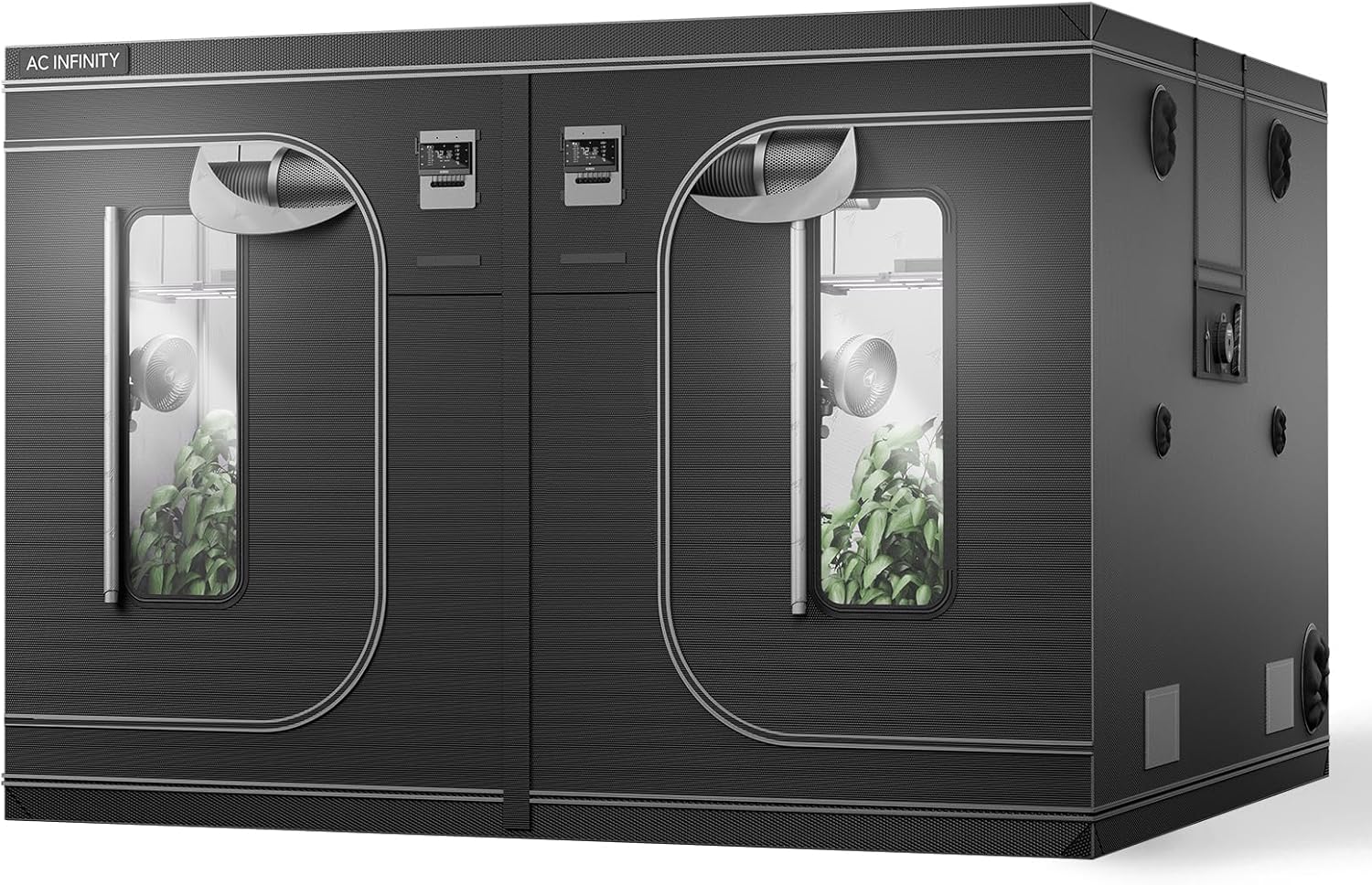
AC Infinity CLOUDLAB 811 Advance Grow Tent (10 x 10)
| Frame Material | Alloy Steel |
|---|---|
| Inner Material | Mylar |
| Item Highlight | Largest Zipper Window, 2000D Mylar Canvas, 1" Poles, Controller Mount |
| Weight Capacity Maximum | 250 pounds |
The AC Infinity CLOUDLAB 811 is a purpose-built grow tent for serious hydroponic growers who want a durable, light-tight environment. It uses thick 2000D canvas and lab-tested mylar to maximize light reflectivity while alloy steel poles and reinforced corners give the frame strong structural support. The tent includes multiple duct ports, cable passthroughs, a controller mounting plate, extra hanging bars, and a stain-resistant catch tray, which makes it straightforward to route ventilation, mount controllers and hang lights or filters. Taller zipper windows and SBS zippers simplify monitoring and access without compromising climate control. In practice the tent is optimized for multi-plant or multi-bay hydroponic systems that need reliable light management and durable construction. The size and weight make it a more permanent installation, and assembly requires some space and care to seal ports properly. If you need a rugged, well-featured tent for a controlled hydroponic grow, this model focuses on reliability and workflow-friendly details.
Best for: Growers who prioritize durable, long-term hydroponic setups and want a lightproof, highly serviceable tent for multiple plants or equipment bays.
Less Ideal for: Casual or first-time hobbyists who need a compact, lightweight tent for occasional use or who lack space for a permanent installation.
- Thick 2000D canvas and lab-tested high-reflectivity mylar for efficient light retention
- Reinforced alloy steel poles and corner construction for strong structural stability
- Multiple duct ports and a controller mounting plate for neat ventilation and cable management
- Extra hanging bars and a heavy-duty catch tray that simplify equipment setup and maintenance
- Large footprint and substantial weight make it less suitable for temporary or small-space setups
- Assembly and precise port sealing take more time compared with simpler tents
Verdict: Buy this tent if you need a heavy-duty, reliability-focused grow tent that keeps light in and equipment organized for a multi-plant hydroponic system.
VIVOSUN S448 4×4 Grow Tent (48" x 48" x 80")

| Tent size | 48" x 48" x 80" |
|---|---|
| Inner material | Polyethylene Terephthalate (PET) |
| Outer material | Oxford Fabric |
| Frame material | Metal |
| Light source wattage | 400 watts |
The VIVOSUN S448 is a 4×4 grow tent designed to give hobby and small-scale growers a durable, lightproof environment for indoor plants. It uses a high-reflectivity mylar interior to diffuse light and reduce hotspots, plus upgraded heavy-duty zippers and a thick 1680D oxford outer fabric for long-term use. The metal frame and reinforced connectors hold hanging bars for lights and other equipment, while multiple duct ports and cable openings make it straightforward to add fans, filters, humidifiers or controllers. A removable mylar floor tray simplifies cleaning and the observation window lets you check plants without breaking the seal. Setup is intended to be quick with clear instructions and smooth-gliding doors for easy access. Expect a solid, workmanlike tent that supports multimedia grow systems, but be aware it is a dedicated grow environment so you will need to add lighting, ventilation and environmental controls separately to run a complete setup.
Best for: Buyers who value proven construction and clear social proof and want a reliable, long-lasting 4×4 tent to build a complete indoor grow system with separate lights and ventilation.
Less Ideal for: Casual plant owners who want a plug-and-play all-in-one kit or those with very limited indoor space should consider smaller integrated kits instead.
- 100% reflective mylar interior to improve light distribution and reduce hotspots
- Sturdy all-metal frame and reinforced connectors that support hanging lights and equipment
- Thick 1680D oxford fabric and heavy-duty zippers for durability and lightproofing
- Multiple duct ports and cable openings for easy integration of ventilation and climate-control gear
- Removable waterproof floor tray and observation window for easier maintenance and monitoring
- Does not include lighting, fans, or filtration so you must purchase a complete system separately
- Relatively large footprint requires dedicated indoor space and clearance for airflow
Verdict: A well-built, reflective 4×4 tent that gives risk-conscious growers a durable, serviceable base to assemble a reliable indoor grow system.
MELONFARM 2×2 Grow Tent with Observation Window and Floor Tray

| Frame Material | Metal |
|---|---|
| Inner Material | Polyethylene Terephthalate (PET) |
| Outer Material | Oxford Cloth |
| Light Source Wattage | 24 watts |
This MELONFARM 2×2 grow tent creates a light-proof, reflective microenvironment for one to a few plants in a small indoor space. It is lined with highly reflective PET mylar and wrapped in heavy-duty 600D Oxford canvas, which helps contain light and maintain stable temperatures when used with a small LED and an inline fan. The kit includes a sturdy metal pole frame that supports lights and ventilation hardware and a removable floor tray to protect floors from spills. Two observation windows let you check plants without opening the main door and disturbing the climate. Assembly is straightforward and tool-free, so setup in a closet or corner is quick. Limitations are its small footprint and modest height, which restricts plant count and tall varieties, and the tent does not include lighting or fans so you must add compatible equipment separately. For conservative buyers this tent emphasizes durability and predictable environmental control rather than extras or large-scale capacity.
Best for: Buyers who want a reliable, low-risk way to start indoor growing in tight spaces and value durable construction and easy setup over large capacity.
Less Ideal for: Gardeners planning to grow many plants, tall varieties, or a full multi-light setup should choose a larger tent or a taller model.
- Durable 600D Oxford canvas and double-stitched seams for light-proofing and tear resistance
- Highly reflective PET inner lining to improve light distribution and efficiency
- Metal pole frame rated to support grow lights and small inline fans
- Observation windows let you inspect plants without opening the main door
- Removable floor tray protects flooring from water and nutrient spills
- Small internal volume limits the number and height of plants you can grow
- No included lighting, fans, or ducting so you must purchase ventilation and light separately
Verdict: A compact, well-built tent that delivers predictable light control and easy setup for cautious indoor growers starting small.
Choosing the Right Hydroponic Grow Tent: Key Factors to Consider
Light Containment and Reflectivity
Preventing light leaks is critical in hydroponic grow tents because unintended light can disrupt photoperiod-sensitive plants and reduce overall yield. High-quality tents use multi-layer reflective liners and tightly sewn seams to keep external light out and bounce grow light evenly over the canopy.
Reflectivity matters for energy efficiency. A tent with good internal reflectance ensures more of the lamp output reaches leaves rather than being absorbed by walls, allowing you to use lower wattage or shorter light cycles for the same canopy coverage. Inspecting zipper seals, corner overlaps, and port flaps helps predict real-world performance.
Ventilation, Port Placement, and Airflow
Hydroponic systems need steady air exchange to control temperature, humidity, and CO2 levels. The tent should have multiple, appropriately sized ports for intake, exhaust, ducting, and electrical pass-throughs positioned to match common fan and filter placements. Poor port placement forces awkward duct runs that reduce fan efficiency and increase heat buildup.
Consider how internal airflow will move across your canopy. Ports near the top for exhaust and lower ports for intake help establish a vertical flow that removes hot air above lights. Tinting or overlap flaps on ports reduces light leakage while preserving airflow, which is important for night cycles and light-sensitive strains.
Frame Design and Load Capacity
The frame must support hanging heavy lighting fixtures, filters, and sometimes reservoirs or trellis systems. Look for tents with reinforced corner joints, thicker metal poles, and rated hanging bars. Weak frames will sag over time, changing light distances and stressing fixtures.
A strong frame also simplifies adjustments and prevents wobble when you access the interior. If you plan to hang multiple fixtures, heavy inline fans, or CO2 systems, prioritize rated weight capacity and cross-bracing features.
Access, Doors, and Maintenance Features
Daily maintenance for hydroponics often means frequent access for nutrient checks, pruning, and equipment adjustments. Tents with wide doors, interior access panels, and removable floor trays make these tasks faster and reduce accidental damage to plants.
Well-designed zipper channels, observation windows, and hose or cable pass-throughs can cut down on disruptions during routine tasks. Consider how easy it is to reach the canopy, lift trays, and replace components without disassembling the tent.
Material Quality and Resistance to Humidity
Hydroponic environments are humid and can accelerate corrosion or fabric breakdown. Look for canvases that resist tearing, seams that are reinforced, and coatings that prevent mold growth. Metal components should be powder-coated or otherwise treated to reduce rust.
Durable materials reduce long-term maintenance and odors. Higher-quality fabrics also maintain reflectivity longer and resist peeling or flaking under warm, humid conditions common in hydroponic grows.
Interior Layout and Space Efficiency
Efficient use of interior space affects how many plants you can manage and how easily you can maneuver inside the tent. Consider whether the tent's height accommodates vertical training, trellising, or taller growth stages, and whether internal hanging bars are arranged to service multiple lights.
Shelving compatibility, the ability to add partitioning for multiple grow stages, and floor tray dimensions for reservoirs or runoff management all influence how effectively you can run a hydroponic system in a given tent footprint.
Sizing the Tent for Your Hydroponic System
Choose a tent size that matches your system type and plant count rather than fitting it to available living space alone. Deep water culture, NFT, or ebb-and-flow systems have different footprint and clearance needs. A crowded tent reduces airflow and increases humidity hotspots.
If you plan to use vertical racks or LST and SCROG techniques, prioritize height as much as floor area. Taller tents give you room to raise or lower lights and manage canopy training without compressing the plants.
- Match tent floor area to the number of plants and the system footprint.
- Add 12 to 24 inches of vertical clearance for light fixtures and plant stretch.
- Reserve space for fans, filters, reservoirs, and maintenance access.
Managing Temperature and Humidity Inside the Tent
Maintaining stable temperature and humidity is the heart of successful hydroponic growing. Use intake and exhaust fans sized for the tent volume plus your lighting heat load. Inline fans paired with carbon or pre-filters help control both temperature and odors in a tight space.
Place hygrometers and thermometers at canopy level to track conditions where plants experience them. Small changes in ventilation strategy or light schedule can have outsized effects inside an enclosed tent.
- Calculate air exchange based on tent volume and fan CFM ratings.
- Use passive vents and ducting to avoid dead zones where humidity accumulates.
- Consider a small dehumidifier if you run heavy nutrient solutions in a sealed room.
Integrating Hydroponic Equipment
Think through how reservoirs, pumps, air stones, and filters will be arranged before choosing a tent. Some tents have removable floor pans or elevated floors that simplify reservoir placement and spill management. Access ports for wiring and tubing make neat installations possible without cutting fabric.
Plan cable management and filter placement to keep the canopy clear. Locating heavy equipment on the tent floor and suspending lights and filters from rated bars maintains a stable center of gravity and keeps work areas unobstructed.
- Map pump and reservoir locations to minimize tubing length and kinks.
- Route power and sensor cables through dedicated ports to preserve seals.
- Use hangers and ratchets rated for intended loads to secure lights and filters.
Setup and Long-Term Maintenance
A tent that is quick to assemble and easy to clean saves time over the life of the grow. Look for sturdy zippers, simple pole connections, and a design that allows you to wipe interiors or replace liners. Removable floors and corner drains make spill cleanups easier in hydroponic systems.
Inspect joints and seams periodically for wear. Treat metal parts and zippers gently in humid conditions to extend service life. Proper initial setup, including correct tensioning of poles, reduces stress on fabric and prevents premature failure.
- Follow manufacturer assembly steps and avoid forcing joints during setup.
- Keep a spare zipper repair kit and patch material for quick fixes.
- Rinse and dry trays and reservoirs between cycles to reduce salt buildup.
Lighting Distance and Canopy Management
A tent's height dictates how closely you can run high-intensity lights to taller plants. Maintain appropriate distances by choosing a tent that accommodates the maximum expected stretch and lamp-to-canopy adjustments. Hanging points should allow for multi-point suspension of lights for even coverage.
Good canopy management-pruning, training, and defoliation-works alongside tent selection to ensure light penetrates the canopy and airflow reaches lower leaves. Plan for access routes and space to perform these tasks without crushing plants.
- Design hanging points for multi-light setups to prevent hotspots.
- Use reflective spacing to enhance uniform light distribution.
- Allow room for routine canopy maintenance without moving pots frequently.
How We Chose the Best Hydroponic Grow Tent
We prioritized attributes that directly affect plant health and day-to-day maintenance in hydroponic setups. Evaluation centered on light containment, ventilation capability, internal space layout, build durability, and ease of access for feeding and maintenance. We also considered setup complexity and how well tents integrate with common hydroponic components like fans, filters, and grow trays. Concrete evaluation criteria included fabric reflectivity and seam construction to measure light tightness and internals reflectivity; duct and port placement plus internal hanging points for ventilation and equipment integration; frame strength and corner design to assess load capacity for lights and filters; and zipper quality, access panels, and interior layout for routine maintenance and plant access. We excluded tents designed solely for passive or decorative use and those lacking ventilation ports that prevent proper hydroponic integration. Products that met these filters were compared on how they support consistent temperature and humidity control, how easy they are to assemble and service, and the longevity of materials and fittings in a humid, nutrient-rich environment.
FAQ
What tent size is best for a small hydroponic setup?
For small systems, a compact tent sized to fit your reservoir and a few plant sites is usually best. Prioritize height and ventilation over squeezing in more floor area, since vertical space helps with light adjustment and canopy training.
How important are reflective interiors in a grow tent?
Reflective interiors significantly improve light efficiency and uniformity. Higher reflectivity means more usable light reaches the plants, which can reduce run time or light intensity needed to achieve the same growth.
Can I run a hydroponic system without an inline fan?
You can in very small, low-heat setups, but inline fans are usually needed to control heat, humidity, and odor in hydroponic tents. Without proper airflow, plants can suffer from heat stress, mold, and uneven CO2 distribution.
How do I prevent humidity-related problems inside the tent?
Maintain consistent air exchanges, monitor humidity at canopy level, and use dehumidification if necessary. Proper spacing, good airflow, and drying trays between cycles help prevent mold and root issues.
Are tent materials washable or replaceable?
Many tents have wipe-clean interiors and removable pans, which makes maintenance easier. Fabric liners are not always washable in a machine, so follow manufacturer cleaning instructions and spot-clean to preserve reflectivity.
What hanging hardware should I use inside a tent?
Use ratchet hangers and straps rated above the combined weight of lights and filters. Avoid makeshift ropes that can slip; secure, rated hardware reduces the risk of sagging or dropped fixtures.
Final Verdict
Choose a Hydroponic Grow Tent that matches your system footprint and gives you room to manage canopy height and equipment. Prioritize light containment and ventilation first, then check frame strength, access features, and material resilience to humidity. Accept tradeoffs between footprint and height depending on your training methods and number of plants. With a tent that fits your layout and supports proper airflow, you will simplify daily maintenance and create a more stable environment for consistent hydroponic results.
