

Note: This article contains affiliate links. If you click on these links and make a purchase, I may earn a small commission at no extra cost to you. This helps support my research and content. Read my full affiliate disclosure here.
If you manage medium to large hedges or prefer gas-powered tools with fewer emissions issues than two-stroke engines, choosing the right 4 Stroke hedge trimmer matters. The correct trimmer will make shaping, thinning, and routine maintenance faster while reducing fuss over mixing fuel. This guide covers five shortlisted 4 Stroke hedge trimmers suited to backyard and estate pruning, evaluating motor performance, fuel use, build durability, vibration control, and ease of maintenance. Read on to understand the tradeoffs among running time, cutting capacity, and user comfort so you can pick the tool that matches your trimming frequency and hedge size.
Top Picks at a Glance
| Best Overall The best all-around choice for most situations | chikura GX50 7‑in‑1 50cc 4‑Stroke Multi‑Tool (Brush Cutter, Trimmer, Pruner, Cultivator) |  |
| Best Quality Built to a higher standard if you want something more solid | AKORIDA GX50 4‑Stroke Gas String Trimmer Combo Kit |  |
| Best Value The sweet spot between price and what you get | NOXJUQU 31cc Backpack 4-in-1 Gas Multi-Tool (String Trimmer, Brush Cutter, Hedge Trimmer, Pole Saw) |  |
| Highest Rated A top-rated pick with lots of positive feedback | ZeHuoGe 31cc Backpack 4-in-1 Gas-Powered Trimming Tool System | |
| Most Popular A crowd favorite that many people choose with confidence | SENIX 4QL HT4QL-L 26.5cc 4-Cycle 22" Gas Hedge Trimmer | 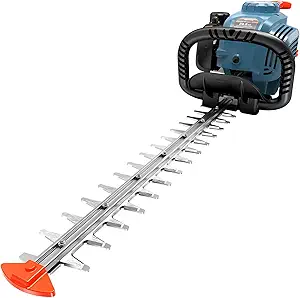 |
chikura GX50 7‑in‑1 50cc 4‑Stroke Multi‑Tool (Brush Cutter, Trimmer, Pruner, Cultivator)
| Engine | 50cc four‑stroke single cylinder |
|---|---|
| Power | 0.95 kW at 7500 rpm |
| Fuel tank capacity | 1000 ml |
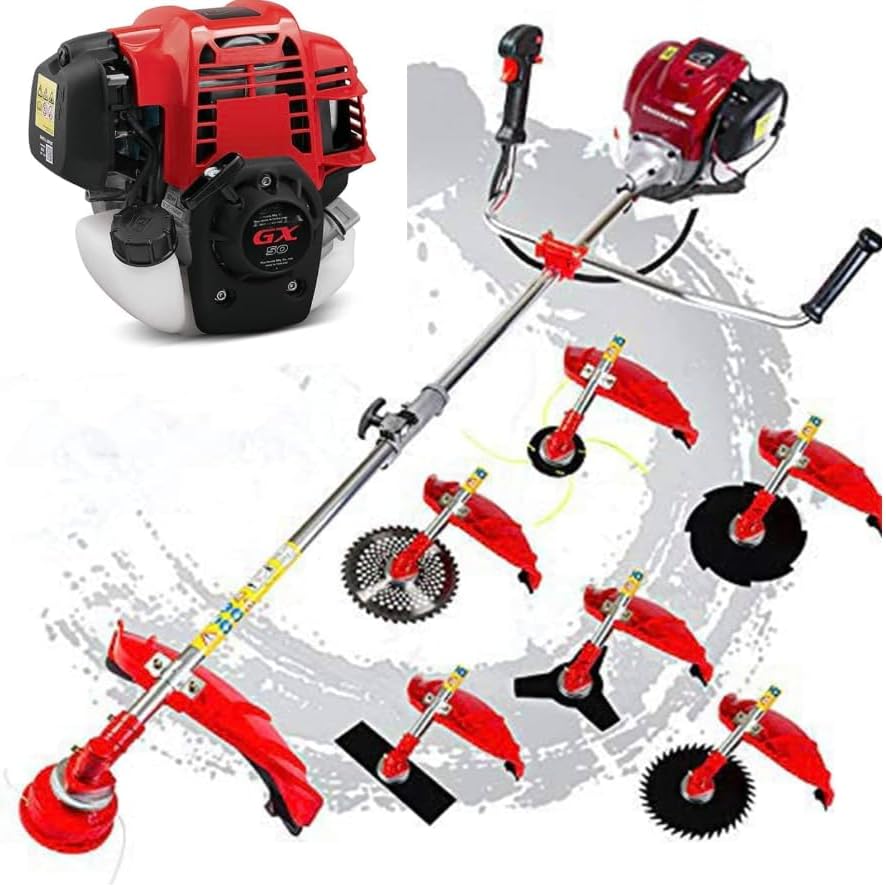
The chikura GX50 is a 7‑in‑1 petrol multi‑tool centered on a 50cc four‑stroke GX50 engine that powers a brush cutter, trimmer head, pruner saw chain and cultivator among other attachments. It is typically used by homeowners who need a single engine to handle edging, heavy grass, small branches and light cultivation without switching machines. Notable features include a quick‑release connector for fast attachment changes, an easy pull starting system, an air‑cooled single‑cylinder engine rated at 0.95 kW and a built‑in low‑noise, fuel‑efficient carburetor and air filter. In practice this delivers respectable cutting power for thick grass and small woody growth while avoiding the fuel mixing and mess of two‑stroke motors. The lightweight design makes it easier to maneuver for trimming and hedge work, though heavier duty or professional hedge jobs may expose the limits of a compact 50cc motor and frequent attachment swaps can interrupt flow. Replacement parts availability is a plus for long term upkeep.
Best for: Homeowners who want one flexible, easier‑to‑start gas tool to handle weekend yard tasks like hedge trimming, edging, light brush cutting and small pruning without managing multiple machines.
Less Ideal for: Commercial landscapers or users who perform long continuous hedge runs or heavy tree pruning should choose a larger dedicated hedge trimmer or professional powerhead system.
- Versatile 7‑in‑1 system covers trimming, brush cutting, pruning and cultivating with one engine
- 50cc four‑stroke engine avoids fuel mixing and offers easier starting
- Quick‑release connector enables fast attachment changes
- Air‑cooled design with quality carburetor and air filter for improved fuel efficiency and lower noise
- 50cc motor may be underpowered for continuous professional hedge or heavy woody cutting
- Frequent attachment changes can slow workflow compared with dedicated single‑purpose tools
Verdict: Buy this if you want a single, easy‑to‑start four‑stroke engine that swaps between seven attachments to handle most homeowner hedge trimming and brush cutting jobs.
AKORIDA GX50 4‑Stroke Gas String Trimmer Combo Kit

| Power Source | Gas Powered |
|---|---|
| Cutting width | 5 |
The AKORIDA GX50 is a 4-stroke gas-powered combo kit built around a 38cc-class engine and a string trimmer head, with multiple quick-release attachments that convert the unit into a brush cutter, tiller, chainsaw and hedge trimmer. It is typically used by homeowners tackling overgrown lawns, edging and light brush where corded or battery models lack run time. Notable features include the 4-stroke engine for lower noise and no fuel-mixing, a quick-release connector for fast attachment changes, and an adjustable hedge trimmer head that rotates 180 degrees for different pruning angles. In practice this provides longer continuous runtime, easier cold starts compared with 2-stroke units, and versatility so one machine handles several yard tasks. Limitations are the expected maintenance of a gas engine, greater weight and vibration compared with electric options, and a learning curve assembling and switching attachments. Buyers should expect a capable, multiuse petrol tool for heavier residential tasks rather than a lightweight trimming-only solution.
Best for: Homeowners and weekend landscapers who prioritize continuous power and multi-function capability for heavy residential trimming, pruning, and light brush clearing.
Less Ideal for: People who need a lightweight, low-maintenance trimmer for small lawns or who prefer quiet, emission-free electric tools should consider battery or corded alternatives.
- 4-stroke gasoline engine offers longer runtime and no fuel-oil mixing
- 11-in-1 quick-release attachments make it a versatile multi-tool for trimming, cutting and tilling
- 180° adjustable hedge trimmer head improves access for pruning at different angles
- Designed for heavier yard work where battery models may lack endurance
- Requires regular gas-engine maintenance and fuel handling
- Heavier and more vibration than comparable electric or battery trimmers
Verdict: Choose the GX50 if you want a single gas-powered tool that delivers longer continuous runtime and converts into multiple yard tools for heavier trimming and pruning jobs.
NOXJUQU 31cc Backpack 4-in-1 Gas Multi-Tool (String Trimmer, Brush Cutter, Hedge Trimmer, Pole Saw)

| Power Source | Gas Powered |
|---|---|
| Speed | 6500 rpm |
| Item Highlight | 4-in-1 (String trimmer, Brush cutter, Hedge trimmer, Pole saw) |
This NOXJUQU 31cc backpack 4-in-1 is a gasoline-powered multi-tool aimed at tackling a full range of outdoor trimming tasks without fuel mixing. It uses a 4-stroke 31cc engine mounted in a padded backpack harness to reduce arm fatigue and shifts the load to your shoulders for longer jobs. The kit includes both flexible and rigid shafts plus quick-change attachments for a string trimmer, brush cutter blade, hedge trimmer head, and a rotatable pole saw that reaches high branches from the ground. Practical benefits include a no-mix engine for simpler refueling, a high 6,500 rpm operating speed for stronger cutting performance, and tool-free attachment swaps that speed transitions between edging, clearing thick brush, pruning hedges, and cutting limbs. Important limitations are the inherent bulk and weight of a backpack unit compared with handheld trimmers and the noise and maintenance needs of a gas engine versus battery models. Expect better power and runtime for large properties but plan for regular servicing and safety gear when using cutting blades and the pole saw.
Best for: Buyers who prioritize efficient, powerful yard maintenance across large properties and want one engine to handle trimming, brush clearing, hedge pruning, and occasional limb cutting without refueling hassles.
Less Ideal for: Urban homeowners with small lawns, casual users who prefer quieter battery tools, or anyone who wants a very lightweight, low-maintenance trimmer.
- True 4-in-1 system covers string trimming, brush cutting, hedge trimming, and pole sawing with one powerhead
- Backpack harness spreads weight to reduce arm and shoulder fatigue during extended use
- 31cc 4-stroke engine runs on straight gasoline so no oil mixing is required
- Tool-free shaft and attachment changes speed up switching between tasks
- Backpack unit is heavier and less maneuverable than handheld trimmers
- Gas engine requires regular maintenance and produces more noise and emissions than battery alternatives
Verdict: Choose this backpack 4-in-1 if you need a single, no-mix gas engine that delivers professional-level power and convenience across trimming, brush cutting, hedge work, and pole sawing.
ZeHuoGe 31cc Backpack 4-in-1 Gas-Powered Trimming Tool System
| Engine Displacement | 31cc |
|---|---|
| Engine Type | Air Cooled 4-Stroke Gasoline Engine |
| Start Type | Recoil Start |
| Max. Engine Speed | 6500RPM |
| Power Source | Gas Powered |
This ZeHuoGe 4-in-1 trimming system is a backpack-mounted, gas-powered tool built around a 31cc 4-stroke engine and a quick-attachment shaft that lets you swap a string trimmer, brush cutter blade, hedge trimmer or pole saw. In use the backpack harness shifts the engine weight off your arms and onto your torso, reducing shoulder fatigue during longer jobs, and the recoil start and full-crank design are intended to improve starting reliability and throttle response. The hedge trimmer head articulates to multiple positions so you can cut shrubs from different angles without excessive repositioning, and the metal blades promise a cleaner finish than line alone. Expect the unit to be most useful for medium-to-large yards where one engine replacing several handheld tools saves storage and time. Limitations include a single-cylinder 1 HP output that is modest for extremely heavy brush and the typical noise and maintenance needs of a gas engine, and you will need to budget time for fuel, oil changes, and blade upkeep.
Best for: Buyers who prioritize a dependable, single-engine solution for routine trimming and pruning across a medium to large property and who prefer a backpack layout to reduce operator fatigue.
Less Ideal for: Casual gardeners with very small yards who prefer low-maintenance electric or battery tools and operators who need maximum commercial-grade power for continuous heavy brush clearing.
- Backpack design shifts weight to the torso to reduce arm and shoulder fatigue during extended use.
- 4-in-1 quick-attachment system lets you switch between trimmer, brush cutter, hedge trimmer and pole saw without separate engines.
- 31cc 4-stroke full-crank engine aims for improved fuel efficiency and longer life compared with two-stroke designs.
- Articulating hedge trimmer head provides multiple cutting angles for neater, more precise shaping.
- Modest 1 horsepower output may struggle with very dense or woody brush compared with larger commercial engines.
- As a gas unit it requires regular maintenance, fuel and oil which add to ongoing ownership tasks.
Verdict: If you want one reliable, backpack-mounted gas engine to handle trimming, cutting and pruning tasks across a larger yard, this 4-in-1 system delivers versatile, fatigue-reducing performance.
SENIX 4QL HT4QL-L 26.5cc 4-Cycle 22" Gas Hedge Trimmer
| Power Source | Gas Powered |
|---|---|
| Blade Length | 22 inches |
| Blade Material | Stainless Steel |
| Cutting width | 1.13 inches |
| Engine displacement | 26.5 cc |
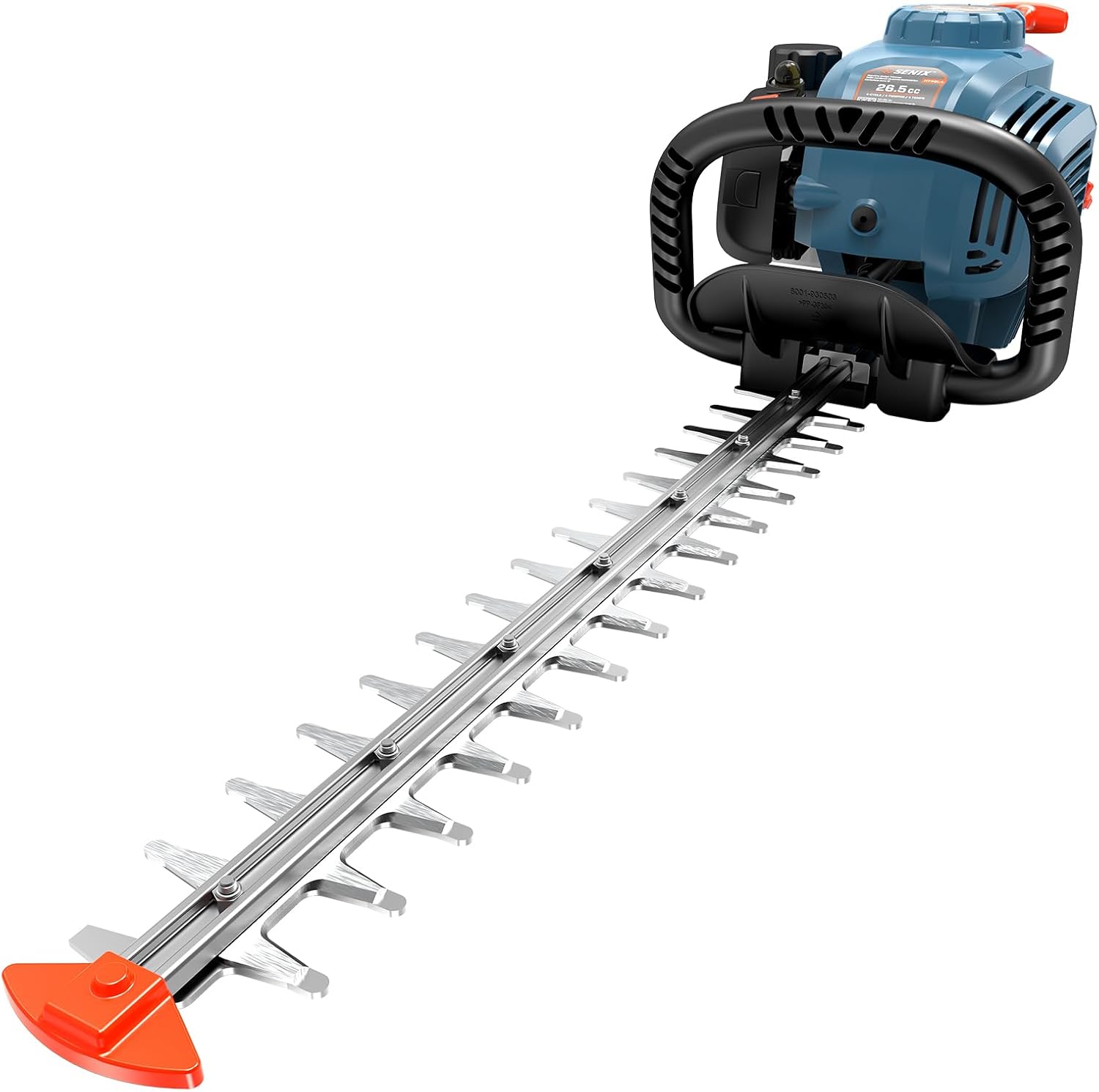
The SENIX 4QL 22-inch gas hedge trimmer is built for heavier hedge and shrub work where corded or battery tools run short. It uses a 26.5 cc 4-cycle 4QL engine that does not require premixing fuel and oil, reducing fuss and the risk of leaks while claiming lower emissions and fuel use than typical two-stroke motors. The 22-inch laser-cut dual-action stainless steel blades and 1-1/8-inch cutting capacity make quick work of thick growth, and the rotating rear handle helps you maintain comfortable angles when trimming tall or wide hedges. Included items such as a blade cover, spark plug wrench, and oil bottle let you start right away and perform basic maintenance. Expect a tool that favors power and continuous run time over lightweight portability and low noise; at about the size and weight of typical gas trimmers it can be tiring for long overhead work and requires regular engine maintenance. For buyers prioritizing simple fueling and robust cutting in commercial or heavy residential tasks, this is a practical gas option.
Best for: Buyers who need a budget-minded gas trimmer that delivers sustained cutting power for commercial or heavy residential hedge jobs and who prioritize runtime and cutting capacity over lightweight ergonomics.
Less Ideal for: If you need the quietest, lightest tool for long periods of overhead or precision topiary work, a battery or electric trimmer would be a better fit.
- Powerful 26.5 cc 4-cycle engine that runs without mixing fuel and oil
- 22-inch laser-cut dual-action stainless steel blades for efficient cutting of thick foliage
- Rotating rear handle for comfortable all-direction trimming
- Includes blade cover and basic maintenance tools to start using right away
- Heavier and bulkier than battery trimmers so it can be fatiguing for extended overhead work
- Gas engine requires regular maintenance and produces engine noise and emissions
Verdict: Choose this SENIX gas trimmer when you want a no-mix, powerful 22-inch tool that delivers continuous cutting performance for demanding hedge work.
Choosing the Right 4 Stroke Hedge Trimmer: Key Factors to Consider
Engine Power and Torque
How much torque a 4 stroke engine produces directly affects the trimmer's ability to slice through thicker, woody stems without bogging down. Higher torque means the blades maintain speed under load and produce cleaner, less ragged cuts. For gardeners who routinely remove older growth or work on dense hedges, an engine with a robust torque curve will reduce the number of passes needed and lower the chance of stalling.
Consider how the power is delivered at typical working RPM rather than just peak output. A motor optimized for steady torque at trimming speeds is more useful than one with a high peak that drops off quickly under load.
Fuel Efficiency and Runtime
Fuel consumption determines how often you stop to refuel during longer jobs. Four-stroke engines are generally more fuel-efficient than two-stroke equivalents because they run on a separate oil reservoir and burn fuel more completely. Better fuel efficiency gives longer continuous runtime from the same tank size and reduces trips to refill cans during multi-hour sessions.
Also factor in fuel tank capacity and ease of refueling in the field. A slightly smaller but significantly more efficient engine can still outperform a thirstier motor with a larger tank in terms of usable trimming time.
Vibration Control and Ergonomics
Sustained vibration leads to hand fatigue and less precise shaping. Effective anti-vibration systems, thoughtful handle placement, and balanced weight distribution let you hold the tool steady and make controlled cuts for longer. For tasks that require detailed shaping at different heights or extended overhead work, low vibration and comfortable grips are essential.
Think about handle shapes and reach, trigger placement, and whether the tool feels balanced when both hands are on the grips. Ergonomics also influence safety since a tool you can control reduces the chance of mistakes.
Cutting Blade Design and Capacity
Blade length, tooth spacing, and blade material determine how quickly and cleanly you can trim a hedge. Longer blades cover more area per pass, while tighter tooth spacing gives cleaner cuts on fine-leaved shrubs. Hardened steel blades hold an edge longer when cutting woody material, reducing sharpening frequency.
Also consider whether blades are easy to sharpen or replace and whether the cutting unit resists bending when it encounters heavier stems. A blade that resists flex helps maintain uniform cuts across the hedge face.
Build Durability and Weather Resistance
Outdoor power tools are exposed to moisture, sap, and accidental contact with branches and soil. Corrosion-resistant coatings, sealed engine components, and reinforced housings extend service life when tools are stored in garden sheds or used in damp conditions. Durable guards around the cutting area protect both the blade and the operator from impacts.
Assess the materials used for external casings, the quality of fasteners, and whether serviceable components are replaceable rather than glued in. Durability reduces long-term ownership costs and downtime for repairs.
Maintenance Accessibility and Serviceability
Four-stroke engines require periodic oil changes, air filter cleaning, and valve checks. A design that grants easy access to oil fill and drain points, a tool-friendly air filter, and straightforward carburetor adjustments simplifies routine care. Clear maintenance points reduce the barrier for regular servicing and help keep the engine running efficiently for years.
Also consider how easy it is to reach common wear parts like spark plugs, starter assemblies, and blade mounting bolts. Simpler serviceability means less time off the job and lower maintenance frustration.
When a 4 Stroke Hedge Trimmer Makes Sense
Four-stroke hedge trimmers are a strong choice if you want gas power with cleaner combustion and no pre-mixing of oil and fuel. They are particularly useful for people who need reliable performance for medium to heavy hedging, frequent landscape maintenance, or jobs where longer runtimes between refuels are valuable.
They are also favored when you prefer the lower exhaust odor and reduced smoke associated with four-stroke designs. Consider them if you regularly tackle woody stems or maintain long hedgerows where battery runtime or corded reach would be limiting.
- Better fuel burn and fewer fumes compared with two-stroke engines
- Longer continuous runtime for extended trimming sessions
- Easier fuel handling because oil is kept separate from gasoline
Preparing for Safe and Effective Trimming
Before you start, check that the cutting teeth are sharp, the guards are secure, and the engine oil level is correct. Wear eye protection, gloves, and hearing protection; even the quieter four-stroke engines can produce significant noise when cutting dense growth.
Plan your trimming path to avoid hitting hidden objects like wire, garden stakes, or irrigation lines. Work at a steady pace and let the motor do the work rather than forcing the blades through oversized branches.
- Inspect for hidden obstacles along the hedge line
- Confirm engine oil level and secure fuel cap
- Use personal protective equipment and firm footing
Basic Maintenance Tasks to Keep an Engine Healthy
Regular oil changes, air filter checks, and spark plug inspections are the backbone of long-term reliability for four-stroke hedge trimmers. Follow recommended oil change intervals and replace the filter when it becomes clogged to prevent power loss.
Keep the cutting blades clean and lightly oiled to prevent rust, and sharpen or replace teeth as needed. Address small issues quickly, such as loose bolts or frayed starter cords, to avoid more extensive repairs later.
- Change engine oil per manufacturer intervals or after heavy use
- Clean air filter and replace if visibly damaged
- Sharpen blades and inspect blade mountings for wear
Handling Common Trimming Challenges
If the trimmer slows or stalls on thicker stems, pause and let the engine recover rather than forcing through multiple passes. Repeated shuttle passes can burn excess fuel and wear the blades. For occasional thicker cuts, use a pruning saw or lopper to remove heavy material before finishing with the trimmer.
When working on topiary or intricate shaping, smaller, controlled strokes with a balanced trimmer reduce mistakes. Keep the blades sharp and take breaks to reassess the shape from a distance.
- Avoid forcing the blades through large woody branches
- Use auxiliary tools for heavier pruning before trimming
- Work in short sessions for precise shaping
Storage and Off-Season Care
Proper storage extends the life of both the engine and blades. Drain fuel or add a stabilizer if storing with fuel in the tank for extended periods. Change the oil before long-term storage and run the engine briefly to circulate clean oil if recommended.
Store the trimmer in a dry, ventilated area off the ground and protect the blades with a sheath or cloth. Periodically check for rust and treat small spots to prevent spread.
- Stabilize or drain fuel before long-term storage
- Change oil and protect blades from moisture
- Store in a dry, ventilated location away from ground contact
How We Chose the Best 4 Stroke Hedge Trimmer
We focused on criteria that matter when gardeners use 4 stroke hedge trimmers for real-world pruning tasks. Primary evaluation metrics were engine torque and consistency under load, which determine how cleanly the blades cut through live and woody growth. Fuel efficiency and runtime were assessed next, since a more efficient engine reduces refueling interruptions during long jobs. Vibration control and ergonomic handling were considered because steady, low-vibration tools reduce fatigue and improve cut accuracy on long hedging sessions. Build durability and corrosion resistance were included to reflect exposure to sap, moisture, and repeated impacts from occasional wood hits. Finally we looked at ease of routine maintenance, such as valve access, oil checks, and air filter service, because 4 stroke engines require straightforward upkeep to stay reliable. We excluded two-stroke machines and electric models, concentrating only on four-stroke designs that use separate engine oil and standard unleaded fuel. We also filtered out products with unclear serviceability or lacking basic protective guards. The scoring emphasized measurable engine and ergonomic features rather than cosmetic extras.
FAQ
How often should I change the oil in a 4 stroke hedge trimmer?
Oil change intervals vary with usage, but many gardeners change oil after the first few hours of break-in and then every 25 to 50 hours of use. Check the owner's manual for specific intervals and inspect oil condition more frequently if you run the tool in dusty or extreme conditions.
Can a 4 stroke trimmer handle small woody branches?
Yes, four-stroke trimmers typically handle small woody stems better than lighter electric options because of higher torque. For larger branches, it is safer to remove them first with hand pruners or a pruning saw before finishing with the trimmer.
Are 4 stroke hedge trimmers harder to maintain than two-stroke models?
Four-stroke engines require separate oil changes and slightly different maintenance routines, but they avoid fuel-oil mixing. Maintenance tasks are straightforward and often less frequent for oil-related issues, though valve and carburetor checks may be needed over time.
What causes excessive vibration and how can I reduce it?
Excessive vibration often comes from imbalance in the cutting unit, loose fasteners, or engine mounting wear. Tighten blade and handle bolts, keep blades sharp, and inspect anti-vibration mounts. If vibration persists, have service check for worn components.
Is fuel stabilizer necessary for four-stroke hedge trimmers?
Fuel stabilizer is recommended if fuel will sit in the tank for more than a month. Stabilizer helps prevent varnish and gum that can clog carburetors. For long storage, draining the tank is another effective option.
Final Verdict
When choosing a four-stroke hedge trimmer, prioritize the combination of torque and fuel efficiency that matches your typical hedge size and trimming frequency. Balance matters too: lower vibration and good ergonomics make long sessions less tiring, while durable construction and easy access to maintenance points reduce downtime. Decide which tradeoffs matter most to you. If you regularly cut dense or woody growth, favor higher torque and robust blades. If long continuous runtime and lower emissions are your priority, emphasize fuel efficiency and serviceability. Use the criteria above to select the trimmer that fits your yard and maintenance habits with confidence.
