

Note: This article contains affiliate links. If you click on these links and make a purchase, I may earn a small commission at no extra cost to you. This helps support my research and content. Read my full affiliate disclosure here.
Choosing the right planter box for herbs changes how well your plants grow and how easy they are to care for. Whether you keep herbs on a sunny windowsill, balcony, or a small patio bed, the box you pick affects soil volume, root health, drainage, and how often you water. This guide covers seven top planter boxes for herbs shortlisted for real garden use. We evaluate each option for drainage performance, material durability, planting depth, and ease of daily care so you can pick the best fit for your space and growing routine.
Top Picks at a Glance
| Best Overall The best all-around choice for most situations | LEETOLLA 31.6" Elevated Raised Garden Bed with Wheels and Storage Shelf |  |
| Best Quality Built to a higher standard if you want something more solid | FOYUEE 31.5" Elevated Mobile Raised Garden Bed with Wheels and Shelf |  |
| Best Value The sweet spot between price and what you get | Keter Urban Bloomer 12.7 Gallon Elevated Raised Garden Bed |  |
| Best Budget The cheapest option that still gets the job done reliably | YANGYIXIN 5-Pack Small Rectangular Planter Boxes with Trays |  |
| Highest Rated A top-rated pick with lots of positive feedback | BIVODA Small HDPE Elevated Raised Garden Bed |  |
| Most Popular A crowd favorite that many people choose with confidence | Best Choice Products 48 x 24 x 30in Raised Fir Wood Garden Bed with Liner |  |
| Best Seller A high-volume bestseller chosen again and again | Land Guard Galvanized Oval Raised Garden Bed Kit (4×2×1 ft) |  |
LEETOLLA 31.6" Elevated Raised Garden Bed with Wheels and Storage Shelf

| Capacity | 2.5 cubic feet |
|---|---|
| Number of Levels | 2 |
| Material Type | Iron |
| Indoor Outdoor Usage | Indoor, Outdoor |
| Other Special Features of the Product | 2 universal wheels + 2 stabilizing feet, 5 drainage holes + 2 cross-lines, Handle Bar, Storage Shelf |
This LEETOLLA elevated raised bed lifts container gardening to waist height so you can plant, water, and harvest without kneeling. It is built from painted iron with a powder-coat finish, includes two all-terrain wheels and an ergonomic handle for moving the filled bed, and has a lower shelf for tools or extra pots. The planting area holds about 2.5 cubic feet of soil and features five drainage holes plus cross-channels to help prevent waterlogging. Assembly is straightforward with the included hardware and takes roughly 30 to 45 minutes with two people. Practical benefits include reduced back strain, mobility to follow sun patterns or shelter plants from storms, and tidy storage on the attached shelf. Limitations are the metal construction, which will require touch-up care over time to avoid surface rust in very wet or coastal conditions, and the relatively narrow planting depth compared with deep beds, so very large root crops may be less suitable. The unit fits small balconies and patios but is best for mixed vegetables, herbs, and compact varieties rather than large, heavy crops.
Best for: Buyers who want comfortable, low-effort vegetable or herb gardening on a balcony, patio, or small yard and prioritize mobility and ease of use over maximal soil depth.
Less Ideal for: Gardeners seeking very deep beds for large root vegetables or those who prefer untreated wood or plastic planters that do not require metal maintenance.
- Elevated height reduces bending and kneeling for easier planting and harvesting
- Two large wheels and a handle let you reposition the bed to follow sun or avoid bad weather
- Built-in drainage holes and cross-channels reduce risk of overwatering
- Lower storage shelf keeps small tools and supplies handy
- Powder-coated iron construction for sturdier, decorative outdoor use
- Metal finish can require periodic touch-up to prevent corrosion in very wet or salty environments
- Planting depth is modest so very deep-rooted crops may be limited
Verdict: A mobile, waist-height metal raised bed that makes growing herbs and compact vegetables easier by cutting bending and letting you move plants to the best light.
FOYUEE 31.5" Elevated Mobile Raised Garden Bed with Wheels and Shelf

| Capacity | 2.5 cubic feet |
|---|---|
| Material Type | Metal |
| Finish Types | Powder Coated |
| Mounting Type | Floor Standing |
| Included Components | Wheels, Plant Stand |
This FOYUEE elevated raised bed is a mobile, waist-height planter designed for easy, ergonomic vegetable and herb growing on patios and balconies. The galvanized steel box with a powder-coated finish resists rust and supports heavy fill so you can add ample soil for productive vegetable crops. Built-in drainage channels and a central drain help prevent waterlogging while the raised profile improves air circulation around roots. A lower storage shelf keeps tools and pots handy and the integrated handle plus 6-inch all-terrain wheels make it straightforward to reposition the planter for sun or shelter. Typical uses are growing salad greens, herbs, compact vegetables, or creating a movable culinary garden outside a kitchen door. Assembly and moving when fully loaded will require some effort despite wheels, and the metal surface can warm in strong sun so seedling protection may be needed. The unit favors growers who want less bending and an organized, movable planting station rather than a large in-ground plot.
Best for: Gardeners who want an ergonomic, moveable vegetable planter for patios or balconies and value easy access, organization, and rust-resistant construction.
Less Ideal for: People who need very large planting volumes, deep-rooted crops, or a permanent in-ground bed for large-scale vegetable production.
- Powder-coated galvanized steel construction resists rust for outdoor use
- Raised waist-height design reduces bending and back strain
- Integrated drainage channels and central drain prevent water buildup
- Built-in wheels and handle allow the planter to be moved for light or weather
- Lower shelf provides convenient storage for tools and supplies
- May be heavy and awkward to assemble or move when filled with soil
- Metal walls can heat up in direct sun and may require shading for sensitive plants
Verdict: Buy this if you want a durable, waist-height mobile planter that makes growing herbs and compact vegetables easier without stooping.
Keter Urban Bloomer 12.7 Gallon Elevated Raised Garden Bed

| Capacity | 22.4 gallons |
|---|---|
| Material Type | Resin |
| Other Special Features | Fade Resistant |
| Mounting Type | Floor Standing |
| Indoor Outdoor Usage | Outdoor |
The Keter Urban Bloomer is an elevated raised garden bed built for simple, low-maintenance herb and small-vegetable gardening on patios, balconies, or decks. It uses a built-in reservoir and water gauge to reduce watering frequency and help prevent overwatering and root rot, while a manual drainage tap allows you to empty the reservoir for indoor moves or heavy rain. The included seed sprouting tray makes starting seedlings neater, and the resin, wood-look finish is UV protected so it resists fading and rot better than real wood. Assembly is straightforward and the rectangular, floor-standing form fits alongside outdoor furniture. Because it is a single-piece plastic/resin planter, it is lightweight and weatherproof but will not provide the insulating or aesthetic qualities of natural wood or heavier materials. Capacity is limited compared with large raised beds, so it is best for herbs, salad greens, and a few compact vegetables rather than large crops.
Best for: Gardeners who want a practical, low-effort elevated planter for growing herbs and small salad greens on a balcony or patio and who prioritize easy watering management and low maintenance.
Less Ideal for: People planning to grow large vegetables, heavy production beds, or who want the look and thermal benefits of natural wood or metal raised beds.
- Self-watering reservoir with visible water gauge helps maintain consistent moisture and prevents overwatering
- Manual drainage tap makes it easy to drain excess water and move the planter indoors without leaks
- UV-protected resin construction resists fading, rot, and rust for low outdoor maintenance
- Included seed sprouting tray simplifies starting seedlings and transplanting into the bed
- Relatively small soil capacity limits the number and size of plants compared with full-size raised beds
- Resin construction lacks the natural insulation and aesthetic of wood or heavier materials
Verdict: If you want a compact, low-maintenance elevated planter that simplifies watering and seed starting for herbs and small veggies, this is a practical choice.
YANGYIXIN 5-Pack Small Rectangular Planter Boxes with Trays
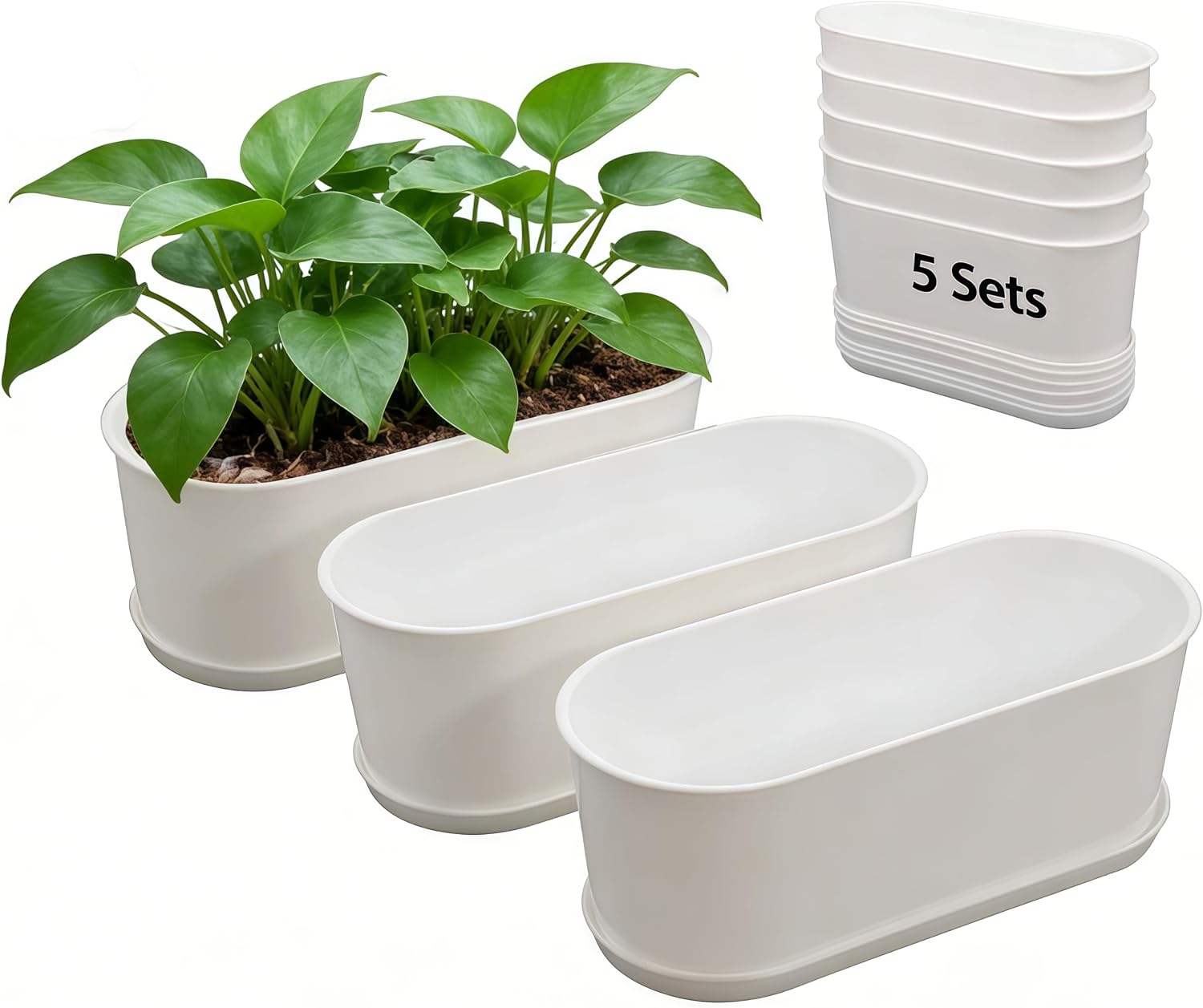
| Capacity | 2.47 liters |
|---|---|
| Mounting Type | Window Mount |
| Other Special Features | Drainage Hole |
| Indoor Outdoor Usage | Indoor, Outdoor |
These YANGYIXIN planters are a practical, budget-friendly option for growing herbs on a sunny windowsill. The pack includes five identical slim rectangular pots with matching removable trays and drainage holes, so excess water collects in the tray instead of damaging the sill. Their compact footprint fits narrow spaces such as kitchen counters, shelves, and window boxes and makes arranging multiple herbs like basil, mint, and thyme easy. Made from lightweight plastic, they are simple to move for watering or to rotate for light. Because they are small, each pot suits a single herb or a few small seedlings rather than larger, long-term plants, and the plastic construction is functional but not decorative if you want a more upscale look. Overall these planters give you a low-cost, no-frills way to start several herb plants in a tight indoor space with basic drainage and easy cleanup.
Best for: Buyers who want an inexpensive, space-saving way to grow several culinary herbs on a windowsill or small indoor space and prefer functional, easy-to-maintain containers.
Less Ideal for: Gardeners seeking decorative or heavy-duty planters for large, long-lived herbs or outdoor weather resistance should consider sturdier or larger alternatives.
- Five matching pots make it easy to start multiple herbs at once
- Removable trays with drainage holes protect surfaces from excess water
- Slim rectangular shape fits narrow windowsills and counters
- Lightweight plastic construction is easy to move and rearrange
- Small capacity is best for seedlings or single herbs, not large perennial plants
- Plain plastic finish may not satisfy buyers looking for decorative planters
Verdict: A low-cost, space-saving five-pack that makes starting multiple kitchen herbs on a windowsill quick and simple.
BIVODA Small HDPE Elevated Raised Garden Bed

| Material Type | High Density Polyethylene (HDPE) |
|---|---|
| Capacity | 10 gallons |
| Number of Levels | 1 |
| Other Special Features of the Product | Drainage Hole, Fade Resistant, Rot Resistant, Rust Resistant, Weather Resistant |
| Mounting Type | Floor Standing |
This BIVODA raised garden bed is a compact, elevated planter built from high-density polyethylene (HDPE) designed for outdoor vegetable and herb growing. It assembles quickly using pre-inserted nuts and 304-grade stainless steel screws, and the elevated 19.7 inch height keeps plants off the ground for easier planting and protection from small pests. The molded HDPE construction is rot and rust resistant and promises low maintenance since it does not need painting or sealing; drainage holes and a reinforced bottom help keep soil from waterlogging while supporting root mass. Practical for balconies, patios, or small yards, it provides about 10 gallons of planting capacity for a few dwarf vegetables, salad greens, or concentrated herb beds. Limitations include a relatively small planting volume and footprint, so it is better for succession planting or compact varieties rather than large, full-season tomatoes or deep-rooted crops. The plastic construction is durable but will not provide the insulating or aesthetic properties of natural wood for certain garden designs.
Best for: Gardeners who prioritize a low-maintenance, long-lasting raised bed for vegetables in small spaces and want a reliable, pest-elevated planting surface they can use season after season.
Less Ideal for: Growers who need large soil volume for big, deep-rooted vegetables or who prefer the thermal and visual qualities of natural wood beds.
- Durable HDPE construction resists rot, cracking, peeling and weathering
- Rust-resistant 304-grade stainless steel hardware reduces corrosion risk
- Pre-inserted nuts and screws make assembly fast and tool-friendly
- Drainage holes and reinforced bottom help prevent waterlogging and add support
- Limited planting capacity at about 10 gallons, not suitable for large root crops
Verdict: Choose this HDPE elevated planter when you want a reliable, low-maintenance raised bed for concentrated vegetable and herb growing in a small outdoor space.
Best Choice Products 48 x 24 x 30in Raised Fir Wood Garden Bed with Liner

| Capacity | 5 cubic feet |
|---|---|
| Material Type | Fir Wood |
| Mounting Type | Floor Standing |
| Other Special Features of the Product | Drainage Hole |
| Indoor Outdoor Usage | Outdoor |
This raised garden bed is a straightforward option for small-space vegetable and herb gardening. Constructed from unfinished fir wood, it assembles into a 48 x 24 footprint with a 30 inch planting height that reduces bending while you tend plants. The included bed liner separates soil from the wood, slowing rot and keeping roots and soil contained, and a built-in drainage hole prevents waterlogging. With about 5 cubic feet of planting volume and a 200 lb weight capacity it accommodates several seasonal vegetables, potting mixes, or a mix of herbs and flowers. The all-wood construction looks natural outdoors but will need sealing or periodic maintenance to maximize longevity. Assembly requires following the included guide and handling multiple pieces, so expect some time and basic tools. For gardeners who value an elevated, ergonomic setup and a ready-to-use liner, this planter delivers a practical balance of planting space and convenience; heavy-duty or permanent raised beds will outlast unfinished fir without added treatment.
Best for: Gardeners who want an elevated, easy-to-use planter for vegetables or herbs and prefer a natural wood look while minimizing daily maintenance.
Less Ideal for: People seeking a permanent, maintenance-free raised bed or very large-scale vegetable production should consider heavier-duty or larger alternatives.
- Ergonomic 30 inch height reduces bending and makes planting and harvesting easier
- Included liner keeps soil off the wood to slow rot and discourage pests
- Built-in drainage hole prevents waterlogging and promotes healthier roots
- Natural fir wood construction offers an attractive, rustic look outdoors
- Unfinished fir requires sealing or periodic maintenance to resist weathering
- Assembly involves multiple parts and basic tools and can take time
Verdict: A practical, elevated wooden planter with a liner and drainage that makes small vegetable and herb gardening easier and more ergonomic.
Land Guard Galvanized Oval Raised Garden Bed Kit (4×2×1 ft)

| Material Type | Metal |
|---|---|
| Finish Types | Double-layer galvanized |
| Capacity | 7.14 cubic feet |
| Mounting Type | Floor Standing |
This Land Guard raised garden bed is a simple, durable option for planting vegetables, herbs, or mixed annuals in a compact outdoor space. The kit arrives as flat panels that assemble into an oval planter about 4 by 2 feet and 1 foot deep, and setup is straightforward so you can fill and plant in minutes. Its double-layer galvanized steel construction and wave-shaped panels are intended to resist corrosion and add rigidity, and the manufacturer states thicker panels at stress points to reduce deformation. An open base design lets excess water drain and helps avoid root rot if placed on soil or lawn. Practical benefits include low maintenance, a tidy planted border that keeps soil contained, and a metal finish that lasts longer than untreated steel. Limitations are the shallow depth for deep-rooted crops and the likelihood the metal will warm quickly in hot sun, which may require more frequent watering or shade management. It is best used as a portable, long-lasting planter for raised-bed style container gardening rather than a full replacement for deeper in-ground beds.
Best for: Gardeners who want a quick-to-assemble, durable raised planter to grow vegetables or herbs in small outdoor spaces and who prioritize evidence of longevity over decorative complexity.
Less Ideal for: Growers who need deep soil for large root crops, or those looking for insulated or fully enclosed beds to control soil temperature and moisture long-term.
- Galvanized double-layer steel resists corrosion for multi-season outdoor use
- Oval, interlocking panel design assembles quickly with included tools
- Open base allows natural drainage to reduce standing water and root rot
- Compact footprint fits small patios, balconies, and tight garden beds
- Only 12 inches deep which limits planting of larger, deep-rooted vegetables or shrubs
- Metal surface can heat up in full sun and increase watering needs
Verdict: A tough, easy-to-assemble galvanized oval raised bed that gives small-space gardeners a durable, low-maintenance container for vegetables and herbs.
Choosing the Right Planter Box for Herbs: Key Factors to Consider
Drainage and Water Control
Herbs need consistent moisture without prolonged waterlogging. A planter box with good drainage prevents root rot and allows you to water more confidently. Look for built-in drainage holes, removable plugs, or layered designs that separate soil from standing water.
Drainage affects how often you must water and which soil mixes work best. In hot, sunny sites, faster-draining boxes reduce overwatering risk, while in shaded or windy spots a slightly slower drain can help retain moisture. Consider whether you need a saucer or catchment system for indoor or balcony setups to protect surfaces.
Planting Depth and Root Volume
Different herbs have different root habits. Shallow-rooted herbs like thyme and chives do well in compact boxes, but rosemary and mint prefer more depth and soil volume. A planter box that provides adequate depth and width helps herbs establish quickly and supports steady growth across seasons.
Insufficient soil volume forces frequent watering and can stunt perennial herbs. If you plan to grow several varieties together, choose a layout that offers separate pockets or enough total volume so stronger herbs do not crowd out more delicate ones.
Material and Weather Resistance
Material determines how a planter box weathers sun, rain, and freezing conditions. Solid wood can look attractive and insulate roots but may need treatment to resist rot. Plastic and composite materials are lightweight and low maintenance but vary in UV resistance and thermal performance.
Metal boxes can be long-lasting but may heat quickly in direct sun, stressing roots. Consider whether the material will sit on a hot balcony ledge or a cool, shaded porch and pick a finish that balances longevity with thermal behavior.
Weight, Footprint, and Mobility
Where you place the planter influences what you can use. Heavy, full-size boxes suit permanent beds but are hard to move once filled. Lighter boxes or modular systems let you rearrange plants with the seasons or bring tender herbs indoors for cold snaps.
Footprint matters for balconies and small patios. Narrow, elongated boxes maximize linear railing or sill space, while square or round boxes fit corner or tabletop use. Think about whether you need built-in handles, caster compatibility, or a design that divides multiple herbs cleanly.
Ease of Planting and Routine Care
You will handle the planter often for watering, pruning, and harvesting. Boxes with a removable liner, open top access, or a shallow lip make planting and maintenance easier. Features that simplify repotting or replacing soil save time and reduce root disturbance.
Consider how easy it is to access each plant for harvesting. Deep, narrow boxes can make reaching the center plants awkward. Also evaluate how the box integrates with drip irrigation, self-watering inserts, or simple hand-watering routines to match your preferred care style.
Pest Management and Cleanability
Herb boxes are close to surfaces and human activity, so ease of cleaning and pest management matters. Smooth materials and removable liners are simpler to clean, reducing the risk of soil-borne pests and disease carrying over between seasons.
Designs with tight seams or hidden cavities can trap debris and pests, so choose boxes that allow you to inspect roots and soil. If you expect pests like slugs or fungus gnats, a slightly elevated box with good airflow helps keep conditions less hospitable to those problems.
Best Box Shapes for Small Spaces
Shape influences how many herbs you can grow and how you access them. Long, narrow boxes are ideal for window sills and balcony rails because they fit linear space while offering enough soil for several small plants. Square or round boxes work better on tables and patios where reach from all sides matters.
Consider compartmentalized designs if you plan to grow herbs with very different water or soil needs. Separate pockets let you tailor the medium and reduce competition between aggressive growers like mint and more delicate herbs.
- Narrow troughs for sills and railings
- Square pots for tabletops and corners
- Compartment modules for mixed plantings
Soil Mix and Amendments for Planter Boxes
Herbs prefer a well-draining, nutrient-balanced mix. Use a potting blend with added perlite or sharp sand for drainage and mix in compost for slow-release nutrients. Lighter mixes reduce weight and improve root oxygenation in boxes that have limited drainage.
For perennial herbs, refresh the top few inches of soil each season and add a light organic fertilizer during the growing months. In small boxes, organic slow-release pellets can reduce the need for frequent feeding.
- Add perlite or sand for faster drainage
- Use compost or aged organic matter for nutrients
- Refresh topsoil annually for perennial setups
Placement, Sun, and Microclimate
Match planter placement to the light needs of the herbs you want to grow. Most culinary herbs prefer at least 4 to 6 hours of sun. Morning sun with afternoon shade suits more tender varieties. Reflective walls and light-colored surfaces can increase heat and light, which affects watering frequency.
Consider wind exposure on balconies which can dry out boxes faster. In exposed spots, choose boxes that retain moisture better or plan for more frequent watering. Moveable boxes give you flexibility to chase the best microclimate as seasons change.
- Aim for 4 to 6 hours of direct sun for most herbs
- Protect from constant strong winds to reduce evaporation
- Use moveable boxes for seasonal microclimate adjustments
Self-Watering and Low-Maintenance Options
If you travel or want lower daily attention, consider self-watering planter concepts that include a reservoir. These help maintain steady moisture without overwatering and reduce the frequency of hand-watering. They are especially useful in hot summer conditions or for busy gardeners.
Self-watering systems work best with a compatible soil mix and reliable filling access. For small herb boxes, a simple wick or reservoir design can be more practical than complex irrigation setups.
- Reservoirs moderate watering frequency
- Match soil to reservoir designs for best results
- Suitable for summer vacations and busy schedules
Maintenance Tips for Longevity
Rotate and prune herbs regularly to encourage bushier growth and prevent woody stems. Clean out spent growth and refresh soil annually to reduce disease pressure. Check drainage holes each season and clear any blockages to keep water moving freely.
If your planter sits outdoors year-round, lift it off the surface slightly to allow airflow and reduce trapped moisture. For wooden boxes, apply a breathable wood treatment on the outside to extend life without sealing the interior soil against air exchange.
- Prune for bushier, productive herbs
- Refresh topsoil yearly and clear drainage
- Elevate planters slightly to improve airflow
How We Chose the Best Planter Box for Herbs
We focused on features that matter to active herb growers and urban gardeners. Core evaluation criteria included drainage performance, material durability against weather and rot, planting depth and root volume, and ease of routine care such as repotting and watering. We also considered footprint and weight for balcony or windowsill setups, and whether designs allowed modular or multi-variety plantings. To build the list we filtered for planter boxes suitable for herb cultivation and everyday handling. We excluded containers that are too shallow for most culinary herbs, units with poor or no drainage options, and materials that deteriorate quickly in outdoor conditions. We prioritized options that provide adequate soil volume for steady growth, straightforward drainage solutions, and materials that reduce maintenance over multiple seasons. Editorial judgment emphasized practical gardener needs: consistent moisture control, enough root space for perennial or annual herbs, and durability for sun and rain exposure. A final pass checked ease of access for harvesting and whether the box design supports companion planting or several small herb specimens together.
FAQ
How deep should a planter box be for most culinary herbs?
Most culinary herbs need 6 to 10 inches of soil to establish healthy roots. Shallow-rooted herbs manage in the lower end, while larger or woody herbs benefit from deeper boxes to avoid frequent drying and root restriction.
Can I grow multiple herbs together in one planter box?
Yes, but choose herbs with similar water and light needs and allow enough soil volume for each plant. Use compartmentalized boxes or give vigorous herbs extra space so they do not overtake smaller neighbors.
Are self-watering boxes safe for herbs?
Self-watering boxes are usually safe and convenient if paired with a well-draining soil and monitored occasionally. They keep moisture steadier but still require attention to avoid over-saturation in cool, low-light conditions.
What material holds up best for outdoor herb boxes?
Materials differ by climate. Rot-resistant wood or properly treated composites balance insulation and aesthetics. Plastic and composite boxes resist rot and are lightweight, while metal is durable but can heat up in direct sun. Choose based on exposure and maintenance willingness.
How often should I repot or refresh soil in a herb planter box?
Refresh the top few inches of soil each year and repot every one to three years depending on plant vigor and soil depletion. Perennial herbs may need less frequent repotting but benefit from nutrient replenishment annually.
Final Verdict
Pick a planter box that matches the herbs you want to grow and the space you have. Prioritize reliable drainage, adequate planting depth, and a material that suits your climate and maintenance preferences. Consider whether mobility, compartmentalization, or a self-watering feature best fits your routine. Focus on the tradeoffs between soil volume and footprint, and balance durability against weight if you need to move boxes seasonally. With the right box, you will reduce watering headaches and support healthier, more productive herb plants.
