

Note: This article contains affiliate links. If you click on these links and make a purchase, I may earn a small commission at no extra cost to you. This helps support my research and content. Read my full affiliate disclosure here.
A bright, sunny porch is a great place to add container plants that thrive in hot, direct light and deliver color or lush foliage all season. Choosing the right plants matters because intense sun, reflected heat from siding, and shallow containers change how often you water and how quickly soil dries out. This guide shortlists five dependable plants for a sunny porch and explains the practical tradeoffs of sun tolerance, watering frequency, and seasonal interest. Below you will find our top picks followed by straightforward guidance on how we evaluated each option and how to match a plant to your porch conditions.
Top Picks at a Glance
| Best Overall The best all-around choice for most situations | Costa Farms Ixora Live Outdoor Shrub, 2–3 ft |  |
| Best Quality Built to a higher standard if you want something more solid | Tropical Plants of Florida Yellow Dipladenia (3 Gallon) |  |
| Best Value The sweet spot between price and what you get | The Three Company Lavender (2-Pack) Live Fragrant Purple Perennials in 1-Qt Pots |  |
| Best Budget The cheapest option that still gets the job done reliably | CitronellaKing Hesperaloe Red Yucca Plants (2 pack) |  |
| Best Seller A high-volume bestseller chosen again and again | Perfect Plants Confederate Jasmine (2-Pack), Star Vine, 1 Gal |  |
Costa Farms Ixora Live Outdoor Shrub, 2–3 ft

| Indoor Outdoor Usage | Outdoor |
|---|---|
| Sunlight Exposure | Full Sun |
| USDA Hardiness Zone | 10 |
| Moisture Needs | Regular Watering |
| Expected Blooming Period | Year Round |
The Costa Farms Ixora is a ready-to-plant, 2–3 foot potted shrub that delivers dense clusters of star-shaped flowers and evergreen, leathery foliage for sunny patios and containers. Designed for full sun, it performs best when placed where it receives six or more hours of direct light and consistent moisture without waterlogging. Buyers get a plant shipped in a plastic grow pot and can use it as a colorful focal point in a sun-drenched container or planted in sandy, well-draining beds in USDA zone 10 and warmer. Notable features include year-round blooming in frost-free conditions, pollinator-friendly nectar that attracts bees and hummingbirds, and simple water-based care instructions. Practical benefits are immediate visual impact from its mature size and relatively low maintenance if grown in the recommended conditions. Limitations are climate dependence and the need to bring the plant indoors or treat it as seasonal in cooler areas since it is hardy only to zone 10, and the potting container is basic plastic rather than decorative.
Best for: Buyers who want an easy, ready-to-display sun-loving shrub for a full-sun patio or pot and prefer a low-risk plant that establishes quickly and produces immediate color.
Less Ideal for: People in cool or frosty climates looking for a year-round outdoor specimen without moving plants indoors should choose a hardier alternative.
- Provides vibrant, near-continuous blooms in full sun for strong visual impact
- Arrives potted at 2–3 feet tall for instant container display
- Attracts pollinators such as bees and hummingbirds
- Simple care routine: regular watering and bright direct sunlight
- Only reliably hardy in USDA zones 10 and warmer so not frost-tolerant
- Supplied in a basic plastic grower pot rather than a decorative container
Verdict: A plug-and-play sun-loving shrub that gives instant, pollinator-attracting color for warm, full-sun pots and patios.
Tropical Plants of Florida Yellow Dipladenia (3 Gallon)

| Indoor Outdoor Usage | Indoor, Outdoor |
|---|---|
| Expected Blooming Period | Spring to Fall |
| Sunlight Exposure | Full Sun |
| Soil Type | Sandy Soil |
The Tropical Plants of Florida Yellow Dipladenia arrives as an established 3-gallon shrub that gives immediate color to patios, containers, or garden beds. It produces bright yellow, trumpet-shaped flowers from spring through fall and is described as low maintenance and attractive to pollinators. This variety has a compact, non-climbing habit so it works well in pots or as a standalone flowering bush without a trellis. It prefers sandy, well-draining soil and performs best in partial to full sun; watering should keep the soil lightly moist with brief drying between waterings. Practical benefits include a fuller look at purchase, extended bloom time through the growing season, and easy placement on sunny patios or along sunny borders. Limitations are that it is a sun-loving tropical plant so it will need protection or indoor overwintering in cooler climates and regular watering during hot spells to avoid stress.
Best for: Buyers who want an easy-to-place, sun-tolerant flowering shrub that delivers season-long color on patios, balconies, or sunny garden beds without needing a trellis.
Less Ideal for: Gardeners in cold-winter regions who cannot provide indoor overwintering or those seeking a climbing vine habit for vertical coverage.
- Established 3-gallon plant delivers immediate visual impact
- Bright yellow trumpet blooms provide long flowering from spring to fall
- Compact, non-climbing habit works well in containers and small patios
- Attracts pollinators and is described as low maintenance
- Not cold-hardy and requires winter protection in cool climates
- Needs regular watering in hot, sunny conditions to keep blooms healthy
Verdict: Choose this yellow dipladenia if you want an established, sun-loving flowering shrub that adds long-lasting color to patio containers or sunny beds with minimal fuss.
The Three Company Lavender (2-Pack) Live Fragrant Purple Perennials in 1-Qt Pots

| Sunlight Exposure | Full Sun |
|---|---|
| USDA Hardiness Zone | 5-9 |
| Moisture Needs | Low |
| Expected Blooming Period | Late Spring to Summer |
These lavender plants arrive as two 1‑quart pots of Lavandula Purple intended for outdoor planting in full sun. They are compact, mounded perennials that reach roughly 12–18 inches tall and are typically used in containers, balcony planters, or low hedge borders where their purple blooms and strong scent add visual and aromatic interest. The plants prefer well‑draining soil and low moisture once established, which makes them low‑maintenance for sunny balconies. Notable features include pollinator‑attracting flowers, deer‑deterring scent, and suitability for USDA zones 5–9, which covers many temperate climates. Because these are live plants shipped from a greenhouse, success depends on initial care during the first weeks after planting and ensuring pots have drainage. Plant size on arrival and bloom timing will vary by season, and buyers in very hot or very cold microclimates should adjust care accordingly. For small‑space gardeners wanting fragrant, drought‑tolerant color in full sun, these lavenders are a practical choice when tended promptly after delivery.
Best for: Gardeners with sunny balconies who want low‑maintenance, fragrant flowering plants that perform well in containers and attract pollinators.
Less Ideal for: People with shaded or mostly north‑facing balconies or those unwilling to water and pot the plants promptly after delivery.
- Compact habit suited to containers and balcony planters
- Fragrant purple blooms that attract pollinators
- Low water needs once established for easy care
- Shipped as live plants directly from greenhouse so you receive established starts
- Success depends on prompt transplanting and initial watering care after arrival
- Not suitable for shady balconies since it requires full sun
Verdict: A compact, fragrant lavender pair that gives sunny balconies long‑lasting color and low‑maintenance scent when planted in well‑draining containers.
CitronellaKing Hesperaloe Red Yucca Plants (2 pack)

| USDA Hardiness Zone | 5-11 |
|---|---|
| Sunlight Exposure | Full Sun to Partial Shade |
| Expected Blooming Period | Spring, Summer, Fall |
| Soil Type | Well-Draining Soil |
| Moisture Needs | Moderate Watering |
These two Hesperaloe red yucca starter plants arrive ready to plant in nursery cubes and are meant to provide low-maintenance vertical interest in drought-tolerant landscapes. They form neat, arching rosettes of narrow foliage and send up tall coral-red flower spikes that attract pollinators through spring to fall. Use them in full sun to partial shade beds, rock gardens, or large containers on well-draining soil; water sparingly after establishment and keep the top inch of soil dry between waterings. Notable features include broad USDA hardiness (zones 5–11), evergreen foliage, and strong drought and cold tolerance, which reduce seasonal chores and replacement risk. As starter plants they require transplanting and some early-season attention to settle in, and they will take a season or two to reach the reported mature height and bloom potential. If you need instant, full-size impact you will need to supplement with larger specimens, but for reliable, low-effort long-term structure in low-water designs these are a practical choice.
Best for: Buyers who prioritize reliable, low-maintenance perennial plants for drought-tolerant landscapes and want long-term structural interest with minimal ongoing care.
Less Ideal for: Gardeners seeking immediate large specimens, instant screening, or plants for heavily shaded locations should consider alternatives.
- Drought-tolerant and cold-hardy across USDA zones 5–11 for dependable outdoor performance
- Evergreen, architectural foliage with tall coral-red flower spikes that attract hummingbirds
- Low maintenance once established and suited to xeriscapes, rock gardens, borders, and containers
- Arrives as ready-to-plant nursery cubes that simplify initial planting and establishment
- Starter size means several seasons of growth are needed to reach full height and spread
- Not a quick fix for instant privacy or immediate large-scale impact
Verdict: A dependable, low-care choice for adding architectural form and long-lasting coral-red blooms to drought-tolerant gardens and containers.
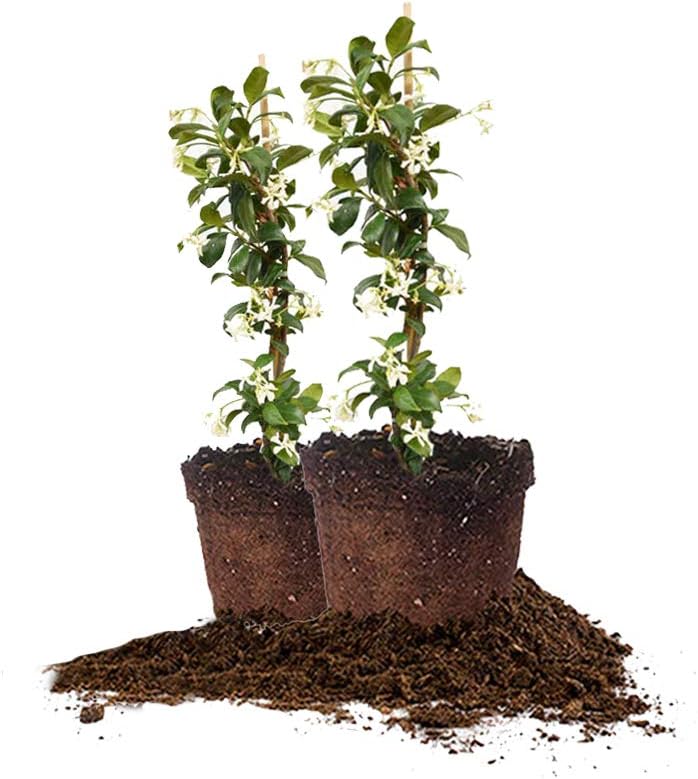
Perfect Plants Confederate Jasmine (2-Pack), Star Vine, 1 Gal
| Indoor Outdoor Usage | Outdoor |
|---|---|
| Expected Blooming Period | Spring |
| Sunlight Exposure | Full Sun, Partial Shade |
| Moisture Needs | Moderate Watering |
| Unit Count | 1 Count |
These two Confederate jasmine vines arrive in individual 1‑gallon nursery pots and are meant to be trained on fences, trellises, railings or other supports to form a fragrant, evergreen screen. They perform best in full sun to part shade and are rated for USDA zones 7–11, so on a shaded porch they will tolerate lower light but bloom most reliably where they get some sun. The plants are described as easy to establish; new arrivals need deep watering every day or two for the first two weeks and can drop some leaves while roots settle. Notable features are the glossy evergreen foliage, sweet white pinwheel flowers in spring and early summer, and organic plant material. Limitations include that each order contains small 1‑gallon pots so expect a period of growth before reaching the listed mature height, and some variability between the two plants. Buyers should plan to provide a structure and basic training to get a neat coverage and to monitor moisture while the plants establish.
Best for: Gardners who want a fragrant, evergreen climbing vine to train on a porch trellis or railing and who prefer a low‑maintenance plant that establishes quickly with basic watering.
Less Ideal for: Those seeking instant privacy or mature coverage right away or gardeners unwilling to train or support vines as they grow.
- Two evergreen vines per order for quicker coverage when planted together
- Fragrant white spring blooms that add scent to a porch area
- Tolerates full sun to partial shade, making it adaptable to sheltered porches
- Ships in 1‑gallon nursery pots so plants are ready to plant immediately
- Described as easy to establish with straightforward watering guidance
- Plants are small 1‑gallon specimens so visual impact takes time as they grow to mature height
- Some leaf drop and minor shipping damage to stems is possible during establishment
Verdict: A practical choice for porch gardeners who want a fragrant, adaptable evergreen vine they can train for seasonal blooms and long‑term screening.
Choosing the Right Plants for Sunny Porch: Key Factors to Consider
Sun and Heat Tolerance
Plants on a sunny porch must survive prolonged direct sunlight and occasional reflected heat from walls or pavement. Choose species that are labeled full sun tolerant and that have leaf structures adapted to high light, such as smaller, thicker, or gray-green leaves which reduce water loss. Even sun-loving plants can show leaf scorch if placed too close to heat-reflective surfaces, so assess porch orientation and surrounding materials.
Sun tolerance affects placement, pot selection, and irrigation timing. If your porch gets afternoon sun, lean toward the most heat-resilient options and provide afternoon shade during heat waves if possible.
Watering Needs and Drought Response
Containers dry out far faster than ground soil, so consider how often you can realistically water. Some sun-loving plants are drought-tolerant once established and can handle intermittent drying between waterings. Others need consistently moist soil and will suffer quickly in small pots on a hot porch.
Match plants to your watering routine. If you travel or prefer low-maintenance care, select species that recover from brief dry spells and avoid those that brown immediately when soil dries. Also consider soil mix and pot material, since terracotta speeds drying while glazed pots retain moisture longer.
Container Size and Root Habit
Not all plants suit every pot. Root depth and vigor determine the minimum container size and how often you must repot or refresh potting mix. Compact, clumping plants suit small pots and hanging baskets, while vigorous spreaders need larger containers to avoid root binding.
Think about where plants will sit on the porch. Narrow rail planters, deep floor urns, and hanging baskets each impose different constraints. Choose plants whose mature size and root habit match available containers to reduce stress and repotting frequency.
Maintenance and Pest Resistance
A porch plant that looks great with minimal fuss makes maintenance enjoyable rather than burdensome. Favor species with natural resistance to common container pests and diseases, and those that do not require frequent deadheading, pruning, or fertilizing to look their best.
Inspect plants regularly; bright porches can attract pests that thrive in warm, dry microclimates. Selecting sturdier species reduces interventions like repeated treatments or constant grooming.
Seasonal Interest and Bloom Duration
Think about how long you want color or special foliage to last. Some plants bloom in flushes, others provide continuous blooms, and some offer primarily ornamental foliage rather than flowers. For a porch used as a focal point, balance bloomers with foliage plants to keep containers attractive when blooms fade.
Consider multi-season appeal if you want containers that look good from spring through fall. Long-blooming or repeat-flowering plants extend display time and reduce the need for frequent replanting.
Matching Plant to Porch Conditions
Assess the microclimate of your porch before selecting plants. Note how many hours of direct sun it receives, whether it gets reflected heat from light-colored walls, and how exposed it is to wind. These details will narrow choices more than broad labels like full sun alone.
Also measure pot locations and depths. A plant that thrives in a deep floor pot may struggle in a shallow railing box. Decide whether you want trailing plants for hanging baskets, tall specimens for corner urns, or compact plants for step planters.
- Place heat-tolerant species in afternoon sun areas; use shade in the hottest spots.
- Group pots with similar water needs to simplify irrigation.
- Use pot feet or saucers to improve drainage and airflow under containers.
Container Potting Mix and Drainage
Good potting mix for a sunny porch balances moisture retention with drainage. A mix with compost, peat or coconut coir, and perlite helps roots breathe while retaining enough water to buffer daily drying. Avoid using garden soil in containers because it compacts and reduces drainage.
Ensure every pot has drainage holes and consider adding a layer of coarse material at the bottom only if it improves overall drainage. The best approach is a free-draining mix and an appropriately sized pot.
- Choose lighter mixes for larger containers to reduce weight.
- Top-dress older pots and replace the upper few inches of mix annually to refresh nutrients.
Irrigation Strategies for Hot Porches
Watering in hot sun requires timing and consistency. Water early in the morning to reduce evaporation and allow foliage to dry before nightfall. For very hot periods, plants may need late-afternoon check-ins to prevent stress.
Use moisture meters or finger tests to avoid overwatering. Mulching the surface of pots with decorative bark or gravel can slow surface drying and keep roots cooler under intense sun.
- Consider self-watering containers or drip irrigation if you travel or are away frequently.
- Rotate pots periodically so all sides receive even light exposure.
Fertilizing and Seasonal Care
Container plants deplete available nutrients faster than in-ground specimens. Use a balanced, water-soluble fertilizer on a regular schedule for flowering or heavy feeders, and a slow-release granular in mixes for lower-maintenance containers.
Prune spent flowers and remove dead foliage to keep containers tidy and reduce pest habitat. Refresh potting mix and divide overcrowded specimens in spring before the main growing season.
- Reduce feeding in the hottest weeks if plants show stress.
- Repot when roots circle the pot or growth slows unexpectedly.
Design Tips for a Sunny Porch Display
Create visual interest by layering heights: place taller specimens at the back or in corners, medium plants in the middle, and trailing plants near edges. Use contrasting foliage textures and complementary bloom colors to avoid a flat display.
Think about seasonal swaps. Use long-blooming summer plants as anchors and replant small seasonal accents to refresh color throughout the season.
- Group containers of different materials to add texture.
- Use consistent pot colors or themes to create a cohesive look.
How We Chose the Best Plants for Sunny Porch
We selected plants that reliably perform in full sun porch environments where containers, reflected heat, and variable wind affect plant health. Our editorial filters prioritized documented sun tolerance, drought resilience in containers, and proven reliability in small-to-medium pots. Shipping or retailer details were excluded; we focused on plant behavior rather than provenance. Evaluation criteria included sun tolerance and heat resilience, which determine if a plant can photosynthesize without leaf scorch in long, hot afternoons. Watering needs and drought response were critical because porch containers dry faster than garden beds. Size and growth habit mattered for container fit and visual balance on narrow porches. Pest and disease susceptibility was reviewed to favor low-maintenance choices. Finally, seasonal interest and bloom longevity helped us prefer plants that contribute weeks or months of color or attractive foliage. We excluded plants that need specialized greenhouse care or deep landscape beds, as well as species with known invasive behavior in containers. The result is a short, practical list focused on plants you can expect to thrive on a sunny porch with normal container care.
FAQ
How often should I water plants on a sunny porch?
It depends on pot size, mix, and species, but many sun-loving container plants need daily watering in hot weather or every other day for larger pots. Use the finger test or a moisture meter to check the top few inches of soil and adjust for heat and wind exposure.
Can I use garden soil in porch containers?
Garden soil is usually too dense for containers and can cause poor drainage and root compaction. A high-quality potting mix designed for containers will perform better and reduce the risk of root rot and drainage problems.
Will full-sun plants survive reflected heat from siding?
Some full-sun plants tolerate reflected heat better than others due to leaf structure and drought adaptations. If your porch has strong reflected heat, choose the most heat-resilient options and provide afternoon shade or larger pots to buffer temperature spikes.
Are there low-maintenance plants that still bloom a long time in full sun?
Yes, several drought-tolerant, sun-loving plants offer long bloom periods and require minimal grooming. Look for plants noted for repeat flowering and natural pest resistance to keep maintenance low.
How do I prevent pests on sunny porch plants?
Regularly inspect foliage and remove damaged leaves, avoid overwatering which can invite disease, and maintain good air circulation between pots. If pests appear, start with mechanical removal and organic controls before considering stronger measures.
Final Verdict
On a sunny porch prioritize plants that combine true sun tolerance with reasonable drought response and a root habit that fits your containers. Match plant water needs to how often you can irrigate and choose potting mixes and pots that moderate temperature and moisture swings. Balance seasonal bloomers with attractive foliage to keep containers interesting through heat waves. Focus on the evaluation criteria above and you will be able to pick porch plants that are both low-maintenance and showy when it matters most.
