

Note: This article contains affiliate links. If you click on these links and make a purchase, I may earn a small commission at no extra cost to you. This helps support my research and content. Read my full affiliate disclosure here.
When you place containers in full sun, the wrong plant will fade fast while the right selections thrive and keep a patio looking intentional. Choosing plants adapted to hot, bright conditions matters because container soil warms and dries more quickly than ground beds. That increases water stress and makes root health the decisive factor for long summer performance. This guide covers seven shortlisted plants for sunny pots chosen for their color, heat tolerance, and container behavior. We evaluated ease of care, watering needs, and seasonal impact so you can pick plants that match how much time and attention you want to give your containers.
Top Picks at a Glance
| Best Overall The best all-around choice for most situations | Costa Farms Aloe Vera Live Succulents, 2-Pack (10–12 in. in grow pots) |  |
| Best Quality Built to a higher standard if you want something more solid | Plants for Pets Euphorbia 'Crown of Thorns' Live Plant (4" Pot) |  |
| Best Value The sweet spot between price and what you get | Gardeners Basics Sunspot Dwarf Sunflower Seeds (about 35 seeds) |  |
| Best Budget The cheapest option that still gets the job done reliably | Verdant Vigor 4 Assorted Live Succulents with Root Ball |  |
| Highest Rated A top-rated pick with lots of positive feedback | Prickly Pear Cactus Pads (Opuntia ficus‑indica) — Set of 3 Live Cut Pads for Planting |  |
| Most Popular A crowd favorite that many people choose with confidence | Altman Plants 20-Pack Live Succulent Assortment (2" Pots) |  |
| Best Seller A high-volume bestseller chosen again and again | THE NEXT GARDENER Sedum lucidum Obesum succulent, 4-inch, fully rooted |  |
Costa Farms Aloe Vera Live Succulents, 2-Pack (10–12 in. in grow pots)

| Indoor Outdoor Usage | Indoor |
|---|---|
| Other Special Features of the Product | Air Purification |
| Sunlight Exposure | Full Sun |
| Soil Type | Sandy Soil |
| Moisture Needs | Moderate Watering |
These Costa Farms Aloe Vera come as a paired set of live succulents in grow pots, intended for bright windowsills, sunny pots, or a desk with strong light. They are drought tolerant and formulated for easy indoor care—water about once every two weeks, use fast‑draining sandy soil, and avoid letting the roots sit in water. The plants are noted for air‑purifying qualities and sculptural, variegated foliage that fits modern or Mediterranean décor. Practical benefits include low attention needs, suitability for beginner plant owners, and a long lifespan when kept in bright light. Packaging is designed for live delivery from the grower so the plants arrive ready to place in a sunny location. Limitations to expect are the need for sustained bright direct light for best growth and the typical vulnerability of potted succulents to overwatering; they are not suitable for deep shade or consistently wet environments. For outdoor use, these are best kept in protected, very sunny containers rather than in cold or rainy conditions.
Best for: Buyers who want an easy, attractive succulent for sunny pots or windowsills and prefer low‑effort houseplants that still make a decorative statement.
Less Ideal for: People who keep plants in low‑light rooms, frequently overwater, or need frost‑hardy outdoor specimens should choose a different plant.
- Low maintenance and drought tolerant, requiring infrequent watering
- Variegated, decorative foliage that works well in sunny pots and modern interiors
- Sold as a pair for easy matching accents or to start a small collection
- Described as helping improve indoor air quality and wellbeing
- Requires bright, direct light to thrive and will perform poorly in low‑light spots
- Sensitive to overwatering and needs well‑draining soil to avoid root rot
Verdict: If you want an easy, sun‑loving potted plant that looks great and needs minimal care, this 2‑pack of Aloe Vera is a practical choice for sunny pots.
Plants for Pets Euphorbia 'Crown of Thorns' Live Plant (4" Pot)

| Indoor Outdoor Usage | Indoor, Outdoor |
|---|---|
| Other Special Features of the Product | Drought Tolerant |
| Sunlight Exposure | Full Sun |
| Soil Type | Loam Soil |
| Moisture Needs | Moderate Watering |
This Crown of Thorns (Euphorbia milii) arrives in a 4-inch nursery pot and is meant as a low-maintenance flowering succulent for sunny spots on a patio or a bright indoor window. It produces persistent pink bracts held on woody, thorned stems and tolerates a range of light levels, although it performs best in full sun. The plant stores water in its stems so it only needs moderate watering and well-draining loam, which makes it suitable for busy owners or those who prefer fuss-free potted displays. Practical benefits include pest resistance and a compact habit that fits in small containers or mixed sunny containers. Important limitations are the plant sap, which is caustic and toxic if ingested and can irritate skin and eyes, and the sharp spines that require careful handling and placement out of reach of children and pets. Expect a long-blooming, drought-tolerant accent plant that adds color where larger shrubs would not fit.
Best for: Buyers who want a low-maintenance, sun-loving flowering succulent for small pots or sunny patios and prioritize easy care and seasonal color without frequent watering.
Less Ideal for: Those seeking child- and pet-safe houseplants or grab-and-go plants for high-traffic areas should choose a non-toxic, spineless alternative.
- Drought tolerant and stores water in thick stems for low-frequency watering
- Suitable for full sun and bright indoor locations, making it versatile for patios or sunny windows
- Compact form fits small pots and crowded container arrangements
- Naturally resistant to common garden pests, reducing maintenance
- Caustic white sap is toxic and can irritate skin and eyes, so it requires careful handling
- Woody stems bear sharp spines that limit placement in homes with close contact
Verdict: A compact, sun-loving, low-maintenance flowering succulent ideal for practical gardeners who need a drought-tolerant potted accent for full-sun spots.
Gardeners Basics Sunspot Dwarf Sunflower Seeds (about 35 seeds)

| Sunlight Exposure | Full Sun |
|---|---|
| Expected Blooming Period | Summer to Fall |
| Moisture Needs | Moderate Watering |
| Material Features | GMO Free, Heirloom |
These Sunspot dwarf sunflower seeds grow compact annuals that give classic sunflower blooms without the tall stalks of standard varieties. Sow directly after frost; germination typically takes 7 to 15 days and flowers appear in roughly 60 to 70 days. The plants reach around 18 to 24 inches with 6 to 10 inch flower heads, making them easy to use in sunny pots, patio containers, raised beds, and borders. The packet contains approximately 35 seeds and includes growing directions on water-resistant paper, which is handy for planners and batch planting. As heirloom, non-GMO open-pollinated seed you can save seed from mature heads for future seasons. Practical benefits include pollinator-friendly blooms and sturdy stalks good for cut flowers. Limitations are the small packet size, which may not be enough if you want large displays, and the need to thin seedlings for best performance. These do best in full sun and well-drained soil and require moderate watering.
Best for: Gardeners who want classic sunflower looks in sunny pots or small beds without tall plants, and who value reusable heirloom seed and straightforward planting.
Less Ideal for: People planning mass plantings or large cut‑flower operations who need higher seed counts and a faster route to large displays.
- Compact plants (18–24 in) that fit well in pots and small garden spaces
- Large 6–10 in blooms attractive to pollinators and useful for cut flowers
- Heirloom non-GMO seeds that can be saved and replanted
- Includes about 35 seeds in a water-resistant packet with planting directions
- Packet size is small for large displays or multiple containers
- Requires thinning and regular care for best flower size and stalk strength
Verdict: Choose these dwarf sunflower seeds when you want reliable, heirloom sunflower blooms that fit sunny pots and small garden spaces.
Verdant Vigor 4 Assorted Live Succulents with Root Ball

| Indoor Outdoor Usage | Indoor, Outdoor |
|---|---|
| Drought Tolerant | Yes |
| Sunlight Exposure | Partial Shade |
| USDA Hardiness Zone | 9-11 |
| Moisture Needs | Moderate Watering |
This four-pack from Verdant Vigor delivers a simple starter set of live succulents that are easy to place around the home or patio. Each plant ships with a root ball so they are ready to pot into sandy, well-draining soil; recommended uses include small containers, mixed succulent arrangements, or windowsill displays. The plants are drought tolerant and need moderate watering and partial shade, which makes them low-maintenance for busy or new plant owners. They are rated for USDA zones 9 to 11 and are described as pet safe, which broadens where you can keep them. Because these are small specimens (about 4 inches expected height), they are best for decorative accents rather than large-scale landscaping. Expect basic, young plants rather than mature specimens, so you may need to re-pot and grow them on to reach fuller size. Overall these succulents are a practical, low-cost way to add greenery with minimal ongoing care.
Best for: Buyers looking for an inexpensive, low-maintenance way to add small, attractive succulents to indoor spaces, windowsills, or sheltered patios and who prefer plants that require little watering.
Less Ideal for: Gardeners seeking mature, statement plants or anyone needing cold-hardy succulents for outdoor planting in climates below USDA zone 9.
- Includes four live plants with root balls ready for potting
- Drought tolerant and needs only moderate watering
- Suitable for indoor and outdoor use in warm climates
- Compact size works well for small containers and mixed arrangements
- Small young plants that may require repotting and time to fill out
- Limited hardiness to USDA zones 9 to 11 restricts outdoor placement in cooler areas
Verdict: An affordable, low-maintenance four-pack of small succulents ideal for beginners and budget-conscious buyers wanting easy-to-care-for greenery.
Prickly Pear Cactus Pads (Opuntia ficus‑indica) — Set of 3 Live Cut Pads for Planting

| Indoor Outdoor Usage | Indoor, Outdoor |
|---|---|
| Sunlight Exposure | Full Sun |
| USDA Hardiness Zone | 8-11 |
| Moisture Needs | Little To No Watering |
| Unit Count | 3 Count |
These are three fresh-cut prickly pear pads intended to be rooted and grown in pots or garden beds. Each pad arrives suitable for callusing and then planting upright in a sandy, fast-draining cactus mix; the included printed instructions and QR code guide you through callusing, planting depth, and watering. Prickly pear is drought tolerant and thrives with abundant direct sunlight, so these pads are a straightforward choice for sunny pots on patios or bright indoor windowsills with supplemental light. Expect slow, steady establishment as new growth forms from the pad; once rooted they need very little water and perform well in USDA zones 8–11 or indoors in cooler climates. Handle carefully—pads can have visible spines and tiny glochids—so use gloves or tongs when unpacking. These are live cuttings, so success depends on following basic propagation steps and providing bright light; they are not instant, mature plants and will take time to develop into a fuller specimen.
Best for: Buyers who want a dependable, low-maintenance sun-loving plant to start in sunny pots or patios and who prefer a straightforward propagation project with clear instructions.
Less Ideal for: Those wanting an already established, display-ready cactus or buyers unwilling to handle spiny material and follow basic propagation steps.
- Arrives ready for propagation with three sizable pads to start multiple plants or a single cluster.
- Drought tolerant once established, making it low-maintenance for sunny pots and patios.
- Includes printed instructions and a QR code to simplify callusing and planting for beginners.
- Live cuttings require correct callusing and rooting steps and are not guaranteed instant growth into mature plants.
- Cannot be shipped to certain states due to agricultural restrictions, limiting availability for some buyers.
Verdict: A simple, reliable way to start drought-tolerant prickly pear plants for sunny pots when you want low-maintenance, sun-loving specimens.
Altman Plants 20-Pack Live Succulent Assortment (2" Pots)
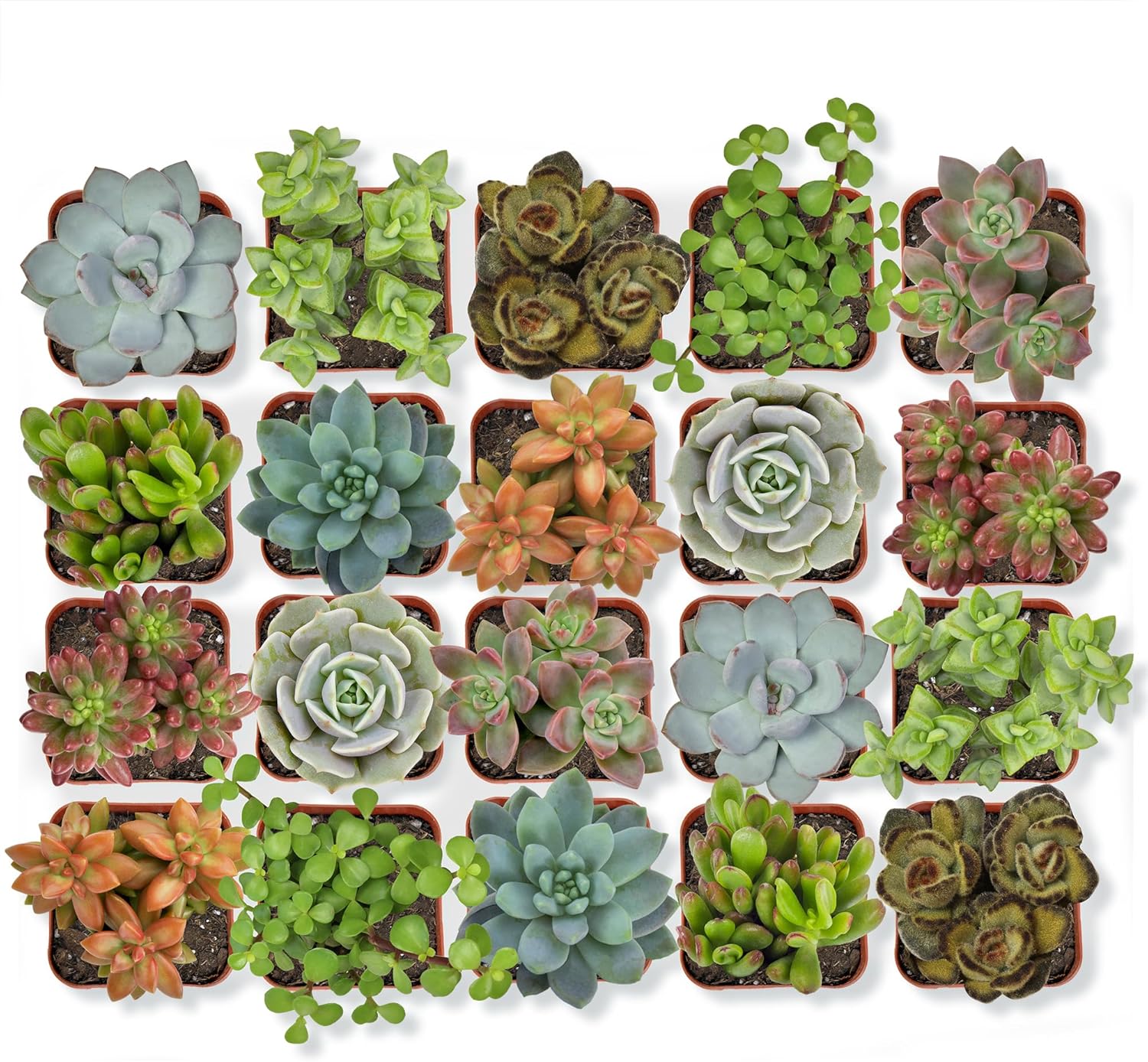
| Indoor Outdoor Usage | Indoor, Outdoor |
|---|---|
| Moisture Needs | Little To No Watering |
| Sunlight Exposure | Full Sun |
| USDA Hardiness Zone | 5 |
This 20-pack from Altman Plants delivers a varied selection of 2" succulents intended for starting container displays, terrariums, or gifting. Each pack contains ten paired varieties such as Echeveria, Crassula, Sedum and others, so you get color and texture variety without sourcing plants individually. The plants are grown to be drought tolerant and prefer bright light and sandy, well-draining media, which makes them easy to place in small pots or mixed container gardens. Practical benefits include low watering needs, year-round interest, and visibly healthy nursery-rooted stock suited to DIY arrangements. Limitations to note are the small nursery pot size, so plan to pot up into larger containers for long-term growth, and full sun preferences mean some indoor spots may require very bright light or supplemental light. For container projects these give a quick, coordinated start but expect to replant or group them for mature displays.
Best for: Buyers who want a reliable, low-maintenance way to start multiple container displays or DIY succulent projects and who value visible social proof that the mix performs well for other gardeners.
Less Ideal for: Gardeners seeking mature, display-size specimens or those who need plants for consistently low-light indoor spots should consider larger, sun-tolerant varieties or shade-adapted houseplants instead.
- Twenty individually potted succulents provide immediate variety for mixed container arrangements
- Pairs of ten different varieties make it easy to create balanced, symmetrical plantings
- Low watering needs and drought tolerance reduce maintenance for container growers
- Suitable for both indoor and outdoor container use when given bright light
- Plants come in 2" nursery pots and will need repotting for sustained growth
- Many varieties prefer full sun, which can limit bright indoor placement options
Verdict: A convenient, low-maintenance 20-pack that gets container succulent projects started quickly with a variety of ready-to-pot plants.
THE NEXT GARDENER Sedum lucidum Obesum succulent, 4-inch, fully rooted

| Indoor Outdoor Usage | Indoor |
|---|---|
| Other Special Features of the Product | Drought Tolerant |
| Sunlight Exposure | Partial Sun |
| USDA Hardiness Zone | 3 |
| Moisture Needs | Moderate Watering |
This 4-inch Sedum lucidum Obesum arrives fully rooted in a grower pot and is designed for low-maintenance indoor display. It thrives in bright, indirect light and follows a soak-and-dry watering routine, so typical use is placing it on a sunny windowsill or tabletop and watering only when the soil is dry. Notable product features are its drought tolerance, suitability for sandy, well-draining soil, and USDA hardiness to zone 3 which indicates resilience in cool conditions when kept protected indoors. Practical benefits include minimal watering needs, straightforward recovery tips for common issues like overwatering or transit damage, and compact size that fits small spaces. Important limitations are that it needs several hours of bright light to keep good color and form, and it is shipped in a grower pot that may require repotting into a decorative container with drainage for long-term display. Buyers should also monitor for signs of overwatering, since succulents show stress quickly if kept too moist.
Best for: Buyers who prefer low-maintenance houseplants that tolerate occasional neglect and want an easy-to-care-for accent for windowsills, desks, or small indoor planters.
Less Ideal for: Not a good choice for buyers who cannot provide several hours of bright light or who want a mature, showy specimen without repotting or growth time.
- Arrives fully rooted and ready to display or repot
- Drought-tolerant and low-maintenance care reduces watering frequency
- Compact 4-inch size fits windowsills, desks, and small planters
- Requires bright light for best color and growth
- Typically shipped in a grower pot that many buyers will choose to repot for aesthetics
Verdict: A small, fully rooted Sedum that delivers simple, low-water indoor greenery for cautious buyers who want a dependable, easy-care plant.
Choosing the Right Plants for Sunny Pots: Key Factors to Consider
Sun Exposure and Microclimate
Full sun in one garden can mean a different microclimate in another. Pots on a west-facing balcony experience intense afternoon heat and reflected light from walls, while a south-facing terrace may have milder morning sun. Assess how many hours of direct sun your pots receive and whether surfaces around them radiate extra heat.
Knowing the exact exposure helps you pick plants labeled for full sun versus those that tolerate only partial afternoon shade. Plants rated for full sun will generally tolerate high light and heat without leaf scorch, while other sun-lovers may still need afternoon relief in very hot regions.
Soil Mix and Drainage
Container soil dries faster than ground soil and can hold heat at root level, so mix choice matters. Use a light, well-draining potting mix that retains enough moisture without becoming waterlogged. Amendments such as coir, perlite, or small amounts of compost shift texture and water-holding balance.
Drainage also affects rooting and fertilizer strategy. Pots with poor drainage increase root-rot risk in summer storms, while extremely free-draining mixes may need more frequent feeding because nutrients leach faster. Match mix and drainage to the water needs of the sun-loving plants you choose.
Watering Routine and Drought Response
Potted plants in sun often demand a more consistent watering schedule than plants in the ground. How a species responds to intermittent dry spells should influence your selection if you plan to be away or prefer low-maintenance containers. Some plants wilt but recover quickly after watering, while others suffer irreversible bloom loss or branch dieback if left dry too long.
Consider using mulches, self-watering inserts, or larger pots to extend time between waterings. Also factor in seasonal changes: watering intervals that work in late spring may be insufficient during midsummer heat waves.
Pot Size and Root Space
Container volume controls how much water and nutrients are available and limits root growth, which affects vigor and flowering. Smaller pots warm and dry out faster and often require more frequent repotting. Choose plants with growth habits that match the planter size you intend to use, or be prepared to move them into larger containers as they fill out.
Consider root-bound tolerance; some sun-loving species tolerate mild root restriction and encourage compact flowering, while others need steady root room to bloom reliably. Planter depth also matters for species with deeper versus shallow root habits.
Fertilizer and Bloom Management
Containers have finite nutrients, so regular feeding keeps sun-loving plants blooming and healthy. Fast-blooming annuals often need steady, balanced feeding to sustain color, while many drought-tolerant perennials and succulents demand lighter feeding to avoid leggy growth.
Decide how much routine maintenance you want: if you prefer low-feeding plants, choose species that flower without heavy fertilizer. If extended bloom is your priority, be prepared to apply a routine liquid feed or timed-release granules suited to container use.
Foliage and Seasonal Interest
Flower color is important, but foliage texture and season-long structure also influence how attractive a sunny pot looks from week to week. Some sun-adapted plants provide long-lasting foliage contrast and form that remains attractive even after flowers fade. Others are peak-bloom performers that need repeated renewal to keep containers lively.
Plan for seasonal transitions: include some plants that maintain form through heat and others that act as temporary showstoppers. This mix creates continuous visual interest with lower overall maintenance.
Designing a Sunny Container Palette
Start by grouping plants with similar light and water needs so you can water and feed uniformly. A successful sunny pot often pairs a structural foliage plant with a colorful bloom producer and a trailing element for spillover. This three-part approach keeps the container balanced and reduces the chance one plant outcompetes the others.
Consider scale and repetition when arranging several pots across a patio. Using the same foliage plant in multiple containers provides unity, while swapping bloom colors seasonally refreshes the display without rebuilding the composition.
- Combine one tall or architectural plant, one mid-height bloomer, and one trailing filler
- Match plants by watering frequency rather than color alone
- Use repetition of foliage texture to unify a group of pots
Pot Material and Heat Retention
Material affects how quickly soil warms and dries. Terracotta breathes and cools less but loses moisture faster, while plastic and glazed ceramics retain moisture longer and warm differently. In very hot sites, choose materials that reduce rapid soil drying or place pots in partial shade during hottest hours.
Light-colored pots reflect heat better than dark pots and can reduce root stress. If you want the look of terracotta without rapid drying, consider larger pots or using a moisture-retaining liner inside.
- Terracotta drains and cools differently than plastic
- Larger volumes buffer temperature swings
- Light-colored containers reduce heat absorption
Managing Heat Waves and Seasonal Extremes
Have a plan for extended heat waves: increase watering frequency, move containers to a spot with afternoon relief if possible, and apply temporary shade cloth to reduce sun intensity for a week or two. Heat stress can be sudden, so check pots in the hottest part of the day to catch wilting before permanent damage.
During cool snaps, remember that southern exposures can create temperature spikes in pots even when ambient air is moderate. Protect tender sun-lovers in early spring or late fall by moving them to sheltered locations or using frost fabric when overnight lows threaten.
- Raise watering temporarily during heat waves
- Use shade cloth for short-term protection
- Monitor pots daily during extreme weather
Seasonal Refresh and Succession Planting
Plan containers so you can swap out short-lived annuals for longer-lived perennials or vice versa depending on the season. A few quick changes, such as replacing a tired bedding plant with a summer annual, can keep a sunny pot vibrant without full repotting. Consider staging: start with cool-season bloomers in spring then transition to heat-loving choices.
Keep some spare seedlings or plugs on hand for quick replacement after heat stress or pest damage. Succession keeps a container attractive across months with minimal overhaul.
- Use seasonal fill-ins to maintain continuous color
- Replace only the spent plants when possible to preserve soil structure
- Plan early so replacements are timed with peak bloom windows
Practical Pest and Disease Notes for Sunny Pots
High light and heat reduce some foliar disease pressures but can encourage pests that thrive in warm, dry conditions, such as spider mites. Inspect undersides of leaves and the soil surface regularly. Good airflow between containers lowers pest buildup and fungal problems.
Avoid overwatering as a preventative measure against root rot, and remove spent foliage promptly to reduce hiding places for pests. Organic controls, gentle washing, and spot treatments are often sufficient in container settings when combined with cultural care.
- Check plants regularly for mites and aphids
- Maintain airflow between pots
- Remove dead material to reduce pest habitat
How We Chose the Best Plants for Sunny Pots
We focused on plants that thrive in full sun containers and that demonstrably handle the temperature swings and faster drying typical of pots. Selection prioritized heat tolerance, drought resilience, and compact or manageable growth habits suitable for confined root space. We also favored species with reliable bloom or foliage interest through the main warm months and that respond well to routine container maintenance such as deadheading and light pruning. Editorial filters excluded plants that need shaded conditions, invasive root systems unsuitable for pots, or very large specimens that require oversized planters. We gave extra weight to options that perform across a range of soil mixes and fertilizer routines so gardeners with differing potting budgets can succeed. Final picks balanced aesthetics, seasonal longevity, and the common maintenance tasks container growers face.
FAQ
How much daily sun do plants for sunny pots actually need?
Most plants labeled for sunny pots do best with at least six hours of direct sun per day. Some heat-lovers prefer longer, brighter exposure, but in very hot climates afternoon shelter or reflected heat management helps prevent leaf scorch.
Can I grow drought-tolerant plants and heavy bloomers together in the same pot?
Mixing drought-tolerant species with heavy-feeding, water-needy bloomers usually causes conflict. Group plants by similar water and feeding needs to avoid uneven performance and frequent replanting.
What size pot is best for sun-exposed containers?
Larger pots are more stable in temperature and moisture, so they reduce watering frequency and stress on roots. Choose a pot that gives roots enough room to fill without being excessively oversized for the species you select.
How often should I fertilize sunny container plants?
Fertilizer frequency depends on plant type and potting mix, but many sun-loving annuals need regular feeding every two to four weeks during active bloom. Slower-growing or drought-adapted plants often require less frequent feeding.
Do pot materials change which plants I should choose?
Yes. Fast-draining terracotta suits plants tolerant of drier roots, while plastic or glazed containers work well for species needing more consistent moisture. Match pot material to the water habits of your chosen plants.
How can I keep containers looking good when I'm away on vacation?
Use larger pots, apply a moisture-retaining mix or mulch, and consider self-watering inserts or internal reservoirs. Also group pots in partial shade to reduce evaporation during your absence.
Final Verdict
For sunny pots, prioritize plants that combine heat tolerance, appropriate water needs, and a container-friendly growth habit. Match plant choice to your exposure, pot size, and how much routine care you want to provide. Tradeoffs are inevitable: showy, heavy-blooming annuals demand more water and fertilizer, while drought-tolerant species offer lower maintenance but different seasonal looks. Choose a mix of structural foliage, mid-height bloomers, and trailing elements to balance form and color. Focus on light, drainage, and watering routines first, then select plants that fit those conditions to ensure long-lasting success in bright containers.
