

Note: This article contains affiliate links. If you click on these links and make a purchase, I may earn a small commission at no extra cost to you. This helps support my research and content. Read my full affiliate disclosure here.
Choosing the right fertilizer for Japanese maple tree matters because these ornamental trees respond to both the balance and timing of nutrients. The wrong formula or feeding schedule can trigger weak growth, poor fall color, or burned roots. This guide covers seven shortlisted fertilizers selected for shade-loving maples, focusing on formulas that support leaf color, controlled growth, and root health. You will find practical notes on nutrient balance, release type, and seasonal use so you can match a product to your planting situation. Below are our top picks followed by detailed buying guidance and care tips.
Top Picks at a Glance
| Best Overall The best all-around choice for most situations | TATAWORM Organic Japanese Maple & Citrus Fertilizer Sea-Kelp Bundle, 2 oz Liquid + 2 oz Powder |  |
| Best Quality Built to a higher standard if you want something more solid | TATAWORM Organic Japanese Maple Liquid Kelp Fertilizer (2 oz) |  |
| Best Value The sweet spot between price and what you get | TreeHelp Annual Care Kit for Japanese Maple |  |
| Best Budget The cheapest option that still gets the job done reliably | Perfect Plants Bonsai Slow-Release Fertilizer Pellets, 5 oz |  |
| Highest Rated A top-rated pick with lots of positive feedback | FoxFarm Happy Frog Japanese Maple Fertilizer (4 lb) |  |
| Most Popular A crowd favorite that many people choose with confidence | TPS Nutrients Japanese Maple Liquid Fertilizer, 8 oz |  |
| Best Seller A high-volume bestseller chosen again and again | Perfect Plants Liquid Bonsai Fertilizer (8 fl oz) |  |
TATAWORM Organic Japanese Maple & Citrus Fertilizer Sea-Kelp Bundle, 2 oz Liquid + 2 oz Powder

| Brand | TATAWORM |
|---|---|
| Item Highlight | Seaweed Plant Food, Concentrated, Water Soluble, Stronger Roots, Healthy Growth |
| Ingredients | Formula 0-0-4 and 0-0-18 |
This TATAWORM bundle pairs a 2 oz liquid and 2 oz powder sea-kelp formula made from Maine-harvested Ascophyllum nodosum to provide routine nutrition for Japanese maples and similar garden plants. Both formulas are concentrated and water soluble so small measured doses mix into multiple gallons of plant food, making them useful for container specimens, young trees, and landscape plantings. The kelp contains natural amino acids, macro and micronutrients that help promote stronger roots, healthier foliage, and steady nutrient uptake through the season. Being OMRI listed and made in the USA makes it suitable for organic gardeners who prefer cleaner inputs. Expect subtle, cumulative benefits rather than quick, high-nitrogen-driven leaf flushes because the listed NPKs emphasize potassium and organic compounds rather than nitrogen. This product is best used as a regular feed to maintain vitality and stress resilience rather than as a corrective treatment for severe nutrient deficiencies.
Best for: Gardeners who want a low-impact, organic feed to maintain steady health and root strength in Japanese maples and other ornamental trees and container plants.
Less Ideal for: Growers seeking a fast-acting, high-nitrogen fertilizer to correct acute yellowing or drive rapid leaf growth should choose a different product.
- OMRI listed and made in the USA, suitable for organic gardening
- Contains Ascophyllum nodosum sea kelp which supplies amino acids and trace nutrients
- Concentrated, water-soluble formulas that mix into multiple gallons for economical routine feeding
- Two complementary formats (liquid and powder) for flexible application methods
- Formulations do not emphasize nitrogen so visible quick green-up may be limited
- Small package sizes require careful measuring and may need frequent repurchase for larger gardens
Verdict: If you want an organic, sea-kelp based routine feed to support root strength and steady seasonal growth in Japanese maples, this concentrated liquid-plus-powder bundle is a practical choice.
TATAWORM Organic Japanese Maple Liquid Kelp Fertilizer (2 oz)

| Item Form | Liquid |
|---|---|
| Application Method | soil drench |
| Target Species | Trees |
| Mixing Ratio | 1 tsp per gallon |
| Formula | 0-0-4 |
This 2 oz TATAWORM liquid kelp is a concentrated seaweed extract designed specifically as a gentle feed for Japanese maples. Mix 1 teaspoon per gallon to make up to 12 gallons and apply as a soil drench every 2 to 3 weeks during active growth. The Maine-harvested Ascophyllum nodosum provides natural potassium, amino acids, and micronutrients that support steady root development, improved nutrient uptake, and better stress tolerance without forcing excessive leaf surge. It is OMRI listed and made without synthetic additives, so it fits into organic care routines and is safe for nearby plants when used as directed. Practical benefits include simple mixing, a mild marine scent, and an included scoop for accurate dosing. Limitations are its low coverage per bottle — a small concentrate intended for regular maintenance rather than heavy feeding — and that visible results can take several weeks and depend on overall site conditions. Follow application timing and avoid applying diluted mix to frozen soil or directly on the trunk.
Best for: Buyers who prioritize steady, long-term health and natural resilience for Japanese maples and prefer organic, low-risk fertilizing strategies.
Less Ideal for: Gardeners seeking a high-coverage, high-NPK synthetic boost for rapid growth or those needing a single-product solution for many trees.
- Concentrated formula mixes easily to make up to 12 gallons for consistent routine feeding
- Maine-harvested sea kelp provides natural potassium, amino acids, and micronutrients
- OMRI listed and free of synthetic additives for organic gardening
- Gentle application reduces risk of leaf burn and avoids forcing excessive rapid growth
- Small 2 oz bottle provides limited total coverage and requires frequent repurchasing for larger plantings
- Low coverage rating means not suitable as a one-time heavy treatment
Verdict: Choose this concentrated liquid kelp if you want a gentle, organic maintenance feed that improves root strength and steady nutrient uptake in Japanese maples.
TreeHelp Annual Care Kit for Japanese Maple

| Item Form | Granules, Powder, Tablets |
|---|---|
| Specific Uses For Product | Root Development |
| Coverage | Full |
| Target Species | maple |
This kit combines a concentrated mycorrhizal treatment, a slow-release premium fertilizer, and a dry biostimulant to support Japanese maple health from the roots up. It is designed to treat one large tree or two to three smaller or newly planted maples and is applied to the soil during the growing season. The mycorrhizal component helps beneficial fungi colonize roots and improve nutrient uptake, the fertilizer supplies macro- and micronutrients with nitrogen in slow-release form to avoid excessively soft new growth, and the biostimulant provides humic extracts, sea kelp, beneficial bacteria, amino acids, and vitamins to encourage root vigor. In practice this means fewer nutrient deficiencies, stronger root establishment for transplants, and steadier seasonal growth when used as directed. The kit is focused on maintenance rather than corrective, so severe nutrient imbalances or advanced pests and diseases will need separate treatments. Also avoid late fall or winter application as recommended, and note the package is sized for only a few trees rather than a large planting.
Best for: A practical gardener who wants a ready-made, root-focused maintenance plan for one to a few Japanese maples and values steady, low-risk growth over aggressive feeding.
Less Ideal for: Owners managing many trees, landscapers needing bulk supplies, or gardeners seeking an all-in-one solution for pests and severe nutrient corrections should look elsewhere.
- Includes mycorrhizal inoculant to improve root colonization and nutrient uptake
- Slow-release nitrogen formula that reduces risk of weak, leggy growth
- Biostimulant adds humic acids, sea kelp, beneficial bacteria and amino acids for root vigor
- Packaged to treat one large or multiple smaller Japanese maple trees with clear application guidance
- Not intended for corrective treatment of severe deficiencies or active pest/disease problems
- Not recommended for late fall or winter application
- Quantity is sized for a small number of trees and may not cover larger landscapes
Verdict: Choose this kit if you want a compact, root-first maintenance package tailored to keeping one to a few Japanese maple trees healthy and well-established.
Perfect Plants Bonsai Slow-Release Fertilizer Pellets, 5 oz

| N-P-K | 18-6-8 |
|---|---|
| Unit Count | 5 Ounce |
| Item Form | Granules |
| Specific Uses For Product | Bonsai tree care |
Perfect Plants Bonsai Fertilizer Pellets are small slow-release granules designed to feed containerized trees, including Japanese maple bonsai, without frequent applications. The product is typically sprinkled on the soil surface (lift the moss first) and left to dissolve gradually; the manufacturer recommends about 2 heaping tablespoons per 10-inch pot and a reapplication every six months. The 18-6-8 N-P-K mix supplies nitrogen for leafy growth plus phosphorus and potassium for root and trunk development, which helps maintain vibrant foliage and stronger roots in potted maples. The resealable heavy-duty bag keeps leftovers dry and the concentrated 5 oz unit is convenient for a modest bonsai collection or spot treatments. Important limitations are the small packaged amount—this 5 oz bag is best for one tree long term or a short season for several trees—and the pellets are formulated for general bonsai use rather than tailored feeding for every growth stage, so heavy-feeding needs or bloom-specific programs may require supplemental products.
Best for: Home bonsai growers who want a low-maintenance, set-and-forget feeding routine for a single Japanese maple or a small collection and who prioritize simplicity and steady nutrition.
Less Ideal for: Bonsai enthusiasts managing large collections or those who need high-volume or stage-specific fertilization programs should consider larger or specialized products instead.
- Slow-release 18-6-8 formula provides extended feeding with applications about every six months
- Resealable heavy-duty bag preserves pellets for long-term storage
- Easy surface application that reduces the need for frequent liquid fertilizing
- Formulated specifically for bonsai and containerized plants, supporting root and trunk strength
- Small 5 oz package limits how many trees it will cover in a single season
- Not a stage-specific fertilizer so may need supplementation for flowering or heavy growth periods
Verdict: A convenient slow-release pellet fertilizer that delivers steady, low-maintenance nutrition ideal for a budget-minded bonsai owner caring for a Japanese maple.
FoxFarm Happy Frog Japanese Maple Fertilizer (4 lb)

| Item Form | Powder |
|---|---|
| Specific Uses For Product | Japanese maples, hydrangeas, junipers, dogwoods and other low pH feeders |
| Application Method | Mix into soil or top-dress |
| Target Species | Trees |
| Mixing Ratio | 2 tablespoons per 1 gallon |
This powdered fertilizer is designed specifically for low-pH feeders such as Japanese maples, hydrangeas, and other ornamentals. It is mixed into potting soil or used as a top-dress and intended for monthly feedings during the growing season. Notable features include a 4-3-4 NPK blend with added soil microbes and mycorrhizal fungi to improve root efficiency and nutrient uptake, plus phosphorus and potassium to encourage stronger branch development. In practice the product provides steady, predictable green growth and helps young transplants establish when combined with proper watering. Application is straightforward using the brand mixing ratio of 2 tablespoons per gallon of soil, which makes repeat feedings easy to replicate. Limitations are that it is a single powdered formula without a measured liquid option and it is tailored to low-pH plants so it is not a universal all-purpose fertilizer for every garden need. Buyers should follow the label for timing and amounts to avoid overfeeding.
Best for: Gardeners who prioritize consistent, plant-specific feeding and want a dependable monthly fertilizer to support healthy foliage and branch structure in Japanese maples and other low-pH ornamentals.
Less Ideal for: People seeking a multi-purpose fertilizer for a wide range of garden plants or those who prefer liquid feeds or foliar applications.
- Formulated for low-pH feeders like Japanese maples to address specific nutrient needs
- Contains beneficial soil microbes and mycorrhizal fungi to improve root nutrient and water uptake
- Phosphorus and potassium content supports stronger branch development and sturdier structure
- Powder form with a clear mixing ratio makes monthly application simple and repeatable
- Only available as a powdered, soil-applied formula rather than a liquid feed for foliar or fertigation use
- Targeted to low-pH plants so it is less suitable as a universal fertilizer for neutral or alkaline feeders
Verdict: Choose this fertilizer if you want a reliable, low-pH–focused monthly feed that improves root efficiency and builds stronger branches in Japanese maples.
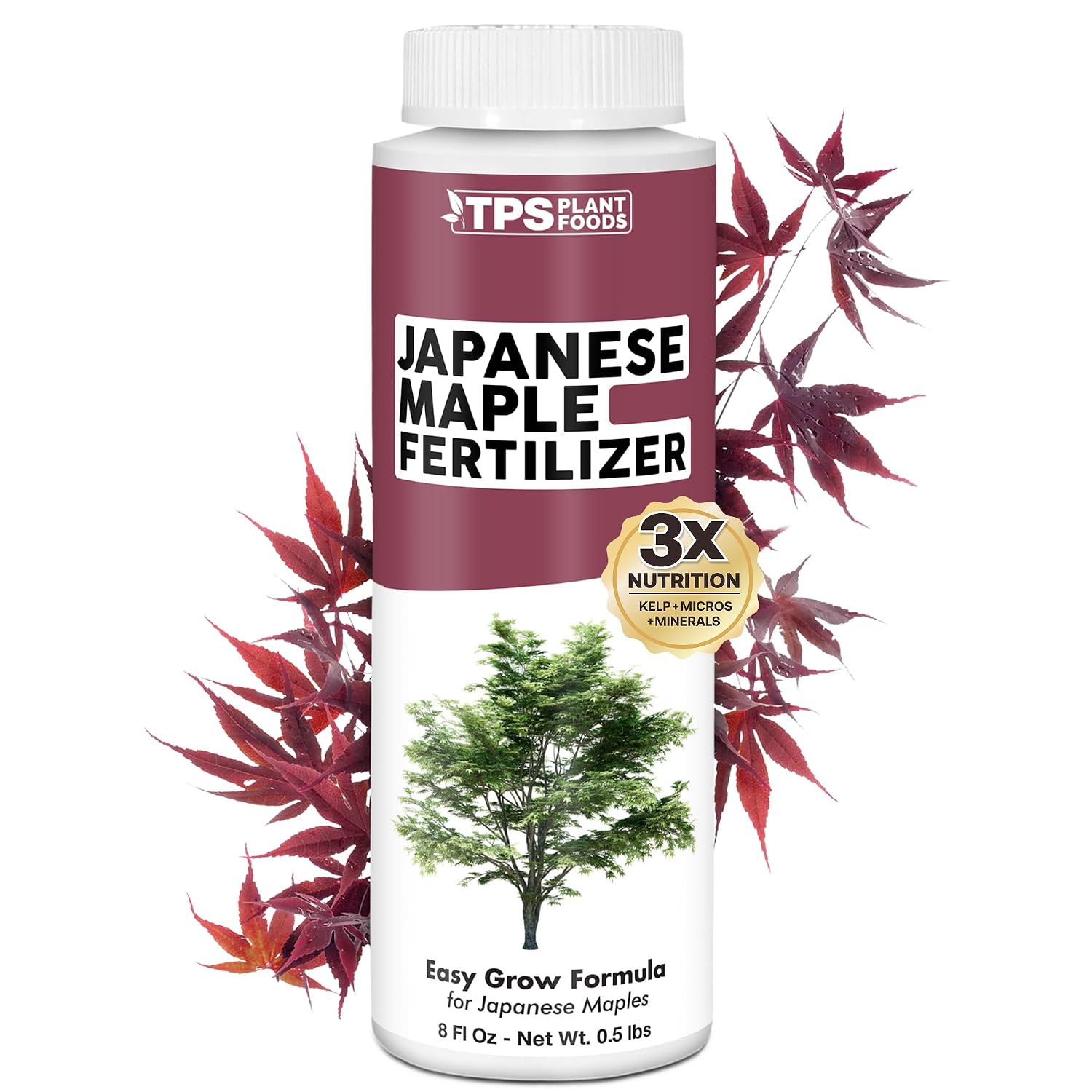
TPS Nutrients Japanese Maple Liquid Fertilizer, 8 oz
| Item Form | Liquid |
|---|---|
| Coverage | Japanese maple trees |
| Target Species | Japanese Maple |
| Unit Count | 8 Fluid Ounces |
| Mixing Ratio | 1:0:0 |
This 8 oz liquid fertilizer from TPS Nutrients is formulated specifically for Japanese maples and ornamental trees. You mix a small amount into water and apply as a feed to promote richer leaf color, encourage fresh branch and leaf growth, and support root establishment. Its liquid form makes it easy to incorporate into regular watering for both potted specimens and landscape plantings, and the product highlights compatibility across growth stages. Practical benefits include targeted nutrition for ornamental foliage and improved root uptake that can help stressed or recently planted trees establish more quickly. Because the bottle is concentrated, a little goes a long way, though that means multiple applications or larger trees will require repurchasing sooner than with gallon-sized fertilizers. The product information lists a simple mixing ratio and emphasizes ease of use, but it does not provide a full NPK breakdown on the detail section, so gardeners wanting exact nutrient numbers or large-volume supply might need to look elsewhere.
Best for: Buyers who prioritize proven, species-focused products and want an easy-to-use feed to enhance leaf color and help young or transplanted Japanese maples establish.
Less Ideal for: Gardeners needing large-volume, long-term supply or those who require an exact NPK specification for precise nutrient planning.
- Formulated specifically for Japanese maple and ornamental trees
- Liquid concentrate is easy to mix and apply with regular watering
- Supports leaf color, new foliage growth, and root development
- Suitable for both container and landscape plantings
- Small 8 oz bottle may require frequent repurchase for larger trees or repeated seasonal use
- Product page does not list a detailed NPK ratio in the visible specs
Verdict: A concentrated, easy-to-apply liquid formulated for Japanese maples that boosts foliage color and root strength for gardeners who want species-specific feeding.
Perfect Plants Liquid Bonsai Fertilizer (8 fl oz)

| Item Form | Liquid |
|---|---|
| Specific Uses For Product | Plant Food |
| Target Species | Bonsai |
| Mixing Ratio | 1:128 (teaspoon : US fluid ounce) |
Perfect Plants Liquid Bonsai Fertilizer is a concentrated 8 fl oz liquid plant food designed for bonsai and other containerized trees such as Japanese maples, junipers, and jade. You mix drops into water at the recommended 1:128 ratio and apply roughly once or twice a month during the active spring and summer growth period. The liquid form delivers nutrients immediately to the roots for quicker uptake than slow-release pellets and supports greener foliage, stronger roots, and more consistent new growth. The resealable bottle helps preserve the concentrate between uses and the product is presented with clear safety guidance. Limitations to know: the label does not list a detailed NPK ratio, so precise nutrient balance is not visible, and an 8 ounce bottle is a small concentrated supply that will require careful measuring for repeat use. For cautious gardeners, following the dilution instructions and watering routine is important to avoid overfertilizing container trees.
Best for: Ideal for cautious gardeners who prefer controlled, measured feeding of bonsai and containerized maples and want a product that integrates into a monthly watering routine.
Less Ideal for: Not the best choice for growers who need an exact, labeled NPK formulation for fertilization planning or for those managing large numbers of trees where larger bulk supplies are preferred.
- Concentrated liquid formula for quick nutrient uptake
- Clear mixing ratio provided for dilution and regular feeding
- Resealable bottle preserves remaining concentrate between applications
- Formulated with containerized trees and bonsai in mind, including maples
- NPK values are not listed on the product details so exact nutrient proportions are unknown
- Small 8 fl oz bottle means limited supply for multiple trees without purchasing more
Verdict: A convenient concentrated liquid fertilizer that lets cautious bonsai and Japanese maple owners apply measured, easy feedings for quicker, visible growth improvements.
Choosing the Right Fertilizer for Japanese Maple Tree: Key Factors to Consider
Nutrient Ratio and Timing
Japanese maples prefer balanced feeding that supports leaf color and root health rather than rapid shoot extension. Look for formulations with moderate nitrogen and adequate phosphorus and potassium to encourage steady growth and stronger tissues.
Timing matters more than a single application. Early spring feeding supports new leaf expansion, while light midsummer maintenance may be appropriate in nutrient-poor soils. Avoid high-nitrogen feeds late in the season because they can prompt tender growth that does not harden off before cold weather.
Slow-Release Versus Quick-Release
Slow-release fertilizers provide a steady supply of nutrients over weeks to months, reducing the risk of root burn and the need for frequent feeding. For Japanese maples, slow-release granules or coated products are often preferable because they match the tree's moderate nutrient uptake.
Quick-release or water-soluble fertilizers can be useful for correcting a short-term deficiency or for rapid color recovery, but they require careful dosing and more frequent applications. If you use a soluble product, follow label directions and consider splitting the recommended dose across multiple light applications.
Micronutrients and Soil pH
Micronutrients such as iron, manganese, and magnesium influence leaf color and overall vigor, especially in acidic-soil-loving species. Japanese maples can display chlorosis when micronutrients are unavailable, so a fertilizer that includes or supplements these elements can prevent pale foliage.
Soil pH affects nutrient availability, so test your soil before selecting a product. In alkaline soils, some micronutrients become less available even if the fertilizer contains them. Address pH if necessary, and choose a fertilizer formulation that complements the measured soil chemistry.
Application Method and Root Zone Size
Japanese maples often have shallow, spreading roots. Choose a fertilizer that can be applied safely across the drip line without concentrated granules next to the trunk. Top-dressing with granules, applying a measured liquid feed, or using slow-release spikes each behave differently in the root zone.
Consider the ease of spreading, ability to incorporate the feed into the upper soil layer, and how easily the product moves with water. Avoid techniques that risk localized high concentrations that could burn fine roots.
Salt Index and Root Safety
Fertilizer salt content affects the risk of root desiccation and burning, especially in small planting spaces or pots. Products with high soluble salt levels may be inappropriate for newly planted or container-grown maples.
Look for low-salt formulations or slow-release options that release nutrients gradually. When using soluble fertilizers, reduce concentration and increase frequency rather than applying a single heavy dose, particularly for sensitive or vulnerable trees.
Formulation Practicality and Label Clarity
Clear application rates, season-specific guidance, and mixing instructions make a fertilizer safe and effective to use. Products with ambiguous labels can lead to over- or under-application, which harms tree health or wastes time.
Also consider packaging size relative to the planting area and whether the product requires special equipment to apply. Practical formulations include those that are easy to measure, spread evenly, and come with straightforward reapplication intervals.
When to Feed Japanese Maples
Feed in early spring just as buds swell to support the first flush of leaf growth. A single balanced application in spring often meets the tree's needs in fertile garden soils, while poorer soils may benefit from a light midseason top-up.
Avoid late-summer or early-fall high-nitrogen feeds because they can stimulate new growth that is vulnerable to cold. If a corrective feed is needed, treat in late spring or early summer and reduce strength compared with spring applications.
- Spring feeding supports leaf expansion.
- Light midseason corrections for poor soils.
- Skip high-nitrogen applications after midsummer.
How to Apply Fertilizer to Shallow Root Zones
Distribute granular products evenly under the canopy, extending to the drip line. Gently rake the granules into the top inch of soil or cover with mulch to keep them from washing away. Avoid piling granules around the trunk flare.
For liquid feeds, water the root zone thoroughly after applying to move nutrients into contact with fine roots. When using spikes or slow-release tablets, follow spacing guidance so nutrients reach the majority of the root system rather than forming concentrated pockets.
- Spread evenly under the canopy, not at the trunk.
- Incorporate into the surface layer or topdress with mulch.
- Water after liquid application to carry nutrients to roots.
Adjusting Feeding for Container and Newly Planted Maples
Potted maples and recently transplanted trees need gentler feeding because their root systems are smaller and potting mixes can retain salts. Use lower-strength, more frequent liquid feeds or a light application of a slow-release product formulated for containers.
Monitor growth and leaf color closely. New transplants benefit from conservative fertilization in the first growing season to encourage root establishment rather than rapid top growth.
- Use lower concentration feeds for containers.
- Favor gentle, frequent applications to avoid salt buildup.
- Delay heavy feeding until after the first season for new transplants.
Dealing with Chlorosis and Other Deficiencies
Yellowing between leaf veins often signals iron or magnesium deficiency rather than a need for more nitrogen. Correct diagnosis helps you choose a fertilizer with the missing micronutrient or apply a targeted nutrient supplement.
A soil test will guide the fix. In many cases a chelated iron product or a balanced fertilizer with added micronutrients will restore color without excessive nitrogen that could push soft growth.
- Leaf vein yellowing often indicates micronutrient shortages.
- Test soil before applying corrective high-nitrogen feeds.
- Use chelated micronutrient supplements when needed.
Mulch and Fertilization: Working Together
A two- to three-inch layer of organic mulch helps maintain soil moisture, moderates temperature, and slowly contributes nutrients as it decomposes. Mulch also reduces the amount of fertilizer needed because it improves soil organic matter over time.
Keep mulch away from the trunk and avoid thick layers that prevent water reaching the root zone. Combine modest fertilizer inputs with regular mulching for the best long-term health of Japanese maples.
- Mulch reduces fertilizer needs by building soil organic matter.
- Keep mulch pulled back from trunk flare.
- Use mulch to improve moisture retention and nutrient cycling.
How We Chose the Best Fertilizer for Japanese Maple Tree
We prioritized formulas and features that matter for Japanese maples rather than generic lawn or shrub mixes. Selection centered on nutrient balance, release behavior, and feeding timing that promote good leaf color without forcing excessive late-season growth. We also evaluated application method and safety for shallow root systems, plus product consistency and clarity of instructions. Concrete criteria used were nutrient ratio and presence of key micronutrients, release type and longevity, application method compatibility with small root zones, and label guidance for timing and rates. We excluded high-nitrogen lawn fertilizers, general-purpose feeds designed for vigorous fruiting, and any products lacking clear instructions for trees and shrubs. Editorial filters removed materials with toxic salts or undefined nutrient sources. The resulting list favors predictable results for shade-adapted maples and straightforward care for home gardeners.
FAQ
How often should I fertilize a mature Japanese maple?
Often a single balanced application in early spring is sufficient for mature maples in average garden soils. In poor soils, a light midseason application can help. Avoid late-season high-nitrogen feedings.
Can I use general-purpose tree fertilizer on Japanese maples?
It depends. General tree fertilizers can work if their nutrient balance and salt index suit shallow-rooted maples. Avoid products with high nitrogen levels or unclear instructions for small ornamental trees.
What signs indicate a fertilizer problem versus normal seasonal color change?
Diffuse chlorosis or burned leaf edges after feeding suggests a fertilizer-related issue. Gradual leaf color changes in fall are seasonal. Consider recent applications and check for localized soil salt buildup to diagnose feeding problems.
Is liquid feeding better than granular for Japanese maples?
Liquid feeding offers faster correction of deficiencies and precise dosing, while granular slow-release products reduce application frequency and lower burn risk. Choice depends on whether you need a quick fix or steady long-term nutrition.
Should I adjust fertilizer rate for maples planted in containers?
Yes. Container-grown maples need lower rates and often more frequent, diluted applications to avoid salt buildup. Slow-release formulations for container plants are a convenient alternative if label guidance matches pot size.
Do Japanese maples need micronutrients added separately?
Sometimes. If soil tests or leaf symptoms point to iron, manganese, or magnesium deficiency, targeted micronutrient applications can help. Choose chelated forms for better uptake when soil pH limits availability.
Final Verdict
Prioritize fertilizer choices that match the shallow-root habit and seasonal rhythm of Japanese maples. Favor balanced nutrient ratios, predictable slow-release behavior, and clear label instructions to avoid root stress and unwanted late growth. Account for soil pH and micronutrient needs before applying corrective feeds. Choosing based on nutrient balance, release type, and application safety will yield the most consistent results. Use conservative rates, feed at the right season, and combine modest fertilization with good mulching and soil care for long-term tree health.
