

Note: This article contains affiliate links. If you click on these links and make a purchase, I may earn a small commission at no extra cost to you. This helps support my research and content. Read my full affiliate disclosure here.
Growing tomatoes in a hanging planter is a practical way to add fresh fruit to balconies, porches, and tight urban yards. The right hanging tomato planter keeps roots healthy, manages water well, and supports vines without taking up floor space. This guide covers six shortlisted hanging tomato planters suited to small-space and container gardening, with attention to drainage, material, and support systems. Below we explain the criteria used to evaluate each option and what to expect from well-designed hanging containers for tomatoes.
Top Picks at a Glance
| Best Overall The best all-around choice for most situations | Topsy Turvy Upside-Down Tomato Planter (Hanging Grow Bag) |  |
| Best Quality Built to a higher standard if you want something more solid | smart spring Ultimate Hanging Basket Planter (12", 2-Pack) |  |
| Best Value The sweet spot between price and what you get | UOUZ 13" Self-Watering Hanging Planter 2-Pack (50 oz Reservoir) |  |
| Best Budget The cheapest option that still gets the job done reliably | SouilGoal 3-Gallon Hanging Felt Grow Bags (Set of 3) |  |
| Highest Rated A top-rated pick with lots of positive feedback | montresor 10" Self-Watering Hanging Planter — 2 Pack |  |
| Best Seller A high-volume bestseller chosen again and again | Homyhoo 2-Pack Upside-Down Hanging Tomato and Herb Planters |  |
Topsy Turvy Upside-Down Tomato Planter (Hanging Grow Bag)

| Capacity | 18 quarts |
|---|---|
| Mounting Type | Hanging |
| Material Type | Cherry |
| Included Components | Plant Hanger |
| Indoor Outdoor Usage | Indoor |
The Topsy Turvy upside-down tomato planter is a simple hanging grow bag made to produce tomatoes from a suspended opening. You fill the bag with potting mix, insert seedlings through the bottom opening, and hang it in full sun on a porch, balcony, or patio. Notable features include a single-level cylindrical bag form with an included hanger and a design that removes the need for stakes or cages. In practice it keeps fruit off the ground, reduces weeding and bending, and can make harvesting easier for raised or balcony gardens. The capacity and lightweight construction make it easy to move and refill each season. Limitations are the single planting level and modest capacity, so it is best for a few plants rather than a full harvest replacement for in-ground beds. Because it is a fabric/painted bag intended for indoor/outdoor hanging use, expect more frequent watering and watch wind exposure on balconies.
Best for: Gardeners who want an easy, space-saving way to grow a few tomatoes on a balcony, deck, or small patio without staking or bending over.
Less Ideal for: People who need maximum yield from multiple plants or who prefer permanent in-ground beds and large-scale tomato production.
- Hanging upside-down design keeps fruit off the ground and reduces pests and weeds
- Included hanger makes setup quick for balconies, porches, or patios
- No need for stakes or cages, simplifying tomato care
- Lightweight and portable so you can move plants to follow sun
- Single-level bag limits the number of plants and total yield
- Requires more frequent watering than in-ground planting
Verdict: If you want a compact, no-stakes way to grow tomatoes on a balcony or patio, this hanging upside-down bag delivers simple setup and low-maintenance harvesting.
smart spring Ultimate Hanging Basket Planter (12", 2-Pack)

| Capacity | 7.5 quarts |
|---|---|
| Mounting Type | Hanging |
| Other Special Features of the Product | Drainage Hole, Side Planting, UV Resistant |
| Material Type | Stone, Zinc |
| Indoor Outdoor Usage | Outdoor |
These 12-inch smart spring hanging baskets are built to boost production in a compact footprint by combining a main planting cavity with multiple side planting ports. You plant the main root ball, pop transplants into the molded side openings, lock the halves together, attach the included zinc-plated chain, and hang on a porch, balcony, or patio. The side-planting design promotes cascading growth and lets you grow several plants in a single basket while keeping fruit and foliage off the ground to reduce rot and pests. Made of heavy-duty, UV-resistant plastic with drainage holes, the pots are reusable season after season and more weatherproof than straw or coco liners. Practical benefits include easier harvests for trailing tomatoes and efficient use of vertical space for small-area vegetable production. Limitations are the fixed 12-inch volume per planter, which will restrict very large tomato varieties and requires regular watering and feeding because containers dry faster than in-ground beds.
Best for: Gardeners who want to maximize fruit or herb yield from limited vertical space and prefer a performance-focused, reusable hanging system for patios or balconies.
Less Ideal for: Growers seeking to support large indeterminate tomato varieties or those who prefer low-maintenance, in-ground beds for large harvests.
- Side planting ports increase plant count and create cascading growth for better yields in one hanging basket.
- Durable, UV-resistant plastic construction is reusable and more weatherproof than straw liners.
- Includes zinc-plated hanging chain and built-in drainage for straightforward setup and moisture control.
- Compact 12-inch diameter fits small patios, balconies, and other limited spaces.
- 12-inch capacity limits use to compact or determinate tomato varieties rather than large indeterminate types.
- Requires more frequent watering and nutrient management compared with in-ground growing.
Verdict: If you need a reusable, high-yield hanging planter that packs multiple plants into one compact basket, this is a top choice for performance-oriented small-space tomato and herb growing.
UOUZ 13" Self-Watering Hanging Planter 2-Pack (50 oz Reservoir)
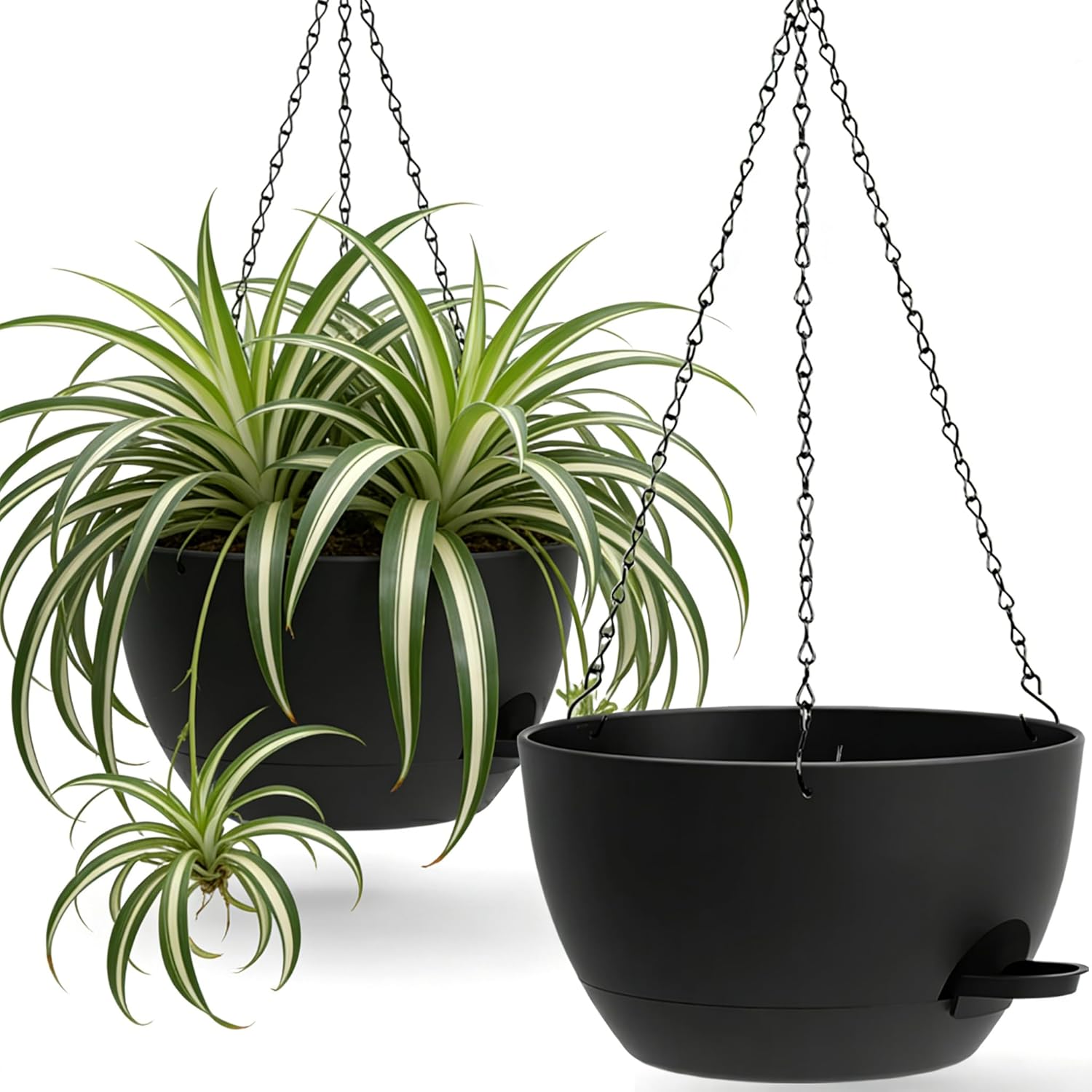
| Capacity | 50 fluid ounces |
|---|---|
| Item Count | 2 Count |
| Material Type | Plastic |
| Mounting Type | Wall Mount |
| Indoor Outdoor Usage | Outdoor |
These UOUZ hanging planters are a practical option for keeping outdoor hanging plants healthy with less daily maintenance. Each 13-inch basket includes a removable 50-ounce reservoir that supplies water to the root zone so containers can go 7 to 14 days between waterings, which is useful for busy homeowners or short trips. The planters are made of lightweight plastic and come with chains for hanging; the basket form and modern styling suit porches, balconies, and garden hooks. Setup is straightforward: assemble the chain, insert the reservoir, and add potting mix and plants. The main benefits are reduced watering frequency and a tidy, contained pot that limits mess when raining. Limitations are the plastic construction, which is less durable than ceramic or metal over many seasons, and the planters are sized for single-season planting rather than large specimen trees. These work best as low-maintenance containers for annuals, trailing vines, and ferns where consistent moisture helps performance.
Best for: Buyers who want reliable, low-maintenance outdoor hanging baskets that keep plants watered during short trips or busy weeks and prefer simple, fuss-free setup.
Less Ideal for: Gardeners seeking heavy-duty, decorative ceramic or metal planters or those who need very large containers for substantial soil volumes or big shrubs.
- Built-in 50 oz removable reservoir reduces watering frequency for 7–14 day care periods.
- Comes as a 2-pack with hanging chains for immediate outdoor installation.
- Lightweight plastic construction makes them easy to lift and rehang when needed.
- Plastic material may fade or become brittle with prolonged sun exposure.
- Capacity is moderate and may need more frequent watering for very thirsty plants in hot climates.
Verdict: Choose these self-watering hanging planters when you want low-effort outdoor baskets that keep plants hydrated for up to two weeks between waterings.
SouilGoal 3-Gallon Hanging Felt Grow Bags (Set of 3)

| Capacity | 3 gallons |
|---|---|
| Material Type | felt cloth, non woven fabric |
| Mounting Type | Hanging |
| Unit Count | 3 Count |
| Indoor Outdoor Usage | Indoor, Outdoor |
These SouilGoal hanging grow bags are a budget-friendly way to add vertical planting for strawberries and other small edibles. Made from felt nonwoven fabric, each 3-gallon bag breathes well to promote healthy roots and reduce waterlogging, and the soft material folds for compact storage or easy washing. The bags have multiple planting holes and sturdy handles so you can hang them from a balcony railing, fence, or beam to save floor space and create a tidy strawberry display. Practical benefits include good drainage and lightweight portability, plus the set of three gives immediate planting capacity for successive harvests. Expectations should be tempered by the simple construction: felt will wear faster than heavy canvas or plastic, and the 3-gallon size is best for shallow-rooted plants rather than large tomatoes. For gardeners who want an inexpensive, space-saving hanging solution for strawberries and small vegetables, these deliver functional performance without extras.
Best for: Gardeners on a tight budget who want a simple, space-saving way to grow strawberries or other small vegetables on balconies, fences, or small patios.
Less Ideal for: People wanting heavy-duty, long-lasting containers for large or heavy plants or those who need large soil volume for big indeterminate tomatoes.
- Breathable felt material promotes air pruning and reduces root rot
- Folds flat for storage and is washable for reuse
- Includes three hanging bags so you can plant multiple varieties at once
- Lightweight with built-in handles for easy hanging and repositioning
- Felt fabric is less durable long-term compared with thicker canvas or rigid planters
- 3-gallon capacity limits use to small or shallow-rooted plants
Verdict: A low-cost, space-saving set of breathable hanging grow bags that let budget gardeners grow strawberries and other small edibles without taking up floor space.
montresor 10" Self-Watering Hanging Planter — 2 Pack

| Material Type | Polypropylene (PP) |
|---|---|
| Mounting Type | Hanging |
| Other Special Features of the Product | Breathable, Drainage Hole, Fade Resistant, Lightweight, Self Watering |
| Unit Count | 2 Count |
These montresor 10-inch hanging planters are designed to make hanging displays low-maintenance and weather resistant. Each set includes two pots made of polypropylene with a recessed removable saucer that creates a small reservoir for self-watering while an aperture and mesh base promote drainage and root aeration. The pack also comes with two hanger options — a metal chain or a bohemian-style rope with wooden beads — so you can choose a sturdier outdoor mounting or a decorative indoor look. In practice the planters work well for trailing plants, ferns, and mixed floral displays where you want less frequent watering and good airflow around roots. They are lightweight and fade resistant, which helps for porch or balcony use, but the plastic construction is less decorative than ceramic and will show wear differently over many seasons. The fixed 10-inch size limits very large specimens and you will need a secure ceiling hook or bracket for heavier plantings. For buyers who want hassle-reduced hanging planters with flexible hanger choices, these deliver useful features in an affordable, durable package.
Best for: Buyers who want dependable, low-maintenance hanging planters for balanced indoor and outdoor use and value flexibility between a sturdy outdoor hanger and a decorative indoor option.
Less Ideal for: Not the best choice for collectors seeking high-end decorative materials or gardeners needing very large heavy-planter solutions for big specimens.
- Built-in removable saucer provides a reservoir for self-watering
- Drainage aperture and mesh base promote aeration and prevent waterlogging
- Includes two hanger styles (metal chain and bohemian rope) for indoor or outdoor mounting
- Made from fade-resistant polypropylene so pots stay lightweight and weather tolerant
- Plastic construction is utilitarian and less premium looking than ceramic or terracotta
- Fixed 10-inch size limits use with very large or heavy plants
Verdict: A practical two-pack of 10-inch self-watering hanging planters that combines easy upkeep and versatile hanger options for reliable indoor or outdoor displays.
Homyhoo 2-Pack Upside-Down Hanging Tomato and Herb Planters

| Unit Count | 2 |
|---|---|
| Material Type | Cotton |
| Mounting Type | Hanging |
| Indoor Outdoor Usage | Indoor, Outdoor |
These Homyhoo upside-down hanging planters let you grow a tomato or other fruiting plant from the bottom port while using side openings for herbs or strawberries. They are fabric hangers with included hangers that install easily on a hook, making them useful on balconies, patios, or in a garage grow setup. The nonwoven felt-like fabric promotes air circulation around roots and can help moderate temperature, and the multiple side ports let you plant several crops in one bag. The upside-down orientation reduces ground pests and saves bending over for maintenance. Limitations are the small individual capacity and single-level design, so large indeterminate tomato varieties will become root-bound quickly and will need frequent watering or pruning. The cotton/fabric construction is durable for seasonal use but will eventually degrade outdoors and needs winter storage for best longevity. For buyers wanting a low-effort, space-saving hanging tomato solution, these bags are straightforward and practical.
Best for: Buyers who want a low-maintenance, space-saving way to grow one tomato plus companion herbs in a balcony or patio setup and prefer uncomplicated, ready-to-hang solutions.
Less Ideal for: Growers seeking large yields from full-size indeterminate tomato varieties or those who need durable, long-term outdoor planters without seasonal replacement.
- Upside-down design reduces soil-borne pests and keeps plants off the ground
- Multiple side ports allow growing herbs or strawberries alongside a bottom tomato
- Fabric material promotes root aeration and helps moderate root temperature
- Includes hangers and two bags so you can set up multiple plants immediately
- Small capacity and single level limit suitability for large tomato varieties
- Fabric will wear faster than rigid containers if left outdoors year-round
Verdict: A simple, space-saving hanging solution for growing a tomato with companion herbs where ease of use and pest avoidance matter most.
Choosing the Right Hanging Tomato Planter: Key Factors to Consider
Drainage and Water Management
Tomatoes need consistently moist but not waterlogged soil. In a hanging planter, excess water must escape quickly because the container has less soil volume and dries differently than ground beds. Look for planters with multiple drainage holes, a well-designed saucer or reservoir system that prevents roots from sitting in water, or breathable fabric that sheds excess moisture.
Poor drainage raises the risk of root diseases and nutrient lockup. Good water management also affects how often you will need to water, which matters when containers hang out of easy reach on balconies or porches.
Root Volume and Planting Depth
Tomato plants develop deep and vigorous root systems even when trained or staked. A hanging planter must provide enough soil volume and planting depth for roots to establish and support heavy fruit loads. Shallow or narrow containers limit root growth and reduce yields because plants cannot access sufficient moisture and nutrients.
Adequate root space also stabilizes the plant against wind and movement. When assessing a hanging planter, consider both the total soil capacity and the effective depth available after accounting for liners, reservoirs, or structural elements that reduce usable volume.
Material and UV Resistance
Hanging planters are exposed to sun, wind, and rain, so materials should resist UV degradation, cracking, and rot. Durable plastics, coated metals, and heavy-duty fabrics each have tradeoffs. Plastic is lightweight and often molded with drainage features, but lower-grade polymer becomes brittle under strong sun. Metal hangers or rims need rust-resistant coatings. Fabric planters breathe well and reduce overwatering risk but can lose shape and require more frequent replacement if not UV-treated.
Assess materials not only for initial appearance but for how they will perform season after season in an outdoor environment.
Strength and Quality of Hanging Hardware
The hanger, hooks, straps, and attachment points take the planter's full weight when filled with soil and plants. That weight increases after watering and during heavy fruiting. Hardware should be rated for the expected wet weight and designed so stress is distributed across multiple attachment points rather than a single fragile knot or rivet.
Also consider how the planter attaches to common urban mounting points like balcony railings, hook fixtures, or beams. Adjustable straps, locked carabiners, or robust rings improve safety and adaptability.
Ease of Watering and Maintenance
Because hanging planters are elevated, you will water and tend them differently than ground containers. Easy-access designs let you top up water, feed fertilizer, prune vines, and inspect root health without complex disassembly. Features such as fill ports, removable liners, or integrated reservoirs reduce the need to unhook the planter frequently.
Consider how often you can reasonably tend the planter given its mounting location, and choose a design that makes routine care quick and safe.
Support for Vines and Fruit
Tomato vines and fruit create torque and leverage that can pull on hangers and stress container walls. Good hanging planters provide anchor points for tying vines or include integrated trellis-style supports so you can train stems upward. Support reduces breakage and keeps fruit clear of the soil surface. Without adequate vine support, plants can become top-heavy and create dangerous load shifts on the hanger.
Plan for methods to stake or tie the main stem and heavier trusses; the planter should make this straightforward without damaging the container.
Choosing the Right Size for Your Variety
Tomato varieties differ in growth habit and root demand. Determinate or patio types usually do well in smaller hanging planters because they stay compact and set fruit in a shorter season. Indeterminate varieties continue to grow and produce over many weeks and typically need larger soil volume and stronger supports.
If you plan to grow larger-fruited or indeterminate tomatoes, opt for the deepest planters you can safely hang and be prepared to provide additional vine training. For compact varieties, smaller hanging pots still benefit from good drainage and at least 8 to 10 inches of depth.
- Match planter depth to expected root depth of the variety
- Consider eventual wet weight before selecting hanging hardware
- Use lighter soil mixes to reduce overall load when space is limited
Soil Mixes and Fertility in Hanging Containers
Soil in hanging planters dries faster and loses nutrients more quickly due to smaller volume and increased exposure. Use a loose, well-draining potting mix that retains moisture while allowing excess to drain. Mixing in water-retentive amendments like coconut coir or a small amount of compost can moderate drying between waterings.
Fertilizer needs are higher in containers because leaching during watering removes nutrients. Apply a balanced, soluble fertilizer on a regular schedule or use a controlled-release formula sized for the container. Monitor leaf color and fruit set as indicators of nutrient status.
- Choose potting mixes formulated for containers, not garden soil
- Incorporate a slow-release feed if watering is infrequent
- Top-dress or side-dress if leaves show deficiency signs
Placement and Light Considerations
Tomatoes require full sun for best fruiting, typically at least six hours of direct light. Hanging planters offer flexibility to position plants where sun is most consistent. Avoid overly shaded eaves or spots that receive only morning or only late-day light.
Keep wind exposure in mind. A breezy balcony may provide better disease airflow but can stress vines and increase evaporation. Place planters where wind will not slam foliage against hard surfaces, and consider adding windbreaks if needed.
- Aim for full sun exposure when choosing a hanging location
- Check how shadows move during the day before installing hooks
- Rotate or move planters seasonally if light patterns change
Winter Care and Off-Season Storage
Hanging planters can be vulnerable to freeze-thaw cycles and prolonged wet winter weather. If you live where temperatures drop below freezing, consider emptying soil and storing lightweight planters indoors to prolong material life. Metal components should be cleaned and dried before storage to reduce corrosion risk.
For fabric planters, rinse and dry thoroughly before folding and storing. If you cannot store the containers, elevate them off the ground and protect hanging hardware with rust-inhibiting treatments to extend service life.
- Empty and dry containers for winter storage when possible
- Inspect and replace any weakened hardware before re-hanging
- Consider mulch or insulation for planters left outside in cold climates
Managing Pests and Diseases in Elevated Containers
Hanging planters are often less accessible to ground pests but can still face aphids, whiteflies, and fungal diseases. Good airflow from being elevated reduces humidity around foliage, which helps prevent some diseases. Regular inspections are still necessary because pests can arrive on wind or by hitchhiking insects.
Pruning lower leaves, avoiding overhead watering on foliage, and spacing plants to improve airflow reduce disease risk. Use targeted, garden-safe treatments if infestations occur and remove heavily affected plant material promptly to protect the rest of the container.
- Inspect foliage weekly for early signs of pests
- Avoid wetting leaves when watering to reduce fungal issues
- Provide good airflow and remove crowded growth
How We Chose the Best Hanging Tomato Planter
We shortlisted hanging tomato planters based on criteria that matter in real small-space and balcony gardening. We prioritized drainage performance because excess water is the most common cause of root rot in suspended containers. Material durability came next, including UV resistance, rot resistance, and hardware strength for safe hanging over time. Root volume and planting depth were compared to ensure plants develop healthy root systems capable of producing fruit. Support features such as integrated hooks, trellis points, or attachment options were considered to keep vines secure and manageable. Ease of watering and refill access mattered for routine care, and weight when planted and loaded influenced suitability for typical ceiling hooks or railings. We excluded containers that lacked clear drainage or had hardware that seemed underspecified for a loaded planter. We also filtered out options intended only for decorative trailing plants rather than fruiting tomato varieties. The resulting picks represent hanging planters that meet practical structural and horticultural needs for growing tomatoes in small outdoor spaces.
FAQ
Can I grow indeterminate tomatoes in a hanging planter?
You can grow indeterminate tomatoes in a hanging planter if the container provides ample soil volume and the hanger and hardware are rated for the wet weight. Expect to provide strong vine support and more frequent watering and feeding compared with compact varieties.
How often should I water a hanging tomato planter?
Watering frequency depends on container size, mix, and weather. Smaller hanging planters often need daily checks in hot weather, while larger containers may require water every two to three days. Check moisture by feeling the top inch of soil and adjust based on plant stress and evaporation.
Are fabric hanging planters better than plastic ones for tomatoes?
Fabric planters improve aeration and reduce overwatering risk because they allow excess moisture to evaporate. However, they may lose shape and show wear faster than rigid plastic. Choose based on durability needs, weight concerns, and how often you want to replace or maintain the container.
What kind of hanger should I use for a loaded tomato planter?
Use hangers and hardware rated for the expected wet weight and distributed across multiple attachment points. Stainless or coated metal hooks, heavy-duty straps, and locking carabiners reduce the chance of failure. Securely anchor hardware to a structural support rather than lightweight decorative railings when possible.
How do I feed tomatoes in a hanging planter?
Use a regular liquid feed or a slow-release fertilizer sized for the container. Because nutrients leach with frequent watering, liquid feeds applied every one to two weeks during the growing season keep plants supplied, while slow-release granules provide longer-term nutrition with less hands-on feeding.
Final Verdict
Select a hanging tomato planter that provides enough root volume, reliable drainage, and strong hanging hardware for the load you expect. Balance material durability and weight so the planter is safe on your chosen mounting point, and pick a size that matches the tomato variety you intend to grow. Prioritize ease of watering and vine support to reduce maintenance time and improve yields. With the right compromises between size, strength, and access, a hanging tomato planter can deliver abundant fruit from a small space.
