

Note: This article contains affiliate links. If you click on these links and make a purchase, I may earn a small commission at no extra cost to you. This helps support my research and content. Read my full affiliate disclosure here.
If you want easier harvesting, better drainage, and a tidy herb patch that fits patios or small yards, an elevated herb garden planter can change how you grow. Raised planters lift soil to a comfortable working height, help keep pests and weeds at bay, and make it simpler to control soil mix and moisture. This guide covers seven shortlisted elevated planters chosen for common gardener needs like planting depth, stability, and weather resistance. Below we explain the evaluation criteria and what each planter does best so you can pick the one that matches your garden layout and maintenance style.
Top Picks at a Glance
| Best Overall The best all-around choice for most situations | SoliWood Cedar Raised Garden Bed with Legs, 48 x 24 x 30 in |  |
| Best Quality Built to a higher standard if you want something more solid | FOYUEE 31.5" Elevated Mobile Raised Garden Bed with Wheels and Shelf |  |
| Best Value The sweet spot between price and what you get | Fiwithy Elevated Metal Raised Garden Bed with Wheels |  |
| Best Budget The cheapest option that still gets the job done reliably | ETELI 2-Tier Raised Garden Bed Planter with Metal Trellis |  |
| Highest Rated A top-rated pick with lots of positive feedback | BIVODA Small HDPE Elevated Raised Garden Bed |  |
| Most Popular A crowd favorite that many people choose with confidence | Best Choice Products 48 x 24 x 30in Raised Fir Wood Garden Bed with Liner |  |
| Best Seller A high-volume bestseller chosen again and again | LEETOLLA 31.6" Elevated Raised Garden Bed with Wheels and Storage Shelf |  |
SoliWood Cedar Raised Garden Bed with Legs, 48 x 24 x 30 in

| Capacity | 6 cubic feet |
|---|---|
| Material Type | Cedar Wood |
| Finish Types | Grey Water Based Painting |
| Included Components | Liner |
This SoliWood raised garden bed is a straightforward elevated planter designed for reliable home vegetable growing. It provides a roomy planting area and a comfortable 30-inch working height so you can tend herbs and vegetables without constant bending. Constructed from cedar with a water-based finish, the box resists outdoor exposure better than untreated softwood and comes with a liner and drainage holes to reduce waterlogging and help roots stay healthy. Assembly uses pre-drilled holes and basic fasteners so one person can put it together in a short time. The 2.4-inch-thick legs and a specified weight capacity make it stable for soil and mature plants on patios, balconies, and backyards. Expect natural wood to require occasional maintenance if left exposed over years, and the planting volume is moderate so very large root crops or multiple seasons of heavy soil may need more frequent replenishing. For straightforward, low-fuss vegetable beds that prioritize durable materials and ergonomic access this unit delivers predictable performance.
Best for: Gardeners who want a dependable, ergonomic planter for growing vegetables and herbs on patios, balconies, or small backyards and who prioritize durable natural materials over lowest cost.
Less Ideal for: People who need very large planting volume for commercial-scale or heavy-rooted crops or who prefer maintenance-free synthetic planters.
- Cedar construction with water-based finish offers natural rot resistance for outdoor use
- Included liner and drainage holes improve soil moisture control and root health
- 30-inch height reduces bending and makes planting and harvest easier
- Pre-drilled holes and straightforward assembly speed setup for most users
- Moderate planting capacity may be small for very large vegetables or dense planting plans
- Natural wood will need periodic maintenance to preserve appearance and longevity
Verdict: A reliable, ergonomically raised cedar planter that makes growing vegetables easier while offering durable, well-draining construction.
FOYUEE 31.5" Elevated Mobile Raised Garden Bed with Wheels and Shelf

| Capacity | 2.5 cubic feet |
|---|---|
| Material Type | Metal |
| Finish Types | Powder Coated |
| Mounting Type | Floor Standing |
| Included Components | Wheels, Plant Stand |
This FOYUEE elevated raised bed is a mobile, waist-height planter designed for easy, ergonomic vegetable and herb growing on patios and balconies. The galvanized steel box with a powder-coated finish resists rust and supports heavy fill so you can add ample soil for productive vegetable crops. Built-in drainage channels and a central drain help prevent waterlogging while the raised profile improves air circulation around roots. A lower storage shelf keeps tools and pots handy and the integrated handle plus 6-inch all-terrain wheels make it straightforward to reposition the planter for sun or shelter. Typical uses are growing salad greens, herbs, compact vegetables, or creating a movable culinary garden outside a kitchen door. Assembly and moving when fully loaded will require some effort despite wheels, and the metal surface can warm in strong sun so seedling protection may be needed. The unit favors growers who want less bending and an organized, movable planting station rather than a large in-ground plot.
Best for: Gardeners who want an ergonomic, moveable vegetable planter for patios or balconies and value easy access, organization, and rust-resistant construction.
Less Ideal for: People who need very large planting volumes, deep-rooted crops, or a permanent in-ground bed for large-scale vegetable production.
- Powder-coated galvanized steel construction resists rust for outdoor use
- Raised waist-height design reduces bending and back strain
- Integrated drainage channels and central drain prevent water buildup
- Built-in wheels and handle allow the planter to be moved for light or weather
- Lower shelf provides convenient storage for tools and supplies
- May be heavy and awkward to assemble or move when filled with soil
- Metal walls can heat up in direct sun and may require shading for sensitive plants
Verdict: Buy this if you want a durable, waist-height mobile planter that makes growing herbs and compact vegetables easier without stooping.
Fiwithy Elevated Metal Raised Garden Bed with Wheels

| Capacity | 400 pounds |
|---|---|
| Material Type | Metal |
| Finish Types | Powder Coated |
| Other Special Features of the Product | Large Wheels, 3 Drainage Holes |
| Indoor Outdoor Usage | Outdoor |
This Fiwithy elevated garden bed is a wheeled, floor-standing planter that brings herb gardening up to waist height to reduce bending and make planting and harvesting easier. It pairs a powder-coated metal square-tube frame with a waterproof fabric planting box and three central drainage holes so herbs stay aerated and do not sit in water. Large wheels and an ergonomic handle let you reposition the planter to follow sun or shade without heavy lifting, and the frame is rated to support substantial soil and plants. Typical uses include balcony or patio herb beds, compact vegetable rows like lettuce and scallions, or a mobile container for seasonal herbs. Notable features are the powder-coated finish for weather resistance, included wheels for mobility, and the elevated design that protects plants from ground pests and makes care more comfortable. Limitations are that the fabric box holds a relatively shallow root zone compared with deep beds and the metal frame may need periodic touch-ups in harsh coastal or very wet climates to avoid surface corrosion over many seasons.
Best for: Home gardeners who want a compact, mobile herb bed that minimizes bending and is easy to reposition on a balcony, patio, or small yard.
Less Ideal for: Gardeners who need deep, permanent raised beds for large root vegetables or those who prefer all-wood or all-solid containers for aesthetic matching across a landscaped area.
- Elevated height reduces bending and makes planting and harvesting easier
- Powder-coated metal square-tube frame offers sturdy support and weather resistance
- Large wheels and handle make it easy to move the planter to optimize sun exposure
- Three central drainage holes prevent waterlogging for healthier herb roots
- Fabric planting box provides a shallower root depth than deep raised beds
- Metal finish may require occasional maintenance in very wet or salty conditions
Verdict: If you want an easy-to-move, waist-high planter for balcony or patio herb gardening that keeps you off your knees, this elevated metal bed delivers practical convenience and durable support.
ETELI 2-Tier Raised Garden Bed Planter with Metal Trellis

| Number of Levels | 2 |
|---|---|
| Material Type | Metal, Plastic |
| Mounting Type | Floor Standing |
| Indoor Outdoor Usage | Outdoor |
This ETELI raised garden bed is a compact two-tier planter designed to boost growing space vertically on a balcony, patio, or small yard. It combines a painted metal frame with plastic planting boxes and metal mesh fence panels that act as trellises for climbing herbs and small vegetables. The removable bottom trays and drain holes help prevent waterlogging and make cleanup easier after watering. Standing about three feet tall, the elevated design reduces bending while providing two shallow planting rows for herbs, strawberries, or trailing flowers. Assembly is required but the kit is lightweight and straightforward to put together with the included instructions. Limitations are the shallow box depth and modest footprint, which mean it is best for shallow-rooted plants rather than larger vegetables or deep-rooted perennials, and the metal/plastic construction may not be as durable long-term as solid wood or heavy-gauge steel in harsh conditions.
Best for: Ideal for gardeners on a tight budget who need more growing space without a large footprint and prefer an elevated setup to reduce bending and simplify maintenance.
Less Ideal for: Not a good fit for growers who need deep beds for larger vegetables or who want a premium, long-lasting material for heavy outdoor exposure.
- Two-tier vertical layout increases planting area on small patios
- Metal mesh panels double as trellis support for climbing plants
- Removable bottom trays and drain holes provide effective drainage and easier cleaning
- Lightweight assembly suitable for renters or frequent repositioning
- Shallow planting boxes limit use to herbs, strawberries, and other shallow-rooted plants
- Painted metal and plastic parts may show wear over multiple seasons
Verdict: A budget-friendly, space-saving elevated planter that adds vertical growing area and trellis support for small outdoor gardens.
BIVODA Small HDPE Elevated Raised Garden Bed
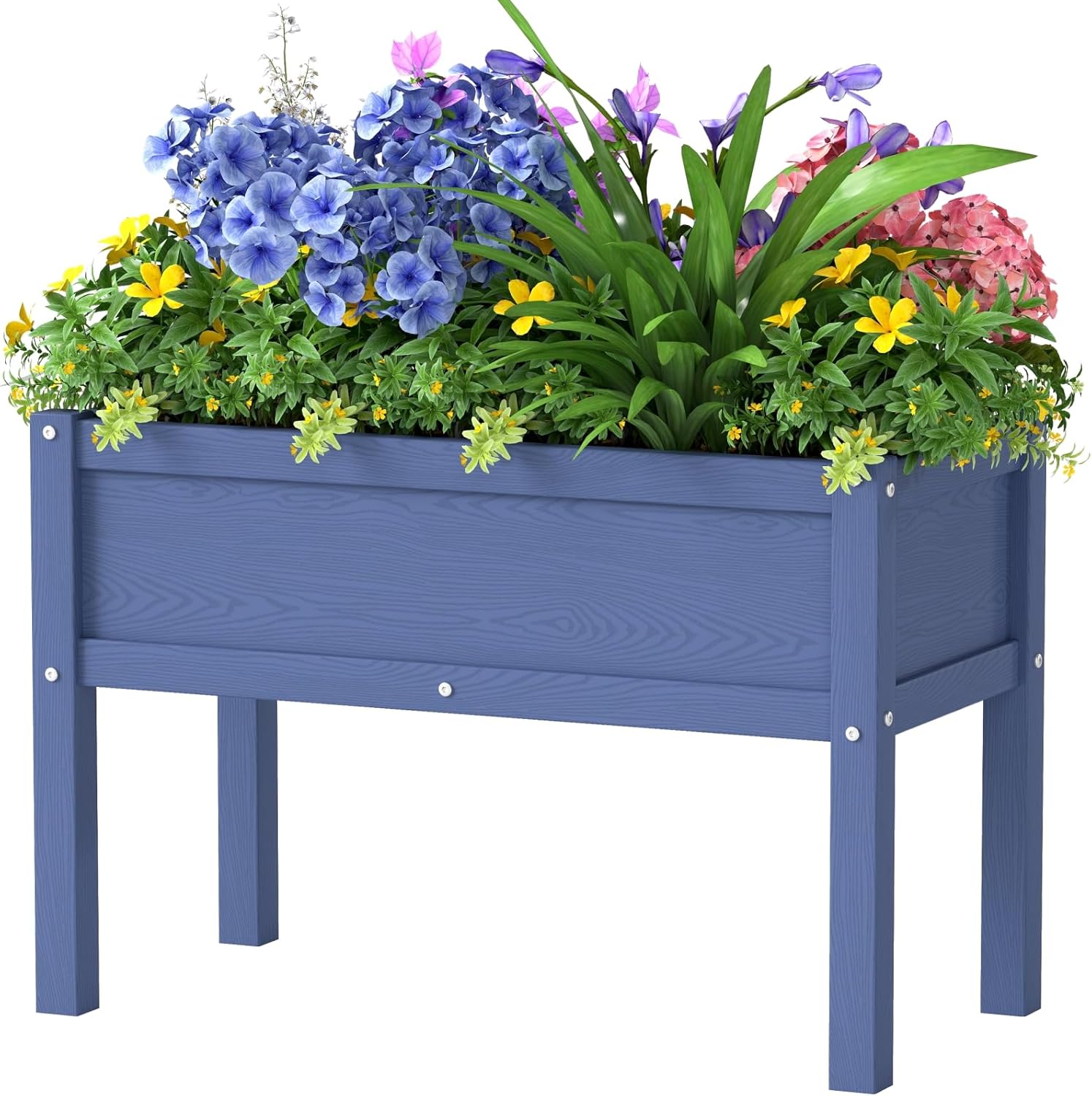
| Material Type | High Density Polyethylene (HDPE) |
|---|---|
| Capacity | 10 gallons |
| Number of Levels | 1 |
| Other Special Features of the Product | Drainage Hole, Fade Resistant, Rot Resistant, Rust Resistant, Weather Resistant |
| Mounting Type | Floor Standing |
This BIVODA raised garden bed is a compact, elevated planter built from high-density polyethylene (HDPE) designed for outdoor vegetable and herb growing. It assembles quickly using pre-inserted nuts and 304-grade stainless steel screws, and the elevated 19.7 inch height keeps plants off the ground for easier planting and protection from small pests. The molded HDPE construction is rot and rust resistant and promises low maintenance since it does not need painting or sealing; drainage holes and a reinforced bottom help keep soil from waterlogging while supporting root mass. Practical for balconies, patios, or small yards, it provides about 10 gallons of planting capacity for a few dwarf vegetables, salad greens, or concentrated herb beds. Limitations include a relatively small planting volume and footprint, so it is better for succession planting or compact varieties rather than large, full-season tomatoes or deep-rooted crops. The plastic construction is durable but will not provide the insulating or aesthetic properties of natural wood for certain garden designs.
Best for: Gardeners who prioritize a low-maintenance, long-lasting raised bed for vegetables in small spaces and want a reliable, pest-elevated planting surface they can use season after season.
Less Ideal for: Growers who need large soil volume for big, deep-rooted vegetables or who prefer the thermal and visual qualities of natural wood beds.
- Durable HDPE construction resists rot, cracking, peeling and weathering
- Rust-resistant 304-grade stainless steel hardware reduces corrosion risk
- Pre-inserted nuts and screws make assembly fast and tool-friendly
- Drainage holes and reinforced bottom help prevent waterlogging and add support
- Limited planting capacity at about 10 gallons, not suitable for large root crops
Verdict: Choose this HDPE elevated planter when you want a reliable, low-maintenance raised bed for concentrated vegetable and herb growing in a small outdoor space.
Best Choice Products 48 x 24 x 30in Raised Fir Wood Garden Bed with Liner

| Capacity | 5 cubic feet |
|---|---|
| Material Type | Fir Wood |
| Mounting Type | Floor Standing |
| Other Special Features of the Product | Drainage Hole |
| Indoor Outdoor Usage | Outdoor |
This raised garden bed is a straightforward option for small-space vegetable and herb gardening. Constructed from unfinished fir wood, it assembles into a 48 x 24 footprint with a 30 inch planting height that reduces bending while you tend plants. The included bed liner separates soil from the wood, slowing rot and keeping roots and soil contained, and a built-in drainage hole prevents waterlogging. With about 5 cubic feet of planting volume and a 200 lb weight capacity it accommodates several seasonal vegetables, potting mixes, or a mix of herbs and flowers. The all-wood construction looks natural outdoors but will need sealing or periodic maintenance to maximize longevity. Assembly requires following the included guide and handling multiple pieces, so expect some time and basic tools. For gardeners who value an elevated, ergonomic setup and a ready-to-use liner, this planter delivers a practical balance of planting space and convenience; heavy-duty or permanent raised beds will outlast unfinished fir without added treatment.
Best for: Gardeners who want an elevated, easy-to-use planter for vegetables or herbs and prefer a natural wood look while minimizing daily maintenance.
Less Ideal for: People seeking a permanent, maintenance-free raised bed or very large-scale vegetable production should consider heavier-duty or larger alternatives.
- Ergonomic 30 inch height reduces bending and makes planting and harvesting easier
- Included liner keeps soil off the wood to slow rot and discourage pests
- Built-in drainage hole prevents waterlogging and promotes healthier roots
- Natural fir wood construction offers an attractive, rustic look outdoors
- Unfinished fir requires sealing or periodic maintenance to resist weathering
- Assembly involves multiple parts and basic tools and can take time
Verdict: A practical, elevated wooden planter with a liner and drainage that makes small vegetable and herb gardening easier and more ergonomic.
LEETOLLA 31.6" Elevated Raised Garden Bed with Wheels and Storage Shelf

| Capacity | 2.5 cubic feet |
|---|---|
| Number of Levels | 2 |
| Material Type | Iron |
| Indoor Outdoor Usage | Indoor, Outdoor |
| Other Special Features of the Product | 2 universal wheels + 2 stabilizing feet, 5 drainage holes + 2 cross-lines, Handle Bar, Storage Shelf |
This LEETOLLA elevated raised bed lifts container gardening to waist height so you can plant, water, and harvest without kneeling. It is built from painted iron with a powder-coat finish, includes two all-terrain wheels and an ergonomic handle for moving the filled bed, and has a lower shelf for tools or extra pots. The planting area holds about 2.5 cubic feet of soil and features five drainage holes plus cross-channels to help prevent waterlogging. Assembly is straightforward with the included hardware and takes roughly 30 to 45 minutes with two people. Practical benefits include reduced back strain, mobility to follow sun patterns or shelter plants from storms, and tidy storage on the attached shelf. Limitations are the metal construction, which will require touch-up care over time to avoid surface rust in very wet or coastal conditions, and the relatively narrow planting depth compared with deep beds, so very large root crops may be less suitable. The unit fits small balconies and patios but is best for mixed vegetables, herbs, and compact varieties rather than large, heavy crops.
Best for: Buyers who want comfortable, low-effort vegetable or herb gardening on a balcony, patio, or small yard and prioritize mobility and ease of use over maximal soil depth.
Less Ideal for: Gardeners seeking very deep beds for large root vegetables or those who prefer untreated wood or plastic planters that do not require metal maintenance.
- Elevated height reduces bending and kneeling for easier planting and harvesting
- Two large wheels and a handle let you reposition the bed to follow sun or avoid bad weather
- Built-in drainage holes and cross-channels reduce risk of overwatering
- Lower storage shelf keeps small tools and supplies handy
- Powder-coated iron construction for sturdier, decorative outdoor use
- Metal finish can require periodic touch-up to prevent corrosion in very wet or salty environments
- Planting depth is modest so very deep-rooted crops may be limited
Verdict: A mobile, waist-height metal raised bed that makes growing herbs and compact vegetables easier by cutting bending and letting you move plants to the best light.
Choosing the Right Herb Garden Elevated Planter: Key Factors to Consider
Planting Depth and Root Space
Planting depth determines which herbs will thrive. Many culinary herbs, like basil and parsley, do well in shallower mixes, but perennial herbs or varieties with deeper root habits need more soil volume. Adequate depth also provides better moisture buffering so the soil does not dry out as quickly in warm weather.
When evaluating elevated planters, check the usable soil depth after liners and any bottom supports are installed. Too-shallow boxes limit plant choices and can require more frequent watering. Aim for a depth that matches the herbs you plan to grow, and remember that adding a layer of drainage material reduces the effective root zone.
Drainage and Water Management
Good drainage prevents waterlogged roots and reduces fungal problems. Elevated planters must allow excess water to escape rather than sitting against wood or metal where it can accelerate rot or corrosion. Look for built-in drainage holes, removable plugs, or a design that permits retrofitting a layer of gravel or coarse media.
Consider how you will water: hand-watering, drip irrigation, or self-watering inserts all behave differently in raised beds. A planter that channels runoff away from structural legs preserves longevity and prevents standing water beneath the planter that could attract pests or stain decking.
Frame Materials and Durability
The material of the frame affects how long the planter will last outdoors and how it ages in sun and rain. Naturally rot-resistant woods are pleasant and blend into garden settings but still benefit from liners or regular sealing. Metal frames can be very durable but need protective coatings to prevent rust. Plastic and composite materials resist rot and are lightweight but vary widely in UV stability and structural rigidity.
Assess how the material will contact soil and moisture long term. Internal liners or raised soil boxes reduce direct exposure, and replaceable components extend service life. Also consider finish and how easy it will be to touch up or maintain the surface over time.
Stability, Footprint, and Wind Resistance
Elevated planters must stay upright in wind and when you lean on them to weed or harvest. A narrow base with a tall profile can tip, especially on uneven ground or a windy balcony. Stability is influenced by leg spread, cross-bracing, weight of the planter when filled, and whether the planter can be anchored to decking or a railing.
Think about where you will place the planter. If it sits on paving, you can expect better stability than on loose soil. Options that allow adding ballast or that have broader feet provide safer, long-term use around kids or pets.
Accessibility and Ergonomics
One of the main reasons gardeners choose elevated planters is to reduce bending and strain. Consider the height and whether it matches your comfortable working range for planting, pruning, and harvesting. Taller planters reduce bending but may have reduced lateral reach into the center; shallower but wider boxes may be more accessible for two-handed work.
Also consider access for maintenance tasks like replacing soil, installing irrigation, or lifting a liner. Removable tops, wide ledges, or split designs make seasonal soil refreshes easier and keep the planter useful for longer.
Assembly, Transport, and Seasonal Storage
Practical assembly matters for gardeners who set up the planter without power tools or heavy lifting help. Look for straightforward hardware, modular panels, and clear instructions. Transport considerations include how heavy the empty frame is and whether it breaks down for storage over winter.
Seasonal storage can extend the life of materials that are sensitive to freeze-thaw cycles. If you plan to move the planter between locations, check whether it can be disassembled and how much space the components require for off-season storage.
Best Placement for Elevated Herb Planters
Sun exposure and convenience should guide placement. Most culinary herbs need at least four to six hours of direct sun, so position the planter where it receives morning sun and some afternoon light if possible. If you only have shady corners, choose herbs that tolerate lower light rather than forcing sun-loving varieties into poor conditions.
Consider proximity to the kitchen for convenient snipping. A planter near a door or on a balcony rail saves time and encourages frequent harvesting. Also allow room to walk around the planter for maintenance and airflow, which reduces humidity around foliage and lowers disease risk.
- Place on a level surface or use shims to prevent rocking.
- Avoid siting under dripping eaves where water continuously soaks the frame.
- Leave 12 to 18 inches of clearance on at least one side for easy access.
Soil Mix and Layering Tips for Elevated Planters
Use a loose, fertile potting mix with good drainage rather than garden soil. Elevated planters dry faster than in-ground beds, so a mix with moisture-retaining organic matter and aeration components supports healthy root systems. Pre-mixed potting blends for container herbs are a practical choice.
If a planter includes a false bottom or you want to reduce weight, add a thin layer of coarse material like broken clay pots or gravel, but do not create a permanent perched water table. Always top the coarse layer with a barrier fabric before adding potting mix to prevent fine particles from clogging drainage.
- Target a well-draining mix with compost and perlite or coarse sand.
- Avoid dense soils that compact in raised containers.
- Refresh the top few inches of soil annually to replenish nutrients.
Winter Care and Off-Season Strategies
Think ahead to frost and freezing weather. Some planters can stay outdoors if the frame material handles freeze-thaw cycles and the soil drains well. For sensitive frames, either move the planter to sheltered storage or empty and stack components to prevent water damage over winter.
If you leave a planter in place, reduce irrigation in fall, trim tender herbs, and add mulch to protect roots. Consider growing winter-hardy herbs or using temporary row coverings to extend the growing season when temperatures dip.
- Drain removable trays before freezing weather to avoid cracking.
- Bring potted herbs indoors or to a protected spot during severe cold.
- Store assembly hardware together to simplify reassembly in spring.
Integrating Drip Irrigation and Water-Saving Options
A small drip line or micro-spray system can keep moisture consistent in an elevated planter and reduce manual watering frequency. Look for systems that fit into planter profiles and that allow pressure regulation for even distribution across multiple herb varieties. Timers help maintain regular schedules while preventing overwatering.
Water-saving options include adding a moisture-retentive layer, using organic mulches, and grouping herbs with similar watering needs together. Overwatering is a common problem in raised containers, so plan irrigation around the light exposure and soil type.
- Install a single drip emitter per transplant and monitor coverage.
- Use mulch to reduce evaporation from the soil surface.
- Group thirsty and drought-tolerant herbs separately to simplify watering.
Styling and Functional Add-Ons
Elevated planters come in designs that range from utilitarian to decorative. Functional add-ons include trellis attachments for vining herbs, shelf space underneath for storage, and hinged lids for pest protection. Choose features that match how you garden rather than purely decorative elements that reduce planting area.
Consider finishes and colors that coordinate with your outdoor space. Natural woods blend into garden beds, while painted finishes can add a focal point on a balcony. Ensure any finish that contacts soil is safe for edible plants or that you use an internal liner.
- Add a small trellis for rosemary or climbing mints.
- Use a removable liner to protect finishes from constant moisture.
- Consider integrated coaster feet to protect decking from moisture stains.
How We Chose the Best Herb Garden Elevated Planter
We focused on real-world gardening needs for elevated herb planters, prioritizing dimensions and features that matter most in small-space and accessible gardening. Our selection filters required adequate planting depth for common culinary herbs, sturdy frame materials that withstand outdoor moisture, and drainage solutions that prevent root rot in raised soil. We evaluated overall footprint and footprint-to-planting area ratio so planters fit patios, balconies, and narrow yards while still supporting multiple herbs. Ease of assembly and seasonal maintenance were included so a planter is useful from the first planting to winter care. Durability under sun and rain and the ability to retrofit liners or irrigation were also considered. Products were excluded if they lacked practical planting depth, had unstable legs or bases that risk tipping, or used materials unsuitable for outdoor soil contact. We avoided entries that offered only decorative function without supporting competent garden use. The final list emphasizes planters that balance ergonomics, drainage, and long-term outdoor performance.
FAQ
How deep should an elevated planter be for common culinary herbs?
Most annual culinary herbs do well in 6 to 8 inches of soil, while deeper-rooted or perennial herbs benefit from 10 to 12 inches. Measure usable depth after liners or false bottoms are installed to be sure you have enough root space.
Can I use an elevated planter on a balcony or rooftop?
Yes, as long as you check weight limits and protect the surface from water damage. Use lightweight soil mixes, avoid overfilling with heavy amendments, and consider trays or furniture feet to protect decking or rooftop membranes.
Is it necessary to line a wooden elevated planter?
Lining extends the life of wood by protecting it from constant moisture contact. Breathable liners or landscape fabric allow drainage while reducing direct soil contact. For treated or composite materials, liners are optional but can still help with maintenance.
How often should I water herbs in an elevated planter?
Watering frequency depends on sun exposure and soil mix but often ranges from every day in hot, sunny weather to every few days in cooler conditions. Check soil moisture with a finger or probe and water when the top inch feels dry rather than on a fixed schedule.
Can elevated planters be moved once filled?
Moving a filled planter is difficult and can risk damaging the structure or spilling soil. If you expect to relocate often, choose a modular design that disassembles or a lightweight frame that can be emptied and moved easily.
Final Verdict
Choose an elevated herb planter that matches the herbs you want to grow and the space you have. Prioritize planting depth and drainage for plant health, and select durable materials and a stable footprint for long-term use. Think about ergonomics, access for watering, and seasonal maintenance when weighing tradeoffs. A practical decision balances ease of use and longevity. If you need frequent access, favor comfortable working height and stable legs. If durability is the priority, choose materials and drainage options that reduce moisture exposure. With those tradeoffs clarified, you can pick an elevated planter that makes daily herb care simpler and more enjoyable.
