

Note: This article contains affiliate links. If you click on these links and make a purchase, I may earn a small commission at no extra cost to you. This helps support my research and content. Read my full affiliate disclosure here.
A properly chosen submersible pond pump keeps water moving, supports filtration, and sustains oxygen levels for fish and marginal plants. The right pump reduces stagnation, prevents algae buildup, and handles summertime debris without constant babysitting. This guide shortlists the top options gardeners typically choose for backyard ponds and small water features. We evaluated candidates for steady flow, resistance to clogging, energy use, and durability in outdoor wet environments. Below are the best picks for a range of pond sizes and maintenance preferences, plus buying guidance to match pumps to your pond.
Top Picks at a Glance
| Best Overall The best all-around choice for most situations | Alpine Corporation PAL8000 8000 GPH Submersible Pond Pump |  |
| Best Quality Built to a higher standard if you want something more solid | Aquascape AquaForce 1000 Solids-Handling Submersible Pond Pump |  |
| Best Value The sweet spot between price and what you get | VIVOSUN Submersible Fountain Water Pump (800 GPH, Adjustable Flow) |  |
| Best Budget The cheapest option that still gets the job done reliably | CWKJTOP 25W Submersible Fountain Pump (400 GPH) with Tubing and Nozzles |  |
| Highest Rated A top-rated pick with lots of positive feedback | WaterRebirth PSA5100 Submersible Pond Pump, 5500 GPH, 325W, Adjustable Flow |  |
Alpine Corporation PAL8000 8000 GPH Submersible Pond Pump

| Flow Rate | 133.33 gpm (8000 GPH) |
|---|---|
| Maximum Lifting Height | 33 feet |
| Power Source | Corded Electric |
| Voltage | 120 volts |
| Material Type | Acrylonitrile Butadiene Styrene (ABS) |
The Alpine PAL8000 is a heavy-duty submersible pump built to circulate large pond and waterfall systems. It delivers up to 8000 gallons per hour using a 540-watt motor while operating quietly enough to sit near outdoor living spaces. Installation is straightforward: the pump can run vertically or horizontally, the multi-angle outlet lets you direct flow to a skimmer, waterfall, or filter, and the 33 foot power cord gives plenty of reach to a nearby outlet. Its ABS construction resists corrosion for continuous submersion, and the compact footprint fits into tighter vaults or sumps. Practical benefits include strong aeration and reliable turnover for larger ponds, simpler plumbing routing thanks to the adjustable outlet, and fewer relays or secondary pumps in medium to large setups. Important limitations are the motor power and flow are best suited to larger systems so it may be overkill for very small ponds, and placement or maintenance can be awkward because it is a submersible unit that requires draining or removal for some service tasks.
Best for: Buyers who need reliable, high-volume circulation for medium to large ponds or multi-tier waterfalls and prioritize strong turnover and low operational noise.
Less Ideal for: Those with very small ponds, container water features, or buyers who prefer external/inline pumps that allow servicing without removing the unit from water.
- Very high flow rate suitable for large ponds and waterfalls (up to 8000 GPH).
- Quiet 540-watt motor that maintains strong circulation without excessive noise.
- Multi-angle outlet and 33 ft cord provide flexible placement and easy flow direction.
- Corrosion-resistant ABS construction for continuous outdoor submersion.
- More powerful and larger than needed for small ponds or tabletop fountains.
- As a submersible unit, routine maintenance often requires removal from the water or partial draining.
Verdict: Choose the PAL8000 when you want a quiet, high-capacity submersible pump that reliably circulates large ponds and waterfall systems.
Aquascape AquaForce 1000 Solids-Handling Submersible Pond Pump

| Power Source | Corded Electric |
|---|---|
| Flow Rate | 4050 liters per hour |
| Maximum Lifting Height | 10 feet |
| Voltage | 120 volts |
| Horsepower | 55 watts |
The Aquascape AquaForce 1000 is a performance-focused submersible pump built for ponds, waterfalls, and external pressure filters. It uses an asynchronous, oil-free motor that provides high torque and energy-efficient continuous-duty operation while keeping noise and vibration low. The pump is designed to handle solids up to 1/4 inch thanks to a protective pre-filter cage with large openings and easy-release clips, so you can install it directly in the pond without frequent clogging. A wide flat base and rubber feet make positioning stable, and included multi-hose fittings plus a rotational ball output simplify plumbing and discharge orientation. Practical benefits include reliable circulation for waterfall filtration, lower running cost compared with magnet-driven pumps, and straightforward maintenance access. Limitations to note are the 10-foot maximum head height which constrains very tall waterfalls and that the unit is plastic-bodied rather than metal, which may matter in heavy-duty commercial settings.
Best for: Buyers who prioritize reliable, high-flow performance for backyard ponds, waterfalls, or external filter systems and want an energy-efficient pump that runs continuously with minimal maintenance.
Less Ideal for: Those needing a pump for very tall waterfalls above 10 feet or buyers seeking heavy industrial or commercial metal-bodied pumps for extreme-duty applications.
- High flow capacity up to 1,070 GPH for strong circulation and waterfalls
- Asynchronous oil-free motor for efficient, high-torque continuous operation
- Protective pre-filter cage processes solids up to 1/4 inch and reduces clogging
- Rotational ball output and included multi-hose fittings simplify plumbing and discharge positioning
- Maximum head height of 10 feet limits use on taller waterfall installations
- Plastic construction may be less durable than metal-bodied pumps in heavy commercial use
Verdict: Choose the AquaForce 1000 when you need a high-flow, energy-efficient submersible pump that handles debris and keeps pond waterfalls running reliably.
VIVOSUN Submersible Fountain Water Pump (800 GPH, Adjustable Flow)

| Flow Rate | 3000 liters per hour |
|---|---|
| Maximum Lifting Height | 10 feet |
| Power Source | AC |
| Voltage | 110 volts |
| Horsepower | 0.07 hp |
This VIVOSUN submersible pump is a small, versatile unit intended to move a lot of water without a large footprint. It delivers up to 800 GPH (3000 L/H) at lower lifts and can push water as high as 10 feet, with a control knob and three nozzle options to tune output for fountains, waterfalls, or recirculating hydroponic systems. The housing is plastic and the pump disassembles easily for cleaning, which helps when running in outdoor ponds or planted tanks where debris can accumulate. It runs relatively quietly and is energy efficient for its flow class, making it suitable for continuous operation. Important limitations are that flow drops significantly as lift increases and the plastic construction is less robust than metal-bodied pumps for heavy commercial use; the cord length is moderate so placement near an outlet may be required. For someone configuring a medium backyard pond or decorative fountain this pump balances power, adjustability, and serviceability, but users needing long-term heavy-duty pond work should consider more rugged models.
Best for: Buyers who want an efficient, easy-to-service pump to run decorative fountains, small to medium ponds, or hydroponic recirculation and who prioritize adjustable flow and low noise.
Less Ideal for: Not a great fit for large commercial ponds or installations that require a metal-bodied, heavy-duty pump built for abrasive debris and continuous high-head operation.
- High maximum flow rate suitable for medium ponds and strong fountain effects
- Adjustable flow knob and three nozzle options let you fine tune water pressure and pattern
- Easy to disassemble and clean, helpful when running in debris-prone environments
- Relatively quiet operation for continuous indoor or outdoor use
- Plastic construction is less durable than metal pumps for heavy commercial or abrasive environments
- Flow rate falls off noticeably at greater lift heights
Verdict: A compact, adjustable-flow submersible that delivers strong circulation and easy maintenance for medium ponds and decorative water features.
CWKJTOP 25W Submersible Fountain Pump (400 GPH) with Tubing and Nozzles

| Power Source | ac |
|---|---|
| Flow Rate | 1500 liters per hour |
| Maximum Lifting Height | 6.5 feet |
| Voltage | 110 volts |
| Horsepower | 25 watts |
This CWKJTOP submersible pump delivers up to 400 GPH (about 1500 L/H) from a compact 25W motor, making it a practical option for small ponds, backyard fountains, tabletop water features, and medium aquariums. It is used submerged in the water and connects to the included 6.5 ft tubing and multiple nozzle heads to create different fountain effects. Notable features include an adjustable flow knob for throttling output, four suction cups for secure placement, a removable shell for easy impeller cleaning, and an ultra-quiet motor that keeps fountain noise low. The long power cord and standard 110V operation make placement flexible around a yard or patio. Limitations to note are the plastic construction that may wear faster than metal pumps and the 6.5 ft maximum lift, which restricts use to modest waterfall heights and shallower installations. For budget buyers who need a straightforward, quiet pump for small water features, this model balances cost and useful features, though heavy-duty or high-head pond systems will require a more powerful, more durable unit.
Best for: Buyers looking for an inexpensive, easy-to-install pump to add circulation or a fountain effect to small ponds, backyard fountains, or tabletop water features and who prioritize quiet, simple operation over heavy-duty performance.
Less Ideal for: Do not choose this if you need a high-head pump for large ponds, long-distance pumping, or a heavy-duty, metal-bodied unit for continuous commercial use.
- Good flow for small features at 400 GPH (1500 L/H) from a 25W motor
- Adjustable flow control lets you fine tune fountain height and circulation
- Includes multiple nozzles, tubing, and suction cups for quick setup
- Removable shell and impeller make cleaning and maintenance simple
- Relatively quiet operation suitable for patios and desktop fountains
- Plastic housing may be less durable than metal alternatives
- 6.5 ft maximum lift limits use for taller waterfalls or higher heads
Verdict: A budget-friendly, quiet 25W pump that gives reliable circulation and adjustable fountain effects for small ponds and backyard water features.
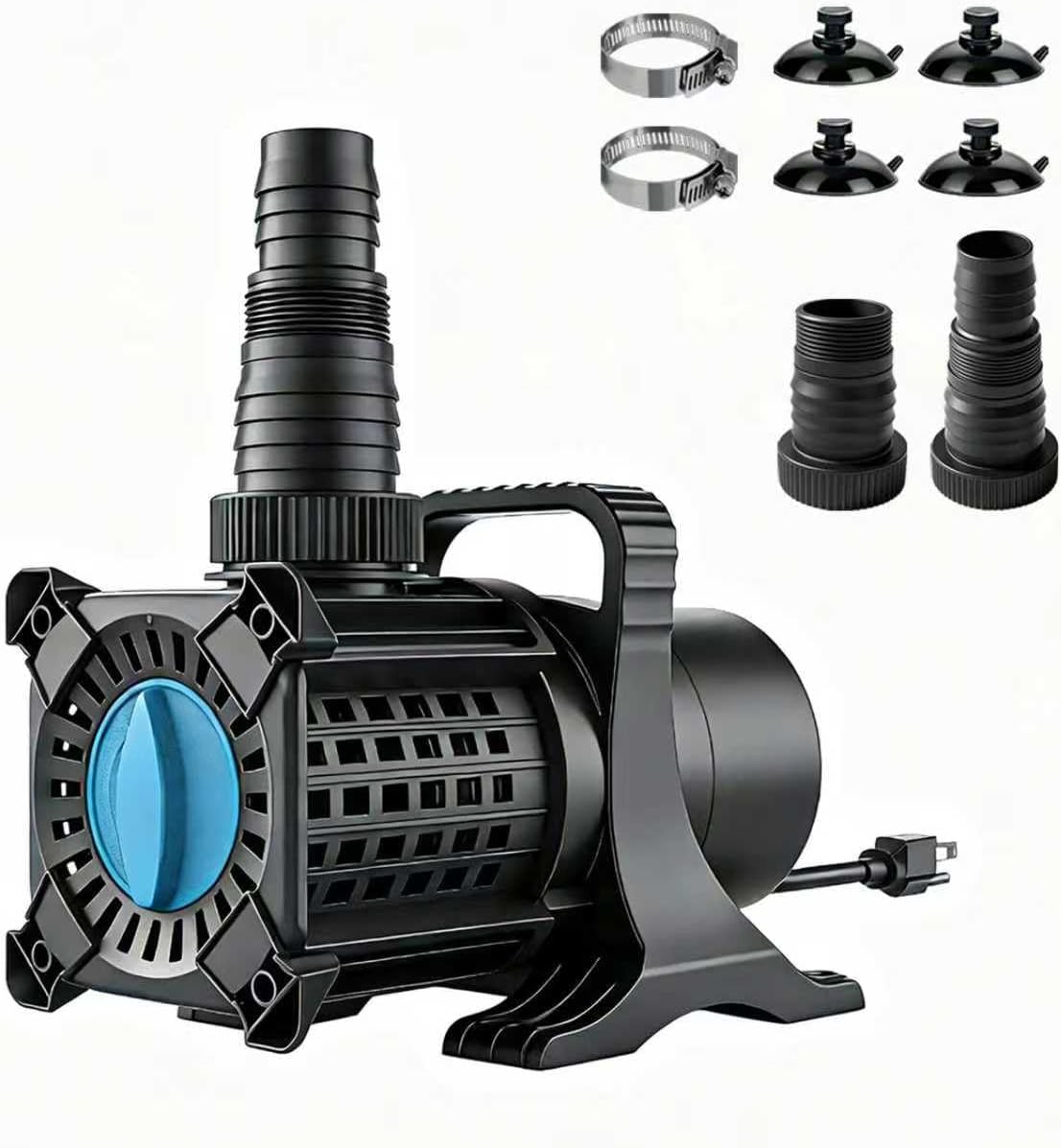
WaterRebirth PSA5100 Submersible Pond Pump, 5500 GPH, 325W, Adjustable Flow
| Power Source | Corded Electric |
|---|---|
| Flow Rate | 91.67 gpm |
| Maximum Lifting Height | 18.7 feet |
| Voltage | 120 volts |
| Horsepower | 0.43 hp |
The WaterRebirth PSA5100 is a heavy-duty submersible pond pump built to move large volumes of freshwater for waterfalls, koi ponds, water gardens and outdoor circulation systems. Its 325W motor delivers up to 5500 GPH at zero lift and can push water as high as 18.7 feet, with a front-mounted 90 degree flow control knob to fine-tune output without extra valves. The unit accepts 1-1/2 inch and 2 inch hoses via included step-down adapters and the rotatable pump head helps align plumbing during installation. A wear-resistant ceramic shaft and oil-free design make it safe for fish and continuous use, while the removable front filter cover simplifies routine cleaning. Expect flow to decrease as lift increases, so match the pump to your waterfall height using the manufacturer lift-flow chart. It is intended for freshwater only and is not rated for pools or hot tubs. For projects that need reliable, high-volume circulation and straightforward flow adjustment, this pump is a practical option.
Best for: Buyers who prioritize long-term, continuous circulation for large freshwater ponds or waterfalls and want a straightforward, serviceable pump that lets them tune flow on the fly.
Less Ideal for: Casual small-pond owners or users who need a pump for pools, hot tubs, or saltwater systems should look for smaller units or models rated for those environments.
- Very high maximum flow rate (5500 GPH) suitable for large waterfalls and ponds
- Adjustable 90° flow control knob allows precise output changes without extra valves
- Wear-resistant ceramic shaft and oil-free design make it safe for fish and continuous operation
- Rotatable pump head and included hose adapters simplify plumbing alignment and installation
- Rated flow is measured at zero lift so actual output will be lower at height
- Not intended for use in swimming pools, hot tubs, or spa applications
Verdict: Choose this pump when you need a reliable, high-volume freshwater circulation solution with easy adjustable flow and fish-safe construction.
Choosing the Right Submersible Pond Pump: Key Factors to Consider
Flow Rate and Head Height
Matching flow rate to pond volume and planned features is essential. A pump rated for a higher flow than the pond needs can create excess turbulence and waste energy, while an undersized pump will fail to keep water clear. Head height affects how much flow you get at the fountain or waterfall outlet; manufacturers list maximum head in feet or meters, but flow falls off with lift. When planning, measure the vertical distance from the pump to the highest outlet and factor in friction from piping so you can pick a pump that still delivers adequate gallons per hour at that real-world lift.
Consider the effect of extra plumbing, fittings, and tubing length, which all reduce delivered flow. If you expect seasonal debris or plant material, select a pump with a bit of spare capacity so it still circulates adequately when partially obstructed.
Intake Design and Clog Management
Pond pumps operate in debris-prone environments, so intake protection matters. Larger screened or basket-style intakes keep leaves and larger particles away from the impeller, reducing stalling and wear. Some pumps offer prefilter housings or external skimmer compatibility which make maintenance easier. Expect to clean screens regularly, especially in autumn or when marginal plants shed.
Also consider whether the pump has a designed path for stringy algae and hairline debris or whether those materials will tangle on the impeller shaft. Pumps with removable impellers or tool-less access simplify field cleaning and reduce the chance of damage during maintenance.
Energy Use and Run Cost
Pumps typically run 24/7 for healthy ponds, so wattage and efficiency translate directly into operating cost. Compare the rated wattage to expected flow to judge efficiency, but remember that pumps operating below their best-efficiency point use more energy per gallon moved. Variable-speed or multi-setting pumps let you dial back flow for quieter operation and lower power draw when full circulation is unnecessary.
Calculate annual running cost using your local electricity rate, and weigh a slightly higher upfront cost for a more efficient pump against years of reduced power bills. Also consider thermal performance; pumps that run cooler under load often last longer and waste less energy as heat.
Materials and Weather Resistance
Submersible pumps sit in wet, outdoor conditions so corrosion resistance and sealed electrical components are important. Look for durable plastics rated for UV exposure or stainless hardware to avoid rust. Seals and gaskets must withstand constant immersion and temperature swings without leaking.
Frost protection is also a consideration in colder climates. Pumps left submerged through winter should be rated for cold operation or be removed before freezing; check manufacturer guidance for freeze protection and safe storage to avoid damage.
Installation and Fitting Options
A pump that cannot connect to your existing tubing or fittings creates extra work. Check outlet sizes and included adapters so you can match common pipe diameters or garden hose fittings. Some units include quick-connect fittings or barbed outlets for flexible tubing, while others are threaded for standard plumbing connectors.
Ease of installation also covers mounting options. Some pumps sit on the pond floor, others fit inside a skimmer or housing. Consider accessibility for future maintenance and whether the pump can be shifted without draining the pond.
Noise and Vibration
Noise levels matter when a pond is close to living spaces. Submersible pumps are generally quieter than external units because water dampens mechanical sound, but motor vibration can still transmit through rigid piping or mounting surfaces. Look for pumps with rubber feet, insulated housings, or rubberized mounts to reduce transmitted vibration.
Quiet operation also ties to flow settings; running a pump at lower speeds often reduces noise. If you plan a fountain or waterfall near seating areas, factor sound into placement and flow choices so the water feature remains pleasant rather than intrusive.
Sizing a Pump for Different Pond Types
Pond size, features, and stocking levels determine needed circulation. Small ornamental ponds and container ponds require much less flow than larger fish ponds. For a general rule, target a pump that can circulate the pond volume once every hour for planted ponds and two to three times per hour for fish-heavy setups or ponds with heavy debris.
For waterfalls and tall fountains, prioritize head height and expect a lower delivered flow at the top. In multi-feature systems, calculate combined head and pick a pump that can supply all outlets simultaneously or plan valves to balance flow.
- Container and barrel ponds: aim for gentle circulation and small intakes.
- Planted ponds: moderate flow to avoid uprooting marginal plants.
- Fish ponds: higher turnover and robust intake protection.
Placement and Winter Care
Where you place the pump affects access, noise, and suction of debris. Center placements may draw more floating debris; tucked near a skimmer or under a rock usually keeps the inlet clearer. Elevate the pump slightly on a flat stone or pad to reduce sludge intake while keeping it submerged.
In freezing climates, either remove and store the pump indoors or ensure it is placed deep enough to avoid ice exposure and is rated for winter operation. Always follow safe electrical practices: use a GFCI-protected circuit and ensure cords remain dry and routed away from walkways.
- Use a protective pad to reduce sediment intake.
- Route discharge tubing to minimize bends and reduce head loss.
- Winterize or remove pumps if not rated for ice-prone conditions.
Maintenance Routine and Troubleshooting
Establish a simple maintenance schedule to extend pump life. Inspect and clear intake screens weekly during heavy leaf fall, and check impellers for wear or tangles. Periodic removal to flush the housing and inspect seals helps prevent midseason failures.
If flow drops suddenly, check for clogged intake, kinked tubing, or trapped air in the outlet. Intermittent operation often indicates partial blockage or worn bearings. A gentle rinse and impeller check resolve most common issues without special tools.
- Keep spare O-rings and basic tools on hand for quick repairs.
- Record pump runtime to anticipate replacement before failure.
- Clean prefilters regularly rather than waiting for a big clog.
Matching Pumps with Filters and Skimmers
Pumps and filtration need to be balanced. Filters and skimmers introduce additional head loss, so choose a pump that can overcome that resistance while still delivering enough flow for the pond. If you plan a biological filter, prioritize steadier flow and moderate turnover to support beneficial bacteria.
Skimmers improve surface cleaning but may require a separate, lower-head pump if placed above the pond water level. Consider whether a single pump will serve multiple functions or whether dedicated pumps for filtration and decorative features make more sense for your layout.
- Quote filter head loss from product specs and subtract it from pump head.
- Use valves to control and balance flow when one pump feeds multiple devices.
How We Chose the Best Submersible Pond Pump
We focused on practical pond use and reliability when assembling this roundup. Key evaluation dimensions included flow capacity and head height to ensure pumps can move the right volume of water at realistic lift distances. Clog resistance and intake design were judged because pond debris and stringy algae are everyday problems that affect uptime. Energy efficiency and rated power draw were part of the assessment so gardeners can estimate running costs over a season. Weather durability and waterproofing, plus corrosion-resistant materials, were considered to gauge service life outdoors. Lastly, ease of installation and available fittings mattered for gardeners who want faster setup or need to adapt to existing plumbing. We excluded units that are primarily fountain-only or not rated for continuous submersion. Small decorative trickle pumps and bare aquarium pumps were also filtered out. The remaining candidates meet minimum standards for pond use, with clear specifications on flow, head, intake protection, and outdoor suitability.
FAQ
How do I size a submersible pump for my pond?
Calculate your pond volume and decide desired turnover rate. Planted ponds usually need one turnover per hour while fish ponds benefit from two or more. Factor in head height and friction from tubing to choose a pump that provides the needed flow at that lift.
Can a submersible pump run dry for a short time?
Most submersible pond pumps are not designed to run dry and can overheat if not submerged. Short, accidental dry runs may not immediately damage well-built units, but repeated dry operation shortens motor life. Avoid dry running by ensuring adequate water depth and placement.
How often should I clean the pump intake?
During high-debris seasons, inspect and clean the intake weekly. In low-debris months, a monthly check is usually sufficient. Regular, small cleanings prevent big clogs and reduce strain on the motor.
Is a variable-speed pump worth the extra cost?
Variable-speed pumps let you tune flow for energy savings, quieter operation, and seasonal needs. They are helpful when a single pump must serve different features or when you want precise control over a fountain's height. Whether the extra cost pays off depends on runtime and how often you vary flow.
Can I leave the pump in the pond over winter?
It depends on the pump rating and local climate. Some pumps are rated for submerged winter use and can stay in deeper, unfrozen water. In areas where ponds freeze solid or ice reaches the pump, removing and storing the unit indoors is safer to prevent freeze damage.
Final Verdict
Choose a Submersible Pond Pump by matching real-world flow at your pond's head height, accounting for the plumbing and any attached filters. Prioritize intake protection and ease of maintenance if your pond sheds leaves or hosts stringy algae. Balance energy use against runtime needs, and select materials rated for outdoor, submerged service to avoid corrosion-related failures. Decide whether a single versatile pump or dedicated pumps for filtration and features best fit your layout. With the right sizing and simple maintenance, a submersible pump will keep water moving and your garden pond healthy for years.
