

Note: This article contains affiliate links. If you click on these links and make a purchase, I may earn a small commission at no extra cost to you. This helps support my research and content. Read my full affiliate disclosure here.
Picking the right pair of garden shears changes routine pruning from a chore into a quick, clean task. The right tool reduces plant damage, speeds seasonal maintenance, and protects your hands during repetitive cutting. This guide narrows the field to the top shortlisted options suited for general garden tasks, from light deadheading to shrub shaping, and explains the tradeoffs that matter in the yard. We evaluated each shears option for cutting performance, ergonomics, durability, and maintenance needs so you can choose based on how you work in the garden. Read on for practical guidance before the product list.
Top Picks at a Glance
| Best Overall The best all-around choice for most situations | Corona BP 3180D Forged Classic Bypass Pruner |  |
| Best Quality Built to a higher standard if you want something more solid | FELCO F2 Pruning Shears — Swiss-Made Bypass Hand Pruner (F2) |  |
| Best Value The sweet spot between price and what you get | VOTREK VT-C800 8.5" Bypass Pruning Shears with SK5 Blade |  |
| Best Budget The cheapest option that still gets the job done reliably | Amazon Basics 7-Inch Bypass Pruning Shears |  |
| Highest Rated A top-rated pick with lots of positive feedback | Fiskars Explore 2-Piece Pruner and Vegetable Shears Set |  |
| Most Popular A crowd favorite that many people choose with confidence | Fiskars Bypass Pruning Shears (5/8" Cut Capacity) |  |
| Best Seller A high-volume bestseller chosen again and again | Decerk 8.5" Professional Bypass Pruning Shears with Titanium-Coated Blade |  |
Corona BP 3180D Forged Classic Bypass Pruner

| Cutting capacity | 1 inch |
|---|---|
| Blade type | Bypass |
| Blade material | Alloy Steel, Carbon Steel |
| Hand orientation | Ambidextrous |
The Corona BP 3180D is a classic forged bypass pruner built for regular garden use and light professional work. Its precision-honed forged steel blade slices live stems and small branches up to 1 inch thick, producing clean scissor-like cuts that help plants heal. The ambidextrous, contoured non-slip handles improve grip and reduce hand fatigue during longer sessions, while the sap groove keeps the blade from gumming up. A spring-loaded action and secure safety lock make it easy to operate and safe to store in a tool bag. Notable practical benefits are durability from the forged construction and consistent cutting performance for roses, shrubs, and small fruit tree pruning. The main limitations are that it is a hand pruner only, so it is not intended for thicker limbs or heavy-duty arborist work, and the metal handle construction may feel heavier than composite models for users who prefer ultralight tools.
Best for: Gardeners who want a durable, reliable hand pruner that delivers clean cuts for routine pruning of roses, shrubs, and small fruit trees and who value long-term build quality over ultralight weight.
Less Ideal for: If you regularly need to cut large limbs or want an ultra-light pruner for repetitive high-volume clipping, a larger lopper or a composite-handled model would be a better fit.
- Forged steel bypass blade cuts cleanly up to 1 inch, promoting healthier regrowth
- Ergonomic non-slip handles provide grip and reduce hand fatigue during extended use
- Sap groove reduces blade sticking for smoother repeated cuts
- Spring-loaded action and safety lock improve ease of use and safe storage
- Not suitable for cutting branches thicker than 1 inch or heavy-duty arborist work
- All-metal handle makes the tool heavier than some lightweight composite pruners
Verdict: A tough, dependable forged bypass pruner that delivers clean 1-inch cuts for gardeners who want durable, professional-level performance.
FELCO F2 Pruning Shears — Swiss-Made Bypass Hand Pruner (F2)

| Blade Length | 2 inches |
|---|---|
| Cutting width | 1 inches |
| Hand Orientation | Right |
| Blade Material | Metal,Steel |
| Handle Material | Metal,Rubber,Steel |
The FELCO F2 is a heavy-duty, precision pruning shear designed for regular use by serious gardeners and professionals. It delivers clean cuts up to about 1 inch thanks to a hardened steel cutting blade and anvil/bypass-style geometry that reduces crushing and promotes plant health. Forged aluminum handles keep the tool lightweight while providing strong, long-lasting support and a rubberized grip that helps reduce hand fatigue during extended sessions. Every part is replaceable which makes the F2 a tool you can service for years rather than replace. Practical benefits include very reliable cutting performance, comfortable ergonomics for right-handed users, and the ability to maintain sharpness and replace worn parts. The main limitations are that it is offered in a large size and right-hand orientation only, so it will not suit left-handed users or gardeners who need a smaller pruner for fine detail work.
Best for: Gardeners and landscapers who prioritize durable, professional cutting performance and want a serviceable tool they can rely on for frequent pruning.
Less Ideal for: Casual gardeners who need a budget or ambidextrous pruner or anyone who requires a small-size tool for fine trimming and delicate work.
- Hardened carbon steel blade produces clean, precise cuts up to 1 inch
- Forged aluminum handles offer strength with a lightweight feel
- Rubberized ergonomic grip reduces hand and wrist strain during long sessions
- All parts are replaceable so the tool can be maintained for decades
- Right-hand orientation and large size limit suitability for left-handed or small-handed users
- No blade coating or locking thumb catch on this model
Verdict: Buy the FELCO F2 if you want a professional, serviceable pruning shear that delivers precise, long-lasting cutting performance.
VOTREK VT-C800 8.5" Bypass Pruning Shears with SK5 Blade

| Blade Material | High Carbon Steel |
|---|---|
| Blade Type | Bypass |
| Hand Orientation | Ambidextrous |
| Cutting width | 20 millimeters |
The VOTREK VT-C800 is a straightforward pair of bypass pruning shears built for everyday garden tasks like cutting rose stems, shaping bonsai, and light tree trimming up to about 20 mm (0.8 in). The SK5 steel blade with a Teflon coating reduces sap build-up and helps keep the edge sharper longer, while the sealed jam-proof spring keeps the mechanism cleaner and more reliable in damp or debris-prone conditions. An ambidextrous slide lock works one-handed and is glove-friendly, and the aluminum core handles with soft non-slip grips are shaped to ease wrist strain for longer sessions. Practical features focus on durability and low maintenance rather than specialty cutting; the tool is best for live growth and fresh stems rather than heavy dry wood. You get a lifetime-limited warranty and a lightweight, easy-to-use design, but the cut capacity limits it to small branches so users needing larger cutting power should look elsewhere.
Best for: Gardeners who prioritize a low-maintenance, comfortable hand pruner for frequent trimming of flowers, shrubs, and bonsai will appreciate this tool.
Less Ideal for: People who regularly need to cut thick or dead wood or who want a high-leverage pruner for heavy-duty tree work should choose a larger anvil or compound-action tool instead.
- Sharp SK5 high carbon steel blade with Teflon coating to reduce sap adhesion and prolong sharpness
- Sealed jam-proof spring that resists debris and improves blade return in damp conditions
- Ambidextrous one-handed slide lock usable with gloves for safer carrying and storage
- Ergonomic non-slip grips designed to reduce wrist and hand fatigue during extended use
- Cut capacity limited to about 20 mm (0.8 in), not suitable for thick or dry branches
- No specialized anvil or compound gearing for high-leverage cutting of hard wood
Verdict: A reliable, low-maintenance bypass pruner that delivers clean cuts and comfort for routine garden trimming tasks.
Amazon Basics 7-Inch Bypass Pruning Shears

| Blade Type | Bypass |
|---|---|
| Blade Material | Stainless Steel |
| Cutting width | 8 millimeters |
| Hand Orientation | Ambidextrous |
| Handle Material | Aluminum, Thermoplastic Rubber (TPR) |
These 7-inch Amazon Basics bypass pruning shears are a straightforward tool for everyday garden tasks like cutting flowers, trimming small branches, and shaping shrubs. The stainless steel bypass blade and high-tension coil spring deliver clean, low-effort cuts on stems up to about 8 millimeters, while the forged aluminum body keeps overall weight down for extended use. Thermoplastic rubber grips provide a non-slip, comfortable hold for left- or right-handed users. The design is basic but practical: no complex adjustment mechanisms or replaceable blade system, so maintenance is limited to occasional sharpening and cleaning. Because they are lightweight and affordable, they suit frequent light-duty pruning rather than heavy woody work. Expect solid value for routine flower and plant care, though gardeners who need premium sharpening features, heavy-duty cutting capacity, or long-term blade replacement options may want a more specialized model.
Best for: Gardeners looking for an inexpensive, no-frills pruner for routine trimming, deadheading, and light shrub maintenance who prioritize low weight and ease of use.
Less Ideal for: Those who regularly cut thick woody growth or need professional-grade replaceable blades and adjustment features should consider a heavier-duty pruner instead.
- Stainless steel bypass blade for clean cuts on live stems
- Lightweight forged aluminum body reduces hand fatigue
- High-tension coil spring makes cutting easier with less effort
- Ambidextrous non-slip TPR handles for comfortable grip
- Not intended for heavy woody branches or professional heavy-duty pruning
- No obvious quick-adjust or blade replacement system included
Verdict: A lightweight, affordable pair of bypass pruners that gives reliable, low-effort performance for everyday garden trimming.
Fiskars Explore 2-Piece Pruner and Vegetable Shears Set

| Blade Edge | Serrated |
|---|---|
| Blade Type | Bypass |
| Blade Material | Stainless Steel |
| Cutting width | 0.5 inches |
This Fiskars Explore 2-piece set pairs a lightweight bypass pruner with an 8-inch vegetable shears to cover routine pruning and harvesting tasks. The pruner is built for clean cuts on live stems up to about 1/2 inch, while the serrated veggie shears grip and slice herbs, flowers, and small fruits without slipping. Both blades are precision-ground, fully hardened stainless steel, which means they stay sharp through regular use and resist corrosion in outdoor conditions. The shears take apart for easy cleaning, a practical detail for gardeners who move from the garden to the kitchen. Handles are plastic, keeping the tools light and easy to control, though heavier pruning jobs will feel limited by the 1/2 inch cutting capacity and lighter handle construction. For gardeners prioritizing dependable cutting performance and simple maintenance, this pair delivers consistent results in everyday garden work, but it is not intended for thick branches or heavy-duty woody pruning.
Best for: Gardeners who want reliable, low-maintenance hand tools for routine pruning and regular harvesting of herbs, flowers, and small vegetables.
Less Ideal for: People who need tools for heavy woody pruning, large branches, or professional landscapers who require more robust, metal-handled equipment.
- Hardened, precision-ground stainless steel blades for lasting sharpness and corrosion resistance
- Bypass pruner makes clean cuts on live growth up to 1/2 inch
- Serrated vegetable shears provide secure grip for harvesting herbs and small produce
- Take-apart shears design allows easy cleaning to reduce cross-contamination
- Lightweight plastic handles improve control and reduce hand fatigue for extended use
- Plastic handles may feel less sturdy for heavy-duty work compared with metal-handled tools
- 1/2 inch cutting capacity limits use to light pruning and not suitable for thicker woody branches
Verdict: Choose this set if you want dependable, low-maintenance pruning and harvesting tools that stay sharp through regular home garden use.
Fiskars Bypass Pruning Shears (5/8" Cut Capacity)
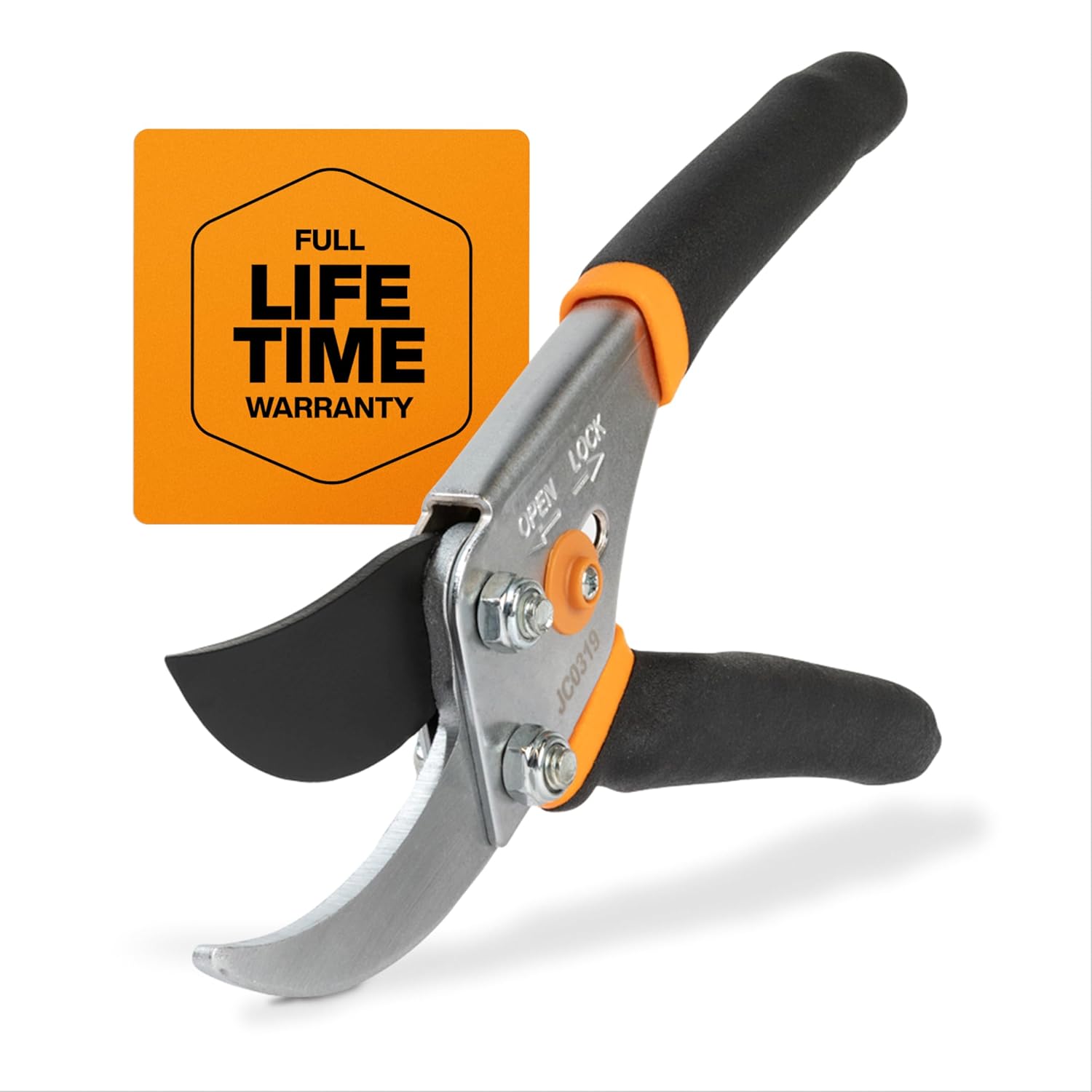
| Cutting width | 0.63 inches |
|---|---|
| Blade Edge | Serrated |
| Blade Material | Alloy Steel |
| Hand Orientation | Ambidextrous |
| Product Style | Bypass Pruner |
These Fiskars bypass pruning shears are a straightforward, durable hand pruner for routine garden trimming and floral work. The precision-ground alloy-steel blades with a low-friction coating and sap groove help the blades glide through stems and resist gumming, which keeps cutting consistent during repeated use. The bypass action and 5/8 inch cut capacity make them well suited to cutting flower stems, small shrubs, and light woody growth without crushing live tissue. An ergonomic non-slip grip and ambidextrous design make the tool comfortable for extended sessions, and the simple safety lock stores the pruner safely between jobs. Because the body is all-steel, the pruners feel sturdy and hold up to regular outdoor use, though heavier branches over the stated capacity will require a larger lopper. Regular cleaning and occasional oiling will preserve the coating and blade performance. For gardeners who value reliability and a proven design, these shears cover everyday pruning tasks with minimal fuss.
Best for: Home gardeners who want a reliable everyday pruner for trimming flowers, shaping shrubs, and routine maintenance and who prioritize tools with a strong track record and solid build quality.
Less Ideal for: People who regularly need to cut thick branches or do heavy-duty arborist work should choose larger loppers or pruning saws instead.
- Precision-ground alloy-steel blades stay sharp and deliver clean bypass cuts on live growth
- Low-friction coating and sap groove reduce sticking and improve rust resistance
- Ergonomic non-slip grip and ambidextrous design reduce hand fatigue during repeated use
- All-steel construction gives durable, long-lasting performance
- 5/8 inch cut capacity is too small for thicker branches so a larger tool is needed for heavier pruning
Verdict: A dependable, well-built bypass pruner that delivers clean cuts for everyday garden trimming and plant care.
Decerk 8.5" Professional Bypass Pruning Shears with Titanium-Coated Blade

| Blade Material | Titanium |
|---|---|
| Blade Type | Bypass |
| Cutting width | 20 millimeters |
| Hand Orientation | Ambidextrous |
These Decerk pruning shears are built for regular garden use and aim to make common pruning jobs easier and cleaner. The SK5 high-carbon bypass blade is nano-polished and titanium-coated, which the brand tests for long edge life and rust resistance, so you can expect consistent, precise cuts on live stems and small branches. The lever-action geometry multiplies cutting force up to four times, letting you tackle stems up to about 3/4 inch without excessive hand strain. Aluminum handles with rubber grips feel secure and cushion the hand, and an ambidextrous layout plus a one-hand safety lock make the tool easy to operate and store. A spare spring is included for basic maintenance. Practical limits are its cut capacity, which is intended for everyday pruning rather than heavy lumber work, and the metal construction means periodic cleaning and light oiling will be needed to keep the blade performing. For gardeners who prefer reliable, low-fuss tools, these shears offer durable cutting performance in a compact package.
Best for: Gardeners who want a dependable, low-maintenance pruner for daily tasks like deadheading, shaping shrubs, and harvesting without relying on heavy or specialized tools.
Less Ideal for: People who need to cut large, dry or hardwood branches regularly or who prefer motorized or ratchet pruners for very heavy-duty pruning.
- Titanium-coated SK5 bypass blade designed for longer edge life and corrosion resistance
- Lever-action design that multiplies cutting force and reduces hand effort
- Ergonomic aluminum handles with rubber grip for comfortable, secure use
- Includes spare spring and one-hand safety lock for convenience and safer storage
- Cut capacity limited to about 3/4 inch, not suitable for thick woody branches
- Requires routine cleaning and occasional oiling to maintain blade performance
Verdict: A compact, durable hand pruner that delivers clean cuts with less hand effort, ideal for routine garden pruning and cautious buyers seeking reliable performance.
Choosing the Right Garden Shears: Key Factors to Consider
Blade Material and Heat Treatment
Blade composition affects sharpness, edge retention, and how often you need to sharpen the tool. Harder steels hold an edge longer and make cleaner cuts, which reduces tearing and speeds plant healing. Softer steels are easier to sharpen at home but blunt faster, which means more frequent maintenance.
Heat treatment and blade tempering change how the steel behaves under load. Properly treated blades resist chipping on small branches and maintain a fine cutting edge. For gardeners, choosing blades that balance hardness with toughness is important because overly brittle steel can chip while overly soft steel dulls quickly.
Cutting Geometry and Joint Action
The way blades meet and move determines whether a shear slices cleanly or crushes stems. Bypass-style shears produce scissor-like cuts that are generally best for live wood and green stems because the shearing action leaves a tidy wound that heals quickly. Anvil-style shears compress material against a flat surface and can be better for dry wood, though they may bruise live stems.
Blade length, bevel angle, and the presence of a slight offset all influence leverage and cut quality. Smooth, closely aligned blade action reduces the need for repeated snips and lowers the risk of tearing, which helps maintain plant health.
Handle Ergonomics and Grip
Comfortable handles reduce fatigue and the risk of repetitive strain when you prune for extended periods. Grip shape, padding, and handle spread influence how force is distributed across the palm and fingers. Ergonomic handles that fit the hand and provide a non-slip surface increase control during precise cuts and improve safety when working on ladders or uneven ground.
Consider hand size and whether you wear gloves. Some handles are contoured for gloves, while others fit bare hands better. A shock-absorbing bumper between handles can also lessen impact on knuckles during heavy cutting.
Durability and Corrosion Resistance
Garden tools live in a damp, sapty environment, so resistance to rust and corrosion matters for long-term performance. Stainless and coated steels shed moisture better than plain carbon steel, but coating quality and the way parts are finished affect longevity. Joints and pivot bolts should be robust and, if possible, serviceable to address wear.
A durable finish prevents staining and reduces friction from sticky sap or residues. Replaceable components, such as pivot bolts or springs, extend a shear's usable life and can be a decisive factor for gardeners who expect heavy seasonal use.
Maintenance and Sharpening Ease
All shears need periodic cleaning and sharpening to perform at their best. Tools that disassemble easily make sharpening, deep cleaning, and part replacement straightforward. Simple designs that allow access to the blade edge and pivot area reduce the time required for routine care.
Consider how often you are willing to sharpen and whether you have the tools to do it. Some shears take a fine file or stone, while others require more specialized tools. Low-maintenance finishes and easily accessible grease points also help keep action smooth.
Safety Features and Locking
Locks, blade guards, and secure latches protect you during storage and transport. A positive locking mechanism prevents accidental opening when reaching into a toolkit or carrying shears in a garden bag. Safety features also include rounded handle ends and guards that minimize the chance of pinching when releasing the tool.
Evaluate how easy the lock is to operate with gloves on and whether it stays engaged under vibration from cutting. Safety should not impede quick access during work but must reliably prevent accidental exposure to the blade.
Choosing Bypass Versus Anvil Action
Bypass action creates a shearing motion where one blade passes the other, making it ideal for live stems and general pruning because cuts are cleaner and heal faster. Anvil action uses a single sharpened blade that closes onto a flat surface and can work well on brittle, dead wood but may crush green stems.
Match the action to your primary tasks. For routine garden shaping, flowering stems, and shrub maintenance, bypass is usually the better all-purpose choice. If you mostly remove dead branches or cut through very hard, dry stems, anvil-style shears can be appropriate.
- Bypass: cleaner cuts on live plants
- Anvil: better for dry or dead wood
- Consider task frequency and plant types
Blade Length and Reach Considerations
Shorter blades give better control and precision for deadheading and tight work around perennials. Longer blades increase cutting capacity and let you span more stems with each snip, which is helpful for pruning larger shrubs or working in hedgerows.
Think about the most common jobs in your garden. If you need to navigate dense plantings or perform detailed shaping, choose more compact shears. For broad maintenance and efficiency on larger plants, a longer blade can reduce the number of cuts required.
- Short blades: precision and control
- Long blades: reach and fewer cuts
- Balance blade length with hand control
Maintenance Routines That Extend Tool Life
Wipe sap and dirt from blades after each use, lubricate the pivot point periodically, and store shears dry to minimize corrosion. Regular light sharpening keeps the edge keen and reduces force needed per cut, which in turn lowers strain on handles and joints.
Developing a short post-use routine prevents buildup that causes gumming and makes sharpening harder. Keep a small cleaning kit near your potting area so maintenance becomes part of the workflow rather than an occasional chore.
- Clean blades after use to prevent sap buildup
- Lubricate pivot and check for loose fasteners
- Sharpen lightly and regularly for best cuts
Adapting Tools to Different Garden Tasks
Garden shears are versatile but not universal. Use compact shears for delicate flowers and detailed shaping, keep heavier-cutting shears for woody pruning, and reserve loppers or saws for branches that exceed the shear capacity. Rotating between tools prevents overloading a single pair of shears and preserves edge life.
If you often move between tasks, consider keeping two pairs: one dedicated to clean, quick cuts on green growth and another built to withstand tougher, intermittent cuts on hardier stems.
- Use the right tool for the stem thickness
- Avoid forcing shears onto branches beyond their design
- Maintain multiple tools for task-specific efficiency
Storage and Seasonal Care
Store shears in a dry, ventilated area away from prolonged moisture exposure to slow corrosion. During dormant seasons, perform a deeper cleaning: remove rust, tighten or replace worn fasteners, and apply a protective coating if appropriate.
Proper winter storage reduces spring prep time and prevents deterioration caused by outdoor exposure. A simple protective sleeve or a hanging rack in a dry shed keeps blades safe and accessible.
- Keep shears dry and hung or sheathed
- Perform seasonal deep cleaning and checks
- Replace worn springs or pivots before heavy use
How We Chose the Best Garden Shears
We focused on the practical traits that determine how well garden shears perform in everyday yard and garden use. Primary evaluation criteria included blade material and edge retention, since a sharp, hard-wearing edge makes cleaner cuts and reduces plant stress. We assessed handle ergonomics and grip design to account for comfort during extended tasks and to reduce hand fatigue for gardeners who prune frequently. Durability and corrosion resistance were judged by materials and build quality so the tool holds up to moisture and sap. Maintenance needs such as ease of sharpening, blade alignment, and whether parts are replaceable influenced selection because long-term usability depends on simple upkeep. Cutting geometry and joint action were examined to ensure consistent, scissor-like shearing rather than crushing or tearing stems. We excluded specialty tools intended only for heavy loppers, hedge trimmers, or floral snips; the list targets general-purpose garden shears suitable for common pruning tasks. We prioritized widely applicable designs that balance comfort, sharpness, and resilience for home gardeners of varying strength and experience.
FAQ
How sharp should garden shears be for healthy pruning?
Shears should be sharp enough to slice through stems cleanly in one motion without crushing. A keen edge minimizes plant damage and speeds healing. If you need excessive force or the cut tears, it is time to sharpen or service the blades.
Can I use the same shears for flowers and woody shrubs?
Often you can, but it depends on blade design and strength. Lightweight shears excel at flowers and soft stems but may struggle with woody growth. For frequent heavier pruning, keep a sturdier pair designed for tougher stems to avoid damaging the blades.
How do I prevent rust and sap buildup on my shears?
Wipe blades clean after each use, apply a light coat of oil to the metal, and store the tool dry. For sticky sap, use a solvent like rubbing alcohol or a dedicated garden tool cleaner before oiling and storing.
Is it worth buying shears with a replaceable pivot or spring?
Yes, replaceable parts extend usable life and make repairs simpler. A serviceable pivot or spring lets you restore tension and smooth action without replacing the entire tool, which is especially valuable if you use shears frequently.
How often should I sharpen garden shears?
Frequency depends on use, but many gardeners sharpen lightly after several hours of cutting or at the end of a busy season. Heavy use may require more frequent touch-ups, while occasional gardeners might sharpen annually.
Are cushioned handles necessary if I wear gloves?
Cushioned handles still help because they reduce impact and distribute pressure whether or not you wear gloves. If you wear thick gloves regularly, look for handles with enough clearance and a grip profile that works with glove bulk.
Final Verdict
Choose garden shears that match the work you do most often: prioritize clean cutting geometry and a durable blade if you prune live stems regularly, or favor robust construction if you deal largely with dead wood. Ergonomics and maintenance requirements determine how comfortable and long-lasting a tool will be in everyday garden use. Weigh the tradeoffs between edge retention, ease of sharpening, and handle comfort to pick the pair that fits your pruning routine and keeps plants healthy.
