

Note: This article contains affiliate links. If you click on these links and make a purchase, I may earn a small commission at no extra cost to you. This helps support my research and content. Read my full affiliate disclosure here.
Angel trumpets are heavy feeders that reward consistent nutrition with larger, more frequent blooms and sturdier stems. Picking the right fertilizer affects not just flower size but plant vigor, disease resistance, and how often you need to tend to feeding. This guide covers six shortlisted fertilizers suited for angel trumpets growing in containers, beds, or patio planters. Each option below was selected for traits gardeners care about: nutrient ratio for flowering, delivery method, and ease of use. We evaluate products by practical criteria so you can match a feeding plan to your watering routine and maintenance preferences.
Top Picks at a Glance
| Best Overall The best all-around choice for most situations | Cz Garden BloomBiscus Hibiscus Plant Food 10-4-12 (4 lb) |  |
| Best Quality Built to a higher standard if you want something more solid | FoxFarm Big Bloom Liquid Plant Food, 16 fl oz |  |
| Best Value The sweet spot between price and what you get | Osmocote Smart‑Release Plant Food Plus Outdoor & Indoor, 2 lb |  |
| Best Budget The cheapest option that still gets the job done reliably | ferti-lome All Purpose Water Soluble Plant Food 20-20-20 (8 oz) |  |
| Highest Rated A top-rated pick with lots of positive feedback | Miracle-Gro Water Soluble All Purpose Plant Food, 12.5 lb |  |
| Most Popular A crowd favorite that many people choose with confidence | Miracle-Gro Water Soluble All Purpose Plant Food, 5 lb |  |
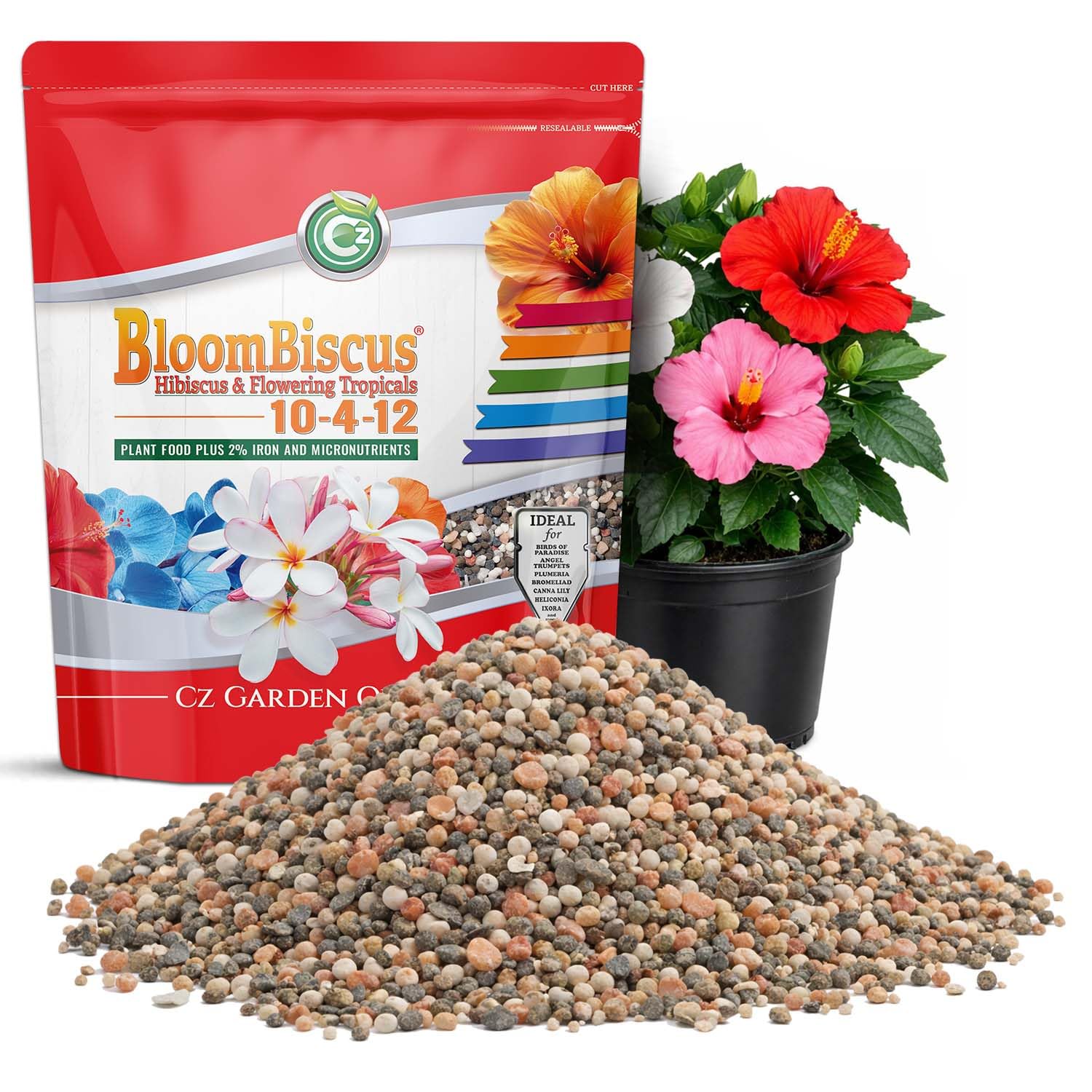
Cz Garden BloomBiscus Hibiscus Plant Food 10-4-12 (4 lb)
| Item Form | Granules |
|---|---|
| Specific Uses For Product | Plant Growth, Root Development, Seed Development, Soil Conditioning |
| Target Species | Flowering Tropicals |
| Unit Count | 64 Ounce |
| Mixing Ratio | 10-4-12 |
This granular BloomBiscus formula is designed to boost blooms and overall vigor in hibiscus and similar tropical flowering plants. It is typically worked into potting mix or applied around the root zone and watered in according to package directions. The 10-4-12 NPK delivers higher potassium for flowering and fruiting while the modest nitrogen supports leaf growth without excessive lushness that can reduce blooms. The added 2% iron and micronutrients help correct common deficiencies that dull flower color. Packaging comes in a resealable pouch for easy pouring and storage. Practical benefits include targeted nutrition for bloom production, broad suitability across many tropical species, and US-made ingredient sourcing. Limitations are that the product is a general granular feed rather than a slow-release or time-release formula so it may require regular reapplication and careful dosing for container-grown plants. Directions are brief on the label so growers who want a feeding schedule may need to follow common hibiscus fertilizing guidelines or consult extension recommendations.
Best for: A gardener focused on getting bigger, more consistent blooms from hibiscus and other tropical flowering plants who prefers a targeted, performance-oriented fertilizer.
Less Ideal for: Those who want a long-term slow-release feed or a liquid program for weekly foliar feeding should consider alternative formulations.
- NPK ratio (10-4-12) concentrated toward flowering and fruiting
- Includes 2% iron plus micronutrients to address common deficiencies
- Resealable heavy-duty pouch for easy pouring and storage
- Formulated specifically for hibiscus and other flowering tropicals
- Not specified as slow-release so it may need more frequent reapplication
Verdict: Choose this 10-4-12 granular with 2% iron when your main goal is stronger, more reliable hibiscus blooms.
FoxFarm Big Bloom Liquid Plant Food, 16 fl oz

| Item Form | Liquid |
|---|---|
| Specific Uses For Product | Organic |
| Application Method | watering can, sprayer, or drip system |
| Unit Count | 16 Fluid Ounces |
| Mixing Ratio | 4 |
Big Bloom is a ready-to-mix liquid plant food intended for flowering and fruiting plants; you dilute 4 tablespoons per gallon of water and apply with a watering can, sprayer, or through drip systems. The formula centers on natural inputs such as bat guano and earthworm castings and is OMRI listed for organic gardening, so it supplies readily available nutrients that can boost blooms and help struggling plants recover quickly. Because it is a low-NPK, bloom-focused concentrate it is useful through multiple growth stages without overwhelming foliage with high nitrogen. Practical benefits include easy integration into existing irrigation, fast uptake for visible response, and suitability for organic beds, containers, and fruiting ornamentals. Important limits are that it contains phosphorus, which some local regulations restrict for turf or lawns, and the small 16 fl oz bottle means frequent refills for larger plantings. Users should follow dilution guidance and local rules to avoid runoff issues.
Best for: Buyers focused on maximizing blooms and fruit on ornamentals, container plants, and small fruiting crops who prefer organic, fast-acting feeding and want a product that fits existing watering systems.
Less Ideal for: People managing large turf areas, large-scale vegetable plots, or those who need a high-nitrogen general-purpose fertilizer should look for formulations designed specifically for those uses.
- Organic certified and OMRI listed, suitable for certified organic gardens
- Natural nutrient sources (bat guano and earthworm castings) that support flowering and fruit set
- Versatile application: watering can, sprayer, hose-end, or drip irrigation compatible
- Low-NPK bloom-focused formula that can be used throughout flowering stages without excessive foliage growth
- Contains phosphorus, which may be restricted by local regulations for some lawn or turf applications
- Smaller 16 fl oz bottle may require frequent repurchasing for medium to large gardens
Verdict: Choose Big Bloom if you want an OMRI-listed, easy-to-use liquid fertilizer that reliably boosts flowering and fruiting in small to medium organic gardens.
Osmocote Smart‑Release Plant Food Plus Outdoor & Indoor, 2 lb

| Item Form | Granules |
|---|---|
| Application Method | Sprinkle |
| Target Species | All plants |
| Mixing Ratio | 1 capful (3 tablespoons) per 2 gallons soil or per 4 sq. ft. |
| Unit Count | 32 Ounce |
Osmocote Smart‑Release Plant Food Plus is a granular, resin‑coated fertilizer designed to feed flowers and other plants steadily for up to six months with 11 essential nutrients. You apply it by sprinkling the recommended amount into the top inch or two of potting mix or garden soil, watering it in, and reapplying every six months; indoor plants use about half the outdoor rate. The resin coating times nutrient release to moisture and temperature, which reduces the need for frequent feedings and lowers the risk of fertilizer burn when used as directed. It works across containers, raised beds, and in‑ground flower beds and covers up to roughly 75 square feet per 2 lb container. Limitations are that a single 2 lb container is only enough for small gardens or several pots, and the slow‑release formula is not suitable when an immediate corrective boost is needed for acute nutrient deficiencies. For gardeners focused on steady, maintenance feeding for flowering plants this is an easy, low‑effort option.
Best for: Gardeners who want reliable, low‑maintenance feeding for flowers and mixed plantings and prefer a consistent supply of nutrients over months rather than frequent liquid feedings.
Less Ideal for: Growers who need fast corrective feeding for visible nutrient deficiencies or those managing very large beds who want bulk fertilizer options to reduce trips to reapply.
- Feeds continuously up to six months with a single application
- Resin coating times nutrient release to plant needs based on moisture and temperature
- Formulated with 11 essential nutrients suitable for a wide range of flowering plants
- No-burn pledge when used as directed reduces risk of overfeeding
- 2 lb container only covers about 75 sq. ft., so frequent repurchase is needed for larger gardens
- Slow‑release formulation does not provide a rapid corrective nutrient boost
Verdict: Choose this product if you want a hands-off, long‑lasting fertilizer that keeps flowering plants fed for months with a single application.
ferti-lome All Purpose Water Soluble Plant Food 20-20-20 (8 oz)

| Item Form | Liquid |
|---|---|
| Application Method | soil drench and foliar spray |
| Target Species | Geraniums, Pansies, Petunias, Impatiens, annuals, perennials, hanging baskets |
| Mixing Ratio | 1:64 (soil), 1:256 (foliar) |
This 8 oz bottle of ferti-lome 20-20-20 is a straightforward, balanced water‑soluble fertilizer for flowering annuals like zinnias. It mixes easily—directions call for 1–2 teaspoons per gallon for soil applications and a much weaker foliar spray—so you can feed plants either through the potting mix or by spraying leaves. The even N-P-K ratio supports steady vegetative growth while supplying phosphorus and potassium for blooms and overall vigor. Because it is liquid and concentrated, small amounts treat many plants and you can apply it every watering or every few days for continuous bloom production. Limitations are the small 8 oz size if you maintain a large planting area and the lack of granular slow‑release option for low‑maintenance schedules. Also it is a general purpose formula rather than a zinnia-specific bloom booster, so some growers may prefer a higher-phosphorus feed when pushing heavy flower set.
Best for: Gardeners who want an affordable, easy-to-mix liquid fertilizer to keep zinnias and other bedding annuals blooming regularly without complicated feeding schedules.
Less Ideal for: Large-scale or low-maintenance gardeners who prefer slow‑release granules or a high‑phosphorus bloom formula tailored specifically for heavy flowering.
- Balanced 20-20-20 formula suitable for foliage and flowering needs
- Water‑soluble concentrate that mixes quickly for soil or foliar feeding
- Concentrated dosing means small bottle treats many plants when mixed correctly
- Small 8 oz bottle may require frequent repurchase for larger beds or repeated use
- Not a high-phosphorus bloom booster if you want to force extra-heavy flowering
Verdict: A compact, easy-to-use 20-20-20 liquid fertilizer that delivers frequent, balanced feeding to keep zinnias blooming without complicated mixing.
Miracle-Gro Water Soluble All Purpose Plant Food, 12.5 lb

| Item Form | Powder |
|---|---|
| Specific Uses For Product | Plant Food |
| Coverage | general purpose, suitable for various plants |
| Mixing Ratio | 1 tablespoon per gallon of water |
Miracle‑Gro Water Soluble All Purpose is a powder fertilizer designed to dissolve in water and deliver fast nutrients to indoor and outdoor plants. Gardeners mix the recommended scoop with a watering can or use a compatible garden feeder to apply directly to the soil around roots; the product gives routine feedings every 7 to 14 days outdoors or every 2 weeks for houseplants. Notable features include an NPK of 24‑8‑16 for strong vegetative growth, a quoted coverage of about 5,000 sq ft from a 12.5 lb container, and an included scoop with separate measuring ends for indoor and outdoor rates. In practice this means quick uptake for leafy growth and an easy, repeatable dosing routine for reliability across container and in‑ground Clusia specimens. Limitations are that it is a general‑purpose formula rather than a Clusia‑specific mix and frequent applications are required during the growing season, so you will need to follow the label closely to avoid overfeeding.
Best for: Buyers who want a dependable, easy‑to‑measure fertilizer to keep Clusia healthy with consistent, repeatable feedings and straightforward application routines.
Less Ideal for: Growers seeking a slow‑release or custom‑formulated Clusia fertilizer or those who prefer lower‑frequency, hands‑off feeding strategies.
- Fast‑acting water‑soluble formula for near‑instant nutrient availability
- Simple mixing ratios and included scoop make dosing consistent
- Large 12.5 lb container covers a lot of garden area for routine feedings
- Suitable for both container and in‑ground use so it works with potted Clusia and landscape plantings
- General all‑purpose NPK may not match specialized nutrient needs of Clusia at every growth stage
- Requires regular applications during the season rather than a slow‑release schedule
Verdict: A reliable, easy‑to‑mix water‑soluble fertilizer that delivers fast, consistent feedings for Clusia in both pots and landscape settings.
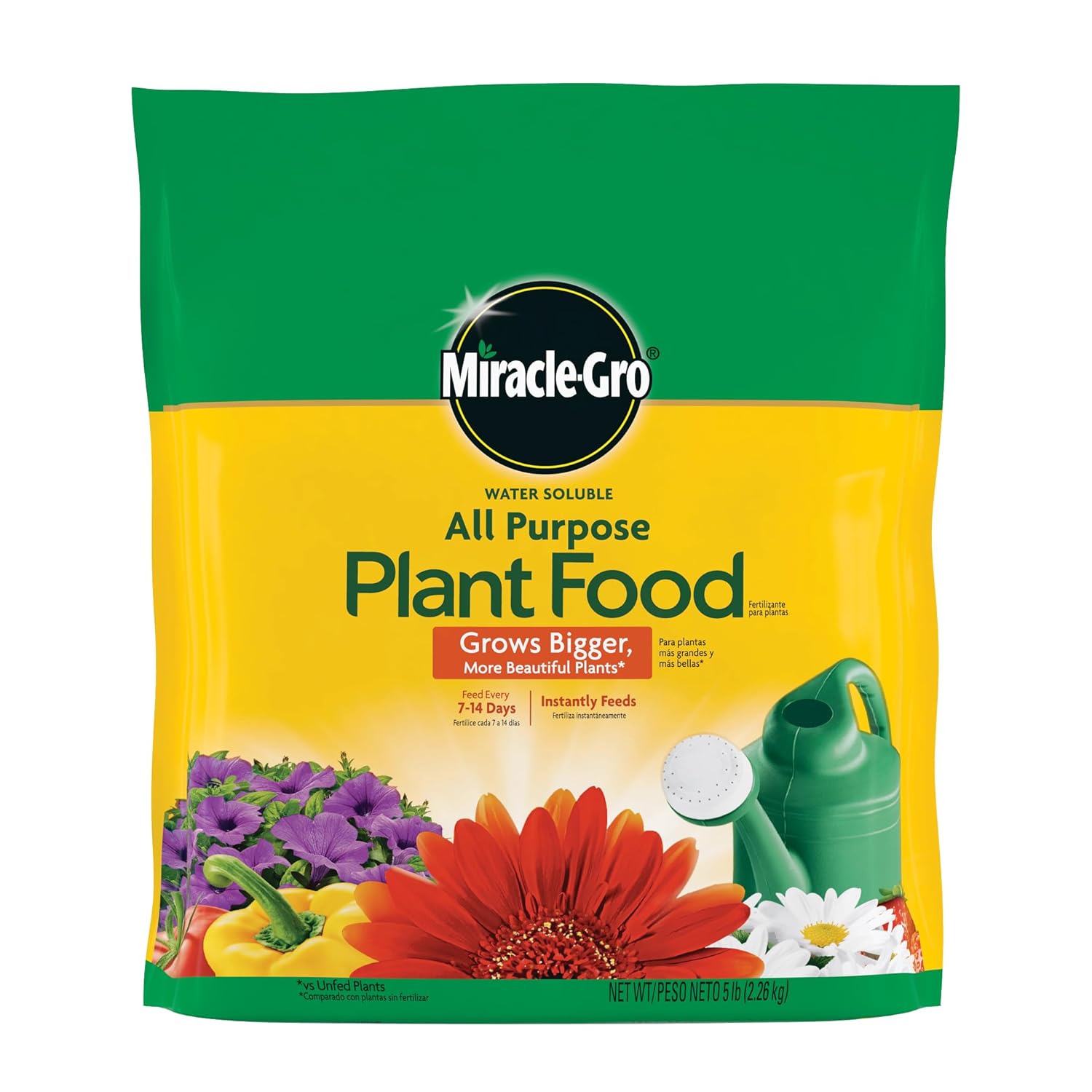
Miracle-Gro Water Soluble All Purpose Plant Food, 5 lb
| Item Form | Powder |
|---|---|
| Application Method | watering can |
| Target Species | all plants |
| Mixing Ratio | 24-8-16 |
| Unit Count | 80 Ounce |
This water-soluble Miracle-Gro formula is designed to give vegetables, flowers and houseplants a quick nutrient boost by dissolving in water and delivering NPK 24-8-16 straight to the root zone. It is typically mixed into a watering can or a garden feeder and applied every 7 to 14 days for outdoor vegetables or every 14 days for indoor plants. The powder format dissolves easily and starts working quickly, which is useful during the active growing season when leafy growth and fruit set matter. A single 5 lb bag covers a large area and the included scoop makes measuring straightforward. Important limitations: because it is a high-nitrogen, fast-release feed it favors quick growth and may need to be balanced with lower-nitrogen or bloom-focused fertilizers if you want more flowers or fruit quality over sheer foliage. Also it requires regular reapplication rather than providing long-term slow release, so plan for repeated treatments during the season.
Best for: Gardeners who want a reliable, quick-acting fertilizer to promote vigorous vegetable growth and who prefer products with broad use and strong customer acceptance.
Less Ideal for: Growers seeking a single application, slow-release fertilizer or those prioritizing low-nitrogen or specialty bloom/fruit formulas for flavor and flowering control.
- Fast-acting water-soluble formula that delivers nutrients quickly to roots
- All-purpose NPK 24-8-16 suitable for a wide range of vegetables and other plants
- Includes a scoop for easy measuring and mixing with a watering can or feeder
- One 5 lb bag feeds a large garden area, reducing the need for frequent purchases
- High-nitrogen formula is not a long-term slow-release feed and requires repeated applications
Verdict: A fast-acting, all-purpose water-soluble fertilizer that reliably boosts vegetable growth when applied regularly.
Choosing the Right Fertilizer for Angel Trumpets: Key Factors to Consider
Nutrient Ratio and Bloom Encouragement
Angel trumpets respond to fertilizer programs that favor bloom development while maintaining healthy leaf growth. A higher middle number in the N-P-K ratio typically supports flower formation, but too little nitrogen will leave foliage weak and too much nitrogen can reduce flower set and create lanky stems. Look for a balanced plan that delivers phosphorus and potassium for bud set and flower longevity, alongside modest nitrogen to sustain green growth.
Beyond primary N-P-K values, keep an eye on micronutrients. Iron, magnesium, and calcium help prevent common deficiencies that show up as yellowing leaves or poor bud development. A fertilizer that lists these elements helps avoid last-minute corrections mid-season.
Release Type: Slow-Release Vs Water-Soluble
Release method determines how often you feed and how forgiving the fertilizer is. Slow-release granules or coated prills deliver nutrients over weeks to months and reduce the risk of overfeeding, which is useful for busy gardeners or container plants. They also provide steadier growth that tends to support larger, long-lasting blooms.
Water-soluble and liquid feeds give faster results and let you fine-tune feeding during active growth or when trying to push a late-season bloom. However, they require regular application and careful measurement to avoid salt buildup in pots. Match the release type to your watering routine and how closely you want to control growth.
Application Ease and Measurement
Practical application matters more than lab numbers for most gardeners. Granules are simple to sprinkle or top-dress, while liquids and water-solubles demand measuring cups or calibrated pumps. Ease of measurement affects consistency: a fertilizer that is quick to dose is more likely to be used correctly, producing reliable bloom results.
Consider whether the fertilizer disperses evenly in your watering can or irrigation system. Products that dissolve cleanly reduce clogging risk in drippers and ensure even nutrient distribution in container mixes and garden beds.
Container Compatibility and Salt Management
Many gardeners grow angel trumpets in pots where salts can concentrate and damage roots. Container-friendly formulas have lower salt indices and are easier to leach with routine watering without harming plants. If you keep trumpet plants in pots, choose fertilizers specifically labeled safe for containers or those with slow-release profiles that minimize salt spikes.
For in-ground plantings, soil buffering helps, but heavy or frequent feeding can still raise salt levels and stress roots. Regular monitoring and occasional deep watering to flush salts can prevent buildup regardless of the fertilizer chosen.
Timing and Frequency for Bloom Cycles
Angel trumpets typically produce large flowers in flushes, and timing fertilizer applications to those flushes improves results. Using a bloom-focused feed during bud formation and a milder maintenance feed during rest periods helps concentrate plant energy into flowers without encouraging excessive leaf growth.
Consider your local climate and growth season length. In cooler regions with shorter growing seasons, more frequent water-soluble feeding can accelerate bloom production. In warmer climates, slower-release products may be sufficient for season-long nourishment with minimal intervention.
Environmental Considerations and Runoff
Fertilizer runoff can affect nearby plants and local waterways. Choosing formulations with lower soluble salt content, applying at recommended rates, and avoiding feeding before heavy rain reduces environmental impact. Slow-release granules also lower immediate runoff risk compared with high-concentration liquid feeds.
If you use fertilizers near water features or in shared landscapes, favor products with clear nutrient labeling and follow application windows that minimize leaching. Good cultural practices like mulching and proper irrigation further cut nutrient loss.
Feeding Schedules for Different Planting Situations
Angel trumpets perform differently depending on whether they are in large beds, small containers, or hanging baskets. For in-ground specimens, apply a balanced fertilizer at planting, then switch to a bloom-focused schedule during active growth. For containers, shorter, more frequent feeds or slow-release stakes work well because potting mixes have limited nutrient reserves.
- Beds: feed at planting and every 6 to 8 weeks with a balanced slow-release formula
- Large containers: combine a slow-release granule at planting with monthly water-soluble feeds during peak bloom
- Small pots or baskets: use weaker liquid feeds every 7 to 14 days to avoid salt buildup
Adjusting Fertilizer When Pruning and Repotting
Pruning and repotting change a plant's nutrient demands. After a heavy prune, delay high-phosphorus bloom feeds and favor a balanced or slightly higher nitrogen formula to support leaf regrowth and root recovery. When repotting, refresh potting mix and apply a gentle starter feed or incorporate a measured slow-release granule to support reestablishment without burning new roots.
- Wait two to four weeks after repotting before heavy bloom feeding
- After formative pruning, use a balanced feed for several weeks to encourage leaf recovery before switching to bloom stimulation
Signs of Nutrient Deficiencies and Quick Fixes
Yellowing leaves, poor bud set, or weak stems can indicate specific nutrient shortages. Interveinal chlorosis often points to magnesium or iron deficiency, while small or sparse blooms usually signal insufficient phosphorus during bud formation. Quick foliar feeds or targeted micronutrient applications can correct deficiencies faster than soil amendments alone.
- Interveinal yellowing: consider magnesium or iron supplements
- Poor bud set: increase bloom-targeted phosphorus for a cycle or two
- Stunted growth: check root health and reduce salt stress before adding more fertilizer
Soil and Media Tips for Better Nutrient Uptake
Well-draining soil that retains some moisture helps angel trumpets absorb nutrients without waterlogging roots. Mixing organic matter into the bed or choosing a potting mix with good aeration increases root health and improves fertilizer efficiency. Periodic soil testing or using a simple probe meter can help you track pH and soluble salts for cleaner uptake.
- Aim for a loose, rich mix with organic matter for in-ground plantings
- Use a peat-free or well-aerated commercial potting mix for containers to reduce compaction and salt buildup
How We Chose the Best Fertilizer for Angel Trumpets
We prioritized criteria that matter in real-world angel trumpet care. First, nutrient balance focused on bloom-promoting ratios and adequate nitrogen for foliage without triggering floppy growth. Second, release method considered whether a slow-release granule, water-soluble feed, or liquid concentrate fits container vs in-ground culture and how often gardeners want to apply fertilizer. Third, ingredient transparency looked at clear N-P-K labeling and inclusion of secondary nutrients like magnesium and calcium that support large blossoms and long-term plant health. Fourth, application practicality weighed ease of measuring, mixing, and applying, plus reduced risk of root burn for potted specimens. Fifth, environmental impact considered formulations with lower salt index and options that reduce runoff risk for outdoor plantings. We excluded products lacking clear nutrient analysis or those formulated primarily for lawns or unrelated crops. We also set aside proprietary blends with undisclosed nutrient ratios because precise feeding matters for flowering shrubs. The final list balances flowering performance with predictable, repeatable application so gardeners know what to expect from each fertilizer type.
FAQ
How often should I fertilize angel trumpets during the growing season?
It depends on the fertilizer type. Slow-release granules typically last several weeks to months and need less frequent application. Water-soluble or liquid feeds work faster but require regular applications, often every one to four weeks depending on concentration and plant vigor.
Can I use general flower fertilizer for angel trumpets?
Often, yes. Many all-purpose flower fertilizers supply the nutrients trumpet plants need. Choose formulations with adequate phosphorus for bud set and monitor plant response. For heavy bloom production, a feed labeled for flowering shrubs is often more effective.
Will too much fertilizer make angel trumpets produce fewer flowers?
Yes. Excessive nitrogen can push leafy growth at the expense of flowers. Follow recommended rates and prefer a bloom-focused ratio during bud formation to avoid excessive vegetative growth.
Are slow-release fertilizers safe for potted angel trumpets?
Slow-release products can be very safe for pots because they release nutrients gradually and reduce the risk of salt spikes. Use the amount suggested for container size and avoid piling granules against the stem or root collar.
How can I avoid salt buildup in container plants?
Flush containers occasionally with extra water to leach accumulated salts, use lower-salt or slow-release formulas, and repot with fresh mix every couple of years. Monitoring plant leaves for tip burn or discoloration helps identify salt stress early.
Final Verdict
Focus on the nutrient balance and application method that matches how you grow angel trumpets. If you prefer low-maintenance care, choose a slow-release product with a bloom-friendly N-P-K and secondary nutrients. If you want tighter control over bloom timing, a water-soluble or liquid feed applied during bud formation gives faster response. Weigh container safety, ease of application, and the need for micronutrients when choosing. Prioritize predictable nutrient delivery and adjust feeding frequency rather than strength to avoid common problems like salt buildup or excessive leafy growth. That approach will help you get larger, more reliable blossoms season after season.
