

Note: This article contains affiliate links. If you click on these links and make a purchase, I may earn a small commission at no extra cost to you. This helps support my research and content. Read my full affiliate disclosure here.
If ants are marching across counters, floors, or window sills, the right ant trap for apartments can stop the problem without disrupting shared living spaces. Apartment setups demand compact, low-odor solutions that work near food prep areas and around children or pets. This guide covers seven top shortlisted options chosen for indoor use, safety, and real-world bait performance. We evaluate how quickly traps attract foragers, how safely the bait is contained, and how easy each unit is to place and maintain. Read on to see which styles and features match the layout and safety needs of your apartment.
Top Picks at a Glance
| Best Overall The best all-around choice for most situations | TERRO Liquid Ant Killer 3-Pack (T200-3SR) |  |
| Best Quality Built to a higher standard if you want something more solid | Catchmaster Defiant Liquid Ant Bait Starter Kit (1 Liquid Bait + 4 Refillable Stations) |  |
| Best Value The sweet spot between price and what you get | ROUTADE 48-Pack Slow-Acting Ant Gel Bait Stations |  |
| Best Budget The cheapest option that still gets the job done reliably | Combat Max Ant Killing Bait Stations, 6 Count |  |
| Highest Rated A top-rated pick with lots of positive feedback | TERRO Ultra Complete Kill Ant Baits, 6 Dual-Formula Bait Stations |  |
| Most Popular A crowd favorite that many people choose with confidence | TERRO Liquid Ant Killer Bait Stations, 12-Pack (T300B) |  |
| Best Seller A high-volume bestseller chosen again and again | Terro Multi-Surface Liquid Ant Baits, 4-Count |  |
TERRO Liquid Ant Killer 3-Pack (T200-3SR)

| Item Form | Liquid |
|---|---|
| Active Ingredients | Sodium Tetraborate Decahydrate (Borax) 5.40% |
| Target Species | Insects |
| Specification Met | EPA |
TERRO Liquid Ant Killer is a straightforward indoor bait system designed to eliminate common household ants by having workers feed on a borax-based liquid and transfer it to the colony. You apply drops of the bait onto the included cardboard tiles and place them along ant trails, baseboards, counters, and other activity hotspots. The 3-pack gives multiple bait stations for treating several rooms or repeated placements. The active ingredient, sodium tetraborate decahydrate, works slowly enough to be shared among nestmates so the queen and hidden workers are affected, which can produce visible reductions in a few days. Because the formulation is liquid and comes in drip bottles, placement and reapplication are simple and low-mess compared with granular or spray options. Limitations are that the product is intended for indoor use only and requires ants to find and feed on the bait, so heavily contaminated or outdoor nests may need additional measures. When used as directed it is a practical, low-effort solution for routine household infestations.
Best for: Homeowners wanting a low-effort, indoor-focused solution to eliminate sugar ants and other household species who prefer baiting over sprays.
Less Ideal for: People who need immediate knockdown of visible ants outdoors or who require a product for large external infestations should look at targeted outdoor nest treatments.
- Borax-based liquid attracts worker ants and allows transfer to the colony for more complete elimination
- Three 2 oz bottles provide multiple placements for whole-house coverage
- Simple drop application on included cardboard tiles makes setup and reapplication low-mess
- EPA specification met and formulated for common household ant species including sugar and ghost ants
- Only effective if ants discover and consume the bait, so results depend on placement and ant behavior
- Designed for indoor use and may not address outdoor nests feeding into the house
Verdict: A simple, effective indoor bait that uses borax to knock out sugar ant colonies by relying on worker-to-colony transfer.
Catchmaster Defiant Liquid Ant Bait Starter Kit (1 Liquid Bait + 4 Refillable Stations)

| Unit Count | 4 Count |
|---|---|
| Included Components | Sodium Tetraborate Decahydrate (Borax) 5.4%, Other Ingredients: 94.6% |
| Target Species | Ant |
| Number of Pieces | 5 |
| Recommended Uses For Product | Indoor Ant Control, Outdoor Ant Control, Reducing and Removing Entire Ant Colonies |
The Defiant Liquid Ant Bait Starter Kit is a performance-focused ant control system that uses a sugar-attractive liquid bait workers carry back to the colony to eliminate the queen and nest. You pour a few drops of the ready-to-use bait into the included stations, place them near ant trails or hotspots, and monitor activity through the clear stations. The kit is designed for repeated use: stations are refillable and stackable for use in dustier or high-traffic spots, and the 3.38 oz bait bottle is described as roughly a one-year supply for an average home. Practical benefits include targeted placement indoors and outdoors, discreet clear housings to watch bait levels, and a formulation intended to be slow-acting so ants transfer the bait through the colony. Important limitations are that it is not labeled for carpenter, fire, or pharaoh ants and results depend on worker ants finding and carrying bait back to the nest which can take up to three weeks for full colony elimination.
Best for: Buyers who prioritize effective colony-level control of sugar-attracted ants and want a reusable, monitored baiting system they can place indoors and near entry points outdoors.
Less Ideal for: Those facing infestations of carpenter, fire, or pharaoh ants or people who need immediate knockdown of visible ants should consider other targeted treatments.
- Ready-to-use liquid bait that workers can carry back to the colony for whole-nest control
- Refillable, stackable stations let you reuse traps season after season and adapt placement
- Clear stations allow easy monitoring of ant activity and bait level
- Includes multiple stations for placement around indoor and outdoor hotspots
- Not effective against carpenter, fire, or pharaoh ants
- Elimination depends on ants finding and transporting bait so results can take up to three weeks
Verdict: Choose this kit if you want a reusable, monitored liquid-bait system built to eliminate sugar-attracted ant colonies rather than just repel or kill individual workers.
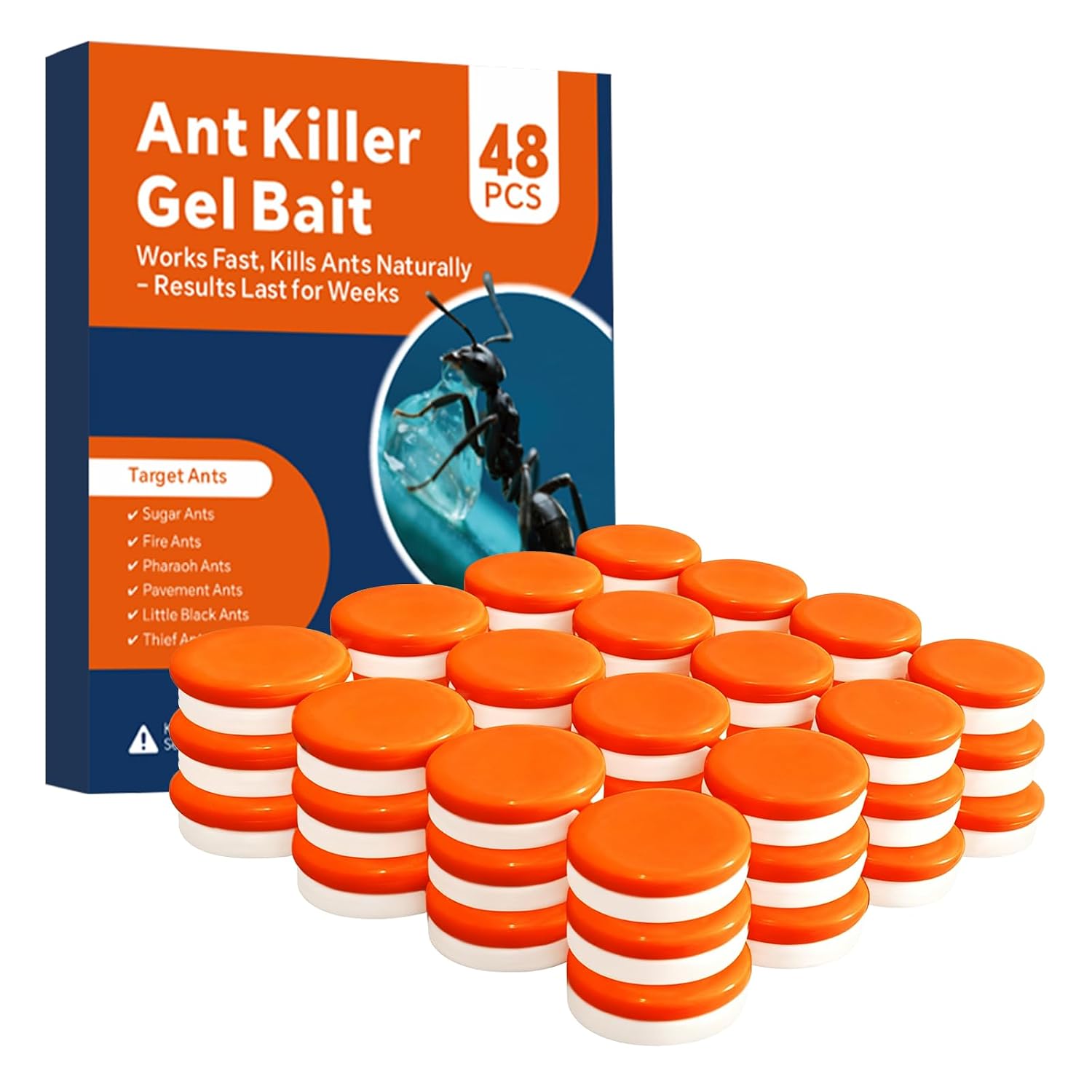
ROUTADE 48-Pack Slow-Acting Ant Gel Bait Stations
| Unit Count | 48 Count |
|---|---|
| Item Form | Gel |
| Target Species | Ants |
| Included Components | Ant gel bait |
This 48-pack of ROUTADE slow-acting ant gel bait stations is built for systematic, long-term ant control in and around the kitchen. Each station contains a gel formula that worker ants consume and carry back to the nest, which helps reduce the entire colony rather than only visible foragers. The product is supplied in ready-to-use stations with adhesive tape so you can place them along baseboards, in cabinets, near sinks, and on entry thresholds without messy sprays or frequent repositioning. The large pack lets you deploy multiple stations in high-traffic areas and replace them over time for continuous coverage. Because the formula is slow-acting, it is effective against a range of common household species including carpenter ants and sugar ants, but it requires several days to weeks to knock down a colony and will not give instant removal of visible ants. Also the stations are small and contain gel rather than a tamper-resistant hard block, so keep them away from children and pets. For someone wanting a low-maintenance, colony-focused approach to kitchen ant problems, this kit makes it easy to set and forget while the bait works.
Best for: Homeowners who prioritize reliable, long-term elimination of ant colonies in kitchens and want a low-maintenance bait they can deploy across multiple hotspots.
Less Ideal for: People who need an immediate knockdown of visible ants or who require childproof solid bait stations should consider alternatives.
- Slow-acting gel designed for worker ants to carry bait back to the nest for colony-level control
- Ready-to-use bait stations with adhesive for easy placement along baseboards and in cabinets
- 48-count pack provides broad coverage around a kitchen and enough replacements for extended use
- Versatile for indoor and outdoor placement to block entry points and high-traffic ant routes
- Slow-acting formula takes days to weeks to eliminate a colony so visible results are not immediate
- Gel in small stations may require careful placement to keep away from children and pets
Verdict: A practical, deploy-and-forget gel bait kit for reliable colony-level control of kitchen ant infestations.
Combat Max Ant Killing Bait Stations, 6 Count

| Active ingredient | Fipronil 0.01% |
|---|---|
| Units included | 6 bait stations |
| Intended use | Indoor and outdoor |
| Protection duration | Up to 3 months per station |
Combat Max Ant Killing Bait Stations are compact, child-resistant plastic stations prefilled with a Fipronil-based bait intended for indoor and outdoor use. You place the stations along ant trails or near entry points and foraging ants enter, feed, and carry the bait back to the nest where it works to eliminate the queen and other colony members. The package includes six stations, each designed to provide up to three months of protection, and the odorless, fuss-free formula means they can sit in kitchens, bathrooms, and living areas without noticeable fumes. Practical benefits include no-mess setup, a discreet low-profile housing that fits under sinks and behind appliances, and a bait attractive to multiple common ant species. Limitations are that results depend on ants finding and accepting the bait and that replacement every three months is recommended to maintain effectiveness. As with any insecticide, keep stations out of reach of children and pets and follow label directions for safe placement and disposal.
Best for: Buyers who want a practical, low-effort indoor ant solution they can place and forget for weeks at a time; good for homeowners prioritizing convenience and discreet placement.
Less Ideal for: People who need immediate knockdown of visible ants by contact spray or who prefer non-chemical control methods; not suitable where children or pets may repeatedly access bait despite child-resistant design.
- Ready-to-use, no activation or messy application required
- Child-resistant, low-profile plastic housing suitable for tight spaces
- Uses Fipronil for fast-acting control that targets the colony via forager transfer
- Odorless and vapor-free formula safe for use in living areas when used as directed
- Effectiveness depends on ants locating and accepting the bait so placement matters
- Requires replacing stations approximately every three months to maintain control
Verdict: A convenient, ready-to-use bait station pack that reliably targets entire ant colonies with minimal setup for buyers who prioritize low-effort indoor control.
TERRO Ultra Complete Kill Ant Baits, 6 Dual-Formula Bait Stations

| Unit Count | 6 Count |
|---|---|
| Included Components | 4 Bait Stations |
| Target Species | Ant |
TERRO Ultra Complete Kill Ant Baits use a dual-formula design—liquid sugar in the top chamber and a protein paste in the bottom—to appeal to ants in different feeding cycles and life stages. You simply open a station and place it near ant trails, baseboards, counters, or other indoor hotspots; worker ants feed on the baits and carry the active ingredient back to the nest, which helps eliminate the queen and colony over time. The product is sold as a 6-count pack of ready-to-use stations and is intended for common indoor species such as pavement, odorous house, and little black ants. In practice you may see increased ant activity initially as more workers are drawn to the bait, but reductions are typically noticeable within days and full control can take a few weeks. The stations are convenient for indoor placement and can remain effective for weeks while visited, but they are not labeled for fire ants, pharaoh ants, carpenter ants, or harvester ants and will not address outdoor mound-only infestations.
Best for: Buyers who prioritize a dependable, low-effort indoor solution for common household ant sightings and want a product that targets the colony rather than only the visible workers.
Less Ideal for: Those dealing primarily with outdoor mound infestations or with specialist ant species that the formula does not cover should consider targeted outdoor treatments or professional pest control.
- Dual bait formula (liquid sugar plus protein paste) attracts ants with different dietary needs
- Ready-to-use stations require no mixing or setup for quick placement
- Designed to be carried back to the nest to reach the queen and reduce the entire colony
- Compact stations suitable for indoor use along baseboards, counters, and corners
- Not effective against fire ants, pharaoh ants, carpenter ants, or harvester ants
Verdict: Use TERRO Ultra when you want a reliable, ready-to-use indoor bait that targets the whole ant colony by offering both sugar and protein attractants.
TERRO Liquid Ant Killer Bait Stations, 12-Pack (T300B)

| Unit Count | 12 Count |
|---|---|
| Item Form | Liquid |
| Target Species | Insects |
| Active Ingredients | Sodium Tetraborate Decahydrate (Borax), 5.40% |
Terro Liquid Ant Killer bait stations are prefilled, single-use traps designed for indoor control of common sugar-loving ants. You place the small stations along baseboards, in corners, under appliances, or on countertops where you see ant activity. Worker ants are drawn to the sweet liquid, feed on it, and take it back to the nest so the borax-based active ingredient can eliminate the colony over days to weeks. The product is easy to use with no mixing or setup and the 12-pack gives coverage for several rooms. Because the bait is contained inside a low-profile plastic station, it reduces incidental contact risk compared with loose sprays or powders and lasts for weeks while ants continue to visit. Limitations are that the formula targets sugar-preferring species so very protein- or grease-attracted ants may ignore it, and control can take 2 to 4 weeks for larger infestations. Also stations should be placed away from pets and children despite the contained design since the bait contains borax.
Best for: Homeowners who prioritize an easy, low-hassle indoor solution and want a bait that works at the colony level with minimal hands-on pest handling.
Less Ideal for: People who need immediate knockdown of ants or who have pets or children that frequently access treated areas and cannot reliably keep them away from placed stations.
- Ready-to-use stations require no mixing or setup
- Designed to be carried back to the nest for colony-level control
- Low-profile enclosed bait reduces messy exposure compared with loose liquids or sprays
- 12 stations provide coverage for multiple rooms or hotspots
- Formulation is sugar-based so less effective on ants that prefer protein or grease
- Control can take 2–4 weeks for large or established colonies
Verdict: A simple, low-contact indoor bait system that reliably reduces sugar-loving ant infestations by getting worker ants to carry borax back to the colony.
Terro Multi-Surface Liquid Ant Baits, 4-Count

| Included Components | 4 ant bait stations plus adhesive strips |
|---|---|
| Target Species | Ant |
| Material Type | Plastic |
| Active Ingredient | Sodium Tetraborate Decahydrate (Borax) 5.40% |
Terro Multi-Surface Liquid Ant Baits are pre-filled stations designed for indoor ant control in homes and apartments. Each station contains a sweet liquid bait with borax that foraging ants consume and carry back to their nest, which can suppress or eliminate the colony over several weeks. The multi-surface design and included adhesive strips let you place the stations flat on counters or stick them discreetly to walls, baseboards, or under cabinets to keep them out of the way. Use is simple: open the tab, set or adhere the bait where you see ant trails, and monitor until the bait is gone. Practical benefits for apartment living include compact, low-profile stations that do not require mixing or sprays and the ability to target hidden nests indirectly through ant foraging behavior. Limitations are that baiting can initially attract more visible ants as they discover the food source and that complete control may take two to four weeks, so it is not an instant fix for a heavy infestation.
Best for: Apartment residents who want a low-effort, non-spray solution to quietly reduce household ant activity and prefer discrete placements out of sight.
Less Ideal for: People needing immediate knockdown for a large infestation or those who require pet- and child-proofed sealed baiting methods beyond adhesive-mounted stations.
- Ready-to-use stations require no mixing or setup
- Multi-surface adhesive allows discreet placement on walls or under cabinets
- Borax-based bait is carried back to the colony for broader control
- Small, low-profile design fits well in tight apartment spaces
- Can temporarily increase visible ants as they are attracted to the bait
- Takes several weeks for full colony control rather than providing immediate knockdown
Verdict: A discreet, ready-to-use bait station system that is easy to place in apartments and works over time to eliminate ant colonies.
Choosing the Right Ant Trap for Apartments: Key Factors to Consider
Bait Type and Attraction
Different bait chemistries appeal to different ant species and foraging appetites. Sugary gels attract carbohydrate-seeking workers while protein- or oil-based baits lure species that prefer greasy food. In apartments you will often encounter sugar-preferring scavengers, but mixed-bait formulations can work across the most common indoor types.
Bait strength and palatability determine how quickly foragers recruit nestmates. Faster-attracting baits reduce visible trails sooner because they draw more ants into the trap, but they must still allow returned workers to carry bait back to the colony to suppress the nest. Consider whether the bait is a liquid, gel, or solid block because that affects how it is consumed and how easily it can be contained in a child-safe housing.
Containment and Child-Pet Safety
Apartments have limited space and often children or pets that can investigate low, reachable surfaces. Good traps enclose bait behind narrow entryways or inside sealed housings so only small foraging ants can access it. Look for tamper-resistant designs that lock or snap closed and that do not require tools to secure.
Also consider bait placement options that keep toxic material off countertops and out of cabinets where food is stored. Traps that minimize exposed liquid or sticky gel reduce accidental contact and mess during removal. Safety labeling and clear instructions for disposal are important because tenants may need to remove traps quickly.
Footprint and Placement Flexibility
Apartment layouts vary from studio kitchens to multiroom units, so trap size and shape matter. Slim, low-profile traps slide under appliances or along baseboards without blocking doors. Small corner-fit designs work well where ants travel along trim. Traps that can be wall-mounted or stuck to backs of cabinets offer placement options when counter space is limited.
Consider visibility if you prefer discreet control in shared or rented spaces. A trap that blends into a corner or under an appliance preserves apartment aesthetics while still being effective. Also check whether the trap rests flat and stable on textured surfaces commonly found in rentals.
Bait Longevity and Indoor Conditions
Indoor conditions such as low sunlight, stable temperature, and limited airflow affect how long baits last. Some baits dry out, crystallize, or lose attractiveness faster under indoor heating or air conditioning. Choose formulations that remain palatable for days to weeks so you do not need constant replacement in a rental setting.
Longer-lasting baits are especially helpful when you cannot check traps every day. But longevity must be balanced with potency. A long-lasting but weak bait might not recruit many foragers. Look for traps where bait longevity is matched to sustained attraction in typical apartment conditions.
Ease of Monitoring and Disposal
Apartment living benefits from low-maintenance solutions. Traps with transparent windows or tops let you see activity without opening the unit. Snap-off disposable cartridges or sealed units make removal quick and clean when bait is spent or when you move out.
Also evaluate whether the trap requires touching the bait during replacement and whether replacement parts are widely available. Simple, tool-free disposal reduces the chance of spills or tenant damage during routine maintenance.
Resistance to Disturbance and Durability
In small living spaces, traps may be bumped, shifted by vacuuming, or jostled by pets. Durable housings that latch and stay closed under light impacts maintain containment. Heavy or sliding appliances can displace lightweight units, so choose traps that resist being accidentally moved or that can be anchored without permanent fixtures.
Material choice also affects longevity. Rigid plastics resist cracking and are easier to clean around, while flimsy materials can split and expose bait. Durability matters if you expect to reuse the trap or move it during cleaning.
Where Ants Start Inside Apartments
Ants in apartments typically enter through tiny gaps around windows, doors, plumbing penetrations, and shared walls. They follow scent trails to reliable food sources such as crumbs, sticky spills, pet food, and residue near sinks. Identifying common entry points and trails helps you place traps where foragers will find them quickly.
Placing traps along baseboards, behind appliances, and at kitchen thresholds intercepts foragers heading to food. Observe worker traffic for a day if possible before deploying traps to increase the chance of quick recruitment and transfer of bait to the nest.
- Check around sinks, trash cans, and pet feeding areas
- Look for trails along window sills and door frames
- Inspect shared walls and vents as potential entry points
Using Traps with Limited Counter Space
When counter or shelf space is tight, prioritize slim-profile traps or ones designed to fit into corners and under appliances. Some units attach to the underside of cabinets or tuck behind baseboards to stay out of sight while still accessible to ants.
Compact traps should still allow ants to enter easily and provide sufficient bait volume to recruit multiple workers. Rotate traps between suspected entry points if you do not have room for all placements at once.
- Measure shallow gaps under appliances before buying
- Consider wall-mounted or adhesive-backed options for tight spots
Managing Ants in Shared or Multiunit Buildings
In multiunit buildings, ant pressure often comes from neighboring units or common areas. Indoor traps are a practical first step but may need to be combined with building-wide sanitation and sealing of common entry points. Communicate with building management about persistent infestations that cross unit boundaries.
Indoor traps reduce visible activity and can cut local colony numbers, but they do not prevent re-entry through shared infrastructure. Consistent placement and monitoring across multiple apartments produce the best collective results.
- Coordinate placement and sanitation with neighbors when possible
- Seal small gaps and cracks to reduce constant reinvasion
Sanitation and Prevention Practices
Traps work best when combined with basic sanitation. Clean counters promptly after food prep, store attractants in sealed containers, and vacuum crumb-prone areas. Manage pet food by using elevated feeders and storing dry food in airtight bins.
Address moisture issues and leaky pipes because some ant species seek water as much as food. Reducing the steady availability of food and moisture makes baited traps more compelling to returning workers and can speed long-term control.
- Wipe spills immediately and clean under appliances regularly
- Store food in sealed containers and manage pet feeding areas
Safe Placement Around Children and Pets
Keep traps on elevated surfaces or inside cabinets where curious hands and paws cannot reach. If floor placement is necessary, use tamper-resistant housings and place traps in corners or behind furniture edges. Always follow label guidance for how long to leave an active bait in place and how to dispose of it safely.
If you must use a visible trap in living areas, choose units with fully enclosed bait chambers and a locking mechanism. Regularly inspect traps to ensure they remain closed and the bait is not spilled or leaked.
- Prefer enclosed housings over exposed gels when children or pets are present
- Check traps after cleaning or moving furniture to confirm they are intact
How We Chose the Best Ant Trap for Apartments
We shortlisted options that solve ant problems inside confined living spaces while minimizing odor, mess, and safety risks. Selection prioritized bait chemistry that targets common indoor species, containment design that prevents accidental access, and size profiles suitable for apartment surfaces and corners. We also looked for traps offering clear placement flexibility so tenants can use them on counters, in cabinets, or along baseboards without drilling or permanent fixtures. Ease of monitoring and disposal mattered because tenants often lack storage for messy cleanup or tools. Longevity of bait under indoor light conditions and resistance to accidental displacement by foot traffic or pets were included as practical filters. Exclusions focused on outdoor-only stations, granular or spray solutions that require broad application inside small spaces, and devices that rely on permanent installation. We avoided traps that produce strong odors or require complex setup steps unsuited to apartment living. The editorial criteria below guided the picks: bait attraction and persistence, containment and child-pet safety, placement and footprint, durability and resistance to disturbance, and ease of monitoring and disposal.
FAQ
How long does an indoor ant trap usually take to reduce visible ants?
It often takes several days to a couple of weeks before you see a sharp decline in visible foragers. Fast-acting baits can cut trail activity within days, but full colony suppression requires workers to carry bait back to the nest, which can take longer.
Are ant traps safe to use around toddlers and pets in apartments?
Many traps are designed with enclosed bait chambers and narrow entry points that limit access. Choose tamper-resistant units and follow label safety guidance. Keep traps out of reach when possible and avoid exposed gels or liquids where contact is likely.
Where should I place traps if I have very limited space?
Place slim traps along baseboards, under appliances, and in cabinet corners where ants travel. You can also use adhesive-backed or wall-mounted styles to free up counter space while keeping bait accessible to foraging ants.
Do indoor traps work for all common apartment ant species?
Traps are effective against many common indoor species, but bait preference varies. Sugary formulations typically work well for sugar-seeking ants, while other species may prefer protein-based baits. If one type fails, switching bait chemistry often helps.
How often should I replace or check ant traps in an apartment?
Check traps every few days at first to monitor activity and bait condition, then weekly once activity drops. Replace bait or the entire trap when it is spent, contaminated, or no longer attracting ants.
Will traps alone stop ants that are coming from neighboring units?
Traps will reduce local activity but may not stop reinvasion through shared walls or common areas. Coordinated sanitation and sealing of entry points, and communication with building management, are often necessary for persistent multiunit infestations.
Final Verdict
In apartments, prioritize traps that balance effective bait attraction with secure containment and a small footprint. Fast-attracting bait speeds visible results, but containment and longevity determine how practical a trap is in tight living spaces with children or pets. Consider where you can place units discreetly and how often you can check them. By focusing on bait chemistry, safety design, placement flexibility, and ease of disposal, you can choose an option that reduces ant activity while fitting the constraints of apartment living.
