

Note: This article contains affiliate links. If you click on these links and make a purchase, I may earn a small commission at no extra cost to you. This helps support my research and content. Read my full affiliate disclosure here.
Picking the right axe for splitting hardwood matters because hardwoods are dense, unpredictable, and can quickly expose weaknesses in tools and technique. You want a tool that transfers energy cleanly, resists wedging, and feels secure through repeated swings. This guide covers the top shortlisted axes for splitting hardwood, chosen for how they perform in real yard and firewood tasks. We evaluated each option on head geometry, handle durability, impact control, and user safety so you can choose an axe suited to the size of your logs and your preferred splitting method. Read on to see the evaluation criteria and practical considerations that informed these picks.
Top Picks at a Glance
| Best Overall The best all-around choice for most situations | LEXIVON V28s 28-Inch Splitting Axe with Fiberglass Handle and Sheath |  |
| Best Quality Built to a higher standard if you want something more solid | 1844 Helko Werk Saxon Splitter Heavy Log Splitting Axe |  |
| Best Value The sweet spot between price and what you get | Fiskars Super Splitting Axe, 36" FiberComp Handle |  |
| Highest Rated A top-rated pick with lots of positive feedback | Fiskars X27 Super Splitting Axe, 36-inch |  |
| Most Popular A crowd favorite that many people choose with confidence | Fiskars Pro IsoCore 8 lb Splitting Maul, 36" |  |
| Best Seller A high-volume bestseller chosen again and again | Fiskars X32 32" Splitting Axe |  |
LEXIVON V28s 28-Inch Splitting Axe with Fiberglass Handle and Sheath

| Handle Material | Fiberglass |
|---|---|
| Blade Material | Grade-A High Carbon |
| Head Type | Splitting Axe |
| Included Components | Sheath |
The LEXIVON V28s is a purpose-built splitting axe aimed at making firewood preparation faster and less fatiguing. Its wedge-shaped, grade-A high-carbon blade and heat-treated cutting edge are designed to split logs with a single, well-placed strike, and the over-molded head-to-handle construction increases durability by reducing the chance of the head loosening. The fiberglass handle with ergonomic TPR grip and reinforced spine absorbs shock and helps maintain control through repeated swings, while the balance point set closer to the head improves swing speed and splitting power. It ships with a protective sheath for safe storage and transport. Important limitations are that the 28-inch length and 5-pound weight make it a heavier tool to swing for long sessions, and like all single-piece axes it still requires proper technique and protective gear to use safely. This axe is a solid choice for homeowners and campers who need reliable, repeatable splits without a fussy maintenance routine.
Best for: Buyers who want a dependable, heavy-duty hand splitting axe for regular firewood or hardwood splitting and value durability and efficient single-strike performance.
Less Ideal for: People seeking a lightweight hatchet for short, fine chopping tasks or those who prefer mechanical or powered log splitters for large-volume splitting.
- Wedge-shaped forged high-carbon blade optimized for one-strike splitting
- Fiberglass handle with TPR grip and reinforced spine reduces vibration and improves control
- Head is over-molded to the handle for increased durability and lower risk of loosening
- Balanced weight distribution near the head for stronger, faster swings
- Includes a protective sheath for safe storage and transport
- Heavier 28-inch design may be tiring during extended splitting sessions
- Not suitable for use by minors and requires proper safety gear and technique
Verdict: If you need a durable, well-balanced manual splitter that delivers powerful one-strike splits of hardwood, the LEXIVON V28s is built for that job.
1844 Helko Werk Saxon Splitter Heavy Log Splitting Axe

| Head Type | Splitting Maul |
|---|---|
| Blade Material | High Carbon Steel |
| Handle Material | Wood |
| Blade Edge | Convex |
The Helko Werk Saxon Splitter is a purpose-built heavy splitting axe for breaking large rounds and stubborn logs. Its hand-forged C50 high carbon steel head is hardened to about 53–56 HRC and shaped as a splitting maul-style head with a convex edge to resist pinching and reduce sticking. The long 31-inch American hickory handle and 6.25 lb head produce the momentum of a maul while keeping enough balance for controlled swings and directional splits. Included leather sheath and a small bottle of protective Axe Guard oil make storage and maintenance easier. Practical benefits include excellent edge retention from the tempered steel, a durable handcrafted head that tolerates hard use, and a handle selected for grain orientation that feels comfortable under repeated swings. Important limitations are the weight and length which make it physically demanding for extended light-duty use, and the specialized heavy profile means it is overkill for small kindling or precision chopping tasks.
Best for: Buyers who prioritize raw splitting performance and durability for processing large logs and seasonal firewood will appreciate this axe; it suits users who prefer a handcrafted, high-quality tool built for heavy-duty work.
Less Ideal for: Casual campers, backpackers, or gardeners who need a lightweight multipurpose axe should choose a smaller, lighter tool instead.
- Hand-forged C50 high carbon steel head with 53–56 HRC for strong edge holding and durability
- Splitting maul head geometry and convex edge reduce pinching and make through-splits more reliable
- 31-inch grade A American hickory handle finished with boiled linseed oil for comfortable grip and shock resistance
- Includes full-grain leather sheath and Axe Guard protective oil for blade protection and simple maintenance
- Heavy total weight and long handle make it tiring for prolonged or one-handed tasks
- Not suited for fine chopping or light camp use where a smaller axe would be more practical
Verdict: If you want a premium, performance-focused splitting axe that brings maul-level power with axe-like balance, the Helko Werk Saxon Splitter is the top choice.
Fiskars Super Splitting Axe, 36" FiberComp Handle

| Handle Material | Wood |
|---|---|
| Blade Material | Forged Steel |
| Head Type | Wedge |
| Blade Edge | bevel,convex |
The Fiskars Super Splitting Axe is built for efficient firewood work on medium to large hardwood logs. Its 36-inch FiberComp handle length and optimized weight distribution increase swing speed and leverage, which helps taller users deliver more powerful strikes with less effort. The forged steel head and convex bevel blade are ground for a sharp, low-friction edge that penetrates and releases cleanly to reduce sticking. The insert-molded head and FiberComp handle aim to resist loosening or breakage common with wood handles, and the shock-absorbing material reduces vibration on heavy swings. Practical buyers will appreciate the emphasis on durability and fewer required sharpenings thanks to the hardened blade. Trade-offs to note are the long handle and heavier feel that suit standing splits but make close-quarters work or one-handed jobs awkward, and the tool is larger than a hatchet so it is not for light pruning or small branches.
Best for: Practical homeowners and weekend woodcutters who need a durable, efficient tool to process hardwood for firewood and value fewer sharpenings and long-term reliability over compactness.
Less Ideal for: Gardeners who primarily do light pruning, campers needing a compact multiuse tool, or buyers who need a small hatchet for close-up work should look elsewhere.
- 36-inch FiberComp handle increases leverage and swing speed for powerful splits
- Forged steel head with convex bevel and low-friction coating for cleaner, easier penetration
- Insert-molded head and durable handle design reduce risk of loosening or breakage
- Shock-absorbing handle cuts vibration for more comfortable repeated use
- Long 36-inch length and heavier swing weight are less convenient for tight spaces or light tasks
- Not suited for one-handed jobs or small branch pruning
Verdict: If you need a hard-working, durable splitting axe that turns big hardwood logs into firewood with fewer swings, this 36-inch Fiskars delivers consistent one-strike splitting performance.
Fiskars X27 Super Splitting Axe, 36-inch

| Included Components | Fiskars X27 Super Splitting Axe (36") |
|---|---|
| Head Weight | 4.3 pounds |
| Handle Material | Steel,Wood |
| Blade Material | Alloy Steel |
The Fiskars X27 is a purpose-built splitting axe that pairs a long 36-inch handle with a razor-sharp, convex-ground alloy steel head to make one-strike splits more likely on medium and large firewood. In typical use you stand with the longer handle to generate extra leverage and swing for deep blade penetration, then let the widened head and bevel geometry drive the split apart. Notable features include an insert-molded forged steel head for durability, a shock-absorbing textured handle to reduce hand strain and improve control, and a protective sheath for safe storage. The design emphasizes efficient, higher-power swings so you can split more wood with fewer strikes, which is especially helpful when prepping large cords of firewood or working by a fire pit. The axe is built for longevity with hardened blade steel and a handle meant to resist breakage, but the heavier head and long reach make it best suited to outdoor splitting rather than fine detail work or confined spaces.
Best for: Buyers who want an efficient, durable splitting axe for processing medium to large firewood and who value extra leverage and fewer swings when cutting cords of wood.
Less Ideal for: People who need a lightweight, maneuverable hatchet for camping, fine carpentry, or working in tight spaces should consider smaller tools instead.
- Long 36-inch handle provides extra leverage for taller users and harder swings
- Convex bevel and hardened alloy-steel head increase one-strike splitting performance
- Insert-molded forged steel head and shock-absorbing handle for durability and reduced vibration
- Includes protective sheath for safe transport and storage
- Long, heavy design is less maneuverable for small or precise jobs
- Not intended for indoor use or tight spaces
Verdict: Choose the Fiskars X27 if you want a rugged, long-handled splitting axe that maximizes leverage and one-swing splitting power for medium to large logs.
Fiskars Pro IsoCore 8 lb Splitting Maul, 36"

| Head Type | Splitting Maul |
|---|---|
| Blade Material | Forged Steel |
| Handle Material | Steel,Wood |
| Head Weight | 6.4 pounds |
The Fiskars Pro IsoCore 8 lb Splitting Maul is a purpose-built wood-splitting tool that combines a heavy forged-steel head and a long 36-inch handle to deliver strong, controlled swings for medium to extra-large logs. Typical use is splitting firewood at a backyard woodpile or campsite where leverage and one-strike splits matter. Notable features include Fiskars IsoCore shock control system in the handle that reduces strike shock and vibration, a high-performance textured grip that helps prevent slips, and an advanced blade geometry with a sharp edge that drives through wood and pulls free more easily. The durable construction and rust-resistant head make it suited to regular outdoor use, and the long handle gives taller users extra leverage. Limitations are that the 36-inch length and 8 lb head make it heavier and less maneuverable for tight spaces or users who prefer a lighter, more compact tool, and safe use requires proper technique and protective gear due to the maul's power.
Best for: Buyers who want a robust, reliable maul for regular firewood splitting and value leverage and reduced vibration to get through larger logs efficiently.
Less Ideal for: People who need a compact or lightweight splitting tool for tight spaces, frequent transport, or who have limited upper-body strength should consider smaller axes or splitting mauls.
- IsoCore shock-absorbing handle reduces vibration and hand strain during repeated swings
- 36-inch handle provides strong leverage for splitting medium to large logs
- Forged steel head with advanced blade geometry promotes deeper penetration and easier removal
- Textured, slip-reducing grip improves control on powerful swings
- Long 36-inch profile can be awkward in confined spaces or for shorter users
- Heavier overall weight requires more user strength and can fatigue during long sessions
Verdict: Choose this maul if you want a powerful, vibration-reducing 36-inch tool built to split medium to extra-large logs with fewer swings.
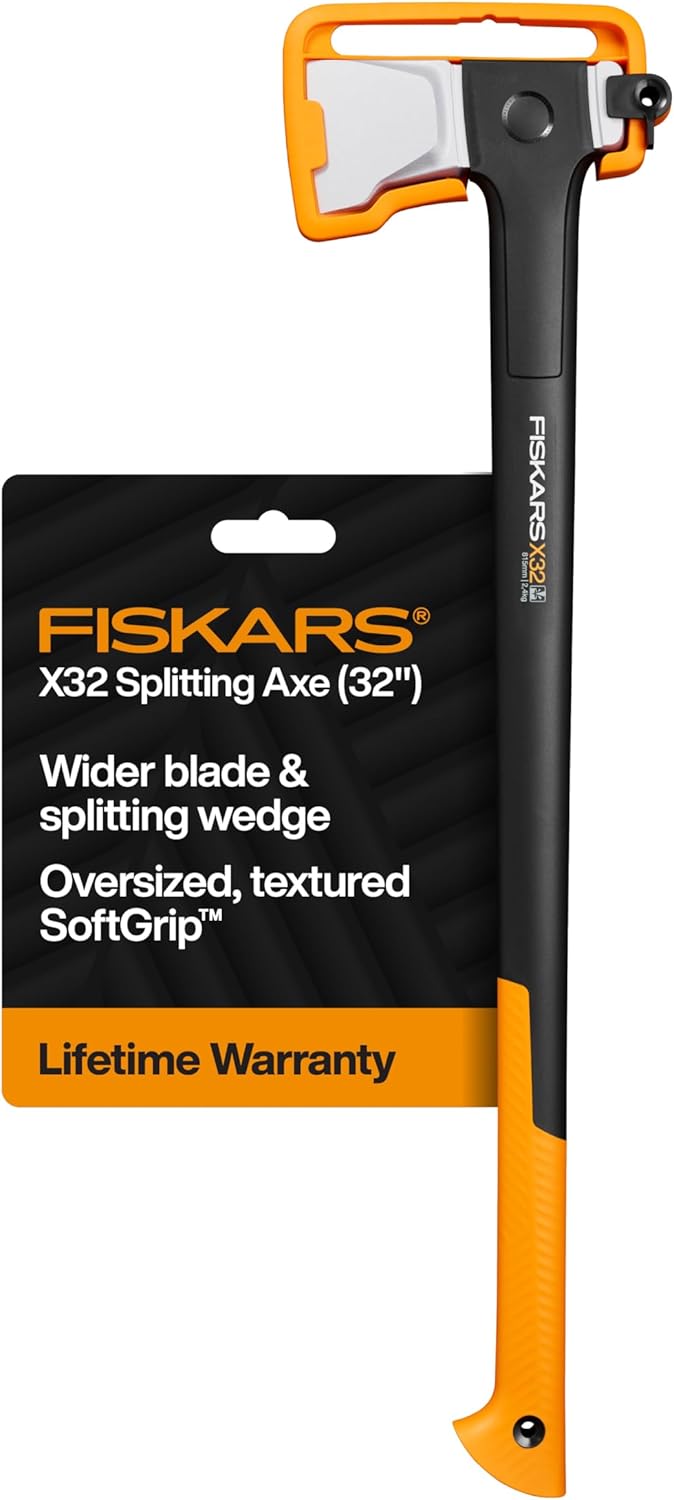
Fiskars X32 32" Splitting Axe
| Blade Material | Forged Steel |
|---|---|
| Handle Material | Fiberglass |
| Head Type | Splitting Wedge |
| Included Components | Sheath |
The Fiskars X32 is a purpose-built splitting axe for tackling large hardwood logs. With a 32-inch reach and a wider splitting-wedge blade geometry, it transfers swing energy efficiently to produce more one-strike splits on logs over about 11.75 inches in diameter. The forged steel blade is double-hardened and finished with a low-friction coating that helps the head glide through wood and resist rust, while the broader profile makes it easier to extract the axe after a split. The FiberComp handle is lighter than steel and absorbs shock to reduce hand and arm fatigue during repeated swings, and the oversized SoftGrip zone plus a hooked end helps keep a secure hold. The head is insert-molded to limit loosening and overstrike damage. It includes a sheath for safe storage. For a buyer who prioritizes predictable, lower-risk performance, the X32 offers consistent splitting power and durability, though its length and weight mean it is optimized for two-handed swings rather than kindling or very small tasks.
Best for: Buyers who want a reliable, low-maintenance splitting tool to process large hardwood logs safely and with less user fatigue, especially homeowners who prefer predictable, durable equipment.
Less Ideal for: Users who need a compact hatchet for campsite tasks, one-handed chopping, or precise felling should choose a smaller specialized axe instead.
- Wider, forged steel splitting wedge designed for efficient one-strike splits on large logs
- Low-friction blade coating reduces sticking and provides rust protection
- FiberComp handle absorbs shock to reduce hand and arm fatigue during prolonged use
- Insert-molded head construction minimizes the risk of the head loosening or separating
- Includes a sheath for safe storage and transport
- Length and intended weight make it unsuitable for one-handed tasks like kindling
- Not ideal for felling or precision chopping where a different axe profile is preferable
Verdict: Choose the Fiskars X32 if you want a durable, low-recoil splitting axe that makes one-strike splits on large hardwood logs more predictable and less fatiguing.
Choosing the Right Axe for Splitting Hardwood: Key Factors to Consider
Head Geometry and Wedge Profile
The head shape and wedge angle determine how effectively an axe forces wood fibers apart. A broader wedge creates more splitting force but can increase the chance of the head getting stuck in a dense knot. A narrower, more tapered profile bites deeper and can start a split more easily, but it may require more follow-through to finish a thick piece.
For hardwoods you should consider a head designed to clear the split quickly so you avoid repeated strikes on the same spot. Look for a consistent taper and a hardened blade face that retains a sharp, robust edge through repeated impacts.
Handle Material and Construction
Handle choice affects shock absorption, longevity, and how vibrations transfer to your hands and arms. Traditional hickory handles absorb impact well and are repairable, but they can break if misused or left exposed to moisture. Fiberglass or composite handles resist weathering and can include internal reinforcements that prevent head separation, but they often transmit more vibration.
Pay attention to how the head is mounted to the handle. Wedged and pinned heads on wooden handles can be re-tightened or replaced, while molded or bonded connections on composites reduce maintenance but may be harder to repair if damaged.
Swing Balance and Head Weight
Mass and balance control how much energy you deliver and how tiring repeated swings become. Heavier heads provide more splitting force per swing and can split larger rounds with fewer hits, but they demand more strength and can fatigue you faster. A well-balanced axe delivers that mass in a controlled arc so you place accurate blows rather than wasting energy.
Consider the typical log sizes you will handle. For small to medium rounds, a lighter, nimble axe may be more efficient. For full-size hardwood rounds, a heavier splitting head paired with a longer handle gives better leverage and momentum.
Durability and Fastening
Durability covers the head steel, heat treatment, and how securely the head is fastened to the handle. Proper heat treatment reduces chipping and maintains edge geometry under repeated impact. Poorly fastened heads can loosen, creating a dangerous situation. For wooden handles, check for solid wedging and proper shaping at the eye. For molded or bonded designs, look for robust manufacturing methods that prevent separation.
Also consider ease of maintenance. Handles that can be replaced and heads that can be re-profiled or re-sharpened extend the useful life of the tool, which matters when you expect heavy seasonal use.
Grip Comfort and Safety Features
A secure grip reduces slips and improves control when swinging. Textured or ergonomically shaped handles help maintain hand position, especially when your hands are sweaty or wearing gloves. Non-slip coatings and palm swell designs stabilize the tool through the swing cycle.
Safety features to consider include clearance from the handle for follow-through, a well-defined poll for controlled strikes, and a low chance of the head catching or deflecting unpredictably. These factors reduce the risk of glancing blows and allow safer, more confident splitting.
Matching Axe Type to Log Size and Season
Different cutting tasks and log dimensions need different axes. Small-diameter, dry hardwoods respond well to lighter splitting axes that let you maintain a quick rhythm. Fresh-cut or large-diameter rounds usually require a heavier head and longer handle to generate the momentum needed to separate dense fibers.
Consider seasonality: green wood tends to be tougher and may close around the wedge, whereas well-seasoned hardwood splits more cleanly. Choose a tool that suits the toughest conditions you expect to face rather than the average.
- Short handles increase control for small logs and bench-splitting.
- Longer handles deliver more force for large rounds and standing splits.
- Match head mass to your strength and the maximum log diameter you will process.
Sharpening and Edge Maintenance
A sharp edge is essential for consistent splitting. Unlike thin chopping blades, splitting heads often have a more robust edge that resists rolling and chipping during heavy use. Regular honing with a file or coarse stone removes dings and preserves the wedge shape.
Avoid over-thinning the edge when sharpening. The goal is to maintain the original wedge geometry rather than create a razor-thin profile that chips under impact. Toward the end of each season, inspect the edge and remove any burrs so the axe performs reliably next time you use it.
- Use a flat file along the original bevel angle to remove nicks.
- Strop or stone lightly for smoother cuts, but do not over-sharpen.
- Check the poll and eye area for cracks while maintaining the bit.
Safe Splitting Techniques and Work Setup
Proper technique reduces effort and injury risk. Stand with a stable stance and swing the axe in a controlled arc rather than forcing speed. For large pieces, begin with a shallow strike to create a starter crack and follow with heavier blows to complete the split. Keep bystanders clear and use a solid chopping block to elevate logs and prevent the blade from striking the ground.
Inspect wood for nails, spikes, or other foreign objects before splitting. Wear eye protection, gloves, and sturdy boots. If the head sticks, do not jerk the handle; instead, drive the poll or use a wooden wedge to finish the split safely.
- Use a raised chopping block to protect the axe edge and improve leverage.
- Start with lighter strikes to establish a line, then follow through with full-power swings.
- Keep your non-dominant hand away from the striking path once the swing starts.
When to Choose a Maul Versus an Axe
A splitting maul has a heavier, broader head and is intended to generate blunt force to drive splits open. An axe for splitting hardwood is typically lighter and shaped to combine wedge action with cutting bite. If you routinely handle very large, knotty rounds, a maul may reduce the number of strikes needed, but it demands more strength and can be harder to control.
For most backyard firewood tasks where you value accuracy and the ability to work in tighter spaces, a well-designed splitting axe provides a good balance of control and force. Think about how often you will process big rounds versus small pieces when deciding which tool best fits your routine.
- Mauls excel on large, tough rounds and can finish stubborn splits.
- Splitting axes offer better control and can be more versatile in mixed tasks.
- If storage or transport is a concern, consider the handle length and head mass you can safely manage.
Storage, Care, and Longevity
Store axes in a dry place to protect wooden handles from rot and composite handles from UV degradation. Keep the bit covered with a sheath to prevent accidental cuts and to protect the edge. Periodic oiling of wooden handles stabilizes the grain and reduces cracking from seasonal humidity changes.
Inspect the tool regularly for signs of loosening or hairline cracks. Tighten wedging and replace handles that show significant wear. Proper care extends service life and keeps performance consistent season after season.
- Apply boiled linseed oil sparingly to wooden handles for protection.
- Keep the head free of rust with light oiling after use.
- Store off concrete floors to avoid moisture transfer to the handle.
How We Chose the Best Axe for Splitting Hardwood
We prioritized attributes that directly affect how an axe behaves when splitting dense hardwood. Key evaluation criteria included head geometry and wedge profile for efficient splitting, handle material and construction for shock absorption and durability, balance and swing weight for controlled energy transfer, and overall safety features like secure head attachment and non-slip grip. Testing-focused filters removed tools intended primarily for chopping, carving, or decorative use; we only considered designs meant for splitting logs and seasonally drying firewood. We also excluded lightweight hatchets that lack the mass needed to split larger hardwood rounds and trade-show prototypes without real-world durability data. Each candidate was assessed on measurable specs where available and on practical performance indicators: how easily the head bites into end grain, whether the wedge clears the split or jams, the comfort of repeated swings, and the robustness of head fastening. We also weighed maintenance factors such as ease of re-sharpening and handle replacement. The result is a selection of axes that most gardeners and homeowners can rely on for consistent hardwood splitting.
FAQ
What head weight is best for splitting hardwood?
It depends on log size and your strength. Lighter heads (around 2.5 to 3.5 pounds) suit small to medium logs and reduce fatigue. Heavier heads deliver more force for large rounds but require more effort to swing and control.
Can I use a chopping axe for splitting hardwood?
Chopping axes are designed for cutting across grain and have thinner profiles, which can be less effective and more prone to damage when used for splitting dense hardwood. A splitting-specific profile is generally safer and more efficient.
How often should I sharpen a splitting axe?
Frequency depends on use. Light seasonal use may only need edging once per season, while regular heavy use benefits from periodic filing to remove nicks. Maintain the original wedge angle rather than creating a paper-thin edge.
Are fiberglass handles better than wooden handles for splitting?
Fiberglass and composite handles resist weather and can be very durable, but they often transmit more vibration and can be harder to repair. Wooden handles absorb shock well and are easily replaceable, so the best choice depends on your priorities for feel and serviceability.
How do I prevent an axe head from sticking in the log?
Use a head geometry that clears the split and avoid driving the axe too shallowly into very dense areas. Follow with a drive from the poll, use a wooden wedge, or rotate the log to relieve pinching. Proper wedge angle and a clean edge help reduce sticking.
Final Verdict
When choosing an axe for splitting hardwood, prioritize head geometry, handle construction, and the balance between head mass and your own strength. Consider how often you will process large rounds versus small pieces, and choose a tool that matches the toughest conditions you expect to face. With proper maintenance and safe technique, the right axe will make splitting hardwood faster, safer, and less tiring.
