

Note: This article contains affiliate links. If you click on these links and make a purchase, I may earn a small commission at no extra cost to you. This helps support my research and content. Read my full affiliate disclosure here.
If you burn wood regularly, the right axe for making kindling changes how fast and safely you get a fire going. A tool that splits predictably and feels balanced in your hands helps you produce small, uniform sticks without extra effort or unnecessary risk. This guide covers six shortlisted axes suited to the specific task of turning logs into kindling, focusing on head geometry, handle control, and durability in real outdoor use. Read on to see the practical traits we prioritized and how each pick performs against those criteria.
Top Picks at a Glance
| Best Overall The best all-around choice for most situations | Fiskars X14 14" Universal Hatchet |  |
| Best Quality Built to a higher standard if you want something more solid | Gränsfors Bruks Hand Hatchet |  |
| Best Value The sweet spot between price and what you get | KSEIBI 274150 Camping Hatchet Axe (Forged Steel, Fiberglass Handle) | 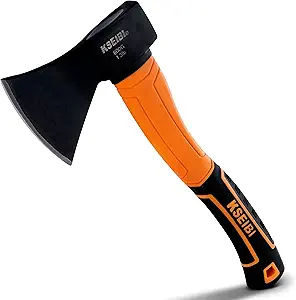 |
| Best Budget The cheapest option that still gets the job done reliably | Truper 1.25 lb Camp Axe with Hickory Handle |  |
| Highest Rated A top-rated pick with lots of positive feedback | LUCKUT Compact Garden Axe with Carbon Steel Blade and Wood Handle |  |
| Most Popular A crowd favorite that many people choose with confidence | Fiskars X7 14" Hatchet |  |
Fiskars X14 14" Universal Hatchet

| Handle Material | Alloy Steel |
|---|---|
| Blade Material | Forged Steel |
| Included Components | Sheath |
| Head Type | Hatchet |
The Fiskars X14 is a balanced 14-inch universal hatchet intended for chopping kindling, limbing small branches, and light felling tasks where single-handed control matters. It pairs a double-hardened forged steel blade with a low-friction coating to cut through fresh, resinous wood cleanly and resist surface corrosion. The FiberComp handle is lightweight but engineered to absorb shock and protect the head from overstrike damage, while the ergonomically curved grip and SoftGrip texture help keep your wrist comfortable during repeated swings. An insert-molded head reduces the risk of handle separation and loosening over time, and the included sheath keeps the blade protected in storage or transport. The tool is not meant for heavy log splitting or prolonged two-handed chopping; users who overwork it on large firewood may find the blade or handle strained. For regular garden clearing, campsite tasks, and producing kindling, the X14 offers a reliable, low-maintenance option built for dependable everyday use.
Best for: A buyer who prioritizes a dependable, low-maintenance tool for routine garden work, campsite tasks, and making kindling will appreciate this hatchet's durability and consistent performance.
Less Ideal for: People who need an axe for splitting large logs, prolonged two-handed chopping, or heavy-duty forestry work should choose a dedicated splitting axe or a longer-handled felling axe instead.
- Balanced, single-handed design for controlled swings and accurate chopping
- Double-hardened forged steel blade with low-friction coating for cleaner cuts and rust resistance
- FiberComp handle that absorbs shock and reduces overstrike damage
- Insert-molded head construction to minimize loosening and handle separation
- Included sheath for safe storage and transport
- Not intended for heavy log splitting or sustained two-handed chopping
- Handle material listed as alloy steel in some specs which may confuse buyers expecting composite
Verdict: A dependable, well-balanced hatchet built for clean cuts and long-term reliability in routine garden and campsite tasks.
Gränsfors Bruks Hand Hatchet

| Head Weight | 450 g |
|---|---|
| Blade Length | 8 centimeters |
| Handle Material | Hickory Wood |
| Blade Material | Carbon Steel |
| Included Components | Sheath |
The Gränsfors Bruks Hand Hatchet is a short, hand-forged hatchet built for precise chopping and kindling work. Its 450 g head of high-carbon steel and convex edge make controlled, repeatable cuts into small logs and branches, while the short overall length keeps strikes compact and easy to manage. The hickory handle is oiled and shaped for a comfortable grip, and the hatchet ships with a leather sheath for safe storage and transport. Typical uses are harvesting kindling, light limbing, campsite chores, and small garden cutting jobs where a long-handled axe would be overkill. Because it is a premium, hand-forged tool it emphasizes durability and a sharp, resilient edge rather than multi-tool features. The main limitations are its small size for larger felling or splitting tasks and the need to maintain the carbon steel blade to prevent rust. For someone focused on efficient kindling production and a durable, well-crafted tool, this hatchet performs very well; it is less suited as a substitute for a full-size splitting axe.
Best for: Buyers who prioritize blade performance and craftsmanship for making kindling and light garden chopping and who want a durable tool optimized for controlled, repeatable cuts.
Less Ideal for: People who need a tool for heavy-duty felling or splitting large logs or those who prefer low-maintenance stainless blades.
- Hand-forged carbon steel head offers a hard, long-lasting cutting edge
- Compact short design enables controlled strikes for making kindling and light garden work
- Oiled hickory handle provides a comfortable, traditional grip
- Includes a high-quality leather sheath for safe storage and transport
- Small head and short handle limit effectiveness on large logs or heavy splitting
- Carbon steel requires regular maintenance to prevent corrosion
Verdict: A compact, hand-forged hatchet that delivers precise, long-lasting cutting performance for efficient kindling production.
KSEIBI 274150 Camping Hatchet Axe (Forged Steel, Fiberglass Handle)

| Blade Material | Forged Steel |
|---|---|
| Handle Material | Fiberglass |
| Head Weight | 600 g |
| Blade Length | 4.13 inches |
The KSEIBI 274150 is a small camping hatchet built for routine campsite tasks: splitting kindling, chopping small to medium logs, and other general outdoor work. It pairs a 600 g forged steel head with an anti-corrosion coating and a fiberglass handle that includes rubberized inserts for grip and shock absorption. The weight and balance make it easy to swing quickly, which helps cut deeper with each strike and reduces fatigue during repeated use. It ships moderately sharp and will benefit from a tune-up if you need maximum cutting performance. A molded hole in the handle offers simple hanging or lanyard attachment and the package includes a carrying sheath for safe storage. Limitations are its size and head weight, which are optimized for portability and kindling rather than splitting very large or frozen rounds; heavy-duty log splitting will require a larger splitting axe or a maul. The hatchet’s throwing suitability and ergonomic grip make it a versatile camp tool for campers who value a durable, lightweight axe for everyday campsite chores.
Best for: Buyers who want a compact, reliable camp axe for splitting kindling, campsite chores, and occasional survival tasks and who prioritize portability and low fatigue during repeated use.
Less Ideal for: Anyone who plans to split large, heavy, or frozen logs regularly should choose a heavier splitting axe or maul instead.
- Forged steel 600 g head with anticorrosive coating for durable cutting performance
- Fiberglass handle with rubber inserts that reduces shock and improves grip
- Well-balanced design that increases swing speed and efficiency for kindling and small logs
- Includes carrying sheath and a hanging hole for easy storage and transport
- Moderately sharp out of the box for general use but may need additional sharpening for optimal performance
- Head weight and compact length are not suited for splitting large or very dense logs
Verdict: A lightweight, well-balanced camping hatchet that delivers durable, efficient performance for splitting kindling and everyday camp tasks.
Truper 1.25 lb Camp Axe with Hickory Handle

| Head Weight | 567 g |
|---|---|
| Handle Material | Hickory Wood |
| Blade Material | Alloy Steel |
| Style Name | Camp Axe |
| Head Type | Hatchet |
This Truper 1.25 lb camp axe is a small, straightforward hatchet built for splitting kindling, light brush clearing, and general campsite chores. The heat-treated alloy-steel head provides a sharp, durable cutting edge while the American hickory handle gives a traditional feel and natural shock absorption. At 14 inches overall and a modest head weight, it is easy to swing and control for precise cuts and battening pieces of firewood into kindling. Practical features include a heat-treated blade and a wood wedge assembly that keeps the head secure. Because it is compact and lightweight, it is convenient to carry on hikes or store with other outdoor gear, but it is not intended for heavy felling or splitting large logs. You should plan to clean and lightly oil the blade after use and inspect the handle for wear over time. For someone who needs an affordable, no-frills tool to produce kindling quickly, this axe hits the core needs without extra features.
Best for: Buyers who want an affordable, portable hatchet mainly for making kindling and light campsite work and who value simplicity over heavy-duty capability.
Less Ideal for: People who need an axe for splitting large firewood, regular heavy-duty logging, or users who prefer low-maintenance synthetic-handle tools.
- Compact and easy to control for precise kindling cuts
- Heat-treated alloy-steel blade holds edge well for repeated chopping
- American hickory handle offers natural shock absorption and comfortable grip
- Lightweight and portable for camping, hiking, or backyard use
- Not suited for splitting large logs or heavy-duty felling
- Wood handle requires occasional maintenance and can wear faster than synthetic handles
Verdict: A budget-friendly, easy-to-handle camp axe that reliably produces kindling and covers light campsite chores.
LUCKUT Compact Garden Axe with Carbon Steel Blade and Wood Handle

| Blade Material | Carbon Steel |
|---|---|
| Blade Length | 3.15 inches |
| Handle Material | Wood |
| Head Type | Hatchet |
This compact garden axe is built for straightforward, reliable cutting and kindling preparation. The 3.15-inch carbon steel blade comes sharpened and holds an edge well for splitting small logs and trimming branches, while the 14.6-inch charred wood handle gives a secure, comfortable grip for repeated swings. Its lightweight, compact hatchet design makes it easy to control when splitting kindling or removing small limbs around the yard, and the single straight edge is simple to re-sharpen when needed. Practical uses include breaking down larger firewood into stove-ready pieces, pruning thicker stems, and campsite tasks where portability matters. The main limitations are its small head and blade length, which mean it is best for kindling and light splitting rather than heavy-duty felling or splitting large logs, and the wood handle requires routine care to avoid weather damage. For gardeners and campers who want a dependable, easy-to-handle hatchet for regular kindling and pruning chores, this axe covers the essentials without extra frills.
Best for: Buyers who prioritize a dependable, easy-to-use tool for making kindling, light splitting, and routine pruning around the yard and campsite.
Less Ideal for: People who need an axe for heavy log splitting, felling large trees, or prolonged professional timber work should choose a larger splitting axe or maul.
- Hardened 3.15-inch carbon steel blade arrives sharpened for immediate use and retains a keen edge.
- Compact 14.6-inch hatchet form is easy to control for precise splitting and pruning.
- Charred wood handle provides a comfortable, traditional grip and good shock absorption.
- Lightweight and portable enough to carry for camping or garden chores.
- Small head and short blade are not suitable for splitting large logs or heavy-duty chopping.
- Wood handle needs periodic maintenance to prevent weathering and reduce risk of damage.
Verdict: A compact, no-nonsense hatchet that reliably makes kindling and handles light pruning with an easy-to-control design.
Fiskars X7 14" Hatchet

| Blade Material | Forged Steel |
|---|---|
| Head Type | Hatchet |
| Included Components | Fiskars X7 Hatchet (14") |
| Manufacturer Warranty Description | Lifetime Manufacturer Limited |
The Fiskars X7 14" Hatchet is a lightweight, purpose-built tool for campfire prep and light wood chopping. Its forged-steel head uses a proprietary grind and low-friction coating to hold an edge longer and reduce blade sticking when splitting small to medium kindling. The hatchet’s weight distribution increases swing speed and perceived power, so one-handed or short two-handed chops feel efficient compared with a basic hatchet. The FiberComp insert-molded handle provides shock absorption and a non-slip grip that reduces fatigue during repeated use, and the included sheath makes it safe to carry. Practical limitations are its size and head weight, which make it unsuitable for heavy-duty felling or large log splitting. The wooden handle listed in some specs may need occasional care compared with full synthetic handles, but the build and edge geometry make this a dependable choice for campers and yard work where a compact, durable hatchet is preferred.
Best for: Buyers who prioritize a reliable, easy-to-use hatchet for camping, firewood prep, and light yard tasks and who look for proven performance rather than experimental features.
Less Ideal for: People needing a heavy-duty splitting axe or a tool for cutting large trees should choose a larger splitting axe or maul instead.
- Proprietary ground forged-steel blade that stays sharp longer and reduces sticking
- Balanced weight distribution for increased swing speed and chopping power
- Shock-absorbing FiberComp handle with non-slip grip reduces user fatigue
- Compact size with included sheath makes it easy to carry for camping and hikes
- Not designed for heavy felling or splitting large logs due to lighter head weight
- Some listings reference a wooden handle which may require more maintenance than full synthetic handles
Verdict: A compact, well-engineered hatchet that delivers durable sharpness and efficient chopping power for campers and outdoor enthusiasts.
Choosing the Right Axe for Making Kindling: Key Factors to Consider
Head Geometry and Bevel Angle
The shape of the axe head and the bevel angle determine how the blade bites into wood and how the wood splits apart. For kindling you usually want a narrower bit and a somewhat acute bevel so the blade severs fibers cleanly instead of forcing the wood apart with a large wedge. A thinner profile helps create long, thin pieces and reduces the need for repeated strikes.
Different bevel angles suit different wood density. Hard, dry hardwoods may need a slightly more robust bevel to avoid chipping, while softer woods split easily with a keener edge. Consider whether the head has a polished or coated face, which affects how easily wood slides off the blade during repetitive cuts.
Handle Length and Balance
Handle length and overall balance affect precision more than raw power when making kindling. A shorter handle gives better control for small, deliberate swings, reducing the chance of overstrikes. However, too short a handle forces awkward wrist angles and increases fatigue when prepping many pieces.
Balance is about how the head and handle weight distribute. A head-heavy axe delivers more bite with less effort but can feel unwieldy for controlled chopping. A well-balanced tool centers the swing, letting you place the blade exactly where needed for thin splits and repeatable cuts.
Edge Retention and Sharpening Ease
An edge that holds its sharpness reduces the time you spend sharpening between sessions. For kindling work you will strike many shallow cuts, and a dull edge increases effort and the risk of glancing blows. Look for steels known for reasonable edge retention while still being straightforward to sharpen in the field.
Also consider how easy the geometry is to maintain. Simple bevels with clear primary and secondary angles are faster to touch up with a stone or file than complex convex grinds. If you plan frequent use, a blade that takes and holds a sharp edge with routine honing is preferable.
Grip Material and Hand Comfort
Comfortable grip materials reduce blisters and improve control over many repetitive swings. Textured or slightly tacky grips help in damp or cold conditions, preventing slips that could lead to missed strikes. Consider whether the handle has shaping or a flared butt to keep the tool from sliding out of your hands during follow-through.
Padding and vibration damping also matter. Hard, stiff handles transmit more shock into your hands when you strike. A material that offers some cushioning can reduce fatigue when preparing a large batch of kindling.
Durability and Head Retention
Frequent small strikes expose the head-to-handle junction to repeated shock. A secure head fit-whether a traditional wedged wooden handle or a modern bonded design-prevents loosening over time. Materials and heat treatment on the head influence resistance to chipping and deformation when used on a variety of woods.
Also consider corrosion resistance if you store the axe outdoors or in a damp shed. Finishes and handle preservatives that protect against moisture extend the life of the tool and keep it reliable for season-after-season use.
Weight and Swing Force
Unlike felling, making kindling rewards controlled, lighter swings that rely on edge geometry rather than brute weight. A moderate head weight lets you make repeated strokes without tiring quickly. Too heavy a head increases momentum and the likelihood of over-splitting or damaging your work surface.
Think about how often you will split and the typical log sizes you will prepare. If you want to process many small logs for indoor use, favor a lighter, maneuverable axe. If you occasionally need to split larger billets down to kindling, a slightly heavier tool may be useful but at the cost of precision.
Preparing Wood and Work Area
Start with stable, dry logs that are easier to split cleanly into kindling. Place the log on a solid chopping block at a comfortable height to reduce awkward wrist angles and to keep the blade from striking hard ground or metal.
Clear the immediate area of trip hazards and position your non-dominant foot for balance. For small sticks, shorter, controlled swings aimed near the edge of the log produce the best thin slats. Use a clamp or notch to hold oddly shaped pieces steady rather than trying to split them freehand.
- Use a chopping block to protect the blade and maintain consistent strike height
- Work on dry wood when possible; damp wood is harder to split into thin strips
- Wear eye protection and keep bystanders at a safe distance
Techniques for Making Uniform Kindling
For predictable results, score the wood with shallow cuts along the desired split lines before applying deeper blows. A series of light, controlled strikes along the grain opens a guide groove that helps the axe follow the split.
When producing multiple pieces, turn a log and split off thin flakes from the edge rather than trying to split the center into many sections. This approach yields longer, straighter kindling and reduces wasted material.
- Score first, then increase force gradually
- Angle the axe slightly to peel off thin slivers rather than wedge the log apart
Sharpening and Light Edge Maintenance
Keep a compact sharpening stone or file nearby to touch up the bevel between sessions. A keen edge reduces the number of strikes and lowers the risk of the axe glancing off the wood.
Use consistent bevel angles when honing to maintain predictable cutting behavior. After sharpening, remove burrs and check the edge on a scrap piece to ensure it bites cleanly.
- Carry a small stone for field touch-ups
- Maintain the same bevel angle for consistent performance
Storage and Care to Prolong Lifespan
Store axes in a dry place and protect the blade with a sheath or cover. Oil metal parts lightly to prevent rust and treat wooden handles with linseed or other protective oils to prevent drying and cracking.
Regularly inspect the head-to-handle junction for looseness and tighten or refit heads that show movement. Replace or repair handles that have deep gouges or fractures before they cause failure during use.
- Use a blade cover to protect the edge and prevent accidents
- Apply preservative oil to wooden handles seasonally
Safety Practices for Repetitive Splitting
When preparing large amounts of kindling, take regular breaks to avoid fatigue-related mistakes. Fatigue reduces precision and increases the chance of overstrikes and accidents.
Keep a consistent stance and swing path, and avoid swinging when people or pets are nearby. If working near frozen or slippery surfaces, clear footing before each session to maintain balance.
- Take breaks during long splitting sessions
- Maintain a clear workspace and steady footing
How We Chose the Best Axe for Making Kindling
We narrowed contenders by focusing on features that matter when turning larger pieces of wood into thin, usable kindling. We prioritized head shape and bevel profile because a slimmer, more acute edge often slices wood fibers cleanly, while a blunter wedge is less suited for producing thin batons. Handle length and balance were evaluated to ensure good control for low-force, precise strikes rather than heavy felling swings. We considered handle material and grip texture for safe, repeatable handling in damp or cold conditions. Durability criteria included head tempering and secure head retention to withstand frequent small splits without loosening or chipping. Ergonomics were tested conceptually for user fatigue when making many short cuts. We excluded axes intended solely for chopping large trees, tactical tomahawks, or decorative pieces not built for repeated splitting. Lawn and garden hatchets with extremely short handles were filtered out unless their geometry supported efficient kindling production. Overall, products that combined a cutting geometry optimized for slicing plus a handle that allowed precise control ranked highest under our editorial filters.
FAQ
What head shape is best for making kindling?
A narrower, slicing-oriented head with a reasonably acute bevel usually works best for kindling because it severs fibers cleanly and produces thin slats. Extremely wide, wedge-style heads are better for splitting large logs but can be less precise for small pieces.
Is a short or long handle better for kindling work?
Shorter handles generally provide better control for precise, low-force swings, while slightly longer handles reduce wrist strain when doing many pieces. Choose a length that balances control with comfort for your height and typical workload.
How sharp should the axe be for making kindling?
The axe should be kept fairly sharp so it cuts with a few controlled blows. A keen edge reduces the number of strikes and lowers the risk of glancing. It does not need the razor polish of a carving tool but should be easy to touch up between sessions.
Can I use a splitting maul to make kindling?
A splitting maul is designed for heavy wedges and delivers powerful blows that can over-split and damage small pieces. It is usually less precise than an axe built for slicing. For consistent, thin kindling, an axe with a slimmer bit is usually preferable.
How do I prevent the axe head from loosening over time?
Regularly check the head-to-handle fit and keep wooden handles conditioned with oil to prevent shrinkage and loosening. If the head starts to move, stop using the tool until the fit is repaired or the handle is replaced to avoid dangerous failures.
What safety gear should I use when making kindling?
Wear eye protection and sturdy gloves to guard against flying splinters and to improve grip. Use closed-toe boots and ensure your chopping block is stable to reduce the chance of slips or accidental contact with the blade.
Final Verdict
When choosing an axe for making kindling, prioritize head geometry and a handle that gives you precise control over raw weight. Edge retention and comfortable grip materials reduce downtime and fatigue during repetitive splitting. Expect tradeoffs: a very light, nimble axe favors control and speed for small pieces, while a heavier tool can handle larger billets but sacrifices finesse. Decide which traits match how often and how much kindling you prepare, then select based on the balance of slicing geometry, handle ergonomics, and durability. That focus will get you consistent, safe results season after season.
