

Note: This article contains affiliate links. If you click on these links and make a purchase, I may earn a small commission at no extra cost to you. This helps support my research and content. Read my full affiliate disclosure here.
If you have roomy containers on a patio, deck, or front entry, choosing the right plants changes how the whole space reads. Large garden pots let you combine architectural foliage, substantial root systems, and longer flowering displays that small pots cannot support. In this guide we short-list six top options suited specifically for large containers, and we explain how each choice behaves in terms of root volume, water use, light needs, and seasonal impact. Use the evaluation notes to match plant habits to your site and maintenance style, then pick the container-friendly picks that will reliably thrive.
Top Picks at a Glance
| Best Overall The best all-around choice for most situations | American Plant Exchange Hibiscus 'Peach' – Live Flowering Shrub in 10-inch Pot |  |
| Best Quality Built to a higher standard if you want something more solid | Proven Winners Double Play Doozie Spirea Shrub, 2 Gal. |  |
| Best Value The sweet spot between price and what you get | The Three Company Lavender (2-Pack) Live Fragrant Purple Perennials in 1-Qt Pots |  |
| Highest Rated A top-rated pick with lots of positive feedback | Old Oaks 'Calidora' Alocasia (Elephant Ear) – 1 Gallon |  |
| Most Popular A crowd favorite that many people choose with confidence | Giant Elephant Ear (3 Bulbs) Colocasia esculenta |  |
| Best Seller A high-volume bestseller chosen again and again | PERFECT PLANTS Frostproof Gardenia Live Plant, 1 Gallon |  |
American Plant Exchange Hibiscus 'Peach' – Live Flowering Shrub in 10-inch Pot

| Plant type | Live flowering shrub |
|---|---|
| Pot size | 10‑inch pot |
| Hardiness zones | USDA 9-11 |
| Light requirements | Full sun (6+ hours) |
This American Plant Exchange hibiscus arrives as a potted, ready-to-plant flowering shrub intended for beds, borders, or large garden pots. It produces ruffled peach blooms and is recommended for USDA zones 9–11, where it performs best in full sun with at least six hours of direct light. Typical use is as a seasonal focal point on a patio or as a repeat-blooming accent in mixed containers; it grows quickly with moderate watering and benefits from occasional pruning to increase flowering. Notable features are its heat tolerance and low-maintenance nature once established, making it a good choice for gardeners who want showy tropical color without intensive care. Limitations to consider are climate dependency and the need to bring the plant indoors or provide protection where temperatures drop below its recommended zones, and like many hibiscus it will need regular sun and water management to avoid stress in container culture.
Best for: Gardeners who want a low‑effort, showy tropical shrub for large pots or sunny garden beds and who live in or can provide warm conditions for USDA zones 9–11.
Less Ideal for: People in cooler climates who cannot move plants indoors for winter or who need a perennial that tolerates extended cold without protection.
- Ready-to-plant flowering shrub in a 10‑inch pot for immediate visual impact
- Produces large, ruffled peach blooms that serve as a strong focal point
- Heat tolerant and suited to full-sun exposure in warm climates
- Easy-care and fast-growing once established with moderate watering and occasional pruning
- Meant for USDA zones 9–11 so it requires winter protection or indoor overwintering outside those zones
Verdict: Choose this hibiscus if you want an easy-care, fast-growing tropical shrub that delivers large peach blooms for large garden pots in warm climates.
Proven Winners Double Play Doozie Spirea Shrub, 2 Gal.

| Sunlight Exposure | Full sun to partial shade |
|---|---|
| USDA Hardiness Zone | 3, 4, 5, 6, 7, 8 |
| Expected Blooming Period | Spring to Fall |
| Moisture Needs | Moderate Watering |
| Soil Type | Sandy Soil |
The Double Play Doozie spirea is a compact ornamental shrub prized for nonstop spring-to-fall flowering and striking red-to-purple foliage and blooms. Sold in a 2 gallon pot, it is typically used as a container accent, grouped edge planting, or low hedge where bright seasonal color is desired. Notable features include seedless, non-invasive habit that channels energy into continuous blooms, broad USDA hardiness (zones 3 to 8), and tolerance for sandy soils and moderate water. Practical benefits are reliable color without constant deadheading, easy placement in full sun containers on patios, and low maintenance care: plant in sun to part shade, water at planting, mulch and fertilize in early spring. Limitations are its modest mature spread and height, which make it unsuitable as a large specimen, and the need to keep it watered during establishment; it is deciduous so it loses foliage in winter. For growers seeking a high-impact, low-effort container plant, this spirea hits the brief, but plan for seasonal dormancy and appropriate spacing when using multiple pots.
Best for: Gardeners who want a low-maintenance, high-impact container or border plant that provides continuous color in full sun and values reliable performance over novelty.
Less Ideal for: People seeking an evergreen focal shrub or a large specimen to fill expansive beds should consider larger or evergreen alternatives.
- Repeat blooming from spring through fall delivers long season color
- Seedless, non-invasive habit directs energy to flowers rather than reseeding
- Performs across USDA zones 3 to 8 for wide climate adaptability
- Works well in containers and as a low hedge or landscape accent
- Deciduous nature means no winter foliage interest
- Modest mature size limits use as a large specimen plant
Verdict: Choose this spirea when you need a compact, low-maintenance container or border plant that delivers long season, showy blooms in full sun.
The Three Company Lavender (2-Pack) Live Fragrant Purple Perennials in 1-Qt Pots

| Sunlight Exposure | Full Sun |
|---|---|
| USDA Hardiness Zone | 5-9 |
| Moisture Needs | Low |
| Expected Blooming Period | Late Spring to Summer |
These lavender plants arrive as two 1‑quart pots of Lavandula Purple intended for outdoor planting in full sun. They are compact, mounded perennials that reach roughly 12–18 inches tall and are typically used in containers, balcony planters, or low hedge borders where their purple blooms and strong scent add visual and aromatic interest. The plants prefer well‑draining soil and low moisture once established, which makes them low‑maintenance for sunny balconies. Notable features include pollinator‑attracting flowers, deer‑deterring scent, and suitability for USDA zones 5–9, which covers many temperate climates. Because these are live plants shipped from a greenhouse, success depends on initial care during the first weeks after planting and ensuring pots have drainage. Plant size on arrival and bloom timing will vary by season, and buyers in very hot or very cold microclimates should adjust care accordingly. For small‑space gardeners wanting fragrant, drought‑tolerant color in full sun, these lavenders are a practical choice when tended promptly after delivery.
Best for: Gardeners with sunny balconies who want low‑maintenance, fragrant flowering plants that perform well in containers and attract pollinators.
Less Ideal for: People with shaded or mostly north‑facing balconies or those unwilling to water and pot the plants promptly after delivery.
- Compact habit suited to containers and balcony planters
- Fragrant purple blooms that attract pollinators
- Low water needs once established for easy care
- Shipped as live plants directly from greenhouse so you receive established starts
- Success depends on prompt transplanting and initial watering care after arrival
- Not suitable for shady balconies since it requires full sun
Verdict: A compact, fragrant lavender pair that gives sunny balconies long‑lasting color and low‑maintenance scent when planted in well‑draining containers.
Old Oaks 'Calidora' Alocasia (Elephant Ear) – 1 Gallon

| Indoor Outdoor Usage | Outdoor |
|---|---|
| Sunlight Exposure | Full Sun to Partial Shade |
| USDA Hardiness Zone | 7, 8, 9, 10, 11 |
| Moisture Needs | Moderate Watering |
| Expected Planting Period | Spring to Fall |
The Old Oaks 'Calidora' Alocasia is a bold, architectural elephant ear offered in a one-gallon container that establishes quickly as a focal plant for patios and large containers. It produces upright, highly ribbed leaves and is commonly used as a centerpiece in mixed containers or as a backdrop in beds. The plant is rated for USDA zones 7–11 and accepts full sun to partial shade and a wide range of soils, which simplifies placement and reduces concern about site selection. Moderate watering needs and the ability to keep it potted over winter in cooler climates make it straightforward to maintain. Limitations are typical for large Alocasias: it will eventually reach substantial size in the ground and needs space or a container large enough to control growth, and it offers no significant blooms so it is chosen for foliage impact rather than flowers.
Best for: Buyers who want a dependable, dramatic foliage plant for outdoor containers or beds and who prioritize low-fuss placement and consistent seasonal performance.
Less Ideal for: Those seeking a compact flowering annual or gardeners without space to accommodate a large foliage plant as it matures.
- Striking upright, highly ribbed foliage creates immediate visual impact
- Wide light tolerance from full sun to partial shade makes siting flexible
- Hardy across zones 7–11 so it can be grown outdoors in many temperate climates
- Sold in a one-gallon container so it establishes quickly and can be easily potted up or used in container displays
- Mature plants can reach large size in-ground and may need a large container or regular size management
- No notable flowering display since the plant is grown for foliage
Verdict: A reliable, showy foliage plant for outdoor containers that simplifies placement and care while delivering strong visual impact.
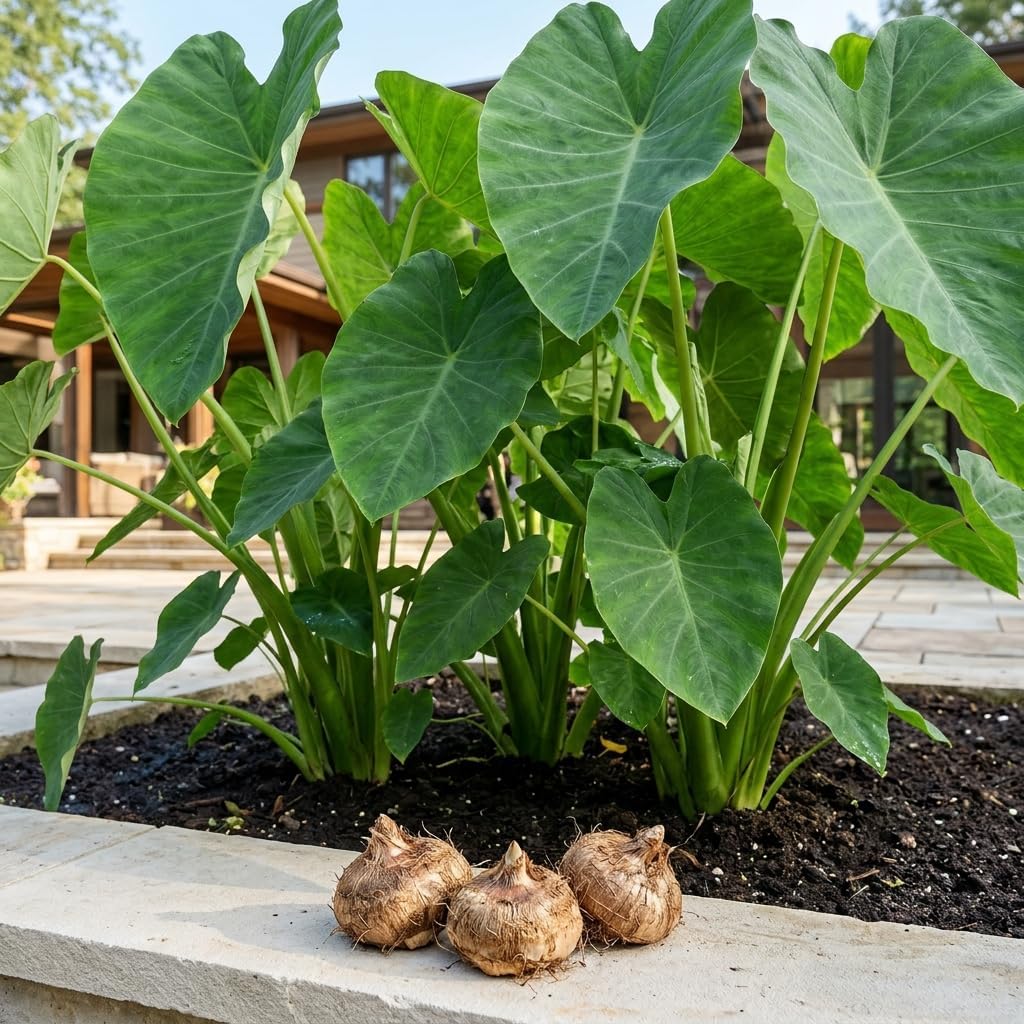
Giant Elephant Ear (3 Bulbs) Colocasia esculenta
| Product Description | 3 Green Elephant Ear Bulbs (Colocasia Esculenta) |
|---|---|
| Date First Available | March 24, 2015 |
| ASIN | B00V4VA29I |
These three giant elephant ear bulbs produce Colocasia plants with large, heart- to shield-shaped leaves that create a strong tropical statement in large garden pots or landscape beds. They are typically planted in spring after frost, placed in sun to partial shade, and grown in rich, consistently moist soil; in containers they provide immediate height and bold foliage without relying on flowers. The listing highlights ease of container culture and suggests lifting corms in colder zones, so they work as seasonal showpieces in temperate gardens and as perennials in warm climates. Practical benefits include rapid visual impact, suitability for patios and poolside planting, and simple planting steps for gardeners familiar with bulbs or corms. Important limitations are climate sensitivity and winter care requirements in cold regions, and the product description does not include detailed size expectations for mature plants or planting depth guidance, so cautious buyers should plan container size and overwintering in advance.
Best for: Gardeners who want bold, tropical foliage to fill large pots or create dramatic focal points and who are comfortable managing seasonal bulbs and winter care.
Less Ideal for: Buyers seeking low-maintenance, year-round perennial shrubs in cold climates or those who need precise sizing information for tight planting spaces.
- Large, dramatic foliage creates instant tropical impact in large pots or beds
- Sold as three bulbs, enough to establish multiple container specimens or a clustered focal point
- Adaptable to sun or partial shade and performs well in rich, consistently moist soil
- Can be lifted and stored over winter where not hardy, allowing seasonal use in colder climates
- Not winter-hardy in many climates and requires lifting or protection to survive freezing temperatures
- Product description lacks specific mature height and spread measurements for planning container size
Verdict: Choose these bulbs when you want fast, high-impact tropical foliage in large containers and are prepared to provide seasonal care.
PERFECT PLANTS Frostproof Gardenia Live Plant, 1 Gallon

| Indoor Outdoor Usage | Outdoor |
|---|---|
| Other Special Features of the Product | Deer Resistant, Fragrant |
| Expected Blooming Period | Summer |
| Sunlight Exposure | Full Sun, Partial Shade |
| Expected Planting Period | Spring |
This 1-gallon Frostproof gardenia is a compact, fragrant shrub intended for outdoor landscape use. It arrives as a live plant with a recommended mature height around 5 feet and is typically planted in mulch beds, as a low hedge, or as an accent near entries where its scent can be enjoyed. Notable features include deer resistance, a history of reliable spring and summer blooms, and included easy-to-use plant food for a simpler start. The plant prefers full sun to partial shade, so it will tolerate some shaded locations but performs best where it receives several hours of direct light. Practical benefits for a cautious buyer are straightforward care, minimal pruning to maintain shape, and an aromatic presence that enhances small gardens or patios. Limitations are that it is sold as a 1-gallon specimen so it will need time to reach mature size, and the product text notes shipping exclusions to a few states which affects availability for some buyers.
Best for: Buyers who want an easy-care, scented shrub for a small garden or patio and prefer reliable, low-maintenance plants that establish steadily rather than instant large specimens.
Less Ideal for: Gardeners seeking an immediate tall screening hedge or a plant for deep, full shade should consider alternative species better suited to dense shade or instant privacy needs.
- Fragrant white blooms that enhance outdoor seating areas during spring and summer
- Deer resistant variety reduces need for protective measures in deer-prone yards
- Includes plant food to simplify initial establishment
- Tolerates partial shade, allowing placement in spots without full sun all day
- Sold as a small 1-gallon plant so it requires time to reach mature size
- Per product notes it does not ship to certain states which limits access for some buyers
Verdict: Choose this gardenia if you want a low-maintenance, fragrant shrub that tolerates some shade and adds seasonal white blooms to small outdoor spaces.
Choosing the Right Plants for Large Garden Pots: Key Factors to Consider
Root System and Container Size Match
Large pots provide more soil volume but still constrain root spread compared with garden beds. Choose plants whose mature root systems tolerate contained space without becoming root-bound too quickly. Deep-rooted shrubs or trees often need very large or specialized containers and frequent root pruning, while many perennials and ornamental grasses adapt by forming dense fibrous rootballs.
Matching root habit to pot depth and width matters because a plant that outgrows its container will decline in vigor, show nutrient stress, and require more frequent repotting. Think ahead to mature size and plan for repotting intervals or root pruning if you prefer long-term container plantings.
Watering Behavior and Soil Volume
Large containers hold more water than small pots, which can reduce irrigation frequency but also create wet pockets if drainage is poor. Consider plants that match the moisture profile you can maintain: succulents and drought-tolerant perennials for sporadic watering, or moisture-loving varieties if you commit to regular irrigation.
Soil mix and drainage are part of the equation. Heavy soil that retains moisture can be fine for moisture-loving plants but will stress species that need quick-drying conditions. Larger pots also buffer temperature swings, which affects evaporation and root temperature-both important for watering schedules and plant health.
Light Exposure and Microclimate
A large container on a sheltered porch receives different light and wind conditions than one on an exposed rooftop. Choose plants that suit the actual microclimate where the pot will live. Full-sun bloomers need sustained direct light to flower well, while shade-tolerant foliage plants will perform better in dappled or north-facing locations.
Wind, reflected heat from walls, and nearby structures can intensify sun or dry out pots faster. Consider whether the container will be moved seasonally, and pick species that tolerate those shifts if you plan to reposition pots for design or protection.
Seasonal Interest and Maintenance Rhythm
Large pots are often focal points, so aim for plants that deliver seasonal structure: reliable summer blooms, winter-forming texture, or strong fall color. Think in terms of a multi-season plan that layers long-lasting foliage with shorter seasonal companions.
Maintenance needs matter. Some high-impact container plants require regular deadheading, pruning, or division to keep looking their best. Others provide low-maintenance presence with minimal care. Match plant selection to the time you want to spend on upkeep so the pot remains attractive without excessive work.
Hardiness, Heat Tolerance, and Overwintering
Containers amplify temperature extremes. Roots in pots can heat up quickly in summer or freeze faster in winter than in-ground plantings. Select plants with hardiness or heat tolerance appropriate to your climate and container placement, or plan for overwintering strategies like moving pots to sheltered spots, insulating containers, or using winter protection techniques.
Understanding a plant's cold tolerance and whether it can be treated as an annual, tender perennial, or houseplant during winter will help you avoid losing specimens to exposure.
Pest Resistance and Disease Susceptibility in Pots
Container conditions concentrate pests and disease risks differently than beds. Poor airflow, overwatering, or contaminated potting mix can encourage fungal issues, while stressed plants are more vulnerable to insects. Favor species with known resistance or straightforward cultural controls for common pests.
Routine monitoring, good sanitation, and choosing mixes with balanced drainage help minimize problems. When picking plants, consider how they tolerate minor stress and whether they require more intervention than you are willing to provide.
Designing a Large-Pot Color Scheme
Large garden pots are design platforms. Start by choosing a dominant foliage or structural plant, then add contrast and seasonal accents. Limit the palette to two or three complementary colors or textures to avoid a cluttered look in a big container.
Consider scale when combining plants. Vigorous specimens should be balanced with lower-growing spillers or mid-height fillers so the arrangement reads as intentional. Repeat colors or textures across multiple pots to create cohesion across a patio or entry.
- Pick a structural center plant with strong form.
- Add one or two complementary foliage or flowering companions.
- Use spillers to soften pot edges and visually expand the container.
Soil Mix and Drainage for Large Containers
Use a well-draining container mix that still holds enough moisture for the chosen plants. Large pots allow for lighter mixes with organic matter, but always include drainage holes and consider an internal drainage layer if the container is very deep.
Amendments such as bark chips or perlite improve aeration for shrubs and perennials, while added compost increases water retention for moisture-loving specimens. Test the potting mix behavior across a week to see how quickly it dries and adjust your watering plan accordingly.
- Ensure at least one drainage hole; elevate the pot slightly to improve flow.
- Match mix components to plant water needs: more organic matter for moisture lovers, grittier mixes for drought-tolerant species.
Placement and Mobility Considerations
Large pots can be heavy when filled and difficult to move. Plan placement first and choose containers with mobility options if you expect to relocate them seasonally. Rolling bases, gliders, or lightweight synthetic pots make moving easier than ceramic or concrete.
Think about sightlines and access when placing focal pots. A well-placed large container can anchor a seating area or define a path, but it should also be accessible for watering, pruning, and winter protection.
- Place heavy pots on surfaces that bear their weight, like reinforced decking or concrete.
- Use saucers or trays to protect delicate surfaces from drainage runoff.
Companion Planting Strategies for Containers
Companion planting in large pots should consider complementary water and light requirements first. Pair plants with similar moisture and light needs to avoid conflicting care routines. Secondary considerations include matching root growth rates and seasonal peak times so one plant does not overwhelm others.
Layering plants with staggered bloom times extends the pot's interest. Use a combination of permanent structural plants and seasonal inserts that can be swapped as needed for color or texture updates.
- Use perennials or woody shrubs as permanent anchors and refresh annuals for seasonal color.
- Avoid pairing fast-spreading rooters with slow, shallow-rooted companions.
Winter Care and Long-Term Pot Management
Large containers require a winter plan. Some plants survive in-situ with insulation and mulching, while others do better if moved to a garage or sheltered area. Consider how much winter protection you can provide when selecting plants that will remain in containers year after year.
Over time, soil nutrient levels decline and salts can build up from fertilizer and tap water. Schedule periodic top-ups of fresh mix or partial repotting and flush soils as needed to keep plants healthy in the long term.
- Insulate pots or move them to sheltered locations in cold climates.
- Top-dress or refresh potting mix every couple of years to maintain fertility.
How We Chose the Best Plants for Large Garden Pots
We selected entries by prioritizing traits that matter for big containers rather than small-pots or in-ground planting. Key criteria included root volume tolerance and container adaptability, which determines whether a plant will stay healthy in a confined root ball; drought and moisture handling, to predict how watering routines behave in larger soil masses; light and microclimate flexibility, since patios and porches vary widely in exposure; seasonal structure and bloom length, which affects how long a pot looks intentional; pest and disease resilience in container conditions; and ease of maintenance, covering pruning and overwintering for large pots. We excluded plants that require deep, undisturbed soil, invasive spreaders unsuited to confined spaces, and those with extremely short-lived ornamental value in containers. Practical specifications guided the picks: mature container size, typical root depth, water-use category, and known hardiness or heat tolerance in pots. These filters ensured the list focuses on plants that deliver strong visual and horticultural performance in large garden pots while remaining manageable for home gardeners.
FAQ
How often should I water plants in large garden pots?
It depends on plant type, potting mix, and exposure. Large pots dry more slowly than small ones, so many container plants need watering every few days rather than daily, but full-sun or wind-exposed sites will require more frequent checks. Use the finger test or a moisture meter to judge soil moisture rather than a fixed schedule.
Can I grow shrubs or small trees in large containers long term?
Many shrubs and small trees adapt to large containers if the pot size suits their root volume and you commit to periodic root pruning or repotting. Choose species known for container tolerance and provide winter protection for less-hardy types. Expect more maintenance than with perennials.
What size pot qualifies as a large garden pot?
A large container typically holds significantly more soil volume than standard 1-5 gallon pots and often has at least 12-18 inches depth and similar or greater diameter. Practical size depends on the plant you intend to grow; aim for enough depth and width to accommodate the mature root mass.
How do I keep large pots from becoming top-heavy or tipping over?
Choose a pot with a wide base or add weight low in the container, such as coarse gravel in the bottom, to lower the center of gravity. Place large pots against a wall or in a recessed spot if wind is a concern, and avoid tall, narrow pots in exposed locations.
Should I fertilize plants in large containers differently than those in the ground?
Container plants rely entirely on the potting mix for nutrients, so they typically need a regular feeding schedule during the growing season. Use a balanced fertilizer appropriate to the plant type and consider slow-release formulas or dilute liquid feeds to avoid salt buildup.
How do I overwinter tender container plants if I cannot move heavy pots?
If moving pots is not feasible, insulate them with bubble wrap or horticultural fleece and group containers together in a sheltered microclimate to reduce exposure. Mulch the soil surface and consider wrapping the pot itself to protect roots from extreme temperature swings.
Final Verdict
For large garden pots, prioritize plants that match container volume, water habits, and the light conditions of your space. Structural specimens that tolerate confined roots and seasonal fillers that complement their rhythm make the most resilient, attractive arrangements. Balance your desired look with realistic maintenance and overwintering plans so the pots stay healthy and visually effective. With the right plant choices and container care, you can create lasting, low-stress focal points that elevate outdoor spaces.
