

Note: This article contains affiliate links. If you click on these links and make a purchase, I may earn a small commission at no extra cost to you. This helps support my research and content. Read my full affiliate disclosure here.
If you want to extend your growing season in a limited space, a small outdoor greenhouse can be one of the most practical upgrades for a patio, balcony, or tiny backyard. The right small greenhouse protects seedlings from late frosts, creates stable humidity and temperature for sensitive plants, and lets you squeeze productive growing into a compact footprint. This guide shortlists the top 7 small outdoor greenhouses for close-space growing and evaluates them on durability, ventilation, ease of assembly, and footprint efficiency. Read on to understand which compact greenhouse style suits your site, how ventilation and materials affect plant health, and what to prioritize when choosing among the top options.
Top Picks at a Glance
| Best Overall The best all-around choice for most situations | Greengro Small Walk-In Greenhouse with PE Cover and Zippered Door |  |
| Best Quality Built to a higher standard if you want something more solid | Exroo 6 x 6 ft Heavy-Duty Polycarbonate Walk-In Greenhouse |  |
| Best Value The sweet spot between price and what you get | Ohuhu 3-Tier Walk-In Outdoor Greenhouse with 4 Shelves (PE Cover, Alloy Steel Frame) |  |
| Best Budget The cheapest option that still gets the job done reliably | AHOME Mini Pop-Up Greenhouse (27 x 27 x 31 in) |  |
| Highest Rated A top-rated pick with lots of positive feedback | Ruelyn 6×4 ft Polycarbonate Walk-In Greenhouse with Hygrometer |  |
| Most Popular A crowd favorite that many people choose with confidence | Pure Garden 4-Tier Mini Greenhouse with PVC Cover and Locking Wheels |  |
| Best Seller A high-volume bestseller chosen again and again | EAGLE PEAK 6×4 Pop-Up Walk-In Greenhouse |  |
Greengro Small Walk-In Greenhouse with PE Cover and Zippered Door
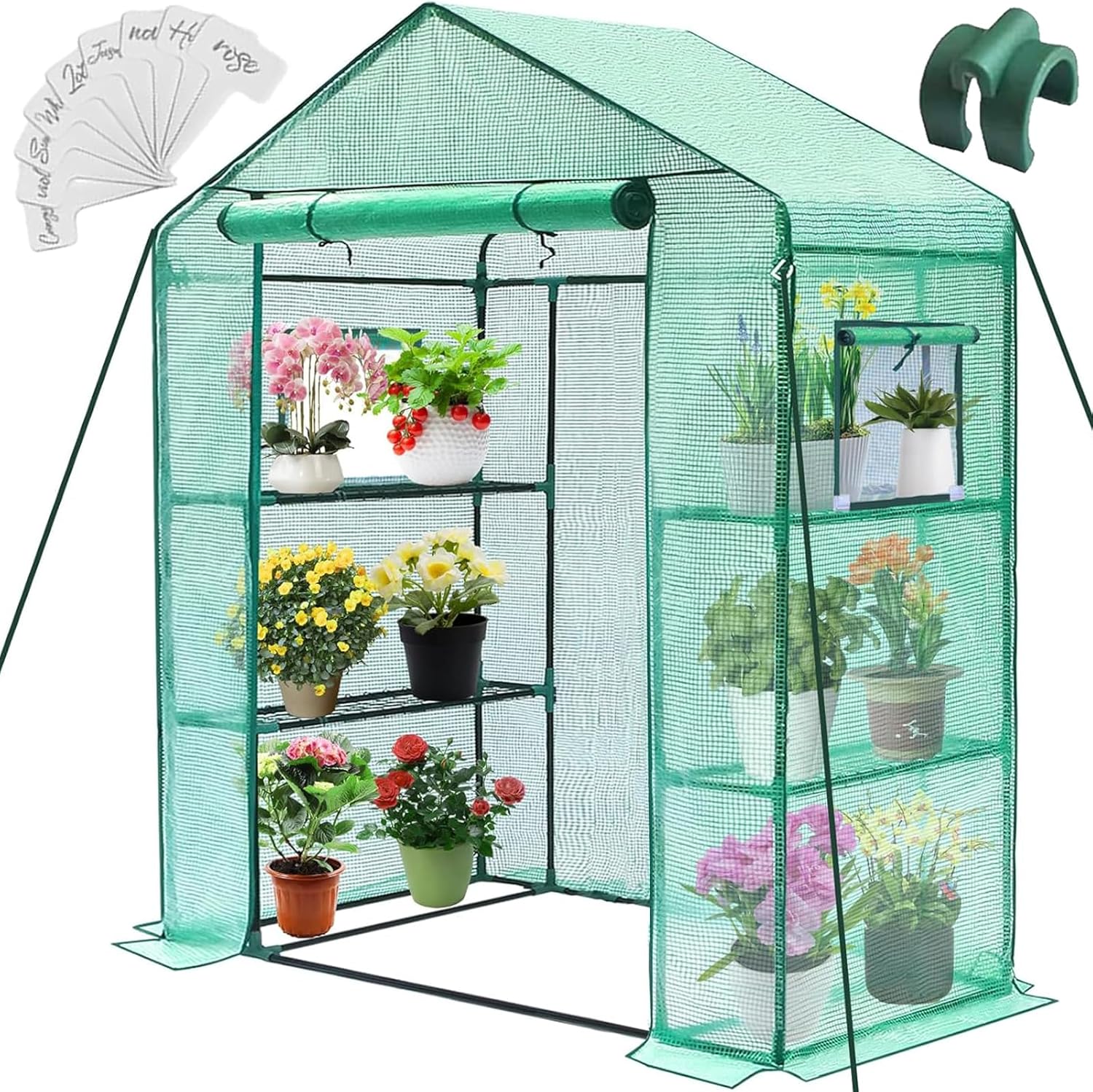
| Cover Material | Polyethylene (PE) |
|---|---|
| Frame Material | Metal |
| Closure Type | Zipper |
| Nominal Wall Thickness | 16 millimeters |
This Greengro small walk-in greenhouse creates a sheltered microclimate for potted plants, seedlings and herbs by combining a metal framework with a thick PE cover and zippered access. It is typically used on a patio, balcony or in a backyard to extend the growing season, shield plants from wind and rain, and keep pests out. Notable features include screened ventilation windows, a roll-up zippered door, four internal shelves for staging pots, and guy ropes with ground stakes for added stability. Practical benefits are straightforward setup without tools, portability for repositioning, and weather-resistant protection that lets you start seeds earlier or overwinter tender plants. Important limitations are its small footprint and modest shelf weight capacity, so it is best for small to medium pots rather than heavy planters, and the lightweight frame and cover remain less durable than rigid greenhouse structures in long-term, high-wind exposure.
Best for: Buyers who want an efficient, moveable solution to protect and organize several small to medium potted plants and seedlings without investing in a permanent structure.
Less Ideal for: Gardeners who need a long-term, heavy-duty greenhouse for large pots, full-size vegetables, or locations regularly exposed to very strong winds should consider sturdier, permanent options.
- Thick polyethylene cover with reinforced edging offers waterproofing and UV reduction
- Zippered roll-up door and screened windows provide ventilation and easy access
- Tool-free assembly and detachable design for quick setup and relocation
- Integrated shelves create organized vertical growing space for multiple pots
- Small size limits capacity to small and medium pots and seed trays
- Lightweight frame and cover are not as long-lasting as permanent rigid greenhouses
Verdict: A compact, easy-to-assemble micro greenhouse that protects and organizes small to medium potted plants while staying portable and budget friendly.
Exroo 6 x 6 ft Heavy-Duty Polycarbonate Walk-In Greenhouse

| Size | 6 x 6 FT |
|---|---|
| Cover Material | Polycarbonate (PC) |
| Frame Material | Aluminum |
| Number Of Vents | 1 |
| Indoor Outdoor Usage | Indoor, Outdoor |
The Exroo 6×6 ft walk-in greenhouse is a small backyard structure designed to extend your growing season and protect plants from wind, rain, snow, and UV exposure. It uses a corrosion-resistant aluminum frame and twin-wall polycarbonate panels to create a durable, light-transmitting shelter that is suitable for seed starting, vegetables, herbs, and container flowers. Typical setup uses the sliding-panel assembly and base pieces to reduce bolting time compared with traditional kits, and the rooftop vent plus sliding door give simple airflow control for temperature and humidity management. Practical benefits include year-round protection, better light diffusion than single-pane plastic, and a compact footprint that fits patios or small yards. Important limitations are the modest interior space that constrains larger shelving setups and the single vent which may require manual adjustment or supplemental ventilation in hot weather. Assembly still requires some time and care to align panels and secure the base in windy locations.
Best for: Gardeners who prioritize reliable year-round performance in a compact footprint and want a weather-resistant, long-lasting small greenhouse for seed starting and vegetable or herb production.
Less Ideal for: People who need a large growing area for tall plants or multilevel shelving setups or those who want fully automated climate control without manual ventilation.
- Durable aluminum frame offers corrosion resistance for year-round outdoor use
- Twin-wall polycarbonate panels provide UV protection while allowing good light diffusion
- Compact walk-in footprint fits small backyards, patios, and decks
- Sliding-panel assembly system reduces assembly time compared with bolt-heavy kits
- Limited interior floor area restricts large shelving or multiple planting tiers
- Only one roof vent may be insufficient for passive cooling in very hot conditions
Verdict: Buy this if you want a compact, heavy-duty small greenhouse that reliably protects plants year-round while fitting a patio or small yard.
Ohuhu 3-Tier Walk-In Outdoor Greenhouse with 4 Shelves (PE Cover, Alloy Steel Frame)

| Size | 3 Tier 4 Shelves |
|---|---|
| Cover Material | Green PE |
| Frame Material | Alloy Steel |
| Number Of Vents | 2 |
| Closure Type | Zipper |
This small walk-in greenhouse is designed to give hobby gardeners a protected, ventilated space for seedlings, potted vegetables and small ornamentals. It assembles from alloy steel tubing and a zippered PE cover to create a three-tier structure with four wire shelves that hold trays and pots; the manufacturer rates total shelf capacity at about 18 lb. A roll-up door and two screened side windows let you control airflow and check plants without fully opening the cover, which helps reduce heat spikes while maintaining circulation. The PE cover is tear-resistant and offers UV protection but is not as clear as PVC, so light transmission is moderate rather than glass-like. Installation is tool-free and the unit is portable, so it can be repositioned on a patio, balcony or sheltered yard spot as seasons change. Expect modest long-term durability compared with rigid greenhouses in exposed, windy sites and plan to anchor the frame and replace the cover sooner if used year-round in harsh weather.
Best for: Gardeners who want a portable, no-tools greenhouse to protect seedlings and container plants while controlling airflow and access with minimal fuss.
Less Ideal for: People needing a permanent, high-transparency structure for heavy-duty year-round use or for large-scale production should choose a rigid-frame greenhouse or taller commercial option.
- Compact walk-in design provides usable standing space for tending plants
- Four wired shelves let you organize trays and pots and keep plants off the ground
- Zippered roll-up door plus two screened windows allow ventilation control and easy access
- Alloy steel frame and grid PE cover offer better tear resistance and UV protection than cheaper covers
- PE cover reduces light clarity compared with transparent PVC or polycarbonate panels
- Not intended for high-wind or heavy-snow exposure without additional anchoring
Verdict: Buy this if you want an easy-to-assemble, portable walk-in greenhouse that protects seedlings and container plants while giving simple ventilation control.
AHOME Mini Pop-Up Greenhouse (27 x 27 x 31 in)

| Indoor Outdoor Usage | Outdoor |
|---|---|
| Special Features | Pop-up design, high humidity promotion, zipper window |
| Cover Material | Polyvinyl Chloride (PVC) |
| Frame Material | Polyvinyl Chloride (PVC) |
This compact pop-up greenhouse is designed to give seedlings and small plants a protected, higher-humidity environment without a lot of effort or setup. The PVC cover and pop-up frame allow the shelter to be erected and folded in seconds, and the included ground tacks help anchor it on lawns or beds. The zipper door and a single vent let you access plants and provide some airflow on warm days. For budget-focused gardeners it delivers the core functions you need to extend the season, guard against light frost, and shelter seedlings from wind and rain. Expect limitations typical of lightweight mini greenhouses: the PVC frame and cover are not as durable as metal-and-polycarbonate structures and will be less resistant to heavy snow or prolonged exposure to strong sun. It is best used as a seasonal, low-cost solution for seedlings, small container plants, or short-term frost protection rather than a permanent greenhouse replacement.
Best for: Gardeners looking for an inexpensive, no-fuss way to start seedlings, protect small plants from light frost, or extend the growing season in beds and containers.
Less Ideal for: People who need a heavy-duty or year-round greenhouse for large plants or for regions with heavy snow, high winds, or intense sun exposure.
- Very quick pop-up setup and folding for easy seasonal use
- Clear PVC cover promotes humidity and light transmission
- Includes ground tacks to improve stability outdoors
- Zipper door and vent provide access and basic ventilation
- Lightweight PVC frame and cover limit long-term durability in harsh weather
- Single vent offers only minimal airflow control
Verdict: A very affordable, easy-to-use pop-up greenhouse that gives seedlings and small plants quick seasonal protection and humidity control.
Ruelyn 6×4 ft Polycarbonate Walk-In Greenhouse with Hygrometer

| Size | 6×4 FT |
|---|---|
| Cover Material | Polycarbonate (PC) |
| Frame Material | Aluminum |
| Closure Type | Lockable Door |
| Number of Doors | 1 |
This Ruelyn 6×4 ft greenhouse is a small, sturdy walk-in structure designed to protect vegetables and flowers through changing seasons. It assembles for two people using the included instructions and tools and sits on a base that can be buried in soil, anchored to concrete, or fastened to wood for added stability. The aluminum frame and 0.16-inch double-wall polycarbonate panels admit light while blocking UV and provide claimed snow-load resistance up to 20 PSF. Practical features include a lockable door, an adjustable roof vent to manage airflow, and a built-in temperature and humidity meter so you can monitor conditions without extra equipment. Because it is compact, it fits into tight backyard spots and can double as sheltered storage for tools. Expect a hands-on installation and periodic maintenance to keep seals and fasteners tight; like most panel greenhouses, heavy storms or drifting snow will still require vigilance despite the reinforced frame.
Best for: Gardeners who need a reliable, year-round protected space in a small backyard and prioritize structural stability and environmental monitoring over large planting area.
Less Ideal for: Those wanting a large commercial greenhouse or a no-assembly pop-up solution should look elsewhere.
- Aluminum frame with double-wall polycarbonate panels provides UV protection and good light transmission
- Adjustable roof vent plus included temperature and humidity meter for easy climate monitoring
- Multiple anchoring options (soil, concrete, or wood) increase stability on different sites
- Compact walk-in footprint fits small backyards while leaving room for plants and storage
- Assembly requires two people and careful following of instructions
- Not intended for permanent heavy structural loads despite reinforced panels
Verdict: A sturdy, compact walk-in greenhouse that gives backyard gardeners dependable year-round protection with built-in climate monitoring and multiple anchoring options.
Pure Garden 4-Tier Mini Greenhouse with PVC Cover and Locking Wheels

| Number of Doors | 2 |
|---|---|
| Closure Type | Zipper |
| Weight Capacity | Maximum weight: 24 pounds |
| Cover Material | Polyvinyl Chloride (PVC) |
| Frame Material | Alloy Steel |
This 4-tier Pure Garden mini greenhouse provides a compact, movable environment for starting seedlings, growing herbs, and protecting small potted plants from frost. Assembly is tool-free and the tubular alloy steel frame plus clear PVC cover create a warm, sheltered space; the zippered roll-up door gives easy access and ventilation control. Each shelf is rated to hold up to 24 pounds, so it accommodates multiple trays, medium pots, or seed flats across four levels. Locking caster wheels make it simple to move the unit onto a porch or into a sunroom, and you can remove the wheels to keep it stationary outdoors. Practical benefits include season extension for vegetables and tender perennials and convenient organization of plants and supplies. Limitations are the lightweight PVC cover, which will need careful anchoring and protection from strong wind and prolonged sun exposure, and the modest shelf spacing that limits very large pots or tall plants.
Best for: Gardeners who want a versatile, space-efficient greenhouse to start seedlings, grow herbs, or protect small plants through cooler months and who value portability and simple setup.
Less Ideal for: Growers who need a heavy-duty, long-term outdoor greenhouse for large plants or commercial propagation should look for sturdier, larger climate-controlled options.
- Compact four-tier design fits seed trays and multiple small to medium pots
- Tool-free assembly with locking wheels for easy repositioning
- Clear PVC cover with zippered roll-up door for protection and ventilation
- Alloy steel tubular frame offers basic stability for everyday use
- PVC cover is lightweight and can deteriorate under prolonged sun or rough weather
- Shelf spacing and weight limits restrict use with large or heavy containers
Verdict: A practical, easy-to-move four-shelf greenhouse that extends the season for seed starting and small-plant growing in compact spaces.
EAGLE PEAK 6×4 Pop-Up Walk-In Greenhouse

| Size | 6×4 |
|---|---|
| Cover Material | Reinforced Polyethylene Film |
| Frame Material | Alloy Steel |
| Number of Doors | 1 |
| Number Of Vents | 2 |
The EAGLE PEAK 6×4 pop-up walk-in greenhouse is a compact, easy-to-use shelter for starting seeds, protecting tender plants from frost, and extending fall or early-winter growth. Its pre-assembled pop-up frame and patented center lock let one person erect the structure quickly without tools, and the reinforced polyethylene cover holds warmth and humidity while filtering light. Mesh windows and a roll-up zippered door provide straightforward ventilation and access, and included stakes and guy ropes help stabilize the unit in light to moderate winds. The alloy steel frame and powder-coated finish add durability compared with flimsy hobby tents, but because it is a lightweight pop-up design it still needs care in heavy snow or high winds and can require additional anchoring or weight bags for stormy weather. The greenhouse is best for patios, balconies, and small backyards where a simple, portable shelter is desirable rather than a permanent heavy-duty structure.
Best for: Buyers who want a small, reliable portable greenhouse they can set up alone to start seeds, overwinter plants, or extend the growing season in a patio or small yard with minimal fuss.
Less Ideal for: Gardeners needing a permanent, heavy-duty greenhouse for large crops or those in exposed, high-wind or heavy-snow climates should choose a framed, rigid structure instead.
- One-person, tool-free pop-up frame for quick setup
- Reinforced PE cover that retains warmth and is UV and water resistant
- Alloy steel frame with powder-coated finish for improved durability
- Zippered roll-up door and mesh windows for ventilation and easy access
- Pop-up design is not suited to heavy snow loads or extreme wind without extra anchoring
Verdict: A compact, one-person pop-up greenhouse that delivers easy setup and season-extension performance for small-space gardeners.
Choosing the Right Small Outdoor Greenhouse: Key Factors to Consider
Frame Material and Strength
The frame determines how well a small outdoor greenhouse stands up to wind, snow, and repeated handling. Aluminum frames are lightweight and resist rust, which is helpful for portable or rental-friendly structures, while steel frames generally offer higher rigidity but can corrode if not properly coated. Look for reinforced joints, cross-bracing, and clear weight or wind-load specs when available. The sturdier the frame, the less likely the cover will flex under gusts, and the longer the greenhouse will retain its shape and seal.
Frame connectors and the quality of fasteners also matter because small greenhouses often rely on snap-fit or bolted assemblies. Poorly designed connectors can introduce weak points where panels separate or sag, reducing internal climate stability and creating gaps that let pests or cold air in. If you need seasonal portability, prioritize frames that balance strength with manageable weight and straightforward disassembly.
Cover Material and UV Resistance
Cover material controls light transmission, insulation, and longevity. Polyethylene covers are common for small greenhouses because they are flexible and affordable, but they vary widely in thickness and UV treatment. Thicker, UV-stabilized polyethylene will last longer and retain more consistent light diffusion, reducing the need for frequent replacement. Rigid polycarbonate panels offer better insulation and impact resistance, which helps in cooler climates and where hail or debris is a concern.
Also consider how the material handles condensation. Some covers or panels have anti-drip coatings or textured surfaces that reduce water droplets falling onto plants. Proper UV resistance keeps the cover from becoming brittle and opaque over a few seasons, maintaining a healthy light environment inside the compact space.
Ventilation and Climate Control
Small volumes of air heat and saturate with moisture quickly, so ventilation has outsized importance in small outdoor greenhouses. Look for adjustable vents, screened openings, roll-up sides or doors, and the ability to add passive airflow without compromising insect exclusion. Good ventilation prevents overheating on sunny days and reduces fungal pressure by keeping humidity in check.
Consider whether the greenhouse design allows for active ventilation upgrades such as clip-on fans or automatic vent openers. In a compact greenhouse, placement and size of vents influence airflow patterns more than in larger structures. Ensure vents are easy to operate from outside and that screens or sealing features are durable and replaceable.
Footprint Efficiency and Internal Layout
When space is limited, usable growing area is more important than external dimensions. Measure the internal width, height, and shelving options rather than just the footprint number. Tall, narrow greenhouses may make good use of vertical space for hanging baskets or tiered shelving, while wider, lower models offer more bench area for flats and pots.
Shelving, peg rails, and the ability to place trays directly on the floor all affect how many plants you can manage. Also think about door swing and access paths; a greenhouse that is technically large enough on paper can feel cramped if the entrance blocks usable space. Choose a configuration that fits your typical tasks, whether starting seedlings, overwintering potted plants, or growing micro-greens.
Assembly, Maintenance, and Longevity
How easy a greenhouse is to assemble affects how quickly you can start using it and whether you will actually take it down or move it when needed. Kits with fewer parts, clear instructions, and labeled hardware shorten build time. Maintenance considerations include how easy it is to clean the cover, replace damaged panels, and maintain seals.
Longevity ties back to replaceable components and warranty support. A greenhouse that is simple to repair by swapping a panel or section of cover will usually outlast one that requires full replacement. Also think about seasonality: if you plan to keep a greenhouse up year-round, prioritize durable materials and anchoring options to prevent wind or snow damage.
Anchoring and Site Preparation
Anchoring prevents small greenhouses from shifting or uplifting in storms, and the right anchoring method depends on your site. Lightweight, portable units often use ground stakes or anchors, which are sufficient on soft soil but may not hold in compacted ground. Heavier frames can accept ground screws or bolted brackets if a semi-permanent installation is acceptable.
Site preparation affects drainage and plant health. A flat, level base with a gravel or paver pad reduces standing water and makes shelving installation simpler. Consider sun exposure and proximity to shade from buildings or trees because even a compact greenhouse needs predictable light patterns for seedlings and growing plants.
Small Greenhouse Styles and What They Do Best
Compact greenhouses come in several common styles, each with strengths for small-space gardening. Mini hoop houses and tunnel-style covers are lightweight and fast to set up, offering gentle frost protection and flexible coverage for benches. They excel for seasonal use and are easy to roll up for ventilation.
A-frame and lean-to designs maximize usable shelf space and can fit snugly against a wall or fence. These shapes often provide taller central space for hanging plants or taller transplants. Rigid polycarbonate boxes and cabinet-style greenhouses provide better insulation and wind resistance and are a good fit when you want a year-round microclimate in a constrained area.
- Mini hoop and tunnel covers: best for quick frost protection and portability
- A-frame and lean-to units: efficient vertical space and sheltered placement
- Cabinet or box greenhouses: improved insulation and durability for year-round use
Siting Tips for Small Yards and Patios
Select a spot with consistent morning sun and some afternoon protection if you live in hot climates. Morning light helps warm the greenhouse after cool nights, while afternoon shade can prevent overheating on sunny days. Avoid sites directly under trees where falling debris, sap, or heavy shade will interfere with the cover and plant growth.
Ensure the surface is level and consider using pavers, decking, or a simple compacted gravel pad to improve drainage and stability. If anchoring into soil, confirm the ground is not prone to winter waterlogging, which can lead to corrosion at base connections and a slippery working surface.
- Aim for morning sun exposure with afternoon relief in hot climates
- Use a stable, level base to improve drainage and protect fastenings
- Keep some clearance from trees and gutters to reduce debris and shade
Seasonal Use and Overwintering Strategies
Decide whether you want the greenhouse for spring and fall season extension or for year-round overwintering. For seasonal use, lighter covers and portable frames are convenient and cost-effective. For overwintering, choose thicker panels, stronger frames, and secure anchoring to resist snow loads and winter winds.
Supplemental heat, if necessary, should be used sparingly in small greenhouses because they are prone to rapid temperature swings. Insulating benches with bubble wrap under trays or using thermal mass such as water-filled barrels can moderate night-time temperature drops without continuous heating.
- Seasonal setups favor lightweight, portable designs
- Overwintering requires sturdier frames, thicker panels, and good anchoring
- Use passive thermal strategies before adding active heat
Maximizing Plant Space in a Small Structure
Think vertically and layer your planting zones. Use narrow shelving units, hanging baskets, and tiered trays to increase plant capacity without crowding floor space. Moveable benches or collapsible shelving make it easier to rearrange as plants grow.
Organize by task so that seed trays, growing-on pots, and finished plants each have a dedicated zone. This reduces handling and makes ventilation adjustments more effective because you can open vents where heat accumulates most.
- Use vertical shelving and hanging systems to expand usable area
- Keep functional zones for starting, growing-on, and hardening off
- Choose lightweight pots and trays to simplify bench rearrangement
Maintenance Checklist for Longevity
Inspect covers and seals at the start and end of each season. Tighten fasteners, check for tears, and clean surfaces to maintain light transmission. Replace worn straps or bungee supports before they fail under wind.
Clear gutters of debris and sweep the interior regularly to prevent mold and pest refuges. Replace damaged panels promptly and store spare clips or parts to make repairs straightforward when needed.
- Seasonal inspection of covers, seals, and fasteners
- Regular cleaning to maintain light and reduce disease pressure
- Keep spare clips and small repair parts on hand
How We Chose the Best Small Outdoor Greenhouse
We selected small outdoor greenhouses based on criteria that reflect how these structures perform in real gardens. Durability under weather stress was prioritized, including frame strength and cover material resistance to UV and abrasion. Ventilation and climate control earned weight because small volumes heat and humidify quickly; options that offer adjustable vents, roll-up doors, or louvered panels scored higher. Ease of assembly and the clarity of instructions were factored in for gardeners who may not want a long build. Footprint efficiency and usable growing area mattered because compact sites require smart internal layouts and shelving. Portability and anchoring options were evaluated for renters and seasonal use. We excluded oversized or commercial greenhouses and any kits that require permanent foundations. Final selections reflect garden-ready features rather than decorative extras, focusing on what actually helps plants thrive in a small outdoor setting.
FAQ
How much sunlight does a small outdoor greenhouse need?
Most seedlings and common greenhouse crops need at least 4 to 6 hours of direct morning sun for healthy growth. In cooler climates more sun helps maintain temperatures, while in hot regions some afternoon shade prevents overheating.
Can I use a small greenhouse on a balcony or rooftop?
Yes, many small outdoor greenhouses are suitable for balconies or rooftops if the structure is stable and properly anchored. Check weight limits for decking and ensure wind exposure is mitigated with appropriate anchoring and windbreaks.
How do I prevent overheating in a compact greenhouse?
Provide adjustable ventilation such as roll-up sides, roof vents, or screened openings that you can open on sunny days. Use shade cloth during heat waves and position thermal mass like water barrels to even out temperature swings.
What is the best way to anchor a portable small greenhouse?
For soft ground, long ground stakes or spiral anchors work well. On hard surfaces, use weighted bases, sandbags, or bolted brackets to a paver or deck. The choice depends on whether you want a temporary or semi-permanent installation.
How long should the cover on a small greenhouse last?
Cover lifespan varies by material and exposure; UV-stabilized polyethylene may last several seasons, while rigid polycarbonate panels typically last many years. Regular maintenance and avoiding sharp contact extends service life.
Final Verdict
For compact sites, prioritize a greenhouse that balances a sturdy frame with effective ventilation and a layout that maximizes usable growing area. Expect tradeoffs between portability and durability: lighter units are easier to move and store but will need more frequent cover maintenance, while sturdier panels offer better year-round protection at the cost of weight. Focus on the features that match how you garden-vent options for warm climates, rigid panels for overwintering, or a tunnel cover for temporary frost protection-and you will select a small outdoor greenhouse that fits your space and growing goals.
